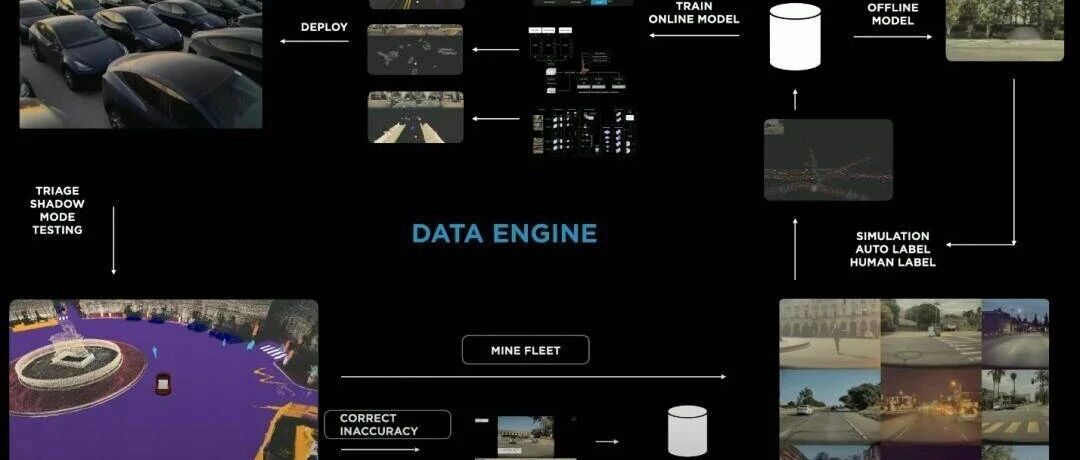
数据闭环

Search documents
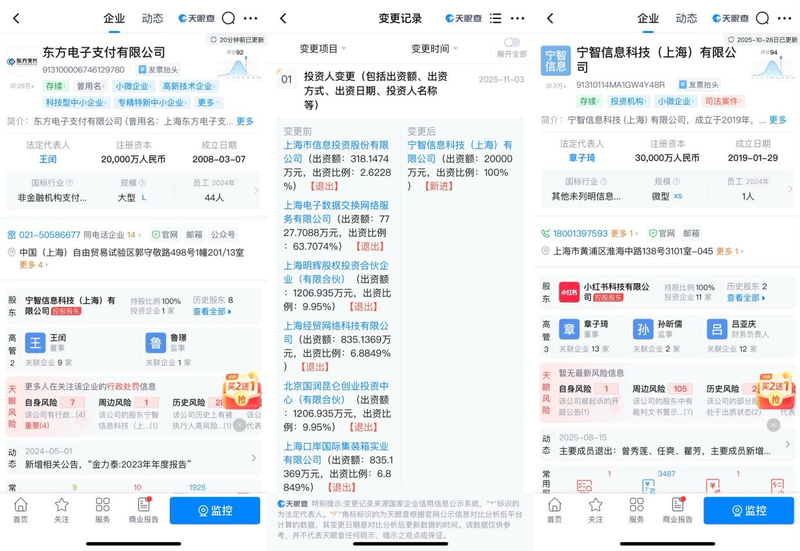
小红书获得支付牌照 或欲补齐关键金融基础设施短板
Xin Jing Bao· 2025-11-06 07:25
Group 1 - The core point of the article is that Xiaohongshu has successfully obtained a payment license through its wholly-owned subsidiary, indicating a strategic move to enhance its e-commerce and financial services capabilities [1][3] - The ownership of Dongfang Electronic Payment Co., Ltd. has changed, with Ningzhi Information Technology (Shanghai) Co., Ltd., a wholly-owned subsidiary of Xiaohongshu, becoming the 100% controlling shareholder [1] - The urgency of obtaining the payment license is highlighted as a necessary step to fill the financial infrastructure gap in Xiaohongshu's business ecosystem, which has been heavily reliant on external payment channels [3][4] Group 2 - Dongfang Payment has undergone a significant capital increase, raising its registered capital from 121 million yuan to 200 million yuan, an increase of over 65% [3] - The financial performance of Dongfang Payment has been poor, with projected revenues of 8.88 million yuan and a net loss of 8 million yuan for 2024, and revenues of 3.76 million yuan with a net loss of 5.27 million yuan for the first half of 2025 [3] - The lack of real transaction flow and customer engagement has been identified as a common issue, but with Xiaohongshu's platform support, profitability is expected to improve through various high-frequency transaction scenarios [4]

理想郎咸朋:VLA 加强化学习将成为车企真正的护城河
晚点LatePost· 2025-11-04 08:03
Core Viewpoint - The article discusses the evolution of Li Auto's autonomous driving technology, particularly focusing on the development and implementation of the VLA (Vision-Language-Action) model, which aims to enhance the driving experience by integrating multi-modal AI capabilities. The article highlights the challenges faced by the team, the strategic decisions made, and the competitive landscape in the autonomous driving sector [5][6][18]. Team Development and Structure - The Li Auto autonomous driving team has undergone significant changes since its inception in 2018, with three generations of core personnel. The recent restructuring aimed to create a flatter organization with 11 new departments, enhancing communication and decision-making efficiency [8][9][51]. - The team has shifted from a centralized, closed development model to a more open and collaborative approach, reflecting the need for agility in AI development [10][11]. Strategic Decisions - The decision to pursue the VLA model was driven by the recognition that simply following existing paths, such as those taken by competitors like Huawei and Tesla, would not suffice. The team aimed to create a new competitive edge through innovative technology [6][14][18]. - The VLA model is positioned as a significant advancement over previous methods, with the goal of achieving L4 level autonomous driving capabilities. The model emphasizes the importance of human-like reasoning and decision-making in driving [21][29]. Challenges and Criticism - The VLA model has faced skepticism from industry experts, with concerns about its feasibility and the technical challenges associated with multi-modal AI integration. Critics argue that the approach may be overly simplistic or "tricksy" compared to other methods [22][24]. - Despite the criticism, the team believes that the challenges presented by the VLA model are indicative of its potential correctness and innovation [24][25]. Future Outlook - The company aims to establish a robust reinforcement learning loop to enhance the VLA model's capabilities, with expectations of significant improvements in user experience by the end of 2023 and into 2024 [28][39]. - The long-term vision includes achieving L4 autonomous driving by 2027, with a focus on building a comprehensive data-driven ecosystem that supports continuous learning and adaptation [41][44].


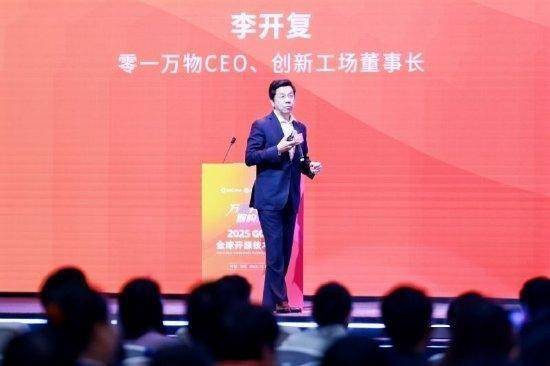
李开复:未来会出现一个人的独角兽公司 因为Agent不会累
Sou Hu Cai Jing· 2025-11-01 12:16
Core Insights - The CEO of Zero One Technology, Kai-Fu Lee, emphasized that AI Agents are not merely software tools but represent a fundamental shift in how companies think about strategy execution and organizational structure [1][3] - Companies will increasingly rely on valuable data loops, with AI Agents acting as super employees that continuously iterate and improve [1] Group 1 - The current organizational structure of companies is primarily human-centric, but this will gradually shift as AI Agents may replace many human roles, leading to a structure dominated by Agents [3] - The concept of a "one-person unicorn company" is introduced, where a single individual can leverage AI Agents to create a valuable enterprise, as Agents can work tirelessly, are non-confrontational, and can be replicated [3]
电池产线在线CT渗透“提速”
高工锂电· 2025-11-01 10:07
Core Viewpoint - The article emphasizes the increasing importance of internal defect detection in the battery industry, particularly with the rise of online CT (Computed Tomography) technology, which is becoming essential for ensuring product quality and consistency in battery manufacturing [5][6][11]. Group 1: Event Overview - The 2025 (15th) High-Performance Lithium Battery Annual Conference will be held from November 18-20, 2025, at the JW Marriott Hotel in Shenzhen [4][15]. - The event will feature discussions on process innovation and smart manufacturing, focusing on yield and consistency as competitive advantages [15]. Group 2: Technological Advancements - The adoption of online CT technology is accelerating in the production lines of power batteries, with companies like Hymson announcing successful batch deliveries of their online CT equipment [5][9]. - Online CT systems can achieve single-cell detection in less than 3.5 seconds, with a measurement precision of less than 0.03mm and a detection efficiency of over 36 PPM [9]. Group 3: Industry Trends - The shift towards stacked cell structures in high-performance batteries increases the need for precise defect detection, as issues like alignment deviations and welding defects directly impact battery safety and performance [7][8]. - AI technology is becoming a critical factor in enhancing the capabilities of online CT systems, transforming them from isolated detection tools to dynamic quality control systems [11][12]. Group 4: Market Opportunities - The domestic market for online CT technology is expanding, as local manufacturers are gaining ground against international competitors by offering customized solutions and faster delivery times [12][13]. - The integration of AI with online CT is expected to enhance the automation of lithium battery production lines, moving towards a more data-driven and process-optimized manufacturing approach [13][14].

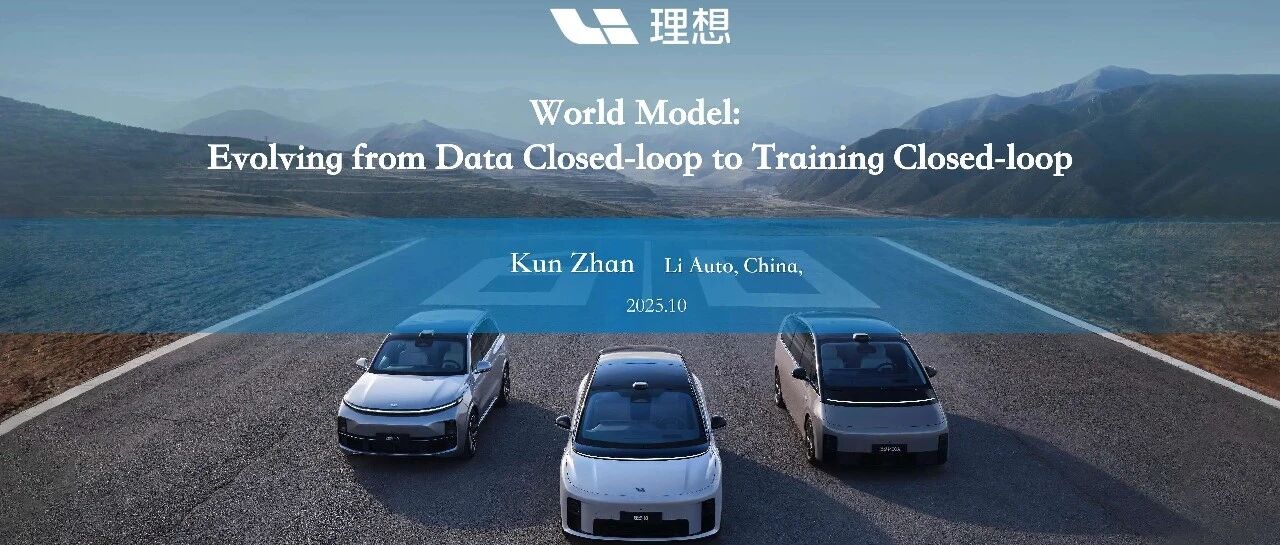
理想ICCV'25分享了世界模型:从数据闭环到训练闭环
自动驾驶之心· 2025-10-30 00:56
Core Insights - The article discusses the advancements in autonomous driving technology, particularly focusing on the transition from data closed-loop systems to training closed-loop systems, marking a new phase in autonomous driving development [17][20]. Group 1: Development of Li Auto's VLA Model - Li Auto's VLA driver model has evolved through various stages, from rule-based systems to AI-driven E2E+VLM systems, with a strong emphasis on navigation as a key module [6]. - The end-to-end mass production version of MPI has reached over 220 units, representing a 19-fold increase compared to the version from July 2024 [12]. Group 2: Data Closed-Loop Value - The data closed-loop process includes shadow mode validation, data mining in the cloud, automatic labeling of effective samples, and model training, with a data return time of one minute [9][10]. - Li Auto has accumulated 1.5 billion kilometers of driving data, utilizing over 200 triggers to produce 15-45 second clip data [10]. Group 3: Transition to Training Closed-Loop - The core of the L4 training loop involves VLA, reinforcement learning (RL), and world models (WM), optimizing trajectories through diffusion and reinforcement learning [22]. - Key technologies for closed-loop autonomous driving training include regional simulation, synthetic data, and reinforcement learning [24]. Group 4: Simulation and Generation Techniques - Simulation relies on scene reconstruction, including visual and Lidar reconstruction, while synthetic data generation utilizes multimodal techniques [25]. - Li Auto's recent advancements in reconstruction and generation have led to significant improvements, with multiple top conference papers published in the last two years [26][29][31]. Group 5: Interactive Agents and System Capabilities - The development of interactive agents is highlighted as a critical challenge in the training closed-loop [37]. - System capabilities are enhanced through world models providing simulation environments, diverse scene construction, and accurate feedback from reward models [38]. Group 6: Community and Collaboration - The article mentions the establishment of nearly a hundred technical discussion groups related to various autonomous driving technologies, with a community of around 4,000 members and over 300 companies and research institutions involved [44][45].
理想智驾自研的起点:卫城计划始末
雷峰网· 2025-10-24 09:09
Core Viewpoint - The article discusses the journey of Li Auto in developing its autonomous driving technology, highlighting the challenges faced and the strategic decisions made to shift from relying on suppliers to self-research and development. Group 1: Historical Context and Initial Challenges - In 2020, Li Auto sold 32,624 units of the Li ONE, significantly exceeding internal expectations, which were initially set at 3,000 units for the first year [2][6] - Despite the success, the company faced immediate pressure from competitors like NIO and Xpeng, who were launching new products and advanced autonomous driving features [4][6] - The internal celebration of sales success contrasted sharply with the external pressures of market competition and technological gaps [6][7] Group 2: Decision to Pursue In-House Development - The decision to pursue in-house development of autonomous driving technology was driven by the realization of dependency on suppliers and the need for greater control over technology [9][19] - Li Auto's leadership recognized the necessity of self-research to remain competitive, especially after observing advancements made by competitors [22][23] - The initial budget for autonomous driving research was limited, forcing the team to be resourceful and strategic in their approach [9][10] Group 3: Development Process and Key Milestones - The "Fortress Project" was initiated to develop Li Auto's first fully self-researched advanced driver assistance system, with a tight deadline of less than 100 days [27][30] - The team faced significant challenges, including high turnover and the need to recruit quickly to meet project demands [32][30] - The successful delivery of the autonomous driving system before the launch of the 2021 Li ONE marked a significant achievement for the company [34][44] Group 4: Data-Driven Approach and Technological Advancements - The establishment of a data closed-loop system named "Poseidon" was crucial for enhancing the efficiency of the autonomous driving development process [39][40] - The data-driven approach allowed the team to rapidly iterate and improve the autonomous driving features based on real-world data [41][42] - By the end of 2021, Li Auto achieved a delivery volume of 90,491 units, a 177.4% increase year-on-year, largely attributed to the new self-researched driving system [43][44] Group 5: Ongoing Challenges and Future Plans - The company faced ongoing challenges in keeping pace with competitors in the rapidly evolving autonomous driving market, particularly in urban navigation capabilities [51][52] - Li Auto's strategic pivot towards end-to-end development and the initiation of new projects like the "Golden Apple Plan" reflect its commitment to innovation and competitiveness [58][59] - The article concludes with anticipation for future developments in Li Auto's autonomous driving technology, emphasizing the need for continuous adaptation and strategic foresight [60]

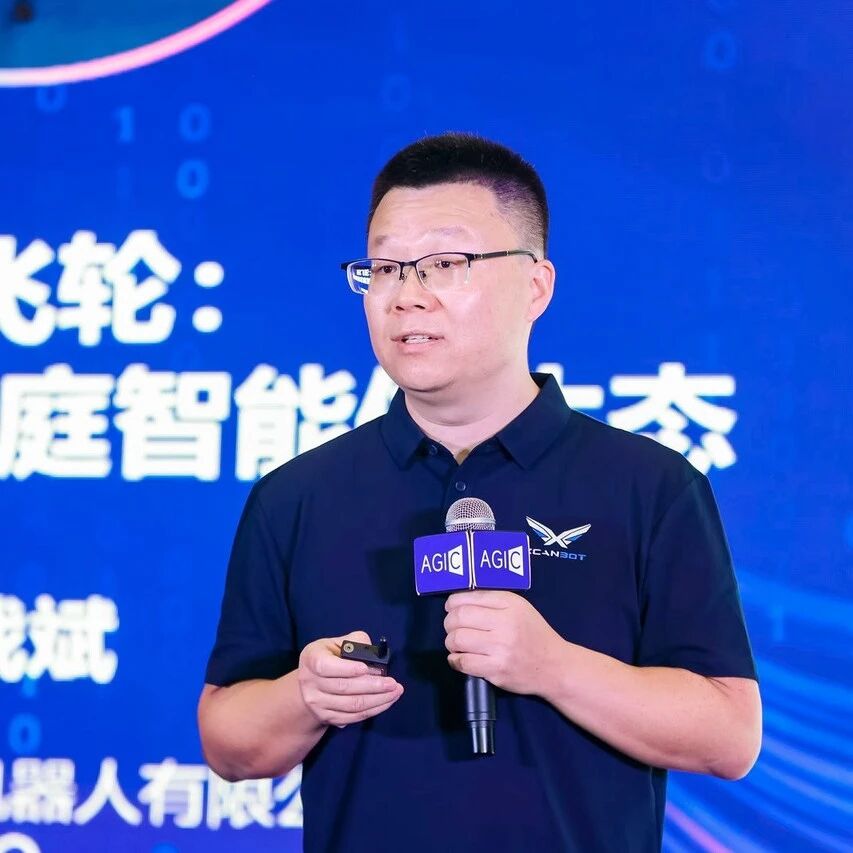
对话星灿智能李战斌:攀完自动驾驶「珠峰」,家庭机器人「沿途下蛋」,剑指万亿赛道
雷峰网· 2025-10-23 10:06
Core Insights - The article discusses the transition from autonomous driving to household service robots, focusing on the development of lawn mowers and companion robots as initial products, ultimately aiming for humanoid companion robots [1][5][6]. Group 1: Company Strategy and Vision - The company aims to leverage its experience in autonomous driving to create a supply chain and data loop for household service robots, starting with lawn mowers and progressing to more complex products [5][6]. - The initial focus on lawn mowers is driven by a significant market opportunity of $40 billion with low penetration rates, alongside the need for improved user experience [6][19]. - The long-term vision includes developing humanoid companion robots, with a phased approach to product development: starting with lawn mowers, then moving to household companion robots, and finally to humanoid robots [6][12][13]. Group 2: Market and Product Development - The lawn mower market is characterized by high usage frequency and the potential for data feedback, which can enhance user engagement and product performance [20]. - The company plans to adopt a "solution + ODM" strategy to streamline operations and establish a healthy cash flow, which will support the development of more complex household service robots [14][29]. - The company has already secured significant orders, including a three-year exclusive contract for lawn mowers, indicating strong market interest and demand [14][16]. Group 3: Technical Advantages and Challenges - The company utilizes advanced technologies such as 5D perception for slope recognition and navigation, which are critical for the performance of lawn mowers in varied outdoor environments [26][27]. - The challenges in the lawn mower industry include the need for reliable quality and high levels of intelligence, as outdoor conditions differ significantly from indoor environments [21][22]. - The company emphasizes that the core competitive advantage lies in AI capabilities rather than manufacturing or distribution channels, highlighting the importance of data loops for improving user experience and reducing costs [24][30]. Group 4: Team and Funding - The founding team has a strong background in technology and has been working together for years, which has facilitated the establishment of the company [7][11]. - The company successfully completed its first round of angel investment, with investors primarily from the industry supply chain, indicating confidence in the team's execution and technological potential [17][18].
智能驾驶专家会议
2025-10-20 14:49
Summary of Key Points from the Conference Call Industry Overview - The conference focuses on the intelligent driving industry, particularly advancements in autonomous driving technology and the competitive landscape among companies like Tesla, Xpeng, and Li Auto. Core Insights and Arguments 1. **Tesla FSD V14 Enhancements**: - Tesla's FSD V14 has significantly improved its autonomous driving capabilities through software optimization, increased camera frame rates from over 30 to over 40 frames, and a tenfold increase in model parameters compared to V13, achieving 2,000 to 2,500 TOPS computing power with the AI5 chip [2][1][4]. 2. **Importance of In-House Chip Development**: - The deep integration of self-developed chips and algorithms is crucial for companies like Xpeng and Li Auto to reduce reliance on general-purpose chip platforms, thereby lowering costs and enhancing performance [1][4]. 3. **Technological Divisions in Domestic Market**: - The domestic intelligent driving technology is divided into two camps: the Vision Oriented Architecture (VOA) and the World Model. Each has its strengths and weaknesses, with VOA requiring high computing power and having lower frame rates, while the World Model faces challenges in environmental prediction [5][6]. 4. **Market Trends Towards Hardware-Software Integration**: - The trend towards integrated hardware and software solutions is expected to grow, with suppliers likely gaining a larger market share as OEMs focus on internal needs, leading to potential price wars in the future [8][1]. 5. **NVIDIA's Market Position**: - NVIDIA maintains a strong market position due to its CUDA ecosystem, which provides a seamless service from AI training to deployment, significantly reducing algorithm migration costs [9][1]. 6. **Regulatory Developments**: - Regulations for L3 autonomous driving are expected to be introduced by 2026, with a focus on data closure, computing center construction, and algorithm optimization [3][10]. 7. **Challenges in Data and Feature Alignment**: - The industry faces challenges in data and feature alignment due to high labeling costs and complex algorithm implementations, which hinder the effective processing of multimodal information [7][1]. 8. **Future of LiDAR Technology**: - LiDAR technology is expected to coexist with visual solutions, with prices dropping to around $200, making it more accessible for widespread adoption in vehicles [11][14]. 9. **AI Driver vs. Traditional Systems**: - The AI driver represents a remote AI takeover system designed to handle specific issues, enhancing user experience without compromising safety [22][1]. 10. **Impact of Mass Production on L4 Companies**: - The mass production of vehicles with autonomous driving technology may challenge the business models of existing L4 companies, particularly regarding licensing and operational experience [23][1]. Other Important Insights - **Investment in AI**: - Companies like Xpeng and Li Auto are investing around $6 billion annually in AI, primarily for algorithm development and road testing, but the impact on differentiation may be limited due to similar capabilities across firms [19][1]. - **Safety Personnel Ratios**: - The current ratio of safety personnel in leading domestic autonomous driving companies is approximately 1:5 to 1:8, with ongoing efforts to reduce reliance on human oversight through AI model development [21][1]. - **Challenges in VOA Technology**: - VOA technology faces latency and multimodal alignment issues, which can be addressed through long-term investment in model adjustments and short-term optimizations [18][1]. - **Emerging Chip Development**: - Domestic suppliers are entering the chip market later but targeting the mid-to-low-end market, which has not yet fully opened up, allowing for competitive advantages through tailored solutions [24][1].

华源证券-汽车行业双周报:特斯拉FSD V14发布在即,智驾范式或再迎跃迁-250928
Xin Lang Cai Jing· 2025-09-28 16:21
Core Insights - Tesla's FSD version 14 is expected to be released soon, with significant improvements in driving experience, likened to having "perception" [1] - The FSD system's competitive data loop capabilities provide a solid foundation for rapid iteration and performance enhancement [2] - The anticipated performance improvements from FSDV14 may exceed market expectations due to substantial growth in model parameters and the introduction of multimodal capabilities [3] Group 1: FSD Version Updates - FSDV14 is projected to be released next week, followed by versions 14.1 and 14.2, with 14.2 expected to deliver unprecedented intelligence in driving experience [1] - The FSD system has shown significant improvements in key metrics, such as city takeover mileage increasing from an average of approximately 100 miles per instance in FSD12 to over 200 miles in FSD13 [2] Group 2: Performance and Data Capabilities - The rapid growth in model parameters may lead to performance improvements that surpass the expected linear enhancements, potentially due to foundational changes similar to large language models [3] - The introduction of SDF network technology and audio data allows FSDV14 to achieve a refined understanding of the physical world, transitioning from single-visual capabilities to multimodal collaboration [3] Group 3: Investment Analysis - If FSDV14's performance exceeds expectations, it could drive technological transformation in the autonomous driving industry, with a focus on companies like XPeng Motors and Li Auto [4] - The release of FSDV14 may further advance Tesla's Robotaxi business, prompting interest in related domestic companies such as Pony.ai and WeRide [4]
毕竟,没有数据闭环的端到端/VLA只是半成品
自动驾驶之心· 2025-09-19 11:24
Core Viewpoint - The future of autonomous driving technology will focus on safer driving, better user experience, and comprehensive scenario coverage, necessitating a robust operational model from both manufacturers and suppliers [1]. Group 1: Data-Driven Technology - Future autonomous driving companies are expected to resemble "data-driven technology companies," where competition will shift from algorithms to the efficiency of data loops [2]. - The ability to quickly collect, clean, label, train, and validate data will be crucial for gaining a competitive edge, requiring advanced automation tools and AI-driven data pipelines [2]. - The architecture involving VLA/VLM will be essential for enhancing user experience, with a focus on building robust, efficient, and low-cost closed-loop simulations [2]. Group 2: Algorithm and Data Services - When considering algorithms, the supporting data services and automated labeling infrastructure must also be taken into account, especially for companies under profit pressure [3]. - The industry is exploring solutions like DiffVLA to transition smoothly into the VLA era while leveraging existing data and tools [3]. - Current research focuses on introducing new data sources and learning paradigms, indicating that the field remains open for exploration and innovation [3]. Group 3: Simulation and Training - There is a consensus in academia and industry on the importance of closed-loop systems involving agent simulators, sensor simulators, and driving policies [4]. - Companies that can effectively address the sim-to-real domain gap and build efficient closed-loop training systems will likely lead the autonomous driving market [4]. - Without a data loop, end-to-end/VLA systems are considered incomplete [5]. Group 4: Community and Knowledge Sharing - The "Autonomous Driving Knowledge Planet" community aims to provide a platform for technical exchange and problem-solving among members from leading universities and companies in the autonomous driving sector [12]. - The community has compiled extensive resources, including over 40 technical routes and numerous datasets, to facilitate learning and application in projects [12]. - Regular discussions with industry leaders on trends and challenges in autonomous driving are part of the community's offerings [12].