数智化
Search documents
响应“人工智能+制造”行动 万兴科技以“AI+创意”助力制造业数智化发展
Zheng Quan Ri Bao Wang· 2026-01-12 12:49
本报讯 (记者舒娅疆)近日,工业和信息化部等八部门联合印发的《"人工智能+制造"专项行动实施意见》出台,为中国 人工智能产业发展与落地应用绘制清晰的路线图。 目前,万兴科技已成为多家央企单位的软件采购重点供应商,所服务客户包括南方电网、中广核、一汽集团、深圳地铁 等,并持续为电子制造、新能源、汽车制造、金融、教育等行业客户在办公生产力场景提供创新解决方案,全面赋能创意内容 生产。 (编辑 李家琪) 据介绍,万兴科技面向半导体等知识密集型行业的提效痛点,打造四位一体的AI创意软件及办公提效方案。在头脑风暴预 研环节,该公司旗下的产品万兴脑图通过AI赋能多模态知识管理,助力团队高效构建框架;设计环节,万兴图示可为半导体研 发生产提供专业图示工具;项目实施环节,万兴项管可提供简洁易用的专业甘特图,兼容Microsoft Project格式,仅需1/10成本 就能科学管理项目进程;知识沉淀环节,万兴PDF可提供一站式智能化PDF解决方案,加速知识归档与管理流程。 此外,面向企业日益增长的内容创作与宣发需求,万兴科技依托旗下万兴天幕音视频多媒体大模型2.0及万兴喵影2026等产 品,提供了前沿的AI解决方案。其中,万兴 ...
浙江移动5G+创新赋能“蓝色循环”新模式
Ren Min Wang· 2026-01-12 08:01
海洋大省如何解决海洋塑料废弃物分散"收集难"?近年来,浙江省因地制宜探索多元化海洋塑料废弃物 治理体系,建立健全海洋塑料废弃物综合治理长效机制,推动从单一的塑料瓶向渔网渔具等全品类海洋 塑料废弃物回收利用拓展,依托本省塑料再生企业,在省内形成"收集—转运—处置"闭环。 在此过程中,浙江移动携手温州市生态环境局,联合当地环保企业创新打造"蓝海驿站+蓝海链"数字化 循环再生体系,为海洋生态保护注入数智化动能。 筑就海岸"信息高速路",环保数据永不断线 浙江省温州市蜿蜒的海岸线上,7座"蓝海驿站"正悄然改变着海洋塑料废弃物的命运。借助人脸识别、 赋码溯源等智慧化手段,"蓝海驿站"可以实现海洋垃圾"全生命周期"追踪。附近村民将来自海洋、海岛 及近岸3公里范围内滩涂生产生活产生的废旧渔网渔具、塑料容器、包装物送至"蓝海驿站"进行高效回 收。"蓝色工厂"随后接力,将海洋塑料废弃物重塑为再生粒子,带动相关产业在应对国际绿色贸易壁垒 的同时,实现海洋塑料垃圾减量化、资源化、产业化。 驿站配备5G人脸识别摄像头、5G智能称重仪、二维码生成终端,回收者打捞垃圾后到驿站登记,终端 自动生成包含"回收者ID、垃圾类型、重量"等信息的 ...
“数智化”领跑汽车产业“新赛程”——“经济新活力”系列评
Xin Lang Cai Jing· 2026-01-11 08:58
力、以创新固根本、以出海练筋骨,方能完整勾勒出中国汽车产业在数智化浪潮中的奋进姿态,为全球 智能出行贡献独特的中国智慧与中国方案。 编辑:呼乐乐 诚为"借风人",以开放协作织就数智经纬。智能驾驶作为一项复杂的系统工程,其技术链条纵贯芯片、 算法、传感器、高精地图、车路协同等诸多环节,单凭一家企业之力都难以全面覆盖。我国车企正以主 动开放的姿态,积极融入全球创新网络,在引进、融合国际先进技术的同时,加速构建起既扎根中国实 际、又具备全球视野的产业创新生态。面向未来,亟需推动合作范式实现从"单向引进"到"双向赋能"的 升级。一方面,要保持更大范围、更深层次的开放,在主动融入全球技术体系的过程中捕捉前沿动态、 吸收最新成果,在技术迭代的浪潮中始终立于前沿;另一方面,要立足我国超大规模市场所孕育的丰富 应用场景与海量数据资源,以平等互利为基础,构建能够吸引全球顶尖人才、技术、资本共同参与的共 创平台。 勇为"弄潮儿",于全球市场锤炼中国品牌。 智能驾驶技术的快速演进,最终要接受全球市场的"大 考"。例如,百度旗下无人驾驶出行服务平台萝卜快跑宣布携手全球领先出行平台,将率先于2026年在 英国伦敦开启无人驾驶测试及出行 ...
2026,我省交通运输做些啥?
Xin Lang Cai Jing· 2026-01-10 23:42
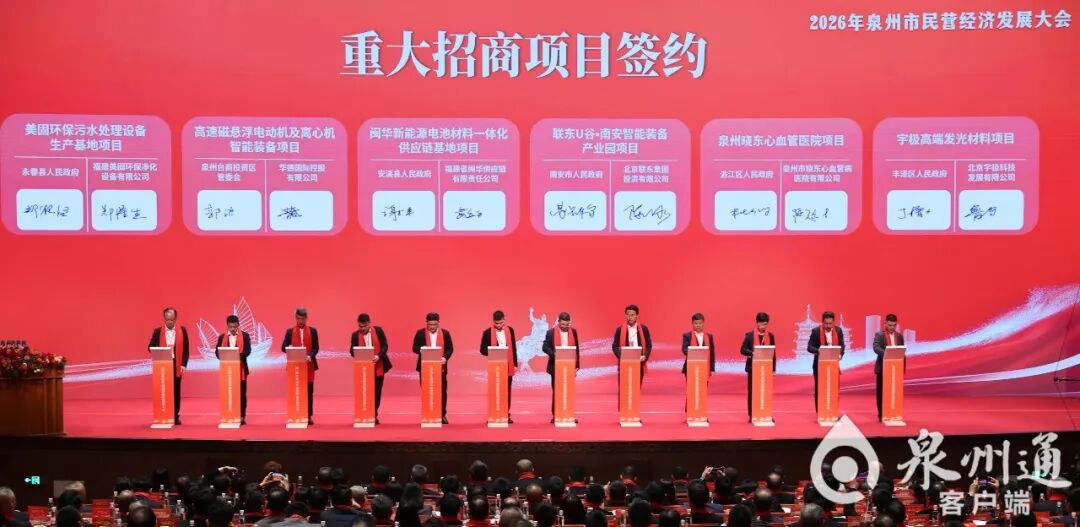
数智化是交通运输高质量发展的重要引擎。今年我省将深入开展数字化转型升级行动。重点推进高速公 路智慧站点、智慧服务区应用升级,构建全省港航地海全时全域数智平台,打造1140公里数字航道,加 快构建"数智交通走廊",为现代化交通治理提供技术支撑。 为破解行业发展痛点难点,我省今年将强化制度建设,持续提升行业治理能力现代化水平。在重点领域 全面开展"一件事" 全链条试点,加快推进航道条例、高速公路条例、港口条例等立法修法进程,积极 推动农村公路管理办法、公共汽车客运管理办法等规章制修订,研究出台促进高速公路高质量发展的政 策意见。 以重点项目攻坚行动为抓手,持续完善交通基础设施网络。在高速公路建设方面,今年我省重点推进京 台扩容、泉厦扩容等项目前期工作,开工泉梅高速泉州段、政永高速闽侯洋里至小箬段等关键工程,加 快漳诏扩容、双福高速等在建项目进度,着力打通省际通道和区域联络线。全年将建成普通国省干线 100公里,实施农村公路建设改造1000公里,新增沿海生产性泊位5个、提升通过能力860万吨。 "以民为本",我省将深入实施交通惠民暖心行动。在高速服务升级方面,全省新增充电设施400个、服 务区出入口6个,同步推进适 ...
利好来了!上海重磅发布,事关商业航天、机器人……
Zheng Quan Shi Bao· 2026-01-10 08:38
Core Viewpoint - The Shanghai Municipal Government has released a three-year action plan (2026-2028) to support the transformation and upgrading of advanced manufacturing, focusing on structural optimization, innovation, and resource support. Group 1: Action Plan Overview - The action plan aims to add 100 manufacturing enterprises with an annual output value exceeding 1 billion yuan by 2028, totaling over 600 such enterprises, and to drive the addition of 500 large-scale industrial enterprises in the supply chain [2] - The plan emphasizes the development of new-generation electronic information, smart connected vehicles, high-end equipment, advanced materials, and green low-carbon industries [2][3] Group 2: Key Industry Focus - The action plan encourages investment in emerging fields such as low-altitude economy, commercial aerospace, embodied intelligence, biomanufacturing, and smart terminals, aiming to overcome bottlenecks in the industrial scale development of innovative products like eVTOLs, commercial rockets, and humanoid robots [1][2] - It supports integrated circuit companies to achieve breakthroughs across the entire industry chain, focusing on equipment, advanced processes, and materials [2] Group 3: Innovation and Research Support - The plan proposes financial incentives for companies increasing their basic research investments, with subsidies ranging from 200,000 to 1 million yuan based on the level of investment [4][5] - It encourages the establishment of research centers and collaboration with universities and research institutions to enhance technological innovation [5] Group 4: Digital and Intelligent Manufacturing - The action plan includes initiatives to promote AI in manufacturing, aiming for large enterprises to achieve full coverage of digital applications by 2027 and to increase robot density to 600 units per million people by 2028 [5][6] - It outlines a new round of smart factory initiatives, targeting a 70% digitalization level for smart manufacturing equipment by 2028 [5] Group 5: Green Transformation and Financial Support - The plan emphasizes green transformation, encouraging the development of low-carbon products and providing financial rewards for energy-saving upgrades [6] - It aims to create over 100 national-level green factories by 2028, with initial recognition receiving a one-time reward of 200,000 yuan [6] - Financial institutions are encouraged to offer lower-interest loans and customized insurance services for key technological equipment and new materials [6]
2026年福建计划完成公路水路投资900亿元
Xin Hua Wang· 2026-01-10 05:03
Group 1 - The core focus of the 2026 transportation work conference in Fujian is to complete over 400 billion yuan in transportation investments during the 14th Five-Year Plan, with a target of 900 billion yuan in road and waterway investments for 2026, striving to reach 1 trillion yuan [2] - Specific investment allocations for 2026 include 250 billion yuan for expressways, 330 billion yuan for regular roads, 80 billion yuan for port and shipping projects, and 240 billion yuan for transportation services and other investments [2] - Key projects for expressway construction will include the expansion of the Jing-Tai and Quan-Xia expressways, as well as the commencement of critical projects like the Quanzhou section of the Quan-Mei expressway and the Zheng-Yong expressway [2] Group 2 - The transportation work will prioritize public welfare, with initiatives such as adding 400 charging facilities and 6 service area entrances, alongside improvements for elderly accessibility and emergency response capabilities [3] - The "Hundred Towns, Thousand Villages, Ten Thousand Miles Road" project will focus on rural road upgrades, including the renovation of 500 kilometers of substandard roads and the implementation of safety projects over 600 kilometers [3] - Fujian aims to enhance port and shipping integration by implementing the "Port-Railway Connection" project, targeting a 10% increase in container rail-water transport volume and reducing logistics costs to 13.2% of GDP [3] Group 3 - Digital transformation is emphasized as a key driver for high-quality transportation development, with plans to advance smart traffic initiatives, including upgrades to smart highway stations and service areas [4] - The establishment of a comprehensive digital platform for port and shipping operations is planned, along with the creation of 1,140 kilometers of digital navigation channels [4] - The goal is to build a "Smart Transportation Corridor" to enhance overall transportation efficiency and service quality [4]
报名:1月18日北京, “汇智·无界前沿”2026第三届全球健康产业创新大会!
思宇MedTech· 2026-01-10 01:09
Group 1 - The article emphasizes the importance of the "2026 Global Health Industry Innovation Conference" to promote high-quality development in the health sector, aligning with national strategies for innovation and health [2][5] - The global health industry is undergoing a transformation driven by disruptive technologies such as artificial intelligence and big data, which are reshaping traditional medical practices and providing new solutions for public health challenges [4] - The conference will gather experts from various fields, including government officials, academicians, and industry representatives, to discuss the future of the health industry and collaborate on innovative solutions [5][6] Group 2 - The conference is scheduled for January 18, 2026, at the Zhongguancun International Innovation Center in Beijing, with various supporting and co-organizing institutions involved [15][16] - A series of parallel forums will take place during the conference, focusing on topics such as medical service innovation, AI in healthcare, and the integration of traditional Chinese medicine with modern technology [19][20] - The main forum will feature distinguished speakers discussing topics like brain-machine interfaces, intelligent medical imaging, and the role of AI in healthcare, highlighting the integration of technology in medical practices [20][21]
智能化变革探索未来制造模式
Jing Ji Ri Bao· 2026-01-09 22:07
Core Viewpoint - China's smart manufacturing is transitioning from digitization and networking to intelligence, with the establishment of leading smart factories as a benchmark for global development [1] Group 1: Overview of Leading Smart Factories - The Ministry of Industry and Information Technology and six other departments announced the first batch of 15 leading smart factories, covering key industries such as equipment manufacturing, raw materials, electronic information, and consumer goods [1][2] - Leading smart factories integrate new information technologies, advanced manufacturing techniques, and lean management concepts, representing the highest standards of China's manufacturing intelligence [1][2] Group 2: Importance and Impact - Building leading smart factories is crucial for the digital transformation and intelligent reform of the manufacturing industry, serving as a benchmark for future manufacturing models and enhancing global competitiveness [1][4] - These factories can accelerate the transition from "factor-driven" to "innovation-driven" manufacturing, addressing traditional industry pain points and fostering a more resilient supply chain [4] Group 3: Technological and Economic Standards - Leading smart factories must have at least 60% of their AI technology application scenarios, significantly higher than the 20% requirement for excellent-level factories [7] - They are required to cover five key areas: factory construction, research and design, production operations, production management, and operational management [7] Group 4: Case Studies and Achievements - Xuzhou Heavy Machinery Co., Ltd. was selected for its mobile crane smart factory project, which emphasizes global customization and agile response, integrating 5G, digital twins, and industrial internet [2] - SAIC-GM-Wuling's island-style smart factory has improved manufacturing efficiency by 30%, with a comprehensive equipment utilization rate of 98.8% and a 43% reduction in product development cycles [5] Group 5: Future Directions and Recommendations - The first batch of leading smart factories should focus on consolidating advantages while achieving higher quality development, emphasizing continuous technological innovation and the deep application of core technologies [6][8] - A multi-faceted promotion system involving policy guidance, enterprise responsibility, and ecological collaboration is essential for fostering more leading smart factories from excellent-level ones [8]
索菲亚:公司持续进行数智化系统研发升级与变革
Zheng Quan Ri Bao· 2026-01-09 13:12
Core Viewpoint - The company is actively engaged in the continuous development and transformation of its digital intelligence systems, leveraging advanced technologies to enhance operational efficiency and consumer experience [2] Group 1: Digital Transformation - The company has been focusing on the research and development of digital intelligence systems [2] - Upgrades and transformations are being implemented across design software, digital operation platforms, and service systems [2] - The aim is to improve work efficiency and accuracy while meeting personalized service demands of consumers [2]
五千亿赛道争夺战:中式汉堡如何实现弯道超车?
Xin Jing Bao· 2026-01-09 12:23
Core Insights - The Chinese hamburger market is undergoing a transformation, with local brands like Tasting challenging the dominance of international players such as KFC and McDonald's as they enter the "ten-thousand store club" by 2025 [1] - The competition is not just about the number of stores but also involves product innovation, supply chain efficiency, and digital capabilities [1] Market Overview - The Chinese Western fast food market is projected to grow from 499.65 billion yuan in 2025 to 587.09 billion yuan by 2027, indicating a significant expansion opportunity for local hamburger brands [2] - Local brands have transitioned from "marginal penetration" to "close combat" in the market, initially targeting lower-tier cities with competitive pricing strategies [2] Product Innovation - Local brands like Tasting are focusing on product innovation rather than engaging in price wars, incorporating Chinese culinary techniques into their hamburger offerings [3] - Tasting has introduced unique flavors inspired by Chinese cuisine, such as Peking duck and spicy boiled water, appealing to younger consumers' desire for personalization and cultural identity [3] Industry Dynamics - The rise of local brands is challenging the traditional fast food model established by international brands, which relied on standardized quality and efficiency [4] - Tasting has become the third-largest Western fast food brand in China, surpassing McDonald's in store count, with 11,124 locations as of November 2025 [4] Competitive Response - International brands are adapting to local tastes, with McDonald's and KFC introducing localized menu items and rethinking product forms to compete effectively [5] - The competition has shifted from local brands challenging international giants to a mutual adaptation of strategies and offerings [5] Food Safety and Digitalization - Food safety management is becoming crucial for brand longevity, with international brands leveraging established systems for transparency and risk management [6] - Local brands are enhancing their operational capabilities through technology, such as Tasting's digital platform for quality control and AI-driven monitoring systems [7] Supply Chain Innovation - Local hamburger brands are exploring new supply chain strategies to balance the demands of fresh production with the stability required for large-scale operations [8] - The integration of data-driven decision-making and system empowerment is providing local brands with the operational support needed to compete with international giants [8] Cultural Impact - The competition between local and international brands is not only a business rivalry but also a reflection of cultural confidence, with local brands redefining hamburgers to better suit Chinese tastes [8] - This dual competition is expected to enhance both efficiency and quality in the Chinese fast food industry, benefiting consumers with more diverse product choices and improved experiences [8]