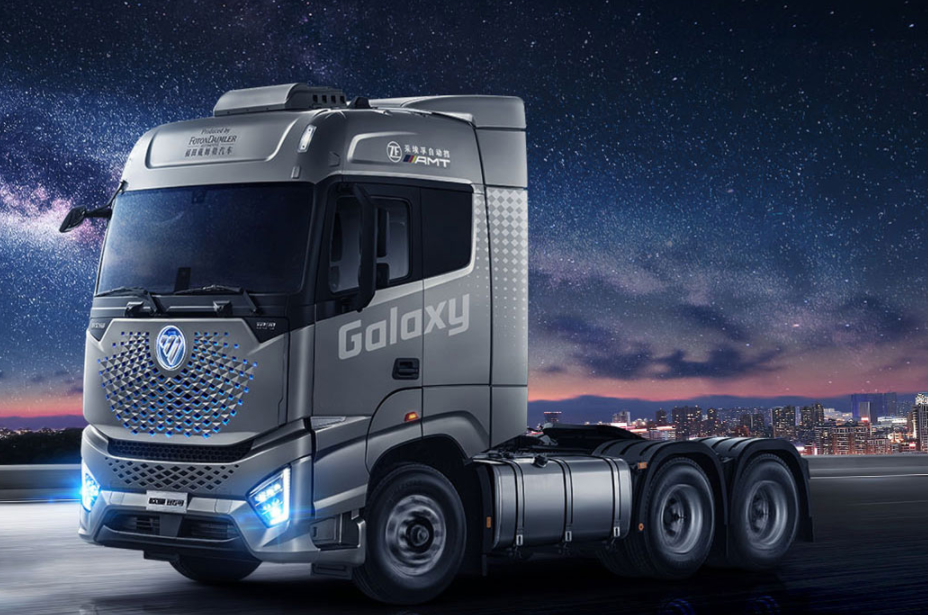
新能源战略

Search documents
众安保险成功落地首笔海外新能源车险业务
Zheng Quan Ri Bao Zhi Sheng· 2025-10-29 13:45
Core Insights - ZhongAn Online P&C Insurance Co., Ltd. has successfully launched its first overseas new energy vehicle insurance business, becoming the first internet insurance company in China to do so, marking a strategic breakthrough from "0 to 1" [1] - The launch of this business supports Chinese automotive companies in their international expansion, particularly as the export volume of new energy vehicles continues to rise [1] Industry Context - Emerging markets such as Thailand, Indonesia, and Brazil have become key areas for automotive companies, but overseas vehicle owners face challenges such as difficulty in obtaining insurance and high premiums [1] - New energy vehicle companies are encountering issues like insufficient insurance supply, weak local repair capabilities, and incompatible data models, necessitating innovative solutions from domestic insurance companies [1] Company Strategy - ZhongAn Insurance aims to leverage its "industry ecosystem + technology empowerment" dual-driven capability to focus on the overseas new energy vehicle insurance market, utilizing its data and intelligent risk control advantages for differentiated breakthroughs [1] - The company plans to gradually expand its overseas new energy vehicle reinsurance coverage and deepen the "insurance + technology" model output, aiming to build a replicable and sustainable global insurance technology ecosystem [1] Future Outlook - As more insurance companies engage in overseas vehicle insurance, ZhongAn's experience is expected to contribute to the formation of a new cross-border insurance model centered around the "Chinese solution," facilitating China's transition from a major automotive manufacturing country to a service-oriented powerhouse [1]

经导财评丨从增值税差异化新政看新能源产业风向
Da Zhong Ri Bao· 2025-10-20 09:42
Core Insights - The Ministry of Finance has announced adjustments to the value-added tax (VAT) policies for onshore wind, offshore wind, and nuclear power, transitioning from broad subsidies to targeted support [1][2] - The new VAT policies will take effect from November 1, 2023, with specific provisions for offshore wind and nuclear power projects [1][2] Group 1: Policy Changes - The VAT exemption for onshore wind power, established in 2015, will be abolished starting November 1, 2023 [1] - From November 1, 2023, to December 31, 2027, a 50% VAT refund policy will be implemented for electricity products generated from offshore wind [1] - For nuclear power, projects approved before October 31, 2025, will benefit from a 50% VAT refund for ten years after commercial operation begins [1] Group 2: Industry Implications - The differentiated VAT policies reflect a shift in the government's approach to renewable energy, moving from "policy blood transfusion" to "market blood production" [1] - The new policies indicate a transitional support strategy for the growing offshore wind and nuclear power sectors, with a focus on fostering technological competitiveness [2] - The success of offshore wind power in achieving price parity by 2027 will depend on advancements in floating technology and access to deep-sea development rights [2]
一汽解放9月新能源为何“反超” 登顶国内榜首?
Zheng Quan Ri Bao Wang· 2025-10-17 12:17
Core Insights - The article highlights the significant growth in China's commercial vehicle market, particularly in the new energy vehicle (NEV) segment, with a penetration rate exceeding 30% in September, indicating a rapid market transformation [1][2] - The strategic foresight of FAW Jiefang, which has implemented the "15333" new energy strategy since 2021, is credited for its leading position in the NEV market, achieving substantial sales growth [2][3] - FAW Jiefang's commitment to technology and product development, alongside a robust service ecosystem, positions it as a leader in the new energy commercial vehicle sector [4][5][6] Industry Performance - In September, China's commercial vehicle production and sales reached 376,000 and 368,000 units respectively, with month-on-month increases of 19.3% and 16.3% [1] - The sales of new energy commercial vehicles surged by 70% year-on-year, with nearly 31,200 units sold in September, marking a significant recovery in the overall automotive industry [1][3] Company Performance - FAW Jiefang maintained a 21.3% market share in the domestic medium and heavy truck segment, leading the industry [1] - The company achieved a remarkable increase in new energy vehicle sales, with over 4,500 units sold in September, capturing a 16.2% market share in the NEV medium and heavy truck category [1][2] - FAW Jiefang's new energy product sales have shown exponential growth, with cumulative sales reaching over 29,700 units from January to September 2025, reflecting a year-on-year increase of 313.3% [2][3] Strategic Initiatives - FAW Jiefang's "15333" strategy focuses on maximizing its advantages in the new energy sector, emphasizing early market entry and user recognition [2] - The company has invested over 20 billion yuan in building a global innovation base for new energy vehicles and has achieved full control over key technologies in the industry [4] - FAW Jiefang is addressing common barriers to NEV adoption, such as high purchase costs and charging difficulties, by innovating business models and establishing a comprehensive service network [6][7] Product Development - The company is developing a diverse range of new energy products tailored to various applications, including electric, hybrid, and fuel cell technologies [5] - Upcoming product launches, including the Jiefang 7 series and Eagle series, are expected to emphasize low energy consumption, lightweight design, and high quality [5] Ecosystem and Services - FAW Jiefang is creating an integrated ecosystem that encompasses vehicle development, charging infrastructure, and after-sales services, enhancing user trust and satisfaction [6] - The company has established a comprehensive service network across county and township levels, ensuring efficient service delivery and support for its customers [6][7]

一位“90后”德国青年的中国创业路:黄金水道,亦是人生航道
Zhong Guo Xin Wen Wang· 2025-10-13 12:58
Core Insights - MIXACO, a German mixed technology company, is establishing its first production base in the Asia-Pacific region in Changzhou, China, marking its first local entity and operations in the country [1][2] - The decision to set up in Changzhou is driven by the city's rapid development in the new energy sector, which complements MIXACO's equipment for the battery industry [1] - Changzhou's strategic location along the Yangtze River Economic Belt provides logistical advantages, facilitating efficient connections between suppliers and customers [1] Industry and Company Summary - The new factory in Changzhou is expected to produce equipment that will be shipped to other Asian countries, including Thailand, enhancing the local battery supply chain [1] - The Changtai Yangtze River Bridge, completed in five years, exemplifies China's rapid infrastructure development and improves logistics efficiency for the company [2] - The establishment of the factory reflects the intersection of China's new development philosophy and global industrial cooperation, showcasing the integration of foreign enterprises into the local economy [2]

中美英资源对比:英国有煤矿,美国有石油,中国有什么?
Sou Hu Cai Jing· 2025-09-21 14:07
Group 1 - The article emphasizes the importance of controlling accessible and affordable energy as a key factor in global power dynamics, particularly in the context of the energy networks between Russia and Europe [2][5][30] - Historical examples illustrate that energy resource allocation and transportation efficiency have been critical to the rise and fall of powers, with the UK and the US leveraging their energy resources effectively [4][11][12] - China's energy strategy is highlighted as a response to historical lessons, focusing on building infrastructure to ensure energy security and efficiency in resource distribution [14][20][22] Group 2 - The article discusses China's energy challenges, particularly its reliance on imported oil and gas, and the risks associated with geopolitical instability in supplier regions [16][18] - China's investment in high-voltage direct current (HVDC) technology is presented as a strategic move to enhance energy security by enabling efficient energy transmission from resource-rich western regions to industrial eastern areas [20][22] - The development of renewable energy sources in western China is framed as a means to not only address energy needs but also to stimulate local economies and create jobs, thereby transforming the region's economic landscape [24][26][28] Group 3 - The article argues that China's renewable energy strategy is not merely a reaction to global trends but a comprehensive approach to overcoming past energy challenges while fostering sustainable development [30] - By leveraging renewable energy, China aims to maintain its competitive edge in manufacturing, countering the labor cost advantages of countries like India and Vietnam through lower energy costs [28][30] - The narrative concludes with the assertion that China's approach to energy is a model for sustainable progress, moving away from traditional energy conflicts towards a more stable and innovative energy future [30]

中集车辆业绩连降后遭平安资管集中减持 “星链计划”能否助力破局?
Xin Lang Cai Jing· 2025-09-19 10:25
Core Viewpoint - The company is experiencing significant revenue and net profit declines, prompting major shareholders to reduce their stakes, indicating potential concerns about the company's future performance and strategic direction [1][3]. Financial Performance - In the first half of 2025, the company reported total revenue of 9.753 billion yuan, a year-on-year decrease of 8.85%, and a net profit attributable to shareholders of 403 million yuan, down 28.48% [1]. - The second quarter of 2025 saw revenue of 5.162 billion yuan, a decline of 6.93%, with a net profit of 224 million yuan, down 24.82% [1]. - For the full year of 2024, total revenue was 20.998 billion yuan, a decrease of 16.30%, and net profit was 1.085 billion yuan, a significant drop of 55.80% [1]. - The company's net profit margin in the first half of 2025 was 4.19%, reflecting a year-on-year decline of 21.98% [1]. Cost Structure and Efficiency - The company's gross margin was 15.01%, showing a slight increase of 0.71 percentage points year-on-year, but operating expenses as a percentage of revenue rose to 6.37%, an increase of 5.07% year-on-year [2]. - The company has been focusing on improving production efficiency and market competitiveness through initiatives like the "Starlink Plan" and "Xiongqi Plan," which have reportedly increased production efficiency by 30% and labor productivity by nearly 30% in 2024 [2]. Market Dynamics - The company's revenue performance is uneven across global markets, with domestic revenue in China for 2024 at 8.676 billion yuan, a slight increase of 0.54%, while North American revenue fell to 6.918 billion yuan, a decline of 36.27% [2]. - The company is actively exploring growth opportunities in the Global South, which represents 24% of global GDP and is expected to contribute 30% of future global economic growth [2]. Shareholder Actions - Major shareholder Ping An Capital began reducing its stake in early 2025, ultimately decreasing its holdings to below 5% after multiple transactions, reflecting concerns over the company's short-term performance and long-term transformation challenges [3].
多家欧盟车企加码新能源汽车 商务部回应
Zhong Guo Xin Wen Wang· 2025-09-18 09:56
Core Viewpoint - The article discusses the competitive landscape of the electric vehicle (EV) market, highlighting the introduction of affordable EVs by European automakers and the ongoing collaboration between Chinese and European companies to enhance innovation and market presence [1][2]. Group 1: European Automakers' Strategies - Several EU automakers, including BMW, Mercedes-Benz, and Renault, are set to unveil their new energy strategies and concept cars at the 2025 Munich Auto Show [1]. - Volkswagen Group announced the launch of a €20,000 ID.1 small electric vehicle, aiming to meet consumer demand for more diverse, advanced, and affordable products [1]. Group 2: China's Position and Response - China's Ministry of Commerce expressed support for the EU's move towards affordable EVs, emphasizing the need for a competitive market environment [1]. - The Chinese government criticized the EU for labeling Chinese EVs as "subsidized" and using anti-subsidy measures as a means to create market barriers, which they argue undermines free competition [1]. Group 3: Collaboration and Innovation - The article highlights the importance of technological innovation and full industry chain cooperation as key drivers of the EV sector's growth, particularly in the context of climate change [2]. - Partnerships between companies like Volkswagen and XPeng, as well as Stellantis and Leap Motor, are fostering innovation in the EU market, showcasing the deep integration of the Chinese and European EV supply chains [2]. Group 4: Future Cooperation - The Chinese side advocates for the removal of tariff barriers and the promotion of fair competition, aiming to create a predictable market environment conducive to industry development and climate change initiatives [3].

产业链超预期!拒绝内卷,上岸!9月16日直播回顾
鑫椤锂电· 2025-09-17 07:51
Core Viewpoint - The article emphasizes the robust development momentum of the battery industry chain and the significant potential for growth driven by favorable policies and market demand [3][4][9]. Group 1: Industry Transformation - The "anti-involution" policy has led to profound changes in multiple key industrial sectors, including new energy vehicles, photovoltaics, and steel [3]. - Despite self-regulatory proposals from industry associations, achieving capacity elimination requires top-level design and continuous policy implementation [3]. Group 2: Market Opportunities - The new energy vehicle and energy storage markets are experiencing unprecedented growth opportunities due to supportive policies [4]. - The "Automobile Industry Stabilization Growth Work Plan (2025-2026)" aims for new energy vehicle sales to reach 15.5 million units in 2025, a year-on-year increase of approximately 20% [4]. Group 3: Market Data - From January to August 2025, the cumulative production of passenger vehicles exceeded 8.85 million units, a year-on-year increase of 33.5% [5]. - The penetration rate of new energy vehicles surged from 5.4% in 2020 to 55.3% in August 2025 [5]. Group 4: Global Battery Market - The global battery market is showing strong growth, with August 2025 battery production reaching 198.42 GWh, of which lithium iron phosphate accounted for 72.34% [7]. - The global lithium battery production from January to August 2025 increased by 48.86% year-on-year, with an estimated annual growth of 39% [7]. Group 5: Key Materials - Production of key materials in the battery industry, such as cathode materials, anode materials, electrolytes, and separators, has significantly increased [8]. - The production of lithium iron phosphate and iron phosphate has seen notable year-on-year growth, indicating strong market demand for cost-effective battery materials [8]. Group 6: Future Technologies - Solid-state batteries are gaining attention as the core technology for the next generation of batteries, supported by significant policy backing [9]. - The Ministry of Industry and Information Technology has highlighted solid-state batteries alongside artificial intelligence and chips in its growth action plan, underscoring their importance in China's new energy strategy [9].
长城汽车(601633):二季度净利润同比增长19%,看好新品周期带来的向上势能
Guoxin Securities· 2025-09-03 15:22
Investment Rating - The investment rating for Great Wall Motors is "Outperform the Market" [6][4][17] Core Views - The report highlights a 19% year-on-year increase in net profit for the second quarter, driven by improved sales and a favorable product mix [1][8] - The company is expected to benefit from a new product cycle and ongoing advancements in its new energy strategy, which are anticipated to drive sales growth [3][4][17] Financial Performance Summary - For the first half of 2025, Great Wall Motors reported revenue of 92.34 billion yuan, a year-on-year increase of 1.0%, with a net profit of 6.34 billion yuan, down 10.2% year-on-year [1][8] - In Q2 2025, revenue reached 52.32 billion yuan, up 7.7% year-on-year and 30.7% quarter-on-quarter, with a net profit of 4.59 billion yuan, reflecting a 19.5% year-on-year increase and a 161.9% quarter-on-quarter increase [1][8] - The company sold 312,000 vehicles in Q2, marking a 10.1% year-on-year increase and a 21.9% quarter-on-quarter increase [1][8] Cost Structure and Profitability - In Q2 2025, the sales, management, and R&D expense ratios were 5.2%, 1.8%, and 4.5%, respectively, with the sales expense ratio increasing due to higher marketing costs for new products [2][15] - The average revenue per vehicle was 157,000 yuan, a decrease of 1,400 yuan year-on-year, while the net profit per vehicle was 8,800 yuan, down 500 yuan year-on-year [2][15] Product and Market Strategy - Great Wall Motors is advancing its new energy strategy with significant investments in hybrid, pure electric, and hydrogen technologies, alongside the launch of new models [3][4] - The company is expanding its overseas market presence, introducing new models in regions such as Latin America, ASEAN, and the Middle East [3][4] Earnings Forecast - The forecasted net profits for Great Wall Motors from 2025 to 2027 are 13.84 billion yuan, 16.20 billion yuan, and 18.81 billion yuan, respectively, with EPS projected at 1.62 yuan, 1.89 yuan, and 2.20 yuan [4][19]

福田汽车上半年营收303.71亿元,净利润同比增长87.57%
Ju Chao Zi Xun· 2025-08-28 07:37
Core Insights - The company reported significant growth in revenue and net profit for the first half of 2025, with a revenue of 30.37 billion yuan, representing a 26.71% increase year-on-year, and a net profit of 776.86 million yuan, up 87.57% from the previous year [3] Financial Performance - Revenue for the reporting period reached 30.37 billion yuan, compared to 23.97 billion yuan in the same period last year, marking a 26.71% increase [3] - Total profit amounted to 750.31 million yuan, a 70.23% increase from 440.77 million yuan year-on-year [3] - Net profit attributable to shareholders was 776.86 million yuan, up 87.57% from 414.17 million yuan [3] - Net profit excluding non-recurring items was 550.60 million yuan, reflecting an 80.81% increase from 304.52 million yuan [3] - The net cash flow from operating activities was 1.89 billion yuan, a significant increase of 415.01% compared to 367.76 million yuan [3] Asset and Equity Position - As of the end of the reporting period, net assets attributable to shareholders were 15.08 billion yuan, a 5.31% increase from 14.32 billion yuan at the end of the previous year [3] - Total assets reached 58.75 billion yuan, representing a 13.31% increase from 51.85 billion yuan at the end of the previous year [3] Strategic Initiatives - The company has accelerated its transition to new energy, improving the profitability of its new energy products and enhancing its product lineup, including electric batteries and hydrogen systems [2] - In the first half of 2025, the company sold 50,142 new energy vehicles, a 151% increase year-on-year, capturing a market share of 12.5%, up 4.2 percentage points [2] - The company is focusing on internationalization and enhancing product capabilities, particularly in heavy trucks, pickups, and buses, while supporting domestic dealers in expanding overseas [2]