
智能生态

Search documents
小米季度营收1131亿:手机收入承压,汽车首次盈利
Guan Cha Zhe Wang· 2025-11-18 10:06
Core Insights - Xiaomi Group reported a strong Q3 performance with revenue of 113.1 billion yuan, a year-on-year increase of 22.3%, marking the fourth consecutive quarter of exceeding 100 billion yuan in revenue [1] - Adjusted net profit reached 11.3 billion yuan, up 80.9% year-on-year, setting a new historical high [1] - Despite the impressive financial results, Xiaomi's stock price has significantly declined, dropping nearly 30% from its September peak, making it the largest decliner in the Hang Seng Tech Index [1] Financial Performance - The smartphone and AIoT segment generated revenue of 84.1 billion yuan, with smartphone revenue at 46 billion yuan, a decline of 3.2% year-on-year, although shipment volume has increased for nine consecutive quarters [1][2] - IoT and lifestyle products revenue was 27.6 billion yuan, reflecting a year-on-year growth of 5.6% [1][2] - Internet services revenue reached 9.4 billion yuan, up 10.8% year-on-year, with overseas internet revenue hitting a record high of 3.3 billion yuan [1][2] - The innovative business segment, including smart electric vehicles and AI, generated 29 billion yuan, with smart electric vehicle revenue at 28.3 billion yuan, marking a year-on-year growth of over 199% [1][2] Market Position and User Engagement - Xiaomi's global smartphone shipments reached 43.3 million units in Q3, continuing a nine-quarter streak of year-on-year growth [2] - In the high-end price segment (4,000-6,000 yuan) in mainland China, Xiaomi's market share reached 18.9%, an increase of 5.6 percentage points year-on-year [2] - The AIoT platform has connected over 1 billion IoT devices as of September 30 [2] - Monthly active users reached 742 million globally, with 187 million in mainland China as of September 30 [2] R&D and Innovation - Xiaomi's R&D investment for the first three quarters totaled 23.5 billion yuan, nearing the total for the entire previous year, with an expected annual investment exceeding 30 billion yuan [2] - In Q3 alone, R&D spending was 9.1 billion yuan, a year-on-year increase of 52.1%, setting a new historical high [2] - The launch of the "Xiaomi-MiMo-Audio" voice open-source model in September marked a significant advancement in voice technology, achieving few-shot generalization based on In-Context Learning [3] - Xiaomi has established a comprehensive smart manufacturing capability system covering smartphones, vehicles, and smart home appliances [3]



追觅的“梦想”实在太多了
3 6 Ke· 2025-11-12 04:45
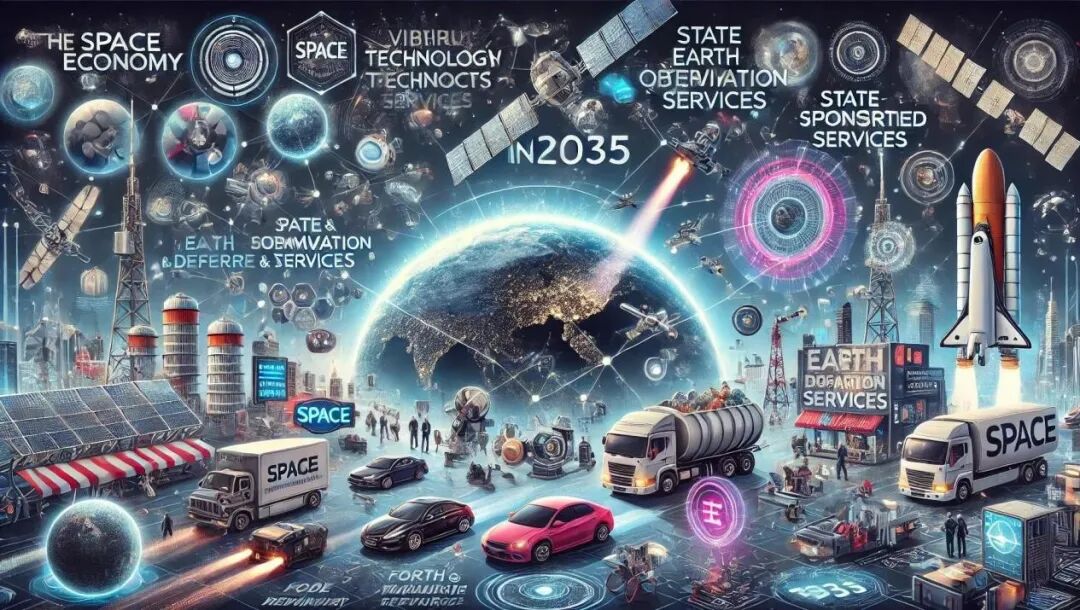
Core Viewpoint - The company,追觅, is aggressively expanding beyond its original cleaning appliance business into various sectors, including automotive, drones, smartphones, and space exploration, driven by the unclear future of its core business and increasing competition in the home appliance market [2][6][12]. Group 1: Expansion into New Industries - In August, 追觅 announced its entry into the drone industry, followed by plans to launch its first smartphone, Dreame Space, in September [2]. - The company has also established a business unit focused on astronomy, aiming to develop intelligent astronomical optical systems and explore asteroid mining [2][3]. - 追觅's ambition includes creating a comprehensive ecosystem that spans from smart home devices to outdoor electric vehicles and even aerospace technologies [11]. Group 2: Challenges in Core Business - The cleaning appliance market is growing, with projections indicating an increase from 20 billion yuan in 2019 to 42.3 billion yuan by 2024, but competition is fierce, and 追觅's market share has dropped significantly [6][12]. - As of early 2025, 追觅's market share in the cleaning appliance sector fell to 7.5%, a decrease of 45.27 percentage points year-on-year, despite revenue reaching 15 billion yuan in 2024 [6][12]. - The company faces challenges in penetrating established markets dominated by brands like Haier, Midea, and Gree, which collectively hold 70% of the high-end appliance market [6][12]. Group 3: Financial Aspects and Investment Strategy - In the first half of 2025, 追觅 reported revenue of 9.855 billion yuan and a net profit of 1.002 billion yuan, with a net profit growth rate of 41.35%, outpacing revenue growth [13]. - The company plans to leverage its ODM (Original Design Manufacturer) business to support its self-research automotive projects, indicating a dual approach to funding its ventures [15][16]. - 追觅's automotive division has reportedly secured over 15 billion yuan in orders, with interest from 54 dealers across 22 countries, suggesting a shift in focus towards international markets [16][17]. Group 4: Competitive Landscape and Market Trends - The global space economy is projected to grow from $596 billion in 2024 to $944 billion by 2033, while the robotics market is expected to exceed $400 billion by 2029, indicating significant growth potential in these sectors [9]. - However, 追觅's entry into the drone and space markets faces stiff competition, particularly from established players like DJI, which has a substantial market presence and extensive patent portfolio [19][21]. - The company’s strategy to diversify into multiple sectors may be a response to the declining investment interest in the automotive sector, as funding is increasingly directed towards advanced manufacturing and artificial intelligence [26][29].
手机厂商入场,能治好AI潮玩的“人工智障”吗?
创业邦· 2025-11-10 03:38
Core Viewpoint - The article discusses the rapid growth and challenges of the AI toy industry, highlighting the duality of increasing sales and consumer dissatisfaction due to technological limitations and subscription models [5][10][36]. Group 1: Market Trends and Growth - The year 2025 is anticipated to be the "Year of AI Trendy Toys," with significant investments and product launches from various companies, including major tech firms and traditional toy manufacturers [5][10]. - AI toys are experiencing explosive growth, with sales on platforms like JD.com increasing sixfold month-on-month and over 200% year-on-year in the first half of 2025 [15]. - The market is seeing a diverse range of entrants, from startups to established companies like Baidu and ByteDance, all leveraging their technological and ecological advantages [10][15]. Group 2: Consumer Insights and Feedback - Consumers express mixed feelings about AI toys, with some praising their interactive capabilities while others criticize their performance, such as slow response times and lack of emotional engagement [13][28]. - The core audience for AI toys includes children and young adults aged 18-35, with a growing demand for emotional companionship rather than just play [20][24]. - A viral video highlighted the emotional impact of AI toys, showing how they can provide companionship to lonely individuals, particularly among the younger generation [22]. Group 3: Challenges and Limitations - Despite the hype, AI toys face significant challenges, including immature technology, poor user experience, and controversial subscription models that deter consumers [27][36]. - Common complaints include weak multi-turn dialogue capabilities, reliance on stable internet connections, and a lack of personalized responses, leading to a disconnect between expectations and reality [28][29]. - The subscription model for AI toys, which often requires ongoing payments for functionality, is viewed unfavorably by consumers accustomed to traditional one-time purchases [30][31]. Group 4: Industry Dynamics and Future Outlook - The entry of smartphone manufacturers into the AI toy market is seen as a potential game-changer, leveraging their advanced technology and extensive distribution networks to enhance product offerings [38][44]. - Collaboration between AI toy companies and established tech firms could lead to improved user experiences and more innovative products, addressing current limitations [45][46]. - The future success of AI toys may depend on their ability to integrate into broader smart ecosystems and provide meaningful emotional connections rather than just functional interactions [47].

家电品牌AI应用加速,深度融入中国本土供应链
2 1 Shi Ji Jing Ji Bao Dao· 2025-11-07 08:41
Core Insights - The global home appliance industry is undergoing a deep restructuring driven by "AI + supply chain" dynamics, with AI applications evolving from individual product intelligence to integrated scene solutions [1] - The Chinese market is becoming a key player in supply chain and technology development, shifting multinational brands' local strategies from simple production and sales to a model focused on "smart ecosystems + local innovation" [1] - China is transforming from a mere production and consumption market to an essential source of innovation, altering the traditional flow of technology and product development [1] AI Applications - The home appliance and home goods sector is experiencing significant innovation driven by AI, which has become a core engine for industry upgrades and market competition [2] - Panasonic showcased its Alpha G5 washing and drying machine, featuring 76 smart chips that utilize AI algorithms to identify fabric types and analyze stains for optimal washing parameters [2] - Sony presented AI enhancements for elderly care devices, including a fall detection sensor that analyzes skeletal motion data to identify falls and trigger automatic alerts [2] Smart Home Solutions - Samsung introduced its AI Home solution at the expo, which includes modules for various scenarios such as home living, entertainment, and health management, creating an interconnected smart ecosystem [3] - Panasonic's "1+N+X Smart Home System" connects various AI smart appliances and customizes additional needs through its core α-Watch [3] Local Supply Chain Integration - Many overseas brands have established manufacturing facilities in China, reflecting the increasing integration of foreign brands with local supply chains and the deepening of their operational strategies [4] - Sony's "China Star Program" supports local game developers by providing technology and supply chain assistance, aiming to build a robust gaming ecosystem in China [5] Global Strategy and Innovation - Panasonic's strategy emphasizes leveraging China's strengths in product design and manufacturing to expand into Southeast Asia and other markets [5] - Panasonic is also enhancing its supply chain capabilities to meet the growing demand for generative AI servers, positioning itself as a key supplier of essential components [6] R&D and Innovation in China - The Chinese government's initiatives aim to foster innovation in the home appliance sector, with a focus on smart, green, and healthy products by 2025 [7] - Sony's image sensor business is experiencing rapid growth, particularly in the automotive sector, driven by the demand from Chinese manufacturers for advanced driving assistance systems [7] - Panasonic has established a large local R&D team, with significant resources dedicated to developing smart appliances and systems [8] Emerging Trends - The 2025 expo is set to showcase 461 new products and technologies, highlighting a trend of "China R&D - China Validation - Global Replication" in the home appliance and consumer electronics industry [9]
家电品牌AI应用加速,深度融入中国本土供应链丨进博观察
2 1 Shi Ji Jing Ji Bao Dao· 2025-11-07 08:33
Core Insights - The global home appliance industry is undergoing a deep restructuring driven by "AI + supply chain" dynamics, with a shift from single product intelligence to integrated scene solutions [1][2] - China's market is becoming a crucial hub for supply chain and technology development, with multinational brands transitioning to a model of "smart ecosystem + local innovation" [1][4] - The demand for AI applications in home appliances is a key engine for industry upgrades and market competition [2][3] AI Applications - AI has become a core driver of innovation in the home appliance sector, exemplified by Panasonic's Alpha G5 washing and drying machine, which utilizes 76 smart chips for real-time fabric and stain analysis [2] - Sony showcased AI enhancements in elderly care devices, such as fall detection sensors that analyze skeletal motion data to provide timely alerts [2] - Companies are increasingly focusing on scene-based and systematized solutions rather than just individual smart devices [2][3] Local Supply Chain Integration - Many foreign brands have established manufacturing facilities in China, enhancing their integration with local supply chains and responding to diverse market demands [4][5] - Sony's "China Star Program" aims to support local game developers, fostering a robust ecosystem for console gaming in China [5] - Panasonic's strategy includes exporting Chinese products and designs to Southeast Asia, leveraging China's manufacturing capabilities [5][6] R&D and Innovation - The Chinese government's initiatives aim to cultivate innovation centers in the home appliance sector by 2025, promoting green, smart, and healthy product development [7] - Sony's image sensor business is experiencing rapid growth, particularly in the automotive sector, driven by demand from Chinese manufacturers [7][8] - Panasonic has established a large local R&D team, with significant resources dedicated to smart appliances and automotive systems [8] Market Trends - The 2025 Import Expo will feature 461 new products and technologies, highlighting a trend of "China R&D - China Validation - Global Replication" in the home appliance and consumer electronics sectors [9]
全系标配易三方、云辇-A,大六座安全豪华SUV腾势N8L上市
智通财经网· 2025-10-28 14:12
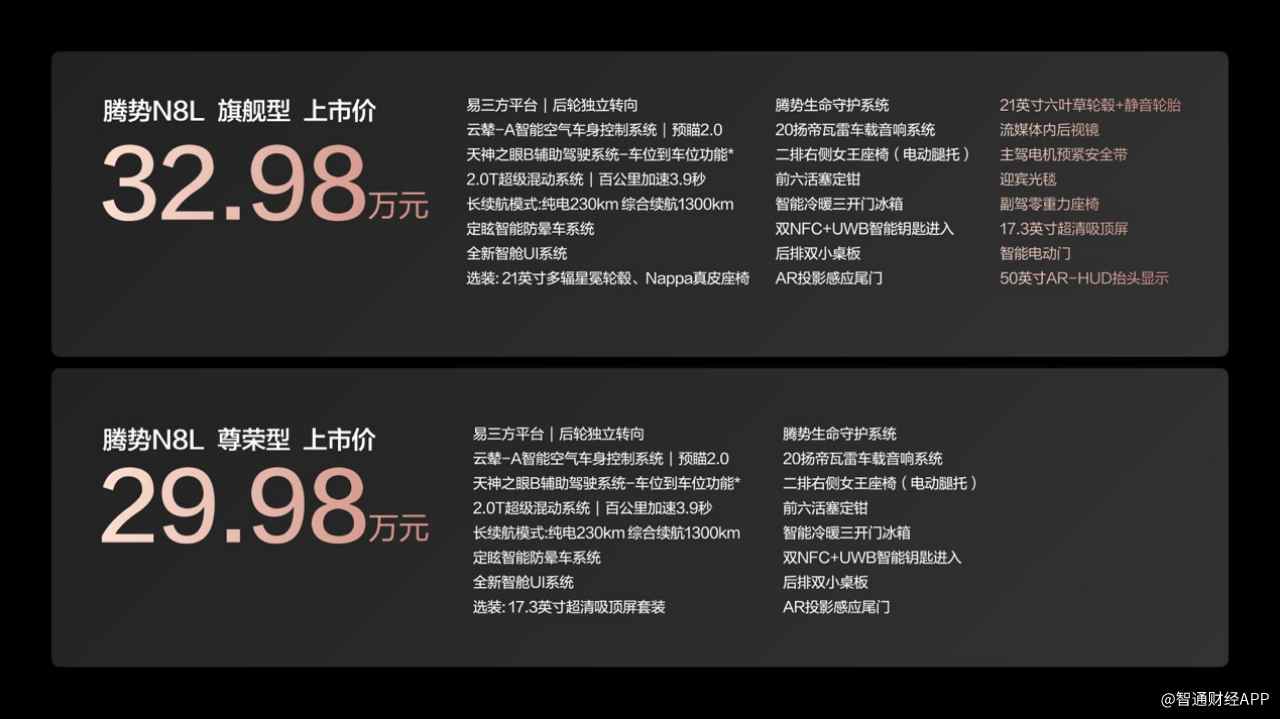
Core Viewpoint - The launch of the Tengshi N8L, a luxury six-seat SUV, aims to redefine family travel with a focus on safety, luxury, and advanced technology, priced between 299,800 to 329,800 yuan [1][31]. Design and Space - The N8L features a spacious interior with dimensions of 5200*1999*1820mm, making it the largest in its class, and incorporates a refined design with high-quality materials [5][6]. - The vehicle offers a total interior space of 6.11 square meters, allowing for comfortable seating for six adults, and includes flexible seating arrangements with electric seats that support various configurations [6][9]. Performance and Technology - Equipped with a dedicated 2.0T hybrid engine and three electric motors, the N8L achieves a 0-100 km/h acceleration in just 3.9 seconds, showcasing its powerful performance [12][15]. - The vehicle features a CLTC electric range of 230 km and a comprehensive range of 1300 km, supported by a blade battery that enhances safety and efficiency [15][20]. Safety Features - The N8L is constructed with high-strength materials, including 2000MPa hot-formed steel, and is equipped with nine airbags, ensuring a robust safety profile [21][22]. - Advanced safety technologies allow the N8L to perform evasive maneuvers at high speeds without losing stability, reinforcing its reputation as a "safety king" in the electric vehicle market [22][24]. Intelligent Systems - The vehicle includes the DiPilot 300 advanced driver assistance system, which utilizes cutting-edge technology for enhanced safety and convenience during driving [24][27]. - The N8L supports smart features such as remote vehicle preparation via an app, NFC key access, and an AR projection tailgate, enhancing user experience [26][28]. Ecosystem Integration - The N8L aims to create a "people-car-home" integrated ecosystem by collaborating with brands for smart home devices and entertainment systems, enhancing the overall travel experience [29][30].

做广告、天价薪酬,你不知道特斯拉为留住马斯克当CEO有多努力
Sou Hu Cai Jing· 2025-10-21 04:19
Core Viewpoint - Tesla is making an unprecedented move by advertising on platforms like X and Instagram to rally shareholder support for CEO Elon Musk's compensation plan, indicating the company's reliance on Musk for its future direction and success [2][5]. Group 1: Strategic Transformation - Tesla is transitioning from merely manufacturing electric vehicles to becoming a comprehensive technology giant focused on artificial intelligence, autonomous driving, energy networks, and humanoid robots [2]. - The company’s ultimate vision under Musk is to create an "intelligent ecosystem" that includes various advanced technologies beyond traditional automotive manufacturing [2]. Group 2: Leadership Dependency - Musk's leadership style is characterized by a strong personal influence, making him not only the CEO but also the chief product officer and visionary architect, which has led to a consistent and rapid development in Tesla's autonomous driving technology [3]. - The board's proposed high compensation plan for Musk is seen as a strategic binding agreement to align his personal interests with the company's long-term value, ensuring his continued leadership in high-risk innovation projects [5]. Group 3: Brand and Talent Attraction - Musk's personal brand is deeply intertwined with Tesla's identity, allowing the company to save significantly on marketing costs while attracting top talent who are motivated by the vision of changing the world [6]. - The unique synergy created by Musk's various ventures, such as SpaceX and Neuralink, enhances Tesla's competitive edge through resource integration across different fields [7]. Group 4: Market Challenges and Strategic Stability - Tesla faces significant challenges in the short term, including a slowing global electric vehicle market and increasing competition from brands like BYD and NIO, which could impact its market share [8]. - Musk's strategic determination is crucial for maintaining stability during these challenging times, as he continues to push for expansion and innovation despite market pressures [8]. Group 5: Succession Planning - There is currently no clear succession plan for Musk, and the lack of a suitable successor with similar strategic vision and public influence poses a risk to the company's future [8]. - The board aims to use the compensation plan to ensure Musk's leadership while gradually preparing an internal successor to facilitate a smooth transition in the future [8]. Group 6: Governance Concerns - The heavy reliance on Musk raises concerns about the company's governance structure, as it may hinder modernization and create uncertainties due to Musk's divided attention among multiple ventures [9]. - Despite these concerns, Tesla is committed to retaining Musk through various means, recognizing that his vision and leadership are essential for navigating the company's transformation [9].


2026年全球家电行业展望报告:消费者需求洞察(英文版)-尼尔森IQ捷孚凯
Sou Hu Cai Jing· 2025-10-17 08:04
Core Insights - The global consumer technology and durable goods (T&D) market is showing signs of recovery, with sales reaching $403 billion in the first half of 2025, a year-over-year increase of 4.6%. The growth is primarily driven by China's trade-in policies, while excluding China, the global growth rate slows to 1.2% [1][18][25]. Market Overview - The global T&D market is projected to grow by 2% in 2025, with significant contributions from China, emerging Asia, Eastern Europe, and the Middle East & Africa, particularly in the home appliance sector [1][25]. - The average replacement cycle for major domestic appliances (MDA) is 8-12 years, with a peak replacement not expected until 2028, while small domestic appliances (SDA) have a shorter cycle of 5-6 years [1][62][65]. Consumer Behavior - In 2026, 60% of consumers prioritize value for money, with durability, high quality, and convenience being key factors in their purchasing decisions [2][89]. - The Gen X demographic (ages 45-60) is becoming the primary consumer group, emphasizing the importance of brand, durability, and energy efficiency in their purchases [70][72]. Regional Insights - The Asia-Pacific region, particularly China, is seeing growth driven by trade-in policies, while emerging Asia focuses on cost-effectiveness and developed Asia emphasizes high-end products [3][82]. - In North America, the market growth is moderate, with MDA sales reliant on replacement demand, while SDA sales are influenced by lifestyle changes [3][82]. Innovation and Trends - Product innovation is focusing on smart ecosystems, convenience, sustainability, and health benefits, with AI functionalities being integrated into various appliances [2][93][94]. - Retailers are encouraged to create a seamless omnichannel experience, particularly for the X generation, as online sales for small appliances exceed 50% [2][3]. Competitive Landscape - Chinese brands are expanding their market share internationally, leveraging competitive pricing and innovative products, particularly in the SDA sector [36][43]. - The evolving US tariffs are expected to impact pricing and competitiveness in the MDA sector, prompting brands to rethink their supply chains [47][51].

鸿蒙空调、小米空调来袭 空调业变化几何?
Di Yi Cai Jing· 2025-09-27 05:13
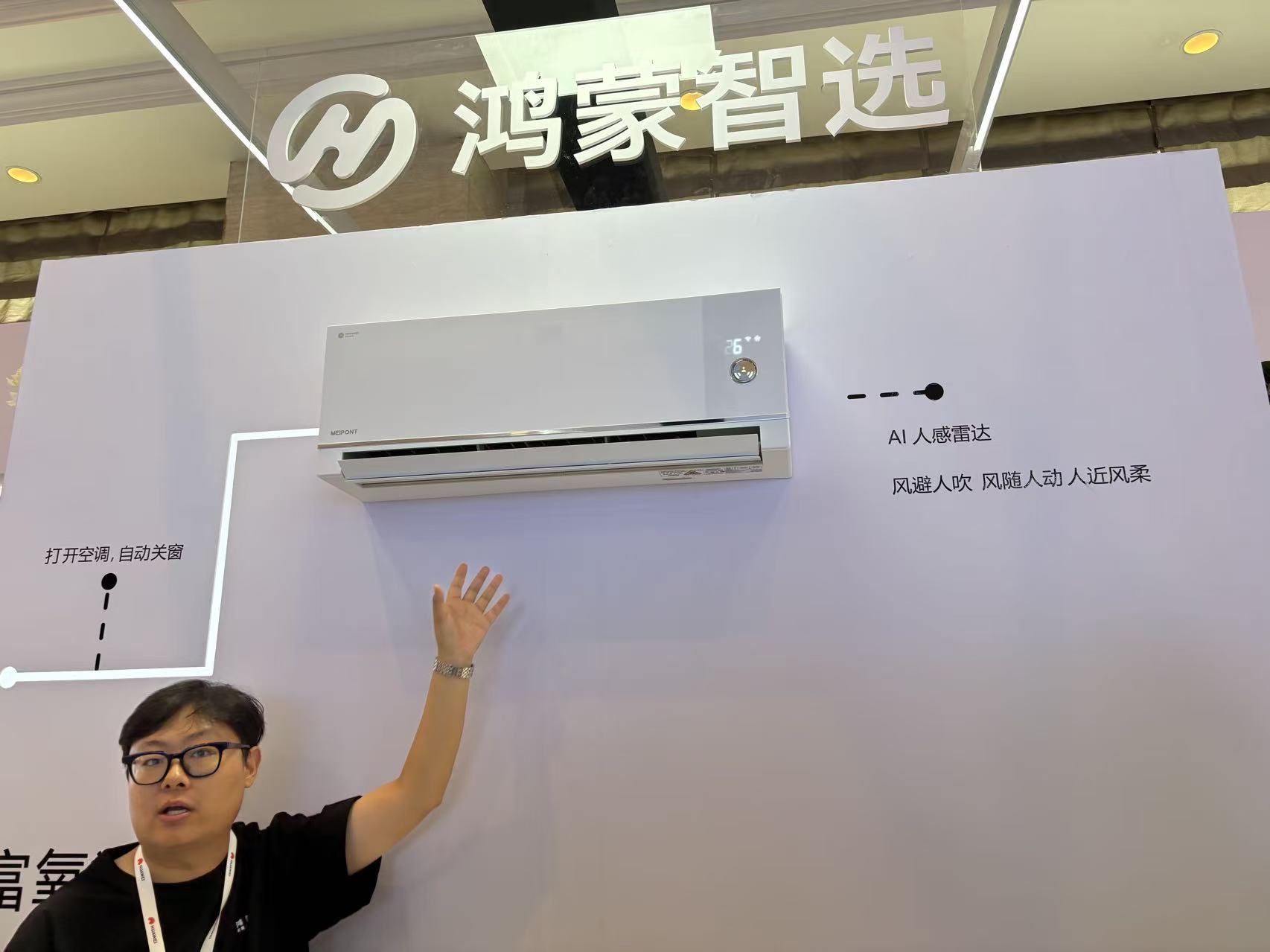
Core Insights - The air conditioning industry is witnessing the rise of new players leveraging smart ecosystems, posing challenges to traditional leaders like Gree Electric, which has faced declining performance and stock prices [2][3] New Forces Rising - At the Hongmeng Smart Selection 2025 Autumn New Product Launch, health air was highlighted as a key focus area, with MEIPONT air conditioners selling out shortly after their launch [3] - MEIPONT's first batch of products sold over 4,000 units and generated over 10 million yuan in sales on the first day [3] - The MEIPONT air conditioners utilize advanced technologies recommended by Huawei, aiming to create a smart air conditioning experience [3][4] Industry Dynamics - The competition is intensifying with Midea Group signing a strategic cooperation agreement with Huawei to develop integrated smart home solutions [5] - Gree Electric is expanding its offline experience stores while also offering a ten-year free repair service, similar to Xiaomi's recent announcement [5][6] - The market is experiencing a price war, with Xiaomi introducing budget-friendly models, leading to pressure on mid-to-high-end air conditioning sales [5][6] Market Outlook - The emergence of new players is expected to accelerate market competition and drive technological upgrades within the air conditioning industry [6] - Analysts suggest that while Xiaomi focuses on cost-effectiveness, the Hongmeng Smart Selection air conditioners target the mid-to-high-end market, indicating a potential shift in market dynamics over time [6]

鸿蒙空调、小米空调来袭,空调业变化几何?
Di Yi Cai Jing· 2025-09-27 04:59
Core Insights - The air conditioning industry is experiencing intensified competition driven by new players leveraging smart ecosystems, leading to a shift in market dynamics [1][3][7] Industry Dynamics - Traditional leaders like Gree Electric (000651.SZ) are facing pressure from emerging competitors, with Gree's stock hitting a year-low of 39.3 yuan per share on September 26 [3] - The competition landscape is characterized by price wars, technological advancements, and service enhancements [3][6] Emergence of New Players - The new player MEIPONT, in collaboration with Huawei's HarmonyOS ecosystem, has launched smart air conditioning products that emphasize technology integration and user experience [4][5] - MEIPONT's initial product launch saw sales exceeding 4,000 units and revenue surpassing 10 million yuan on the first day [4] Competitive Strategies - Xiaomi has also made significant strides in the air conditioning market, achieving a 14.73% share in the online segment, a 3.78 percentage point increase year-on-year, ranking third behind Midea and Gree [5] - Midea has signed a strategic partnership with Huawei to develop integrated smart home solutions, while Gree is expanding its offline experience stores [6] Service and Pricing Competition - The competition is not only about technology but also service, with Gree and Xiaomi both offering ten-year free repair services for their air conditioners [6] - Xiaomi's introduction of budget-friendly models has intensified price competition, impacting mid-to-high-end sales, while Gree has opted not to engage in price wars [6] Market Outlook - Analysts suggest that the influx of new players will accelerate market competition and technological upgrades, similar to past trends in the television industry [7] - However, some experts caution that while Xiaomi's air conditioning business has matured over ten years, MEIPONT's entry is still in its early stages and may take time to establish a market presence [7]