
碳边境调节机制

Search documents
欧盟拟强化高排放进口产品碳关税政策 严打避税行为
Xin Lang Cai Jing· 2025-12-17 08:53
Core Viewpoint - The European Union (EU) is expanding the scope of its carbon border tax to include automotive parts and washing machines, aiming to protect local industries from low-priced imports from countries with less stringent climate regulations [1][5][6]. Group 1: Carbon Border Tax Expansion - The carbon border tax will now cover downstream products that heavily use steel and aluminum, such as construction products, grid components, and machinery [2][7]. - The carbon border adjustment mechanism (CBAM) is the world's first carbon border tax, currently taxing the carbon emissions of imported products like steel, aluminum, cement, and fertilizers [1][5]. Group 2: Addressing Compliance and Evasion - The EU plans to implement strict measures against foreign companies that underreport emissions to evade carbon taxes, potentially imposing "default emission values" on products from non-compliant countries [3][8]. - This initiative aims to prevent foreign companies, particularly from China, from strategically exporting low-carbon products to Europe while continuing to produce high-carbon products for other markets [3][8]. Group 3: Implementation Timeline and Subsidies - The carbon border tax will require importers to pay for the emissions of their imported products starting in 2026, with a compliance grace period until September 2027 [4][9]. - The EU plans to allocate 25% of the carbon border tax revenue to subsidize European manufacturers to offset additional costs incurred due to the tax, specifically targeting industries investing in low-carbon manufacturing processes [4][9].
CBAM引发全球化工业战略调整
Zhong Guo Hua Gong Bao· 2025-12-17 06:01
Core Viewpoint - The EU's Carbon Border Adjustment Mechanism (CBAM) will be implemented on January 1, 2026, serving as a geopolitical tool to transfer internal carbon costs to global supply chains, significantly impacting the competitiveness of the chemical industry [1] Group 1: Impact on the Chemical Industry - The CBAM aims to create a "green buffer" for EU chemical companies, particularly basic chemicals and polymer producers, who face the highest carbon prices globally at approximately €80 per ton, thus balancing the burden on domestic manufacturers [1] - The mechanism may lead to a strategic adjustment in the global chemical and petrochemical sectors, as it directly affects cost structures, trade flows, and technological innovation [3][4] Group 2: Global Response and Trade Dynamics - Major chemical exporting countries like China, the Middle East, the US, and India may opt for "trade flow reconfiguration" rather than immediate capital-intensive low-carbon transformations in response to the additional costs imposed by CBAM [2] - High carbon intensity chemical products are likely to shift towards markets in Asia, Africa, and Latin America, where environmental standards are less stringent, potentially leading to "carbon leakage" without a net reduction in global carbon emissions [2] Group 3: Technical and Geopolitical Challenges - The uncertainty surrounding CBAM lies in its complex technical execution, particularly in setting "default emission values" for various chemical products, which may lead to distortions in carbon pricing and undermine the mechanism's effectiveness [2] - The geopolitical backlash is evident, with the US expressing dissatisfaction, prompting the EU to consider providing "additional flexibility," indicating internal divisions within the Western bloc regarding climate policy tools [3] Group 4: Future Implications - The implementation of CBAM may not lead to the expected technological convergence and accelerated emissions reductions, but rather push the global chemical industry into a more regionalized and uncertain strategic era [4] - The industry's low-carbon future will depend on global collaboration in technological innovation and the establishment of mutual recognition standards, rather than solely relying on a border tax mechanism [4]
欧盟将对更多产品征收碳边境税
Ge Long Hui· 2025-12-17 00:38
一份欧盟委员会草案显示,欧盟计划扩大即将实施的碳边境调节机制(CBAM)的覆盖范围,将更多进口 产品纳入其中,以堵住外国企业规避该税的漏洞。这份将于周三发布的欧盟委员会提案草案称:"该提 案将扩大碳边境调节机制的范围,以应对目前已纳入该机制范围的钢铁和铝产品价值链下游产品可能出 现的'碳泄漏'风险。" ...
气候大会风向变化:谈判进展缓慢,绿色产业影响凸显
Xin Lang Cai Jing· 2025-12-10 03:52
Core Insights - COP30, held in Belém, Brazil, marked the tenth anniversary of the Paris Agreement, but achieved only symbolic progress on key issues, failing to meet the expectations of climate-vulnerable countries for stronger climate action [3][23] - The focus of global climate governance is shifting from multilateral political consultations to economic and industrial decision-making, highlighting the importance of translating international consensus into domestic policies and investment actions [3][23] - Despite the absence of the United States, China and the European Union reached a high-level joint statement, demonstrating their commitment to advancing the Paris Agreement through dialogue and cooperation [3][23] Multilateral Dialogue in Climate and Trade - Trade issues were formally included in the climate conference discussions, with a consensus reached to establish the "Climate-Trade Comprehensive Forum" (IFCCT) to address carbon border measures and low-carbon product standards [4][24] - The forum aims to provide a communication channel rather than establish unified rules, potentially easing policy friction amid increasing fragmentation of global standards [4][24] - The inclusion of trade in climate negotiations is seen as a significant breakthrough, reflecting the integration of climate and economic issues [5][25] China's Growing Influence - China's presence at COP30 was prominent, with a central exhibition area attracting significant attention and participation from various countries, showcasing its climate actions and low-carbon technologies [7][27] - The country is increasingly taking on a coordinating role among developing nations, moving beyond a unified stance with the G77 group to facilitate consensus on key issues [11][31] - China's new Nationally Determined Contributions (NDC) target aims for significant reductions in greenhouse gas emissions and an increase in the share of non-fossil energy by 2035 [9][29] Climate Financing - COP30 emphasized the need for a financing roadmap of $1.3 trillion and a minimum of $300 billion from developed countries to support climate action in developing nations [16][36] - The conference highlighted the challenges posed by the absence of U.S. funding commitments, which has created a significant gap in climate financing that cannot be filled by other countries alone [17][37] - The decision to establish a two-year work program on climate financing reflects ongoing difficulties in advancing funding mechanisms, particularly for adaptation efforts, which are currently underfunded [18][39]


11月出口超预期反弹,同比增幅较上月回升7个百分点
第一财经· 2025-12-08 10:11
Core Viewpoint - Despite global demand contraction due to tariffs and economic fluctuations, China's foreign trade demonstrates resilience, supported by a robust supply chain and innovative responses [3]. Trade Performance - In November, China's exports increased by 5.9% year-on-year, rebounding by 7 percentage points compared to a 1.1% decline in the previous month, indicating a strong peak season [4]. - The overall trade performance showed a year-on-year increase in imports and exports of 4.3% and 1.9%, respectively, with month-on-month growth of 5.5% in total exports [3][4]. Factors Influencing Export Growth - The rebound in November's export growth is attributed to a lower base from the previous year, a global trade recovery, and significant increases in chip and automobile exports, which grew by 34.2% and 53.0% year-on-year, respectively [5][6]. - The increase in exports of high-tech products helped offset declines in traditional labor-intensive goods like bags and toys [6]. Export Trends by Region - Exports to the U.S. saw a year-on-year decline of 28.6%, widening from a 25.2% drop the previous month, while exports to the EU and Belt and Road economies surged, with EU exports increasing by approximately 14.8% [7][10]. - The diversification of export markets is evident, with non-U.S. exports showing a significant year-on-year growth of 12.1% [9]. Future Outlook - The overall resilience of China's exports is bolstered by the flexibility of private enterprises and the ongoing transformation of the manufacturing sector, with expectations of continued strong performance in chip and automobile exports [12]. - However, potential challenges include a forecasted decline in export growth due to high base effects and ongoing tariff impacts, particularly from the U.S. [12][14].
胡彬:气候融资转向公平有效新方向
Jing Ji Ri Bao· 2025-11-17 00:03
Core Viewpoint - The COP30 conference in Brazil marks a critical juncture in global climate governance, focusing on the urgent need for a new climate financing system that is sufficient, equitable, and accessible to meet the funding gap required to achieve the Paris Agreement's temperature control goals [1][2]. Climate Financing Transition - The past decade has seen developed countries fail to fulfill their annual commitment of $100 billion in climate funding, leading to a significant imbalance in funding structures, particularly in adaptation investments [2][3]. - COP30 signifies a new phase of systematic restructuring in climate financing, with discussions centered around the "Baku-Belém Climate Financing Roadmap" aimed at significantly increasing global climate funding targets [2]. Balancing Fairness and Efficiency - Key disagreements between developed and developing countries revolve around responsibility definitions, funding nature, and usage priorities [3]. - Developed nations emphasize mobilizing private capital and market mechanisms, while developing countries insist on the primary responsibility of developed nations to provide funding as per the Paris Agreement [3]. - There is a critical shortage of funds for vulnerable nations to adapt to climate change, and high-risk countries struggle to access favorable funding due to debt and credit issues [3]. Innovative Financing Approaches - A shift from "aid logic" to "investment logic" in global climate financing is emerging, characterized by three main trends [4]. - The integration of public and private sectors is becoming the dominant model, with emerging market countries leveraging sovereign funds to attract international capital [4]. - Regional cooperation mechanisms are accelerating, with initiatives led by countries in Latin America, Africa, and ASEAN to create localized financing solutions [4]. - The deep integration of market mechanisms and financial tools is evident, with initiatives like the "Global Carbon Market Alliance" aiming to standardize and enhance transparency in carbon credits [4]. China's Role in Climate Financing - As a major developing country, China advocates for multilateralism and equitable cooperation in addressing climate financing challenges [6]. - China proposes establishing a "Global South Climate Financing Coordination Mechanism" to enhance collective bargaining power among developing nations [6]. - Sharing experiences in green finance, such as green credit and bonds, can help improve project transparency and reduce financing costs for partner countries [6]. - China aims to promote market connectivity and activate carbon asset potential by aligning carbon market standards with BRICS and ASEAN countries [6]. Conclusion - Climate financing serves as a "glue" for uniting climate action consensus and a "catalyst" for accelerating green transitions, with COP30 indicating a historic evolution in the global climate financing system [7].
聚力绿色金融 夯实湖北碳市场枢纽功能——全国碳市场与金融培训交流会在汉成功举办
Quan Jing Wang· 2025-10-29 08:57
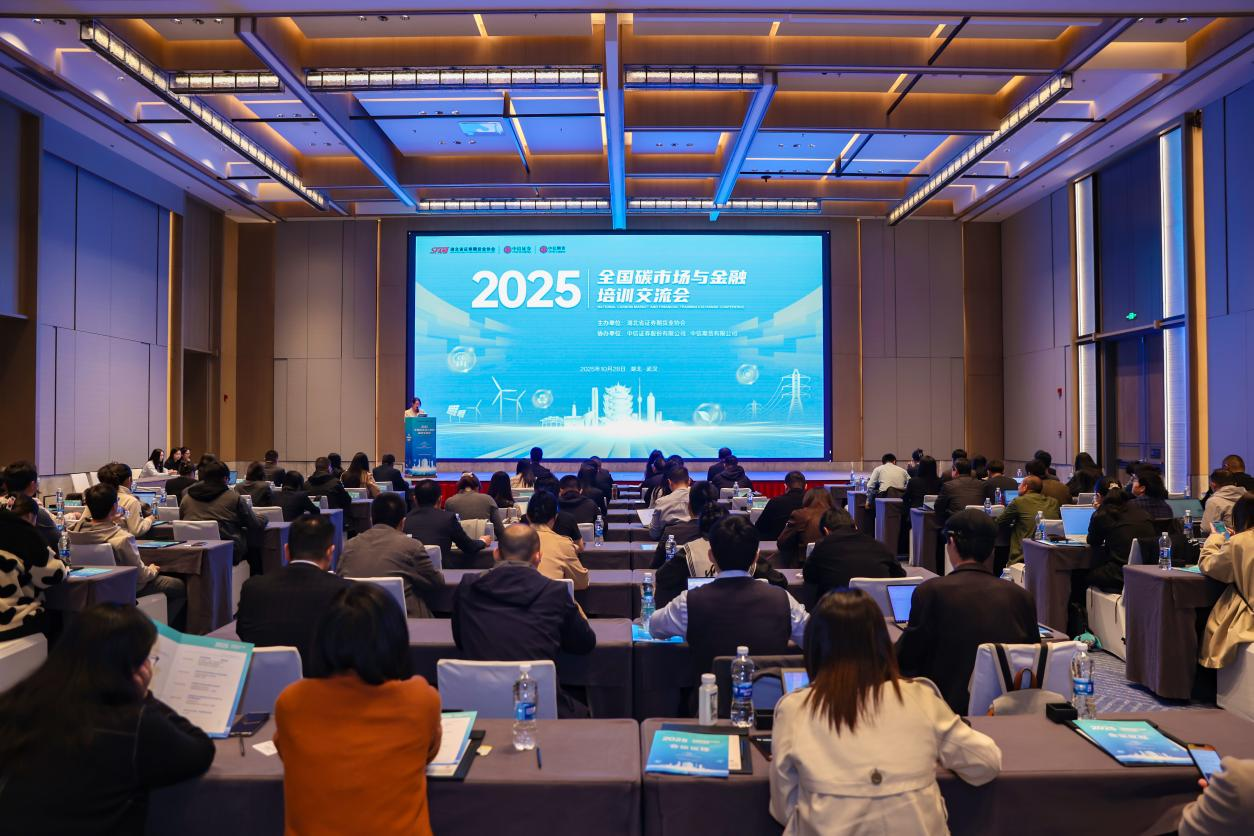
Core Insights - The "National Carbon Market and Financial Training Exchange Conference" was successfully held in Wuhan, organized by the Hubei Securities and Futures Industry Association, with over 100 representatives from key emission enterprises and financial institutions participating to discuss carbon market policies, trading mechanisms, and financial innovations [1][3] Group 1: Conference Overview - The conference featured frontline experts from core institutions of the national carbon market, focusing on infrastructure and enterprise practices in the morning session [3] - Key presentations included an overview of the national carbon market by Xiao Liya, analysis of trading rules by Shi Jiangguangtai, and insights on carbon asset management from Xia Feng [3][5] - The afternoon session addressed policy interpretation and financial empowerment, with significant contributions from Yan Fei on "dual carbon" policy evolution and Qin Ke on supply-demand dynamics and price trends in the national carbon market [3][7] Group 2: Objectives and Impacts - This training exchange is a concrete measure for the Hubei securities and futures industry to implement "green finance" and enhance the effectiveness of the carbon market [9] - The event aims to inject new momentum into Hubei's carbon financial innovation and establish a market ecosystem where "emission reduction is valuable and green is rewarding" [9] - It further solidifies Hubei's pivotal role in the national carbon market construction, contributing to the region's economic green transformation [9]

欧盟发布气候和能源新战略
中国能源报· 2025-10-17 14:42
Core Viewpoint - The European Union (EU) has released a new climate and energy strategy aimed at promoting a transition to clean energy and enhancing international competitiveness in the clean technology sector [1]. Group 1: Clean Technology Manufacturing - The EU aims to increase its clean technology manufacturing capacity to capture 15% of the global technology market share, thereby enhancing industrial competitiveness [1]. Group 2: International Cooperation and Investment - The EU plans to strengthen cooperation with various countries to create new business opportunities for the European clean technology industry, including organizing business forums and establishing the "EU External Clean Transition Business Council" [1]. - A budget of €200 billion is allocated for the EU's external cooperation financing tool "Global Europe" from 2028 to 2034, with 30% of this budget dedicated to climate and environmental expenditures to support partner countries in developing actionable climate action plans [1]. Group 3: Policy Coordination and Carbon Pricing - The EU intends to enhance policy coordination, information exchange, and cooperation among member states to support partner countries in establishing and improving carbon pricing policies [1]. Group 4: Carbon Border Adjustment Mechanism - The EU's "Carbon Border Adjustment Mechanism" is set to be implemented in 2026, which will impose "carbon tariffs" on imports of products such as cement, fertilizers, and steel from countries with relatively lenient carbon emission restrictions, a move that has drawn criticism from some trading partners for increasing the burden on developing countries [1].

【环球财经】瞄准能源转型 欧盟发布气候和能源新战略
Xin Hua She· 2025-10-17 14:26
Core Points - The European Commission released the "EU Global Climate and Energy Vision," outlining action plans to promote the transition to clean energy and enhance industrial competitiveness [1] - The document aims to increase the EU's clean technology manufacturing capacity to 15% of the global technology market share, thereby boosting industrial competitiveness [1] Summary by Sections Clean Technology and International Cooperation - The EU plans to strengthen cooperation with various countries to create new business opportunities for the European clean technology industry [1] - Key initiatives include organizing business forums and establishing the "EU External Clean Transition Business Council" to promote EU clean technology business internationally and encourage investment in climate adaptation [1] Financial Commitments and Support - The EU intends to allocate 30% of the budget from its external cooperation financing tool "Global Europe," totaling €200 billion from 2028 to 2034, to climate and environmental expenditures [1] - This funding aims to support partner countries in developing actionable climate action plans and promoting clean industry development [1] Carbon Border Adjustment Mechanism - The EU's "Carbon Border Adjustment Mechanism" is set to be implemented in 2026, imposing "carbon tariffs" on imports of cement, fertilizers, and steel from countries with relatively lax carbon emission restrictions [1] - This measure has faced criticism from some trading partners, who argue it increases the burden on developing countries [1]
瞄准能源转型 欧盟发布气候和能源新战略
Xin Hua She· 2025-10-17 11:59
Core Viewpoint - The European Commission has released the "EU Global Climate and Energy Vision," outlining action plans to promote the transition to clean energy and enhance international competitiveness in the clean technology sector [1] Group 1: Clean Technology Manufacturing - The EU aims to increase its clean technology manufacturing capacity to achieve a 15% share of the global technology market [1] - The plan includes strengthening international cooperation to create new business opportunities for the European clean technology industry [1] Group 2: Investment and Financing - The EU plans to allocate 30% of the €200 billion budget for its external cooperation financing tool "Global Europe" from 2028 to 2034 to climate and environmental expenditures [1] - This funding will support partner countries in developing actionable climate action plans and promoting clean industry development [1] Group 3: Policy Coordination and Carbon Pricing - The EU will enhance policy coordination, information exchange, and cooperation among member states to support partner countries in establishing and improving carbon pricing policies [1] Group 4: Carbon Border Adjustment Mechanism - The EU's "Carbon Border Adjustment Mechanism" is set to be implemented in 2026, imposing "carbon tariffs" on imports of products like cement, fertilizers, and steel from countries with relatively lax carbon emission restrictions [1] - This measure has faced criticism from some trading partners, who argue it increases the burden on developing countries [1]