绝对收益

Search documents
以深度投研驱动高质量发展,信达澳亚基金如何靠特色精品业务走出差异化路径?
Xin Lang Cai Jing· 2025-12-22 10:58
Core Viewpoint - The public fund industry is transitioning from a "scale-oriented" approach to a "quality-first" strategy, emphasizing sustainable core competitiveness amidst challenges like homogenized competition and declining fee rates [1][13]. Group 1: Investment Strategy and Research Framework - The essence of active management lies in professional fundamental research to identify and hold high-potential growth companies for long-term capital appreciation [2]. - The company employs a "top-down" and "bottom-up" research framework, ensuring investment portfolios capture industry growth while selecting individual stocks for significant alpha returns [2][3]. - The investment team has established a modern research management system covering the entire process, emphasizing a professional talent structure and efficient collaboration [3]. Group 2: Investment Process and Technology Integration - The investment process is driven by a dual approach of "refinement and intelligence," integrating deep research with intelligent quantitative support systems [4][5]. - The company has developed a comprehensive fund manager tagging system to evaluate investment logic consistency and stability, enhancing decision-making [4]. - A "human-machine collaboration" investment model is employed to improve decision-making efficiency and accuracy, combining human insights with machine processing capabilities [5]. Group 3: Product Strategy and Market Positioning - The company focuses on a "boutique, professional, and differentiated" product strategy, concentrating resources on active investment capabilities in core areas like equity, absolute return, and quantitative strategies [6]. - The active equity funds cover mainstream sectors such as technology growth, consumer upgrades, and advanced manufacturing, with notable products achieving excellent long-term performance [6][8]. - The fixed income team emphasizes a "solid" investment style, aiming for positive asset value growth in various market conditions, with products receiving high ratings from authoritative agencies [8]. Group 4: Recent Developments and Future Outlook - The appointment of the new general manager, Fang Jing, is expected to bring fresh perspectives and drive strategic innovation in product development and resource integration [12][14]. - The company has achieved a weighted average return of 252.42% over the past seven years, ranking 7th among 118 public fund companies, demonstrating resilience and the ability to generate excess returns [12]. - The company is committed to expanding its FOF product line to meet the growing demand for retirement investment solutions, leveraging its strengths in fund evaluation and asset allocation [11].
不给基金持有人短期“惊喜”或“惊吓”
Zheng Quan Shi Bao· 2025-12-21 04:23
Core Viewpoint - The A-share market is potentially entering a slow bull phase driven by dual factors of valuation recovery and profit improvement [2][6]. Group 1: Market Conditions - Current bank stocks offer a dividend yield exceeding 4%, significantly higher than the yield on ten-year government bonds, indicating a favorable investment environment [2]. - There is an expectation of a rebound in profitability for cyclical industries, contributing to a positive market sentiment [2][6]. - The average price-to-book ratio for the banking sector is currently 0.7, suggesting that the valuation disparity is unsustainable [6]. Group 2: Investment Strategy - The company employs a strategy of "extreme diversification + safety margin" to navigate potential market volatility, utilizing quantitative models to identify undervalued and profit-stable assets [2][3]. - The investment philosophy adheres to the "absolute return" principle, focusing on dynamic asset allocation based on market conditions rather than a fixed stock-bond ratio [3]. - The company emphasizes a balanced and diversified portfolio, with individual stock holdings rarely exceeding 1% of total positions, aiming for a long-term positive experience for investors [4]. Group 3: Sector and Stock Selection - The investment approach includes a balanced distribution across industries and a diversified stock selection, with a focus on low valuation and stable profit growth [4][5]. - The company tracks potential stocks using quantitative models to efficiently identify promising sectors and stocks, while final investment decisions are based on safety and return assessments [5]. Group 4: Outlook on Equity and Bond Markets - The equity market is expected to experience a slow bull trend, with improved market sentiment and potential for significant capital inflows [6]. - In the bond market, the company maintains a cautious stance due to historically low interest rates and limited room for further declines, focusing on mid to short-duration bonds for their value [7].


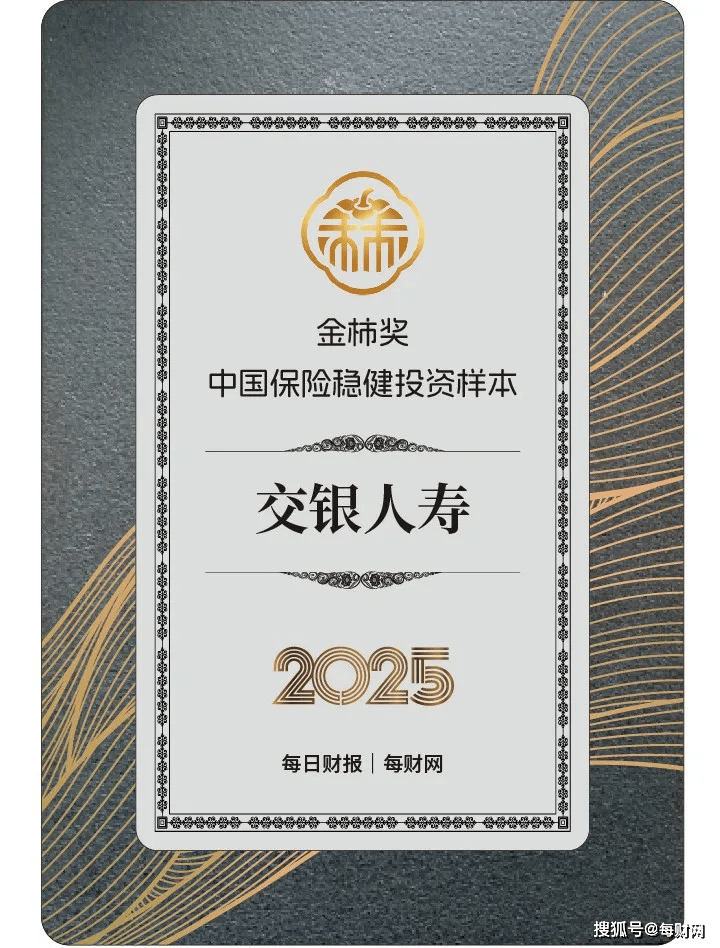
交银人寿获评"2025金柿奖*中国保险稳健投资样本"
Sou Hu Cai Jing· 2025-12-18 10:00
Core Viewpoint - The insurance industry must enhance its long-term, stable, and value investment capabilities to support the high-quality development of the real economy, with Jiaoyun Life being recognized for its robust investment performance and commitment to long-term value [1][3]. Investment Strategy - Jiaoyun Life adheres to the philosophy of "absolute return + long-term stable return," focusing on absolute rather than relative returns and prioritizing long-term stability over short-term gains [3]. - The company has established a solid investment foundation through strategic foresight and flexible execution in a complex market environment [3]. Performance Metrics - In the first half of 2025, Jiaoyun Life's asset management platform achieved a comprehensive yield of 6.5%, maintaining a leading position among major bank-affiliated life insurance companies [4]. - The average comprehensive investment yield over the past three years reached 6.75%, showcasing the company's sustained and strong investment capabilities [4]. Investment Management System - The investment advantages of Jiaoyun Life stem from its professional and systematic investment management framework, with a precise allocation in major asset classes [5]. - Fixed income investments serve as a "ballast," ensuring safety by matching asset-liability durations and proactively allocating long-term quality fixed income assets [5]. Equity and Alternative Investments - The company employs value, long-term, and contrarian investment strategies in equity investments, aiming for long-term excess returns while maintaining patience during market fluctuations [6]. - In alternative investments, Jiaoyun Life focuses on high-quality infrastructure projects in key national regions and captures opportunities in innovative assets like public REITs, achieving a comprehensive yield of approximately 30% in its public REITs strategy products [6]. Future Outlook - The domestic economy shows strong internal momentum, and Jiaoyun Life aims to leverage its research and investment collaboration to create differentiated competitive advantages in a challenging market [7]. - The company is committed to fulfilling its insurance obligations and enhancing financial services to the real economy, continuously advancing the insurance industry's stable operation and value growth [7].
重阳投资荣膺“金阳光·五年卓越私募公司奖"︱重阳动态
重阳投资· 2025-12-16 11:19
Core Viewpoint - Chongyang Investment has been awarded the "Golden Sunshine · Five-Year Outstanding Private Equity Company Award," which reflects both recognition and motivation for the company to continue its commitment to value investment and absolute returns [1][5]. Group 1 - The "Golden Sunshine" award is organized by Shanghai Securities News and China Securities Network, recognized as one of the most authoritative awards in China's capital market due to its long history and significant influence [5]. - Chongyang Investment emphasizes its philosophy of discovering and investing in value, aiming to be a responsible institutional investor that creates stable and long-term returns for its clients [5].

重阳投资荣膺华尊奖“卓越私募基金公司奖”︱重阳动态
重阳投资· 2025-12-11 11:43
Core Viewpoint - The forum focused on "high-quality development" in the private equity sector, emphasizing the transition from quantitative accumulation to qualitative leaps through professionalization, standardization, and ecological construction [4]. Group 1: Event Overview - The "2025 Private Equity High-Quality Development Forum and the First Private Fund Huazun Award Ceremony" was held in Shanghai on December 11, organized by Caixin [1]. - The event gathered over a hundred institutions, showcasing the increasing influence of Caixin in the industry [4]. Group 2: Awards and Recognition - Chongyang Investment was honored with the "Outstanding Private Fund Company Award" at the ceremony [1]. - The Huazun Award aims to discover and recognize excellent private fund managers who adhere to long-termism and consistently create value for clients [4]. Group 3: Company Philosophy - Chongyang Investment continues to uphold the philosophy of "value investment, absolute returns," focusing on discovering and investing in value to create stable and long-term returns for investors [4].

华夏资本:以衍生品为矛,打造低利率时代的另类投资解决方案
Sou Hu Cai Jing· 2025-12-10 04:31
Core Viewpoint - The article discusses the evolution of the asset management industry in China, highlighting the differentiation between public and private funds, and how Huaxia Capital has carved out a unique niche by focusing on absolute returns through innovative derivative strategies [1][15]. Group 1: Market Context - The Chinese asset management industry is experiencing a shift towards high-quality development, with a clear distinction in the U.S. market between public funds offering standardized market beta and hedge funds focusing on absolute returns [1]. - Domestic public products are becoming increasingly beta-oriented, while many private funds remain focused on long positions in stocks, leading to intense competition and a lack of differentiation [1]. Group 2: Huaxia Capital's Strategy - Huaxia Capital has successfully developed a differentiated approach by leveraging a deep understanding of derivative tools, offering a multi-asset solution centered around three strategies: "strategy assurance," "stable income," and "aggressive appreciation" [1]. - Since entering the derivatives market in 2020, Huaxia Capital has issued products totaling over 100 billion yuan, establishing itself as a significant player in areas like "snowball" and "alternative fixed income+" [1]. Group 3: Snowball Strategy - The "Snowball" strategy converts market volatility into sustainable returns, relying on a sophisticated structure that generates income as long as the index does not fall below a predetermined "safety cushion" [2][3]. - As of November 30, 2025, Huaxia Capital has issued over 500 Snowball products, achieving a success rate of over 99% and an average return of 14% per product, generating a total of 2.45 billion yuan in profits for investors [3]. Group 4: Core Competencies - Huaxia Capital prioritizes the interests of its investors, proactively adjusting product structures to mitigate risks, especially during market fluctuations [4]. - The company has innovated a "joint distribution" model, allowing multiple brokers to sell the same product, significantly increasing fundraising efficiency [4]. - A refined online inquiry system has been established to enhance trading efficiency, allowing for better pricing and stronger relationships with trading partners [5]. Group 5: Product Lines - Huaxia Capital is expanding into on-exchange derivatives, focusing on two main product lines: income-generating strategies and tool-based strategies, with covered call strategies being a key offering [6]. - The company provides various tools to match different market views, including asymmetric index increases and protective strategies like the "Star and Satellite" strategy [7]. Group 6: Alternative Fixed Income+ - In response to challenges in traditional fixed income, Huaxia Capital has introduced an "alternative fixed income+" model that clarifies income structures and risk characteristics through the use of options [9]. - The alternative fixed income products are designed to provide effective asset allocation tools for investors with varying risk preferences, featuring customizable structures [9]. Group 7: Low-Volatility All-Weather FOF - The all-weather FOF aims to provide stable returns in a low-volatility environment, utilizing a diverse range of asset classes and investment tools [11]. - Huaxia Capital's unique approach includes a volatility control module that actively manages risk based on market conditions, enhancing the product's performance [12]. Group 8: Conclusion - Huaxia Capital's rapid growth is attributed to its innovative product line that meets the absolute return needs of high-net-worth clients, showcasing a proactive approach in asset allocation and strategy innovation [14][15]. - The company is positioned at the forefront of a trend in the Chinese private equity industry, moving away from homogeneous stock long positions towards a more diversified approach akin to mature overseas markets [15].

王向宇:放弃既要、又要的幻想,长期投资才是能实际把握住、有可能把握住的事情
Xin Lang Cai Jing· 2025-12-06 10:39
Core Viewpoint - The current challenges in pension fund management include the conflicting demands for both long-term and short-term returns, as well as absolute and relative returns, leading to a pessimistic conclusion that it is not feasible to achieve both simultaneously [2][5]. Group 1: Investment Challenges - The investment community faces a dilemma where clients and companies demand high returns with low volatility, which is difficult to balance [2][5]. - Wang Xiangyu emphasizes the need to abandon the unrealistic expectation of achieving both high absolute and relative returns simultaneously [2][5]. Group 2: Focus on Absolute Returns - It is recommended to focus on absolute returns rather than relative returns, as historical evidence suggests that successful long-term absolute returns will likely lead to satisfactory relative returns over time [3][5]. - Long-term investment is portrayed as a more manageable and beneficial strategy for investors, despite the need to endure short-term volatility [3][5].

低利率时代的收益突围:永赢基金详解固收增强解决方案
Zhong Guo Ji Jin Bao· 2025-12-05 07:40
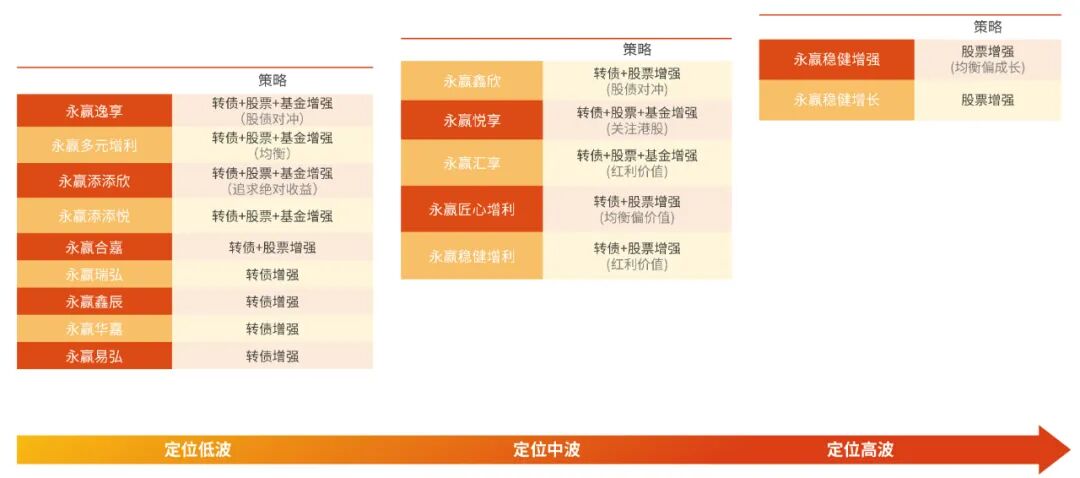
Core Insights - The article discusses the challenges investors face in a low interest rate environment and how Yongying Fund is addressing these challenges through diversified strategies in fixed income enhancement products [1][2][7]. Group 1: Investment Strategy - Yongying Fund emphasizes a shift from "single yield" to "multi-enhancement" strategies to meet return objectives in a prolonged low interest rate scenario [2]. - The core solution proposed is "multi-asset, multi-strategy," which involves expanding asset classes and employing various strategies within each asset category to optimize risk-return profiles [2][3]. - Specific paths to achieve absolute returns include focusing on high Sharpe ratio assets and actively managing portfolios to exceed benchmark returns [2][3]. Group 2: Product Performance - Yongying Fund's fixed income enhancement products have returned to historical high scales, with low to medium volatility strategies showing strong performance [3]. - For instance, the Yongying Xinxin A product achieved a return of 21.61% over the past two years, significantly outperforming the category average of 11.93% [4]. - The Yongying Multi-Asset and Multi-Strategy product has a maximum drawdown of only -0.71%, better than the category average of -1.39% [4]. Group 3: Systematic Research Support - Yongying Fund has developed a robust systematic research platform that supports effective strategy execution, including asset allocation and risk management [6]. - The "Qianxing" research system utilizes big data and AI to enhance bond investment strategies and risk assessment, earning recognition from the People's Bank of China [6][10]. Group 4: Market Outlook - The fund anticipates that global liquidity and fiscal expansion will continue, with a focus on U.S. tech stocks, U.S. bonds, and gold as key investment areas [6][7]. - The bond market is expected to experience a "low interest rate + high volatility" environment, presenting trading opportunities, particularly in credit bonds [7].
理财加码“含权”,新尝试与新挑战
Huan Qiu Wang· 2025-12-03 06:23
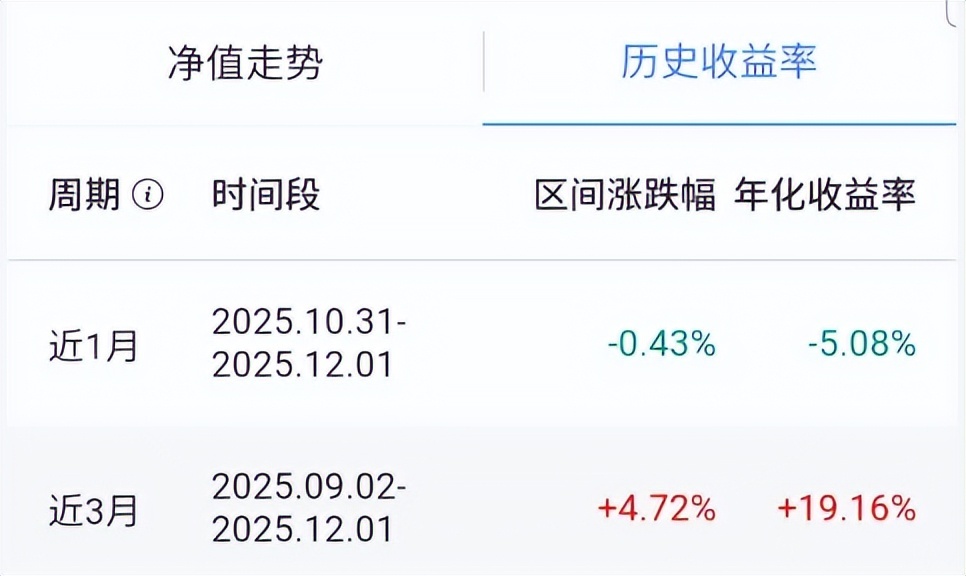
Core Viewpoint - The banking wealth management market is experiencing a shift towards the issuance of rights-containing products in response to low interest rates and an "asset shortage" environment, with a focus on balancing returns and risks [1][2]. Group 1: Market Trends - Since mid-November, the issuance of rights-containing products has increased, with 13 new equity products launched between November 17 and 18, including 12 index-type products from Huaxia Wealth Management [2]. - Currently, there are 63 existing equity wealth management products in the banking sector, reflecting a trend of increasing equity asset allocation to enhance product appeal and yield flexibility [2]. - The issuance of mixed and "fixed income +" products has increased by over 50% year-on-year since August, with expectations of raising performance benchmarks by 30-50 basis points to meet investor yield demands [2]. Group 2: Performance and Risks - The pursuit of yield flexibility has led to increased volatility risks, with recent market fluctuations causing rights-containing products to experience significant drawdowns, with a weekly withdrawal exceeding 25 basis points [3]. - For example, one equity product from a certain bank saw a monthly decline of 0.43% and an annualized return of -5.08% [3][4]. Group 3: Regulatory and Policy Framework - The rise in rights-containing product issuance is supported by regulatory frameworks, such as the "Implementation Plan for Promoting Long-term Funds into the Market," which allows wealth management funds to participate in new stock subscriptions on par with public funds [5]. - This policy has led to active participation from several wealth management companies in offline new stock subscriptions, with notable allocations in high-profile IPOs [5]. Group 4: Caution and Future Outlook - Despite the potential for increased returns through new stock subscriptions, many wealth management companies remain cautious due to associated risks and the need for specialized capabilities in stock analysis and pricing [7]. - The overall allocation of equity assets in wealth management remains low, with only 2.1% of total wealth management assets allocated to equity as of the end of Q3 [8]. - Future growth in equity allocations is expected to be driven by yield requirements, with a gradual increase in equity exposure anticipated if market conditions stabilize [9].
不要让相对收益,困住你本该富足的人生
雪球· 2025-12-01 13:00
Core Viewpoint - The article discusses the distinction between relative and absolute returns in investment, emphasizing the importance of focusing on personal financial goals rather than comparing oneself to others [5][6][7]. Group 1: Understanding Relative vs. Absolute Returns - Relative return focuses on outperforming benchmarks or peers, while absolute return emphasizes the actual returns received by the investor [6]. - Many funds are evaluated based on relative returns, which can lead to anxiety and poor decision-making when investors constantly compare themselves to others [7]. Group 2: Finding Personal "Enough" - Carl Richards emphasizes the need for dialogue to understand what money means to individuals and how to define their own "enough" [8][9]. - The concept of "enough" should not be a fixed number but rather a subjective experience that can be explored through practical experiments and self-reflection [30]. Group 3: The Role of Uncertainty in Financial Planning - Richards uses illustrations to convey complex financial concepts, such as the unpredictability of outcomes and the importance of accepting uncertainty in financial planning [17][18]. - The illustration titled "The Magic Certainty Button" critiques the unrealistic desire for certainty in financial decisions, highlighting that such certainty does not exist [12][15][16]. Group 4: The Impact of Social Media on Financial Comparisons - The article discusses how social media complicates the comparison process, leading individuals to feel inadequate by constantly comparing their lives to others [25][27][28]. - Richards encourages readers to carefully choose their comparison groups and focus on personal values rather than societal pressures [28]. Group 5: The Future of Financial Advice - The article suggests that while AI can assist in financial analysis, the emotional aspects of financial decision-making still require human insight and empathy [37][38]. - The concept of "self-driving money" is introduced, where financial processes can be automated, but the need for human guidance in setting goals remains crucial [38].