绿电直供

Search documents
瀚蓝环境(600323):业绩符合预期充分展现公司增长韧性
Hua Yuan Zheng Quan· 2025-09-05 09:10
Investment Rating - The investment rating for the company is "Buy" (maintained) [5] Core Views - The company's performance aligns with expectations, demonstrating growth resilience. In H1 2025, the company achieved revenue of 5.76 billion yuan, a year-on-year decline of 1.05%, while net profit attributable to shareholders was 970 million yuan, a year-on-year increase of 9% [6] - The company announced an interim dividend of 0.25 yuan per share, totaling 204 million yuan, which accounts for 21.08% of the net profit attributable to shareholders for H1 2025 [6] - The integration of Yuefeng Environmental exceeded market expectations, contributing to profit growth despite a high base from the previous year. The company is actively expanding its heating services and optimizing financing costs, which is expected to sustain high growth in performance for the second half of the year [6][8] Summary by Sections Market Performance - Closing price as of April 4, 2025, was 26.26 yuan, with a yearly high/low of 28.18/18.47 yuan [3] Financial Data - Total market capitalization is 21,411.02 million yuan, with a debt-to-asset ratio of 72.46% and net asset value per share of 16.90 yuan [3] Earnings Forecast and Valuation - Projected revenues for 2025-2027 are 13.721 billion, 15.526 billion, and 15.632 billion yuan respectively, with corresponding net profits of 1.976 billion, 2.263 billion, and 2.358 billion yuan [7][8] - The current price-to-earnings ratio (P/E) is projected to be 11, 9, and 9 times for 2025-2027 [8]

瀚蓝环境(600323):粤丰并表利润超预期,高成长高分红可期
Shenwan Hongyuan Securities· 2025-08-27 13:53
Investment Rating - The report maintains a "Buy" rating for the company [2] Core Insights - The company reported better-than-expected performance in its 2025 interim results, with a revenue of 5.763 billion yuan and a net profit of 967 million yuan, reflecting a year-on-year growth of 8.99% [6] - The integration of Guangdong Feng Environmental Protection has significantly contributed to profits, with a net profit of 117 million yuan in June, adding approximately 60 million yuan to the company's net profit [6] - The company is focusing on cost reduction and efficiency improvement, with a notable increase in free cash flow to 338 million yuan in the first half of 2025 [6] Financial Data and Profit Forecast - Total revenue is projected to be 12.211 billion yuan in 2025, with a year-on-year growth of 2.7% [5] - The net profit attributable to the parent company is expected to reach 1.916 billion yuan in 2025, reflecting a growth rate of 15.1% [5] - Earnings per share (EPS) is forecasted to be 2.35 yuan in 2025, with a projected price-to-earnings (PE) ratio of 11 [5] Dividend Policy - The company plans to distribute a cash dividend of 2.5 yuan per 10 shares for the 2025 interim period, with a commitment to increase the dividend per share by no less than 10% from 2024 to 2026 [6]
瀚蓝环境:上半年净利润同比增长8.99% 拟10派2.5元
Zhong Zheng Wang· 2025-08-27 07:36
Core Viewpoint - The company reported a slight decline in revenue but achieved a net profit increase due to strategic acquisitions and operational efficiencies [1][2] Financial Performance - The company achieved operating revenue of 5.763 billion yuan in the first half of 2025, a year-on-year decrease of 1.05% [1] - Net profit attributable to shareholders was 967 million yuan, representing a year-on-year growth of 8.99% [1] - The company plans to distribute a cash dividend of 2.5 yuan per 10 shares, totaling 204 million yuan, which accounts for 21.08% of the net profit for the first half of the year [2] Business Segments - The solid waste treatment business generated 2.949 billion yuan in revenue, making up 52.60% of total main business income and serving as a core growth driver [2] - The daily capacity for municipal solid waste incineration reached 97,590 tons, ranking among the top three in the industry [2] - Revenue from the waste incineration business (excluding engineering and equipment) grew by 17.63% year-on-year [2] Strategic Initiatives - The company completed the acquisition of Yuefeng Environmental, which began consolidation into financial reports from June 1, 2025 [1] - Efforts to integrate resources from Yuefeng Environmental and optimize supply chain management are expected to release synergistic effects [1][2] - The establishment of an "Artificial Intelligence Joint Research Institute" aims to advance digital transformation within the company [2] Environmental and Innovation Efforts - All waste incineration projects received green certificates, with over 6.53 million certificates sold, contributing to a carbon reduction of 3.504 million tons [2] - The company has innovated a "green electricity direct supply" model and signed cooperation agreements with several enterprises for computing power centers [2]
零碳园区,降碳“三部曲”
Bei Jing Ri Bao Ke Hu Duan· 2025-08-26 23:57
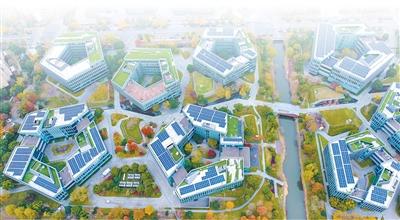
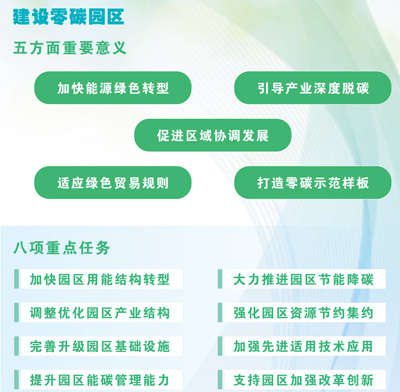
Core Viewpoint - The establishment of zero-carbon parks is a crucial strategy for promoting green transformation in China, addressing challenges such as increasing pressure for renewable energy consumption and the difficulty of deep carbon reduction in high-energy-consuming industries [2][6]. Group 1: Zero-Carbon Park Definition and Importance - Zero-carbon parks aim to reduce carbon emissions from production and living activities to "near zero" levels, with the potential to achieve "net zero" conditions [2]. - The National Development and Reform Commission (NDRC) has issued a notice to support the construction of zero-carbon parks, emphasizing their role in contributing to carbon reduction and serving as practical examples for building a "zero-carbon society" [2][6]. Group 2: Energy Consumption and Structure Transformation - Jiangsu's Dafeng Port Zero-Carbon Industrial Park utilizes a 13.76 MW centralized photovoltaic power station to produce green electricity, which is directly supplied to enterprises [3]. - The park aims for 85% of its electricity consumption to come from traceable green electricity by 2030 [3]. - In Inner Mongolia, a new distribution network and a 220 kV substation have been established to supply 900 million kWh of green electricity annually to the park [4][5]. Group 3: Carbon Emission Standards and Goals - The NDRC has introduced a core indicator for evaluating zero-carbon parks: "carbon emissions per unit of energy consumption," which aims to reduce emissions significantly compared to the national average of 2.1 tons per ton of standard coal [6][10]. - The target is to achieve a reduction of approximately 90% in carbon emissions per unit of energy consumption in zero-carbon parks [6]. Group 4: Industrial Structure Optimization - The transformation of traditional industries, such as steel and paper, is essential for enhancing their green competitiveness, with projects like upgrading electric arc furnaces to energy-efficient models [7][8]. - The development of low-energy, low-pollution, and high-value-added emerging industries is also a focus within zero-carbon parks [7][8]. Group 5: Management and Technological Integration - The establishment of intelligent management platforms in zero-carbon parks allows for real-time monitoring of carbon emissions and energy consumption, enhancing management efficiency [9][10]. - The integration of artificial intelligence technology is being explored to improve carbon emission forecasting and scheduling [9][10]. Group 6: Systematic Approach to Zero-Carbon Park Construction - The construction of zero-carbon parks is a systematic project requiring comprehensive planning and coordination, with the NDRC planning to support the establishment of national-level zero-carbon parks [10].

零碳园区,降碳“三部曲”(产经观察)
Ren Min Ri Bao· 2025-08-26 22:22
Core Viewpoint - The construction of zero-carbon parks is a crucial strategy for promoting green transformation in China, addressing challenges such as increasing pressure on renewable energy consumption and the difficulty of deep carbon reduction in high-energy-consuming industries [2][5]. Group 1: Zero-Carbon Park Definition and Importance - Zero-carbon parks aim to reduce carbon emissions from production and living activities to "near-zero" levels and are essential for achieving a "net-zero" condition [2]. - The National Development and Reform Commission (NDRC) has issued a notice to support the establishment of zero-carbon parks, emphasizing their role in contributing to carbon reduction and serving as practical examples for building a "zero-carbon society" [2][5]. Group 2: Energy Consumption and Green Electricity - Jiangsu's Dafeng Port Zero-Carbon Industrial Park utilizes a 13.76 MW centralized photovoltaic power station to supply green electricity directly to enterprises, ensuring a clear physical traceability of energy sources [3][4]. - The park aims for over 85% of its electricity consumption to come from traceable green electricity by 2030 [4]. - In Inner Mongolia, a new distribution network and a 220 kV substation have been established to supply 900 million kWh of green electricity annually, supported by a 385,000 kW wind-solar-storage project [4]. Group 3: Carbon Emission Standards and Goals - The NDRC has introduced a core indicator for evaluating zero-carbon parks: "carbon emissions per unit of energy consumption," aiming for a reduction of 90% from the current national average of 2.1 tons of CO2 per ton of standard coal [5]. - Specific targets include maintaining carbon emissions below 0.2 tons per ton of standard coal for parks consuming 200,000 to 1,000,000 tons of energy annually, and below 0.3 tons for those consuming over 1,000,000 tons [5]. Group 4: Industrial Structure Optimization - The transition to zero-carbon parks involves optimizing industrial structures to enhance "green competitiveness," with traditional high-energy-consuming industries like steel and paper being targeted for upgrades [7][8]. - New industries with low energy consumption and high added value are being developed, such as photovoltaic and hydrogen fuel cell manufacturing in the Ordos zero-carbon industrial park [8][9]. Group 5: Management and Technological Integration - The establishment of smart management platforms in zero-carbon parks allows for real-time monitoring of carbon emissions and energy consumption, enhancing management efficiency [10]. - The NDRC has set additional guiding indicators, including clean energy consumption ratios and resource recycling rates, to promote comprehensive energy management and resource conservation [10][11]. Group 6: Systematic Approach to Zero-Carbon Parks - The construction of zero-carbon parks is a systematic project requiring coordinated planning and execution, with the NDRC planning to support the establishment of national-level zero-carbon parks through pilot projects and funding [11].
伟明环保20250807
2025-08-07 15:03
Summary of Weiming Environmental Conference Call Company and Industry Overview - **Company**: Weiming Environmental - **Industry**: Nickel production and waste incineration power generation Key Points and Arguments Nickel Production - Weiming Environmental's first high ice nickel production line is expected to be operational by the end of the year, with a 70% stake in the project, projected to contribute approximately 400 million RMB in net profit attributable to the parent company, significantly enhancing 2026 performance [2][3] - Current high ice nickel prices are around $13,000 per ton, with estimated production costs controlled between $11,000 and $12,000 per ton [2][3] - The company has laid out plans for three nickel smelting projects, with the first project expected to reach full production by 2025, contributing to a total capacity of 40,000 tons [3] - The company also holds a 20% stake in a 20,000-ton wet nickel smelting project [3] Waste Incineration Power Generation - Total waste incineration power generation capacity has reached approximately 40,000 tons, ranking within the top ten in the industry, generating annual operational revenue of 1.7 to 2 billion RMB and over 3 billion RMB in cash flow [2][6] - The business model relies on waste treatment fees (30%) and electricity sales (70%) [6] - The industry has entered a stable operational phase, with capacity exceeding the 14th Five-Year Plan target, and new capacity additions are not expected to increase further [10] Financial Performance and Projections - The company's net cash ratio typically hovers around 1.3 times, indicating strong operational cash flow relative to net profit [8] - A significant national subsidy payment is expected to return in June to July 2025, indicating an acceleration in subsidy disbursement [9] - For 2025, the environmental business is projected to grow by about 10%, with total profits expected to reach around 3 billion RMB, corresponding to a market capitalization of over 30 billion RMB, resulting in a PE ratio of less than 11 [25] Future Growth and Expansion - Future growth points include the high ice nickel smelting industry and overseas expansion, particularly in Southeast Asia, where modern waste incineration facilities are lacking [17][18] - The company is exploring partnerships to apply waste incineration power generation to high-energy-consuming enterprises, enhancing revenue through green electricity supply policies [20] - The Shanghai Lingyun Volunteer Center project is expected to influence the industry towards a rental model for computing power [21] Challenges and Opportunities - The nickel industry is expected to see upward price trends due to low-cost production, rapid downstream demand growth, and concentrated supply dynamics [7] - The company faces challenges in overseas expansion, including higher investment costs (20%-30% more than domestic) but has opportunities for higher revenue in markets like Indonesia [19] Key Milestones - Key milestones include the operational launch of the new high ice nickel production line by the end of the year and decisions based on nickel cost data expected in the third or fourth quarter [27] Additional Important Information - The company has a full industrial chain equipment manufacturing capability, which reduces capital expenditure and enhances competitiveness [4][16] - The waste incineration power generation business is expected to maintain a dividend payout ratio of around 30%, keeping the dividend yield at approximately 3% [27]

天启鸿源中标中国能建磷酸铁锂电池储能系统集中采购项目双标段
Zheng Quan Ri Bao Zhi Sheng· 2025-08-07 13:45
Core Viewpoint - Tianqi Hongyuan, a subsidiary of Jiangsu Tongli Rising Machinery Co., Ltd., has successfully won two bidding packages in the centralized procurement project for lithium iron phosphate battery energy storage systems by China Energy Construction, marking a significant achievement in the energy storage sector [1][2]. Group 1: Bidding Success - Tianqi Hongyuan's subsidiary, Tongqi New Energy, won Package 2 (0.5C/2 hours system, 6GW/12GWh) and Package 3 (0.25C/4 hours system, 2.5GW/10GWh), becoming one of only 15 companies to win dual packages [1]. - The bidding process required high qualifications, with Package 2 needing over 1000MWh of completed projects in the last two years and Package 3 requiring over 500MWh [1]. Group 2: Technical Strength and Market Position - Tianqi Hongyuan has a long-term technical accumulation in the energy storage field, holding dozens of patents and multiple authoritative certifications [2]. - The company has participated in several benchmark projects, including a 720MWh national-level grid-side energy storage project in Gansu and a 500MWh multi-energy complementary project in Hebei [2]. - The company's integrated "wind-solar-storage" solution ensures a 99.99% power supply reliability for data centers, reducing carbon emissions and electricity costs, which contributed to its successful bidding [2].

华源证券:给予韶能股份增持评级
Zheng Quan Zhi Xing· 2025-07-07 12:16
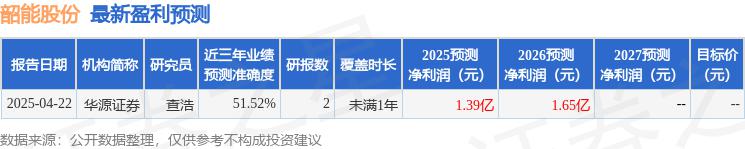
Group 1 - The company has announced a plan to issue A-shares to a specific investor, Jin Cai Investment, with a maximum of 101 million shares at a price of 3.96 yuan per share, raising up to 400 million yuan for working capital [1][2] - The company has introduced a restricted stock incentive plan, granting 16.208 million shares to 243 individuals, including senior management, with a grant price of 2.52 yuan per share, and performance targets for net profit growth from 2025 to 2027 set at no less than 30%, 64%, and 97% respectively [1][2] - The company has outlined a shareholder return plan for the next three years (2025-2027), committing to distribute at least 30% of the average annual distributable profit if certain conditions are met [1][2] Group 2 - Following the completion of the private placement, the actual controller of the company will become the Shaoguan State-owned Assets Supervision and Administration Commission, which will control 21.75% of the shares through Jin Cai Investment and Industrial Assets [2] - The company is positioned to benefit from the "computing power city" initiative in Shaoguan, which is expected to drive significant growth in electricity demand and renewable energy projects [3] - The company has set ambitious profit targets for 2025-2027, forecasting net profits of 1.16 billion, 1.36 billion, and 1.7 billion yuan, with year-on-year growth rates of 51.1%, 17.5%, and 25.1% respectively [3]

兴蓉环境(000598) - 2025年6月26日投资者关系活动记录表
2025-06-26 11:14
Group 1: Water Supply and Wastewater Treatment Projects - The company operates and is constructing water supply projects with a capacity of approximately 4.3 million tons per day and wastewater treatment projects exceeding 4.8 million tons per day, with most projects expected to be operational between 2025 and 2026 [2][3]. Group 2: Accounts Receivable Management - The company has seen an increase in accounts receivable due to expanded business operations, and it places a high priority on managing accounts receivable and actively pursuing collections [2]. Group 3: Waste Incineration Power Generation Projects - The Chengdu Wanxing Environmental Power Plant (Phase III) is under construction, with a waste processing capacity of 5,100 tons per day, sludge co-processing capacity of 800 tons per day, and kitchen waste processing capacity of 800 tons per day, expected to be operational in 2026 [3]. Group 4: Pricing Mechanism for Water Supply - The company can submit water price adjustment requests to the government price administration department based on national policies and relevant agreements, with adjustments subject to cost monitoring and public hearings [3]. Group 5: Future Capital Expenditure and Dividends - The company has significant capital expenditures due to multiple ongoing water supply and waste projects, which are expected to decrease as these projects become operational in the next 1-2 years. The company is focused on increasing cash dividend ratios and will consider further enhancing shareholder returns once major projects are operational [3].

绿电直供:破局能源转型,探索电力市场化新路径
Sou Hu Cai Jing· 2025-06-26 02:03
Group 1 - The concept of "green electricity direct supply" is gaining attention in China, aiming to address specific issues within the context of power policy adjustments [1][6] - The emergence of direct supply models reflects the industry's urgent need for a more flexible electricity supply mechanism, requiring close cooperation between major electricity consumers and green electricity suppliers [1][4] - Direct supply of electricity is not a new phenomenon, as self-built power plants have been common in energy-intensive industries like electrolytic aluminum, providing cheaper electricity and showcasing market competitiveness [1][3] Group 2 - Understanding green electricity direct supply requires knowledge of China's complex power grid, dominated by state-owned enterprises across various energy types, including coal, hydro, nuclear, and renewables [3][6] - The electricity market in China faces monopolistic issues, with limited user choice due to strict control by grid companies, making the direct supply model a potential solution to promote market openness and competition [3][6] - The core challenge of green electricity direct supply lies in addressing the instability of green electricity supply due to the intermittent nature of solar and wind energy, necessitating advancements in storage technology [4][6] Group 3 - The National Development and Reform Commission and the National Energy Administration have issued guidelines to promote green electricity direct supply, providing institutional support for renewable energy consumption and user-side energy structure transformation [6] - Green electricity direct supply is seen as an effective way to tackle issues of electricity surplus and saturation of green electricity supply, offering stable supply to excellent electricity consumers and new market opportunities for suppliers [6] - Despite challenges, the gradual improvement of policies and continuous technological innovation may position green electricity direct supply as a key direction for reform in China's electricity market [6]