
绿色低碳技术

Search documents
我国首个高压天然气长输管道余压发电项目投运
Yang Shi Wang· 2025-11-20 05:57
Group 1: High-Pressure Natural Gas Power Generation Project - The first high-pressure natural gas long-distance pipeline pressure recovery power generation project in China, the Haimen Station natural gas pressure recovery power generation project, has officially commenced operations in Nantong, Jiangsu [1] - The project efficiently utilizes excess pressure resources during high-pressure natural gas transportation, marking a breakthrough in the comprehensive utilization of energy in long-distance pipelines [1] - The project can generate approximately 3 million kilowatt-hours of electricity annually, equivalent to reducing carbon dioxide emissions by over 2,000 tons [1] Group 2: Technological Innovations and Equipment - The core equipment of the power generation project is independently designed and manufactured in China, featuring adjustable flow technology and 3D-printed impellers [1] - The new technology significantly reduces the energy consumption of the equipment while addressing multiple technical challenges such as high pressure and low flow [1] - The new equipment operates in parallel with the existing pressure regulation system, ensuring a reliable gas supply for residents and businesses even if the power generation equipment is offline [1] Group 3: Future Developments and Projects - The company plans to gradually promote megawatt-level domestically produced pressure recovery power generation equipment in typical distribution stations in the Yangtze River Delta region [2] - The total installed capacity of high-pressure natural gas long-distance pipeline pressure recovery power generation projects in China is estimated to reach 42,000 kilowatts [2] Group 4: "Shan Electric into Anhui" UHV Project - The Anhui section of the "Shan Electric into Anhui" ultra-high voltage direct current transmission project has been fully completed as of November 18 [2] - The project spans 323 kilometers in Anhui, with the entire "Shan Electric into Anhui" transmission line project over 80% complete [2] - The project is part of the national "14th Five-Year Plan" and is expected to be fully operational by the end of June 2026, with an annual electricity transmission capacity exceeding 36 billion kilowatt-hours, more than half of which will be renewable energy [2]
如何穿越死亡谷?工信部重磅发布,重点发展5大行业100+新材料!
材料汇· 2025-11-14 16:34
Core Viewpoint - The article emphasizes the importance of technology innovation in China's modernization efforts and highlights the challenges faced by universities in transforming scientific research outcomes into marketable products, particularly the "valley of death" in technology transfer [2]. Group 1: Technology Transfer Challenges - The "valley of death" refers to the critical phase in the technology transfer process where research outcomes struggle to transition from laboratory development to commercial viability [2]. - This issue is not unique to China but is a common global challenge faced by many countries [2]. Group 2: New Materials Pilot Platform Construction - The Ministry of Industry and Information Technology and the National Development and Reform Commission issued guidelines for the construction of new materials pilot platforms from 2024 to 2027, aiming to establish around 300 local pilot platforms and cultivate about 20 high-level platforms [5]. - The goal is to enhance the capacity for technology transfer and industrialization in key areas of the new materials industry [5]. Group 3: Focus Areas for Pilot Platforms - The guidelines cover five major categories: raw materials industry, equipment manufacturing, consumer goods industry, information technology, and emerging industries, with specific focus on 37 subfields including petrochemicals, non-metallic materials, and advanced materials [6]. - Key technologies include high-purity electronic chemicals, high-performance resins, and bio-based materials, among others [8]. Group 4: Sector-Specific Developments - In the petrochemical sector, the focus is on low-carbon technologies and the efficient utilization of resources, aiming to develop key materials for industrialization [8]. - The steel industry is concentrating on special smelting and processing technologies, with an emphasis on low-carbon metallurgy [11]. - The non-ferrous metals sector is targeting green and efficient extraction and smelting processes for various metals, including rare earths [14]. Group 5: Emerging Technologies and Applications - The article discusses advancements in various fields such as quantum technology, clean low-carbon hydrogen, and medical devices, highlighting the need for pilot platforms to support the development and commercialization of these technologies [44][47][48]. - The focus on artificial intelligence and robotics aims to enhance capabilities in intelligent decision-making and control technologies [42][43].


积极主动对接国际规则与市场需求(专家点评)
Ren Min Ri Bao· 2025-11-11 22:36
Core Insights - During the "14th Five-Year Plan" period, the Chinese shipbuilding industry has capitalized on the global shipping industry's green transformation and the new rising cycle of the shipbuilding market, achieving significant milestones in green low-carbon technology application and high-end ship type research and development [1] - The industry has maintained its position as the world's largest shipbuilding market for 16 consecutive years, with a comprehensive capability in ship and marine product assembly and construction [1] Digitalization and Intelligence - Key enterprises are accelerating their digital and intelligent transformation, enhancing the digital, networked, and intelligent levels of ship design, construction, and services [1] - Significant breakthroughs have been made in the application of digital and intelligent technologies in products such as ships, including areas like assisted autonomous navigation, comprehensive energy efficiency management, equipment operation and maintenance, ship-to-shore communication, and intelligent cargo management [1] - The technology for intelligent ships has evolved from single-system applications to multi-system integration [1] Green Development - The Chinese shipbuilding industry is building a green ship product system and technology framework, supported by dual-fuel technology, new energy applications, and green energy-saving configurations [1] - The mainstream products are accelerating their green low-carbon transformation, making China a major supplier of low-carbon shipping equipment globally [1] - In 2024, China's share of new green ship orders in the international market is expected to reach 78.5%, covering main ship types such as container ships, oil tankers, and bulk carriers [1] Future Outlook - Looking ahead to the "15th Five-Year Plan," the industry aims to proactively align with international rules and market demands, leveraging global industrial chain collaborative innovation advantages [1] - There is a focus on accelerating the development of new productive forces to strengthen the position of the shipbuilding and related industries in global industrial division of labor, supporting the construction of a maritime power and a manufacturing power [1]
以开放之姿共赴进博之约——写在第八届进博会开幕之际
Jin Rong Shi Bao· 2025-11-06 02:56
Core Insights - The China International Import Expo (CIIE) showcases China's commitment to high-level opening-up and cooperation with the global economy, with participation from 155 countries and over 4,100 foreign enterprises [1][2][3] Group 1: Economic Diplomacy - The CIIE is a significant economic diplomatic event following the 20th Central Committee's Fourth Plenary Session, reflecting China's strategy to expand high-level openness and create a win-win cooperation environment [1] - The event attracted around 1,500 representatives from various sectors, indicating strong international confidence in China's economic development [1] Group 2: Open Market Dynamics - China's consistent open stance has made it a major trading partner for over 150 countries and regions, with trade volume with Belt and Road Initiative countries exceeding 50% [2] - The removal of foreign investment restrictions in the manufacturing sector and the implementation of the "2025 Action Plan for Stabilizing Foreign Investment" demonstrate China's commitment to creating a favorable environment for foreign enterprises [2] Group 3: High-Quality Development - The CIIE highlights China's shift towards high-quality development, featuring new products and technologies that align with consumer demands for better living standards [3] - Innovations such as artificial intelligence and green technologies are showcased, positioning China as a testing ground for global innovations [3] Group 4: Global Cooperation - The CIIE serves as a platform for global products, promoting mutual benefits and cooperation amidst rising unilateralism and protectionism [3][4] - The event has evolved over eight years, maintaining its core values of openness, inclusivity, and mutual benefit while expanding in scale and innovation [3][4] Group 5: Future Outlook - China aims to continue its high-level opening-up to address development challenges and respond to global expectations, reinforcing the CIIE's role in fostering a community with a shared future [4]
我国已拿下全球绿色船舶近70%订单
中国能源报· 2025-10-30 06:07
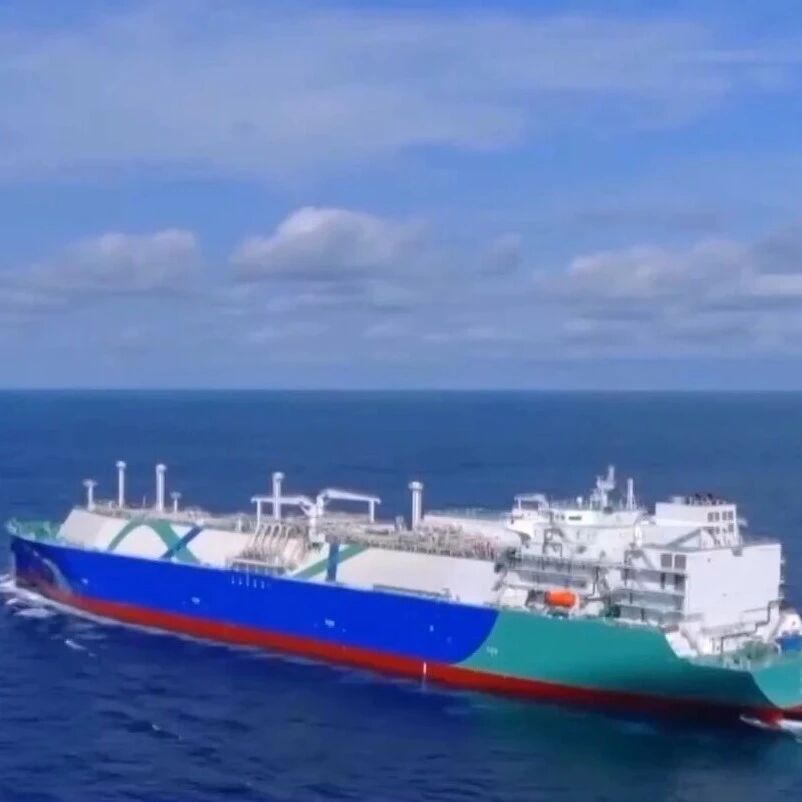
Core Viewpoint - The article highlights China's significant advancements in the production of green ships, particularly LNG carriers, with the country securing nearly 70% of global orders for green vessels, showcasing its leadership in the industry [6][12]. Group 1: Delivery and Technological Advancements - Two domestically produced LNG carriers, each with a capacity of 174,000 cubic meters, were delivered in Shanghai, marking a milestone in China's fifth-generation LNG ship development [1]. - These vessels incorporate the latest global design concepts and technologies, achieving international leading standards in overall technology and significantly enhancing the performance metrics of the ships [1][3]. - The ships are equipped with a unique re-liquefaction system and a domestically developed exhaust gas recirculation system, which effectively reduces CO2 emissions during navigation [3]. Group 2: Market Position and Orders - China has secured over 50 LNG ship orders and has 24 more under construction, with expectations to deliver 11 large LNG ships this year, setting a new national record for annual deliveries [3][5]. - The proportion of green ship orders received by Chinese shipyards has exceeded 80%, the highest level in the past five years, indicating a strong market position [6]. Group 3: Industry Trends and Future Outlook - By June 2025, it is projected that China's new green ship orders will account for 68.8% of the international market share, with shipbuilding industry profit margins reaching 9.71%, the highest in nearly a decade [6]. - The Chinese shipbuilding industry is focusing on optimizing production processes and increasing investment in research and development to create new green and intelligent ship types [8]. - The upcoming five years are deemed crucial for the Chinese shipbuilding industry to respond to global shipping's green transformation and enhance its competitive edge [10][12].

联合水务(603291.SH)拟对e4E公司进行增资 布局相关绿色低碳技术领域
智通财经网· 2025-10-14 11:51
Core Insights - United Water (603291.SH) has announced an investment in e4E Company, focusing on carbon reduction and related technologies [1][2] - The investment aligns with the growing market demand for green low-carbon technologies and supports China's "dual carbon" strategy [3] Investment Details - United Water International Investment will invest RMB 30 million (approximately USD) to acquire 100% of e4E's issued A series convertible preferred shares, representing 50% of e4E's total issued shares [1] - Following this, United Water International Investment plans to invest an additional RMB 24 million (approximately USD) to purchase 2,400 shares of e4E's newly issued B series convertible preferred shares, while another investor will contribute RMB 8 million (approximately USD) for 800 shares [2] - After the completion of this capital increase, United Water International Investment will hold 53.45% of e4E's total issued shares, but will not control e4E's board or shareholders' meeting [2] Strategic Implications - The investment is a strategic move for United Water to quickly enter the green low-carbon technology sector and explore specific application scenarios [3] - This initiative also represents a step towards expanding international business and accelerating the company's globalization efforts [3]

联合水务(603291.SH):子公司拟对参股公司e4E公司增资
Ge Long Hui A P P· 2025-10-14 11:05
Core Viewpoint - United Water (603291.SH) has made a strategic investment in e4E Company, focusing on carbon reduction and related technologies, indicating a strong commitment to green and low-carbon technology development [1][2] Group 1: Investment Details - United Water International Investment will invest RMB 30 million (approximately USD) to acquire 100% of e4E Company's issued A series convertible preferred shares, representing 50% of e4E's total issued shares [1] - Following this, United Water International Investment plans to invest an additional RMB 24 million (approximately USD) to purchase 2,400 shares of B series convertible preferred shares, while another investor will contribute RMB 8 million (approximately USD) for 800 shares [2] - After the completion of this capital increase, United Water International Investment will hold 53.45% of e4E's total issued shares, including both A and B series convertible preferred shares [2] Group 2: Market Potential - The investment aligns with the accelerating development and commercialization of green low-carbon technologies, highlighting the significant future market demand potential [2]
联合水务:子公司拟对参股公司e4E公司增资
Ge Long Hui· 2025-10-14 10:56
Core Viewpoint - United Water (603291.SH) has made a strategic investment in e4E Company, focusing on carbon reduction and related technologies, indicating a strong commitment to green and low-carbon technology development [1][2] Group 1: Investment Details - United Water International Investment will invest RMB 30 million (approximately USD) to acquire 100% of e4E Company's issued A series convertible preferred shares, representing 50% of e4E's total issued shares [1] - Following the investment, United Water International Investment plans to subscribe to 2,400 shares of B series convertible preferred shares for RMB 24 million (approximately USD), while another investor will subscribe to 800 shares for RMB 8 million (approximately USD) [2] - After the completion of this capital increase, United Water International Investment will hold 53.45% of e4E's total issued shares, including both A and B series convertible preferred shares [2] Group 2: Market Potential - The development and commercialization of green low-carbon technologies are accelerating, leading to significant future market demand potential [2] - The investment aligns with e4E Company's actual business development funding needs, highlighting the growing importance of carbon capture and related technologies in the market [2]
中电联与日本海外电力调查会签署合作备忘录
Sou Hu Cai Jing· 2025-09-26 01:28
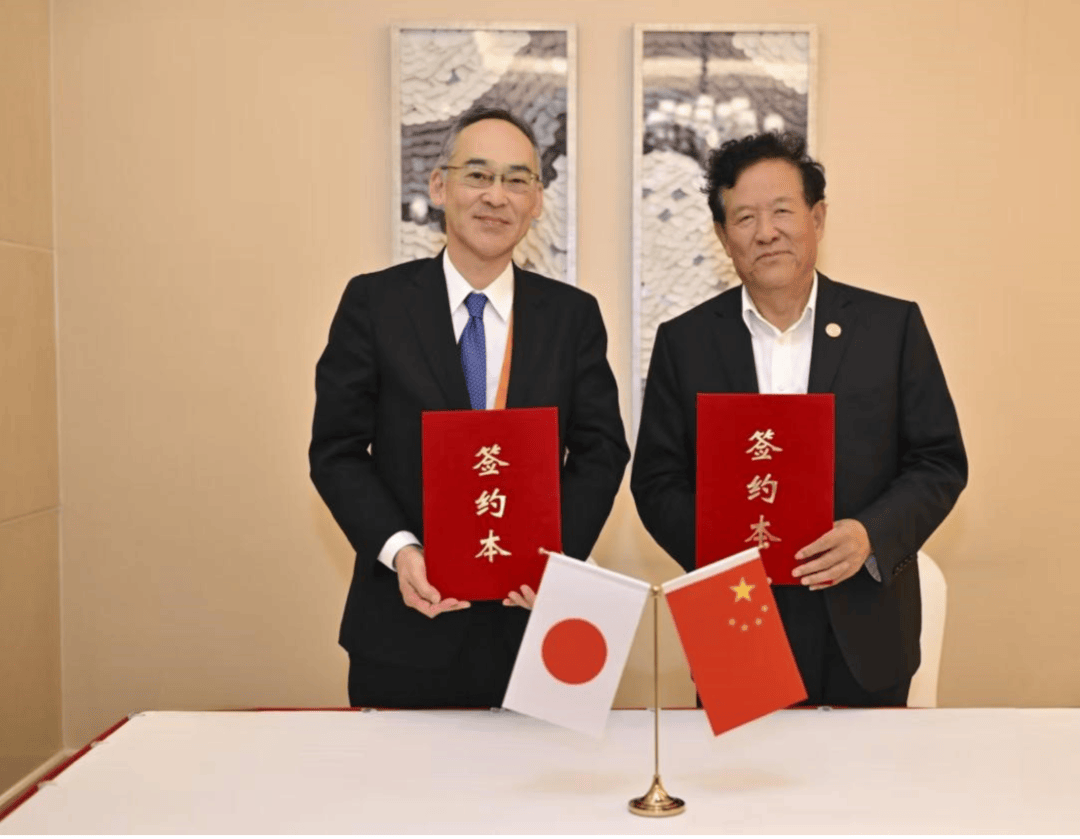
Core Viewpoint - The signing of a new cooperation memorandum between the China Electricity Council and the Japan Overseas Power Investigation Association marks a deepening collaboration in information sharing and technology exchange within the electric power industry of both countries [1][3]. Group 1: Cooperation Areas - The memorandum outlines broader and more practical cooperation in areas such as electricity data statistics, exchange of industry research reports, technical exchanges, and collaboration on green low-carbon technologies [3]. - Specific focus areas include renewable energy grid integration, energy storage technology, hydrogen utilization, and carbon capture and storage (CCS) [3]. Group 2: Statements from Leaders - The Vice Chairman of the China Electricity Council, Yang Kun, emphasized that this cooperation reflects the deepening mutual trust and development between the electric power industries of China and Japan, aiming to promote high-quality development in the face of global energy transition trends [3]. - Yoshihito Morishita, President of the Japan Overseas Power Investigation Association, noted the significant reference value of China's development experience and technological innovations, highlighting the memorandum's role in strengthening close ties in information exchange and technical cooperation [3]. Group 3: Future Plans - The memorandum stipulates that both parties will engage in regular visits, information exchange, and technical communication over the next three years, encouraging member units to participate in specific cooperation projects [3]. - The forum, themed "Green Development, Creating the Future Together," attracted representatives from government, enterprises, and research institutions, with the memorandum signing being a highlight of international cooperation [3].
河北:“六好”措施推动“好房子”建设
Zhong Guo Xin Wen Wang· 2025-09-22 10:52
Group 1 - The core viewpoint of the article is that Hebei Province is implementing measures to accelerate the construction of "good houses" to meet the high-quality living needs of the public [1][2] - The measures include six aspects: "good standards," "good design," "good construction," and others, focusing on safety, comfort, sustainability, and intelligence in housing [1] - Hebei will categorize and promote the development of local engineering standards based on the differentiated needs of new and existing residential buildings, including a comprehensive review and revision of current standards [1] Group 2 - The design units are encouraged to innovate residential design concepts, optimize indoor space functionality, and enhance health and comfort for residents, catering to both the elderly and children [1] - The promotion of green low-carbon technologies and high-quality building materials is emphasized, aiming to create visible "good house" projects from both new housing and renovation perspectives [2] - Hebei aims to establish a number of demonstrative "good houses" that are tangible and visible, accelerating the implementation of the "good house" concept [2]