
美国劳动力市场

Search documents
宏观主题研究:美国劳动力市场到底有多弱?
SPDB International· 2026-01-27 07:25
Labor Market Overview - The U.S. labor market is experiencing a rare phenomenon of simultaneous weakening in both supply and demand, leading to a cooling effect[12] - In 2025, non-farm payrolls increased by only 584,000, significantly lower than 2,012,000 in 2024 and 2,594,000 in 2023, marking the lowest level since 2010 excluding the pandemic[6] - The unemployment rate rose moderately from an average of 4.03% in 2024 to 4.24% in 2025, indicating a gradual increase rather than a sharp spike[6] Economic Indicators - The unemployment rate increased to 4.4% in December 2025, a slight decrease of 0.1 percentage points from the previous month[10] - Job openings to unemployed persons ratio fell from 1.09 at the end of 2024 to 0.92 in November 2025, reflecting a tighter labor market[9] - The PMI employment index for manufacturing dropped below 50, indicating contraction, while the non-manufacturing PMI showed signs of recovery, reaching 52 in December 2025[16] Future Projections - The downward trend in the labor market is expected to continue into 2026, but the likelihood of a rapid deterioration leading to recession is low[29] - The average unemployment rate is projected to rise to 4.4% in 2026, up from 4.2% in 2025, reflecting ongoing labor market challenges[29] - The Federal Reserve is anticipated to implement two more rate cuts of 25 basis points each in 2026 to mitigate labor market deterioration[29] Risks and Challenges - Risks include slow rate cuts potentially triggering a recession, prolonged inflation due to tariffs, and the effectiveness of policy stimulus falling short of expectations[29] - The labor force participation rate slightly declined from an average of 62.6% in 2024 to 62.4% in 2025, indicating reduced labor supply[14]
凯德北京投资基金管理有限公司:美国劳动力市场韧性面临考验
Sou Hu Cai Jing· 2026-01-24 11:12
Group 1 - The recent data indicates a slight increase in initial jobless claims in the U.S., reaching 200,000, which is a modest rise of 1,000 from the previous week, yet remains below market expectations, reflecting a certain resilience in the U.S. labor market [1] - The non-farm payrolls added only 50,000 jobs in December, remaining consistent with the revised November figures, while the unemployment rate decreased from 4.5% to 4.4%, marking the first decline in six months [3] - Job vacancies significantly dropped from 7.4 million to 7.1 million in November, indicating a cooling in employer hiring intentions, which contrasts with the economic growth momentum [3] Group 2 - The weakening recruitment momentum is attributed to various factors, including external uncertainties affecting business confidence and the lagging effects of previous tightening policies aimed at curbing inflation [5] - The Federal Reserve has lowered the benchmark interest rate for the third consecutive time, expressing concerns that the actual weakness in the labor market may exceed what surface data suggests [5] - Several large companies have announced layoffs across logistics, automotive, technology, and telecommunications sectors, indicating structural adjustments in certain areas, although overall layoffs remain low [8] Group 3 - The four-week average of initial jobless claims has decreased, and the total number of continuing claims has also shown a week-on-week decline, suggesting that some unemployed individuals are finding new jobs [8] - The U.S. labor market is described as being in a delicate balance, with low unemployment rates and claims data masking underlying issues such as hiring freezes and slowing growth [8]

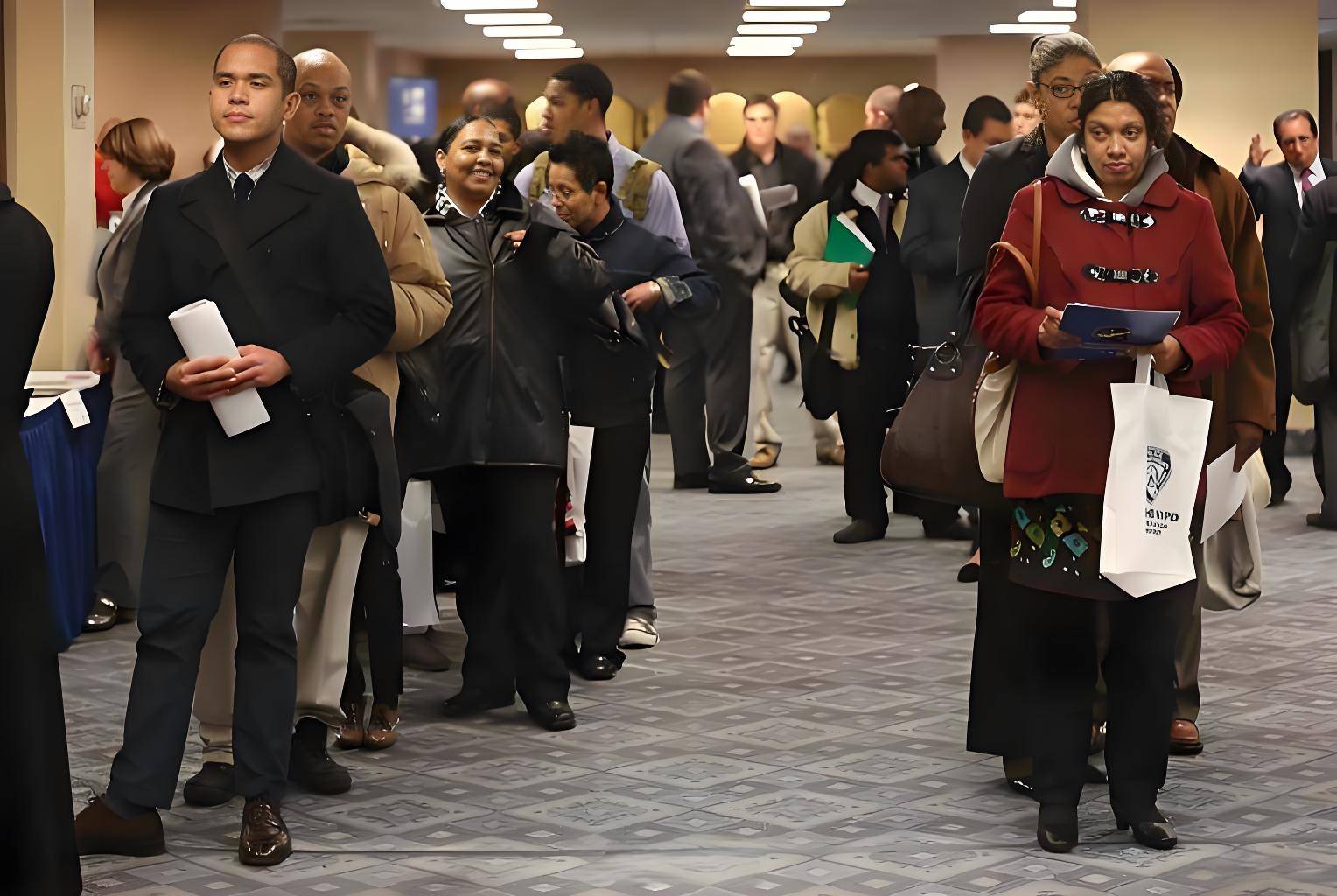
US weekly jobless claims increase by 1,000 to 200,000, below forecasts
Invezz· 2026-01-22 14:49
Core Viewpoint - The number of Americans filing new claims for unemployment benefits increased slightly last week but remained significantly below expectations, indicating that the US labor market is continuing to expand at a steady, albeit subdued, pace [1] Group 1 - The rise in new unemployment claims was slight, suggesting stability in the labor market [1] - Claims are still well below expectations, reinforcing positive labor market trends [1] - The overall labor market is expanding steadily, indicating resilience despite the slight increase in claims [1]

ATFX汇评:美联储褐皮书发布,8个储备区温和增长
Sou Hu Cai Jing· 2026-01-15 09:44
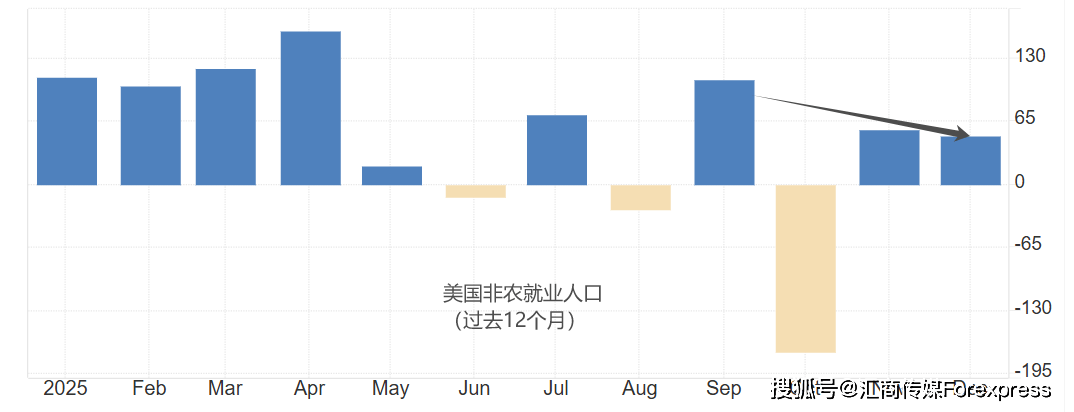
Economic Activity - The Federal Reserve's Beige Book indicates a neutral to optimistic outlook, with 8 out of 12 districts reporting slight or moderate economic growth, compared to the previous report where economic activity showed little change [1] - The recovery from the government shutdown in late 2025 is evident, as 8 districts have achieved growth, suggesting a rebound in the U.S. economy [1] Labor Market - The labor market remains stable, with 8 out of 12 districts reporting no changes in hiring, which is considered good news given the previous downturn [3] - Non-farm employment in December was reported at 50,000, lower than the previous 56,000 and below the average of 100,000 prior to May 2025, indicating ongoing challenges in the labor market [3] Inflation - Companies expect a slowdown in price increases, but prices are expected to remain high, which is a critical factor for the Fed's interest rate decisions [5] - Historical data suggests a higher probability of continued decline in inflation rather than an increase, with core CPI remaining at 2.6% in November and December 2025, compared to above 3% earlier in the year [5] Currency Impact - Following the Beige Book release, the dollar index closed with a bearish candlestick, indicating a short-term consolidation phase [5] - The neutral optimism reflected in the Beige Book suggests that the U.S. economy may not be as pessimistic as previously thought, potentially allowing for a continuation of the dollar's short to medium-term upward trend [5]
每日机构分析:1月12日
Sou Hu Cai Jing· 2026-01-12 09:39
Group 1: Federal Reserve and Monetary Policy - Goldman Sachs has postponed its expectation for the Federal Reserve's first interest rate cut from March 2026 to June 2026, anticipating rate cuts of 25 basis points in both June and September [1] - The analysis indicates that despite significant progress in inflation, the Fed may act cautiously due to one-time price boosts from tariffs, and the labor market, while stabilizing, still faces risks of further weakness [1] - The possibility of a rate cut in January 2026 has been virtually eliminated due to an unexpected drop in the U.S. unemployment rate, leading to a significant cooling of market expectations for easing [2] Group 2: Employment and Labor Market - Morgan McKinley's report shows a 12% year-on-year increase in job vacancies in the UK financial services sector by 2025, driven by a surge in demand for skills related to artificial intelligence, regulatory compliance, and data reporting [1] - Despite some weakening indicators, overall employment data in the U.S. remains resilient, suggesting that immediate monetary policy intervention is not urgent [2] - Approximately 40% of homes in the U.S. are mortgage-free, with rising home prices attributed more to soaring construction and labor costs than to interest rate factors [3] Group 3: Investment Trends and Market Dynamics - JPMorgan highlights a massive investment surge in AI infrastructure, estimating total investments to reach between $5 trillion and $7 trillion, with the four major U.S. cloud providers expected to invest $480 billion by 2026 [3] - The phenomenon of "locked-in" homeowners with mortgage rates below 4% continues to constrain housing market liquidity, with over half of U.S. homeowners unwilling to sell regardless of interest rates [3]
美国12月非农就业数据点评:美联储或继续观望降息效果
KAIYUAN SECURITIES· 2026-01-10 13:08
Employment Data - In December 2025, the U.S. added 50,000 non-farm jobs, which was below the market expectation of 65,000 and a decrease from the revised November figure of 64,000[3][15] - The unemployment rate fell to 4.4%, which was lower than market expectations, indicating a marginal improvement in the labor market[5][20] - Average hourly earnings increased by 3.8% year-on-year, surpassing market expectations[3][15] Labor Market Trends - The labor force participation rate remained stable at approximately 62.4%, while the unemployment rate decreased, suggesting a slight recovery in the labor market[5][20] - Permanent unemployment and first-time job seekers increased, while re-employment and temporary job seekers decreased, indicating a preference for hiring experienced workers[24][20] - Job openings in November were 7.146 million, down by approximately 303,000 from October, reflecting a slight easing in labor market tightness[6][38] Federal Reserve Outlook - The Federal Reserve is likely to maintain a wait-and-see approach regarding interest rate cuts, having already reduced rates by 75 basis points in 2025[7][46] - The Fed's decision to lower rates in December was influenced by rising unemployment risks, but the recent decline in unemployment may lead to a period of stable rates[7][46] - The Fed is expected to consider 1-2 additional rate cuts in 2026, primarily in the second half of the year[9][50]
美国劳动力市场持续走软
Xin Hua She· 2026-01-09 15:35
Core Insights - The U.S. Labor Department reported on January 9 that non-farm payrolls added in December 2025 fell below expectations, indicating a continued softening in the U.S. labor market [1] Group 1 - The number of new non-farm jobs added in December 2025 was lower than anticipated [1] - Data from the previous two months was revised downward, further highlighting the weakening labor market [1]
突发! 美联储,降息大消息!
Xin Lang Cai Jing· 2026-01-09 15:12
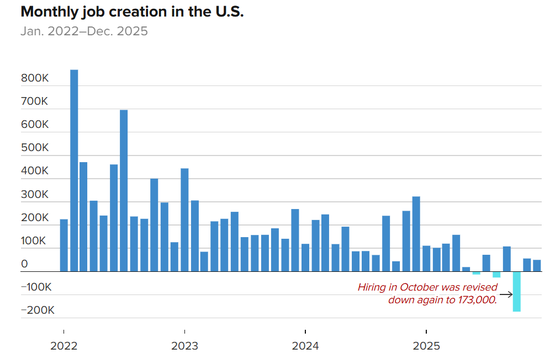
Core Viewpoint - The likelihood of the Federal Reserve lowering interest rates this month is nearly zero, influenced by the latest non-farm employment data and the unemployment rate [1][4][13]. Employment Data Summary - In December, non-farm employment increased by 50,000, which is lower than the revised 56,000 for November and below the expected 73,000 [7][8]. - The unemployment rate decreased slightly to 4.4%, while the market had anticipated it to remain at 4.5% [8][13]. - The average monthly non-farm employment increase for 2025 is projected at 49,000, significantly lower than the 168,000 for 2024 [13]. Market Reactions and Predictions - Analysts suggest that the drop in the unemployment rate makes it unlikely for the Fed to lower rates in January, with traders believing the possibility is almost non-existent [4][15]. - Future interest rate decisions will depend on the performance of the labor market in the coming months, with concerns about inflation potentially limiting further easing [15]. - Market expectations indicate a possible 50 basis point rate cut later this year, but January's cut is considered highly unlikely [15].
Principal资管公司:劳动力情况仍未明朗,美联储需要提供支持
Xin Lang Cai Jing· 2026-01-09 14:34
Core Viewpoint - The current state of the U.S. labor market is uncertain, with wage growth falling below expectations and recent data revisions leading to a negative average growth over the past three months [1] Group 1: Labor Market Conditions - Wage growth has been lower than anticipated, contributing to a lack of clarity in the labor market [1] - Recent data revisions have resulted in the three-month average wage growth dropping into negative territory [1] - Persistent unemployment levels raise concerns about the overall health of the labor market [1] Group 2: Economic Outlook - The tightening labor supply may explain some of the wage growth issues, but ongoing unemployment remains a significant concern [1] - There may be a need for additional support from the Federal Reserve for the U.S. economy, although immediate action is not anticipated [1]
经济学家认为美国劳动力市场最糟糕阶段或已过去
Xin Hua Cai Jing· 2026-01-09 12:39
Group 1 - The core viewpoint is that while the U.S. labor market is experiencing a slowdown in hiring and an increase in layoffs, the most severe phase of economic slowdown may have passed, pending confirmation from the upcoming December employment report [1][2] - A senior economist from Bank of America noted that although the labor market has not fully recovered, data suggests that the worst phase may be over, but the impact of the longest government shutdown in U.S. history has significantly affected the employment data for October and November [1] - Another economist focused on financial markets believes that the December employment report will provide a clearer understanding of the economic situation and is expected to reflect actual conditions better than November's data, as the Bureau of Labor Statistics' data collection processes return to normal [1] Group 2 - Analysis indicates that the U.S. labor market is undergoing a mild cooling process amid sustained high interest rates and rising corporate cost pressures [2] - If the December data shows stable unemployment, slowing wage growth, but no significant decline in employment numbers, it could support the "soft landing" narrative and influence the Federal Reserve's monetary policy path in the first half of 2026 [2] - The December employment report is widely viewed as a key indicator for assessing the resilience of the U.S. economy, and its release may reshape investor expectations regarding growth, inflation, and interest rates [2]