
资产定价

Search documents
熊园:美联储主席换届——流程、人选、影响
Sou Hu Cai Jing· 2025-09-10 03:30
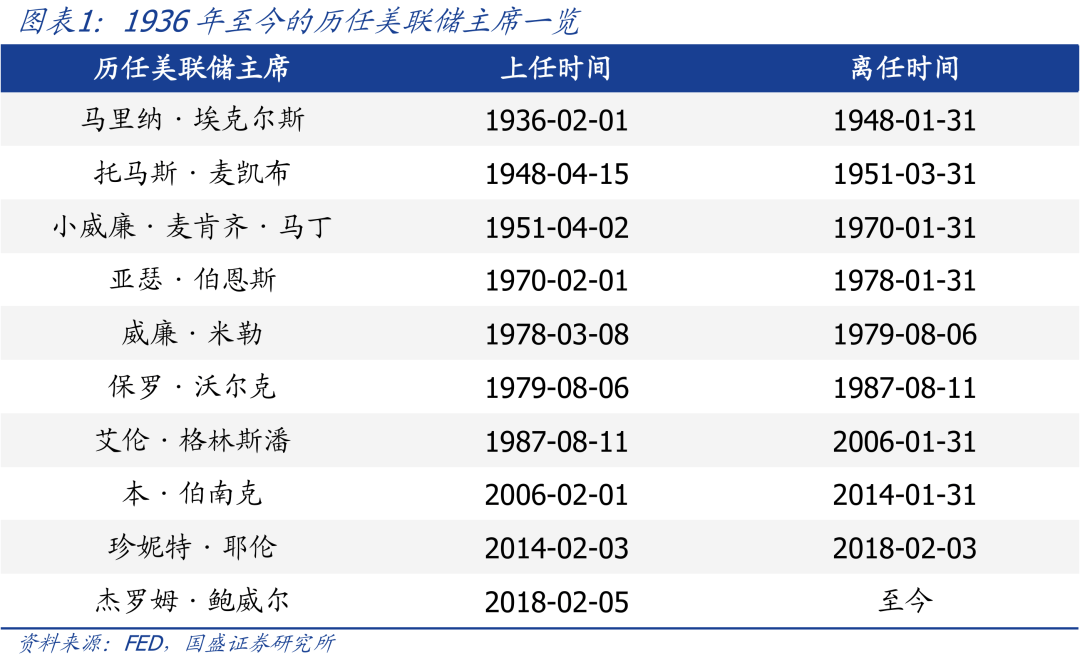
Core Conclusion - The current Federal Reserve Chairman Jerome Powell's term will end on May 15, 2026, and the next chairman is likely to be chosen from three candidates: Waller, Hassett, and Walsh, all of whom hold dovish views. The market currently sees Waller as the most probable candidate [1]. Group 1: Appointment Rules - The Federal Reserve Chairman serves a 4-year term and can be reappointed indefinitely, while the term for a Federal Reserve Board member is 14 years, with no possibility of reappointment. The President nominates the chairman, who must be confirmed by a majority vote in the Senate [2]. - Powell's term as chairman ends in May 2026, but he can continue to serve as a board member until January 31, 2028, if he does not seek reappointment [2]. Group 2: Candidates and Their Policy Stances - The three candidates for the next Federal Reserve Chairman are Waller (current Fed board member), Hassett (current NEC director), and Walsh (former Fed board member). All three are considered dovish and advocate for immediate interest rate cuts [5]. - Waller emphasizes the importance of Fed independence, while Hassett and Walsh show some flexibility regarding this independence, with Walsh suggesting that Fed policy should align with fiscal policy [5][7]. Group 3: Timing of Trump's Nomination - Historically, Trump is expected to nominate the next chairman around February 2026, but given his dissatisfaction with Powell, an earlier nomination is possible to diminish Powell's influence [8]. Group 4: Likelihood of Candidates - As of September 7, Waller has a 36% probability of being nominated, followed by Hassett at 26% and Walsh at 16%. Waller's probability has remained stable over the past month [9][11]. - A survey indicated that professional investors believe Waller and Walsh are more qualified than Hassett, who lacks extensive experience in financial institutions [14]. Group 5: Historical Impact on Asset Classes - Historical data shows that in the three months prior to a new chairman's nomination, U.S. stocks generally perform poorly, while the performance of U.S. Treasury yields is inconsistent, and the dollar index tends to weaken [15]. - After the nomination, U.S. stocks typically see a significant improvement, with Treasury yields rising, although the dollar and gold prices may vary depending on the new chairman's policy stance [15].

中信证券:美国是否正在进入产业政策时代?
Ge Long Hui A P P· 2025-09-01 01:20
Core Viewpoint - The recent actions of the Trump administration regarding capital participation by certain U.S. companies have introduced more "policy factors" into the market, leading investors to consider whether the U.S. is entering an era of industrial policy [1] Group 1: Policy Implications - If the Trump administration expands its capital participation plans, "policy factors" will have a greater impact on asset pricing in the U.S. market [1] - The relationship between companies involved in capital participation and the U.S. government is expected to reduce tail risks, resulting in a downward shift in the credit spread for related firms [1] Group 2: Equity Market Effects - Initially, related equity assets may reflect positive impacts from policy announcements; however, governance constraints, limitations on dividends and buybacks, and increasing uncertainty regarding U.S. government regulations may cap the upper limit of stock price valuations for these companies [1]

【有本好书送给你】重拾金融美德:“人文棱镜”塑造金融行业价值创造
重阳投资· 2025-08-28 07:33
Core Viewpoint - The article emphasizes the importance of understanding finance through a humanistic lens, advocating for a return to the core values of finance as a tool for value creation rather than value extraction [24][25]. Group 1: Financial Industry Challenges - In the first half of 2025, 43 payment institutions were fined nearly 160 million yuan due to anti-money laundering issues, and Haier Consumer Finance was fined 2.3 million yuan for collection violations, highlighting risk management vulnerabilities [9]. - The non-performing loan ratio of commercial banks rose to 2.8%, and valuations of Hong Kong-listed banks hit a ten-year low, indicating a trend of international capital withdrawal [9]. - The cryptocurrency market faced turmoil, with Layer 2 projects collapsing and exchanges imposing bans, revealing governance issues within the industry [9][10]. Group 2: Humanistic Approach to Finance - The article discusses the need for financial professionals to better explain their work to regain public trust, emphasizing that finance should create value rather than extract it [10][11]. - Michal DeSai, a Harvard professor, suggests that integrating financial principles with literature, history, and philosophy can enhance practitioners' understanding and resistance to corruption [11][12]. - The narrative includes a parable illustrating the dual nature of finance, portraying it as both noble and deceitful, which reflects the complexities of human nature [12][13]. Group 3: Understanding Risk and Probability - The article highlights that finance provides tools to navigate a world filled with risks and uncertainties, emphasizing the importance of understanding probability [16][20]. - Historical perspectives on risk reveal that the understanding of probability evolved over time, transitioning from divine intervention to rational analysis [15][16]. - The concept of insurance is presented as a practical application of risk management, emphasizing the collective sharing of risk among individuals [19][20]. Group 4: Conclusion on Financial Wisdom - The essence of financial wisdom is rooted in human nature, navigating the tension between nobility and deceit, and is fundamentally about managing risk and creating value [24]. - The article concludes that the ultimate mission of finance is not merely numerical manipulation but empowering individuals to navigate their lives with dignity amidst uncertainty [24].

电子行业总市值首超银行说明什么
Jing Ji Ri Bao· 2025-08-26 22:01
Core Insights - The A-share market has witnessed a historic moment as the electronic industry surpassed the banking sector, reaching a total market value of 11.54 trillion yuan as of August 22, marking it as the largest industry in the A-share market [1] - This structural change reflects the accelerated rise of China's electronic industry and a shift in investor preferences towards technology-driven sectors, indicating a steady transition of economic development towards innovation-driven growth [1][2] Industry Overview - The banking sector, traditionally favored for its stable profits and large asset scale, has been overtaken due to the continuous rise in China's technological innovation and the transformation of industrial structures, with emerging industries like electronics, new energy, and biomedicine gaining more influence and market share [1][2] - The electronic industry has experienced sustained high growth in sub-sectors such as consumer electronics and semiconductors, driven by the rapid upgrade of global consumer electronics and the surge in demand for artificial intelligence computing power [1] Investor Behavior - The shift in investor preference from "large and stable" bank stocks to high "technology content" electronic stocks is a natural choice in the context of China's high-quality economic development [2] - As the economic development model evolves, technology innovation has become the core driver of economic growth, leading to increased investor attention and higher valuations for industries with greater technological capabilities and growth potential [2] Market Dynamics - The maturation and development of the capital market have created favorable conditions for the electronic industry's rise, supported by reforms such as the establishment of the Sci-Tech Innovation Board in 2019 and recent policy measures aimed at optimizing the market environment for innovative enterprises [2][3] - The re-ranking of industry market values not only represents a re-evaluation of the electronic industry's worth but also reflects the success of China's economic structural adjustments, with asset pricing shifting from traditional metrics of "scale and stability" to "technology and growth" [3]
站在白酒复苏的前夜
2025-08-26 15:02
Summary of the White Wine Industry Conference Call Industry Overview - The white wine industry has experienced four cycles since 2000: 1999-2003, 2008-2009, 2012-2015, and 2022-present, each with unique macroeconomic environments and market performances [2][8] Key Points and Arguments - The current white wine cycle is similar to the 2013-2015 cycle, which was marked by a significant downturn due to the "Three Public Consumption" ban, impacting high-end white wine markets, particularly Moutai, which saw wholesale prices drop from 1,850 RMB to 850 RMB [3][10] - During the 2013-2015 cycle, the white wine stock index fell by 46% from January 2013 to June 2014, but began to rebound in June 2014, ahead of fundamental performance confirmation [5][11] - Improvement in the fundamentals is evident, with a narrowing decline in advance receipts and positive operating cash flow trends, indicating that companies are emerging from a low point [6][11] - Liquidity expectations improved significantly with the launch of the Shanghai-Hong Kong Stock Connect in late 2014, which attracted foreign investment into A-shares, particularly in consumer stocks [7][9] Important but Overlooked Content - The current cycle faces challenges such as overcapacity and macroeconomic impacts, but leading companies have a more concentrated market share, allowing them to better manage market fluctuations and maintain smoother inventory and channel cycles [10][12] - Changes in consumer drinking habits, particularly among younger demographics, are shifting towards more personalized and lower-alcohol options, which may affect the overall recovery of white wine consumption in the long term [10][11] - The upcoming Mid-Autumn Festival and National Day are critical periods for assessing whether the white wine market has truly bottomed out [11][12]
东兴证券:白酒整体基本面向好趋势确认 建议关注贵州茅台等
Zhi Tong Cai Jing· 2025-08-26 02:45
Core Viewpoint - The report from Dongxing Securities indicates that the liquor stocks are on the verge of a bottom recovery in asset pricing, despite a weak recovery in the fundamentals of liquor consumption. The overall trend of improving fundamentals has been confirmed, suggesting a focus on the rebound opportunities in the liquor sector, particularly for companies like Kweichow Moutai (600519) and Wuliangye (000858) that have consistently increased market share during the cycle [1]. Group 1 - Since 2000, the liquor industry has experienced four cycles: 1999-2003, 2008-2009, 2012-2015, and 2022-present. The cycle from 2013 to 2015 was notably deep and similar to the current macroeconomic situation, prompting a review of capital pricing changes during that period to identify potential bottom recovery windows for liquor stocks [2]. - The analysis of the 2013-2015 liquor cycle revealed that liquor stock prices typically bottom out approximately two quarters before the fundamentals confirm a recovery, indicating a lead time in market reactions to fundamental changes [2]. Group 2 - Two key changes in expectations influenced the asset pricing of liquor stocks during the previous cycle: the stabilization of terminal sales around the 2014 Dragon Boat Festival and the improvement in the financial health of liquor companies as indicated by their semi-annual reports. Additionally, the initiation of the Shanghai-Hong Kong Stock Connect reform in 2014 improved liquidity expectations for consumer stocks, attracting long-term capital to the liquor sector [3]. - The current liquor cycle is seen as a combination of the liquor sector's own cycle and the macroeconomic cycle. Positive trends are observed in both demand and liquidity, with the upcoming Mid-Autumn Festival and National Day holidays indicating a clearer upward trend in liquor demand, alongside significant liquidity improvements in the A-share market, which reached a 10-year high in August 2025 [3].


会员金选丨教授公开课:全球政治经济不确定性下的国际经济形势展望
Di Yi Cai Jing Zi Xun· 2025-08-13 04:12
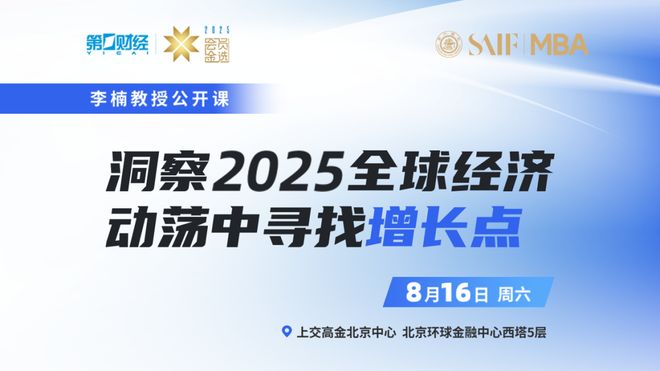
Group 1 - The public lecture will explore the international economic outlook under global political and economic uncertainty [2][3] - The event is scheduled for August 16, Saturday, at 1:00 PM in Beijing [2] - The agenda includes a lecture by Professor Li Nan on economic decision-making logic in uncertain environments, focusing on long-term risks and the impact of technological innovation on asset pricing [3] Group 2 - Professor Li Nan is the Deputy Director of the Securities and Finance Research Institute at Shanghai Jiao Tong University and has extensive experience in financial economics and macro asset pricing [4] - Her research focuses on economic policy and investment decisions under uncertainty, pricing of long-term risks, and the valuation of intangible assets [4] - Professor Li has published articles in top economic journals and has collaborated with Nobel laureates, indicating her significant contributions to the field [4] Group 3 - Professor Li has rich bilingual teaching experience and has taught various programs including undergraduate, master's, and executive education [5] - She has received multiple awards for her thesis guidance and has developed several internationally recognized courses [5] - Her contributions to educational materials include writing a chapter for the "Research Handbook on Alternative Finance" [5] Group 4 - Professor Li has published articles on financial regulation, fintech, and innovation finance in influential media outlets and has been invited to speak at various forums [6] - The public lecture series is a collaboration between First Financial and Shanghai Jiao Tong University, aimed at addressing pressing topics for businesses [7]
十年研究心法之一:研究并不复杂,唯用心尔
HUAXI Securities· 2025-08-04 03:36
Report Summary 1. Report Industry Investment Rating No industry investment rating information is provided in the content. 2. Core Viewpoints of the Report - The core of research is to find causal relationships to predict the future, and in capital market research, it focuses on finding factors affecting asset prices and predicting price trends [2][14]. - The key to capital market research is to simplify complexity and capture market participants' expectations, and historical research is crucial for quick mastery [3][4]. - Total research is more complex due to the constantly changing macro - environment, and one needs to keep learning and updating analysis frameworks [5]. - Research and investment are both related and different. Research is about discovering rules, while investment is about breaking them, and they have different stances [8][25]. - To do well in capital market research, one needs to have passion and dedication, and quickly respond to events [30]. 3. Summary by Directory 3.1 What is Research and What Does Capital Market Research Focus on? - The core of research is to find causal relationships and make future predictions. The difficulties lie in clearly identifying causal relationships and finding the core reasons at different stages [2][14]. - In capital market research, the change in asset prices is the result, and it aims to find influencing factors and predict price trends. A good capital market research should have clear conclusions, logical arguments, and detailed data [15]. 3.2 The Key to Capital Market Research: Simplify Complexity and Capture Expectations - First, understand the impact direction and amplitude of each factor on asset pricing. When new events occur, quickly predict price changes based on accumulated causal relationships [16]. - Second, simplify complexity by accurately grasping the main - line logic and finding important variables. For example, the bond market has "three aspects" and the stock market has three pricing factors [18]. - Third, capture market participants' consistent expectations. Asset pricing involves both actual impacts and expected changes, and only the part beyond expectations can bring excess returns [19]. 3.3 How to Quickly Go from Novice to Expert? History is the Best Teacher - By studying history, one can understand the relationship between events and asset performance, build a research analysis library, and quickly make predictions when similar events occur [20]. - The more one knows about the history of an asset, the more likely they are to gain returns, and the 10,000 - hour rule applies to investment research [22]. 3.4 Total Research is More Complex Because the World is Always Changing - Macro - research is complex as the macro - environment is constantly changing, and changes in factors or variables may invalidate the analysis framework and lead to inaccurate future judgments [5][23]. - One needs to maintain the ability to learn quickly, review the impact of events and policies, and update the analysis framework [7][24]. 3.5 Research and Investment: Interrelated but Different - Research discovers rules, while investment breaks them. Investment needs to confront market sentiment, buy when the market is ignored, and sell when it is popular [8][25]. - Research should be on the left - hand side and adhere to judgments, while investment may be on the right - hand side and make compromises when necessary to control retracements [28][29]. 3.6 How to Do Well in Capital Market Research? - To do well in capital market research, one needs passion and dedication, and quickly respond to events without over - complicating analysis [30]. - One should invest a lot of time and energy, distinguish logic and priorities from daily changes, and focus on the main contradictions [30].
中欧养老混合A:2025年第二季度利润4221.73万元 净值增长率2.06%
Sou Hu Cai Jing· 2025-07-20 07:43
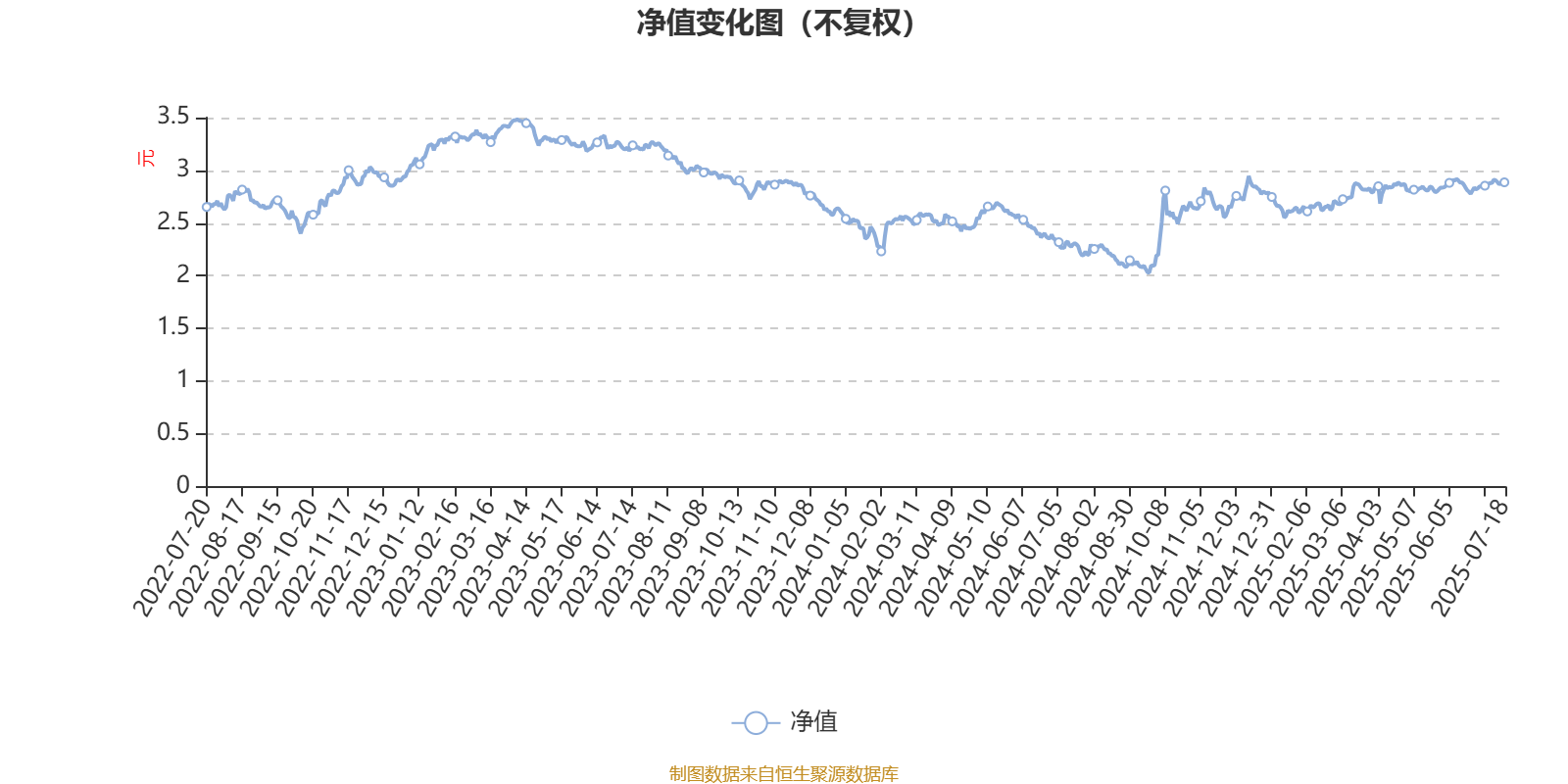
Core Insights - The AI Fund Zhongou Pension Mixed A (001955) reported a profit of 42.22 million yuan for Q2 2025, with a weighted average profit per fund share of 0.0556 yuan [3] - The fund's net value growth rate for the reporting period was 2.06%, and as of the end of Q2, the fund size was 1.866 billion yuan [3] - The fund manager, Xu Wenxing, oversees five funds, all of which have shown positive returns over the past year [3] Fund Performance - As of July 18, the fund's unit net value was 2.886 yuan [3] - The fund's performance over various time frames includes: - 3-month net value growth rate: 1.01%, ranking 131 out of 132 comparable funds [4] - 6-month net value growth rate: 10.22%, ranking 66 out of 132 [4] - 1-year net value growth rate: 25.00%, ranking 39 out of 132 [4] - 3-year net value growth rate: 11.72%, ranking 21 out of 127 [4] Risk and Return Metrics - The fund's Sharpe ratio over the past three years is 0.3113, ranking 27 out of 129 comparable funds [9] - The maximum drawdown over the past three years is 41.7%, ranking 38 out of 129 [11] - The largest single-quarter drawdown occurred in Q1 2022, at 19.7% [11] Investment Strategy - The fund has maintained an average stock position of 87.23% over the past three years, compared to a peer average of 86.11% [14] - The fund reached a peak stock position of 93.13% at the end of 2023, with a low of 73.76% at the end of 2021 [14] Holdings Concentration - The fund has a high concentration in its top holdings, with the top ten stocks consistently exceeding 60% over the past two years [18] - As of Q2 2025, the top ten holdings include companies such as Gujia Home, Chenguang Stationery, and Songcheng Performance [18]
英国央行副行长布里登:气候风险开始被纳入资产定价。
news flash· 2025-07-10 15:16
Group 1 - The Deputy Governor of the Bank of England, Jon Cunliffe, stated that climate risks are beginning to be incorporated into asset pricing [1] - This shift indicates a growing recognition of the financial implications of climate change within the financial sector [1] - The integration of climate risk into asset pricing could lead to significant changes in investment strategies and risk assessments [1]