
防范化解风险

Search documents
守牢安全底线,稳妥化解风险
Xin Hua She· 2025-12-24 08:45
Group 1 - The central economic work meeting emphasizes the importance of balancing development and security, identifying risk prevention as a key task for the upcoming year [1] - The meeting highlights the need for a proactive approach to risk management, focusing on high-quality development and safety as mutually reinforcing goals [1] - The current development environment in China is characterized by both strategic opportunities and significant risks, necessitating improved risk prevention capabilities [1] Group 2 - China's urbanization is transitioning from rapid development to stable development, requiring the real estate market to adapt to new conditions [2] - The real estate sector must balance development and risk prevention, with policies aimed at stabilizing the market and promoting affordable housing [2] - Local government debt risks need to be addressed through optimized restructuring and management practices, ensuring compliance and preventing new hidden debts [2] Group 3 - The emphasis on historical proactive spirit is crucial for overcoming challenges and risks in the economic and social development goals for the coming year [3] - There is a call for unity and strategic determination to navigate risks and transform challenges into opportunities, ensuring a new security framework supports the new development framework [3]
守牢安全底线,稳妥化解风险——九论学习贯彻中央经济工作会议精神
Xin Hua Wang· 2025-12-20 13:57
Group 1 - The core viewpoint emphasizes the importance of balancing development and security, with a focus on risk management in key areas as a priority for economic work in the coming year [1][2] - The article highlights the need for a systematic approach to prevent and mitigate major risks, reinforcing the idea that safety is a prerequisite for development and vice versa [1][2] - It discusses the transition of urbanization in China from rapid growth to stable development, indicating significant changes in the real estate market that require adaptive strategies [2][3] Group 2 - The need for proactive measures to address local government debt risks is outlined, advocating for optimized debt restructuring and management to prevent systemic risks [3] - The article stresses the importance of maintaining a balance between development and debt resolution, promoting a market-oriented transformation in government debt management [3][4] - It calls for a strategic approach to navigate challenges and risks in the economic landscape, emphasizing unity and confidence in achieving development goals [4]
新华社评论员:守牢安全底线,稳妥化解风险——九论学习贯彻中央经济工作会议精神
Xin Hua She· 2025-12-20 13:43
Group 1 - The core viewpoint emphasizes the importance of balancing development and security, with a focus on risk prevention and management as a key task for the upcoming economic work [1][2] - The article highlights the need for a systematic approach to prevent and mitigate major risks, reinforcing the idea that safety is foundational for development [1][2] - It stresses the importance of adapting to changes in the real estate market, advocating for policies that stabilize the market and promote high-quality development [2] Group 2 - The article discusses the necessity of addressing local government debt risks through optimized restructuring and management practices, aiming to prevent the emergence of systemic risks [3] - It calls for a proactive approach to debt management, emphasizing the need for a long-term mechanism that aligns with high-quality development [3] - The commentary underscores the importance of unity and strategic determination in overcoming challenges and risks in the economic landscape [3]
学习规划建议每日问答 | 如何理解增强财政可持续性
Xin Hua She· 2025-12-18 07:24
Core Viewpoint - The article emphasizes the importance of enhancing fiscal sustainability through proactive fiscal policies and systematic management to support economic and social development over the next five years [1] Group 1: Fiscal Policy and Economic Growth - Strengthening macroeconomic regulation through fiscal policies to ensure market mechanisms are effective and to enhance the vitality of microeconomic entities [2] - The need for a balanced approach in fiscal macro-control to smooth short-term fluctuations and boost long-term development momentum [2] - Expansion of domestic demand and enhancement of technological innovation capabilities as key strategies for increasing fiscal sustainability [2] Group 2: Fiscal Resource Management - Improvement of fiscal resource allocation efficiency through comprehensive management and integration of budgetary resources [3] - Inclusion of all revenues derived from administrative power and state-owned resources into government budget management [3] - Establishment of a fiscal capacity assessment mechanism to ensure that major policies and projects are financially feasible [3] Group 3: Fiscal Expenditure Structure - Optimization of fiscal expenditure structure through zero-based budgeting reforms and a performance-oriented budget allocation mechanism [3] - Emphasis on ensuring essential expenditures while reducing unnecessary spending to enhance fiscal policy effectiveness [3] - Strengthening management of social welfare expenditures and improving the evaluation of fiscal support systems [3] Group 4: Risk Management - Establishment of a comprehensive monitoring and regulatory system for local debt to prevent and mitigate hidden debt risks [4] - Enhancement of the long-term sustainability of pension insurance systems and the safeguarding capabilities of medical insurance funds [4] - Development of a safety supervision system for social security funds to ensure their value preservation and growth [4]
前瞻2026:从经济发展逻辑看未来一年的政策着力点
Sou Hu Cai Jing· 2025-12-13 02:08
Group 1 - The core focus for China's economic work in 2026 will be on balancing short-term stability with long-term structural optimization, addressing both immediate economic growth and the cultivation of new growth drivers [2][4] - Short-term policies will prioritize maintaining economic growth within a reasonable range, ensuring overall employment stability, and keeping price levels stable, which requires continuous and targeted macroeconomic policies [2][5] - Long-term strategies will emphasize fostering new growth momentum through investments in technology innovation, industrial upgrades, and green development, aiming to enhance total factor productivity and build a modern industrial system [2][5] Group 2 - The expected key directions for economic work in 2026 include promoting industrial system upgrades through technological innovation, expanding domestic demand, deepening reforms in key areas, and effectively preventing and mitigating risks in critical sectors [3][5] - Expanding domestic demand will involve measures to release consumer potential, such as increasing household income and improving the consumption environment, while maintaining reasonable investment intensity in key areas [5] - Reform efforts will focus on establishing a higher-level market economy, enhancing the market-oriented allocation of resources, and creating a favorable business environment, alongside steady expansion of institutional openness to attract global resources [5] Group 3 - Effective risk prevention and mitigation will be essential for maintaining overall economic and financial stability, requiring enhanced monitoring and early warning systems for various risks [5] - Clear policy signals will guide the allocation of resources towards technology innovation, green development, and improving livelihoods, accelerating economic structural optimization [5] - Policies aimed at expanding domestic demand and strengthening risk prevention will ultimately focus on safeguarding and improving people's livelihoods, promoting employment and income growth, and enhancing social security levels [5]

金融监管总局:着力化解存量风险,坚决遏制增量风险,严守不“爆雷”底线
Xin Lang Cai Jing· 2025-12-12 12:45
Core Viewpoint - The meeting of the Financial Regulatory Bureau's Party Committee emphasized the importance of the Central Economic Work Conference, which provides guidance for economic work in the upcoming period, particularly in the context of transitioning from the 14th Five-Year Plan to the 15th Five-Year Plan [1][4]. Group 1: Risk Prevention and Management - The bureau aims to effectively prevent and resolve risks in key areas, focusing on mitigating existing risks and preventing new ones, while ensuring that there are no major financial failures [2][5]. - Support will be provided to stabilize the real estate market and enhance the role of urban real estate financing coordination mechanisms [2][5]. - Financial institutions will be guided to address local government financing platform debt risks in a market-oriented and legal manner [2][5]. Group 2: Strengthening Regulatory Effectiveness - The bureau plans to enhance financial legal frameworks and improve regulatory capabilities through precise and efficient law enforcement [2][5]. - Financial institutions are encouraged to adopt correct operational, performance, and risk perspectives, aiming for cost reduction and efficiency improvement [2][5]. - There will be a crackdown on illegal financial activities to protect the financial interests of the public [2][5]. Group 3: Promoting High-Quality Development - Financial institutions are urged to increase support for major national strategies and key sectors, enhancing the adaptability of economic and financial services [2][6]. - The bureau will continue to utilize new policy financial tools to stimulate investment and boost consumption [2][6]. - Efforts will be made to optimize financial services for rural revitalization and support for flexible employment groups [2][6]. Group 4: Party Governance and Internal Discipline - The bureau emphasizes the importance of political construction and the implementation of the Party's innovative theories to enhance political capabilities [3][6]. - Continuous efforts will be made to uphold integrity and discipline within the regulatory team, fostering a clean and responsible workforce [3][6]. - The bureau will focus on creating a positive atmosphere for entrepreneurship and governance [3][6]. Group 5: Year-End Work and Future Planning - The bureau will conduct a comprehensive review of this year's key objectives and plan for the financial regulatory priorities for 2026 [3][6]. - There will be an emphasis on policy communication to create a favorable public opinion environment for high-quality economic and financial development [3][6]. - Safety production and social stability will be prioritized as part of the year-end work [3][6].
关注2025年中央经济工作会议公报的新变化
Sou Hu Cai Jing· 2025-12-12 09:47
扫码文末"投小圈" 加入行业交流群 文章来源:张明宏观金融研究 作者:张明 01 对经济工作的认识与体会 2024年中央经济工作会议:必须统筹好有效市场和有为政府的关系,形成既"放得活"又"管得住"的经济 秩序;必须统筹好总供给和总需求的关系;必须统筹好培育新动能和更新旧动能的关系;必须统筹好做 优增量和盘活存量的关系;必须统筹好提升质量和做大总量的关系。 2025年中央经济工作会议:必须充分挖掘经济潜能,必须坚持政策支持和改革创新并举,必须做到 既"放得活"又"管得好",必须坚持投资于物和投资于人紧密结合,必须以苦练内功来应对外部挑战。 解读 在2025年,中国政府多次强调"投资于物和投资于人紧密结合", 未来与教育、培训、医疗、养老的投 资可能会明显增加。"充分挖掘经济潜能"和"苦练内功"本质上是一脉相承的,如何扩大内需尤其是提振 消费仍是当务之急。 02 经济工作基调 2024年中央经济工作会议:更好统筹发展和安全,实施更加积极有为的宏观政策,扩大国内需求,推动 科技创新和产业创新融合发展,稳住楼市股市,防范化解重点领域风险和外部冲击,稳定预期、激发活 力,推动经济持续回升向好,不断提高人民生活水平,保 ...
国泰海通|中央经济工作会议的六个亮点
国泰海通证券研究· 2025-12-12 04:22
Core Viewpoint - The article discusses the outcomes of the Central Economic Work Conference held on December 11-12, 2025, emphasizing a moderate policy tone, a focus on internal demand, and long-term structural improvements while addressing external risks [3][4][9]. Group 1: Policy Tone and Direction - The policy tone is generally moderate, shifting from "seeking progress while maintaining stability" to "maintaining stability while seeking progress and improving quality and efficiency" [4][10]. - Fiscal policy will maintain necessary levels of deficit, debt, and expenditure, with a projected deficit rate around 4% [4][11]. - Monetary policy will continue to be moderately loose, with an emphasis on promoting reasonable price recovery [11][12]. Group 2: Internal Demand and Investment - The focus is on internal demand, with clear strategies to stabilize investment and enhance service consumption [4][11]. - Investment is expected to stop declining, with new policy financial tools being utilized to support this [4][11]. - Service consumption will be promoted through reforms aimed at increasing supply to stimulate demand [11][12]. Group 3: Risk Management and Real Estate - The emphasis on risk prevention has decreased, with ongoing policies for real estate and debt management [5][12]. - Reforms in the housing provident fund system are anticipated, including potential reductions in loan rates and adjustments in withdrawal ratios [5][12]. - The fiscal environment for 2026 is expected to remain similar to 2025, with a focus on managing debt and social spending [5][12]. Group 4: Social Stability and Employment - Maintaining social stability remains a priority, with measures in healthcare, education, and employment being highlighted [6][13]. - The economic growth target for 2026 is expected to remain stable, balancing growth with social needs [6][13]. - The article notes the importance of transitioning from traditional labor-intensive industries to ensure employment stability [6][13]. Group 5: Long-term Structural Reforms - The conference highlighted the need for long-term structural reforms to address "involution" in competition, with a focus on establishing a unified national market [5][12]. - Measures to improve the supply side are expected to contribute to a moderate recovery in the Producer Price Index (PPI) [5][12]. - The commitment to a dual carbon strategy includes accelerating the construction of a new energy system and improving disaster prevention infrastructure [6][13].

从中央经济工作会议看“十五五”开局之年中国经济着力点
Xin Hua Wang· 2025-12-11 16:50
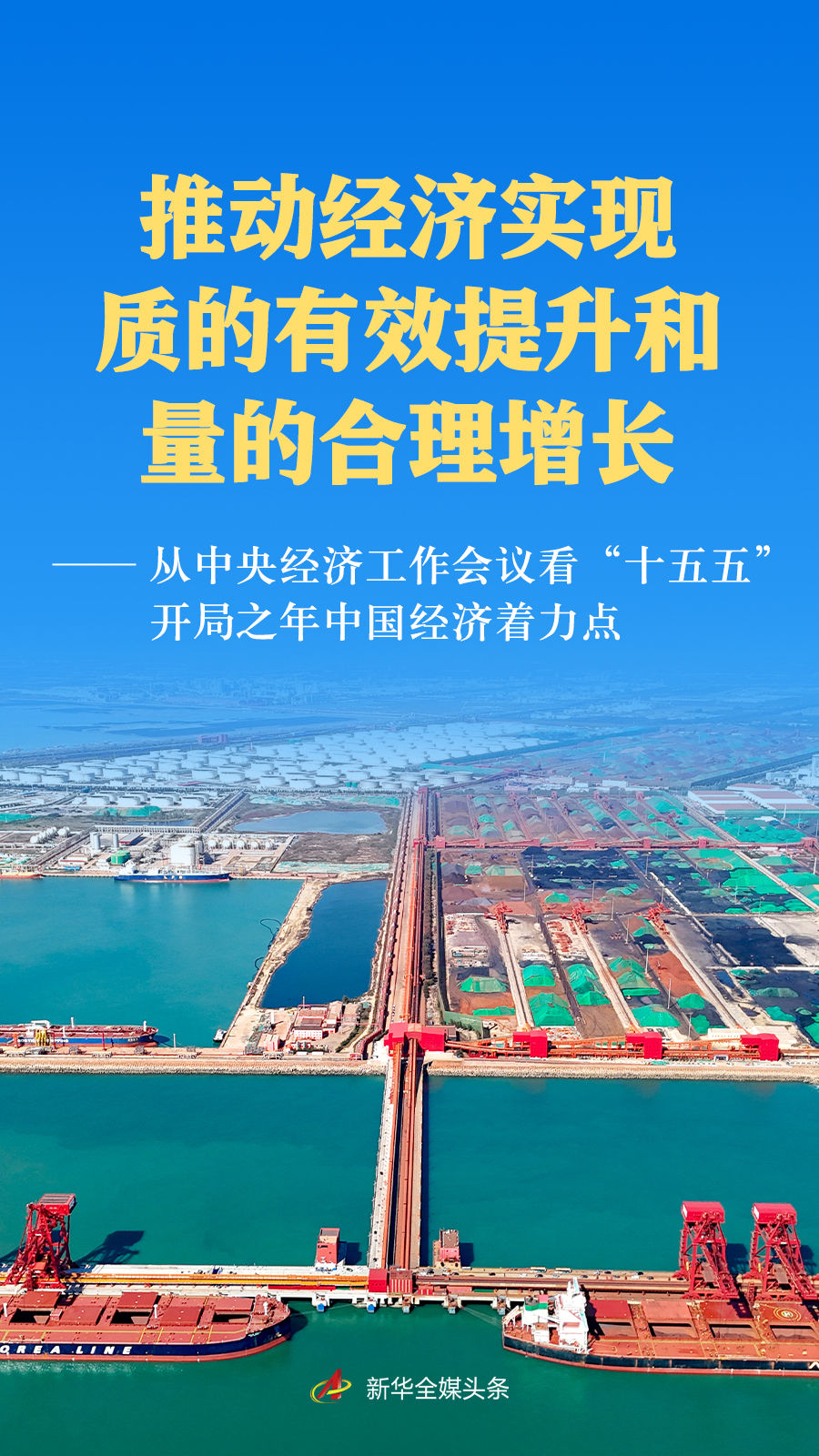
中央经济工作会议12月10日至11日在北京举行。习近平总书记出席会议并发表重要讲话,总结2025年经济工作,分析当前 经济形势,部署2026年经济工作,为实现"十五五"良好开局定向领航。 不断深化新形势下做好经济工作的规律性认识 2025年是"十四五"规划收官之年,在中国式现代化进程中具有重要意义。 会议总结今年经济运行情况,指出"经济社会发展主要目标将顺利完成""'十四五'即将圆满收官,第二个百年奋斗目标新征 程实现良好开局"。 会议认为,通过实践,我们对做好新形势下经济工作又有了新的认识和体会:必须充分挖掘经济潜能,必须坚持政策支持 和改革创新并举,必须做到既"放得活"又"管得好",必须坚持投资于物和投资于人紧密结合,必须以苦练内功来应对外部挑 战。 新时代以来的中央经济工作会议,一贯重视理论总结,用以指导经济发展实践。随着形势变化,中央经济工作会议持续深 化对经济工作的规律性认识,2021年提出"四个必须",2022年提出"六个坚持",2023年提出"五个必须",2024年提出"根本保 证""五个必须统筹"。 原标题:新华全媒头条·聚焦中央经济工作会议|推动经济实现质的有效提升和量的合理增长——从中央经 ...
金瑞期货总经理侯心强:坚持服务实体 筑牢风控根基 推动行业高质量发展
Zheng Quan Ri Bao Wang· 2025-12-11 14:04
Group 1 - The central economic work conference outlines a clear blueprint for high-quality economic development in China and indicates the fundamental direction for capital markets to serve the real economy and mitigate risks [1] - Jinrui Futures emphasizes its commitment to implementing the conference's directives by adhering to the new development philosophy, focusing on serving the real economy, and strengthening risk control foundations [1][4] Group 2 - The conference calls for financial institutions to enhance support for key areas such as expanding domestic demand, technological innovation, and small and medium-sized enterprises [2] - Jinrui Futures aims to integrate futures tools more closely with the real economy, actively aligning with national strategies and focusing on rural revitalization [2] - The company plans to deepen its efforts in the industrial customer sector, enhancing its research and development capabilities centered around hedging, and providing comprehensive risk management services [2] Group 3 - The conference stresses the importance of maintaining a bottom line and actively and prudently addressing risks in key areas [3] - Jinrui Futures recognizes that risk management is vital for its survival and development, and it aims to be a benchmark for risk management in the futures market [3] - The company is enhancing its internal monitoring, compliance management, and investor education efforts to ensure prudent and stable financial operations [3] Group 4 - Jinrui Futures will continue to uphold the spirit of the central economic work conference, focusing on serving the real economy while maintaining vigilance against risks [4]