
首发经济

Search documents
南京狂揽480家首店:德基一骑绝尘,JLC、万象天地争第二
3 6 Ke· 2026-02-12 02:33
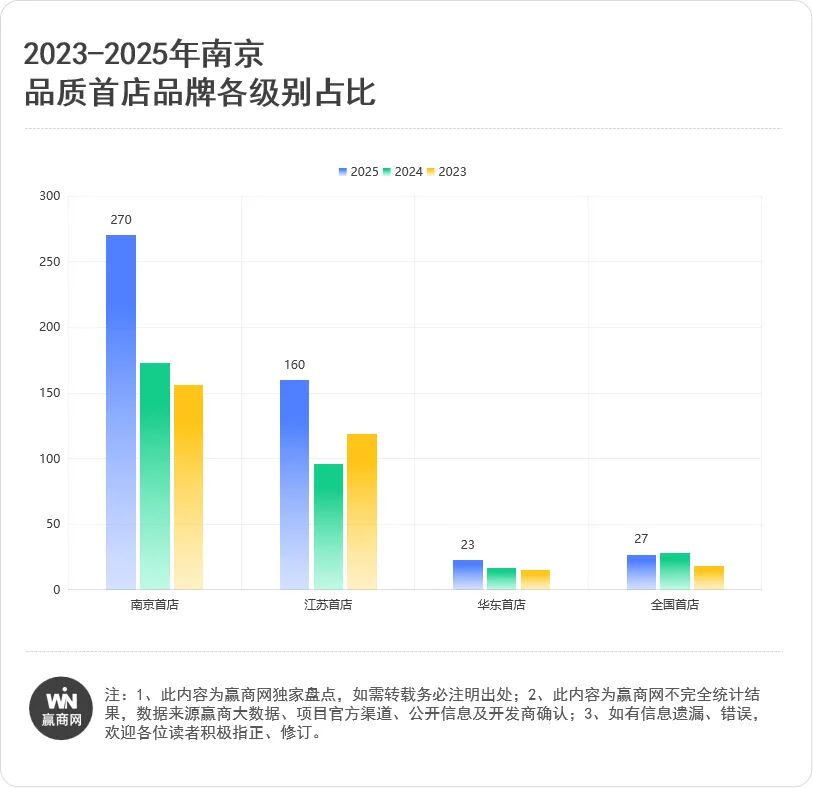
Core Insights - Nanjing has accelerated its "first store economy" in 2025, being selected for multiple national pilot projects and hosting over 1,700 consumer promotion events throughout the year, with the Xinjiekou business district maintaining its leading position in East China [1][3] - The city introduced a record 480 quality first stores, with significant growth in consumer experiences and international offerings, indicating a substantial uplift in urban consumption capabilities [1][3] Group 1: First Store Introduction - A total of 480 quality first stores were introduced in Nanjing, with 237 in dining and 199 in retail, accounting for over 90% of the total, reflecting a strong consumer demand for high-frequency and quality experiences [3][6] - The concentration of first stores in dining and retail indicates a solid local consumption base, supporting brands' entry and testing in the market [6][7] - Nanjing's Deji Plaza introduced 56 retail first stores, contributing nearly 30% of the city's retail first store resources, reinforcing its status as a key city for high-end retail brand launches [7][8] Group 2: Dining Sector Dynamics - The dining sector emerged as the most active area for first store competition in 2025, with JLC Nanjing introducing 28 dining first stores, leading in quantity [10][11] - The popularity of casual dining is evident, with 46 new beverage stores and 32 dessert stores introduced, showcasing a trend towards frequent product iteration and diverse consumer experiences [13][15] - Despite lower numbers, sectors like children's services and entertainment are increasingly valuable for enhancing consumer ecosystems and extending visit durations [15] Group 3: Commercial Ecosystem and Performance - Nanjing's first store economy not only increased in quantity but also in quality, with 27 national first stores and 23 East China first stores introduced, enriching the commercial ecosystem [16][19] - Deji Plaza achieved a sales figure of 26.24 billion yuan, a 7.1% increase year-on-year, maintaining its position as the top-performing shopping center in the country [21][23] - JLC Nanjing quickly became a cultural landmark, introducing 59 first stores, with over 40% of tenants being brands new to Nanjing, Jiangsu, or even nationwide [26] Group 4: Policy Support and Future Outlook - Nanjing has released new policies to support the development of the first store economy, offering financial incentives for high-quality brand introductions and events [37][39] - The policies aim to enhance service consumption quality and support the development of new consumption models, indicating a strategic focus on nurturing a vibrant consumer environment [39][41] - Looking ahead to 2026, Nanjing plans to continue implementing first store economy policies, aiming to establish itself as a leading international consumer city [41]

北京新消费场景最高可获2000万元补贴
Bei Jing Shang Bao· 2026-02-11 16:21
Core Insights - Beijing is launching a funding initiative to support new consumption formats, models, and scenarios, with a maximum funding of 20 million yuan per project [1] - The city is expected to receive a total of 400 million yuan in central government funding over the next two years to encourage innovation in consumption formats, models, and scenarios [1] Group 1: Funding and Support - The funding initiative targets three key areas: the "first launch economy," innovative multi-consumption scenarios, and cross-industry integration with IP [2] - The policy aims to create a new ecosystem for the first launch economy by supporting the establishment of "first launch centers" and attracting high-profile stores [2] - Financial support will be provided through "post-event rewards" and "investment subsidies," with specific criteria for different types of projects [3] Group 2: Project Categories and Incentives - Projects eligible for rewards include first launch centers, flagship stores, and IP-themed stores, with a clear benchmark for achieving rewards [3] - For investment subsidy projects, support will be provided for developing multi-format scenarios and new consumption models, with subsidies up to 20 million yuan per project [3] - The initiative encourages the integration of technology such as AI and VR in creating immersive consumption experiences [2]
北京“三新”消费试点资金申报指南出炉 单项最高支持2000万元
Zhong Guo Xin Wen Wang· 2026-02-11 14:28
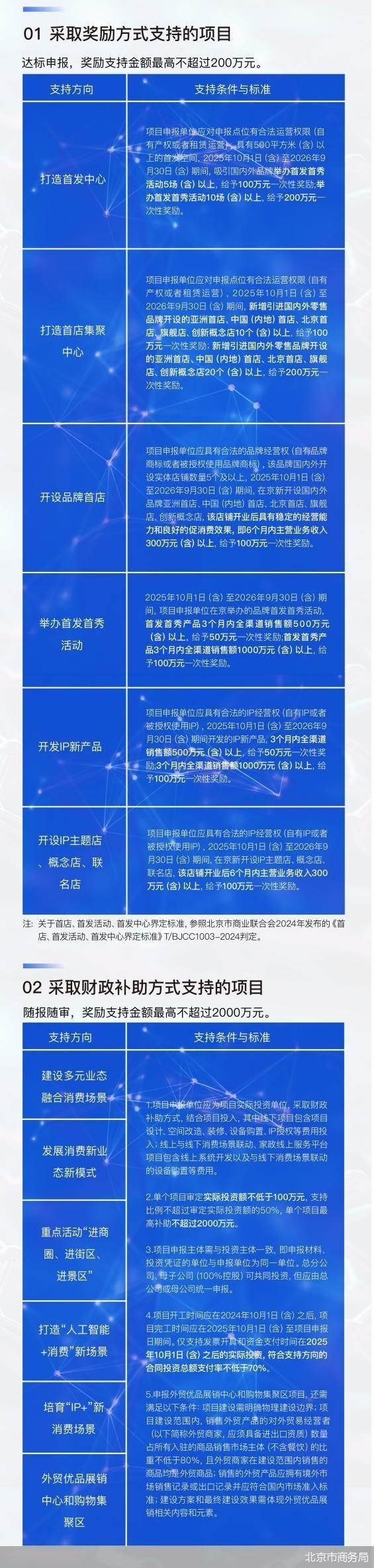
Core Viewpoint - Beijing's Municipal Bureau of Commerce has announced a funding application notice for new consumption formats, aiming to support three key areas: the launch economy, innovative consumption scenarios, and cross-industry integration with IP [1][2] Group 1: Key Areas of Focus - The launch economy encourages the creation of "launch centers" that integrate brand display, debut, and experience, rewarding the introduction of flagship stores and high-profile brands in Beijing [2] - Innovative consumption scenarios focus on the integration of diverse consumption spaces and business formats, supporting traditional shopping areas to expand into cultural, artistic, and technological experiences [2] - The cross-industry integration with IP aims to develop new consumption scenarios that leverage popular IPs, including themed stores and immersive experiences using technologies like AI and VR [3] Group 2: Funding Support Details - The funding support includes two main types: "post-event rewards" and "investment subsidies," with a maximum funding of 20 million yuan per project [4] - For projects like launch centers and IP-themed stores, a clear performance benchmark is set, where achieving 3 million yuan in revenue within six months can yield a one-time reward of 1 million yuan [4] - Investment subsidy projects will receive up to 50% of the approved investment amount, with a cap of 20 million yuan for projects that develop new business formats and consumption scenarios [4]
单项最高支持2000万元 北京“三新”消费试点资金申报指南出炉
Bei Jing Shang Bao· 2026-02-11 12:40
Core Viewpoint - Beijing is launching a funding initiative to support new consumption formats, models, and scenarios, with a focus on three key areas: the debut economy, diverse consumption scene innovation, and IP cross-industry integration. Individual projects can receive up to 20 million yuan in funding support [1][7]. Group 1: Funding Support Details - The funding initiative includes two types of support: "post-event rewards" and "investment subsidies" [9]. - For projects related to debut centers, flagship store clusters, and IP-themed stores, a reward system is in place where meeting specific criteria can yield rewards up to 2 million yuan [4][9]. - Projects that establish new retail brands or IP-themed stores can receive a one-time reward of 100,000 yuan if they achieve a revenue of 3 million yuan within six months of opening [9]. Group 2: Key Areas of Focus - The debut economy aims to create "debut centers" that integrate brand display, premieres, and experiences, encouraging the introduction of flagship stores and high-profile brand events [8]. - Scene innovation focuses on the integration of diverse consumption spaces, allowing traditional shopping areas to expand into cultural, artistic, and technological experiences [8]. - The initiative also promotes the development of new service consumption formats, such as leisure camping and performance spaces, as well as the integration of quality consumption resources with well-known IPs [8]. Group 3: Financial Implications - Beijing is expected to receive a total of 400 million yuan in central government funding over the next two years to support these initiatives [7]. - The funding is designed to leverage public financial resources to attract private investment, aiming to cultivate influential new consumption landmarks and brands [7].
31省2026年扩内需“新招数”:场景创新、供给创新、民生补短板
Xin Lang Cai Jing· 2026-02-11 07:30
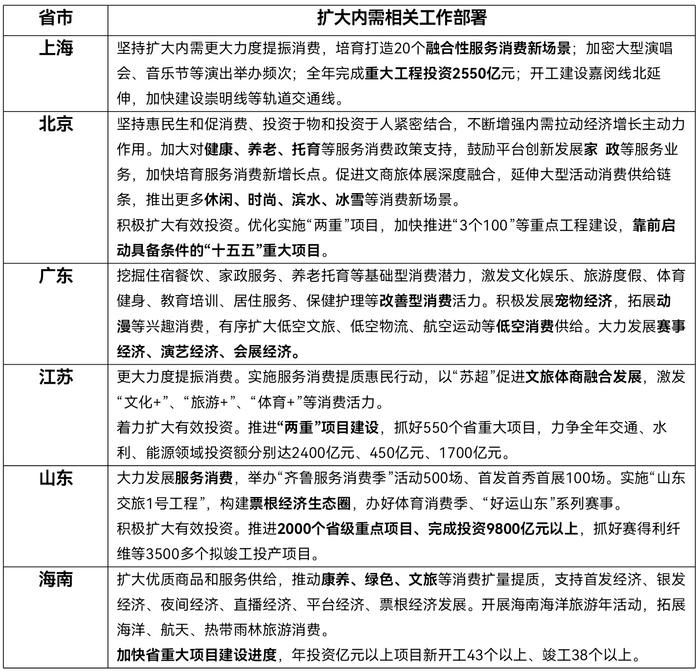
Core Viewpoint - The expansion of domestic demand is a central theme in the local government work reports across 31 provinces, emphasizing the need for a strong domestic market driven by effective investment and service consumption [1][4]. Group 1: Domestic Demand Expansion - The core logic of domestic demand expansion is to achieve a virtuous cycle of "demand driving supply and supply creating demand" [1]. - The focus has shifted from relying primarily on investment and scale expansion to optimizing demand structure and upgrading drivers, emphasizing quality, sustainability, and endogenous growth of domestic demand [1][5]. - New consumption scenarios are being explored and developed to expand domestic demand growth, with a focus on innovative consumption and service expansion [1][2]. Group 2: Local Government Initiatives - Beijing aims to promote the integration of culture, commerce, tourism, and sports, creating new consumption scenarios such as leisure and fashion [2][4]. - Shanghai plans to enhance service quality and efficiency while developing 20 new integrated service consumption scenarios [2][4]. - Guangdong is focusing on expanding new consumption formats and utilizing artificial intelligence to reshape consumption platforms [2][4]. Group 3: Consumer Trends - Consumption is transitioning from a focus on physical goods to a balanced emphasis on both goods and services, with traditional consumption quality improvement and new consumption expansion being key themes [5][7]. - The "old-for-new" policy is set to become a normalized approach, with local governments expanding subsidy ranges to include various new consumer products [5][6]. - Service consumption is gaining unprecedented attention, with new service consumption areas such as elderly care and cultural tourism being prioritized [7][8]. Group 4: Investment Focus - Investment is being directed towards addressing livelihood shortfalls, upgrading industries, and enhancing infrastructure, with a focus on effective investment as a key driver for expanding domestic demand [9][10]. - Local governments are increasing investment in public services and infrastructure to support consumption and improve living standards [11][12]. - There is a notable shift in investment logic from a focus on physical assets to a balanced approach that includes human capital development [9][12]. Group 5: Emerging Industries - Investment in new infrastructure and emerging industries is being prioritized, with a focus on artificial intelligence, integrated circuits, and biotechnology [13]. - Provinces are establishing mechanisms to leverage social capital for consumption upgrade projects, creating a closed-loop chain of "investment - innovation - output - consumption" [13].
商务部副部长答21,进一步扩消费要这么干
21世纪经济报道· 2026-02-11 06:07
Core Viewpoint - The article discusses the significant achievements in China's consumption market during the "14th Five-Year Plan" period, highlighting the optimization of consumption structure, continuous innovation, coordinated urban-rural development, and the interconnection of domestic and international markets [1][2][3]. Group 1: Consumption Market Characteristics - Consumption structure has been optimized, with the penetration rate of new energy passenger vehicles reaching 53.9%, an increase of 48.2 percentage points since 2020. Service consumption accounted for 46.1% of total household consumption expenditure, up by 3.5 percentage points from 2020 [1]. - Innovation continues to thrive, with the integration of business, tourism, culture, and sports leading to new experiential and interactive consumption scenarios. China's online retail sales reached nearly 16 trillion yuan, maintaining the top position globally for 13 consecutive years [2]. - Rural consumption has shown faster growth than urban areas, with an average annual growth rate of 5.4% during the "14th Five-Year Plan." By 2025, rural online retail sales are expected to exceed 3 trillion yuan, growing by 6.7% year-on-year, with agricultural product online sales increasing by 9.9% [2]. Group 2: Future Consumption Expansion Strategies - The Ministry of Commerce plans to enhance consumer spending by optimizing policies for replacing old products, reforming automotive consumption, and promoting domestic and foreign quality products. Key exhibitions like the China International Import Expo will be leveraged to attract international goods [3][4]. - Service consumption will be expanded by relaxing entry restrictions and promoting the integration of various service sectors, focusing on transportation, domestic services, and online audiovisual services [3]. - New consumption models will be cultivated, emphasizing digital, green, health, and intelligent consumption, while supporting the launch of new brands and products in the market [3][4].
21社论丨95亿人次流动彰显中国经济人气与活力
21世纪经济报道· 2026-02-11 00:55
Group 1 - The core viewpoint of the article highlights the unprecedented scale of the Spring Festival travel rush in 2026, with an expected 9.5 billion trips, reflecting the robust vitality and confidence in China's economy [1][3] - The travel patterns during the Spring Festival are shifting from a one-way flow primarily for labor return to a two-way interaction that includes family visits, tourism, and leisure activities, indicating a diversification in travel purposes [1][2] - The Spring Festival is not only a massive population migration but also a significant consumption event across various sectors such as transportation, accommodation, and retail, with initiatives like the "New Spring Shopping" campaign aimed at boosting offline retail [2][3] Group 2 - The infrastructure supporting the Spring Festival travel has seen significant advancements, with China boasting the world's largest high-speed rail and highway networks, enabling efficient and comfortable travel experiences [3][4] - Technological innovations, including big data and AI-driven scheduling systems, have improved transportation efficiency by over 40% compared to a decade ago, enhancing the overall travel experience for passengers [3][5] - Various service upgrades have been implemented to meet the increasingly diverse travel needs, such as pet transportation services on high-speed trains and optimized processes for carrying sports equipment, contributing to a more convenient travel experience [4][5]
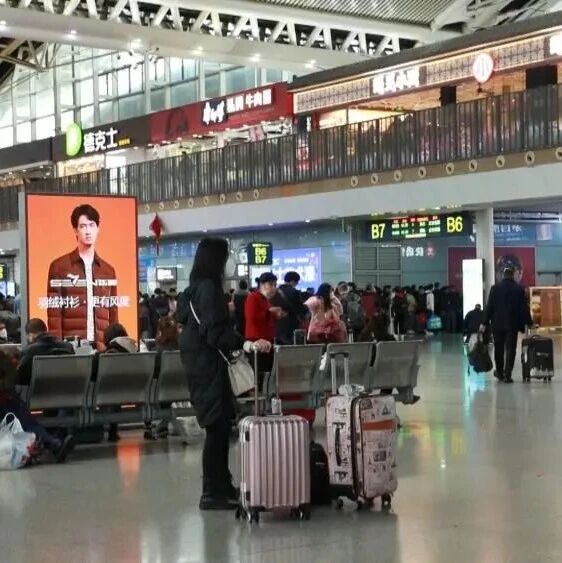
21社论丨95亿人次流动彰显中国经济人气与活力
2 1 Shi Ji Jing Ji Bao Dao· 2026-02-10 23:15
Core Insights - The 2026 Spring Festival travel season is expected to see a record 9.5 billion trips, reflecting strong consumer confidence and economic vitality in China [1] - The travel patterns are shifting from a focus on labor migration to include family visits, tourism, and leisure activities, indicating a diversification in travel purposes [1] - The Spring Festival is not only a massive population movement but also a significant consumption event across various sectors, including transportation, accommodation, and retail [2] Group 1: Travel Volume and Economic Impact - The Spring Festival travel volume is projected to reach 9.5 billion trips, equivalent to over one movement per person for the global population, with an average of 235 million trips daily [3] - The travel season is supported by China's extensive transportation infrastructure, including the world's largest high-speed rail and highway networks, enhancing the efficiency and comfort of travel [3] - The 9-day holiday period during the Spring Festival is expected to significantly expand the consumer market, injecting new momentum into economic growth [2] Group 2: Changing Travel Patterns - There is a notable increase in reverse travel, with more elderly individuals visiting their children in urban areas, reflecting changing family dynamics [1] - Family-oriented self-driving trips and tourism during the holiday season are becoming increasingly popular, showcasing a shift in consumer behavior [1] - The demand for diverse travel experiences, such as intercity travel and winter sports tourism, is driving growth in new economic sectors [2] Group 3: Technological Advancements and Service Upgrades - The integration of big data and AI in transportation systems has improved overall efficiency by over 40% compared to a decade ago, enhancing the travel experience [3] - The widespread adoption of electronic tickets and facial recognition technology has significantly increased the efficiency of passenger flow, eliminating long queues [3] - Transportation departments are implementing various service upgrades, such as pet transport services and optimized luggage handling for winter sports equipment, to meet evolving consumer needs [4]
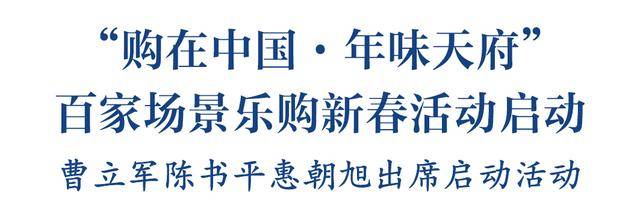
“购在中国·年味天府”百家场景乐购新春活动启动
Sou Hu Cai Jing· 2026-02-10 22:05
Core Viewpoint - The "Shopping in China: New Year Taste in Tianfu" event was launched in Sichuan Tianfu New Area, emphasizing the importance of consumption in driving economic growth and improving people's livelihoods [1][3]. Group 1: Event Overview - The event features various themed areas including "Chuan Brand" quality products, economic exhibitions, and New Year displays, creating a festive atmosphere with a diverse range of products [3]. - Key officials, including Cao Lijun and Chen Shuping, inspected the product exhibition areas to understand brand presence, business layout, and safety responsibilities [3]. Group 2: Economic Implications - Cao Lijun highlighted that consumption is a crucial driver of economic development and a direct reflection of people's needs for a better life, supported by national policies aimed at boosting consumption and expanding domestic demand [3]. - Chengdu is identified as a "trillion-level consumption city" with rich consumption scenarios and strong potential, aiming to implement special actions to boost consumption and enhance the capabilities of key business districts [3]. Group 3: Future Initiatives - The city plans to cultivate new consumption formats, enhance unique consumption brands, and actively develop new economic models such as night economy and silver economy to meet high-quality consumer demands [3]. - Efforts will be made to optimize the consumption environment, including addressing prepaid consumption disputes and improving consumer rights protection mechanisms [3]. Group 4: Promotional Activities - The event showcased "Chuan Brand" quality products through a performance, introduced promotional information for the 2026 New Year reunion dinner, and launched various consumer coupons and activities [5]. - A "Chengdu New Year Consumption Panorama" was initiated to display discount points across the city, encouraging tourists to enjoy their time in Chengdu [5].
2026年四川如何促消费?
Xin Lang Cai Jing· 2026-02-10 20:04
Core Insights - In 2025, Sichuan achieved a retail sales total of 29,135.4 billion yuan, marking a 5.1% increase from the previous year, positioning it as the second among the top ten economic provinces in China [1] - In 2026, Sichuan plans to implement five major initiatives to boost consumption, focusing on creating a "big consumption" ecosystem [1] Group 1: Consumption Initiatives - The five major initiatives include actions targeting service consumption, product consumption, new consumption, scenario carriers, and consumption environment [2] - The service consumption enhancement initiative will introduce special support policies for inbound consumption and the automotive aftermarket, aiming to create benchmark projects and enhance tourism offerings [2] - The product consumption expansion initiative will optimize the old-for-new policy for consumer goods, focusing on local industries such as automobiles and home appliances, and will feature events like the fifth Panda Consumption Festival [2] Group 2: New Consumption and Scenario Development - The new consumption cultivation initiative will focus on enhancing emotional value experiences and developing sectors like the first-release economy and health consumption, while exploring the establishment of a new consumption research institute [2] - The scenario carrier innovation initiative aims to create high-standard consumer scenarios and support innovative commercial environments, including expanding the coverage of old-for-new programs in rural areas [2] - The consumption environment optimization initiative will add 300 new tax refund stores and regulate the vehicle recycling industry, while promoting policy coordination [2]