K型经济

Search documents
Aflac(AFL) - 2025 Q4 - Earnings Call Transcript
2026-02-05 14:02
Financial Data and Key Metrics Changes - Aflac reported Q4 2025 net earnings per diluted share of $2.64 and adjusted earnings per diluted share of $1.57, with full-year net earnings per diluted share at $6.82 and adjusted earnings at $7.49 [5] - Adjusted earnings per diluted share increased 0.6% year-over-year for Q4 2025, while adjusted book value per share rose 0.5% [14] - The adjusted return on equity (ROE) was 11.7%, and 14.5% excluding foreign currency remeasurement [14] Business Line Data and Key Metrics Changes - Aflac Japan's sales increased by 15.7% in Q4 and 16% for the full year 2025, driven by the launch of the Moraito cancer insurance product [6][7] - Aflac U.S. generated nearly $1.6 billion in new sales for 2025, with over one-third coming from Q4 [8] - Premium persistency in Aflac Japan remained strong at 93.1%, while Aflac U.S. reported a persistency of 79.2% [9][10] Market Data and Key Metrics Changes - Aflac Japan's net earned premiums in yen terms declined by 1.9% for Q4 2025, while underlying earned premiums decreased by 1.2% [14][15] - In the U.S., net earned premiums increased by 4%, but the total benefit ratio rose to 48.6%, driven by higher claims activity [17] Company Strategy and Development Direction - Aflac continues to emphasize third sector protection and has introduced innovative products to meet changing customer needs [7][8] - The company aims to maintain strong premium persistency while offsetting the impact of reinsurance and policies reaching paid-up status [7] - Aflac plans to enhance its capital deployment strategy, including a 5.2% increase in dividends for Q1 2026 and a record $3.5 billion in share repurchases for 2025 [11][12] Management's Comments on Operating Environment and Future Outlook - Management expressed confidence in the company's financial strength and ability to navigate increasing out-of-pocket medical expenses faced by consumers [10] - The outlook for 2026 includes expectations for underlying earned premiums in Japan to decline by 1%-2% and net earned premium growth in the U.S. to be in the lower end of the 3%-6% range [25] Other Important Information - Aflac's capital position remains strong, with an SMR above 970% and an estimated regulatory ESR of 253% [22][23] - The company has enhanced liquidity and capital flexibility by creating off-balance sheet pre-capitalized trusts [21] Q&A Session Summary Question: Concerns about surrender levels in Japan due to rising yields - Management acknowledged the potential for increased surrenders but noted that they have not yet experienced significant changes [30] Question: Impact of ESR on M&A or capital deployment - Management confirmed that while capital is available for M&A, finding suitable operational and strategic targets remains challenging [33] Question: Lower benefit ratio guidance in Japan - Management explained that the lower benefit ratio is influenced by updated actuarial assumptions and new product introductions [36][38] Question: Group versus non-group sales performance - Management reported strong growth in group sales, particularly in network dental and vision products, while traditional voluntary benefits have been flat [72] Question: Future premium growth in Japan - Management indicated that strong persistency is limiting premium growth, with expectations for a positive turn in the future [78]

美国经济学家彼得·阿特沃特接受《环球时报》独家专访:美顶层与底层“信心鸿沟”日益加深
Huan Qiu Shi Bao· 2026-02-02 23:05
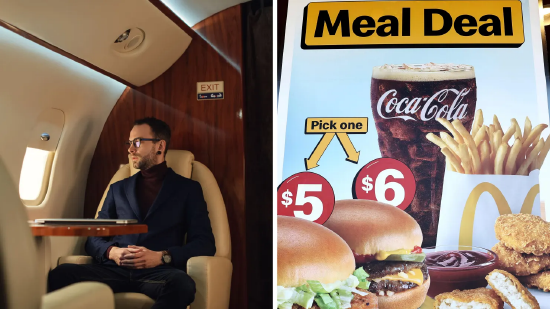
环球时报: 您是怎样注意到并且推广"K型经济"这个概念的? 【环球时报报道 记者 杨沙沙】编者的话:"美国人的生活正在'K型经济'中高度分化""'K型经济'2025年 占据主导,2026年仍将持续""对越来越多的美国家庭而言,经济压力如同凛冽寒风般袭来"……美国 《财富》杂志、美国有线电视新闻网(CNN)等媒体这样报道本国"富者愈富、穷者愈穷"的社会现状。 美国经济学家、咨询公司财经睿见创始人彼得·阿特沃特是"K型经济"这个概念的核心推广者,该概念指 经济复苏或增长过程中,不同群体、行业或区域呈现两极分化趋势的现象:一部分快速上升,另一部分 持续低迷,形成类似字母"K"的走势。曾预测疫情后美国经济呈现"K型"复苏的阿特沃特,日前在中国 推出新书《投资的信心——如何从混乱走向清晰》。他近日在接受《环球时报》记者专访时,谈及美国 选民心态、航空公司机舱座位、文化等层面的变化,并从中捕捉到危险的经济信号。阿特沃特警告称, 美国经济顶层与底层群体间的"信心鸿沟"正日益加深,将影响到美国的未来发展。 当泰勒 · 斯威夫特被击败 环球时报: 从您2020年提出并推广"K型经济"概念到现在,美国经济"K型分化"是越来越明显 ...
美国K型经济特征凸显:1%人群握近32%财富 后半段群体仅占2.5%
Sou Hu Cai Jing· 2026-02-02 11:15
2025年第三季度数据显示,美国最富有的1%人群净资产占比升至近32%,创下历史新高;收入处于后 半段的群体仅持有全国2.5%的财富,财富差距已达严峻水平。 穆迪分析公司首席经济学家马克·赞迪表示:"这不是周期性或暂时性的现象,这是一个结构性的根本问 题。" 美国社会财富不平等持续加剧,结构性裂痕加速扩大,"K型经济"特征愈发凸显。 美国消费者新闻与商业频道信息显示,美国高收入群体加大度假产品与高端商品的消费力度;而受长期 高通胀影响,低收入群体难以负担住房、食品杂货与汽油等基本生活开支,群体间消费分化态势显著。 密歇根大学消费者调查结果显示,与5年前相比,2025年美国最高与最低收入群体的财务状况信心差距 达到十多年来的峰值,低收入群体的被抛弃感持续增强。 特朗普政府推动的大规模税收和支出法案被认为是差距进一步扩大的驱动因素,该法案削减了针对贫困 群体的医疗与食品补助计划。 市场有风险,投资需谨慎。本文为AI基于第三方数据生成,仅供参考,不构成个人投资建议。 来源:市场资讯 美国施蒂费尔公司首席股票策略师巴里·班尼斯特在报告中指出,这种状况"在经济上不可持续"。赞迪 补充称,"K型"曲线意味着美国经济在多个 ...
“K型经济”显示美国财富不平等持续加剧
Xin Lang Cai Jing· 2026-02-02 09:46
Core Viewpoint - The article highlights the increasing wealth inequality in the United States, characterized by a "K-shaped economy," where high-income groups benefit from rising stock markets while low-income groups struggle with essential living costs [1] Group 1: Economic Disparities - Wealth inequality in the U.S. is worsening, with structural divides expanding rapidly [1] - High-income individuals are spending significantly on luxury goods and vacation products due to stock market gains [1] - Low-income groups are facing challenges in affording necessities such as housing, groceries, and gasoline due to prolonged high inflation [1] Group 2: Future Projections - Economists predict that this inequality will continue to worsen in the future [1] - Analysts attribute the widening gap to tax and spending policies from the Trump administration, which have tightened support programs for the poorest populations [1]
美媒:“K型经济”显示美国财富不平等持续加剧
Xin Lang Cai Jing· 2026-02-02 09:36
Core Insights - The article highlights the increasing wealth inequality in the United States, characterized by a "K-shaped economy" where the rich are benefiting disproportionately compared to the poor [1][2][3] Group 1: Economic Disparities - As of the third quarter of 2025, the wealthiest 1% of Americans hold nearly 32% of the nation's net assets, a record high, while the bottom half of the population owns only 2.5% of the wealth [1][2] - The gap in financial confidence between the highest and lowest income earners has reached its widest point in over a decade, indicating a growing sense of abandonment among the poorest Americans [1][2] Group 2: Structural Issues - Economists assert that the current state of inequality is not a temporary phenomenon but a fundamental structural issue within the economy [1][3] - The "K-shaped" economic model suggests that growth is heavily reliant on a small segment of the population, leading to concerns about the sustainability of economic growth [2][3] Group 3: Policy Implications - Analysts point to the "big and beautiful" tax and spending policies of the Trump administration as a contributing factor to the widening gap, particularly due to cuts in medical and food assistance programs for the poorest [3] - The current economic conditions are viewed as unsustainable, with potential long-term negative impacts on overall economic growth [2][3]
国泰海通:沃什改革货币政策机制表明控制通胀的决心 料可满足降息需求
智通财经网· 2026-02-01 02:14
Group 1 - The core viewpoint of the report is that Walsh's "pragmatic monetary policy" signals the Federal Reserve's commitment to controlling inflation while addressing Trump's interest rate cut demands, aiming to correct market distortions caused by excessive QE and achieve convergence in a "K"-shaped economy [1] Group 2 - Walsh's notable policy proposition is "rate cuts + balance sheet reduction," emphasizing the need for the Federal Reserve to take responsibility for inflation, which he attributes to prolonged QE, advocating for QT to control inflation and create space for rate cuts once risks are mitigated [1][3] - The balance between the White House and Wall Street is highlighted, as Trump's criticism of Powell led to Walsh being favored for his ability to maintain Fed independence while aligning with Trump's rate cut desires [1][2] Group 3 - The concept of QT is described as "responsible balance sheet management," aimed at correcting the "infinite support" approach of monetary policy on the demand side, while rate cuts are intended to enhance supply capabilities from an industrial policy perspective [2] - Evidence supporting QT's effectiveness in controlling inflation is noted, with CPI dropping from 9% to around 3% following the Fed's announcement of passive balance sheet reduction in 2022 [3] - Challenges in transitioning to a "tight reserve mechanism" are acknowledged, as liquidity issues may constrain QT implementation until bank reserves return to adequate levels [3]

国泰海通 · 宏观聚焦|缩表式降息:如何理解沃什的政策主张
国泰海通证券研究· 2026-01-31 14:26
Core Viewpoint - The article discusses the policy stance of the new Federal Reserve Chairman, Walsh, emphasizing "pragmatic monetarism" which aims to control inflation while addressing President Trump's interest in interest rate cuts, ultimately seeking to correct market distortions caused by excessive quantitative easing (QE) and achieve convergence in the "K"-shaped economy [2]. Group 1: "Balance Sheet Reduction + Rate Cuts": New Fed Chairman's Policy Proposals - Walsh's notable policy proposal is "rate cuts + balance sheet reduction" (QT), asserting that the Fed must take responsibility for inflation, which he attributes to prolonged QE post-crisis. He believes QT is necessary to control inflation, and once inflation risks are mitigated, it will create room for rate cuts [3][7]. - The policy proposals reflect a reform in monetary policy mechanisms. Walsh criticizes the Fed's large balance sheet, claiming QE distorts market incentives. He advocates for reducing bank reserves through balance sheet reduction to enhance lending willingness, transitioning from a "sufficient reserves" to a "scarce reserves" framework [4][8]. Group 2: The White House and Wall Street Balance: Why Trump Chose Walsh - Trump's criticism of current Chairman Powell as "Mr. Too Late" led to speculation about other candidates, but Walsh, favored by Wall Street, offers a balance between maintaining Fed independence and aligning with Trump's rate cut demands. His "pragmatic monetarism" reflects a commitment to controlling inflation while accommodating Trump's interests [4][12]. - The QT approach is seen as "responsible balance sheet management," correcting the idea of "infinite support" for demand-side policies, while rate cuts aim to enhance supply capabilities from an industrial policy perspective. This aligns with Trump's supply-side reform agenda [4][12]. Group 3: Pragmatic Monetarism: Speculations on Walsh's Governance Approach - Based on the quantity theory of money, QT is indeed a tool for controlling inflation. Evidence includes the CPI dropping from 9% to around 3% after the Fed announced passive balance sheet reduction in 2022. However, QT has limits, as recent liquidity issues in the repo market have led to a halt in QT and the initiation of Reserve Management Purchases (RMP) [5][16]. - Operationally, a series of deregulatory measures for banks, such as relaxing capital constraints and optimizing the Fed's temporary discount tools, could provide more room for QT. However, transitioning to a "scarce reserves" framework is challenging, and liquidity issues will constrain QT until bank reserves return to adequate levels. Trump's policies for manufacturing and real estate require credit expansion, which depends on sufficient reserve levels [5][16].


财富不平等加剧,美国K型经济特征空前显著
Xin Lang Cai Jing· 2026-01-30 12:45
Core Insights - The economic gap between the wealthy and the poor in the United States is continuously widening, with economists indicating that this trend shows no signs of ending [1][25] - The "K-shaped economy," which has been a focal point for consumers, business leaders, policymakers, and investors since the COVID-19 pandemic, is now considered a core characteristic of the U.S. economy rather than a temporary trend [1][25] Economic Disparity - The Gini coefficient, a key measure of wealth concentration, has reached a 60-year high, reversing the trend of decline seen during the pandemic [4][29] - As of the third quarter of 2025, the wealth held by the richest 1% of Americans is projected to reach nearly 32% of the nation's total wealth, while the bottom 50% holds only 2.5% [8][31] - The share of GDP allocated to employee compensation has fallen to its lowest level in over 75 years, indicating that ordinary workers are receiving a smaller portion of the economic "pie" [8][31] Consumer Behavior - The economic divide is directly influencing consumer spending habits, with high-income households increasing their expenditure on luxury goods and services, while low-income households are cutting back on non-essential spending [11][34] - Households earning less than $75,000 are spending a lower percentage on travel and experiences compared to 2019, while those earning over $150,000 are increasing their spending in these areas [11][34] - The relative total spending of the top 20% of earners has reached a multi-decade high, while the remaining 80% have seen their spending drop to historical lows [12][34] Structural Issues - The K-shaped economic structure is viewed as a fundamental issue rather than a cyclical one, with roots tracing back to economic policies from decades ago [16][25] - The decline in unionization rates has weakened workers' bargaining power, contributing to economic disparity [16][36] - The economic recovery post-COVID has disproportionately benefited high-income individuals, with stock market gains further widening the wealth gap [17][37] Future Outlook - Economists predict that wealth inequality will continue to worsen, exacerbated by policies that cut welfare programs for the poor [21][40] - Concerns are raised about the sustainability of a K-shaped economy, with experts warning that relying on high-income consumers for economic growth is problematic [22][41] - The U.S. economy is seen as fragile, dependent on a few key sectors for growth, which raises concerns about its long-term stability [24][43]
2026年1月fomc点评:关注Q2美国降息预期重启
Orient Securities· 2026-01-30 02:09
Economic Outlook - The Federal Reserve paused interest rate cuts in January 2026, maintaining the federal funds rate target range at 3.5% to 3.75%[7] - The U.S. unemployment rate fell to 4.4% in December 2025, indicating a resilient labor market despite concerns about job growth[7] - Retail sales in November 2025 increased by 0.6% month-on-month, with total sales reaching $735.904 billion[9] Inflation and Consumer Spending - Personal consumption expenditure growth remained steady at 2.6% year-on-year in November 2025, despite a decline in real disposable income growth to 1%[7] - The savings rate dropped to a low of 3.5%, indicating potential consumer spending vulnerabilities[7] Labor Market Dynamics - Job openings decreased to 7.15 million in November 2025, with the job vacancy rate falling from 4.5% to 4.3%[7] - The proportion of consumers reporting difficulty in finding work rose to 20.8% in December 2025, suggesting a weakening job market[7] Future Rate Cut Expectations - Market consensus anticipates no rate cuts in March 2026, with an 87% probability of maintaining current rates[7] - If the unemployment rate exceeds 4.5% and job creation remains low, the Fed may reopen the space for rate cuts[7] Risks and Constraints - Risks include a hard landing for the U.S. economy, a significant rebound in inflation, and the Fed's rate cut pace falling short of expectations[4]
中信证券:预计鲍威尔剩余任期内将不再降息
Zhi Tong Cai Jing· 2026-01-29 01:37
Core Viewpoint - The Federal Reserve maintained its policy interest rate at 3.5-3.75% during the January 2026 meeting, aligning with market expectations, and indicated stability in the U.S. unemployment rate, with no further rate cuts anticipated in the remaining meetings under Powell's chairmanship [1][2][7]. Group 1: Federal Reserve Meeting Highlights - The Federal Reserve decided to keep the federal funds rate target range unchanged at 3.5-3.75%, with a split vote where two members supported a 25 basis points cut [2]. - The Fed's balance sheet management includes reinvesting maturing Treasury securities and managing reserves, with approximately $15.4 billion in reinvestment purchases planned from January 15 to February 12, 2026 [2]. - Economic indicators show steady expansion, with employment growth remaining low and inflation still elevated, while the Fed aims for full employment and a long-term inflation rate of 2% [2]. Group 2: Changes in Economic Assessment - The Fed's language shifted from "moderate pace" to "solid pace" regarding economic activity, indicating a more robust outlook [3]. - Employment language was adjusted to reflect signs of stabilization in the unemployment rate, contrasting with previous assessments of rising unemployment risks [3]. - The inflation description was simplified to indicate it remains elevated, with the previous mention of rising downside risks to employment removed [3]. Group 3: Powell's Statements and Economic Outlook - Powell stated that the policy rate is in a good position and revised the expected peak of tariff-induced inflation from Q1 to mid-year [4][5]. - He highlighted the K-shaped economic recovery, where high-income individuals significantly contribute to consumption, driven by asset appreciation and AI-related investments [5][6]. - Powell expressed concerns about affordability but noted that the Fed's tools are limited in addressing structural issues like K-shaped economic disparities [6]. Group 4: Market Reactions and Future Expectations - The company anticipates no further rate cuts in Powell's remaining meetings, with asset prices showing minimal volatility in U.S. equities, bonds, and the dollar, while gold prices are influenced by geopolitical factors and market sentiment [7]. - The employment market is described as balanced, with low hiring and low layoffs, indicating no immediate pressure for further rate reductions [7].