
固定资产投资

Search documents
如何认识最新的出口数据和出口形势?
Hua Er Jie Jian Wen· 2025-10-13 09:09
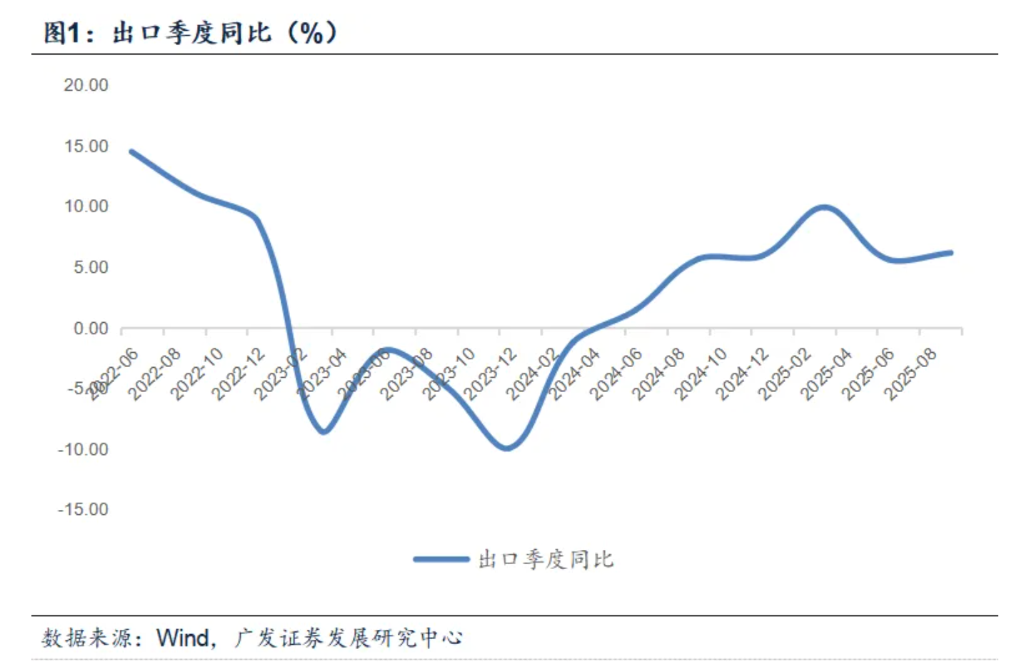
Core Insights - September exports increased by 8.3% year-on-year, maintaining a high level, influenced by a low base from the previous year, with a month-on-month change of 2.1% remaining stable seasonally [1] - The resilience in exports aligns with high-frequency data, showing a significant increase in container throughput and a rise in the PMI new export orders index [1] - For Q3, exports grew by 6.6% year-on-year, meeting expectations, with a projected Q4 year-on-year growth of 3.6% based on seasonal trends [4] Export Performance - In the first three quarters of 2025, exports are expected to show a gradual increase, with year-on-year growth rates of 5.6%, 6.2%, and 6.6% respectively, leading to a cumulative growth of 6.1% [5] - Historical data indicates that from 2000 to 2011, China's export growth was significantly higher than global averages, while from 2012 to 2019, growth slowed down [5][6] - The period from 2020 to 2023 saw high volatility in exports, with China outperforming global export growth in the first two years and slightly underperforming in the latter two [6] Regional Export Trends - Exports to ASEAN and Africa have shown exceptional growth, with year-on-year increases of 14.7% and 28.3% respectively, now accounting for 23.4% of China's total exports [9] - Exports to Africa have surged by 56.4% year-on-year, driven by strong economic growth forecasts in East African countries [9] Product Export Dynamics - Labor-intensive products have seen a decline in exports, while high-end products such as machinery, integrated circuits, and automobiles have experienced significant growth, with increases of 24.9%, 32.7%, and 10.9% respectively [10] - High-tech product exports reached 3.75 trillion yuan, growing by 11.9%, contributing over 30% to overall export growth [10] Import Trends - Imports in September grew by 7.4% year-on-year, with notable increases in iron ore, copper, and integrated circuits, indicating potential investment recovery [11] - The increase in imports may be linked to policy-driven financial tools and project initiations, which could signal a positive trend for Q4 investments [11] Economic Outlook - The uncertainty surrounding U.S. de-globalization tariffs may impact macroeconomic conditions, with fixed asset investment being a critical area to monitor [13] - The overall economic landscape suggests that if tariffs are implemented, domestic demand may counterbalance external demand, but if not, exports are expected to remain stable [13]

【广发宏观郭磊】如何认识最新的出口数据和出口形势
郭磊宏观茶座· 2025-10-13 08:32
Core Viewpoint - China's export growth remains resilient, with September exports increasing by 8.3% year-on-year, supported by a low base from the previous year and seasonal stability [1][5][8]. Group 1: Export Performance - September exports showed a year-on-year growth of 8.3%, with a month-on-month increase of 2.1%, aligning with seasonal averages from the past five and twenty years [1][5]. - The third quarter's export growth was 6.6%, meeting expectations, and projections for the fourth quarter suggest a year-on-year growth of 3.6% if seasonal trends hold [8][10]. - For 2025, exports are expected to grow by 5.5% year-on-year, with quarterly growth rates gradually increasing [9][10]. Group 2: Historical Context - From 2000 to 2011, China's export growth was significantly higher than global averages, while from 2012 to 2019, growth slowed [10][11]. - The period from 2020 to 2023 has been characterized by high volatility in exports, with China's growth outpacing global figures in the first two years and lagging slightly in the latter two [12][13]. - Projections for 2024 indicate that China's export growth will exceed global growth by more than double [2][10]. Group 3: Regional Export Dynamics - Exports to the U.S. have seen a significant decline of approximately 27%, while exports to the EU, ASEAN, Latin America, and Africa have shown double-digit growth, with exports to Africa increasing by 56.4% [3][16]. - Cumulative exports to ASEAN and Africa for the first nine months of the year have increased by 14.7% and 28.3%, respectively, now accounting for 23.4% of total Chinese exports [3][16]. Group 4: Product Export Trends - Labor-intensive products such as textiles and toys have seen a decline in exports, while high-end products like machinery and integrated circuits have experienced substantial growth, with increases of 24.9% and 32.7%, respectively [17][18]. - High-tech product exports reached 3.75 trillion yuan, growing by 11.9%, contributing significantly to overall export growth [17]. Group 5: Import Trends - Imports in September grew by 7.4% year-on-year, with significant increases in iron ore, copper, and integrated circuits, potentially driven by policy-related financial tools and project initiations [4][18]. - The acceleration in imports may indicate a positive outlook for investment in the fourth quarter if linked to project commencements [4][18]. Group 6: Economic Environment and Risks - The uncertainty surrounding U.S. de-globalization tariffs could shift macroeconomic dynamics, with potential impacts on domestic demand and fixed asset investment [21]. - The primary economic challenges remain rooted in insufficient fixed asset investment, necessitating close monitoring of fiscal developments [21].

详解新一轮政策性金融工具
2025-10-13 01:00
Summary of Policy Financial Instruments Conference Call Industry Overview - The conference call discusses the new round of policy financial instruments aimed at addressing capital shortfalls for enterprises and stimulating infrastructure construction and consumption to counteract the impacts of international trade friction [1][3]. Key Points and Arguments - **Objective of Policy Financial Instruments**: The instruments are designed to support infrastructure and consumption scene transformation, thereby stimulating domestic demand and consumption [1][3]. - **Project Application Process**: Local governments and enterprises submit project applications, which are reviewed by the National Development and Reform Commission (NDRC) and then allocated to three policy banks for investment decisions [1][4]. - **Expected Impact on Loans**: The new instruments are projected to increase the growth rate of medium- to long-term loans to approximately 12%, alleviating the current credit asset shortage [1][6]. - **M1 Growth Rate**: The revival of M1 growth is expected to activate deposits, reducing banks' liability costs and improving net interest margins and revenue growth [1][6]. - **Investment in Fixed Assets**: The policy instruments are anticipated to boost fixed asset investment growth by about 10 percentage points, with private fixed asset investment growth benefiting by approximately 4 percentage points [1][7]. - **Focus on Technological Innovation**: Unlike previous rounds that focused on infrastructure, this round emphasizes supporting technological innovation, including sectors like artificial intelligence [3]. Additional Important Content - **Financial Tool Operation**: The operation involves several steps, including project application, NDRC review, and the establishment of Special Purpose Vehicles (SPVs) for project funding [4][5]. - **Impact on Local Government Finances**: The issuance of financial instruments is expected to help local governments cope with fiscal pressures by providing necessary capital for investments [3]. - **Long-term Economic Effects**: The investments are projected to have a long-term impact, with actual driving force expected to be around two to three percentage points annually over the next 3 to 5 years [7]. - **Inflation Outlook**: If all investments convert to demand deposits, M1 growth could increase by about 4.5 percentage points, potentially leading to a rise in inflation in the following six months [2][7].
市委财经委员会召开会议研究部署全市投资、消费及融资工作孟景伟主持 张君毅廖强出席
Sou Hu Cai Jing· 2025-10-10 16:48
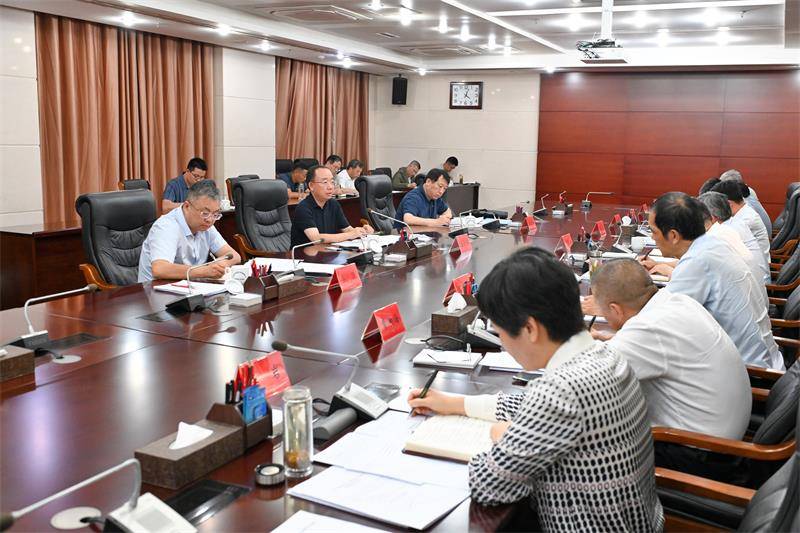
10月10日下午,市委财经委员会召开会议,听取全市固定资产投资和重点项目推进情况以及提振消费工作汇报, 审议通过有关文件,研究部署下一步工作。市委书记、市委财经委员会主任孟景伟主持会议并讲话。市长、市委 财经委员会副主任张君毅,市委副书记廖强及市委财经委员会成员出席会议。 会议指出,投资是经济增长的重要引擎,既事关当下更事关长远,必须一抓到底、常抓不懈。要坚持全市"一盘 棋",抢抓黄金期、大干四季度,全力以赴完成年度投资目标任务。要压实项目工作责任,坚持领导领衔包保、属 地主体、部门主管,完善"5+1+N"等重大项目推进机制,强化工作督导,对项目工作进度严重滞后的要提醒约 谈。要加强工作调度,抓好清单化管理、工作衔接联动,推动在手项目尽快开工、加快建设,形成更多实物工作 量。要加强工作创新,探索项目投融资新模式,创新好房子建设新路径,以创新助力各项工作提升质效。要做好 工作谋划,用足用好上级政策,加强项目谋划及要素保障,提高储备项目转化实施率。要加大招商引资力度,做 好制造业投资项目入规纳统,切实增强发展动能。 会议强调,要坚持有效市场与有为政府相结合,千方百计提振消费、扩大内需。要优化消费供给,立足新消费浪 ...
机械设备行业跟踪:工程机械行业韧性足,内外销整体边际改善
Mai Gao Zheng Quan· 2025-10-10 14:13
Investment Rating - The industry rating is "Outperform" compared to the market [1][118] Core Viewpoints - The engineering machinery industry shows strong resilience with improvements in both domestic and international sales [1] - The macroeconomic environment indicates a slight recovery in manufacturing, with the PMI index at 49.4% in August 2025, still in the contraction zone, but production PMI at 50.8% indicates expansion [2][6] - Fixed asset investment in China reached 326,111 billion yuan from January to August 2025, with infrastructure investment growing by 5.4% and manufacturing investment by 5.1% [14] Summary by Sections 1. Macroeconomic Tracking - The manufacturing PMI for August 2025 is 49.4%, a 0.1 percentage point increase from the previous month, indicating marginal improvement but still in contraction [2][6] - The PPI decreased by 2.9% year-on-year in August 2025, ending an eight-month decline, while the CPI fell by 0.4% [11] - Fixed asset investment from January to August 2025 totaled 326,111 billion yuan, a 0.5% year-on-year increase, with infrastructure investment up 5.4% and real estate investment down 13.2% [14] 2. China Engineering Machinery Sales Overview - From January to August 2025, excavator sales reached 154,181 units, a 17.2% increase year-on-year, with domestic sales up 21.5% [19][26] - Sales of various machinery types showed mixed results, with tower cranes down 34.5% and high-altitude work vehicles up 40.5% [27][41][100] - Overall, the sales of construction machinery reflect a structural divergence, with some categories like excavators and loaders performing well while others like tower cranes are struggling [51][56]
新闻分析丨激活“新引擎” 夯实“硬支撑”——1—8月份石家庄固定资产投资稳快增长的背后
Sou Hu Cai Jing· 2025-10-08 02:50
Core Viewpoint - Shijiazhuang's fixed asset investment growth rate for January to August reached 14.8%, surpassing both national and provincial averages, indicating strong economic momentum and potential for regional development [1][2]. Investment Growth Drivers - The city has focused on high-quality development, systematically planning and accelerating investment projects, which has led to the rapid advancement of large-scale, high-quality projects that serve as new engines for economic growth [2][4]. Major Projects Supporting Development - Significant projects such as the Taiwei Aviation Simulator Production Base with a total investment of 3 billion yuan and the Hebei High-speed Group's Electronic Technology Industrial Park are underway, contributing to the local economy with expected annual outputs exceeding 1 billion yuan [3][4]. Infrastructure Investment - Infrastructure investment in Shijiazhuang has shown a robust growth of 16.3% year-on-year, which is higher than the overall investment growth rate, indicating a strong focus on enhancing urban infrastructure [7]. Project Planning and Execution - The city has planned 341 key construction projects with a total investment of 379.48 billion yuan, focusing on strategic emerging industries and traditional industry upgrades, which are crucial for future economic development [4][6]. Service and Environment Optimization - The local government has improved the business environment by providing effective services and support for major projects, exemplified by the Qingkong Innovation Base project, which has attracted partnerships with leading enterprises [8]. Future Outlook - The city aims to continue enhancing project support mechanisms and optimizing the investment environment to ensure timely project execution and sustained economic growth [8].
中国冶金矿山企业协会:黑色金属矿采选业固定资产投资意愿和投资活跃度仍然较强
智通财经网· 2025-09-29 08:09
Steel Industry Production Situation - In August 2025, the production of pig iron in China reached 69.793 million tons, a year-on-year increase of 1.0% but a month-on-month decrease of 1.4% [2] - The production of crude steel in August was 77.369 million tons, showing a year-on-year decrease of 0.7% and a month-on-month decrease of 2.9% [2] - The production of steel products in August was 122.765 million tons, a year-on-year increase of 9.7% and a month-on-month decrease of 0.1% [2] National Iron Ore Production Situation - In August, the production of iron ore raw ore was 81.633 million tons, a year-on-year increase of 8.8% but a month-on-month decrease of 5.4% [3] - Cumulative production of iron ore raw ore from January to August was 678.104 million tons, a year-on-year decrease of 4.2% [3] - The production of iron concentrate in August was 23.003 million tons, a year-on-year increase of 3.4% but a month-on-month decrease of 0.5% [3] Iron Ore Import Situation - In August, China imported 105.225 million tons of iron ore, a year-on-year increase of 3.9% and a month-on-month increase of 0.6% [4] - The import value was 975.552 million USD, a year-on-year decrease of 2.7% [4] - The average monthly price was 92.72 USD per ton, a year-on-year decrease of 9.7% [4] Iron Ore Supply and Demand Situation - From January to August, the production of pig iron was 57.907 million tons, a year-on-year decrease of 1.1% [5] - The domestic iron ore raw ore production was 67.810 million tons, a year-on-year decrease of 4.2% [5] - The iron ore import volume was 80.162 million tons, a year-on-year decrease of 1.6% [5] - As of the end of August, the port inventory of imported iron ore was 13.763 million tons, a month-on-month increase of 0.6% but a year-on-year decrease of 10.5% [5] Investment Situation in Black Metal Mining Industry - From January to August, the fixed asset investment in the mining industry increased by 3.0%, with black metal mining investment increasing by 15.6%, exceeding the national mining industry growth by 12.6 percentage points [6] - The cumulative growth rate of private investment in the black metal mining sector was 19.0%, higher than the national average by 1.2 percentage points [6] - Investment willingness and activity in the black metal mining sector remain strong [6] Revenue and Profit Situation in Black Metal Mining Industry - From January to August, the total operating revenue of the mining industry was 3,372.77 billion CNY, a year-on-year decrease of 13.1% [7] - The operating revenue of the black metal mining sector was 305.64 billion CNY, a year-on-year decrease of 12.6% [7] - The total profit of the mining industry was 566.11 billion CNY, a year-on-year decrease of 30.6%, while the black metal mining sector's profit was 29.50 billion CNY, a year-on-year decrease of 30.3% [7]
2025年1-8月份全国固定资产投资增长0.5%
Guo Jia Tong Ji Ju· 2025-09-28 08:09
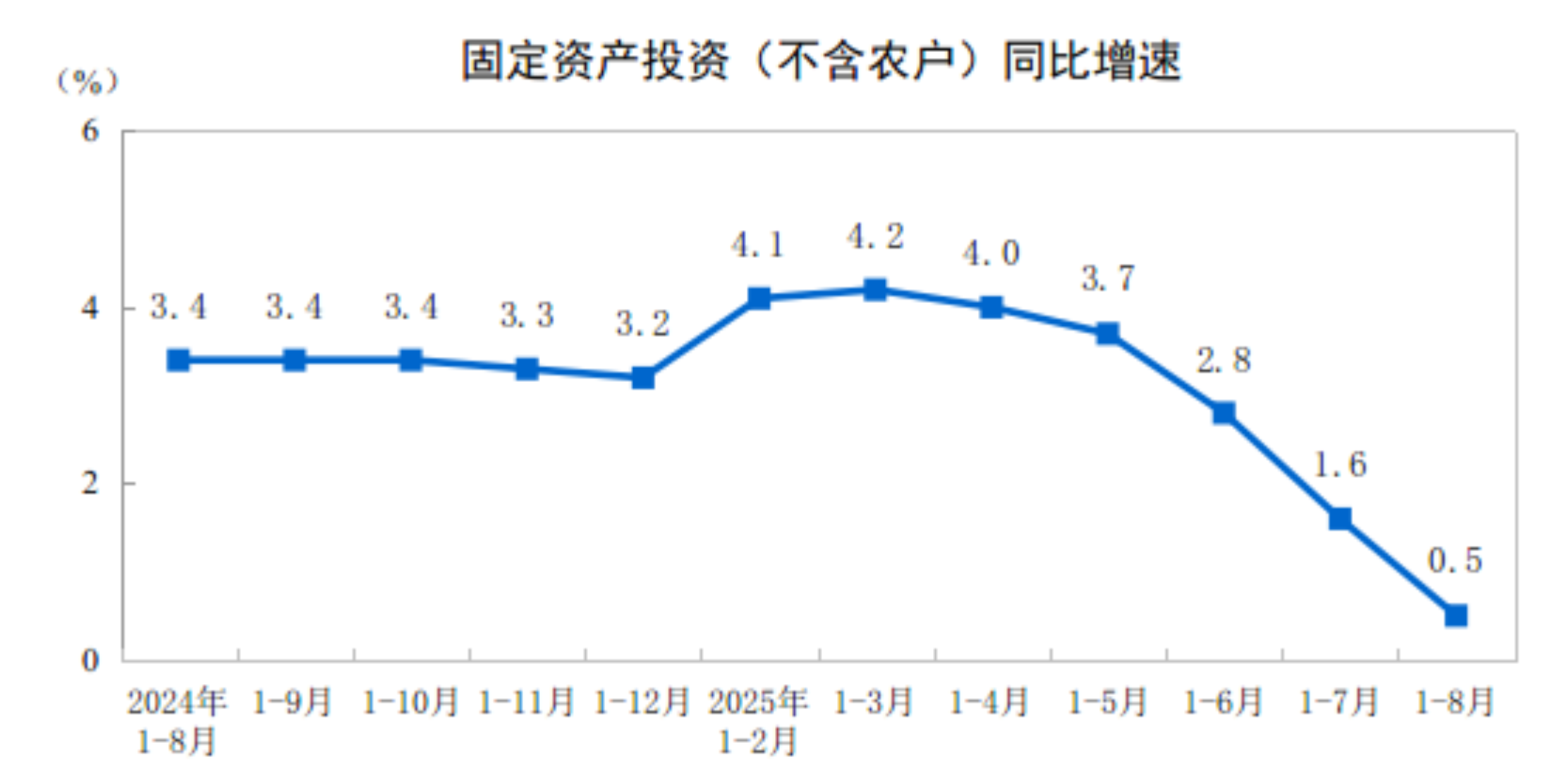
Core Insights - National fixed asset investment (excluding rural households) reached 32.6111 trillion yuan from January to August 2025, showing a year-on-year growth of 0.5% on a comparable basis [1] - Private fixed asset investment experienced a year-on-year decline of 2.3% [1] Investment by Industry - Investment in the primary industry totaled 646.1 billion yuan, with a year-on-year increase of 5.5% [3] - Investment in the secondary industry reached 11.8246 trillion yuan, growing by 7.6% [3] - Investment in the tertiary industry was 20.1404 trillion yuan, reflecting a decline of 3.4% [3] - Within the secondary industry, industrial investment grew by 7.7%, with mining investment up by 3.0%, manufacturing investment up by 5.1%, and investment in electricity, heat, gas, and water production and supply up by 18.8% [3] - In the tertiary industry, infrastructure investment (excluding electricity, heat, gas, and water production and supply) increased by 2.0%, with water transport investment up by 15.9%, water conservancy management investment up by 7.4%, and railway transport investment up by 4.5% [3] Investment by Region - Eastern region investment declined by 3.5% year-on-year, while the central region saw a growth of 2.5%, the western region grew by 2.3%, and the northeastern region experienced a decline of 6.0% [3] Investment by Registration Type - Domestic enterprises' fixed asset investment grew by 0.5%, while investment from Hong Kong, Macau, and Taiwan enterprises increased by 2.3%. In contrast, foreign enterprises' fixed asset investment fell by 15.4% [4]
1-8月阿塞拜疆固定资产投资总额为66.9亿美元
Shang Wu Bu Wang Zhan· 2025-09-27 03:23
Group 1 - The total fixed asset investment in Azerbaijan for January to August 2025 is 113.7 billion manats (66.9 billion USD), showing a year-on-year decrease of 0.2% [1] - Investment in the oil and gas sector has decreased by 16.6%, while investment in the non-oil and gas sector has increased by 8% [1] - Of the total investment, 58 billion manats (34.1 billion USD) is allocated to production, accounting for 51% of the total; 38.2 billion manats (22.5 billion USD) is for the services sector, making up 33.6%; and 17.5 billion manats (10.3 billion USD) is for residential construction, representing 15.4% [1]
1-8月外国对阿塞拜疆固定资产投资额同比增长35.7%
Shang Wu Bu Wang Zhan· 2025-09-27 03:23
Core Insights - Foreign direct investment (FDI) in Azerbaijan's fixed assets reached 2.62 billion manats (154 million USD) from January to August 2025, marking a year-on-year increase of 35.7% [1] - The oil and gas sector attracted 1.93 billion manats (114 million USD) in FDI, reflecting a year-on-year growth of 19.2% [1] - The non-oil and gas sector saw FDI of 690 million manats (41 million USD), which is a significant increase of 120% year-on-year [1] Investment Overview - Total investment attracted by Azerbaijan during the same period amounted to 11.37 billion manats (669 million USD), showing a slight decline of 0.2% year-on-year [1] - Investments in the oil and gas sector decreased by 16.6%, while the non-oil and gas sector experienced an 8% increase [1]