
新兴产业

Search documents
大连冲刺万亿之城助力东北振兴
Zhong Guo Xin Wen Wang· 2025-11-06 13:00
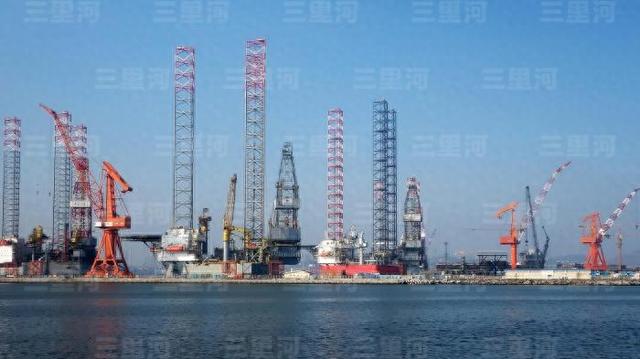
Core Viewpoint - Dalian is on track to become the first city in Northeast China to achieve a GDP of over 1 trillion yuan, with significant contributions from its industrial and port economies [1][3][4]. Economic Performance - Dalian's GDP reached 951.69 billion yuan in 2024, approaching the 1 trillion yuan mark, with a year-on-year growth of 6.0% in the first three quarters of 2025, outperforming the national average by 0.8 percentage points [1][3]. - The industrial sector contributed 60% to Dalian's GDP growth in 2023, with the petrochemical industry leading, projected to generate 425.6 billion yuan in 2024 [4]. Industrial Strengths - Dalian is home to the world's largest PTA production base and the largest single construction oil refining project in China, showcasing its industrial prowess [4]. - The city's industrial added value growth rate reached 12.8% in the first three quarters of 2025, ranking among the top 15 sub-provincial cities [4]. Port Economy - Dalian Port has risen to the fourth position globally in the Container Port Performance Index, handling over 98% of Northeast China's foreign trade containers [5]. - The port's container throughput is expected to exceed 5 million TEUs in 2024, marking a five-year high, and significantly contributing to logistics, trade, and finance sectors [5]. Emerging Industries - Dalian is focusing on new economic drivers, with strategic emerging industries projected to account for 14% of GDP in 2024, aiming to increase to 15% [6]. - Recent projects include a national AI computing center and the successful delivery of the first hydrogen fuel cell rail locomotive [6]. Regional Impact - Dalian's success in reaching the 1 trillion yuan GDP milestone could serve as a model for other cities in Northeast China, potentially attracting more investment and talent to the region [8]. - The city is expected to play a pivotal role in revitalizing the Northeast, enhancing its economic influence and collaborative networks with inland cities [7][8].

万润新能:公司实际控制人刘世琦、李菲累计增持公司股份约20万股
Mei Ri Jing Ji Xin Wen· 2025-11-06 11:53
每经AI快讯,万润新能(SH 688275,收盘价:79.38元)11月6日晚间发布公告称,截至本公告披露 日,公司控股股东、实际控制人刘世琦先生、李菲女士通过上海证券交易所系统以集中竞价交易方式累 计增持公司股份约20万股,增持金额约人民币909.89万元,已超过本次增持计划下限金额人民币860.67 万元,本次增持计划已实施完毕。 2024年1至12月份,万润新能的营业收入构成为:锂电行业占比97.64%,其他业务占比2.36%。 截至发稿,万润新能市值为100亿元。 (记者 张明双) 每经头条(nbdtoutiao)——"十五五"新风口!专访五年规划深度参与者董煜:锚定4大新兴产业和6大 未来产业 ...

悦心健康:接受中信建投证券等投资者调研
Mei Ri Jing Ji Xin Wen· 2025-11-06 11:16
Group 1 - The core viewpoint of the article highlights that Yuexin Health (SZ 002162) is engaging with investors through a research meeting scheduled for November 6, 2025, with key executives participating to address investor inquiries [1] - For the first half of 2025, Yuexin Health's revenue composition is reported as follows: tiles account for 80.1%, medical services for 11.19%, and warehouse leasing and other services for 8.71% [1] - As of the time of reporting, Yuexin Health has a market capitalization of 4.1 billion yuan [1]


老登们的社交货币全崩了
虎嗅APP· 2025-11-06 09:34
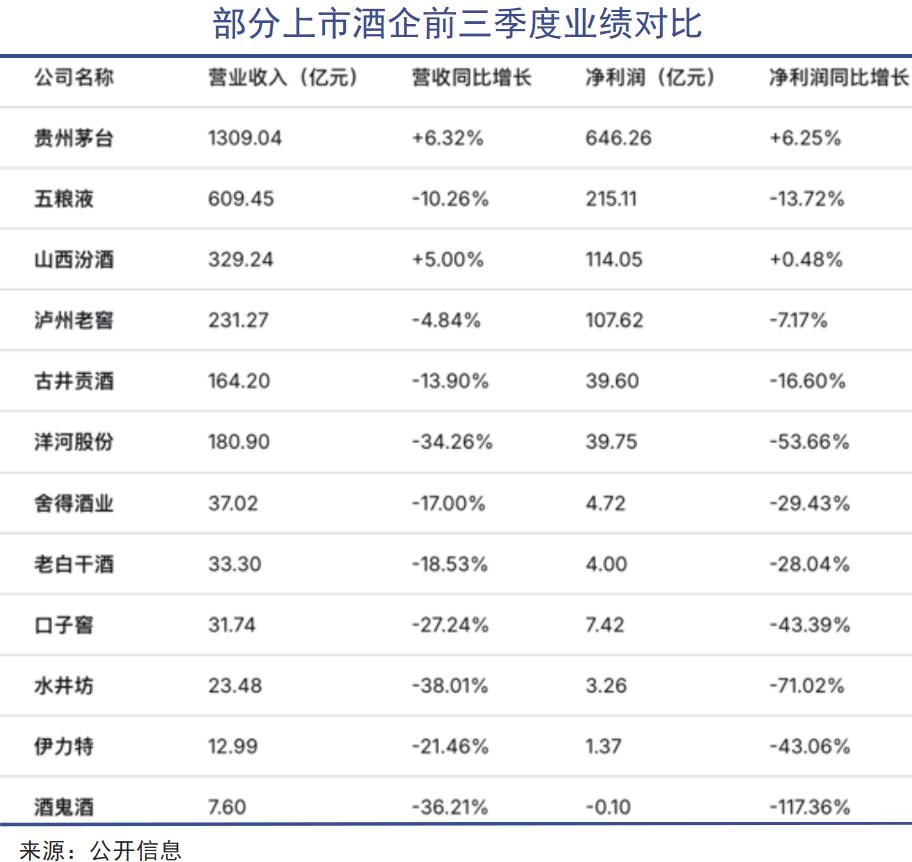
Group 1: Core Views - The market is experiencing a significant divergence, particularly in the traditional high-end consumption sector represented by liquor, which has been stagnant for a long time [4][5]. - Despite the challenges, some investors are optimistic about traditional liquor stocks, as evidenced by the surge in the liquor sector following negative news about Wuliangye [5][6]. - The generational divide in investment preferences is becoming more pronounced, with younger investors favoring emerging industries and high valuations, while older investors remain committed to traditional sectors [5][7]. Group 2: Liquor Industry - The liquor industry has reported its worst third-quarter performance, with 18 listed companies generating a total revenue of 317.66 billion yuan, a year-on-year decline of 5.84%, and a net profit of 122.69 billion yuan, down 6.88% [9][11]. - The third quarter saw a dramatic revenue drop of 18.42% and a net profit decline of 22.03%, reversing the growth trend seen in 2024 [9][11]. - Even leading companies like Kweichow Moutai are facing challenges, with third-quarter revenue growth slowing to 0.56% and net profit growth to 0.48%, marking their lowest growth rates in recent years [11][13]. Group 3: Tea Industry - The high-end tea sector has seen positive developments, with Baima Tea successfully listing on the Hong Kong Stock Exchange after multiple failed attempts, achieving an 86.7% increase on its first trading day [18][19]. - Despite the initial success, Baima Tea's performance is showing signs of slowing growth, with a projected revenue growth of only 1.0% for 2024 and a decline in revenue and net profit in the first half of the year [20][19]. - The business model of Baima Tea relies heavily on high-end gift markets, which may not be sustainable in the long term [20][22]. Group 4: Traditional Medicine - The traditional medicine sector, represented by Pianzaihuang, is struggling, with a reported revenue of 7.44 billion yuan for the first three quarters, down 11.93%, and a net profit of 2.13 billion yuan, down 20.74% [24][25]. - The market price of Pianzaihuang has significantly dropped, with some platforms reporting prices below 600 yuan, a decline of over 60% from its peak [27][28]. - The changing market dynamics suggest that the value of high-end gifts and social currencies like liquor and traditional medicine may continue to decline as consumer preferences shift [29][30].




前三季度长三角外贸总额超12万亿元
Guo Ji Jin Rong Bao· 2025-11-06 09:19
Core Insights - The Yangtze River Delta region has achieved a remarkable foreign trade performance in the first three quarters of this year, with a total import and export value of 12.62 trillion yuan, a year-on-year increase of 6.6%, marking a historical high for the same period [1] Group 1: Shanghai's Foreign Trade Performance - Shanghai's foreign trade continues to show positive momentum, with a total import and export value of 3.34 trillion yuan in the first three quarters, up 5.4% year-on-year [2] - Exports from Shanghai reached 1.48 trillion yuan, growing by 11.3%, while imports were 1.86 trillion yuan, increasing by 1.1% [2] - The trade performance with ASEAN, the Middle East, and Africa has been particularly strong, with respective growth rates of 12.5%, 22.9%, and 32.5% [2] - The export of leading industries such as integrated circuits, biomedicine, and artificial intelligence reached 193.67 billion yuan, growing by 10.3% [2] Group 2: Jiangsu's Foreign Trade Growth - Jiangsu's total import and export value reached 4.38 trillion yuan, setting a historical record [4] - Mechanical and electrical products accounted for nearly 70% of the province's exports, driving an 8.7 percentage point increase in export growth [5] - Jiangsu's trade with Belt and Road countries accounted for over half of its total trade, achieving double-digit growth [5] Group 3: Zhejiang's Market Diversification - Zhejiang's total import and export value reached 4.17 trillion yuan, with exports of 3.16 trillion yuan and imports of 1.01 trillion yuan, all setting historical highs [5] - The province has accelerated its market diversification, with exports to ASEAN growing by 16.8%, surpassing the U.S. to become Zhejiang's second-largest export market [5] - The number of private foreign trade enterprises in Zhejiang has continued to increase, with over 120,000 enterprises, of which 112,000 are private, contributing to 82% of the province's total import and export value [6] Group 4: Anhui's Strong Growth - Anhui's total import and export value reached 726.25 billion yuan, with a year-on-year growth of 15.7%, the highest in the Yangtze River Delta region [6] - The province's exports of mechanical and electrical products have increased significantly, with the share rising from 59% at the end of the 13th Five-Year Plan to over 70% [6] - Anhui's trade with Belt and Road countries reached 391.94 billion yuan, accounting for 54% of its total trade, with double-digit growth in emerging markets [6] Group 5: Collaborative Development in the Yangtze River Delta - The impressive foreign trade performance in the Yangtze River Delta is attributed to the provinces' ability to leverage their strengths and respond to challenges [7] - There is a close cooperation network among the provinces, facilitating resource sharing and complementary advantages, such as Shanghai's high-end industries supporting Jiangsu's manufacturing base [7] - The region needs to maintain strategic determination, deepen industrial upgrades, and expand diversified markets to address uncertainties in foreign trade [7]

第八届进博会|专访:进博会将进一步拓展泰中经贸合作广度与深度——访泰国商业部长素帕姬·素吞汶
Xin Hua She· 2025-11-06 08:25
Core Insights - The China International Import Expo (CIIE) is expected to further expand the breadth and depth of economic and trade cooperation between Thailand and China, with Thailand being the guest country this year [1][2] - The number of Thai enterprises participating in the expo has significantly increased, with 60 companies attending, three times the number from the previous year, indicating a strong desire to enhance international competitiveness [1] - The ongoing high-level opening up by China is seen as beneficial for both domestic economic growth and the broader global economy, especially in the context of rising protectionism [2] Economic Cooperation - China is Thailand's largest trading partner, and the bilateral trade volume is projected to reach $133.98 billion in 2024, reflecting a year-on-year growth of 6.1% [2] - The alignment of China's Belt and Road Initiative with Thailand's "Thailand 4.0" development strategy presents significant opportunities for cooperation in digital economy and emerging industries [2] - The recent signing of the upgraded protocol for the China-ASEAN Free Trade Area 3.0 is expected to inject more confidence and momentum into Thailand-China economic cooperation [2]
“十五五”锚定现代化产业体系 固本育新打开增长新空间
Zheng Quan Shi Bao· 2025-11-05 18:35
Core Insights - The core viewpoint of the article emphasizes the importance of strengthening the real economy as a strategic priority in China's 15th Five-Year Plan, highlighting its critical role in national development and economic resilience [1][2]. Group 1: Strengthening the Real Economy - The real economy is identified as the foundation of a nation's economy, essential for wealth creation and national strength [2]. - The plan aims for industrial value-added growth from 31.3 trillion yuan to 40.5 trillion yuan between 2020 and 2024, providing robust support for economic, technological, and comprehensive national strength [2]. - The strategy includes building a modern industrial system focused on advanced manufacturing, quality, and green development, ensuring a balanced manufacturing sector [2][3]. Group 2: Upgrading Traditional Industries - The plan outlines four key areas for optimizing traditional industries: solidifying foundations, fostering innovation, expanding capacity, and enhancing efficiency [3]. - Key industries such as mining, metallurgy, chemicals, and machinery are targeted for quality upgrades to maintain global competitiveness [3][4]. - A collaborative approach involving policy, technology, and finance is necessary for the transformation of traditional industries [4]. Group 3: Cultivating Emerging and Future Industries - The plan emphasizes the cultivation of emerging and future industries, including new energy, new materials, and aerospace, to inject new momentum into economic growth [5][6]. - It proposes implementing industry innovation projects and exploring diverse technological routes and business models for future industries [5]. - Addressing challenges in emerging industries requires innovative mechanisms and a focus on application-oriented development [6]. Group 4: Enhancing the Service Sector - The plan recognizes significant potential for expanding and improving the service sector, aiming to enhance its integration with advanced manufacturing and modern agriculture [7]. - It calls for actions to elevate the quality and capacity of the service industry, promoting specialized and high-value production services [7].
老登们的社交货币全崩了
3 6 Ke· 2025-11-05 10:29
Group 1: Market Overview - The Shanghai Composite Index is challenging the 4000-point mark, but the market remains highly differentiated, particularly in the traditional high-end consumption sector represented by liquor, which has been stagnant for a long time [1][4] - Limited market funds seem to have completely abandoned the shift from technology stocks back to traditional consumer stocks, although some investors are still betting on liquor stocks for a brighter future [1][4] - The liquor sector experienced a significant surge despite the historical negative news from Wuliangye, reflecting an optimistic investment sentiment that the bottom has been established [1][4] Group 2: Liquor Industry Performance - The liquor industry reported its worst third-quarter results in history, with 18 listed companies achieving a total revenue of 317.66 billion yuan, a year-on-year decline of 5.84%, and a net profit of 122.69 billion yuan, down 6.88% [5][4] - The third quarter saw a dramatic revenue drop of 18.42% and a net profit decline of 22.03%, significantly worse than the average decline in the first three quarters [5][4] - Even leading companies like Kweichow Moutai reported a third-quarter revenue growth rate of only 0.56% and a net profit growth rate of 0.48%, marking their lowest growth rates in recent years [8][9] Group 3: Kweichow Moutai's Challenges - Kweichow Moutai is facing severe operational issues, with its flagship product's price dropping below 1700 yuan, a significant decline during peak consumption seasons [9][8] - The traditional distribution model is under pressure as the company shifts towards direct sales and e-commerce platforms, disrupting the traditional dealer system [9][12] - The liquor industry's long-standing "strong factory, weak dealer" situation is being challenged as the market dynamics shift [11][12] Group 4: Tea Industry Developments - In contrast to the liquor sector, the high-end tea industry has seen positive developments, with Baima Tea successfully listing on the Hong Kong Stock Exchange, achieving an 86.7% increase on its first trading day [13][15] - Baima Tea aims to address industry pain points through brand upgrading and digitalization, although its performance has shown signs of slowing growth [15][13] - The high-end tea market is characterized by a complex relationship between product value and social connections, with the actual value often tied to the networking opportunities it provides [16][15] Group 5: Traditional Chinese Medicine - The traditional Chinese medicine sector, represented by Pian Zai Huang, reported its worst performance in history, with a revenue of 7.442 billion yuan, down 11.93%, and a net profit of 2.129 billion yuan, down 20.74% [19][22] - The market price of Pian Zai Huang has significantly dropped, reflecting a broader decline in the perceived value of high-end medicinal products [22][23] - The changing social dynamics and consumer preferences are leading to a reevaluation of the value of traditional high-end products like liquor and medicine [24][25]
金禄电子:公司加快推进新兴产业应用领域的产品开发
Zheng Quan Ri Bao· 2025-11-05 09:39
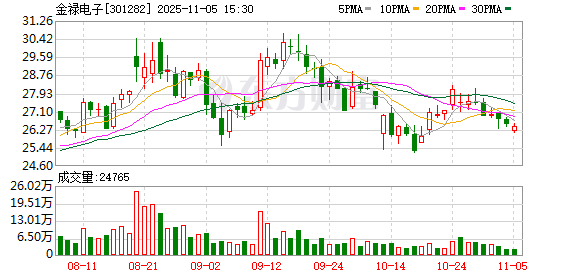
Core Viewpoint - Jinlu Electronics is accelerating the development of products in emerging industry applications, with successful advancements in various types of circuit boards for data centers and other sectors [2] Group 1: Product Development - The company has successfully developed a 28-layer rigid board for data center applications [2] - Jinlu Electronics has achieved mass production of a 22-layer composite substrate and a 16-layer rigid-flex board, as well as a 16-layer high-speed rigid board, which have been delivered to clients in commercial aerospace and defense sectors [2] - Further progress in product development will be disclosed in the company's 2025 annual report [2]
金禄电子(301282.SZ):应用于数据中心领域的28层刚性板已研制成功
Ge Long Hui· 2025-11-05 07:27
Core Viewpoint - Jinlu Electronics (301282.SZ) is accelerating product development in emerging industry applications, with successful advancements in various high-tech products aimed at data centers and defense sectors [1] Group 1: Product Development - The company has successfully developed a 28-layer rigid board for data center applications [1] - It has also achieved mass production of a 22-layer composite substrate and a 16-layer rigid-flex board, which are now being delivered to clients in commercial aerospace and defense sectors [1] - Additionally, a 16-layer high-speed rigid board has been produced and is ready for commercial use [1]