
人工智能(AI)

Search documents
港股互联网ETF(513770)下探近7个月新低,资金溢价狂涌,信心来自哪里?
Xin Lang Cai Jing· 2026-02-08 12:10
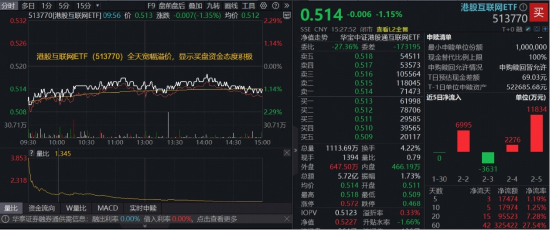
Core Viewpoint - The Hong Kong stock market experienced a significant decline influenced by the drop in US tech stocks, with major internet companies facing deep corrections, particularly Alibaba and Meituan [1][10]. Group 1: Market Performance - On February 6, the three major indices in Hong Kong opened sharply lower, with Alibaba-W dropping nearly 3% and Meituan-W and Kuaishou-W falling over 2% [1][10]. - The Hong Kong Internet ETF (513770) opened lower and saw a price drop of up to 2%, eventually closing down 1.15%, despite showing signs of strong buying interest with a net inflow of 175 million yuan over the past five days [11][13]. Group 2: Valuation and Investment Sentiment - The Hong Kong internet sector has seen a continuous decline for six days, with the market price hitting an eight-month low on February 5. The current price-to-earnings ratio (PE) for the China Securities Hong Kong Internet Index is 24.25, which is at a historical low compared to the past five years [3][13]. - Southbound capital has shown a clear bottom-fishing trend, with a cumulative net purchase exceeding 56 billion HKD this week, including a record 24.977 billion HKD on February 5, focusing on Tencent, Alibaba, and Xiaomi [5][15]. Group 3: Future Outlook - Analysts from Guohai Securities highlight that leading internet companies are generally undervalued, with a new round of competition centered around AI models improving commercial ROI. The internet sector is expected to see a valuation reset, driven by stable user traffic and the emergence of generative AI as a new growth driver [16]. - GF Securities notes that the current global dollar cycle is peaking and transitioning, with the RMB entering a mild appreciation phase. This, combined with foreign capital inflows and valuation recovery, presents a favorable re-pricing window for Chinese equity assets [16]. Group 4: ETF and Investment Strategy - The Hong Kong Internet ETF (513770) and its linked funds passively track the China Securities Hong Kong Internet Index, with the top ten weighted stocks including Alibaba-W, Tencent, and Xiaomi, accounting for nearly 77% of the ETF [6][16]. - For investors looking to reduce volatility while still focusing on technology, the Hong Kong Large Cap 30 ETF (520560) is recommended, which combines high-growth tech stocks with stable dividend-paying companies [17].

电子行业周报:谷歌/亚马逊26年CAPEX指引超预期,AI硬件需求强劲-20260208
SINOLINK SECURITIES· 2026-02-08 11:11
Investment Rating - The industry is rated positively, with expectations of significant growth in capital expenditures from major companies like Amazon and Google, indicating a bullish outlook for the sector [1][26]. Core Insights - Amazon raised its 2026 capital expenditure forecast to $200 billion, a more than 50% increase from $131 billion in 2025, driven by strong demand signals in AI hardware and cloud services [1]. - Google's parent company, Alphabet, expects its 2026 capital expenditure to be between $175 billion and $185 billion, nearly double its 2025 spending, reflecting robust growth in its cloud business [1]. - The demand for AI infrastructure is expected to lead to a significant increase in ASIC (Application-Specific Integrated Circuit) numbers from major tech companies, with a projected explosive growth in 2026-2027 [1][4]. - The semiconductor and PCB (Printed Circuit Board) sectors are anticipated to benefit from the strong demand for AI, with many companies in these areas experiencing high order volumes and expansion plans [4][26]. Summary by Sections Section 1: AI and Cloud Infrastructure - Amazon's AWS cloud division saw a 24% year-over-year growth, with a backlog of $244 billion, indicating strong enterprise investment in AI and cloud services [1]. - Google's cloud revenue reached $17.7 billion in Q4, a 48% increase year-over-year, driven by strong demand for enterprise-level AI products [1]. Section 2: Semiconductor and PCB Industry - The PCB industry is maintaining high demand due to the growth in automotive and industrial applications, with expectations of price increases for copper-clad laminates [6]. - AI-driven demand is expected to boost PCB prices and volumes, with companies actively expanding production to meet this demand [4][26]. Section 3: Consumer Electronics - The consumer electronics sector is seeing a continuous expansion of AI applications, particularly in the Apple supply chain, with innovations in foldable devices and AI glasses [5]. - The demand for AI-enabled devices is expected to drive significant growth in the market, with various manufacturers exploring new product categories [5]. Section 4: Semiconductor Equipment and Materials - The semiconductor equipment sector is experiencing a robust upward trend, with significant capital expenditures expected to support the growth of advanced manufacturing processes [23][25]. - The materials sector is also poised for improvement, with a focus on domestic production capabilities in response to international supply chain challenges [25][34]. Section 5: Company-Specific Insights - Companies like North Huachuang and Zhongwei are positioned to benefit from the increasing demand for semiconductor equipment and materials, with strong growth prospects in their respective markets [28][30]. - Three Ring Group is focusing on high-capacity MLCC (Multi-Layer Ceramic Capacitor) products, which are expected to see increased demand due to AI applications [33].



四大科技巨头今年欲砸6500亿美元加码AI
第一财经· 2026-02-08 09:54
2026.02. 08 本文字数:2470,阅读时长大约4分钟 在理论定义中,AGI被视为AI的终极状态,意味着系统能在会计、法律等多个白领专业领域达到并取 代人类的智力水平。 现代AI"教父"之一本吉奥(Yoshua Bengio)警示称,AGI的研发进程可能会陷入停滞,而这种停滞 对投资者而言无异于灾难。他称,行业很可能在不久的将来"碰壁",面对目前无法预见且难以快速解 决的技术瓶颈,这可能诱发一场真正的金融崩盘。毕竟,当前涌向AI领域的数万亿资金,大多建立 在技术能以目前速度规律进步的乐观预期之上。 罗伯特·李凭借其在帝国理工学院深造电子工程的学术背景,也提供了基于技术视角的结论。他表 示:"从本质上看,AI运行的底层逻辑近年来并未发生颠覆性变革,真正的改变在于算力与存储能力 的爆发式增长,以及模型从处理单一数字数据向多模态(涵盖文本、视频和音频)的进化。尽管如 此,这些模型的核心仍是模式识别,实质上是极其复杂的统计模型。" 罗伯特·李形象地解释道,当用户利用AI模型搜索量子计算时,模型只是通过训练库或互联网搜集海 量资料,并利用模式识别提取共性并予以总结。这种功能虽然高效,却并非真正的智能。 作者 | ...



四大科技巨头今年欲砸6500亿美元加码AI,分析师:别为AGI“倾家荡产”
Di Yi Cai Jing· 2026-02-08 06:49
美国科技巨头大举"撒钱"的举动正令资本市场感到忧虑。 上周,在亚马逊宣布计划向人工智能(AI)及相关基础设施领域注资2000亿美元后,股价于6日早盘应 声下跌近9%。然而,市场的冷静反应并未浇灭这场AI投资热潮。根据谷歌、微软、亚马逊和Meta在近 日披露的最新资本支出计划,这四大科技巨头在2026年的开支总额预计将高达约6500亿美元。 在理论定义中,AGI被视为AI的终极状态,意味着系统能在会计、法律等多个白领专业领域达到并取代 人类的智力水平。 而驱动这些巨头"不计成本"投入的核心逻辑,很大程度上寄希望于通用人工智能(AGI)的实现,以及 随之而来的数万亿美元潜在回报。正如硅谷风投机构红杉资本(Sequoia Capital)合伙人卡恩(David Cahn)所言:"唯有AGI的实现,才能证成未来十年这一量级的投资提案。" 然而,业内对AGI实现路径正涌现出越来越多的怀疑。彭博行业研究高级中国科技分析师罗伯特·李 (Robert Lea)在接受第一财经记者采访时表示,鉴于当代AI模型存在根本性的逻辑缺陷且方法论较为 单一,仅仅通过扩展现有模型,即行业目前盛行的做法,不太可能实现AGI。 模式识别并非真智 ...
天价域名交易:AI.com以7000万美元易主 创下新纪录
Sou Hu Cai Jing· 2026-02-08 03:43
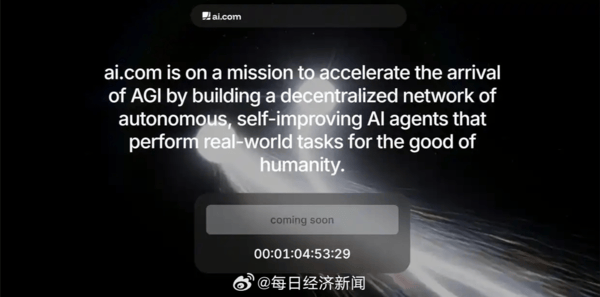
买家Kris Marszalek是加密货币和股票交易平台"Crypto.com" 的联合创始人兼首席执行官。在2016年创 办加密货币交易所后,马尔扎莱克的公司在竞争激烈的市场中脱颖而出,年收入已增长至约15亿美元。 他的公司通过高调营销策略取得了成功,包括以7亿美元签下NBA洛杉矶湖人队主场的20年冠名权,将 昔日的"斯台普斯中心"更名为"加密货币网体育馆"。 根据公开报道,在此之前最贵的域名交易是币圈公司Block.one以3000万美元收购的"Voice.com"。中国 互联网安全公司360以1700万美元买入的"360.com"则位列第三。 这笔交易最引人关注的一点是卖家的身份至今仍未公开。但该网站此前就因为会选择性地跳转至 ChatGPT、谷歌Gemini、马斯克的xAI官网引发关注。在DeepSeek热潮席卷全球后,该域名也曾设置跳 转至DeepSeek官网。域名的跳转历史反映出AI领域的竞争格局和热门玩家的变迁。 【CNMO科技消息】当地时间2月6日,据英国《金融时报》报道,Crypto.com创始人克里斯·马尔扎莱克 斥资7000万美元买下AI.com域名,刷新了公开披露的域名交易价格纪录。交 ...
科技周报|苹果CEO库克谈退休、马云现身阿里千问春节项目组
第一财经网· 2026-02-08 03:36
库克深入谈及退休规划,腾讯、阿里、百度掀起春节前AI大模型的红包大战,松下宣布裁员规模可能 增至1.2万人。 2月5日,苹果CEO库克主持召开一场全员大会,描绘了人工智能(AI)将如何重塑苹果的未来,同时 深入谈及了退休和继任规划。他谈到:"大家都清楚,人到了一定年纪,有些人会选择退休,这是很自 然的事。"库克表示自己花很多时间思考5年后、10年后,甚至15年后谁会坐在这个房间里。思考这些事 情并制订计划,是领导力的重要组成部分。 【点评】:已经年满65岁的库克退休传闻去年下半年开始升温。目前,新任首席运营官萨比·汗已全面 接手运营工作,并正致力于解决行业内普遍面临的内存芯片短缺问题。随着苹果继任者规划逐渐浮出水 面,苹果面临的问题是,公司需要的是一位创新者,还是另一位精明的管理者?是一位像库克那样通过 让公司变得更具可预测性和渐进性而成功的领导者,还是一位像乔布斯那样通过冒险来押注未来的富有 远见的产品规划师? 腾讯、阿里、百度春节撒45亿红包 2026年马年春节前夕,红包大战再度升级,腾讯、阿里、百度三大巨头累计投入超45亿元,且首次将 AI作为核心驱动,开启"红包+AI"的全新玩法。阿里千问斥资最高,达 ...




中俄正在核电领域构筑压倒性地位
日经中文网· 2026-02-08 00:33
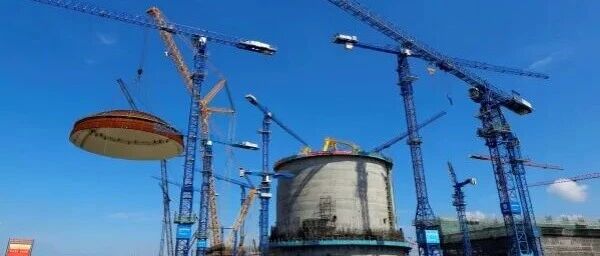
Core Viewpoint - China and Russia are establishing a dominant position in the global nuclear power sector, with 90% of new nuclear reactors starting construction in 2025 being led by these two countries [2][4]. Group 1: Nuclear Power Development in China - By 2030, China's operational nuclear power capacity is projected to reach 110 million kilowatts, surpassing the United States to become the world's largest [4]. - The Chinese government has approved the construction of 10 nuclear reactors at five sites, aiming for nuclear power to account for 10% of the energy mix by 2040, up from less than 5% in 2024 [4]. - Currently, there are 27 nuclear reactors under construction in China, with approximately 60 reactors (including those under maintenance) in operation, totaling around 64 million kilowatts of installed capacity [5]. Group 2: Global Nuclear Power Landscape - In 2025, nine large nuclear reactors are expected to commence construction globally, with China contributing seven, Russia one, and South Korea one [4]. - Since 2016, over 90% of the 63 nuclear reactors that began construction worldwide have been built by China and Russia, with only five reactors from other countries (South Korea and the UK) [4]. Group 3: Small Reactor Development - China is also focusing on developing smaller reactors, with the "Linglong One" reactor in Hainan Province successfully completing cooling tests and planned to be operational by 2026 [7]. - Russia is pursuing the export of small reactors and has built 19 reactors abroad in the past decade, with ongoing projects in Turkey and Bangladesh [7]. Group 4: U.S. Nuclear Power Initiatives - The U.S. has not started construction on new commercial nuclear reactors since 2013, but efforts are underway to revive the sector, including a plan to build 10 large reactors by 2030 [8][9]. - The U.S. government is also investing in small reactor development, with plans to introduce new technologies by 2032 [9]. Group 5: Nuclear Energy Revival - The trend of nuclear energy revival, which began in the 2000s, faced setbacks after the Fukushima disaster in 2011, but a "second nuclear revival" is now emerging, driven by advancements in AI and increasing electricity demand [10].
中国蓄电池厂商相继在美建厂,减轻关税负担
日经中文网· 2026-02-08 00:33
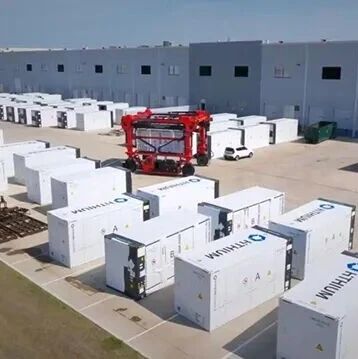
Core Viewpoint - Chinese battery companies are shifting from exporting products to local production in the U.S. to mitigate tariff-related cost increases and capitalize on the growing demand for battery systems in data centers [2][4]. Group 1: Market Dynamics - Chinese battery manufacturers are increasingly establishing factories in the U.S., with companies like Xiamen Hicharge Energy and Horizon Robotics announcing new production lines in Texas and Tennessee, respectively, with capacities of 10 GWh and 7 GWh [4]. - The intensifying competition in the Chinese market has prompted these companies to target the U.S. market, which presents greater growth opportunities [4]. Group 2: Regulatory Environment - The U.S. government, under the Biden administration, announced a plan to impose tariffs of up to 25% on Chinese-made batteries starting January 2026, which has influenced Chinese companies to localize production [4]. - The OBBB Act, passed in July 2025, aims to strengthen restrictions on companies controlled by the government, indicating potential future challenges for Chinese firms operating in the U.S. [5]. Group 3: Demand Drivers - The demand for batteries in the U.S. is being driven by significant investments in data center equipment by large tech companies, fueled by the AI boom [5].
别让AI的信息茧房困住青年实践的步伐
Xin Lang Cai Jing· 2026-02-07 23:56
然而,信息的易得性从来不是实践的对立面,青年的成长离不开"知"与"行"的同频共振。作为新时代的 认知工具,AI为青年打开了高效学习的"一扇窗",在社会实践启程之前,帮助青年高效搭建知识框架、 快速把握时代脉搏,但真正的成长,终究要在"行"中完成。当他们真正走进田间地头、驻足非遗工坊、 深入产业一线时,就能以现有知识为基础,在实践中修正认知偏差、锻炼实际能力,最终实现从理论认 知到实践行动的转变。 AI的便捷性,极易让青年陷入"认知舒适区"。动动手指,就能获取丰富翔实的理论分析、资料梳理、策 略建议等,看似掌握了全貌,实则离真实的应用场景相去甚远。就像在乡村产业发展中,AI能算出农 产品的市场数据,却无法感知田间地头的产销痛点;能生成文化活动的策划方案,却难以体会传统技艺 背后的文化温度。与此同时,AI海量整合的答案、面面俱到的分析带来信息饱和,由算法悄然构建起 的信息茧房让青年的认知停留在"虚拟框架"中,让不少人陷入"纸上谈兵"的惰性,失去了主动探索、亲 身体验的动力。 伴随着AI时代的到来,如何更好地看待社会实践的意义值得进一步思考。这个寒假,记者注意到我省 诸多高校作出了有益实践:在闽清县樟洋村,福建农林 ...
英伟达今年不推GPU 30年来首见
Jing Ji Ri Bao· 2026-02-07 23:07
Core Insights - NVIDIA will not release new gaming GPUs this year due to a global shortage of storage chips caused by the AI boom, marking the first time in 30 years that the company has skipped a new GPU launch [1][2] - The planned upgrade for the GeForce RTX50 series, codenamed "Kicker," has been postponed indefinitely, with no new timeline provided for its release [1] - The delay in the Kicker launch will also push back the release of the next-generation gaming GPU, potentially named the RTX60 series, which was originally set to begin production by the end of 2027 [1] Industry Impact - The shortage of storage chips has led to increased prices and has forced NVIDIA to prioritize the supply of these chips for AI products over gaming GPUs [1] - The gaming GPU market has already seen significant price increases, with flagship models like the GeForce RTX 5080 and RTX 5090 experiencing substantial price hikes since Q4 of last year [2] - Major graphics card manufacturers, including ASUS, MSI, and Gigabyte, are on alert due to ongoing supply constraints and price surges in the gaming GPU market [2] Supply Chain Dynamics - Both gaming and AI chips utilize similar raw materials sourced from major suppliers such as Samsung, SK Hynix, and Micron, despite differences in the types of storage chips used [2] - NVIDIA's spokesperson confirmed strong demand for GeForce RTX GPUs but acknowledged the limitations in storage supply, emphasizing ongoing collaboration with suppliers to secure necessary components [2]