
人形机器人

Search documents
中国机器人在跳舞,美国机器人在发论文
远川研究所· 2026-02-26 13:17
Core Viewpoint - The article discusses the contrasting approaches of China and the United States in the development of humanoid robots, highlighting China's focus on hardware and the U.S.'s emphasis on software, suggesting a competitive landscape where both countries leverage their strengths in manufacturing and technology [5][9][19]. Group 1: Industry Overview - The Chinese robotics industry has gained significant public attention, with various robots showcased during events like the Spring Festival, while the U.S. robotics scene appears quieter despite having numerous companies [5][7]. - Major players in the U.S. robotics sector include companies like World Labs and Physical Intelligence, focusing on software and AI models, while NVIDIA is developing platforms specifically for humanoid robots [7][9]. - The article notes a clear division in focus: China excels in hardware production, while the U.S. leads in software development and algorithm innovation [9][10]. Group 2: Hardware vs. Software - The development of humanoid robots requires both advanced hardware and sophisticated software, with hardware acting as the physical body and software serving as the brain [13][15]. - Key components such as joints and sensors are critical for the functionality of humanoid robots, with the article emphasizing the need for precise engineering to achieve human-like dexterity [13][15]. - U.S. companies are concentrating on creating software that understands physical rules, which is essential for the practical application of humanoid robots in real-world scenarios [15][19]. Group 3: Supply Chain Dynamics - The supply chain for humanoid robots is heavily influenced by the automotive industry, with many suppliers transitioning from automotive components to robotics [19][20]. - Chinese manufacturers are providing essential hardware components, while U.S. firms contribute advanced software and AI technologies, creating a symbiotic relationship between the two countries [20][21]. - The article highlights that companies like Tesla are leveraging their experience in electric vehicles to inform their robotics initiatives, indicating a crossover of technologies between the two sectors [20][24]. Group 4: Future Outlook - The article suggests that the competition in the humanoid robotics space may mirror the dynamics seen in the electric vehicle market, with Chinese companies potentially emerging as strong contenders [24][26]. - It notes that the rapid advancements in AI and robotics could lead to a scenario where Chinese firms dominate specific segments of the market, similar to trends observed in the electric vehicle industry [24][26]. - The potential for collaboration and competition between U.S. software expertise and Chinese manufacturing capabilities is emphasized as a key factor in the future of humanoid robotics [25][26].



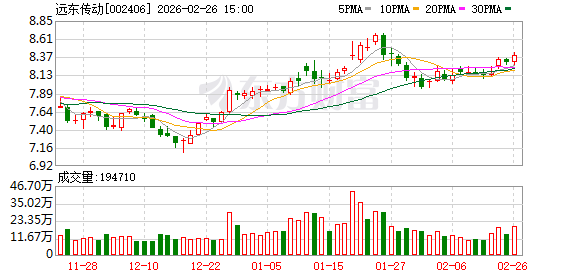
远东传动:目前公司主营产品未涉及人形机器人领域
Mei Ri Jing Ji Xin Wen· 2026-02-26 13:16
Group 1 - The company, Far East Transmission (002406.SZ), primarily focuses on universal joints and drive shafts for commercial vehicles, passenger cars, special vehicles, and construction machinery [2] - The company has not ventured into the humanoid robot sector and does not have any clients in that field [2] - There is no collaboration between the company and Tesla [2]

信音电子(301329.SZ):未有机器人、人形机器人连接器产品
Ge Long Hui· 2026-02-26 13:16
Group 1 - The core business of the company is the research, development, production, and sales of connectors [1] - The main products include connectors for laptops, consumer electronics, automotive, and other applications [1] - The connectors are categorized by function, primarily including power connectors, audio-visual connectors, and transmission connectors [1]

“抢跑”马年春季攻势,券商研究所“赶场”忙
2 1 Shi Ji Jing Ji Bao Dao· 2026-02-26 12:45
Core Viewpoint - The A-share market has shown a strong start in the Year of the Horse, igniting expectations for a spring rally, with many institutions predicting an early start to the spring market [1][2] Group 1: Market Activity and Strategy Meetings - Numerous brokerage firms have adopted a "no break during the Spring Festival" approach, scheduling extensive roadshows and strategy meetings during the holiday period [1][4] - From February 16 to 23, a total of 292 conference calls were arranged by brokerage research teams, averaging over 32 calls per day [6][7] - The spring strategy meetings are characterized by diverse focuses, with some emphasizing technology growth and resource cycles, while others cover macroeconomic analysis and emerging sectors like commercial aerospace and brain-computer interfaces [1][20] Group 2: Focus Areas for Investment - The chemical and TMT (Technology, Media, and Telecommunications) sectors are highlighted as key areas for investment exploration by brokerages [2] - AI and robotics have emerged as hot topics during the Spring Festival roadshows, with innovative formats being utilized to engage audiences [8][16] - Brokerages are actively producing research reports on robotics, with at least 25 reports published during the holiday period, focusing on themes like commercialization and industrialization [17] Group 3: Insights from Strategy Meetings - Analysts from various brokerages have differing views on market strategies, with some predicting a "super cycle" in oil prices and recommending investments in the petrochemical sector [25] - Other analysts suggest a focus on "new battlegrounds" for investment, emphasizing the importance of short-term trading and identifying sectors with low current holdings [26] - The consensus among institutions is that the equity market is on an upward trend, with increasing market activity expected [24]


机械行业月报:顺周期机械复苏持续,AI、人形机器人产业蓬勃发展
Zhongyuan Securities· 2026-02-26 12:24
Investment Rating - The report maintains an "Outperform" rating for the mechanical industry [1] Core Views - The mechanical sector is experiencing a cyclical recovery, with significant growth in AI and humanoid robot industries [1][4] - In February, the CITIC mechanical sector rose by 6.01%, outperforming the CSI 300 index by 5.38 percentage points, ranking second among 30 CITIC primary industries [9] - Key sub-industries such as laser processing equipment, other transportation equipment, shipbuilding, boiler equipment, oil and gas equipment, engineering machinery, and 3C equipment saw gains exceeding 10% [4][9] Summary by Sections 1. Mechanical Sector Market Performance - As of February 25, 2026, the CITIC mechanical sector increased by 6.01%, outperforming the CSI 300 index [9] - The top-performing sub-industries in February included laser processing equipment and shipbuilding, with most gains exceeding 10% [4][9] 2. Engineering Machinery - January excavator sales reached 18,708 units, a year-on-year increase of 49.5% [18] - The report highlights a sustained recovery in the engineering machinery sector, with leading companies expected to see accelerated performance recovery [33] 3. Robotics - The production of industrial robots in December reached 90,116 units, marking a 14.7% year-on-year increase [36] - The humanoid robot sector is entering a rapid development phase, with significant investments and advancements in technology [47] 4. Shipbuilding - In 2025, China's shipbuilding industry maintained a leading global market share, with a completion volume of 53.69 million deadweight tons, a year-on-year increase of 11.4% [50]





机械行业月报:顺周期机械复苏持续,AI、人形机器人产业蓬勃发展-20260226
Zhongyuan Securities· 2026-02-26 11:49
Investment Rating - The report maintains an "Outperform" rating for the mechanical industry, indicating a positive outlook for investment opportunities in this sector [1]. Core Insights - The mechanical sector is experiencing a cyclical recovery, with significant growth in AI and humanoid robot industries. The sector outperformed the CSI 300 index by 5.38 percentage points in February 2026, with a 6.01% increase [3][4]. - Key sub-industries such as laser processing equipment, shipbuilding, and engineering machinery showed strong performance, with many exceeding 10% growth [4][9]. - The report emphasizes the importance of focusing on leading companies in cyclical recovery, particularly in engineering machinery, shipbuilding, and humanoid robots, suggesting specific companies for investment [4][35]. Summary by Sections 1. Mechanical Sector Performance - In February 2026, the mechanical sector rose by 6.01%, outperforming the CSI 300 index, ranking second among 30 major industries [9]. - Key sub-industries with notable growth included laser processing equipment and shipbuilding, while lithium battery and photovoltaic equipment lagged behind [4][9]. 2. Engineering Machinery - January 2026 saw a 49.5% year-on-year increase in excavator sales, with domestic sales growing by 61.4% [18]. - The report highlights a sustained recovery in the engineering machinery sector, driven by equipment renewal cycles and increasing export competitiveness [33][35]. 3. Robotics - The humanoid robot industry is rapidly developing, with a 14.7% increase in industrial robot production in December 2025 [36]. - The report notes that humanoid robots are becoming a focal point in AI applications, with significant advancements in technology and production capabilities [36][47]. 4. Shipbuilding - The shipbuilding industry remains robust, with a 11.4% increase in completed shipbuilding tonnage in 2025, maintaining a leading global market share [50]. - The report indicates that the shipbuilding sector is experiencing a recovery, with a strong order backlog and improved profitability among leading companies [50].

日发精机:用于丝杆、螺母的内、外螺纹磨床已向部分客户交付使用
Zheng Quan Ri Bao Wang· 2026-02-26 11:41
Core Viewpoint - The company, Rifa Precision Machinery (002520), has developed high-precision CNC thread grinding machines primarily used for processing high-precision screws and nuts in industries such as new energy vehicles, humanoid robots, industrial mother machines, tools, and industrial automation, which have gained customer recognition [1] Market Development - The company is making progress in market expansion and has signed contracts or established strategic partnerships with several clients, including Best (300580), Wuzhou Xinchun (603667), and Sanlian Forging (001282) [1] - Technical exchanges and cooperation discussions are ongoing with some potential clients [1] Product Delivery - CNC grinding equipment for internal and external threads has been delivered to some customers, and specialized grinding machines for nut processing have also been delivered [1] Industry Challenges - Some downstream industries, such as humanoid robots, are still in the early stages and have not yet achieved large-scale production, which may delay the industrial growth of CNC grinding equipment [1] - The company will focus on tracking the technological development routes of downstream customers and end-users, prioritizing product research and development in related fields for future growth [1]

利亚德:依托动作捕捉技术切入人形机器人赛道,已与多家知名厂商开展硬件销售及动捕训练合作
2 1 Shi Ji Jing Ji Bao Dao· 2026-02-26 10:32
南财智讯2月26日电,利亚德在投资者关系活动中表示,公司机器人业务属于AI与空间计算板块,营收 占总营收约5个百分点;依托领先的Optitrack光学动捕技术,精准补足人形机器人产业高质量动作数据 匮乏这一关键瓶颈,提供高保真的动作数据与运动控制底层能力;目前已与国内外诸多知名机器人厂家 建立合作,涵盖硬件销售、动作训练及动捕训练中心建设等多个维度。 ...

无矿何以称王?金龙稀土北交所IPO:背靠厦钨,绑定比亚迪,专注精深加工
市值风云· 2026-02-26 10:12
Core Viewpoint - Jinlong Rare Earth has shown significant growth in revenue and net profit, with a 34% year-on-year increase in revenue and a 110% increase in net profit for the first half of 2025, despite lacking its own rare earth mining resources and having divested its smelting business [26][35][36]. Company Overview - Jinlong Rare Earth, established in March 2000, is a subsidiary of Xiamen Tungsten Co., Ltd., which holds a 65.20% stake in the company [5][6][8]. - The company is focused on the manufacturing of high-purity rare earth oxides and deep processing, having transferred its rare earth smelting business to China Rare Earth Group [19][36]. Financial Performance - In the first half of 2025, Jinlong Rare Earth reported a revenue of 2.72 billion yuan, with a net profit of 110 million yuan, marking a 34% and 110% increase year-on-year, respectively [26][35]. - The company's gross profit margin was 10.5% and the net profit margin was 4.4% as of mid-2025 [24][25]. Industry Position - Jinlong Rare Earth ranks among the top four companies in the A-share rare earth permanent magnet industry based on revenue and is in the top three for net profit [28][29]. - The company has a comprehensive competitive edge in the rare earth industry, focusing on deep processing and serving notable clients such as BYD, Siemens, and Midea [29][30]. Supply Chain and Procurement - Jinlong Rare Earth does not own rare earth mining resources but has historically procured from associated companies, with significant purchases from Longyan Rare Earth Development Co. [13][18]. - In 2024, the company shifted to sourcing from third-party suppliers, indicating a change in its procurement strategy [16][18]. Market Trends - The rare earth industry is experiencing high demand due to strategic resource status and increasing applications in sectors like electric vehicles and wind energy, contributing to price increases for rare earth materials [34]. - Jinlong Rare Earth's focus on high-purity rare earth oxides and deep processing aligns with industry trends, positioning the company to benefit from the ongoing market growth [36].

2025年中国新设经营主体2574.5万户
Zhong Guo Xin Wen Wang· 2026-02-26 09:47
Group 1 - The core viewpoint of the articles highlights the significant growth in new business entities in China, with a total of 25.745 million new entities expected by 2025, indicating a trend towards higher quality and innovation in the market [1][2] - In 2025, 9.5 million new enterprises and 16.194 million new individual businesses are projected to be established, showcasing a robust entrepreneurial environment [1] - The emergence of new and future industries is notable, with 1.134 million new enterprises related to "8 major emerging industries + 9 major future industries," reflecting a 9.9% increase from the previous year [1] Group 2 - The consumer sector is experiencing significant growth, particularly in the "smart consumer device manufacturing" sector, which is expected to reach 78,000 entities, with 5,000 new establishments [1] - The cultural tourism industry is also thriving, with 3.302 million new enterprises projected for 2025, marking a 12.2% increase year-on-year [1] - The "silver economy" is expanding rapidly, with 68,000 new enterprises expected in 2025, reflecting a 17.1% growth, driven by the aging population's needs [1] Group 3 - The scale of high-quality entrepreneurial talent remains stable, with a notable increase in young entrepreneurs in traditional sectors, particularly in wholesale and retail, reaching 1.729 million by the end of 2025, an 8.4% increase from 2021 [2] - Young entrepreneurs continue to dominate emerging sectors, with 213,000 in scientific research and technical services, and 526,000 in culture, sports, and entertainment [2] - The growth of internet-based business models is significant, with rapid increases in newly established online live streaming enterprises and individual businesses expected by 2025 [2]