人民币国际化

Search documents
中金缪延亮:提升人民币储备货币地位
中金点睛· 2026-01-22 23:37
Core Viewpoint - The article discusses the historical opportunities and necessary measures for enhancing the internationalization and reserve status of the Renminbi (RMB), emphasizing the need for a multi-faceted approach to overcome existing barriers and challenges [2][17]. Group 1: Characteristics and Determinants of International Reserve Currencies - International reserve currencies are defined as currencies widely accepted for international payments, with their status reflecting a country's comprehensive national strength and international standing [4]. - The three main drivers of a currency's reserve status are market forces, policy support, and historical inertia, with market forces being the most fundamental [4][5]. - The strength of market forces is determined by a currency's ability to meet the three primary demands for foreign exchange reserves: precautionary international payment needs, exchange rate stability needs, and value preservation needs [5][6]. Group 2: Progress and Significance of RMB as a Reserve Currency - Before the 2008 global financial crisis, RMB internationalization was limited, but post-crisis, demand for RMB surged due to China's economic recovery and trade rebound [14]. - The People's Bank of China has actively promoted RMB internationalization by enhancing its use in cross-border trade and investment, including the establishment of various mechanisms for RMB-denominated investments [14][16]. - Despite recent progress, RMB's share in global foreign exchange reserves remains below 2%, indicating significant room for improvement compared to its weight in the SDR basket [17]. Group 3: Main Obstacles to Enhancing RMB's Reserve Currency Status - The primary internal obstacles to RMB's reserve currency status include a mismatch between trade settlement and trade volume, and insufficient development and openness of the financial market [19][20]. - Trade settlement in RMB is significantly lower than China's trade volume, with only 3.87% of global trade settlements conducted in RMB, highlighting the need for increased acceptance and use of RMB in international transactions [22]. - Factors such as market position, financing conditions, and historical inertia contribute to the low adoption of RMB for trade settlements [23][24]. Group 4: "Three Carriages" to Enhance RMB's Reserve Currency Status - The article proposes a "three carriages" approach to enhance RMB's reserve currency status, focusing on promoting cross-border trade settlement in RMB, advancing financial market development and openness, and leveraging regionalization to boost RMB's international use [33][34]. - Key measures include increasing the use of RMB in major commodity imports, providing economic incentives for businesses to settle in RMB, and optimizing cross-border RMB settlement services for key enterprises [35][36]. - Developing both offshore and onshore RMB markets is crucial, with recommendations for improving market infrastructure and expanding the range of RMB-denominated financial products available to international investors [37][38].


提升金融服务实体经济高质量发展质效
Jing Ji Ri Bao· 2026-01-22 23:29
Core Viewpoint - The People's Bank of China (PBOC) will continue to implement a moderately loose monetary policy to support economic stability, price recovery, and financial market stability, particularly in the context of the 14th Five-Year Plan [2][3]. Monetary Policy Implementation - The PBOC aims to maintain ample liquidity and match the growth of social financing and money supply with economic growth and price level expectations, indicating room for further cuts in reserve requirement ratios (RRR) and interest rates this year [2][3]. - Structural monetary policy tools will be optimized to enhance support for key strategic areas and weak links, with recent policy adjustments already made to improve these tools [2][3]. Financial Market Stability - The PBOC will focus on maintaining stable financial markets, managing expectations, and ensuring the RMB exchange rate remains stable within a reasonable range [3][4]. - Mechanisms will be established to provide liquidity to non-bank institutions under specific scenarios, and two monetary policy tools will be utilized to support capital market stability [3][4]. Macro-Prudential Management - A comprehensive macro-prudential management system will be developed, focusing on monitoring systemic financial risks and expanding the coverage of macro-prudential management to include new financial sectors [6][10]. - The PBOC will enhance the standardization and effectiveness of macro-prudential management tools and improve the legal framework supporting these policies [6][10]. Support for Key Areas - The PBOC will increase policy support for expanding domestic demand, technological innovation, and small and micro enterprises, including a dedicated 500 billion yuan for consumer and elderly care loans [7][8]. - An additional 400 billion yuan will be allocated to support technological innovation, raising the total to 1.2 trillion yuan, with a focus on high R&D investment private small and medium enterprises [7][8]. Collaboration and Coordination - The PBOC emphasizes collaboration with various government departments to enhance financial services and improve the effectiveness of financial support for the real economy [8]. - Coordination between monetary and fiscal policies will be strengthened to amplify the effects of financial support through measures like interest subsidies and guarantees [8][10]. International Financial Cooperation - The PBOC will actively participate in global financial governance reforms and international cooperation, promoting a fair and inclusive global financial governance system [9][10]. - Efforts will be made to enhance the internationalization of the RMB and develop a secure and efficient cross-border payment system [9][10].
响应产业实际诉求 反映中国价格信号 期现合力构建船燃市场“舟山价格”体系
Shang Hai Zheng Quan Bao· 2026-01-22 18:37
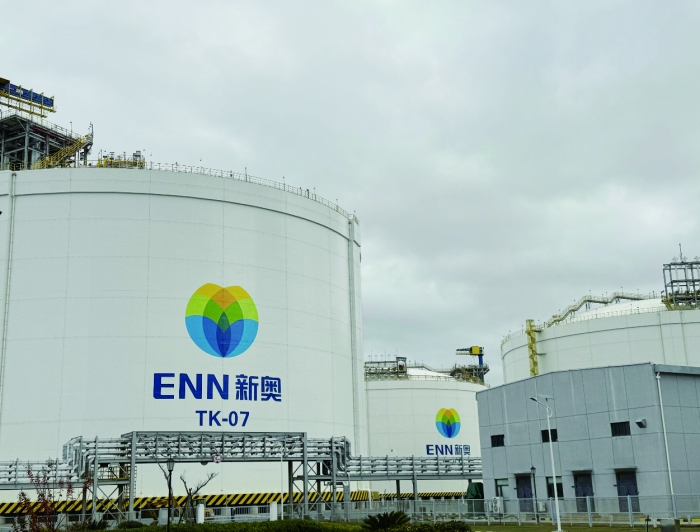
Core Insights - The article highlights the rapid development of the Zhoushan bonded marine fuel supply market, positioning Zhoushan as a key player in China's energy supply chain and a significant hub for bonded marine fuel supply globally [4][5]. Group 1: Market Growth and Infrastructure - Zhoushan has become China's largest bonded marine fuel supply port, with a projected bonded fuel supply volume of 802.71 million tons in 2025, marking a 10.6% increase despite challenges in the international shipping market [5][6]. - The completion of the Newell Zhoushan LNG receiving station has increased its annual receiving capacity to 10 million tons, supporting the gas needs of 30 million households in the Yangtze River Delta [4]. Group 2: Price System Development - The establishment of the "Zhoushan Price" index, based on low-sulfur fuel oil futures prices, has created a local pricing mechanism that reflects market supply and demand, enhancing the pricing influence of Chinese ports [6][10]. - The "Zhoushan Price" system integrates seller and buyer quotes, providing a transparent and fair trading environment, which improves operational efficiency across the supply chain [7][8]. Group 3: Impact on Industry Operations - The "Zhoushan Price" has transformed traditional trading models, moving away from point-to-point pricing based on foreign benchmarks, thus increasing market transparency and efficiency [7]. - The local pricing system aids companies in making informed operational decisions and managing price risks effectively, allowing for better financial planning and operational strategies [8][9]. Group 4: Future Developments and Internationalization - The establishment of a high-level trading model in the Zhejiang Free Trade Zone aims to expand the trading ecosystem beyond oil and gas to include other commodities, addressing various industry challenges [10][11]. - The "Zhoushan Price" is positioned to enhance the internationalization of the RMB, as it is the first domestic price mechanism based on futures prices, gaining recognition on international platforms [11].
潘功胜:有序推进人民币国际化
Bei Jing Shang Bao· 2026-01-22 12:03
具体举措包括深化金融领域制度型开放,持续推动金融服务业和金融市场的高水平开放,有序推进人民 币国际化,支持上海国际金融中心建设,巩固和提升香港国际金融中心地位。持续建设和发展多渠道、 广覆盖、安全高效的人民币跨境支付体系,加大跨境支付国际合作。 同时,积极参与国际金融治理和合作,务实开展多双边货币金融合作,积极参与全球宏观政策协调和国 际金融监管规则制定,继续推动国际货币基金组织份额改革,增强发展中经济体的发言权和代表性。加 强与高水平开放相匹配的监管能力建设,推动构建多元高效的全球金融安全网,坚决维护国家金融安 全。 北京商报讯(记者 廖蒙)1月22日,据新华社报道,谈及如何继续推进全球金融治理改革和国际金融合 作,中国人民银行党委书记、行长潘功胜表示,下一步,中国人民银行将积极践行全球治理倡议,坚持 走改革开放之路、多边主义之路,为建设更加公平、公正、包容、有韧性的全球金融治理体系贡献力 量。 ...
博时市场点评1月22日:三大指数翻红,创业板涨超1%
Xin Lang Cai Jing· 2026-01-22 08:35
Market Overview - The three major indices in the A-share market showed slight gains after narrow consolidation, with total trading volume increasing to 2.7 trillion yuan compared to the previous day [1][7] - The Shanghai Composite Index closed at 4122.58 points, up 0.14%, while the Shenzhen Component Index rose by 0.50% to 14327.05 points, and the ChiNext Index increased by 1.01% to 3328.65 points [10][11] Economic Insights - China's economy successfully achieved a 5% growth target for 2025, with notable recovery in prices during the fourth quarter, although still weak overall [1][7] - Key characteristics include stronger supply than demand and better external demand compared to internal demand, with investment and consumption remaining weak [1][7] - The core issue identified is insufficient domestic demand, which is expected to be a focus for improvement in supply optimization, price recovery, and profit enhancement in the coming year [1][7] International Developments - U.S. President Trump announced a framework for future agreements regarding Greenland and the Arctic region, leading to the cancellation of a planned 10% tariff on goods from Denmark, Norway, and six other European countries [2][8] - This tariff cancellation is seen as a positive signal for global trade, reducing immediate uncertainties and improving market risk appetite [2][8] - However, geopolitical uncertainties related to NATO defense responsibilities and Arctic resource control remain complex and require ongoing attention [2][8] Financial Policy Updates - The People's Bank of China emphasized the acceleration of building a cross-border payment system for the renminbi, aiming for greater connectivity and diversification in cross-border payments [3][9] - This initiative is part of a broader strategy to enhance the internationalization of the renminbi and reduce reliance on traditional international payment systems, potentially benefiting international trade and capital flows [3][9] Consumer Market Initiatives - A new policy was introduced to establish duty-free shops at 41 ports, including Wuhan Tianhe International Airport, allowing travelers from Macau to purchase duty-free goods up to 15,000 yuan [3][9] - This measure aims to stimulate inbound consumption and domestic high-end consumer demand, contributing to the strategy of expanding domestic demand and enhancing the role of consumption in economic growth [3][9]

芦哲:中国出口“惧怕”人民币升值吗
Di Yi Cai Jing· 2026-01-22 06:20
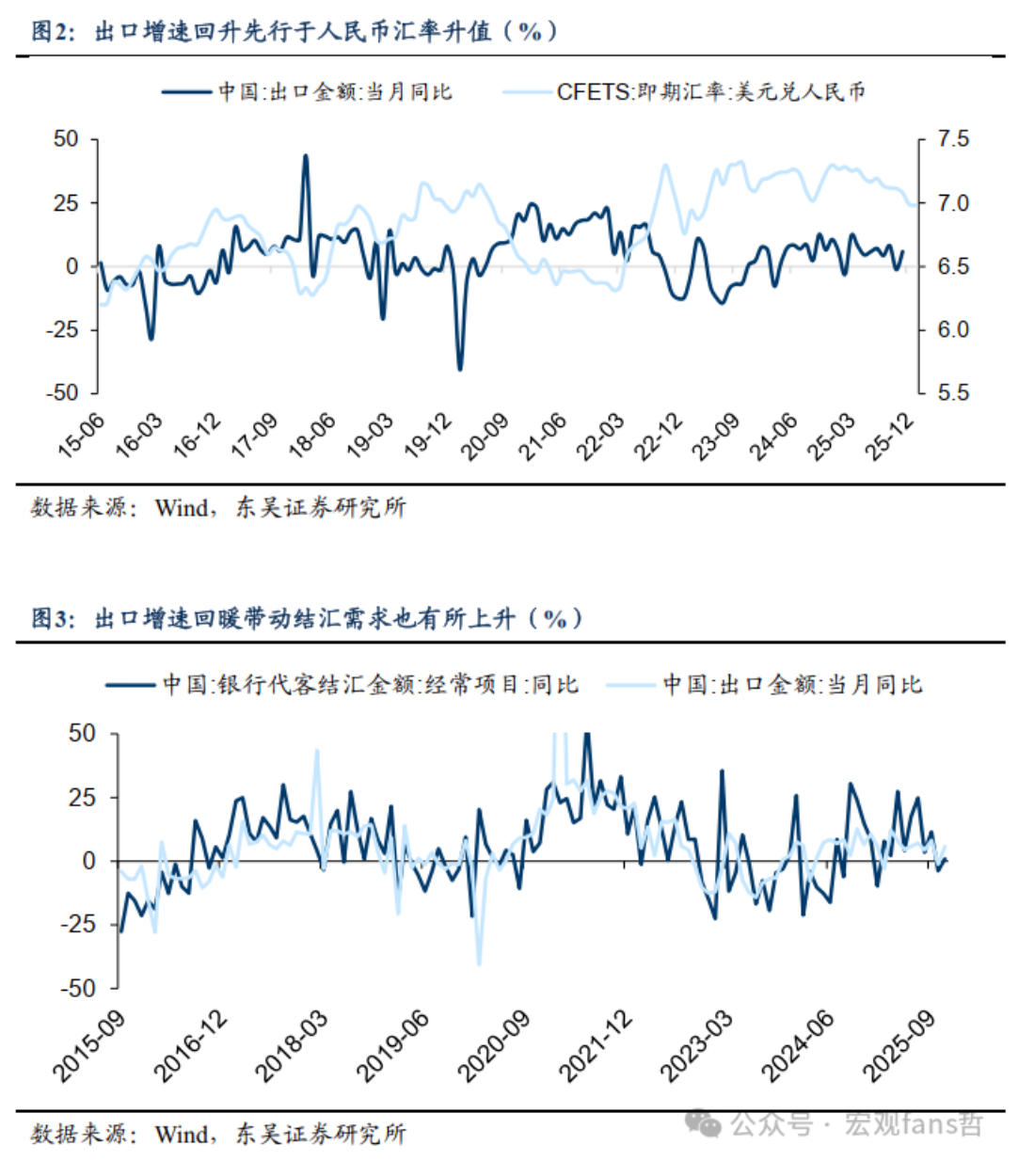
Core Viewpoint - The impact of exchange rates on exports is gradually diminishing due to the optimization of export product structure and the absolute comparative advantage of certain high-end products [1][2]. Group 1: Exchange Rate Trends - By the end of 2025, the RMB is expected to appreciate against the USD, potentially reaching 6.7 to 6.8 by the end of 2026, driven by market forces and policy adjustments [1]. - Since the "8.11 exchange rate reform" in 2015, the correlation between RMB exchange rate movements and export trends has weakened significantly, with a correlation coefficient of only 0.3% from September 2015 to November 2025 [2]. - During the two appreciation cycles since the reform, exports maintained stable growth despite RMB appreciation, indicating that exchange rate changes do not negatively impact export growth [2][3]. Group 2: Export Competitiveness - The actual effective exchange rate of the RMB remains low compared to major economies, providing a price advantage for Chinese exports despite the appreciation of the RMB [5]. - The central bank's refined management of the exchange rate has reduced the impact of exchange rate fluctuations on exports, allowing exporters to adjust pricing and lock in rates [6]. - The competitiveness of Chinese exports has been enhanced due to the continuous upgrading of industrial structure, with technology-intensive products gaining a stronger market position [9][10]. Group 3: Trade Settlement and Currency Internationalization - The proportion of RMB in international trade settlements is increasing, with RMB cross-border payments for goods trade reaching approximately 12.4 trillion yuan in 2024, a 15.9% increase year-on-year [11]. - Significant breakthroughs have been made in RMB settlement for major exports, such as large ships and aircraft, indicating a shift away from the dominance of the USD in trade transactions [12].
广发银行发力货币桥业务,服务人民币国际化
Xin Lang Cai Jing· 2026-01-22 01:52
Core Insights - Guangfa Bank has successfully completed its first cross-border remittance business under the multilateral central bank digital currency bridge, marking a significant breakthrough in expanding the application scenarios of digital RMB in cross-border payments [1][3] - The currency bridge, initiated by the People's Bank of China, Hong Kong Monetary Authority, Bank of Thailand, and Central Bank of the UAE, utilizes blockchain and distributed ledger technology to facilitate point-to-point transactions, significantly simplifying intermediary processes and reducing transaction costs [1][3] Group 1 - The currency bridge serves as a foundational infrastructure for digital RMB cross-border payments, reshaping the cross-border payment industry through technological innovation [2][4] - Guangfa Bank has been enhancing its cross-border financial service capabilities, including launching Cross-Border Wealth Management 2.0 and optimizing its global agency network [2][4] - The successful implementation of the currency bridge extends cross-border financial services into the innovative realm of digital RMB, adding new momentum to support the cross-border development of the real economy [2][4] Group 2 - Moving forward, Guangfa Bank aims to leverage the development window of digital RMB, focusing on technology implementation and scenario innovation to meet the dual needs of enterprises going global and attracting financial resources [2][4] - The bank's efforts align with national policies for high-level financial openness and the dual circulation development strategy, contributing to the internationalization of the RMB [2][4]
“玉兰债”受青睐持续扩容
Jin Rong Shi Bao· 2026-01-22 01:26
Core Viewpoint - The "Yulan Bond" market is experiencing significant growth, driven by China's financial market opening policies, strong demand for quality RMB assets, and improved issuance mechanisms [1][2]. Group 1: Market Growth and Performance - In 2025, 11 "Yulan Bonds" were issued, totaling approximately 8 billion RMB, marking a historical high with a year-on-year growth rate exceeding 40% [1]. - As of early 2026, two "Yulan Bonds" have already been issued, with a total scale of 3.3 billion RMB [1]. - The cumulative issuance of "Yulan Bonds" has surpassed 25 billion RMB, covering both financial and non-financial institutions [2]. Group 2: Strategic Importance and Features - "Yulan Bonds," named after Shanghai's city flower, are a cross-border bond issuance model that supports multiple currencies, including RMB, USD, and EUR [2]. - The bonds enhance cooperation between domestic and international financial infrastructures, providing a new financing option for domestic entities [2]. - The issuance process benefits from the cross-border connectivity between the Shanghai Clearing House and European Clearing Banks, improving efficiency and offering a comprehensive suite of services [2]. Group 3: Future Outlook and Innovations - The first "Yulan Bond" from a free trade zone issuer was launched in January 2026, raising 3 billion RMB with a coupon rate of 1.95%, attracting significant interest from various investors [4]. - The market is expected to continue its steady growth in 2026, with potential for product innovation and diversification of participants, including international institutions and large tech companies [5]. - Future developments may include the introduction of market-making systems to enhance liquidity and the exploration of green bonds and sustainable-linked bonds to meet diverse investment needs [5].
紧跟国家金融开发政策 广发银行以货币桥业务 赋能跨境支付领域
Mei Ri Shang Bao· 2026-01-22 00:27
Group 1 - The core achievement of Guangfa Bank is the successful completion of its first cross-border remittance business using the multilateral central bank digital currency bridge, marking a significant breakthrough in expanding the application scenarios of digital RMB in cross-border payments [1][2] - The currency bridge project, initiated by the People's Bank of China, Hong Kong Monetary Authority, Bank of Thailand, and Central Bank of the UAE, utilizes blockchain and distributed ledger technology to facilitate point-to-point transactions, significantly simplifying intermediary processes and reducing transaction costs [1] - This initiative aligns with the national financial opening policies and is a practical implementation of the action plan to strengthen the digital RMB management service system and related financial infrastructure [1] Group 2 - The currency bridge serves as a foundational infrastructure for digital RMB cross-border payments, driving a transformation in banks from traditional payment intermediaries to comprehensive financial service providers, thereby reinforcing the technological support for RMB internationalization [2] - Guangfa Bank has been enhancing its cross-border financial service capabilities, including the launch of Cross-Border Wealth Management 2.0 and the optimization of its global agency network, which extends cross-border financial services into the innovative realm of digital RMB [2] - The bank plans to leverage its advantages in the Guangdong-Hong Kong-Macao Greater Bay Area and continue to innovate in technology and application scenarios to meet the dual demands of enterprises going global and attracting financial resources [2]
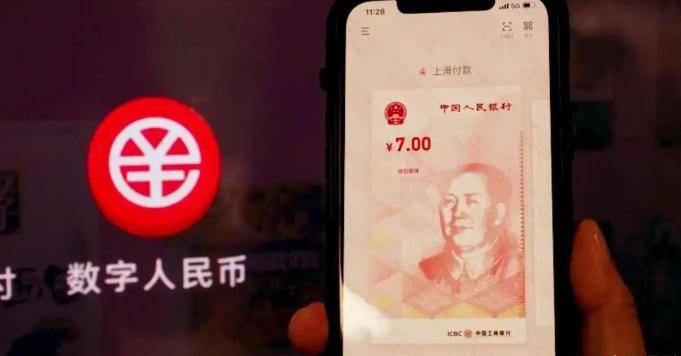
新版人民币2.0时代落地,纸币将何去何从?老百姓的支付方式会被颠覆吗
Sou Hu Cai Jing· 2026-01-21 21:46
Core Viewpoint - The transition to the digital renminbi 2.0 era signifies a fundamental change in China's payment system, moving from a simple digital cash model to a more dynamic digital deposit system that generates interest for users [2][4]. Group 1: Digital Renminbi Transition - The digital renminbi will evolve from being a digital cash equivalent to a true digital deposit, allowing it to earn interest starting January 1, 2026, at a current rate of 0.05% [2][4]. - The management of digital renminbi will shift from direct control by the central bank to commercial banks, enhancing service quality and providing deposit insurance up to 500,000 yuan [4][5]. Group 2: Usage and Adoption - As of November 2025, the digital renminbi has processed 3.48 billion transactions, amounting to 16.7 trillion yuan, indicating its transition from a pilot project to a widely used payment tool [5]. - The number of personal digital wallets has reached 230 million, with 18.84 million corporate wallets, showing significant user adoption [5]. Group 3: Future Implications - The digital renminbi's role in international payments is growing, with a 95.3% share in cross-border transactions, suggesting an increase in the renminbi's status as a payment tool in global trade [9]. - Future developments may allow users to purchase traditional financial products directly with digital renminbi, enhancing its utility and attractiveness [10]. Group 4: Payment Method Evolution - The coexistence of cash and digital renminbi is expected, with cash usage declining gradually rather than disappearing abruptly, similar to the transition from tapes to CDs [6][12]. - The transition to digital payment methods will be gradual, ensuring that all demographics, including the elderly, are accommodated during this shift [8][10].