元宇宙

Search documents
50城试点“三新”消费,北京等地共迎百亿级市场机遇
Jin Rong Jie· 2025-12-18 14:55
Core Viewpoint - The Chinese government is initiating a pilot program in 50 cities to promote new consumption formats, models, and scenarios, signaling a shift from material to service and experience-oriented consumption [1][2]. Policy Signals - The transition towards service and experience-oriented consumption has been officially recognized, with the central economic work conference prioritizing domestic demand and market development [2]. - The government report emphasizes consumption, mentioning it 32 times, indicating unprecedented policy focus on boosting consumer spending [3]. Strategic Positioning - The core mission of the pilot program is to stimulate the development of new consumption formats and create a new high ground for innovative consumption [4]. - This initiative is part of a broader strategy to implement the "Special Action Plan for Boosting Consumption" and expand the supply of quality goods and services [5]. Core Content - The pilot program will focus on three main areas: enhancing the first-release economic service system, innovating diverse service consumption scenarios, and supporting cross-brand collaborations with quality consumption resources [6]. - Specific initiatives include establishing first-release centers, promoting digital technologies in various sectors, and developing immersive consumption spaces [6]. Market Transformation - The consumption market is undergoing structural changes, with service consumption expected to grow by 6.2% year-on-year in 2024, outpacing goods retail growth by 3 percentage points [7]. - Mixed operating models, such as bookstores combined with cafes, are emerging as new consumption highlights, with an emphasis on increasing residents' income to boost consumption capacity [8]. Funding Arrangement - Central government subsidies for pilot cities will vary based on city size, with super-large cities receiving 400 million yuan, large cities 300 million yuan, and other cities 200 million yuan [9][10]. - Funding will be distributed in two batches, with initial funds released in the first year and remaining funds contingent on performance evaluations [10][11]. Implementation Process - The pilot program will follow a structured process involving local applications, evaluations, fund distribution, and performance assessments [12]. - Each province can recommend two cities for the pilot, with top consumer spending provinces allowed to recommend three [12]. Local Actions - Successful implementation of the pilot program relies on strong local government support, with cities encouraged to refine their implementation plans and establish effective mechanisms [13][14]. - Business departments in pilot cities will play a crucial role in coordinating efforts and addressing challenges [15]. New Consumption Trends - Emerging consumption trends include the rise of "self-indulgent consumption" among Generation Z and rapid growth in sectors like pet economy [16]. - The integration of technologies like artificial intelligence with consumer services is expected to create new growth opportunities in the market [16].
稳居全国文化产业第一梯队!广州天河加码发力数字文娱新赛道
Nan Fang Du Shi Bao· 2025-12-18 10:37
Core Insights - Guangzhou Tianhe District is positioning itself as a hub for the digital entertainment industry, launching a series of initiatives and policies to support the sector [2][3] - The digital entertainment market in China is projected to reach 1.75 trillion yuan in 2024, driven by advancements in AI technologies [3] - Tianhe District has established a complete industrial chain in the cultural sector, from research and development to monetization, making it a key player in the national landscape [6] Industry Overview - Tianhe District has 1,164 cultural enterprises above designated size, an increase of 210, generating revenue of 226.66 billion yuan, accounting for 37.5% of Guangzhou's total [4] - The gaming industry in Tianhe is particularly strong, contributing 33.8% of the national gaming revenue, and is recognized as a training ground for talent in the sector [5] Technological Integration - The integration of AI in various fields such as gaming, film, and music is reshaping the production and consumption models within the digital entertainment industry [3][6] - The district aims to enhance collaboration between original content production and leading tech companies to boost innovation capabilities [6] Policy Support - Tianhe District has introduced policies to promote high-quality development in the digital cultural industry, including financial support for gaming companies up to 8 million yuan annually [7] - The district also offers substantial funding for hosting major esports events, with support based on actual expenditures [7] Upcoming Events - A series of music performances and events are scheduled in Tianhe, including 53 large concerts featuring popular artists from December 2025 to March 2026 [8]

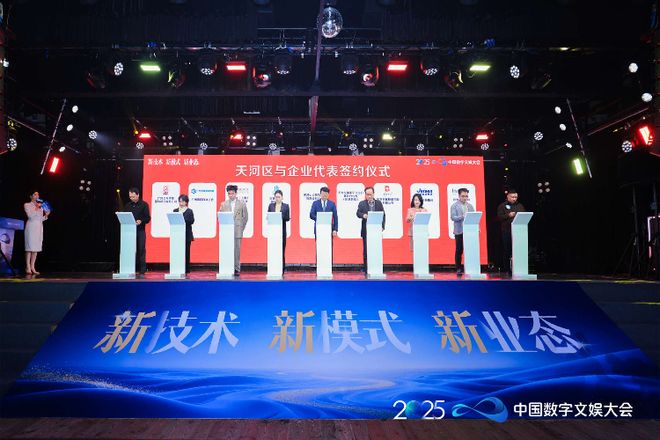
中国文娱产业AI应用报告发布,“数字文娱+AI”呈现六大趋势
2 1 Shi Ji Jing Ji Bao Dao· 2025-12-18 06:44
李智表示,未来"数字文娱+AI"的发展存在六大趋势。首先,创作民主化与"超级创作者"崛起,专业创 作的门槛被打破,"一人团队"即可完成过去需要多人协作的项目。其次,AI将重构IP生态,核心竞争力 转向规则定义与生态运营,IP持有者的核心竞争力将从控制内容转向定义规则、运营生态和驾驭AI工 具。其三,AI驱动的内容体验将实现升维,进一步朝向可感知、可共情的沉浸生态发展。其四,AI还 将驱动文娱文旅商业模式升级,从供给驱动型内容生产向需求即时共创的情感生态服务跃迁。其五,文 旅产业边界将消弭,"以文塑旅,以旅彰文"成为主线,如AI用于文物修复、数字存档和创造性转化。其 六,随着文娱+AI的爆发,监管和伦理问题日益将凸显,需构建相关治理体系推动科技向善发展。 李智表示,广州市天河区是我国数字文娱与AI深度融合的"核心引擎"。2024年,天河区数字创意产业营 收达2266.6亿元,占广州市37.5%,集聚网易、三七互娱等头部企业,成为全国数字文娱产业高地。未 来,随着元宇宙、AIGC等技术的深度应用,天河有望成为全球文娱产业创新策源地。 文娱产业为什么需要AI技术?12月18日,2025年中国数字文娱大会上,北京易观 ...

可靠吗?苹果考虑在印度封装iPhone芯片;腾讯升级大模型研发架构,姚顺雨出任首席AI科学家;小米发布最新MiMo大模型
雷峰网· 2025-12-18 00:45
Key Points - Apple is in talks with Indian semiconductor manufacturers to assemble and package iPhone chips in India, marking a shift from just final assembly to more complex semiconductor packaging [4][5] - Tencent has upgraded its large model research architecture, establishing new departments to enhance its AI capabilities, with a former OpenAI researcher appointed as chief AI scientist [7][8] - Xiaomi's new model, MiMo-V2-Flash, was launched by "genius girl" Luo Fuli, achieving a top 2 ranking among global open-source models [12] - MiniMax and Zhiyu have passed the Hong Kong Stock Exchange hearing, aiming to become the first publicly listed large model companies [21][22] - Neta Auto has established a new company named "Qianhe Auto" for restructuring purposes amid financial difficulties [24][25] - OPPO's executive shared a humorous experience of meeting a fan while undergoing dental surgery, highlighting the company's engagement with consumers [27][28] - Meta is planning layoffs in its metaverse department, reallocating resources towards AI smart glasses due to better market performance [44][45] - BYD has commenced comprehensive testing of its L3 autonomous driving technology, having completed over 150,000 kilometers of road validation [34] - Xiaomi plans to invest approximately 400 billion yuan in R&D in 2026, as part of a larger 2 trillion yuan investment over the next five years [40][41] - iRobot has entered bankruptcy and is being acquired by its main manufacturer, Sunkwan Group, which will retain the iRobot brand and continue operations in China [39][40]






毫微上涨2.33%,报3.08美元/股,总市值7120.09万美元
Jin Rong Jie· 2025-12-17 15:47
Core Viewpoint - The company, Haowei (NA), has experienced a stock price increase of 2.33% on December 17, reaching $3.08 per share, with a total market capitalization of $71.20 million [1] Financial Performance - As of June 30, 2025, Haowei reported total revenue of 8.2834 million RMB, a year-on-year decrease of 66.52% [1] - The net profit attributable to the parent company was -7.0545 million RMB, showing a year-on-year increase of 87.67% [1] Company Overview - Haowei Laboratory Limited is a foreign holding company registered in the Cayman Islands, primarily operated by its domestic entity, Zhejiang Haowei Technology Co., Ltd. [1] - Zhejiang Haowei Technology Co., Ltd. focuses on providing infrastructure support for the metaverse, developing high-throughput memory chips, high-performance computing chips, and distributed computing solutions [1] - The company's products are applicable in data centers, supercomputing, and artificial intelligence, empowering various application scenarios within the metaverse [1] - In 2019, the company validated its HBM2D memory technology and developed its unique compute-storage integrated FPU chip architecture [1] - In 2020, based on the FPU architecture, the company was the first to mass-produce the Cuckoo 1.0 dedicated computing chip [1] - Currently, the company is continuously iterating its products, expanding from specialized markets to general markets, aiming to provide computing power for a future intelligent digital society [1] - The company is committed to offering high-bandwidth, high-performance dedicated processor chips and solutions for distributed computing, core networks, artificial intelligence, high-performance computing, and video encoding/decoding in the metaverse ecosystem [1]

元宇宙正从概念炒作回归理性
Jing Ji Ri Bao· 2025-12-16 21:57
Core Viewpoint - Meta is shifting its focus from the metaverse to AI hardware, planning to cut its metaverse budget by 30% next year due to ongoing losses exceeding $70 billion over the past four years, while also considering acquiring an AI wearable startup [1][2]. Group 1: Meta's Strategic Shift - Meta's metaverse business has faced continuous losses, with challenges including underwhelming technology maturity, insufficient user interest, and unclear commercialization prospects [1]. - The market reacted positively to Meta's decision to reduce metaverse funding, resulting in a stock price increase of over 3%, reflecting investor concerns about ongoing losses in this segment [1]. - Despite the budget cuts, the metaverse remains a long-term vision for Meta, with generative AI contributing to content development, but the company is prioritizing AI hardware for more immediate returns [1]. Group 2: AI Hardware Market Dynamics - Meta's AI glasses have gained significant market traction, capturing 73% market share in the first half of the year, with shipments increasing over 200% year-on-year, positioning it as a new growth engine [2]. - The company is reallocating investments from the metaverse to AI hardware, emphasizing its commitment to AI infrastructure with a substantial portion of its $72 billion capital expenditure directed towards this area [2]. - The competition in AI hardware is intensifying, with major tech companies like Alibaba, ByteDance, and Google entering the market, indicating a fierce battle for dominance in AI glasses and smartphones by 2026 [2].

北京东城已累计实现建筑规模减量约230万平方米
Xin Jing Bao· 2025-12-16 13:42
Core Insights - The Dongcheng District has made significant progress during the 14th Five-Year Plan period in areas such as cultural heritage, economic growth, urban governance, and improving residents' well-being [1][2][4] Economic Development - Dongcheng District contributes nearly 8% of the city's GDP with only about 0.25% of its area, projecting a GDP of 380.87 billion yuan for 2024 and an average annual growth rate exceeding 5% during the 14th Five-Year Plan [2] - The financial sector is a key pillar, attracting major institutions like Morgan Stanley, with state-owned enterprise funds exceeding 130 billion yuan [2] - The digital economy's core industry revenue surpasses 300 billion yuan, with rapid development in AI and the metaverse [2] Cultural Initiatives - The district has four world cultural heritage sites, leading the city, and has successfully promoted the application for the protection of the central axis, resulting in over 25 million participants in cultural activities [2][7] - The "Cultural + " strategy has been implemented, integrating culture with technology, consumption, and various industries, enhancing cultural soft power into hard support for development [7][8] Urban Governance and Infrastructure - Urban renewal projects have improved living conditions for over 5,000 households, with significant reductions in PM2.5 levels by 29.3% [4][10] - The district has built 16 age-friendly parks and improved transportation networks, increasing road density to 10.16 kilometers per square kilometer [4] Consumer Market Growth - Dongcheng is developing into an international consumption center, attracting over 540 domestic and international flagship stores, with retail sales expected to exceed 160 billion yuan [3] - The introduction of a tax refund point has led to a 229% year-on-year increase in related product sales [3] Industry Structure and Innovation - The district has adopted an "8 industrial clusters + 4 characteristic streets" model, housing over 4,000 enterprises, contributing more than one-third to the district's economy [6] - The "Cultural Strong District" strategy aims to create a new benchmark for the integration of culture, commerce, and tourism [7]
从硅谷到宁波:回国的苹果Vision Pro团队发布自研MR专用芯片
Guan Cha Zhe Wang· 2025-12-16 10:53
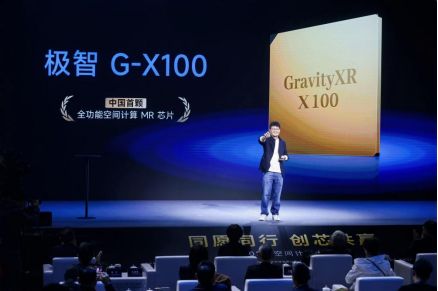
Core Insights - A startup named Wanyou Gravity Electronics has developed China's first fully functional MR chip, "Extreme Intelligence G-X100," amidst a slowdown in MR chip development by global tech giants [1][3] - The chip features a global record low color perspective latency of 9 milliseconds and is built on a 5nm advanced process, attracting significant industry attention [3][10] Industry Context - Major global tech companies have recently retreated from the MR chip market due to challenges in hardware experience, including device weight, short battery life, and high latency causing user discomfort [4][5] - Meta and Microsoft have faced substantial losses, leading to the termination of their MR chip projects and a shift towards using existing solutions from Qualcomm [4][5] Company Strategy - Wanyou Gravity's team, including former Apple Vision Pro developers, aims to address the fundamental pain points of XR devices through specialized chip design rather than general-purpose solutions [5][7] - The "Extreme Intelligence G-X100" chip is designed as a powerful co-processor or space computing accelerator, focusing on spatial perception, 3D reconstruction, and virtual-real fusion rendering [7][9] Technical Advantages - The chip's end-to-end optimization has significantly reduced latency, achieving 9 milliseconds compared to Qualcomm's previous solutions, which had latencies of 40-60 milliseconds [10] - The chip's power consumption is as low as 3W, enabling the development of lightweight devices, with a reference design for MR glasses weighing under 100 grams [10] Product Ecosystem - Wanyou Gravity has introduced a complete chip product matrix and a full-stack solution called "Extreme Domain," which includes additional products tailored for AI/AR glasses and spatial rendering [12][14] - The company emphasizes an open ecosystem approach, contrasting with traditional chip giants, and has partnered with nearly 300 companies across various sectors [16] Future Applications - The potential applications of the chip extend beyond MR headsets to include next-generation XR devices, AI hardware, and robotics, enhancing user interaction and environmental understanding [19][20] - The integration of spatial computing capabilities with AI models is expected to bridge the gap between perception and action, enabling smarter interactions in various fields [19][20]
数字科技产业观察 | 双周要闻(2025.12.02—12.16)
Mei Ri Jing Ji Xin Wen· 2025-12-16 10:45
Government Initiatives - The Ministry of Industry and Information Technology (MIIT) has revised the "Management Measures for Public Service Platforms for Industrial Technology," effective from December 5, 2025, focusing on key industries such as equipment, petrochemicals, steel, and artificial intelligence [1][1] - The National Development and Reform Commission, along with other ministries, has issued opinions to strengthen the construction of data element disciplines and digital talent teams, aiming to support the development of a digital economy and society [1][1] - The Ministry of Ecology and Environment has released guidelines for the construction of a product carbon footprint factor database to support the establishment of a carbon footprint management system [1][1] - MIIT is seeking public opinions on the "Comprehensive Standardization System Construction Guide for the Metaverse Industry (2026 Edition)," aiming to establish over 50 national and industry standards by 2030 [1][1] Local Actions - Shandong Province is promoting the metaverse as a new economic growth point, supporting cities like Jinan and Qingdao in building future industry pilot zones [1][1] - Jiangsu Province has established a Metaverse Standardization Technical Committee in Nanjing to fill the gap in the standardization system within the province [1][1] Industry Developments - The GPU leader, Moore Threads, has officially listed on the STAR Market, becoming the first domestic GPU stock, with a market capitalization of 305.5 billion yuan and an opening surge of 468.78% [3][3] - Google has integrated AI simultaneous translation into all its headphones and launched an experimental browser named "Disco," aiming to redefine web browsing experiences [3][3] Academic Insights - Academician Zhang Yaqin predicts that the future of large models will not exceed ten, emphasizing the integration of information, physical, and biological intelligence [4][4] - Academician Tan Jianrong stresses the importance of small models as the foundation for large models, advocating for a shift towards precision small models and industry-specific intelligent agents [4][4] Technology and Applications - The Ministry of Industry and Information Technology has granted approval for China's first batch of L3-level conditional autonomous driving vehicles, marking a significant step towards commercialization [6][6] - Mathematician Terence Tao and his team have solved the 50-year-old Erdős 1026 problem in just 48 hours using AI tools, showcasing the potential of AI in solving complex mathematical challenges [6][6]

上海交大一间宿舍,走出3个百亿宅男
创业家· 2025-12-16 10:12
Core Viewpoint - MiHoYo has transformed from a small dormitory startup into China's third-largest gaming company, with a valuation of 175 billion RMB, focusing on creating a virtual world for a billion people by 2030 [8][39]. Group 1: Company Background - MiHoYo was founded in 2011 by four students from Shanghai Jiao Tong University, who initially aimed to create a world-class original animation company [12][18]. - The company started with a small loan and faced numerous challenges, including initial failures in game launches and securing funding [22][23]. Group 2: Key Milestones - The breakthrough came with the release of "崩坏学园2" in 2014, which capitalized on the rise of the 二次元 culture and mobile gaming, generating significant revenue growth [26][27]. - "崩坏3" was launched in 2016, surpassing Tencent's "王者荣耀" to become the top-grossing game in China, marking a pivotal moment for MiHoYo [32][33]. Group 3: Financial Performance - In 2020, MiHoYo's revenue soared to 10.128 billion RMB, with a net profit of approximately 5.7 billion RMB, largely driven by the success of "原神" [37][38]. - By 2022, MiHoYo reported game revenues of 27.34 billion RMB, solidifying its position in the gaming industry [38]. Group 4: Future Aspirations - MiHoYo aims to create a virtual world that can accommodate a billion users, expanding its focus beyond gaming to include AI, brain-computer interfaces, and nuclear fusion technologies [45][46]. - The company is actively investing in new technologies and has established partnerships with institutions for research and development in advanced fields [43][44].