情绪价值

Search documents
聊一聊我对张雪峰的若干感想
虎嗅APP· 2025-09-25 13:39
Core Viewpoint - The article discusses the phenomenon of Zhang Xuefeng, who has gained popularity by providing emotional value to parents and students, acting as a "mouthpiece" for their frustrations and aspirations in the education sector [5][9]. Summary by Sections Zhang Xuefeng's Situation - Zhang Xuefeng's main account has been banned on various platforms, but his smaller accounts continue to operate, suggesting potential for a comeback [5]. - His rise to fame is attributed to his ability to articulate the sentiments of millions of parents and students, providing them with emotional comfort [5]. Emotional Value vs. Professional Value - Zhang's statements, such as the lack of future in journalism and the importance of hard work in high school, resonate emotionally but lack substantive professional insight [6][7]. - The appeal of his messages lies in their emotional resonance rather than their factual accuracy, as they reflect widespread frustrations with the education system [7][8]. Role as a "Mouthpiece" - Zhang Xuefeng serves as a voice for parents who feel disillusioned with the media and education, allowing them to express their grievances [8]. - His motivational speeches to high school students are more impactful than traditional advice from teachers, as he embodies a successful figure that students can relate to [8][9]. Market for Educational Consulting - Zhang's services create an illusion of a shortcut for parents seeking to navigate the complexities of college admissions and career choices for their children [9][10]. - He capitalizes on the desire of Chinese parents to control their children's futures, offering them a sense of agency through his consulting services [10]. Information Gap and Trends - Despite claims of possessing unique insights, Zhang's advice often lacks originality and is reactive to prevailing trends in education and job markets [10][11]. - The article suggests that his influence is based on providing emotional value rather than genuine expertise, as he adapts his messages to align with current societal sentiments [11]. Conclusion on KOL Dynamics - The article concludes that the role of Key Opinion Leaders (KOLs) like Zhang Xuefeng is increasingly about providing emotional support rather than delivering expert knowledge, reflecting a broader trend in social media [11].

用户选领克图啥?领克穆军:情绪价值是关键,哈曼卡顿成配置首选
2 1 Shi Ji Jing Ji Bao Dao· 2025-09-25 09:15
Core Insights - The Lynk & Co 08 EM-P has officially launched on September 24, with a price range of 175,800 to 228,800 yuan, and a limited-time offer of 159,800 to 212,800 yuan until October 31 [1] - This model is positioned as a "luxury family intelligent hybrid SUV" and is a key part of Lynk & Co's electrification strategy, built on the CMA Evo architecture [1] - The vehicle features advancements in design, intelligent cockpit, comfort, performance, safety, and intelligent driving assistance [1] Product Features - The Lynk & Co 08 EM-P is available in four different models [1] - The car emphasizes emotional value, with a focus on features like the Harman Kardon sound system, which is highly valued by users [1]
聊一聊我对张雪峰的若干感想
Hu Xiu· 2025-09-25 06:46
Core Viewpoint - The article discusses the rise and potential fall of Zhang Xuefeng, a popular figure in the education consulting space, highlighting his role as a "voice" for parents and students, and the emotional value he provides rather than technical expertise [1][2][9] Group 1: Zhang Xuefeng's Influence - Zhang Xuefeng's accounts on various internet platforms have been banned, but his smaller accounts continue to operate, suggesting potential for a comeback [1] - He has gained popularity by voicing sentiments that resonate with parents and students, acting as a "mouthpiece" for their frustrations and aspirations [2][4] - His statements, such as the lack of future in journalism and the importance of hard work in high school, have been widely shared, despite lacking substantial professional content [2][3] Group 2: Emotional Value vs. Technical Expertise - The emotional value provided by Zhang Xuefeng has led to a significant following, as he articulates common frustrations with the education system [2][6] - His ability to connect with audiences through emotionally charged rhetoric has overshadowed the lack of unique insights or information [6][7] - The article suggests that the blending of "professional value" and "emotional value" is a common trend in the social media era, where consumers often seek emotional satisfaction rather than genuine expertise [9] Group 3: Market Dynamics and Parental Behavior - Zhang Xuefeng's services cater to the desires of Chinese parents who seek shortcuts for their children's educational paths, reflecting a broader cultural tendency [5] - The article critiques the lack of proactive engagement from parents in understanding educational choices, which Zhang Xuefeng exploits by offering seemingly easy solutions [5][6] - The changing job market and the devaluation of degrees have made parents more reliant on figures like Zhang Xuefeng for guidance, despite the questionable validity of his advice [3][4]
以调研洞察青年 Soul创始人张璐团队不断探索新型社交产品的演进路径
Sou Hu Cai Jing· 2025-09-24 10:58
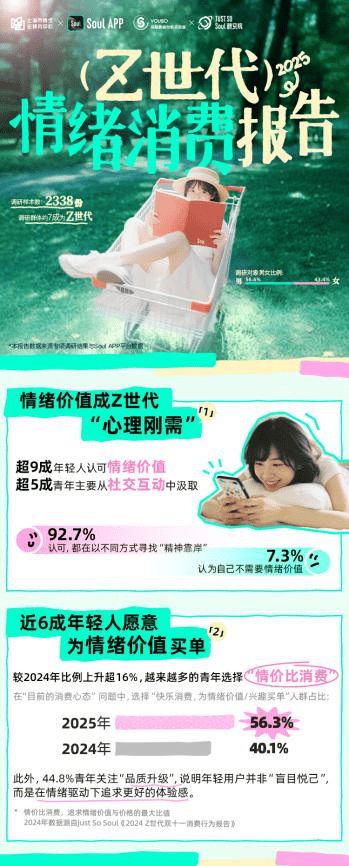
Core Insights - The report highlights that "emotional value" has become a core necessity in the spiritual lives of young people by 2025, driven by the rise of emotional consumption among the youth [1] - The findings are based on a survey conducted by Soul App, which collected 2,338 valid responses, with approximately 70% of respondents being from Generation Z (post-1995 and post-2000) [3] Emotional Consumption Trends - Over 90% of young people recognize "emotional value," with many having experiences of paying for it, and nearly 40% are frequent consumers [3][4] - The average monthly expenditure on emotional consumption is 949 yuan, with 18.1% of youth willing to spend over 2,000 yuan monthly [4] Motivations and Preferences - The primary motivations for young people to pay for emotional value are "emotional tuning" and "gaining understanding and recognition," with women favoring self-rewarding consumption and men seeking understanding through consumption [6] - The top five categories of emotional consumption include physical goods (40.7%), experiential consumption (39.4%), social relationship consumption (28.1%), digital consumption (27.7%), and co-branded/IP-related consumption (24.9%) [6] Age-Related Consumption Patterns - Younger groups are more inclined to pay for social relationships and digital consumption, with the highest average spending in these categories observed among those aged 18-20 and 21-25, respectively [7] - Significant growth in interest for "AI companionship" and "digital avatars" has been noted, with post volumes and search volumes increasing dramatically on the Soul platform [7] Consumption Timing and Psychological Aspects - More than half of young people exhibit regular consumption patterns, with peak times occurring after 10 PM and during work breaks [9] - Emotional consumption serves dual purposes: 48.4% engage in it for emotional stability, while 34.9% do so to celebrate happiness [10] - The report indicates a shift towards a more rational and mature perspective on emotional consumption among young people, emphasizing the importance of diverse social networks for long-term emotional health [10]
2025年抖音生活服务心动榜餐厅再发榜:百城超3300家餐厅入选
Zheng Quan Shi Bao Wang· 2025-09-24 07:18
Core Insights - Douyin Life Service has expanded its "Heartfelt List" of restaurants for 2025 from 40 to 101 cities, featuring over 3,300 restaurants, with more than 1,000 new entries [1][2] - The focus has shifted from merely "delicious" food to a comprehensive "pleasant experience," with "atmosphere" becoming a key consumer consideration [1][2] - 67% of consumers rank "good atmosphere" among their top three factors for choosing a restaurant, with related content on Douyin seeing a 101% year-on-year increase [1][2] Industry Trends - The dining experience is evolving from the "taste era" to the "experience era," driven by emotional value, leading to four emerging trends: Eastern Aesthetics, Mountain Nature, Relaxed Fashion, and Future Vanguard [1][2] - Restaurants related to Eastern Aesthetics have seen video views exceed 4 billion, with order growth over 170% year-on-year; Mountain Nature restaurants have experienced a GMV growth of 102% [2] - The "Relaxed Fashion" category, targeting young social groups, has seen Douyin payment orders increase 15 times, while Future Vanguard restaurants marked with "tech style" and "cyberpunk" tags have seen order numbers grow by 131% [2] Heartfelt Index and Business Impact - The "Heartfelt Index" quantifies user preferences by integrating various engagement metrics, significantly reducing the decision-making cost for users when selecting restaurants [2][3] - Restaurants featured on the Heartfelt List have experienced an overall sales growth of 30%, with those focusing on atmosphere and emotional experiences converting user sentiment into data, leading to increased visibility and repeat purchases [2] - The Heartfelt List serves as a crucial link between content popularity, in-store conversion, and brand equity, fostering a closed-loop experience from discovery to consumption and sharing [3] Event and Strategic Goals - On September 23, Douyin Life Service and Xinhua Net launched the "Heartfelt List" restaurant event in Shanghai, aiming to provide differentiated dining guides and promote regional specialty restaurants nationwide [3] - The platform seeks to encourage users to dine out, thereby generating more business opportunities for the restaurant industry [3]
独立演讲:全球视野,本地深耕:消费投资的“Glocal”之道|2025年36氪产业未来大会
3 6 Ke· 2025-09-22 10:25
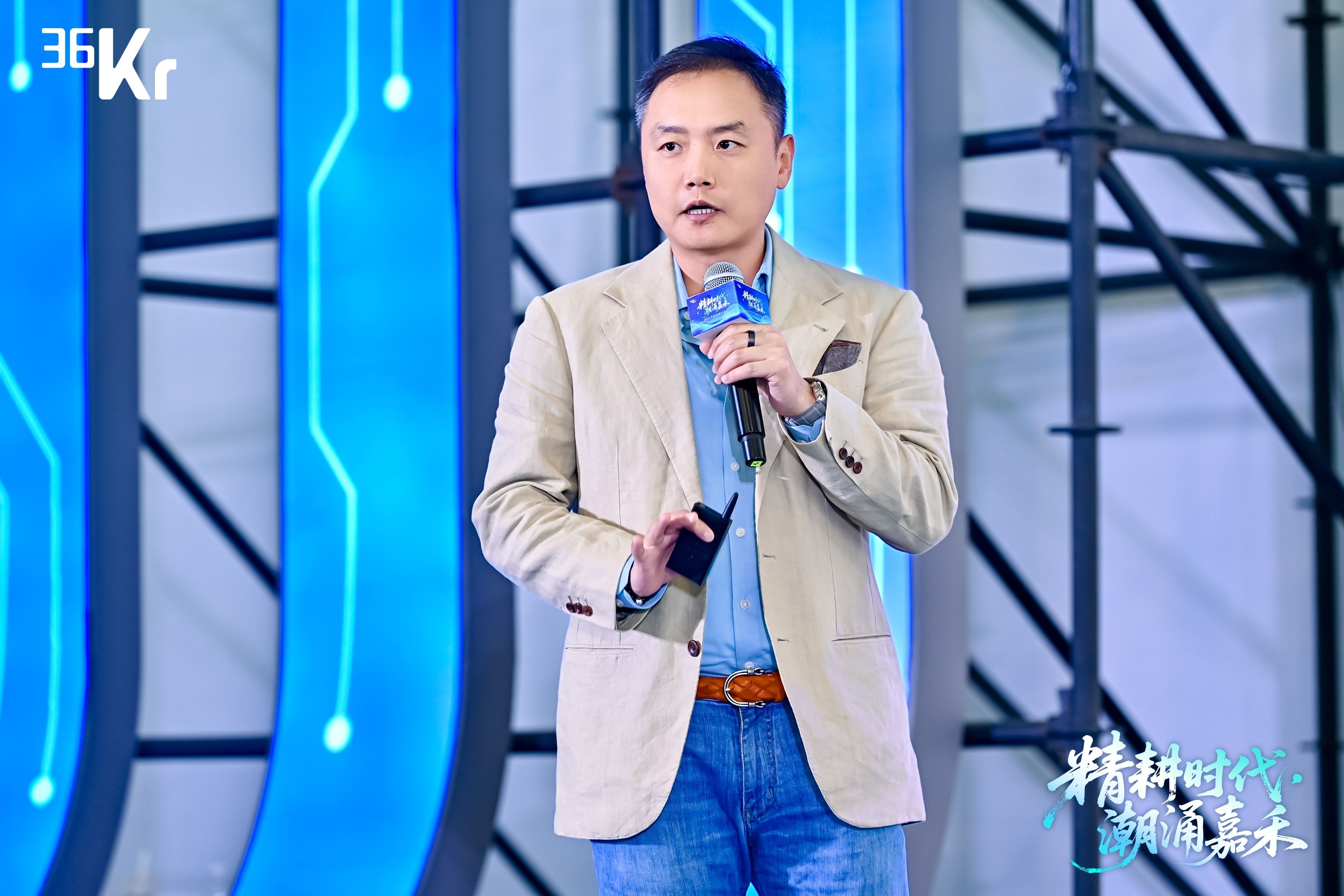
Core Insights - The conference held in Xiamen, China, focused on five key sectors: artificial intelligence, low-altitude economy, advanced manufacturing, new energy, and consumer goods, aiming to discuss development paths and industry future [1] - The event emphasized the collaboration between government, capital, and industry to address pain points and bottlenecks in industrial development [1] Company Overview - The company, founded in 1989, is the largest investment institution focused on the consumer sector globally, managing approximately $37 billion across nine different investment strategies [4] - The company has invested in over 300 representative consumer brands over the past 30 years, emphasizing long-term partnerships with enterprises [4] Investment Strategy - The company adopts a "Glocal" approach, combining global methodologies and consumer insights with local market applications, particularly in China [5] - The focus is on building brands that convey emotional value and resonate deeply with consumers, leveraging China's strong supply chain capabilities and mature digital commerce [5] Market Focus - The company prioritizes investments in China and the United States, while also exploring opportunities in Japan, India, Australia, New Zealand, Europe, and South America [4] - The company identifies sustainable consumer behavior trends, such as "contactless" payments and the rise of "solo economy," to guide investment decisions [8] Brand Development - The company aims to assist local emerging brands in achieving dual upgrades in branding and distribution, helping them secure advantageous positions in broader markets [9] - The company emphasizes the importance of emotional value in branding, illustrated by successful collaborations like the partnership between Heytea and FENDI [10] Localization Strategy - The company recognizes the need for localized understanding in the Chinese market, tailoring strategies to different regional consumer preferences and characteristics [11] - The company integrates local capabilities with global experience to support the growth of outstanding Chinese brands into industry leaders on a global scale [11]
为什么你的包上,要挂一个玩偶?
3 6 Ke· 2025-09-19 07:49
Group 1 - The core viewpoint of the articles highlights the rising trend of "bag charms" among young consumers, which serve as a form of social currency and personal expression, driven by popular IPs [1][2][4] - The popularity of bag charms reflects a shift from practical functionality to emotional value, with 64% of consumers prioritizing spiritual consumption, particularly among younger demographics [2][4] - Brands are increasingly leveraging IP collaborations to create bag charm products, which have become a popular marketing strategy, enhancing brand visibility and consumer engagement [5][6] Group 2 - The emergence of bag charms has led to a community of enthusiasts who share and exchange these items, indicating a deeper emotional connection and social belonging among consumers [2][4] - Experts suggest that traditional advertising methods are becoming less effective, and brands are now focusing on emotional connections through products like bag charms, fostering loyalty and engagement [6] - The integration of digital tools and creative designs in the development of bag charms can enhance their appeal and effectiveness in reaching target audiences [8]

奶茶品牌,开卷养生
Guan Cha Zhe Wang· 2025-09-18 12:45
Core Insights - The new tea beverage industry is undergoing a transformation from "tasty" to "healthy," with health and wellness becoming mainstream consumer demands [1][2] - The market size of China's new tea beverage industry is projected to reach 354.72 billion yuan in 2024 and exceed 400 billion yuan by 2028 [1] - Over 40% of consumers indicate that "health risks" are a primary reason for potentially reducing their purchases of ready-made tea beverages [1] Industry Trends - The competition in the new tea beverage sector is shifting from a "traffic battle" to a "value battle," with consumers increasingly concerned about health attributes and nutritional content [2] - A survey shows that 49.4% of consumers worry about health impacts from new tea beverages, while 42.2% fear weight gain [2] - The rise in mental health issues, such as anxiety and depression, is influencing consumer preferences towards healthier beverage options [2] Product Innovations - Brands like "沪上阿姨" are launching initiatives such as the "五色慢养" plan, which combines traditional health wisdom with modern tea experiences [3][4] - New products emphasize health benefits, such as high fiber and low burden, with examples including "五黄高纤慢养瓶" and "五黑焕发慢养瓶" [4] - Other brands are also innovating, with "喜茶" introducing a "light milk tea" series and "奈雪的茶" focusing on functional beverages [4] Challenges and Opportunities - The industry faces challenges in balancing health benefits with taste, as reducing sugar and fat may impact flavor [5] - There is a lack of unified standards for "healthy tea beverages," leading to quality inconsistencies in the market [5] - Consumer education on health and nutrition is necessary to correct misconceptions about healthy eating [5] Future Outlook - The competition in the tea beverage industry will evolve to encompass product innovation, supply chain management, standardization, and consumer education [6]

亚洲茶饮消费新趋势:体验、功能、情绪成新亮点
Zhong Guo Shi Pin Wang· 2025-09-18 09:35
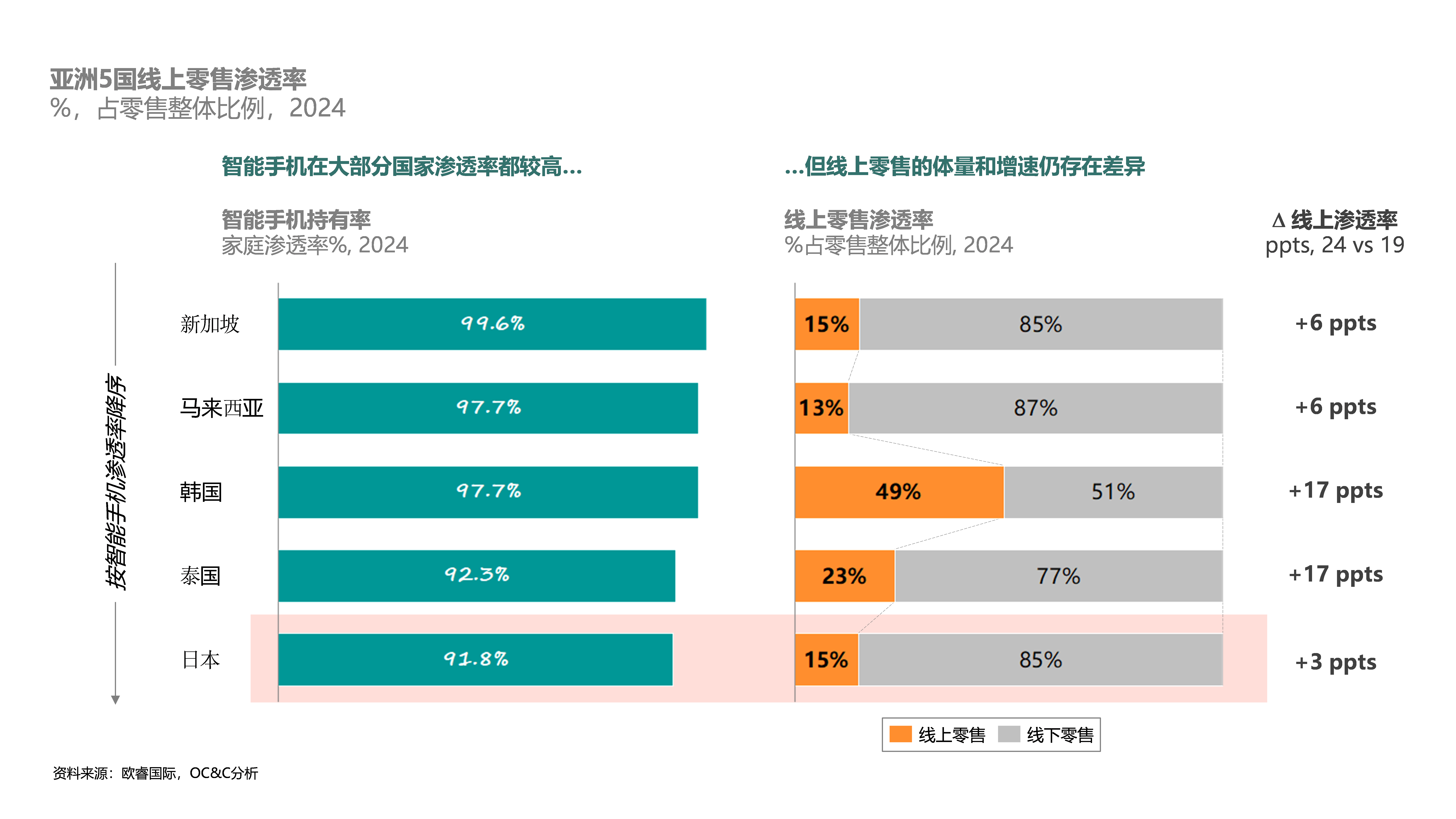
Core Insights - The competition in the Chinese tea beverage market is intensifying, with brands facing the common challenge of seeking new growth opportunities amidst a multi-dimensional competitive landscape in terms of taste, variety, and marketing strategies [1] - Asian consumers are increasingly looking for a more comprehensive value proposition beyond just taste, including multi-dimensional experiences, health benefits, functional advantages, and emotional resonance [1] Group 1: Experience Upgrade - Consumers are now prioritizing the entire experience from discovery to consumption, rather than just the product itself [2] - In Japan, offline retail provides an unparalleled experience, contributing to a lower e-commerce penetration rate of about 15%, which is slowing down [2][9] - South Korean consumers heavily rely on social media, with a projected penetration rate of 94% by 2025, making products that are visually appealing and shareable more likely to gain exposure [9][10] - Southeast Asian consumers are open to new ideas and willing to spend on innovative products, creating a favorable environment for market entry [10] Group 2: Health-Conscious Consumption - The demand for healthier beverage options is rising, with "good taste without burden" becoming a crucial decision factor for consumers [11] - The share of sugar-free carbonated drinks is increasing across countries, with Singapore leading at 60%, while Japan and South Korea exceed 40% [11] - Governments in countries like Thailand and Malaysia are implementing "sugar taxes" to encourage the development of low-sugar and low-calorie products [19] Group 3: Functional Benefits - Asian consumers are increasingly seeking beverages with additional functional benefits [20] - Japan leads in the functional beverage sector, with a government initiative allowing brands to claim health benefits without extensive approval, significantly shortening product launch times [20] - In South Korea, the energy drink market has seen an annual growth rate of 18% over the past five years, driven by high demand for energy-boosting products [30] Group 4: Emotional Value - The need for emotional management is growing, with many consumers seeking beverages that provide comfort and relaxation [31] - Low-alcohol beverages are gaining popularity in Japan and South Korea as a means to alleviate stress, while drinks containing calming ingredients like GABA are increasingly available [31][38] Group 5: Cultural Roots - Different Asian countries have distinct tea drinking traditions that shape consumer preferences [39] - Japanese consumers prefer pure teas with no additives, while consumers in Southeast Asia favor sweeter, richer flavored teas [39] - Understanding and respecting local tea culture differences is essential for product development [39] Conclusion - The Asian beverage market is complex, exhibiting both common trends and significant local differences. Brands must deeply understand cultural nuances and consumer mindsets to identify strategic entry points that align with local demands [40]
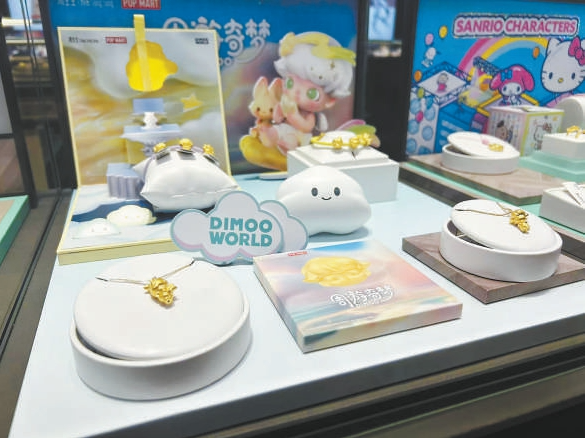
天价“痛金”到底值不值?与动漫游戏元素相结合,单克售价竟然卖到2600元
Bei Jing Wan Bao· 2025-09-18 09:16
Core Viewpoint - The rise of "pain gold" jewelry, which combines elements from anime, games, and other IPs, has captured the attention of young consumers, leading to high prices and significant market interest [1][4][6]. Group 1: Market Trends - "Pain gold" products are increasingly popular among young consumers, with prices reaching as high as 2,600 yuan per gram [7]. - Traditional gold jewelry stores are shifting focus from classic items to IP-themed gold products, with many stores dedicating significant display space to these items [4][5]. - Sales strategies include engaging with customers through fandom-related interactions, enhancing emotional value and social recognition [5][6]. Group 2: Pricing and Valuation - "Pain gold" items are typically sold at fixed prices rather than by weight, often resulting in a significant premium over the market gold price [7][8]. - For example, a gold banknote weighing only 0.2 grams is priced at 520 yuan, equating to 2,600 yuan per gram, which is over double the market price of gold [7]. - The premium for these items can exceed 100%, with specific examples showing prices significantly above the current gold market rate [7]. Group 3: Consumer Behavior and Perception - Consumers are often led to believe that "pain gold" items are valuable investments, with marketing emphasizing their scarcity and potential for appreciation [8][10]. - However, the resale value of these items is often much lower than the purchase price, with significant depreciation noted when attempting to sell or trade them back [10][11]. - Many brands do not support returns and only offer trade-in options at a fraction of the original price, leading to consumer dissatisfaction [10][11]. Group 4: Marketing and Consumer Rights - Marketing strategies for "pain gold" often highlight emotional connections and perceived value, while downplaying critical information such as weight and resale conditions [12]. - There are concerns regarding potential misleading advertising practices, as consumers may not be fully informed about the actual value and conditions of these products [12]. - Experts suggest that brands should provide clear information about product specifications and resale policies to protect consumer rights [12].