
算力

Search documents
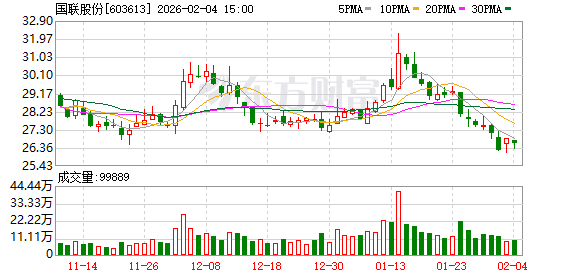
国联股份:公司去年已完成部分算力资源部署,各项工作正在有序推进
Mei Ri Jing Ji Xin Wen· 2026-02-04 13:11
Group 1 - The company has completed part of its computing power resource deployment last year [2] - Various tasks related to the computing power planning and operation are progressing in an orderly manner [2] - Specific progress updates will be provided in the company's announcements [2]


为算力时代“降温”,瑞为新材以金刚石散热技术攻克芯片散热“卡脖子”难题
Huan Qiu Wang Zi Xun· 2026-02-04 09:15
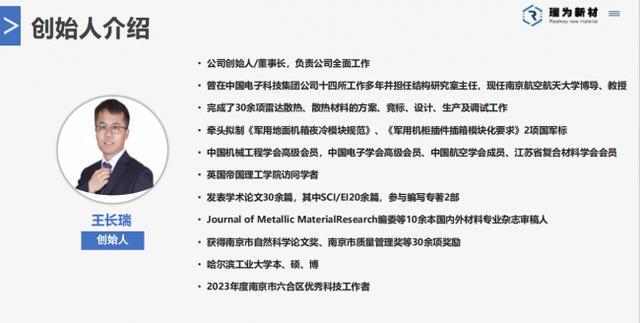
Core Insights - The article highlights the achievements of Nanjing Ruiwei New Materials Technology Co., Ltd. in overcoming challenges in the heat dissipation sector for chips, led by an 80s-born PhD, Wang Changrui [1][3] Company Background - Wang Changrui, with a strong academic background from Harbin Institute of Technology and roles as a professor and doctoral advisor, founded Ruiwei New Materials in 2021 to address national strategic needs in chip heat dissipation [3][4] - The company aims to transform laboratory research into practical solutions for the Chinese chip industry, focusing on breaking foreign technology monopolies [3] Technological Breakthroughs - Ruiwei New Materials has developed a new formula that effectively combines diamond and metal, addressing the compatibility issues that have historically limited the use of diamond in chip cooling applications [4] - The company has achieved significant advancements in manufacturing techniques, enabling the production of diamond-copper composite materials that meet the high thermal conductivity requirements of modern electronics [4] Product Development - The company has completed three iterations of its products, each tailored to meet industry demands: - The first generation offers a thermal conductivity improvement of 275%-300% over conventional materials, reducing chip temperature by 20-30°C [6] - The second generation integrates chip heat sinks with housing for enhanced cooling efficiency [6] - The third generation features an all-in-one design that minimizes thermal resistance and simplifies manufacturing processes [6] Market Position and Growth Potential - Ruiwei New Materials is the first company in China to achieve mass production of diamond heat dissipation materials, supplying major industries including aerospace and automotive [7] - The demand for cooling solutions is expected to rise significantly due to the rapid growth of AI and big data industries, with China's computing power scale growing at an annual rate of approximately 30% [7] - The company has successfully completed four rounds of financing, raising several hundred million yuan to support ongoing research and capacity expansion [7]
“光顾赚钱不搞研究”,OpenAI元老级高管出现离职潮,Mark Chen紧急回应
3 6 Ke· 2026-02-04 08:51
Core Insights - OpenAI is experiencing a significant executive turnover, with key figures such as Jerry Tworek and Andrea Vallone leaving the company, raising concerns about internal stability and strategic direction [1][3][10] Group 1: Executive Departures - The recent departures include high-ranking officials who have been instrumental in OpenAI's development, indicating a potential crisis within the organization [1][7] - Jerry Tworek, a prominent figure in OpenAI, cited a desire to explore research areas that are difficult to pursue within the company as a reason for his departure [7][8] - Andrea Vallone mentioned being assigned an "impossible task" related to user mental health, which contributed to her decision to leave [9][10] Group 2: Strategic Shift - Reports suggest that OpenAI is shifting its focus from foundational research to more commercially viable projects, leading to dissatisfaction among researchers [3][10] - Mark Chen, a current executive, refuted claims that foundational research is being neglected, asserting that it remains a core focus of the company [3][13] - The internal conflict appears to stem from differing priorities between those advocating for research and those prioritizing commercial success [13] Group 3: Resource Allocation and Challenges - OpenAI is facing resource constraints, particularly in computational power, which is forcing the company to concentrate its efforts on ChatGPT and related projects [14][16] - The company has reportedly halted many non-LLM projects and restructured its workforce to focus on immediate revenue-generating activities [10][11] - OpenAI's reliance on computational resources is critical, as indicated by their scaling law, which suggests that increased computational investment leads to greater revenue [16][18] Group 4: Competitive Landscape - OpenAI is under pressure from competitors like Google, which is developing advanced models such as Gemini 3 Pro, adding to the internal and external challenges the company faces [18] - Concerns about the sustainability of OpenAI's user base and product offerings have emerged, particularly with rumors of the potential phasing out of GPT-4o [18]

“光顾赚钱不搞研究”,OpenAI元老级高管出现离职潮,Mark Chen紧急回应
量子位· 2026-02-04 07:28
Core Viewpoint - OpenAI is experiencing a significant executive turnover, raising internal alarms due to a strategic shift towards prioritizing large language models (LLMs) over foundational research, leading to dissatisfaction among researchers and high-profile departures [1][4][18]. Group 1: Executive Departures - Recent departures include key figures such as Jerry Tworek, Andrea Vallone, and Tom Cunningham, all of whom have expressed concerns about OpenAI's shift away from objective research towards more commercially beneficial projects [2][8][18]. - The reasons for these departures highlight a common theme: a perceived marginalization of original research in favor of LLM development, which has led to frustration among employees seeking to pursue innovative projects [15][18][20]. Group 2: Internal Dynamics - OpenAI's leadership, particularly Mark Chen, has publicly refuted claims that foundational research is being neglected, asserting that the company remains committed to long-term research initiatives while also focusing on product development [6][25][28]. - The internal conflict appears to stem from differing priorities between research-focused executives and a leadership team more inclined towards market-driven strategies, creating a divide within the organization [28][29]. Group 3: Resource Allocation and Challenges - OpenAI is facing significant resource constraints, particularly in computational power, which has led to a strategic focus on ChatGPT as the core business, sidelining other projects deemed less immediately profitable [30][31][32]. - The company has acknowledged the "Scaling Law," indicating that increased computational investment is essential for revenue growth, which has resulted in a concentration of resources on LLMs at the expense of other research areas [35][36][37]. Group 4: Competitive Landscape - OpenAI is under pressure from competitors like Google, which is advancing its own models, and internal unrest is compounded by the need for more computational resources to maintain its competitive edge [41][42]. - The company is reportedly seeking a $100 billion partnership with NVIDIA to bolster its computational capabilities, although there are concerns about the viability of this partnership amid ongoing strategic challenges [38][39].

中际旭创:光模块龙头业绩亮眼,行稳致远无惧短期风浪-20260204
东方财富· 2026-02-04 07:25
Investment Rating - The report maintains a "Buy" rating for the company, indicating a positive outlook for its stock performance relative to the market index [3][6]. Core Views - The company, a leader in optical modules, is expected to achieve significant revenue growth driven by strong demand for computing infrastructure and an increasing proportion of high-speed optical modules in its product mix [6][7]. - The company's net profit for 2025 is projected to be between 98.0 to 118.0 billion yuan, representing a year-on-year increase of 89.50% to 128.17% [1]. - The report highlights the company's strategic focus on new optical solutions, including OCS, CPO, and 3.2T optical modules, to capture market opportunities in integrated optics [5][6]. Summary by Sections Financial Performance - The company forecasts a net profit of 109.62 billion yuan for 2025, with a growth rate of 111.97% compared to the previous year [7]. - Revenue projections for 2025, 2026, and 2027 are 386.57 billion yuan, 687.61 billion yuan, and 925.25 billion yuan, respectively, with corresponding growth rates of 62.00% and 77.88% [6][7]. Market Position - The company is positioned as a global leader in optical modules, benefiting from robust demand from end customers for computing infrastructure [6]. - The report notes that the company's high-speed optical module business has shown strong profitability, with net profit estimates of 108 to 131 billion yuan after excluding stock incentive costs [5][6]. Product Development - The company is actively developing new optical solutions to meet evolving market demands, with expectations for rapid growth in 1.6T optical module orders starting in 2026 [5][6]. - The report emphasizes the company's capability to develop customized products for key clients, anticipating significant demand for cabinet optical interconnect products by 2027 [5].

科技行情下的资金抉择:AI爆款被追逐,这几位 “稳健派” 的规模增长也超百亿元……
聪明投资者· 2026-02-04 07:06
Core Viewpoint - The article highlights the significant growth in the public fund market in China, driven by a strong technology sector, with total public fund assets reaching 37.71 trillion yuan by the end of 2025, an increase of nearly 4.9 trillion yuan from the end of 2024 [2]. Fund Growth Overview - Since April 2025, public fund sizes have set historical records for nine consecutive months, with the total public fund size reaching 37.71 trillion yuan by December 2025, up from 32.83 trillion yuan at the end of 2024 [2]. - Among various fund types, money market funds lead with a size of 15.03 trillion yuan, followed by bond funds at 10.94 trillion yuan, and stock funds increasing to 6.05 trillion yuan, a growth of nearly 1.4 trillion yuan from the end of 2024 [2]. Top Performing Funds - The top three actively managed equity funds in terms of size growth in 2025 are all from Yongying Fund, with notable performances from Zhang Lu's Yongying Advanced Manufacturing Smart Selection, which saw a growth of 64.19 billion shares and a scale increase of 17.7 billion yuan, achieving a return of 98.41% [5]. - Other notable funds include Yongying Rui Xin and Yongying Technology Smart Selection, which grew by 65.76 billion shares and 40.9 billion shares respectively, with Yongying Technology Smart Selection achieving a remarkable annual return of 233.29% [5][6]. Fund Manager Insights - Yongying Fund's total actively managed equity fund size reached 111.517 billion yuan by December 31, 2025, primarily driven by the "Smart Selection" series, which focuses on high-growth sectors such as humanoid robots, photolithography machines, and AI applications [12]. - Fund manager Gao Nan's total managed fund size reached a record high of 701.05 billion yuan by the end of 2025, with significant growth attributed to the secondary bond fund Yongying Stable Growth [16]. Investment Strategies - Gao Nan's investment strategy emphasizes stock selection based on company growth potential and profitability, aiming for a diversified industry exposure while capturing growth opportunities [23]. - The article notes that several fund managers have initiated purchase limits on their products to manage rapid growth in fund sizes [24]. Market Trends - The article indicates a significant capital flow towards both ends of the investment spectrum, with a notable increase in funds focused on technology and value-oriented investments [9][8]. - The performance of non-technology funds also saw substantial growth in 2025, indicating a broader market interest beyond just technology-focused investments [8].

今年上海GDP增长5%左右,新支撑结构正形成
第一财经· 2026-02-04 06:49
Core Viewpoint - The Shanghai government aims for a GDP of 5.67 trillion yuan by 2025, with a growth target of around 5% for 2026, reflecting a pragmatic approach to economic challenges and opportunities [2][3]. Group 1: Economic Growth Drivers - New productive forces, particularly in integrated circuits, biomedicine, and artificial intelligence, have historically surpassed 2 trillion yuan, serving as a cornerstone for economic growth [3]. - The information services sector has seen a significant increase, with a 15.3% growth in added value, driven by the demand for AI and computing power [3][4]. - The resilience of Shanghai's economy has improved, showcasing its ability to adapt through industrial upgrades and tapping into domestic demand amidst global economic uncertainties [3]. Group 2: Industry Insights - The rapid expansion of AI applications is a key growth driver, with a surge in demand for computing power leading to increased electricity consumption [4][5]. - The electricity system is evolving from a supportive role to a critical infrastructure component, directly impacting the feasibility of AI and digital industries [5]. - There is a heightened demand for reliable energy systems in urban operations and industrial upgrades, necessitating improvements in the resilience and adaptability of the electricity grid [5][6]. Group 3: Challenges and Recommendations - Despite growth opportunities, industries face challenges such as complex system requirements for power supply and the need for long-term investment returns [6][9]. - Recommendations include integrating computing power needs into industrial planning, accelerating the development of new power systems, and stabilizing market expectations to encourage long-term investments [9][10]. - Emphasis on enhancing foreign trade resilience and supporting green transformation initiatives is crucial for sustainable economic development [10][11].
中际旭创(300308):光模块龙头业绩亮眼,行稳致远无惧短期风浪
East Money Securities· 2026-02-04 05:52
Investment Rating - The report maintains a "Buy" rating for the company, indicating a positive outlook for its stock performance relative to the market index [3][6]. Core Views - The company, a leader in optical modules, is expected to achieve significant revenue growth driven by strong demand for computing infrastructure and an increasing proportion of high-speed optical modules in its product mix [6][7]. - The company's net profit for 2025 is projected to be between 98.0 to 118.0 billion yuan, representing a year-on-year increase of 89.50% to 128.17% [1]. - The report highlights the company's strategic focus on new optical solutions, including OCS, CPO, and 3.2T optical modules, to capture market opportunities in integrated optics [5][6]. Summary by Sections Financial Performance - The company forecasts a net profit of 109.62 billion yuan for 2025, with a growth rate of 111.97% compared to the previous year [7]. - Revenue projections for 2025, 2026, and 2027 are 386.57 billion yuan, 687.61 billion yuan, and 925.25 billion yuan, respectively, with corresponding growth rates of 62.00% and 77.88% [6][7]. Market Position - The company is positioned as a global leader in optical modules, benefiting from robust demand from end customers for computing infrastructure [6]. - The report notes that the company's product shipments are growing rapidly, with high-speed optical modules becoming a larger share of total sales [6]. Future Outlook - The company anticipates that the 1.6T optical module will see rapid growth starting in 2026, with significant orders already in place [5][6]. - The report suggests that the company's financial management capabilities will improve as it progresses with its Hong Kong listing and global business expansion, potentially mitigating short-term financial impacts [5][6].
算力回调,情绪面导致下跌,或可重视算力低位布局机会
Mei Ri Jing Ji Xin Wen· 2026-02-04 03:42
Market Overview - The computing power sector experienced a significant pullback, with communication ETFs and AI ETFs on the ChiNext index dropping around 4% [1]. Factors Behind the Decline - The recent concerns regarding CPO (Chiplet-based Optical) technology have intensified, particularly due to pressure from Google's OCS, leading Nvidia to promote CPO advancements. There are mixed opinions on production schedules and shipment volumes, but overall market sentiment remains wary of CPO's negative impact on pluggable optical modules [1]. - The U.S. stock market faced a sharp decline, with the Nasdaq opening high but closing lower, reflecting weak performance in tech stocks. Investors are worried about Anthropic's new legal plugin potentially replacing traditional software companies, which caused a significant drop in the software sector, further spreading panic in market sentiment [1]. Future Outlook - Despite the lack of significant negative fundamentals, the current pullback is primarily driven by emotional concerns related to CPO, presenting potential opportunities for low-position investments [1]. - The technology industry's progress and iteration are normal, and leading companies in optical modules have accumulated CPO technology, positioning them to benefit from industry chain advantages. Major domestic pluggable optical module manufacturers have established strong customer loyalty, which is expected to help them secure a majority of orders as CPO penetration increases, potentially improving gross margins due to higher integration levels [1]. - The optical module market is projected to face a supply shortage by 2026, with expectations for continued high growth into 2027. The rapid penetration of 1.6T optical modules and chip shipments could lead to significant market expansion, marking a golden period for profit growth for leading optical module manufacturers. Upcoming quarterly reports and the GTC conference are expected to serve as strong catalysts, reinforcing a robust fundamental outlook [2]. - The implementation and penetration of CPO will be a lengthy process, and domestic manufacturers possess relevant technical capabilities, suggesting limited impact from CPO. The high demand for 1.6T optical modules in 2026-2027 is anticipated to provide numerous catalysts for growth. Overall, the recent decline in computing power is mainly sentiment-driven and does not alter the high growth trend in the optical module industry, offering a favorable time for investment in communication ETFs and ChiNext AI ETFs [2].
生益电子(688183):Q4环降源于下游大客户拉货放缓,静待Q2新架构产品拉货
CMS· 2026-02-04 03:12
Investment Rating - The investment rating for the company is "Add" [2] Core Insights - The company announced a significant profit increase for 2025, with net profit expected to be between 1.43 billion to 1.51 billion, representing a year-on-year growth of 331.0% to 355.9% [1] - The fourth quarter performance showed a decline due to a slowdown in orders from major clients, particularly AWS, but the company is expected to benefit from new product launches in Q2 2026 [6] - The company is focusing on high-end market expansion, particularly in AI server and switch PCB business, which is anticipated to drive substantial growth [6] Financial Data and Valuation - Total revenue is projected to grow from 32.73 billion in 2023 to 22.12 billion in 2027, with a compound annual growth rate (CAGR) of approximately 45% [10] - The net profit is expected to increase from a loss of 250 million in 2023 to 4.08 billion in 2027, indicating a strong recovery and growth trajectory [10] - The price-to-earnings (PE) ratio is projected to decrease from -2881.5 in 2023 to 17.6 in 2027, reflecting improved profitability [10] Shareholder Information - The major shareholder is Guangdong Shengyi Technology Co., Ltd., holding 62.93% of the shares [2] - The company has a total market capitalization of 72 billion [2] Performance Metrics - The company reported a return on equity (ROE) of 24.4% [2] - The asset-liability ratio stands at 54.0%, indicating a moderate level of financial leverage [2]
