金融强国建设

Search documents
罗志恒:“十五五”规划建议的十二大看点
Sou Hu Cai Jing· 2025-10-29 04:05
Core Insights - The "15th Five-Year Plan" emphasizes quality development, technological self-reliance, and the importance of domestic consumption, particularly in the context of changing external circumstances and US-China competition [1][2][5] - The plan outlines 12 major tasks categorized into optimizing supply, expanding demand, and ensuring security, aiming for a higher level of supply-demand circulation [1][5] Comparison with Previous Plans - The assessment of future risks and uncertainties is more pronounced in the "15th Five-Year Plan," shifting from a focus on strategic opportunities to a dual emphasis on opportunities and risks [2] - The development goals have expanded from six to seven areas, highlighting quality development, technological self-reliance, and increased international influence [2][6] Task Prioritization - The "15th Five-Year Plan" prioritizes the modernization of the industrial system and places technological innovation second, reflecting the current international emphasis on openness [3][6] - The plan includes a clear structure with three main sections: achievements from the previous five years, specific tasks, and the role of party leadership [5][6] Economic and Social Development Goals - The plan sets seven key development goals, including significant improvements in quality development, technological self-reliance, and social welfare [16][17] - The nominal GDP growth target is set at an average of 5% per year, with a focus on increasing the resident consumption rate from 40% to 43% [17][18] Industrial and Technological Development - The plan emphasizes the construction of a modern industrial system as the foundation for economic development, with a focus on maintaining a reasonable proportion of manufacturing [21][23] - It highlights the importance of technological self-reliance and innovation, particularly in key sectors such as integrated circuits and advanced materials [28][29] Domestic Demand and Consumption - The plan stresses the need to expand domestic demand and enhance consumption, aiming to create a robust domestic market to counter external uncertainties [30][31] - It outlines strategies to increase disposable income and improve consumer confidence, alongside optimizing the supply structure to meet evolving consumer needs [30][31][33] Macro-Economic Governance - The plan calls for improvements in macro-economic governance, emphasizing the need for coordinated fiscal and monetary policies to support sustainable growth [34][35] - It advocates for a shift from traditional fiscal policies to a more proactive approach that enhances the efficiency of existing assets and promotes strategic investments [38][39]

构建中国特色现代金融体系
Jing Ji Ri Bao· 2025-10-28 23:18
Core Insights - The 2025 Financial Street Forum in Beijing emphasized the importance of establishing a comprehensive macro-prudential management system to support the real economy and promote high-quality financial development [1] Group 1: Macro-Prudential Management - The global financial crisis of 2008 highlighted the need for macro-prudential policies to address systemic risks, leading China to pioneer a macro-prudential policy framework [2] - The People's Bank of China (PBOC) plans to enhance the monitoring and assessment of systemic financial risks, with a focus on separating macro-prudential assessments from monetary policy evaluations [2] - Key measures will include strengthening oversight of systemically important banks and insurance companies, improving liquidity risk management, and enhancing cross-border capital flow management [3][4] Group 2: Financial Strengthening and Reform - The "14th Five-Year Plan" has seen significant progress in mitigating financial risks, with a focus on enhancing the adaptability of financial services to support sustainable economic development [5][6] - The PBOC aims to deepen reforms and expand openness in the financial sector, promoting a diverse and healthy financial ecosystem [5] - There will be an emphasis on improving risk management and coordination among various financial policies to prevent systemic risks [6] Group 3: High-Level Opening Up - New policies will be introduced to enhance cross-border trade facilitation and optimize foreign exchange management, significantly increasing the number of businesses able to conduct foreign exchange transactions [7][8] - The global trade volume is projected to grow at an annual rate of 5.4% from 2019 to 2024, with China playing a crucial role in enhancing global economic resilience [8] - China's foreign exchange market transactions are expected to increase by 37% compared to 2020, indicating a strong momentum for high-level opening up [8]
构建中国特色现代金融体系——来自2025金融街论坛年会的报道
Jing Ji Ri Bao· 2025-10-28 22:23
Group 1: Macro-Prudential Management - The importance of macro-prudential management has been emphasized, especially after the 2008 financial crisis, highlighting that the stability of individual financial institutions does not guarantee overall financial system stability [2] - China has been proactive in establishing a macro-prudential policy framework since 2008, with ongoing enhancements to the monitoring and assessment systems for systemic financial risks [2][3] - The People's Bank of China (PBOC) plans to split the Macro-Prudential Assessment (MPA) into two parts: one focusing on monetary policy execution and the other on macro-prudential and financial stability assessments [2] Group 2: Financial Risk Prevention - Key measures will be taken to strengthen risk prevention in important institutions and sectors, including enhanced supervision of systemically important banks and insurance companies [3] - The PBOC aims to improve the monitoring of leverage levels and liquidity risks in financial institutions to prevent the accumulation of market risks [3] - A focus on real estate financial management will be maintained, with the establishment of a comprehensive analytical framework for real estate finance [3] Group 3: Financial Sector Development - The "14th Five-Year Plan" has achieved significant results in mitigating financial risks, with a commitment to advancing the construction of a financial powerhouse during the "15th Five-Year Plan" period [5] - The goal is to enhance the adaptability of the financial system to the economy, promoting a new model of financial services that balances direct and indirect financing [5] - Continuous reforms and opening-up measures are essential for enhancing the dynamism and vitality of the financial sector, with a focus on differentiated development among various financial institutions [5] Group 4: High-Level Opening-Up - New policies will be introduced to enhance cross-border trade facilitation, expanding pilot programs and optimizing foreign exchange management for trade [8] - The PBOC aims to strengthen the regulatory framework for foreign exchange, utilizing advanced technologies for better monitoring and risk prevention [9] - China's foreign trade is projected to reach a historical high of over $33 trillion this year, with significant growth in foreign exchange market transactions and cross-border capital flows [9]

加快建设金融强国 展望“十五五”金融业大有可为
Zhong Guo Zheng Quan Bao· 2025-10-28 21:12
Core Viewpoint - The "14th Five-Year Plan" emphasizes the construction of a strong financial nation, focusing on serving the real economy, deepening reform and innovation, and preventing financial risks [1] Group 1: Development of Financial Sectors - The plan highlights the development of five key areas: technology finance, green finance, inclusive finance, pension finance, and digital finance [2] - In technology finance, banks and securities firms are encouraged to support innovative enterprises through loans and equity investments [2] - Green finance aims to align standards with international practices and explore carbon financial derivatives, supporting industries like energy storage and hydrogen [2] - Pension finance focuses on building personal pension product offerings and encouraging the development of long-term, stable pension products [2] - Inclusive finance should leverage digital transformation to create online financial products for small and micro enterprises and rural areas [2] - Digital finance requires financial institutions to invest in digital infrastructure and enhance service efficiency and risk control through technology [2] Group 2: Optimization of Financial Institutions - The plan calls for optimizing the financial institution system, encouraging institutions to focus on their core businesses and improve governance [3] - The financial system has developed into a comprehensive support service structure, with banks as the main service providers [3] - Large banks are expected to transition towards comprehensive and international development, while small and medium banks will focus on niche markets [3] - Non-bank financial institutions will play a more significant role in asset and wealth management [3] - Regulatory authorities will guide institutions to find their positioning and promote differentiated competition [3][4] Group 3: Strengthening Financial Regulation - The plan emphasizes the need for comprehensive financial regulation, enhancing collaboration between central and local regulators [5] - A robust risk prevention and resolution system is to be established to ensure financial stability [5] - Financial institutions are advised to strengthen risk management frameworks and utilize digital tools for comprehensive risk control [6] - There is a focus on improving compliance management and ensuring adherence to regulatory requirements [6]
守好金融安全网 “十五五”将健全金融监管框架
Zheng Quan Shi Bao· 2025-10-28 18:12
Group 1 - The core focus of China's financial reform during the "14th Five-Year Plan" period is to balance financial development and security, ensuring that systemic financial risks are effectively managed [1] - The acquisition of Jinzhou Bank by Industrial and Commercial Bank of China exemplifies the ongoing financial reform efforts, aligning with the regulatory goals of consolidating risk management and promoting the merger and restructuring of small financial institutions [1] - The evolving financial landscape presents new challenges for risk prevention, including risks associated with digital assets, rapid global capital flows, and the amplification of market behaviors through social media [1] Group 2 - The current financial regulatory model is inadequate to address the complexities of the financial system and emerging risk forms, necessitating a more collaborative approach between macro and micro-prudential management [2] - Strengthening risk prevention and regulatory measures is essential for the high-quality development of the financial industry, with the "14th Five-Year Plan" period expected to see enhanced regulatory frameworks and improved risk management resources [2] - The construction of a comprehensive macro-prudential management system is a key focus, with new policies and measures anticipated to emerge in response to the outlined objectives [2]

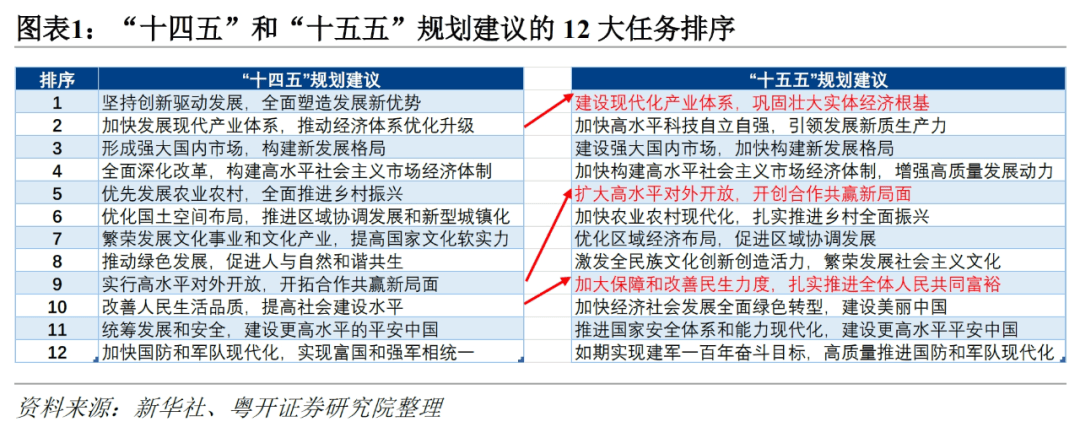
粤开宏观:《“十五五”规划建议》的12大看点:科技自立与扩大内需引领新征程
Yuekai Securities· 2025-10-28 13:57
Economic Environment and Challenges - The "15th Five-Year Plan" emphasizes the coexistence of strategic opportunities and risks, highlighting increased uncertainty in the development environment[3] - External challenges are expected to intensify, with geopolitical tensions and trade barriers affecting China's economic landscape[17] - The plan identifies effective demand insufficiency and the need for new and old kinetic energy conversion as critical issues[19] Development Goals - The plan sets seven major development goals, including achieving significant high-quality development and a notable increase in the resident consumption rate[20] - Aiming for an average nominal GDP growth rate of 5% during the "15th Five-Year Plan" period to reach a per capita GDP of approximately $27,000 by 2035[21] - The target for the resident consumption rate is to increase from 40% to 43%, necessitating a 6.5% annual growth in consumption[22] Industrial and Technological Focus - The establishment of a modern industrial system is prioritized, with a focus on maintaining a reasonable proportion of manufacturing in the economy[25] - The plan emphasizes the importance of technological self-reliance and innovation as a core component of high-quality development[33] - Specific sectors such as new energy, advanced manufacturing, and digital economy are highlighted for rapid development and support[28] Domestic Demand and Investment - Expanding domestic demand is identified as a strategic foundation for modernization, with a focus on enhancing consumer confidence and increasing disposable income[35] - The plan calls for optimizing the investment structure, directing funds towards education, healthcare, and emerging technologies[36] - Reforming the income distribution system is crucial for sustainable consumption growth and fostering a robust middle-income group[38] Governance and Policy Coordination - The plan advocates for improving the macroeconomic governance system and enhancing policy effectiveness through better coordination of fiscal and monetary policies[39] - Emphasis is placed on creating a stable and predictable institutional environment to support market participants[42] - The need for a proactive fiscal policy is highlighted to address short-term fiscal challenges while ensuring long-term sustainability[43]
资本市场改革持续深化
Shanxi Securities· 2025-10-28 08:58
宏观 资本市场改革持续深化 2025 年 10 月 28 日 宏观研究/事件点评 分析师: 郭瑞 执业登记编码:S0760514050002 电话:0351-8686977 邮箱:guorui@sxzq.com 事件:2025 年 10 月 27 日,中国证监会主席吴清在 2025 金融街论坛年 会上发表主题为《发挥投融资综合改革牵引作用 推动"十五五"资本市场 高质量发展》的演讲,围绕防风险、强监管、促高质量发展工作主线进一步 部署资本市场改革。 "三个更加聚焦"为资本市场进一步深化改革指明了方向。"三个更加 聚焦",即更加聚焦服务新质生产力发展,更加聚焦统筹发展与安全,更加 聚焦强本强基。"十五五"时期的经济发展目标对经济实力、科技自立自强、 产业竞争力等关键领域实现质的跃升提出了更高的要求。一方面,合理的经 济增速是实现 2035 远景目标的关键支撑,经济建设依然是"十五五"时期 的头等大事。另一方面,也要继续坚持科技创新对新质生产力的引领。在这 一背景下,"三个更加聚焦"进一步释放了资本市场深化改革,聚焦高质量 发展的有利信号。未来,资本市场将进一步通过优化资源配置、支持科技创 新、完善市场体系等助力 ...
沪指突破4000点!银行股给力!
Zheng Quan Ri Bao Zhi Sheng· 2025-10-28 04:53
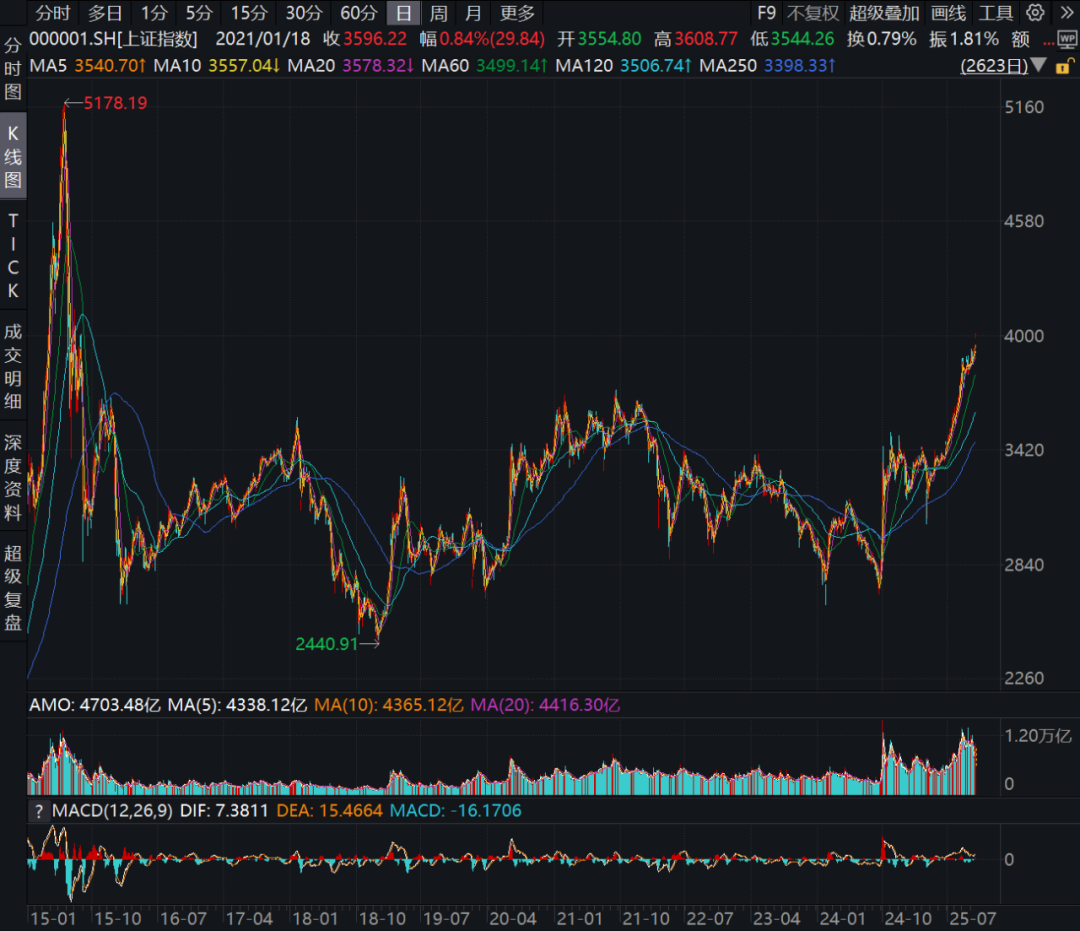
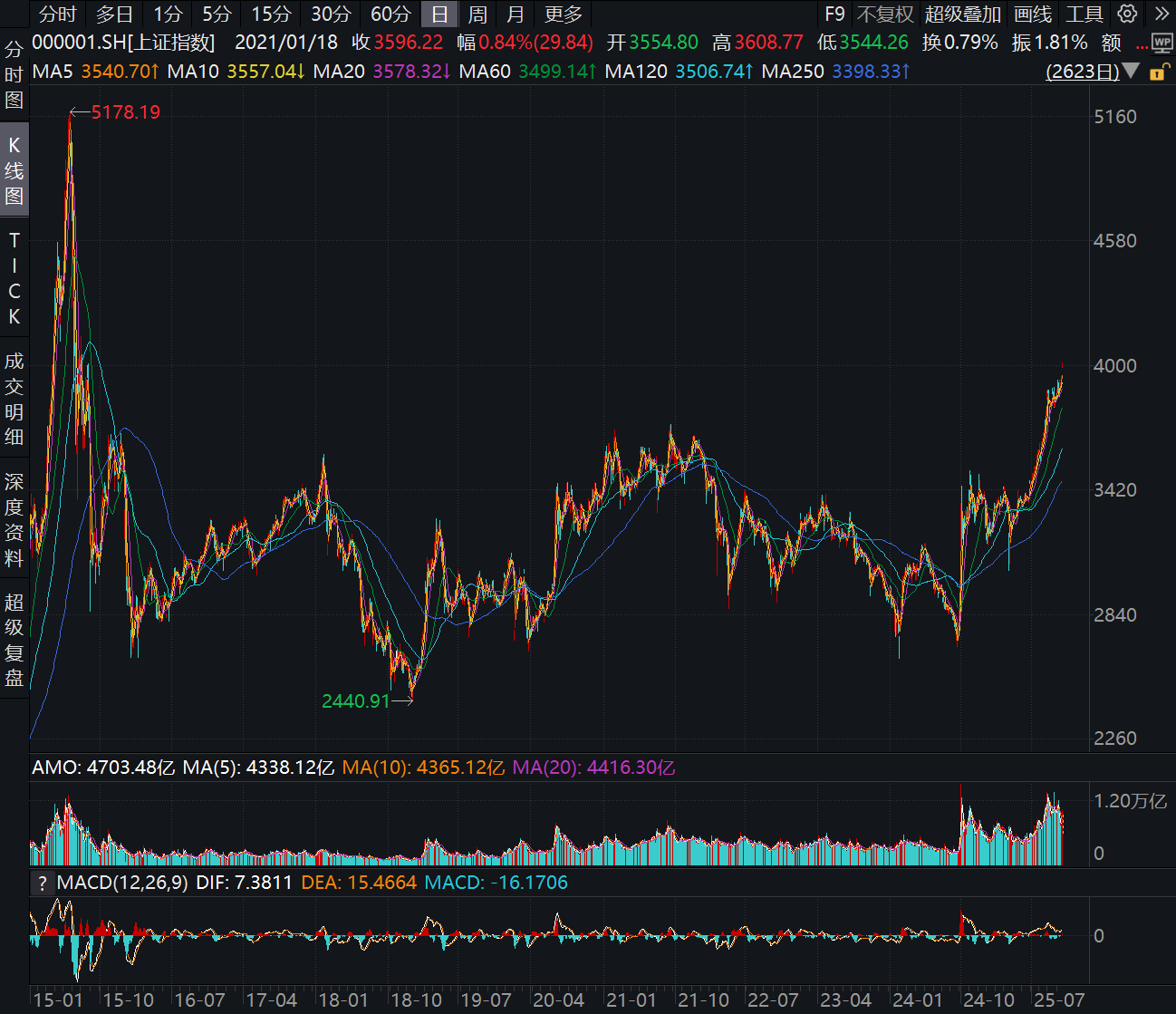
Core Points - The Shanghai Composite Index surpassed the 4000-point mark for the first time since August 2015, with a year-to-date increase of over 19% [1] - As of the midday close, the index was at 4005.44 points, reflecting a gain of 0.21%, with over 3000 stocks rising [1] Group 1: Market Performance - Bank stocks, particularly Xiamen Bank, Postal Savings Bank, and Agricultural Bank, significantly supported the index's strength [3] - Agricultural Bank's stock price reached a new high, closing at 8.26 yuan per share with a gain of 0.98%, and a net inflow of over 20 million yuan [3] - Agricultural Bank has seen a year-to-date increase of over 60%, with a total market capitalization nearing 2.9 trillion yuan, making it the largest by market cap in A-shares [3][4] Group 2: Regulatory Developments - The top three A-share market capitalizations are all bank stocks: Agricultural Bank, Industrial and Commercial Bank, and China Construction Bank, with market caps of 2.89 trillion yuan, 2.84 trillion yuan, and 2.45 trillion yuan respectively [4] - Li Yunzhe, head of the National Financial Supervision Administration, emphasized the commitment to advancing financial development in line with the "14th Five-Year Plan" during the 2025 Financial Street Forum [4] - Four large banks have established financial asset investment companies, with Postal Savings Bank also in the process of setting up its own, named Zhongyou Investment, with a registered capital of 10 billion yuan [5]


沪指突破4000点!银行股有力支撑
Zheng Quan Ri Bao Wang· 2025-10-28 04:51
Core Viewpoint - The Shanghai Composite Index has surpassed the 4000-point mark for the first time since August 2015, with a year-to-date increase of over 19% [1]. Group 1: Market Performance - As of the midday close, the Shanghai Composite Index stood at 4005.44 points, reflecting a gain of 0.21%, with over 3000 stocks rising [1]. - Bank stocks, particularly Xiamen Bank, Postal Savings Bank, and Agricultural Bank, have significantly supported the index's strength [3]. - Agricultural Bank's stock price reached a new high, closing at 8.26 yuan per share, with a year-to-date increase exceeding 60% [3]. Group 2: Market Capitalization - The total market capitalization of Agricultural Bank is close to 2.9 trillion yuan, making it the largest by market cap in A-shares [3]. - The top three A-share market capitalizations are all bank stocks: Agricultural Bank (2.89 trillion yuan), Industrial and Commercial Bank (2.84 trillion yuan), and China Construction Bank (2.45 trillion yuan) [3]. Group 3: Regulatory Developments - Li Yunzhe, head of the National Financial Supervision Administration, emphasized the commitment to advancing financial development in line with China's unique path during the 2025 Financial Street Forum [3]. - Four major banks have established financial asset investment companies in Beijing, with Postal Savings Bank also in the process of setting up its own [3]. Group 4: Company Announcements - Postal Savings Bank announced the approval to establish a financial asset investment company, named China Postal Investment, with a registered capital of 10 billion yuan [4].
金融街论坛|2025金融街论坛年会嘉宾共话全球金融发展
Xin Hua Wang· 2025-10-28 00:58
Core Points - The 2025 Financial Street Forum opened in Beijing on October 27, focusing on "Innovation, Transformation, and Reshaping Global Financial Development" [4] - The People's Bank of China (PBOC) emphasized a supportive monetary policy stance to foster economic recovery and financial market stability, with plans for moderately loose monetary policy and enhanced macro-prudential management [4] - The National Financial Regulatory Administration aims to improve economic and financial adaptability, deepen reforms, and enhance the safety and development of the financial sector [5] - The China Securities Regulatory Commission (CSRC) plans to advance market reforms, enhance investor protection, and expand high-level institutional openness [5] - The State Administration of Foreign Exchange (SAFE) will focus on balancing development and security, deepening reforms in the foreign exchange sector, and improving the foreign exchange management system [6] - International financial cooperation is seen as having significant potential, with discussions on global economic growth and financial stability among key international financial leaders [6] Group 1 - The forum's theme centers on global financial development through innovation and transformation [4] - PBOC's commitment to a supportive monetary policy aims to create a favorable environment for economic recovery [4] - The focus on macro-prudential management indicates a proactive approach to financial risk monitoring [4] Group 2 - The National Financial Regulatory Administration's goals include enhancing financial sector vitality and ensuring safety [5] - CSRC's initiatives aim to strengthen market stability and investor rights [5] - SAFE's reforms are directed towards a more open and secure foreign exchange management system [6] Group 3 - International financial leaders highlighted the importance of cooperation in addressing global challenges [6] - The forum is co-hosted by multiple key financial institutions, indicating a collaborative effort in financial governance [7]