
创新药出海

Search documents
超20亿美元!中国创新药“出海”重大突破
Shang Hai Zheng Quan Bao· 2025-10-08 14:21
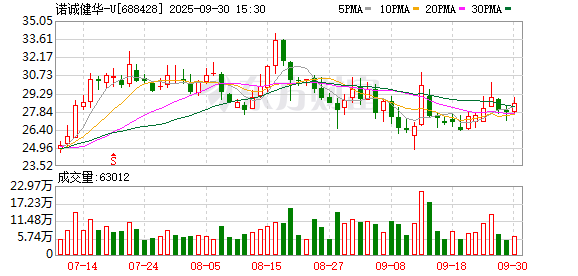
Core Insights - The collaboration between Nocera Biopharma and Zenas BioPharma involves a global licensing agreement worth over $2 billion, focusing on the development of Orelabrutinib for multiple sclerosis and other autoimmune diseases [2][4]. Group 1: Agreement Details - Zenas will receive global exclusive rights for Orelabrutinib in the multiple sclerosis field and rights for non-oncology development and commercialization outside Greater China and Southeast Asia [4][5]. - Nocera Biopharma will receive an upfront payment of $100 million, milestone payments, and 7 million shares of common stock from Zenas, along with royalties of up to a percentage of annual net sales from licensed products [4][6]. Group 2: Product Potential - Orelabrutinib is the first highly permeable BTK inhibitor for the central nervous system to enter Phase III clinical trials, with trials for primary progressive multiple sclerosis (PPMS) starting in Q3 2025 and secondary progressive multiple sclerosis (SPMS) trials expected to begin in Q1 2026 [4][8]. - The drug has shown significant efficacy in reducing brain inflammation and has an excellent safety profile based on Phase II data [4][8]. Group 3: Strategic Focus - Nocera Biopharma retains global rights for Orelabrutinib in oncology and non-oncology rights in Greater China and Southeast Asia, indicating a strategic focus on dual therapeutic areas [6][8]. - The company aims to enhance its drug discovery platform to develop first-in-class and best-in-class therapies for autoimmune diseases, addressing unmet medical needs in China and globally [9].


1500亿创新药龙头第三次冲刺港交所,实控人为四川新首富
2 1 Shi Ji Jing Ji Bao Dao· 2025-10-06 00:55
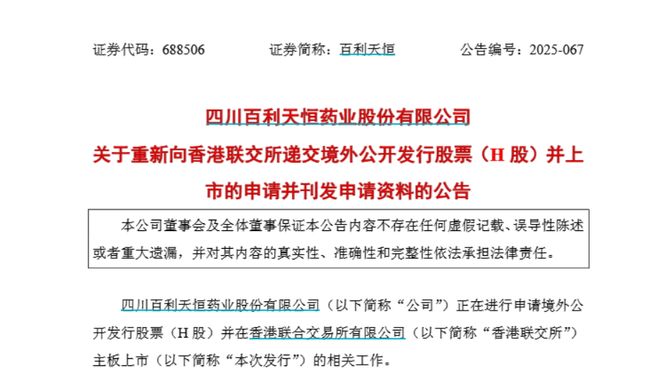
Core Viewpoint - Sichuan Baili Tianheng Pharmaceutical Co., Ltd. has re-submitted its listing application to the Hong Kong Stock Exchange, marking the third attempt since last year [1]. Company Overview - Baili Tianheng completed a private placement in A-shares, raising a total of 3.764 billion yuan, with funds allocated entirely for innovative drug research and development [3]. - The company primarily operates in the innovative biopharmaceutical sector and traditional Chinese medicine, with key products including Propofol emulsion injection [5]. - As of September 30, the company's market capitalization reached 155 billion yuan, with its chairman, Zhu Yi, holding 72.22% of the shares, valued at approximately 112.853 billion yuan [6]. Financial Performance - The company reported significant financial fluctuations, with revenues of 703 million yuan in 2022, declining to 562 million yuan in 2023, and projected to rise to 5.823 billion yuan in 2024. However, net profits showed a loss of 282 million yuan in 2022, escalating to a loss of 1.12 billion yuan in the first half of 2025 [6]. - For the first half of 2025, the company recorded revenues of 171 million yuan, a 96.9% decrease year-on-year, and a net loss of 1.12 billion yuan, a 124% decline compared to the previous year [7]. - R&D expenses accounted for 606.69% of revenue in the first half of 2025, reflecting a significant increase in investment in innovation [8]. Industry Context - There is a growing trend among A-share pharmaceutical companies to pursue dual listings in Hong Kong, with at least 10 companies announcing progress on "A+H" plans this year [10]. - The Hong Kong market has seen a resurgence in biotech listings, with 10 biotech companies listed under Chapter 18A of the Main Board Listing Rules, raising approximately 8.05 billion HKD [11]. - The innovative drug sector has gained traction, with the Wind Innovation Drug Index rising by 51.22% year-to-date, indicating a robust market environment for pharmaceutical investments [12].
A股:创新药概念股,或许是未来穿越牛熊的真神!!
Sou Hu Cai Jing· 2025-10-04 02:12
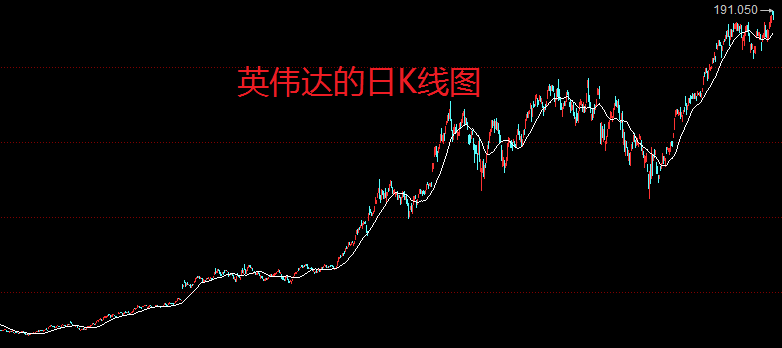
Group 1 - The core idea is that companies with a global market reach, like those in the US, achieve higher valuations compared to local companies that primarily sell domestically [1][3] - Companies that sell products internationally have a significantly larger revenue potential, as they can tap into billions of potential customers across various regions [3] - The article highlights that many Chinese companies are still confined to local markets, facing intense competition and low profit margins, which limits their valuations [3] Group 2 - The pharmaceutical industry, particularly innovative drug companies, is positioned to become a major wealth generator as successful drugs can be sold at high prices globally [5] - Chinese biotech firms are increasingly gaining recognition on the international stage by licensing their innovative drugs to global companies, leading to substantial revenue contracts [5] - Once these companies establish a foothold overseas, their valuation shifts from being seen as local players to global healthcare competitors, attracting significant capital investment [7] Group 3 - The potential for future pharmaceutical giants in A-shares and Hong Kong stocks is high, with expectations that companies exceeding valuations of 100 billion or even 300 billion will emerge from this group of "outbound pioneers" [7] - Investing in innovative drugs carries risks, including research failures and regulatory hurdles, necessitating careful analysis to distinguish between genuinely promising companies and those that may not deliver [7] - The future winners in the market will be those companies that are willing to expand globally and generate revenue from international markets, with innovative drugs being a key avenue for Chinese firms to achieve this [7]
港股异动 | 医药股再度强势 四季度创新药将迎来多项催化 机构称药品关税实际影响小
智通财经网· 2025-10-02 07:57
Group 1 - Pharmaceutical stocks are experiencing a strong rally, with notable increases in share prices for companies such as Clover Biopharmaceuticals (up 20.26%), Genscript Biotech (up 15.05%), and others [1] - On September 26, former President Trump announced a 100% tariff on any brand or patented pharmaceutical products starting October 1, 2025, unless companies establish manufacturing facilities in the U.S. [1] - Southwest Securities predicts uncertainty regarding the implementation of this executive order, suggesting that Chinese innovative drug companies heavily reliant on the U.S. market may face short-term pressure [1] - China’s innovative drug companies that engage in business development (BD) overseas are expected to be less affected, particularly those involved in license-out agreements, which are essentially intellectual property transactions [1] - China Post Securities believes the actual impact of the tariffs will be minimal, viewing the current price drop as a good opportunity to increase holdings in innovative drugs [1] Group 2 - From the perspective of catalysts in the innovative drug sector, October will see significant industry conferences such as ESMO (October 17-21), followed by ASH and the San Antonio Breast Cancer Symposium in December [2] - There has been ongoing progress in outbound licensing transactions this year, with several significant deals already completed, indicating potential opportunities for high-quality domestic innovative drugs to enter international markets [2] - The fourth quarter is expected to bring domestic policy implementations, including adjustments to the medical insurance catalog [2]
签下巴西政府30亿长约,胰岛素龙头出海走出新范式!
市值风云· 2025-09-30 11:54
Group 1 - The core viewpoint of the article highlights that the Chinese innovative pharmaceutical industry is increasingly focusing on international expansion, with a significant rise in business development (BD) transactions in 2025 compared to previous years [4][5] - In the first half of 2025, the total amount of BD transactions for innovative drugs going overseas approached the total for the entire year of 2024, indicating a strong trend towards international collaboration [4] - BD transactions are characterized as technology licensing rather than product sales, offering lower initial investment and shorter monetization cycles compared to self-directed overseas market entry [4][5] Group 2 - The article notes that while large companies like Heng Rui Medicine (恒瑞医药) can sustain regular BD transactions due to their abundant pipelines, smaller pharmaceutical companies may struggle to maintain consistent overseas revenue through this model [5] - A Chinese innovative pharmaceutical company has adopted a unique approach to its overseas strategy, distinguishing itself from typical models in the industry [7]

中邮证券:首予百济神州“买入”评级,在研管线即将进入收获期
Xin Lang Cai Jing· 2025-09-30 06:19
Core Insights - The report from Zhongyou Securities highlights that BeiGene achieved a net profit attributable to shareholders of 450 million yuan in the first half of the year, a significant improvement from a net loss of 2.88 billion yuan in the same period last year [1] - In Q2 2025, the company reported a net profit of 540 million yuan, compared to a net loss of 970 million yuan in the same quarter of the previous year [1] - BeiGene has raised its full-year revenue guidance from the previous range of 4.9-5.3 billion USD to a new range of 5.0-5.3 billion USD, while maintaining its guidance for positive GAAP operating profit for the year [1] Financial Performance - The company reported a substantial turnaround in net profit, moving from a loss of 2.88 billion yuan to a profit of 450 million yuan year-on-year [1] - The Q2 2025 results show a net profit of 540 million yuan, indicating a strong recovery compared to the previous year's loss of 970 million yuan [1] Product Performance - The sales of the drug Zebrutinib showed stable growth quarter-on-quarter, while the drug Dazalutamide experienced rapid market expansion [1] - BeiGene is positioned as a leading company in the innovative drug export sector, showcasing strong global commercialization capabilities [1] Future Outlook - The company is approaching a harvest period for its research pipeline, indicating potential for future growth and profitability [1] - The initial coverage of the company has been rated as "Buy," reflecting positive sentiment towards its future performance [1]
创新药投资手册
2025-09-28 14:57
Summary of the Conference Call on Innovative Drug Investment Industry Overview - The conference call focuses on the innovative drug industry, particularly in China, and its expansion into overseas markets [2][6][14]. Key Points and Arguments 1. **Risk-Adjusted Success Rate Assessment** - The success rate of innovative drugs is assessed based on existing clinical data, with phase I data improving success rate expectations to 70%-80% if results are favorable [2][4]. 2. **Market Expansion Strategies** - Chinese innovative drug companies expand overseas through two main strategies: "borrowing a boat" (collaborating with foreign companies) and "building a boat" (establishing their own teams abroad) [2][6]. 3. **Global Recognition of Chinese Innovative Drugs** - The recognition of Chinese innovative drugs internationally is attributed to the engineer dividend, accumulated experience in small molecule drug development, and the emergence of globally competitive products [2][7]. 4. **License Out Transaction Process** - The license out process involves several steps: finding partners, signing confidentiality agreements, material transfer agreements, letters of intent, due diligence, and final licensing agreements, with a joint steering committee established for management [2][8][9]. 5. **Geopolitical Factors** - Geopolitical factors have a limited impact on the international layout of Chinese pharmaceutical companies, despite potential restrictions from U.S. policies [10]. 6. **Advantages in Macromolecule Drug Development** - China has advantages in macromolecule drug development due to the engineer dividend and cost-effectiveness, with lower R&D costs compared to the U.S. [11]. 7. **Performance of Innovent Biologics** - Innovent Biologics has shown outstanding performance in innovative drug development, particularly in the PD-1 interleukin 2 field, showcasing a shift from quantity to quality in Chinese drug innovation [12]. 8. **U.S. Pharmaceutical Companies' Interest in China** - U.S. pharmaceutical companies are interested in acquiring Chinese assets due to the impending expiration of patents and the high cost of U.S. assets [13]. 9. **Trends in Chinese Innovative Drug Exports** - The trend of Chinese innovative drugs going overseas is strong, with expectations of a more than 50% increase in outbound activities in the latter half of the year compared to the first half [4][15]. 10. **Valuation Methodology** - The valuation of innovative drugs is based on relative and absolute valuation methods, with current PS multiples in Hong Kong and A-shares being significantly lower than expected [3][16]. 11. **Future Valuation Potential** - The innovative drug sector has the potential for significant valuation increases, with estimates suggesting a doubling of current valuations compared to historical highs [17]. 12. **Outlook for the Innovative Drug Sector** - The innovative drug sector is expected to enter a new phase of rapid valuation restructuring and high-quality development, supported by favorable policy, industry upgrades, and a growing number of companies entering profitability [18][19]. 13. **Impact of Macroeconomic Factors** - Current macroeconomic disturbances have minimal impact on the innovative drug sector, allowing for strategic investments despite market sentiment [20]. Additional Important Insights - The innovative drug sector is experiencing a transformation with a focus on both domestic and international markets, indicating a robust growth trajectory [19]. - The emphasis on early-stage investments to capture potential returns is highlighted as a strategic approach for investors [5].
融资涨股价不涨!资金开始偷偷减仓通信了
Sou Hu Cai Jing· 2025-09-26 13:44
Core Viewpoint - The skepticism surrounding the future profitability of Zhongji Xuchuang has led to a mixed market response, with recent stock price movements indicating a lack of confidence despite increased financing activity [1][2][3]. Financing Activity - In August, Zhongji Xuchuang experienced a significant increase in net financing purchases, which was a key driver for its stock price rise. However, in September, while financing continued to grow, the stock price stagnated, suggesting that selling pressure has emerged [5][6]. - The net financing purchases for Zhongji Xuchuang showed fluctuations, with notable figures such as a net purchase of 371,977.60 thousand yuan on September 5, followed by a decline in net purchases in subsequent weeks [6]. Market Sentiment - The stock price of Zhongji Xuchuang has only increased by 1.65% over the past month, which is negligible given its typical volatility of around 5% [3]. - The commentary from analysts and market participants reflects a divided sentiment, with some urging caution regarding the sustainability of profit margins in the face of future capacity expansions [1][3]. Broader Industry Context - Other companies in similar sectors, such as Xinyi Technology and Shenghong Technology, have also seen increased financing but have struggled to maintain upward stock momentum, indicating a potential trend across the industry [5][7]. - The overall market has accumulated a significant amount of speculative financing, particularly in sectors like telecommunications and AI, which could pose risks if market conditions shift [10].

特朗普宣布将对专利及品牌药品加征100%关税,对国内药企影响几何?
财联社· 2025-09-26 07:06
Core Viewpoint - The article discusses the announcement by President Trump regarding a new round of high tariffs on various imported products, particularly focusing on the pharmaceutical industry, which will see a 100% tariff on patented and branded drugs starting October 1, 2023, significantly higher than the previous 15% agreement with Europe [1][2]. Group 1: Tariff Details and Market Reaction - The new tariffs include a 50% tariff on kitchen cabinets and bathroom sinks, a 30% tariff on imported furniture, and a 100% tariff on patented and branded drugs, with exemptions for companies that have manufacturing facilities "under construction" in the U.S. [1][2] - Following the announcement, the innovation drug index and various biotech ETFs saw declines of over 1%, with specific companies like Huahai Pharmaceutical and Baiyue Shenzhou experiencing stock price drops [2][3]. Group 2: Company Responses and Strategies - Many domestic pharmaceutical companies are assessing the impact of the new tariffs, with some indicating that their production capabilities in the U.S. may mitigate the effects. For instance, Huahai Pharmaceutical is evaluating whether its facilities meet the criteria for exemption [4][5]. - Major U.S. pharmaceutical companies like Johnson & Johnson and Eli Lilly have already invested significantly in expanding their domestic production capabilities, with Johnson & Johnson planning to invest approximately $20 billion in North Carolina and Eli Lilly announcing a $270 billion investment for new factories [3][4]. Group 3: Expert Opinions and Future Outlook - Industry experts suggest that the 100% tariff is politically motivated and may not significantly impact domestic innovative drug companies, as many already have manufacturing in the U.S. and the majority of their sales are through partnerships with multinational corporations [6][7]. - The anticipated implementation of a global drug pricing model by the U.S. government could further influence drug pricing and market dynamics, but experts believe that the overall impact on the domestic pharmaceutical industry will be limited [6][7].



创新药受关税消息冲击,恒瑞医药拿下出海大单
Xin Lang Cai Jing· 2025-09-26 06:31
Core Viewpoint - The innovative drug sector experienced significant volatility due to tariff news, with the Hang Seng Pharmaceutical ETF (159892) dropping over 2% [1] Group 1: Market Impact - Major holdings such as MicroPort Medical, MicroPort Robotics, and others led the decline, while companies like 3SBio, Alibaba Health, and Zai Lab also saw notable drops [1] - The recent announcement of an overseas exclusive development and commercialization licensing agreement for Ruilong's Trastuzumab, valued at over $1.1 billion, highlights the growing international collaboration in the innovative drug sector [1] Group 2: Long-term Outlook - Since 2025, there has been a surge in large-scale overseas business development deals in the innovative drug sector, indicating increasing global recognition of China's innovative drug capabilities [1] - Leading companies are actively seeking partnerships with top global pharmaceutical firms to expedite the translation of research outcomes into marketable products [1] - While short-term export prospects may be affected by tariff changes, the long-term outlook remains strong due to technological advancements, a shift away from internal competition in the pharmaceutical industry, and breakthroughs in AI-driven drug development [1]