智能化

Search documents
东风商用车孙杰:2026年目标锚定17.6万辆以上 海外重点开拓18个市场
Guo Ji Jin Rong Bao· 2026-02-05 15:11
Group 1 - The core objective for Dongfeng Commercial Vehicle is to achieve an annual sales target of over 176,000 units by 2026, representing a year-on-year growth of 34% [1] - In 2025, Dongfeng Commercial Vehicle aims to reach an annual sales volume of 131,000 units, which is a 24% increase compared to the previous year [3] - The company plans to enhance its competitive advantage in new energy products and focus on expanding overseas sales in 18 key global markets [3] Group 2 - Dongfeng Commercial Vehicle is committed to integrating digitalization and intelligence into its operations to seize opportunities in the ongoing wave of smart technology [3]

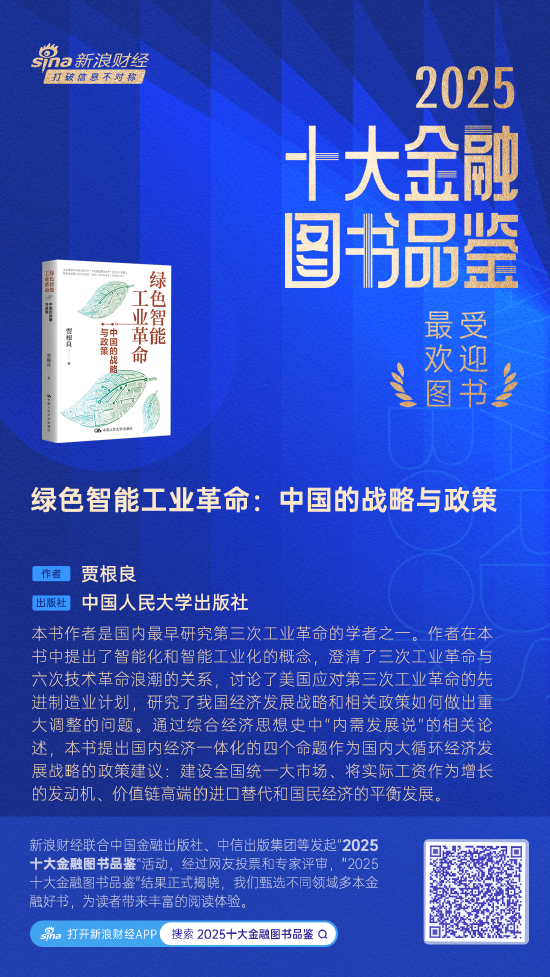
贾根良《绿色智能工业革命:中国的战略与政策》获评2025十大最受欢迎金融图书
Xin Lang Cai Jing· 2026-02-05 14:08
Group 1 - The event "2025 Top Ten Financial Books Appreciation" was jointly launched by Sina Finance, China Financial Publishing House, and CITIC Publishing Group, with the results announced after nearly two months of competition and expert review [1][5] - The book "Green Intelligent Industrial Revolution: China's Strategy and Policy" by Jia Genliang was awarded as one of the top ten most popular financial books for 2025 [1][5] Group 2 - The author, Jia Genliang, is one of the earliest scholars in China to study the Third Industrial Revolution [4][9] - The book introduces the concepts of intelligence and intelligent industrialization, clarifying the relationship between the three industrial revolutions and six technological revolution waves [4][9] - It discusses the advanced manufacturing plan in the U.S. in response to the Third Industrial Revolution and examines how China's economic development strategy and related policies need significant adjustments [4][9] - The book proposes four policy suggestions for domestic economic integration as part of the domestic circulation economic development strategy: building a unified national market, using real wages as a growth engine, high-end import substitution in the value chain, and balanced development of the national economy [4][9]
新特电气:公司密切关注国家投资政策及行业发展变化
Zheng Quan Ri Bao Wang· 2026-02-05 12:17
Group 1 - The company is closely monitoring national investment policies and industry developments to optimize its business layout [1] - The company is expanding its product applications in energy storage and renewable energy sectors [1] - The company is accelerating digital and intelligent upgrades to support future industry investment opportunities [1]
太钢不锈:公司以深化改革创新为动力
Zheng Quan Ri Bao Wang· 2026-02-05 12:17
Core Viewpoint - The company is committed to deepening reform and innovation to drive high-end, intelligent, green, and efficient development in the steel industry, enhancing the quality and sustainability of its products [1] Group 1 - The company aims to increase the gold content, new material content, and green content of its steel products [1] - The company leverages its advanced stainless steel national key laboratory to focus on the research and development of "bottleneck" materials and cutting-edge products [1]

【重磅深度/奇瑞汽车】深耕出海,多品牌协同拓展增长边界
东吴汽车黄细里团队· 2026-02-05 11:37
Key Points - The core viewpoint of the article emphasizes Chery Automobile's transformation into a global technology-driven automotive enterprise, focusing on both globalization and smart technology [2][14][15]. Group 1: Basic Information - Chery Automobile was established in 1997 and has transitioned from reverse engineering to a technology-driven enterprise, initially entering the mainstream and entry-level passenger car market with models like Fengyun and QQ [14]. - The company has a clear shareholding structure involving state-owned capital, strategic investors, and management, ensuring no direct interference in operations from state capital [14][15]. - Financial data shows improvement driven by the growth of new energy vehicles and exports, with significant revenue increases expected from 2022 to 2024 [19][21]. Group 2: Brand System - Chery has developed a five-brand system to meet diverse market demands, including Chery, Jetour, Exeed, iCAR, and Zhijie, each targeting different customer segments [38]. - The main brand, Chery, focuses on the mainstream market with high cost-performance and various powertrain options, while Jetour emphasizes family-oriented SUVs [41][46]. - Exeed targets the high-end market, iCAR is aimed at younger consumers with personalized electric vehicles, and Zhijie collaborates with Huawei to offer smart electric vehicles [41][57]. Group 3: Export Strategy - Chery's export strategy has evolved from focusing on developing markets to expanding into key markets like Russia and Europe, with a significant presence in Russia as of 2023 [62][66]. - The Tiggo series is central to Chery's product strategy, offering a range of energy types and configurations to adapt to different regional markets [70]. - The company has rapidly expanded its overseas dealer network, increasing from 252 to 1092 dealers between 2022 and 2025, supporting its global sales strategy [78]. Group 4: Technological Foundation - Chery is consolidating its smart technology development by integrating its subsidiaries into a centralized "Chery Intelligent Center" to enhance its R&D capabilities [82][83]. - The company employs a dual-track strategy of self-research and collaboration with leading technology partners like Huawei and Horizon to advance its smart driving technologies [83]. - Chery's vehicle platform structure includes traditional fuel platforms and new energy platforms, allowing for a layered approach based on price and technology paths [84]. Group 5: Profit Forecast and Investment Recommendations - Chery is projected to achieve net profits of 184 billion, 211 billion, and 254 billion yuan from 2025 to 2027, with a strong growth trajectory in new energy and export markets [6][88]. - The company is expected to maintain a higher valuation compared to its peers due to its robust growth in new energy vehicles and stable export position, receiving a "buy" rating for its stock [6][90].

家电行业2026年度信用风险展望(2026年1月)
Lian He Zi Xin· 2026-02-05 11:01
Investment Rating - The report indicates a stable outlook for the home appliance industry, with a focus on credit risk assessment for 2026 [7] Core Insights - The home appliance industry in China experienced a historical high in domestic sales in 2025, driven by government policies and consumer demand, although growth is expected to slow down due to high base effects and market saturation [10][20] - The export of home appliances faced challenges in 2025, with total export value and quantity declining compared to the previous year, influenced by high base effects and uncertain trade environments [10][22] - The industry is undergoing structural changes, with growth driven by smart, green, and high-end product upgrades, as well as deeper market penetration [10][11] Industry Overview - In 2025, China's GDP reached 140.19 trillion yuan, growing by 5.0% year-on-year, supported by domestic demand and government policies [11] - The retail sales of home appliances and audio-visual equipment reached 1.16949 trillion yuan, a year-on-year increase of 11.0% [20] - The home appliance market is characterized by a shift from policy-driven growth to market-driven dynamics, with a notable impact from the "old-for-new" subsidy policies [10][20] Policy and Regulatory Environment - The government continued to enhance the "old-for-new" subsidy policy in 2025, expanding the scope and funding to stimulate home appliance consumption [15][16] - The 2026 policy will maintain support for the "old-for-new" program, focusing on energy-efficient products and expanding the range of supported items [17] Industry Performance - The home appliance sector showed resilience in 2025, with sample companies reporting revenue growth of 7.35% and profit growth of 10.42% in the first three quarters [44] - The industry is experiencing a structural differentiation in performance, with leading brands benefiting from government policies and market dynamics [38] Competitive Landscape - The home appliance industry is highly competitive, with leading companies like Midea, Haier, and Gree dominating the market, accounting for a significant share of total revenue [38][41] - The market is increasingly concentrated, with the top ten companies accounting for approximately 82.38% of the industry's revenue [38] Financial Condition - The sample companies in the home appliance industry maintain a low leverage level, with a median debt-to-asset ratio of 43.29% as of September 2025 [49] - Profitability indicators show a decline in gross margin to 21.61% in the first three quarters of 2025, compared to 23.15% for the previous year [45]
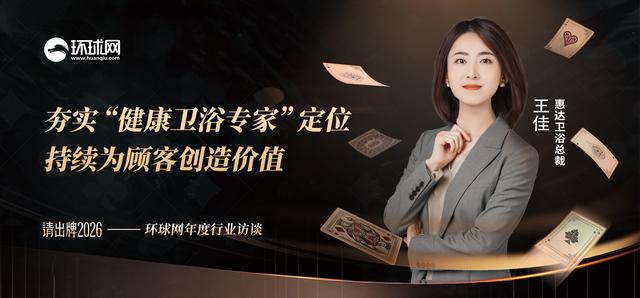
请出牌2026丨惠达卫浴王佳:夯实“健康卫浴专家”定位 持续为顾客创造价值
Huan Qiu Wang· 2026-02-05 10:14
Core Viewpoint - The Chinese home furnishing industry is undergoing significant changes in 2025, with companies needing to adapt their strategies to meet evolving consumer demands for quality and health [1][3] Group 1: Health Technology Focus - The most notable change in 2025 is the shift in consumer decision-making from brand premium and basic functionality to tangible value enhancement, particularly health value [3] - Huida Sanitary Ware has launched the "Deep Shield" series featuring a "full waterway sterilization" system, extending health protection throughout the entire water usage chain [3] - Huida has established itself as the first company in the sanitary ware industry to standardize the "full waterway sterilization" technology, providing a basis for "healthy sanitary ware" [3][5] Group 2: Addressing Market Challenges - In the context of a saturated market, Huida's Deep Shield series has become a core growth engine in the high-end market due to its unique health technology advantages [5] - To tackle the challenges of the renovation market, Huida has introduced the "Quick Installation Magic Box" solution, promising kitchen and bathroom renovations within 2 to 7 days with a ten-year warranty [5][7] - The company is focusing on the elderly care market by developing a complete product ecosystem to address the full range of elderly bathroom needs [7] Group 3: Global Expansion and Standards - Huida is committed to quality as a foundation for global competition, achieving certifications from various international quality systems, including ETL, UPC, CE, and Watermark [7][9] - The company aims to promote global mutual recognition of technology and standards, transitioning from merely exporting products to achieving technical recognition and standard alignment [9] Group 4: Strategic Direction and Innovation - The sanitary ware industry is experiencing structural changes, and future competition will focus on professional depth, technological research, supply chain collaboration, and user experience [10] - Huida is concentrating on the smart toilet segment as a core growth point for the next five to ten years, reinforcing its strategic direction and product foundation [10][11] - The company is transitioning to become a "scene integrator" to meet complex consumer demands for functionality, aesthetics, and emotional connection [11]

奇瑞汽车(09973):深耕出海,多品牌协同拓展增长边界
Soochow Securities· 2026-02-05 09:38
Investment Rating - The report assigns a "Buy" rating for Chery Automobile (09973.HK) for the first time [1]. Core Insights - Chery Automobile is transitioning towards globalization and intelligence, with a focus on multiple brands to meet diverse market demands. The company has established a clear equity structure involving state-owned assets, strategic investors, and management, which enhances operational efficiency and strategic alignment [8][13]. - The financial outlook is positive, with significant revenue growth driven by the expansion of new energy vehicles and increasing overseas sales. The report forecasts a substantial increase in net profit from 11.95 billion yuan in 2023 to 25.38 billion yuan by 2027 [1][17]. - Chery's brand strategy includes five distinct brands: Chery, Jetour, Exeed, iCAR, and Zhijie, each targeting different market segments and customer needs [38][39]. Summary by Sections 1. Basic Information - Chery Automobile was founded in 1997 and has evolved from a local manufacturer to a global technology-driven automotive enterprise. The company has a clear equity structure that balances state ownership, strategic investments, and management control [13][14]. - The company has seen rapid revenue growth from 2022 to 2024, primarily due to the increasing contribution of new energy vehicles and sustained overseas revenue growth [17][18]. 2. Existing Brand System - Chery's main brand targets the mainstream market with a focus on high cost-performance and diverse powertrain options. Jetour emphasizes family travel and off-road capabilities, while Exeed targets high-end users. iCAR is aimed at younger consumers with a focus on personalization, and Zhijie leverages collaboration with Huawei for smart experiences [38][39]. 3. Export Strategy - Chery has a well-established export strategy that began in developing markets and is now expanding into key markets like Russia and Europe. The company has adapted its product offerings and distribution channels to suit local market conditions [55][60]. - The Tiggo series is central to Chery's product strategy, with a focus on multiple brands and energy types to cater to different regional markets [65]. 4. Technological Foundation - Chery is enhancing its platform-based manufacturing capabilities and pursuing a dual-track strategy of self-research and collaboration with leading technology partners. The company aims to consolidate its R&D efforts to improve efficiency and innovation [8][34]. 5. Profit Forecast and Investment Advice - The report projects Chery's net profit to reach 18.41 billion yuan in 2025, with a corresponding P/E ratio indicating a favorable valuation compared to peers. The strong momentum in new energy development and solid export positioning justify a higher valuation for the company [1][17].
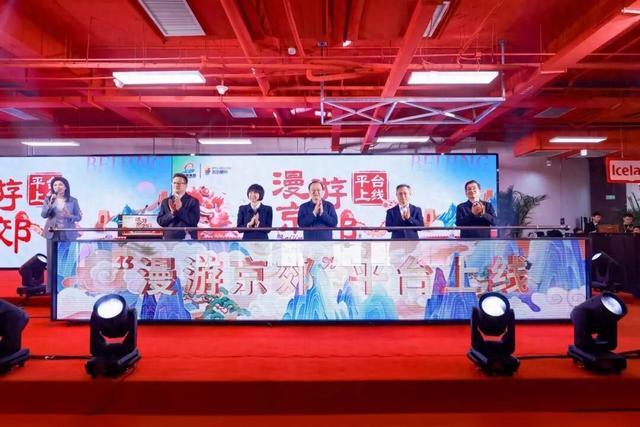
北京乡村旅游智慧平台“漫游京郊”上线发布会在门头沟举办
Xin Lang Cai Jing· 2026-02-05 07:52
来源:门头沟融媒 记者:马燊 来源:北京号 2月4日,北京乡村旅游智慧平台"漫游京郊"上线发布会在门头沟区京西智谷Iceland Lab基地成功举办。 活动由北京市文化和旅游局、北京市农业农村局、门头沟区人民政府、首旅集团联合主办。北京市委副 秘书长孙文锴,北京市文化和旅游局党组书记、局长郭怀刚,北京市委农工委副书记、北京市农业农村 局副局长、一级巡视员姚忠阳,首旅集团党委副书记、董事、总经理李云,门头沟区委书记喻华锋出 席。 发布会上,京郊十区文旅部门围绕"春节焕新游"主题,轮番登台发布各区春节特色活动、文旅产品。现 场同步打造三大主题体验专区,其中"漫游京郊市集"专区汇聚了20辆主题花车,展示了京郊各区极具地 域特色的文创好礼、特色农副产品并现场展卖,成为移动的"农文旅会客厅"。 "漫游京郊"乡村旅游智慧平台,以数字化、智能化赋能乡村产业融合,是市区两级、政企多方通力协作 的成果,是汇集众智、回应市场需求的生动实践。平台汇集了京郊农、文、旅、体、商全维度资源,还 有可视化地图、VR场景预览、内容种草、达人直播、AI智能行程定制、产品预订等多种"玩法",可帮 助用户轻松实现"线上规划、线下体验"的无缝衔接。 ...
销量连跌两年,中国区CEO黯然离开,宝马中国战略大溃败?
Sou Hu Cai Jing· 2026-02-05 07:11
Core Viewpoint - BMW Group announced a significant leadership change in its Greater China region, appointing a new CEO, which comes at a time of declining sales and market challenges in China [1][4]. Group 1: Leadership Change - The announcement of the leadership change was made two months in advance, which is unusual for the company [1]. - The outgoing CEO, Gao Xiang, served for only two years, while the new CEO, Ke Ruichen, has 27 years of experience within BMW but lacks prior experience in the Chinese market [1][3]. Group 2: Sales Performance - BMW's sales in China have seen a dramatic decline, with 2024 sales dropping to 714,500 units, a 13.4% decrease year-on-year, and further falling to 625,500 units in 2025, a 12.5% decline [5][7]. - Over two years, BMW lost nearly 200,000 units in sales in China, a figure comparable to the annual output of a medium-sized joint venture car company [5]. Group 3: Market Context - The decline in BMW's sales in China is unique compared to its global performance, where total sales increased slightly by 0.5% in 2025 [7]. - The luxury German automotive sector, including competitors like Mercedes-Benz and Audi, is also facing significant challenges in the Chinese market, with declines of 19% and 5.6% respectively [9]. Group 4: Pricing Strategy - BMW attempted to exit the price war in mid-2024, citing concerns over profit erosion and brand value, but this strategy did not stabilize sales and led to further market share loss [10][13]. - In January 2026, BMW announced significant price cuts on 31 models, with reductions up to 300,000 yuan, marking a rare move in its history [13][16]. Group 5: Electric Vehicle Strategy - BMW is betting on electric vehicle (EV) development under the new leadership, with plans to launch around 20 new BMW and MINI models in 2026, including a long-wheelbase version of the BMW iX3 tailored for the Chinese market [19][21]. - The shift in consumer preferences towards EVs and smart features is a critical factor for BMW's strategy in China, where the penetration rate of new energy vehicles exceeds 50% [19]. Group 6: Challenges Ahead - Ke Ruichen's lack of experience in the Chinese market poses significant challenges, as previous attempts to appoint leaders without local experience have not been successful [21][23]. - The competitive landscape in China is increasingly complex, with local brands like BYD and Li Auto rapidly advancing in product quality and marketing strategies [23][25].