
机器学习

Search documents
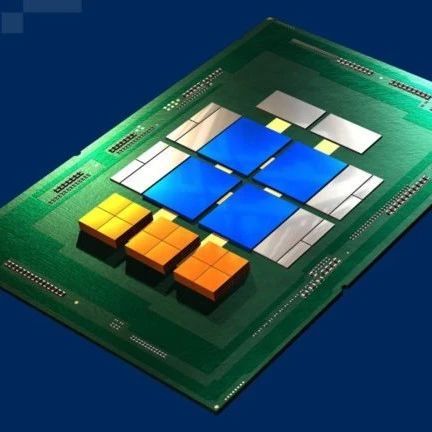
PCIe 8.0官宣,UCIe 3.0发布
半导体行业观察· 2025-08-06 02:00
Core Insights - The PCI Express (PCIe) 8.0 specification aims to achieve a data rate of 256.0 GT/s, with a maximum bidirectional throughput of 1 TB/s through x16 configuration, set to be released to members in 2028 [2][4] - PCIe 8.0 is expected to support emerging applications such as artificial intelligence/machine learning, high-speed networking, edge computing, and quantum computing, as well as data-intensive markets like automotive, hyperscale data centers, high-performance computing (HPC), and military/aerospace [2][4] - The UCIe 3.0 specification has been announced, enhancing performance with support for data rates of 48 GT/s and 64 GT/s, marking the next phase in the evolution of open chip standards [5][9] PCIe 8.0 Specification Features - PCIe 8.0 will double the data rate to 256 GT/s, continuing the tradition of doubling bandwidth every three years to support next-generation applications [4] - The demand for PCIe technology is expected to grow due to its high bandwidth, scalability, and energy efficiency, particularly in data-intensive applications [4][5] UCIe 3.0 Specification Highlights - UCIe 3.0 introduces runtime recalibration for improved power efficiency and expanded sideband coverage for more flexible multi-chip configurations [5][6] - The specification supports a raw bit rate of 256.0 GT/s and up to 1 TB/s bidirectional throughput through x16 configuration [5][9] - UCIe 3.0 emphasizes higher scalability, flexibility, and interoperability, driving innovation in the chiplet ecosystem [6][9]

摩根士丹利:亚马逊云服务辩论+英伟达分配与乔摩尔,Meta增长与支出,谷歌人工智能与司法部风险
摩根· 2025-08-05 15:42
Investment Rating - The report maintains a positive outlook on the cloud services industry, particularly for AWS, with projected growth rates of 18%-20% in the coming years [1][4]. Core Insights - AWS shows strong order backlog and demand in both AI and non-AI sectors, similar to competitors Azure and GCP [1][3]. - NVIDIA's Blackwell chip procurement by the top four cloud providers is expected to reach $65-70 billion in 2025, with AWS capturing a smaller share compared to Microsoft and Google due to its in-house chip strategy [1][5]. - AWS's profit margin has decreased by 600 basis points due to stock incentive adjustments, but revenue growth is expected to rebound to around 30% in the upcoming quarters [8]. Summary by Sections AWS Growth and Performance - AWS is projected to achieve growth rates of 18%-19% in the second half of 2025 and 20% in the first half of 2026, with AI companies contributing significantly to revenue growth [1][4]. - Annual recurring revenue from AI companies is expected to increase from $1 billion to $4-5 billion, contributing approximately 2% to overall growth [4]. Capital Expenditure and Strategy - Capital expenditures are primarily directed towards AWS for power and data center construction, with an annualized increase of approximately $30 billion [2][9]. - There are indications that AWS may introduce AMD instance services, which could diversify its offerings but still rely heavily on NVIDIA's dominance in the cloud market [7]. Competitive Landscape - Meta's advancements in GPU machine learning are expected to enhance user engagement and profitability, with EPS projections for 2026 reaching $33, potentially rising to $35 with strong performance [12]. - Google's cloud business is performing well, with partnerships with AI-native companies and advancements in technologies like Gemini, positioning it for significant growth in 2026 [14][15].


中金公司 小盘优势能否延续
中金· 2025-08-05 03:16
Investment Rating - The report maintains a neutral stance on the stock market, cautious on bonds, and optimistic on commodities [2][4]. Core Insights - The report highlights that the PPI was below expectations while social financing and CPI exceeded expectations, leading to a neutral outlook for the stock market. GDP growth was above expectations, putting pressure on the bond market, while the commodity market outlook remains optimistic [1][2]. - The industry rotation model for August recommends sectors such as comprehensive, comprehensive finance, media, agriculture, forestry, animal husbandry, fishery, telecommunications, and light industry manufacturing, indicating a shift from real estate and consumer services [4][12]. - The small-cap growth style is expected to continue its dominance, supported by macroeconomic indicators and investor sentiment [5][6]. Summary by Sections Economic Indicators - As of the end of July, PPI was below expectations, while social financing and CPI were above expectations, leading to a neutral view on the stock market. GDP growth was consistently above expectations, negatively impacting the bond market [2][4]. Industry Recommendations - The August industry rotation model recommends comprehensive, comprehensive finance, media, agriculture, forestry, animal husbandry, fishery, telecommunications, and light industry manufacturing, while excluding real estate and consumer services [4][12]. Investment Strategies - The best-performing strategy in July was the new stock strategy, achieving a monthly return of 11.3%, significantly outperforming major small-cap indices [8]. - The growth trend resonance stock selection strategy yielded a return of 7.9%, while the XG Boost growth selection strategy achieved a return of 5.8% [9]. - For August, the report suggests focusing on small-cap combinations and dividend/valued selections, while not recommending growth strategies due to ongoing valuation declines [11][12]. Quantitative Models - The report discusses advancements in quantitative models, particularly deep learning models that have outperformed benchmarks significantly [13][14].

瑞银:美联储理事库格勒意外辞职 鲍威尔继任战提前打响
贝塔投资智库· 2025-08-04 04:03
瑞银经济学家Amanda Wilcox在上周五的一份报告中写道:"库格勒理事席位的提前空缺,将使下任主 席的遴选工作进入加速阶段。"美联储此前宣布,库格勒将于8月8日正式离任。这位2023年9月就任、 原定任期至2026年1月的理事,上周因个人原因缺席了联邦公开市场委员会(FOMC)会议。 库格勒在任职未满两年之际提前离任,正值白宫酝酿鲍威尔最终继任方案的关键时刻。 点击蓝字,关注我们 据瑞银经济学家分析,美联储理事库格勒上周五的意外辞职,使得主席鲍威尔继任者的遴选工作被迫提 前启动 ,这一职位空缺可能导致美联储领导层重组远早于预期。 而关于鲍威尔的潜在继任者,媒体和政策界已有诸多猜测。Wilcox指出:"包括《华尔街日报》6月报 道在内的多家媒体已披露若干候选人名单,财政部长斯科特·贝森特、国家经济委员会主任凯文·哈西特 和前理事凯文·沃什均在列。我们认为本周两位支持降息25个基点的异议者之一沃勒理事也可能参与角 逐。" 尽管瑞银未对政府最终决策作出预测,但Wilcox强调:"我们期待关注这一进程,特别是在今天下午的 辞职事件使得时间表明显提前之后。" 库格勒理事的提前离任使美联储理事会出现七个空缺席位,白 ...

仅用提示词工程摘下IMO金牌!清华校友强强联手新发现,学术界不靠砸钱也能比肩大厂
量子位· 2025-08-02 05:23
Core Viewpoint - The collaboration between two Tsinghua University alumni has successfully enhanced the Gemini 2.5 Pro model to achieve a gold medal level in the International Mathematical Olympiad (IMO) through a self-iterative verification process and prompt optimization [1][4][10]. Group 1: Model Performance and Methodology - Gemini 2.5 Pro achieved a 31.55% accuracy rate in solving IMO problems, significantly outperforming other models like O3 and Grok 4 [9]. - The research team utilized a structured six-step self-verification process to improve the model's performance, which includes generating initial solutions, self-improvement, and validating solutions [16][18]. - The model was able to generate complete and mathematically rigorous solutions for 5 out of 6 IMO problems, demonstrating the effectiveness of the structured iterative process [24][23]. Group 2: Importance of Prompt Design - The use of specific prompt designs significantly improved the model's ability to solve complex mathematical problems, highlighting the importance of prompt engineering in AI model performance [12][14]. - The research indicated that detailed prompts could reduce the computational search space and enhance efficiency without granting the model new capabilities [23]. Group 3: Research Team Background - The authors, Huang Yichen and Yang Lin, are both Tsinghua University alumni with extensive academic backgrounds in physics and computer science, contributing to the credibility of the research [26][28][33]. - Yang Lin is currently an associate professor at UCLA, focusing on reinforcement learning and generative AI, while Huang Yichen has a strong background in quantum physics and machine learning [30][35]. Group 4: Future Directions and Insights - The research team plans to enhance the model's capabilities through additional training data and fine-tuning, indicating a commitment to ongoing improvement [42]. - Yang Lin expressed the potential for AI to play a more significant role in mathematical research, especially in addressing long-standing unresolved problems [44].


苹果公司季度收入同比激增10% 库克罕见表态AI战略
Sou Hu Cai Jing· 2025-08-01 07:48
Group 1 - The core point of the article is that Apple reported a strong Q3 FY2025 financial performance, with total revenue reaching $98 billion, a 10% year-over-year increase, marking the largest quarterly revenue growth since Q1 FY2022 [1][3] - The Mac and iPad segments performed well, with Mac revenue increasing by 20% to $8.5 billion, driven by the popularity of the new MacBook Air with M4 chip, and iPad revenue rising by 18% to $7 billion, with a 30% surge in education market purchases [3] - The Greater China region, Apple's third-largest market, generated $17 billion in revenue, a 7% year-over-year increase, ending a streak of four consecutive quarters of decline [3] Group 2 - Apple CEO Tim Cook outlined the company's AI strategy, indicating a significant increase in capital expenditure and R&D investment in generative AI and machine learning, focusing on enhancing personalized experiences while protecting user privacy [3] - Cook emphasized that AI is deeply integrated into every new product, from Siri optimization to photo editing and health monitoring, redefining device interaction through edge AI [3] - Analysts noted Cook's openness to acquisitions in the AI space, suggesting that Apple may pursue technology-driven acquisitions to enhance its AI capabilities and catch up with competitors like Microsoft and Google [3][4] Group 3 - Some analysts raised concerns about the pace of Apple's AI strategy implementation, with Morgan Stanley pointing out the lack of details on self-developed large models and the reliance on third-party models for AI functionalities [4] - Goldman Sachs raised Apple's target price to $240, believing that the combination of edge AI and privacy protection will attract high-end users and further improve service business margins [4]


Alphatec (ATEC) - 2025 Q2 - Earnings Call Transcript
2025-07-31 21:30
Financial Data and Key Metrics Changes - The company reported total revenue of $186 million, representing a 27% increase year over year, with surgical revenue growing by 29% to $168 million [9][10] - Adjusted EBITDA reached a record $23 million, accounting for 13% of revenue, marking an improvement of 880 basis points year over year [4][16] - Free cash flow was $5 million, indicating a positive cash generation trend [4][18] Business Line Data and Key Metrics Changes - Surgical revenue growth was driven by a procedural volume increase of 28%, with surgeon adoption growing by 21% and utilization increasing by 6% [10][11] - EOS revenue increased by 11% year over year, contributing $17 million to total revenue [13] - Same store sales in established territories grew by 29%, reflecting strong demand in existing markets [5][11] Market Data and Key Metrics Changes - The company has achieved a market share ranking of third in the U.S. spine market, indicating significant competitive positioning [7][38] - The company continues to grow at five to six times the overall market rate, showcasing its strong market presence [22] Company Strategy and Development Direction - The company is focused on creating clinical distinction and enhancing surgeon adoption through innovative product offerings and a robust sales force [24][30] - Investments in technology infrastructure are aimed at supporting long-term growth and profitability, with a focus on integrating various surgical tools into a cohesive ecosystem [30][34] - The company plans to launch a new robotic system in early 2026, which will be integrated into existing surgical workflows [65][66] Management's Comments on Operating Environment and Future Outlook - Management expressed confidence in the company's ability to maintain positive cash flow and profitability, with expectations for continued strong revenue growth [20][19] - The company anticipates a sequential step down in revenue from Q2 to Q3, typical for the seasonality of the business [98] - Management highlighted the importance of operational improvements and asset management in driving future profitability [19][20] Other Important Information - The company has raised its full-year revenue guidance by $8 million to $742 million, reflecting strong performance in the surgical business [20][63] - Non-GAAP gross margin was reported at 70%, with a slight decrease year over year due to product mix changes [14] Q&A Session Summary Question: What differentiates the upcoming robotic system? - The company emphasized the integration of navigation robotics into the surgical workflow, aiming for increased precision and efficiency in spine procedures [41][46] Question: How much of the same store growth is attributed to new reps and instrument availability? - Management noted that both new hires and increased instrument availability have contributed to growth, with a focus on surgeon adoption and utilization driving results [51][56] Question: What are the expectations for organic growth and geographic penetration? - The company expects over 20% organic growth, with a focus on expanding in under-indexed geographies and leveraging the EOS technology for predictive analytics [62][94] Question: What is the outlook for CapEx and free cash flow? - Management indicated a commitment to positive free cash flow while maintaining strategic CapEx investments to support growth initiatives [109]

美光科技下跌5.07%,报108.92美元/股,总市值1218.95亿美元
Jin Rong Jie· 2025-07-31 15:23
Group 1 - Micron Technology's stock price decreased by 5.07% to $108.92 per share, with a trading volume of $1.213 billion and a total market capitalization of $121.895 billion [1] - For the fiscal year ending May 29, 2025, Micron Technology is projected to have total revenue of $26.063 billion, representing a year-over-year growth of 50.12%, and a net profit attributable to shareholders of $5.338 billion, showing a staggering increase of 4997.25% [1] - Micron Technology is a global leader in the semiconductor industry, offering a wide range of high-performance memory and storage technologies, including DRAM, NAND, NOR Flash, and 3D XPoint memory [1] Group 2 - The company has a 40-year history of technological leadership, with its memory and storage solutions driving disruptive trends in key market areas such as cloud data centers, networking, mobile, artificial intelligence, machine learning, and autonomous vehicles [1] - Micron's common stock (MU) is traded on the NASDAQ exchange [1] - The company is scheduled to disclose its fiscal year 2025 annual report on September 24, with the actual release date subject to company announcement [1]

电网扩建引爆新“铜荒” 2030年铜价剑指1.2万美元?
智通财经网· 2025-07-31 09:11
智通财经APP获悉,随着全球范围内数千亿美元资金投入电网现代化改造与扩建工程,以满足数字化与 清洁能源革命带来的巨大电力需求,铜消费增速已远超行业预期。然而,智利、刚果(金)等主要产铜国 因新矿投资不足导致供应受限,这为铜价长期高位运行埋下伏笔。部分分析师预测,2030年前铜价将突 破每吨1.2万美元的历史峰值,较当前约9700美元/吨的价格上涨23%。 尽管终端用户正寻求替代方案,但铜因其卓越的导电性、耐用性和多功能性仍难以被取代。国际能源署 数据显示,全球电网投资额继2024年创下3900亿美元纪录后,今年预计将突破4000亿美元大关。 咨询公司Benchmark Mineral Intelligence(BMI)战略总监Michael Finch表示,"铜在电网基础设施中常被严 重低估。虽然各国都意识到扩建电网的必要性,却普遍低估了所需的铜材总量",特别是美国、英国和 中国这三大关键市场的投资需求。 据该机构提供的最新预测,全球发电与输电网络升级带来的铜需求将从今年的1252万吨增至2030年的 1487万吨。 数据中心与电动汽车成需求新引擎 美国银行分析师Michael Widmer预计,到2030年 ...
机器学习因子选股月报(2025年8月)-20250730
Southwest Securities· 2025-07-30 05:43
Quantitative Factors and Construction Factor Name: GAN_GRU Factor - **Construction Idea**: The GAN_GRU factor is derived by processing volume-price time-series features using a Generative Adversarial Network (GAN) model, followed by encoding these time-series features with a Gated Recurrent Unit (GRU) model to generate a stock selection factor [4][13][41] - **Construction Process**: 1. **Input Features**: 18 volume-price features such as closing price, opening price, turnover, and turnover rate are used as input data. These features are sampled every 5 trading days over the past 400 days, resulting in a feature matrix of shape (40,18) [14][17][18] 2. **Data Preprocessing**: - Outlier removal and standardization are applied to each feature over the 40-day time series - Cross-sectional standardization is performed at the stock level [18] 3. **GAN Model**: - **Generator**: An LSTM-based generator is used to preserve the sequential nature of the input features. The generator takes random noise (e.g., Gaussian distribution) as input and generates data that mimics the real data distribution [23][33][37] - **Discriminator**: A CNN-based discriminator is employed to classify real and generated data. The discriminator uses convolutional layers to extract features from the 2D volume-price time-series "images" [33][35] - **Loss Functions**: - Generator Loss: $$ L_{G} = -\mathbb{E}_{z\sim P_{z}(z)}[\log(D(G(z)))] $$ where \( z \) represents random noise, \( G(z) \) is the generated data, and \( D(G(z)) \) is the discriminator's output probability for the generated data being real [24] - Discriminator Loss: $$ L_{D} = -\mathbb{E}_{x\sim P_{data}(x)}[\log D(x)] - \mathbb{E}_{z\sim P_{z}(z)}[\log(1-D(G(z)))] $$ where \( x \) is real data, \( D(x) \) is the discriminator's output probability for real data, and \( D(G(z)) \) is the discriminator's output probability for generated data [27] 4. **GRU Model**: - Two GRU layers (GRU(128,128)) are used to encode the time-series features, followed by an MLP (256,64,64) to predict future returns [22] 5. **Factor Output**: The predicted returns (\( pRet \)) from the GRU+MLP model are used as the stock selection factor. The factor is neutralized for industry and market capitalization effects and standardized [22] Factor Evaluation - The GAN_GRU factor effectively captures the sequential and cross-sectional characteristics of volume-price data, leveraging the strengths of GANs for feature generation and GRUs for time-series encoding [4][13][41] --- Factor Backtesting Results GAN_GRU Factor Performance Metrics - **IC Mean**: 11.43% (2019-2025), 10.97% (last year), 9.27% (latest month) [41][42] - **ICIR**: 0.89 [42] - **Turnover Rate**: 0.82 [42] - **Annualized Return**: 38.52% [42] - **Annualized Volatility**: 23.82% [42] - **IR**: 1.62 [42] - **Maximum Drawdown**: 27.29% [42] - **Annualized Excess Return**: 24.86% [41][42] GAN_GRU Factor Industry Performance - **Top 5 Industries by IC (Latest Month)**: - Home Appliances: 27.00% - Non-Bank Financials: 23.08% - Retail: 20.01% - Steel: 14.83% - Textiles & Apparel: 13.64% [41][42] - **Top 5 Industries by IC (Last Year)**: - Utilities: 14.43% - Retail: 13.33% - Non-Bank Financials: 13.28% - Steel: 13.23% - Telecommunications: 12.36% [41][42] GAN_GRU Factor Long Portfolio Performance - **Top 5 Industries by Excess Return (Latest Month)**: - Textiles & Apparel: 5.19% - Utilities: 3.62% - Automobiles: 3.29% - Non-Bank Financials: 2.56% - Pharmaceuticals: 1.47% [2][43] - **Top 5 Industries by Average Monthly Excess Return (Last Year)**: - Home Appliances: 5.44% - Building Materials: 4.70% - Textiles & Apparel: 4.19% - Agriculture: 4.09% - Utilities: 3.92% [2][43]