软件定义汽车

Search documents
当零部件走向台前 汽车业迎来“价值重估”时刻
Zhong Guo Qi Che Bao Wang· 2025-05-07 01:07
Core Insights - The 2025 Shanghai Auto Show highlights the transformation of the automotive industry, showcasing innovations in the parts sector driven by electrification, intelligence, and globalization [2][3] - The event reflects the automotive supply chain's cross-domain collaboration and the industry's diverse and global landscape [2][3] - The shift from hardware-dominated to software-defined vehicles marks a fundamental change in industry logic, with software becoming a key factor in defining automotive product capabilities [3][4] Industry Trends - The dual drive of electrification and intelligence is the core theme of the 2025 Shanghai Auto Show, with a significant increase in the number of exhibitors showcasing new technologies and products [3][5] - The automotive software market is projected to reach $55 billion by 2025, with over-the-air upgrades, smart cockpit interactions, and autonomous driving algorithms as the main growth areas [6] - AI technology is increasingly integrated into vehicles, enhancing their capabilities and transforming them into mobile smart terminals [4][6] Company Strategies - Foreign parts manufacturers are shifting from unilateral technology output to deep ecological integration, focusing on localizing technology implementation [9][12] - Bosch aims to leverage software and technological innovations to empower smart mobility, with a projected 4% sales growth in China for 2024, reaching 116.6 billion yuan [9] - Continental Group plans to list its automotive subgroup AUMOVIO, emphasizing its commitment to the Chinese market and local innovation [10][11] Emerging Technologies - The integration of AI and automotive technology is reshaping the collaboration model among people, vehicles, roads, and clouds, positioning smart vehicles as essential components of a smart lifestyle [4][5] - New products such as the R-UniAD technology from SenseTime and the advanced chip platforms from Black Sesame are pushing the boundaries of autonomous driving capabilities [7][6] - The introduction of immersive smart cockpit solutions and multi-modal technologies is enhancing user experience and safety in vehicles [8][6] Market Dynamics - The presence of over 300 exhibitors, including major international tech companies, indicates a significant shift in the automotive market landscape, with parts manufacturers taking center stage [13][15] - The competition in the automotive industry is evolving from hardware breakthroughs to collaborative innovation across the entire supply chain [5][12] - The 2025 Shanghai Auto Show serves as a critical observation point for the ongoing transformation in the automotive value chain, with a notable shift towards electrification and intelligence [16]


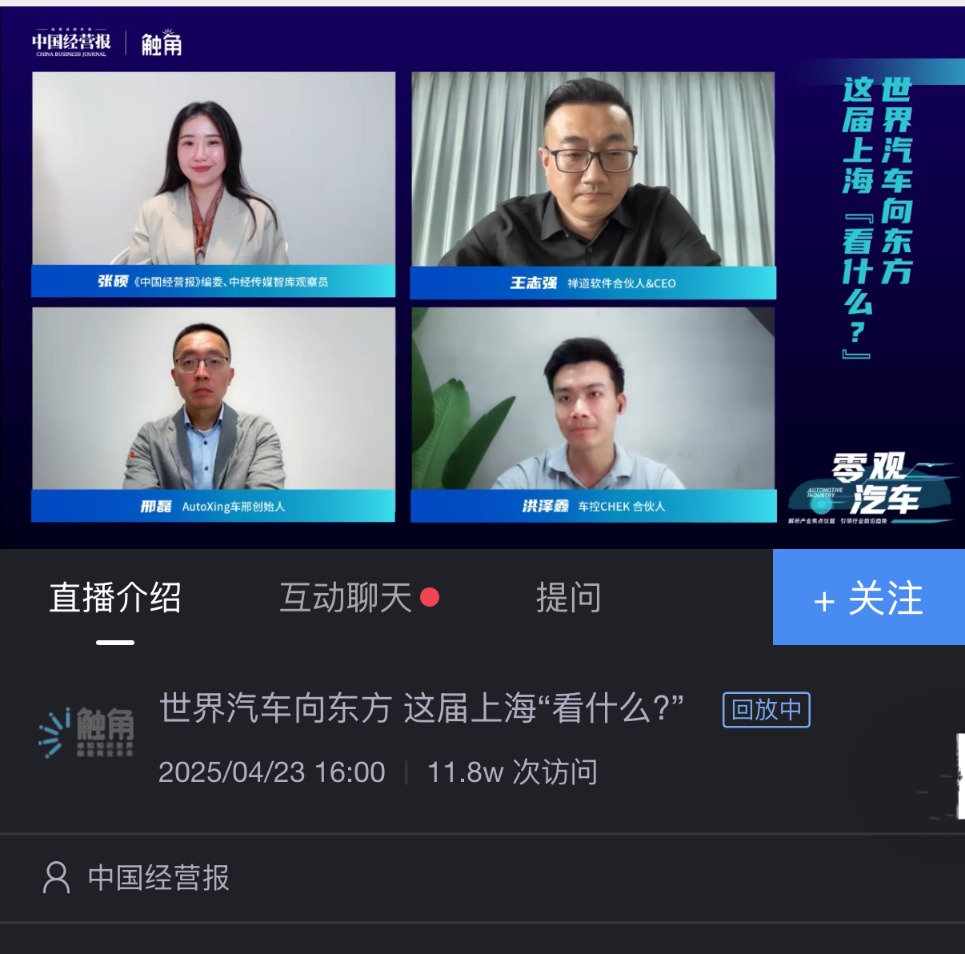
对话王志强:开源或通用操作系统的运用 将极大地激活汽车产业生态
Zhong Guo Jing Ying Bao· 2025-05-06 03:43
Core Viewpoint - The automotive industry is undergoing a significant transformation towards "software-defined vehicles," with a strong emphasis on Over-The-Air (OTA) updates and increased computational power in vehicles [2][3]. Group 1: Software and Hardware Integration - Automotive manufacturers are increasingly investing in vehicle computing power, focusing on platform architecture to maintain technological leadership [2]. - The open-source operating system announced by Li Auto is expected to have a profound impact on the automotive supply chain, promoting cost-effective product updates and enhancing industry collaboration [2][3]. Group 2: AI Development in Automotive - AI is a central topic in the automotive sector, with two main development directions: intelligent driving technology and generative AI-driven interaction systems [4]. - The synergy between spatial intelligence from autonomous driving data and interactive intelligence from AI models is creating a dual-driven innovation ecosystem in the automotive industry [5]. Group 3: Regulatory and Safety Considerations - The rise of intelligent driving has led to increased scrutiny from regulatory bodies, emphasizing the need for clear standards and safety regulations in the automotive sector [5][6]. - Current efforts by European automakers to establish safety and cybersecurity standards are being mirrored by domestic manufacturers, who are also setting technical requirements for OTA and software capabilities [6]. Group 4: Competitive Landscape and Future Outlook - Domestic automakers are leading globally in the development of smart electric vehicles, demonstrating rapid iteration capabilities compared to international counterparts [7]. - The competitive landscape is expected to evolve, with intensified competition among suppliers of key materials and components, potentially reshaping the global supply chain and redefining pricing structures in the automotive market [7].
深度集成 QNX 技术,文远知行ADAS 的 WePilot 方案迈向新高度
Jiang Nan Shi Bao· 2025-05-06 02:13
Core Insights - WeRide has partnered with BlackBerry's QNX to accelerate the development and deployment of software-defined vehicle (SDV) solutions for global automotive OEMs and Tier 1 suppliers [1][2] - The WePilot advanced driver assistance system (ADAS) solution, integrated with QNX's technology, has achieved mass production by the end of 2023 and is being implemented in Chery's models [1] - QNX OS for Safety has received multiple industry certifications, ensuring high reliability, safety, and real-time performance, making it suitable for various safety-critical sectors [1] Group 1 - The collaboration aims to enhance the WePilot ADAS with strong defensive driving capabilities, flexible lane changing, and 360° obstacle avoidance [2] - WePilot is designed to operate under all weather conditions and road scenarios, supporting a combination of multi-modal sensors and continuous optimization through deep learning algorithms [2] - The partnership will focus on continuous innovation and technology iteration to lead the industry towards smarter, safer, and more reliable autonomous driving solutions [2] Group 2 - The WePilot solution has obtained several industry certifications, including ISO/SAE 21434 and ISO 26262, ensuring automotive OEMs can deliver high-quality, vehicle-grade designs with functional safety [2] - The integration of QNX's advanced technology stack into WeRide's offerings is expected to significantly contribute to the transformation of global transportation [2]


大陆拆分汽车子集团Aumovio,独家对话CEO
汽车商业评论· 2025-05-01 10:29
撰 文 / 刘宝华 设 计 / 张 萌 "今天对大陆集团来说是伟大的一天。" 拥有154年历史的大陆集团2025年4月23日宣布拆分成两个独立公司,新闻发布会选择在上海车展媒 体日举行,大陆集团执行董事会成员兼汽车子集团首席执行官冯贺飞(Philipp von Hirschheydt)在 演讲开篇如是说。 这是去年8月宣布拆分计划后的尘埃落定。大陆集团监事会认为"大陆集团正面临百年历史中最大的 转型和变革",拆分是他们应对变革和转型的措施之一。 从集团公司到专业公司 拆分后,轮胎业务和康迪泰克业务属于新大陆集团,另一部分成立独立的新公司,二者的销售额基 本都在200亿欧元左右,都有强大的技术基础作为支撑。发布会上宣布了新公司名称—— Aumovio。 "'Au'是automotive,也就是汽车,'mov'是移动,我们希望能够让我们的智能出行变得更安全、愉 悦、互联且自主,我们认为这是未来的趋势。'io'是innovation创新,我们希望能够有最新的技术解 决方案,这就是我们名字的意义。"Aumovio公司CEO冯贺飞解释。 4月25日大陆集团年度股东大会获得批准后,Aumovio计划于2025年9月在法兰 ...
博世发布辅助驾驶新方案 新产品矩阵即将投放市场
Jing Ji Guan Cha Bao· 2025-05-01 00:54
Core Insights - Bosch has launched a new driver assistance brand "Bosch Horizon Driver Assistance" at the Shanghai Auto Show, which includes three product lines covering SAE Level 2 assistance systems [1][2] - The company emphasizes the rapid transformation of intelligent driver assistance in China and aims to leverage software and technology innovations to seize business opportunities in this sector [1][3] Group 1: Product Launches and Innovations - Bosch's new driver assistance solutions include the Supreme version aimed at urban driving, which is based on dual Orin-X chips and is set for mass production by the end of 2023 [2] - The company has also introduced a new generation multifunction camera and an upgraded version of the Bosch Horizon Driver Assistance, reinforcing its leadership in Advanced Driver Assistance Systems (ADAS) [2][3] - Bosch is developing a visual language model to enhance the understanding of complex traffic scenarios, such as tidal lanes and bus-only lanes [3] Group 2: Market Strategy and Collaborations - Bosch has established partnerships with five Chinese OEMs for high-speed and urban memory driving assistance, with most projects expected to go into mass production this year [3] - The company plans to expand its end-to-end model for urban driving assistance to high-speed roads and urban memory driving by the end of 2025 [2][3] Group 3: Business Performance and Future Outlook - Bosch's intelligent mobility business is the largest segment of the group, projected to generate €55.9 billion (approximately ¥462.5 billion) in sales for the fiscal year 2024, accounting for nearly 62% of total sales [4] - In 2024, Bosch's sales in China are expected to grow by 4%, reaching ¥116.6 billion, which represents a quarter of Bosch's global intelligent mobility sales [5] - The company has identified that 65% of new business opportunities in China over the next five years are related to intelligent and electrified solutions [5]
上海车展丨马瑞利中国区总裁申克磊:中国技术创新正在辐射全球汽车市场
Xin Hua Cai Jing· 2025-04-30 19:50
Core Insights - The Chinese automotive market is driving global market development, with new concepts and models emerging first in China, positioning it as the largest automotive market and a leader in automotive R&D [1][4] - Marelli is adapting to the Chinese market and aims to leverage successful experiences from China to promote globally [1] Group 1: Strategic Focus - Marelli is strategically positioned in both electrification and intelligence within the automotive industry, utilizing digital twin technology to enhance design, testing, and collaboration [2] - The company has significantly invested in new energy sectors, developing products like integrated thermal management modules and advanced display technologies to improve human-machine interaction [2][3] Group 2: Local and Global Integration - Marelli's strategy of "In China, for the world" emphasizes serving the local market while leveraging technological advancements from China to benefit global markets [2][3] - The establishment of the Asia-Pacific Innovation Center for automotive lighting in China aims to consolidate R&D resources and enhance local technological advantages [3] Group 3: Global Market Opportunities - The rise of Chinese automotive exports presents significant opportunities, with Marelli supporting Chinese automakers in international markets through localized solutions and global expertise [3] - Marelli has provided integrated solutions for projects like BYD's ethanol sensor technology in Brazil and collaborated with Changan to expand into the ASEAN market [3]
上汽连续降本,为转型争取时间和空间丨一分钟财报
晚点Auto· 2025-04-30 15:16
Core Viewpoint - SAIC Motor Corporation has shown signs of recovery in Q1 with improved net profit, but challenges remain ahead as the company navigates a competitive market and adjusts its strategies [2][3]. Financial Performance - In Q1, SAIC's vehicle sales reached 944,800 units, a year-on-year increase of 13.27% - Revenue was 140.8 billion yuan, a decline of 1.55% compared to the previous year [3]. - The net profit attributable to shareholders was 3.023 billion yuan, up 11.4% year-on-year, while the net profit excluding non-recurring items was 2.85 billion yuan, an increase of 34.4% [4]. Sales Dynamics - The increase in sales was primarily driven by SAIC-GM-Wuling, which sold 353,000 vehicles, marking a significant year-on-year growth of 57.58% - However, higher-margin joint venture brands experienced declines, with SAIC-GM down 2% and SAIC Volkswagen down 8% [4]. Cost Management - The improvement in profit was largely attributed to cost-cutting measures, with sales, management, and R&D expenses reduced by 5.45%, 7.14%, and 1.76% respectively - The proportion of these expenses relative to revenue was lower than the same period last year [4]. Strategic Initiatives - SAIC has been focusing on its "New Four Modernizations" strategy, which includes electrification and intelligent connectivity, and has established a software center to enhance its self-developed software capabilities [5]. - The new leadership has prioritized cost reduction and efficiency improvements, consolidating various technical and vehicle segments to optimize operations [5]. Collaboration and Future Outlook - The company is emphasizing partnerships, as seen in its collaborations with Huawei and other tech firms to enhance its smart vehicle capabilities - Adjustments in organizational structure and strategy execution are expected to take time, but are crucial for regaining competitiveness in the rapidly evolving automotive market [6].

单季营收增三成,亿咖通全球车型搭载破870万
Jing Ji Guan Cha Bao· 2025-04-30 14:11
Core Insights - ECX reported a revenue of 1.22 billion RMB (approximately 170 million USD) for Q1 2025, marking a 30% year-over-year increase [1] - The company achieved a gross profit of 240 million RMB (approximately 33.5 million USD), with a stable gross margin of 20% [1] - ECX's shipment volume surged by 81% year-over-year, reaching 684,000 units, with over 8.7 million vehicles equipped with its technology globally [1] Business Structure - The collaboration with Geely Galaxy has significantly contributed to the growth in shipment volume, with Geely Galaxy's sales increasing by over 290% in March [2] - ECX secured new project orders for eight new Geely models, enhancing its position as a provider of intelligent solutions within the Geely Group [2] - The launch of the Antora® 1000SPB central computing platform and the development of high-level intelligent driving solutions based on NVIDIA DRIVE AGX platform are key innovations driving growth [2] International Expansion - ECX is preparing to establish a global supply chain and R&D center in Singapore to strengthen its delivery capabilities in Southeast Asia and international markets [3] - A strategic partnership with HERE Technologies aims to develop a next-generation global vehicle navigation system, enhancing localized adaptation for global OEM clients [3] - The company is focused on optimizing product cost structures and improving operational efficiency to support growth in the smart automotive sector [3] Long-term Strategy - The management anticipates continued growth in demand for intelligent cockpits and advanced driver assistance systems from global OEMs [3] - The integration of generative AI in vehicle human-machine interaction and software platform development is expected to bolster future business growth [3] - ECX aims to enhance the modularity and compatibility of its hardware and software platforms to accelerate adaptation processes for mainstream overseas automakers [3] Global Operations - Over the past eight years, ECX has established 12 global operation centers in countries including China, the UK, the US, Germany, Sweden, and Malaysia [4] - The company serves a diverse range of clients, including major automotive manufacturers such as Volkswagen, Volvo, Geely, Polestar, Hongqi, Dongfeng, and Changan [4] - ECX is focused on building core capabilities in key technology areas such as chip modules, intelligent cockpits, central computing, AI models, and software platforms to enhance its technological pricing power and platform leadership [4]

国产汽车芯片暗战上海车展
Di Yi Cai Jing· 2025-04-30 12:56
Core Insights - The local supply chain is reshaping the global automotive industry landscape through technological breakthroughs, rapid response, and cost advantages, with future competition in the smart vehicle sector focusing on ecosystem collaboration and supply chain integration efficiency [1][2] Industry Developments - The 2025 Shanghai Auto Show featured a dedicated "China Chip Exhibition Area," showcasing over 1,200 domestic automotive chips from more than 150 member units of the China Automotive Chip Industry Innovation Strategic Alliance, marking the largest participation in history [1] - Intel debuted its second-generation SDV (AI-enhanced Software Defined) SoC at the auto show, collaborating with Black Sesame Intelligence to develop an integrated cockpit and driving assistance platform, which is set to support scenarios from L2+ to L4 and aims for a reference design release in Q2 2025 [2] Competitive Landscape - The global smart driving assistance chip market is experiencing a shift as domestic chip companies like Horizon Robotics and Black Sesame Intelligence gain traction, challenging the dominance of Nvidia and Tesla [3][4] - A report from Founder Securities indicates that in 2024, the global installation volume of smart driving domain control chips is projected to reach 5.28 million units, with Nvidia's Drive Orin-X series holding nearly 40% market share and Tesla's FSD at 25.1% [3] Strategic Collaborations - Black Sesame Intelligence has initiated mass production of its first domestic single-chip central computing platform based on the Wudang C1296 chip, in collaboration with Dongfeng Motor and Junlian Zhixing [3] - Local chip companies are forming partnerships with multiple OEMs, which is crucial for driving large-scale production and ensuring supply chain security amid geopolitical factors [4] Market Positioning - Domestic chip companies are focusing on entry-level smart driving assistance systems, primarily used in vehicles priced below 200,000 yuan, while high-end products remain dominated by Nvidia [4] - The competition in high-end smart driving chips is expected to intensify in the next two to four years as urban NOA technology matures and becomes widely adopted [5]


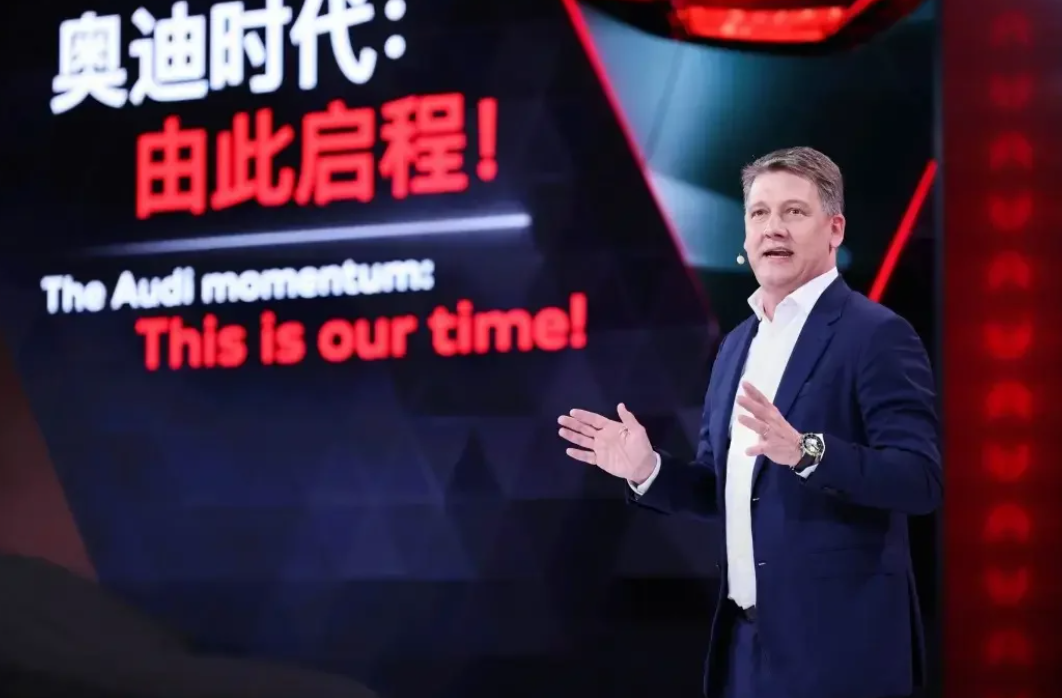
车展季·大咖说 | 奥迪管理董事会主席高德诺:转型中的奥迪将坚守燃油车、混动车、纯电车三大产品支柱
Mei Ri Jing Ji Xin Wen· 2025-04-30 10:46
Core Insights - Audi is entering a year of delivery in the Chinese market, showcasing five new production models at the Shanghai Auto Show, including the Audi A5L, A5L Sportback, Q5L, Q6 e-tron, and E5 Sportback, which are based on the latest platforms [1][4] - The company has a clear strategic blueprint to not only launch new products in the electric vehicle market but also to continue leading in the luxury fuel vehicle market [1][4] Strategic Focus - Audi's transformation strategy focuses on two key areas: software-defined vehicles and advanced driver assistance technologies [4][5] - The E5 Sportback, developed in collaboration with SAIC, is a significant milestone in Audi's global transformation, adhering to the strategy of "In China, for China" [4][5] Dual Brand Strategy - Audi's dual brand strategy aims to serve different consumer segments: the traditional Audi brand for those seeking classic luxury and technology balance, and the new AUDI brand targeting younger consumers interested in cutting-edge technology [5][7] - This strategy is a long-term plan based on the unique development speed and consumer segmentation in the Chinese market [5][7] Partnerships and Technology - Audi has partnered with Huawei to integrate advanced driving technologies into its vehicles, with the A5L Sportback being the first fuel vehicle to feature Huawei's technology [5][7] - The company is also collaborating with Momenta to develop advanced driver assistance systems, positioning itself as the first luxury brand to offer such systems in both fuel and electric vehicles [5][7] Market Insights - The average age of luxury car consumers in China is 35, indicating a younger demographic with higher expectations for technology and personalization [7] - Audi plans to maintain a product strategy that includes fuel vehicles, hybrid vehicles, and electric vehicles, recognizing the significant differences in consumer demand across global markets [7][8] Localization Strategy - Audi emphasizes local development in China, aligning its AUDI brand strategy with the "In China, for China" approach, and incorporating market-specific solutions into its platforms [7][8] - The company is committed to balancing its development across key markets, including the U.S. and Europe, while continuing its localization efforts in China [7][8]