
华山A2000

Search documents
CES变成中国科技秀:机器人跳舞、熊猫获奖
3 6 Ke· 2026-01-09 08:24
Group 1: Core Themes of CES 2026 - The main theme of CES 2026 is "human-centered" AI applications, marking a shift from traditional consumer electronics to AI-centric technological transformations [1] - Chinese companies are increasingly taking center stage at CES, with 942 exhibitors, accounting for approximately 22% of the total, maintaining their position as the second-largest exhibiting nation [1] - In specific sectors, Chinese firms dominate, with 55% of humanoid robot exhibitors and nearly 70% of AI glasses brands coming from China [1] Group 2: Robotics and AI Innovations - Chinese manufacturers are expected to continue leading in cost reduction and efficiency improvements in humanoid robots, showcasing their capabilities in unstructured environments [2] - Notable products include the Unitree H1 humanoid robot with advanced sensing capabilities and the latest generation of the "绝影" series robotic dogs, which excel in indoor navigation [4][11] - The "Care-bot" humanoid robot by Fourier demonstrates embodied intelligence in real-life interaction scenarios [7] Group 3: Consumer Electronics and Smart Devices - Over 80% of global smart glasses supply chain manufacturers are from China, with 16 Chinese companies showcasing their products at CES [15] - Innovations in smart home devices include the AI-driven "安安" companion robot designed for elderly and cognitively impaired individuals [16] - Companies like Alibaba and XREAL are launching advanced AI glasses, with features such as ultra-lightweight designs and integration with various AI services [19][20] Group 4: Automotive and AI Integration - The automotive industry is transitioning from "software-defined" to "AI-defined" vehicles, with companies like Geely and Great Wall showcasing new technologies [28] - Geely's G-ASD smart driving solution and Great Wall's focus on new energy technologies highlight the industry's shift towards AI integration [30][32] - New products like the AI-driven logistics solutions from New Stone and advanced lidar technology from Hesai demonstrate the growing importance of AI in transportation [34][35] Group 5: Home Appliances and AI - Hisense introduced new RGB-Mini LED display technology and AI-controlled smart refrigerators, showcasing the integration of AI in home appliances [41] - TCL's innovations in display technology, including the world's first printed OLED car screen, reflect advancements in consumer electronics [43][44] - Companies are increasingly focusing on AI capabilities in home security and smart home management systems [51][49] Group 6: Overall Impact of AI - CES 2026 emphasizes the profound impact of AI on the consumer electronics industry, with expectations for AI user numbers to grow significantly [59] - The event serves as a platform for global tech companies to set the foundation for future technological development and transformation [59] - The integration of AI into various sectors, including robotics, automotive, and consumer electronics, indicates a trend towards deeper AI adoption in everyday life [59]





港股异动 | 黑芝麻智能(02533)逆市涨超4% 华山A2000全场景通识辅助驾驶深度功能演示台架首次亮相CES
智通财经网· 2026-01-08 02:25
Core Viewpoint - Black Sesame Intelligence (02533) has seen a stock price increase of over 4% amidst market fluctuations, currently trading at HKD 22.12 with a transaction volume of HKD 90.28 million [1] Group 1: Company Developments - On January 6, CES 2026 commenced in Las Vegas, where the company showcased its latest achievements in three key areas: assisted driving, embodied intelligence, and consumer electronics [1] - The Huashan A2000, a comprehensive assisted driving demonstration platform, made its debut at the exhibition [1] - Since its market introduction, the Huashan series has received widespread recognition for its performance, with successful collaborations established with well-known automotive companies such as Dongfeng, Geely, Hongqi, and JAC [1] Group 2: Technology and Performance - The Huashan A2000 features a large-core architecture and algorithmic collaborative design, optimized at the system level, leveraging the company's latest Jiushao NPU [1] - The actual performance of the Huashan A2000 is comparable to the highest-performing intelligent driving chips globally [1] - The chip is expected to empower applications in intelligent assisted driving (VLM/VLA) and cockpit AI Box applications in the future [1]

【太平洋科技-每日观点&资讯】(2026-01-06)
远峰电子· 2026-01-05 11:49
Market Overview - Major indices showed positive performance with the STAR Market 50 Index up by 4.41%, ChiNext Index up by 2.85%, Shenzhen Component Index up by 2.24%, North Star 50 up by 1.80%, and Shanghai Composite Index up by 1.38% [1] Domestic News - Aibang announced that Thunderbird Innovation will showcase its first AR smart glasses "Thunderbird X3 Pro Project eSIM" at CES 2026, featuring dual full-color MicroLED display and integrated eSIM communication module with 4G support [2] - Taiwan announced a subsidy plan for its IC design industry to support the development of chips for drones, robots, and satellite communications, aiming to maintain its key position in the global semiconductor market [2] - Crystal Integration's fourth phase project has officially started construction in Hefei, aiming to build a 12-inch wafer foundry with a monthly capacity of 55,000 wafers, focusing on 40nm and 28nm processes for various applications [2] - Black Sesame Technologies announced that its high-performance all-scenario intelligent driving chip, Huashan A2000, has passed relevant reviews by the U.S. Department of Commerce and Defense, allowing global sales and applications [2] Overseas News - Samsung Electronics launched the world's first 130-inch Micro RGB TV R95H, utilizing advanced AI technologies to enhance color and contrast, improving realism and detail in images [3] - Elon Musk announced that Neuralink will begin large-scale production of brain-machine interfaces in 2026, moving towards nearly fully automated surgeries [3] - TrendForce predicts a 55-60% increase in general DRAM contract prices in Q1 2026 due to a significant shift in advanced processes and new capacities to meet AI server demand [3] - Panel manufacturers are expected to raise prices in January due to increased demand and supply constraints caused by natural disasters [3] AI Insights - Yuanxiang has open-sourced the XVERSE-Ent series, a bilingual large model designed for entertainment, utilizing unique MoE technology to reduce deployment barriers while retaining general capabilities [4] - The China Meteorological Administration released a new AI weather model "Fengyuan," capable of providing precise weather forecasts by directly analyzing observational data [4] - ByteDance launched a collaborative platform named AnyGen overseas, supporting various functions such as slide generation and document writing, with options for user customization [4] - Zhiyuan Robotics partnered with MiniMax to provide full-process AI technology support for text-to-speech, enabling personalized voice synthesis [4] Industry Tracking - The first transaction of an embodied intelligence dataset in Jiangsu Province was completed, containing approximately 25,000 data entries for various scenarios [5] - A team from the University of Science and Technology of China proposed a heterogeneous quantum network architecture, demonstrating its potential in advanced security applications [5] - Zhongke Technology achieved a breakthrough in mass production of a new antibacterial material, outperforming traditional silver-based materials at a significantly lower cost [5] - Four departments released a digital transformation implementation plan for the automotive industry, aiming for deep integration of digital technologies by 2027 [5]

港股收盘 | 恒指收涨0.03% 脑机接口概念爆发 快手-W劲升11%领跑蓝筹
Zhi Tong Cai Jing· 2026-01-05 09:00
Market Overview - The Hong Kong stock market experienced fluctuations, with the Hang Seng Index closing up 0.03% at 26,347.24 points and a total trading volume of HKD 283.46 billion [1] - The Hang Seng Tech Index rose by 0.09%, while the Hang Seng China Enterprises Index fell by 0.22% [1] Blue-Chip Stocks Performance - Kuaishou-W (01024) led blue-chip stocks, surging 11.09% to HKD 73.6, contributing 35.65 points to the Hang Seng Index [2] - Other notable performers included Innovent Biologics (01801) up 6.09% and Chow Tai Fook (01929) up 5.13% [2] - Conversely, China National Petroleum (00857) and Wharf Real Estate (01997) saw declines of 3.52% and 3.57%, respectively, negatively impacting the index [2] Sector Highlights Technology Sector - Major tech stocks mostly rose, with Kuaishou increasing by 11% and Alibaba by over 2% [3] - The brain-computer interface concept gained traction following Elon Musk's announcement of large-scale production plans for Neuralink in 2026 [4] Real Estate Sector - The real estate sector showed strong performance, with Greentown China (03900) rising 6.56% and Shimao Group (00813) up 5.76% [4] - An article in "Qiushi" magazine emphasized the importance of stabilizing market expectations in the real estate sector, suggesting proactive measures to shorten adjustment periods [4] Pharmaceutical Sector - Pharmaceutical stocks performed robustly, with Zhaoyan New Drug (06127) up 13.73% and Yimeng Biotech (09606) up 11.81% [5] - The National Medical Products Administration reported a record number of approved innovative drugs in 2025, significantly exceeding previous years [5] Insurance Sector - Insurance stocks collectively rose, with New China Life (01336) increasing by 5.34% and China Life (02628) by 3.4% [6] - The insurance industry reported a 7.6% year-on-year growth in premium income for the first 11 months of 2025 [6] Automotive Sector - Automotive stocks faced declines, with Great Wall Motors (02333) down 6.15% and XPeng Motors (09868) down 4.6% [6] - The 2026 vehicle trade-in subsidy policy will continue, with adjustments to subsidy amounts based on vehicle pricing [7] Oil Sector - Oil stocks were generally weak, with China National Petroleum (00857) down 3.52% [7] - The geopolitical situation in Venezuela may impact oil prices, with potential increases in production posing risks for future pricing [7] Notable Stock Movements - Woan Robotics (06600) reached a new high, closing up 19.57% at HKD 110, with plans to launch a humanoid home robot in January 2026 [8] - Black Sesame Technologies (02533) rose 11.21% after announcing its high-performance smart driving chip received approval for global sales [9]


CES将开幕,黄仁勋对谈联想杨元庆:未来合作或再翻5倍
Guan Cha Zhe Wang· 2026-01-05 08:48
Core Insights - The annual Consumer Electronics Show (CES) in Las Vegas will commence on January 6, showcasing advancements in AI hardware and technology [1] - NVIDIA CEO Jensen Huang is expected to address the ongoing demand for AI chips and the future of AI technology during his keynote speech [1] - Huang will emphasize "Physical AI," highlighting its applications beyond robotics, impacting various industries such as healthcare, automotive, and manufacturing [1] Group 1: NVIDIA and AI Trends - Huang will discuss the collaboration between NVIDIA and Siemens to apply AI in industrial scenarios [1] - The demand for NVIDIA's Blackwell chips remains high, but supply issues persist [2] - Huang and Lenovo's CEO Yang Yuanqing predict that enterprise-level AI will become a key battleground, with hybrid AI as a critical breakthrough [2] Group 2: Industry Participation and Innovations - Major chip executives from Intel, Qualcomm, and AMD will also participate in Lenovo's event, with AMD expected to announce significant updates to its Ryzen series [3] - Chinese companies will showcase advanced products, including Alibaba's "Quark AI Glasses" and Kuaishou's "Kling AI" model [3] - Various humanoid robots and AI-driven products from Chinese companies will be presented, demonstrating the growth of embodied intelligence in the industry [3]


从智能汽车到具身智能:黑芝麻智能的第二增长曲线正在显现
Ge Long Hui· 2025-11-21 09:00
Core Insights - The SesameX platform represents a significant advancement in the robotics industry, marking the transition from demo to commercial deployment, akin to the evolution of the smart automotive sector in 2018, but with a faster growth trajectory [2][9][30] - SesameX is the first comprehensive computing platform designed for the commercial deployment of robots, integrating perception, understanding, reasoning, motion control, and safety into a unified architecture [1][10][12] Industry Transition - The robotics industry is at a pivotal point, with the potential for rapid growth surpassing that of smart vehicles, as indicated by the industry's current position on the S-curve [2][8] - The global service robotics market is projected to exceed $40 billion by 2025, with a compound annual growth rate of over 20%, particularly in China, which is becoming the largest application market for robots [8][30] Technological Advancements - SesameX is not merely a chip or an operating system; it is a comprehensive system that enables robots to grow and evolve, characterized by five core capabilities: expertise, excellence, expression, experience, and expedition [12][23] - The platform consists of five layers, including a computing platform, network communication, operating system, middleware, and atomic application layers, each designed to enhance the capabilities and safety of robots [13][16][17][18][19][20] Safety and Reliability - The X-Safety system is a groundbreaking feature of SesameX, embedding safety into every layer of the platform, ensuring that robots operate with a proactive safety mindset [21][30] - The platform adheres to ASIL-D automotive safety standards, indicating a high level of reliability and safety in robotic operations [21][30] Ecosystem and Commercialization - SesameX has already established partnerships with various robotics companies, indicating its readiness for commercial deployment and integration into real-world applications [24][25][29] - Collaborations with industry leaders, such as Junsheng Electronics and Huazhong Electric Power Technology, highlight the platform's engineering maturity and commercial viability [25][29] Future Outlook - The emergence of SesameX is expected to catalyze a shift from fragmented technological innovations to a collaborative platform-based competition in the robotics industry, accelerating overall industry growth [31][32] - The establishment of a foundational platform like SesameX is seen as a critical step in the evolution of the robotics sector, similar to the pivotal platforms in previous technological eras [33][34]
国产人形机器人,用的哪家处理器?
3 6 Ke· 2025-09-19 10:47
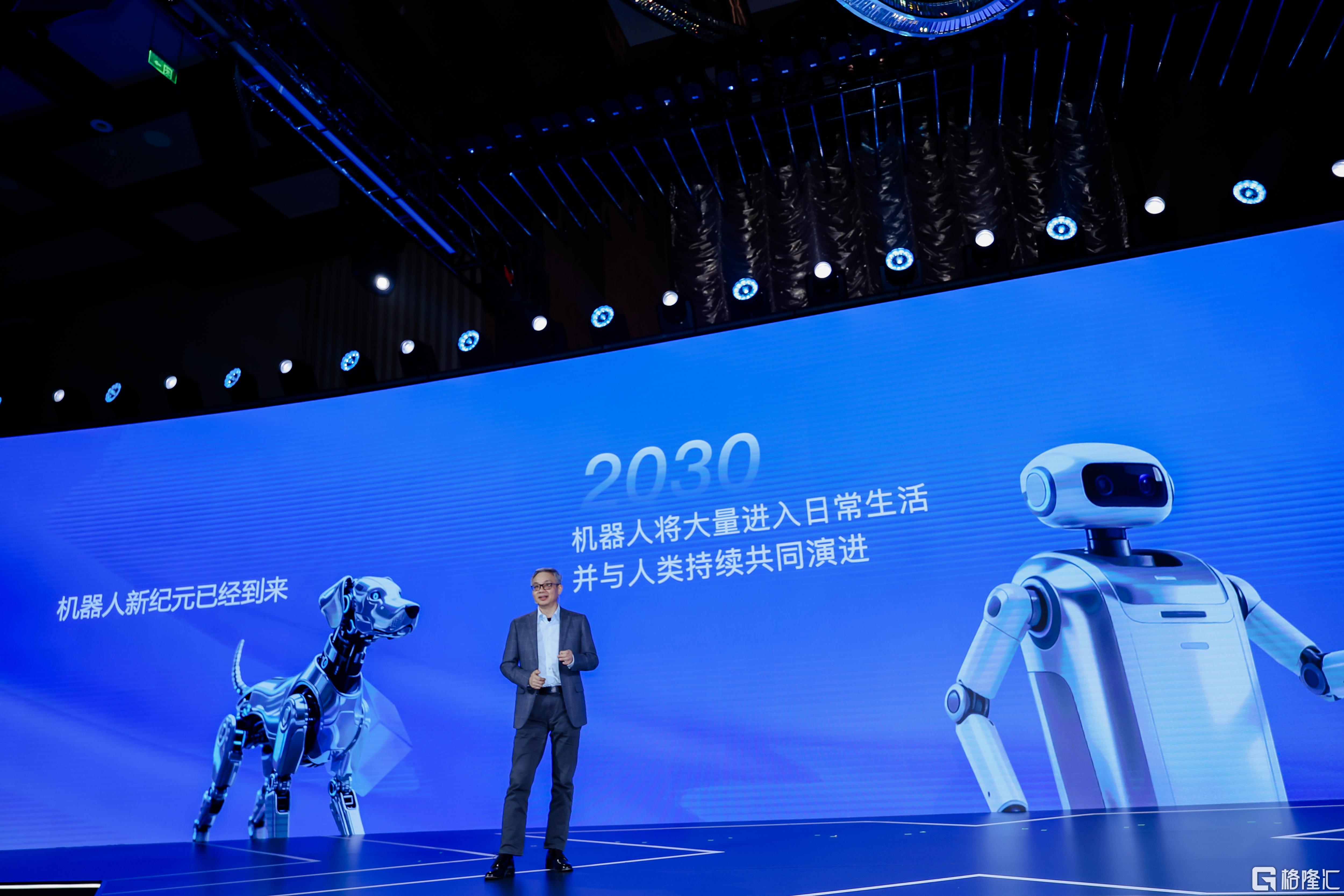
Group 1 - The humanoid robot market is on the verge of explosive growth, with a projected market size of approximately 9 billion in 2025, expected to soar to 150 billion by 2029, reflecting a compound annual growth rate (CAGR) exceeding 75% [2] - The core drivers of this market growth will be industrial handling and medical applications, highlighting the importance of advanced processing capabilities in humanoid robots [2][5] - The performance of processors is critical as it directly influences the intelligence level and application potential of humanoid robots, making them the foundational element of the robotics industry [1][5] Group 2 - The current processor supply for humanoid robots is dominated by NVIDIA and Intel, while domestic chip manufacturers are still in the catch-up phase [6] - Tesla is noted for its capability to develop its own chips, such as the Dojo chip for AI model training and the FSD chip for real-time operations in robots, while other manufacturers primarily rely on Intel and NVIDIA chips [6][8] - The Jetson Orin series from NVIDIA is widely used, providing up to 275 TOPS of computing power, significantly enhancing the capabilities of humanoid robots [9][10] Group 3 - Domestic manufacturers are accelerating the development of their own humanoid robot chips to compete with foreign dominance, focusing on integrating general intelligence with practical application needs [10][11] - The RK3588 and RK3588S chips from Rockchip have been adopted by several humanoid robot manufacturers, showcasing their potential in the robotics field [11] - The RDK S100 development kit from Horizon Robotics integrates both "brain" and "cerebellum" functions into a single SoC, simplifying hardware architecture and reducing development costs [12][14] Group 4 - The trend towards "brain-cerebellum fusion" architecture aims to enhance the synchronization and efficiency of humanoid robots by integrating cognitive decision-making and motion control into a unified system [15][17] - Current challenges in the humanoid robot market include insufficient data accumulation, hardware architecture optimization, high costs, and safety concerns, which need to be addressed for large-scale commercialization [18][19][20]

智驾算力之战:一位芯片“老将”的DeepSeek式攻坚
财富FORTUNE· 2025-05-14 12:56
Core Viewpoint - The article highlights the journey and vision of the company Black Sesame Intelligence, focusing on its development of advanced intelligent driving chips and the broader implications for the automotive and AI industries. The founder, Dan Jizhang, emphasizes the importance of safety in driving and the potential of intelligent driving technology to significantly reduce accident rates. Group 1: Company Overview - Black Sesame Intelligence was founded in 2016 and launched its first mass-produced intelligent driving chip, the "Hua Shan A1000," in 2020, which has been adopted by several major automotive brands [1][2]. - The company has since developed the "Wudang" series of chips, such as the C1236 and C1296, which integrate cockpit management and intelligent driving tasks, thereby reducing costs for automakers [1][2]. Group 2: Technological Advancements - The latest chip, the Hua Shan A2000, utilizes a 7nm process and offers performance comparable to 4nm flagship chips, supporting L3-L4 level autonomous driving [2]. - The company aims to break traditional chip application boundaries by expanding into various forms of robotics, promoting a "one chip, multiple functions" approach [2]. Group 3: Market Trends and Opportunities - The global intelligent automotive market is projected to exceed $500 billion by 2030, with an annual growth rate of over 20%, and China is expected to reach a 40% market share in smart vehicles by 2025 [6]. - The company recognizes the challenges of high R&D costs and the need for substantial investment in software and tools for mass production [6]. Group 4: Strategic Partnerships and Ecosystem - Black Sesame Intelligence positions itself as a full-process technology partner, providing not only chips but also algorithms and development support, which enhances collaboration with automotive manufacturers [7]. - The company emphasizes the importance of an open ecosystem to achieve scale, as the development cost of automotive-grade chips can exceed $100 million [8]. Group 5: Future Outlook - Black Sesame Intelligence plans to go public in Hong Kong, becoming the first listed company focused on automotive-grade chips, which reflects its strategic foresight [9]. - The company is also exploring the integration of vehicle and road technologies, aiming to reduce costs and improve efficiency in traffic management systems [12]. Group 6: Industry Challenges - The intelligent driving chip industry is expected to face a brutal elimination process, with only a few companies likely to survive due to intense competition [12]. - The company is aware of the geopolitical challenges affecting the chip industry but sees opportunities in the growing demand for AI-driven solutions and embodied intelligence [11].

国产汽车芯片暗战上海车展
Di Yi Cai Jing· 2025-04-30 12:56
Core Insights - The local supply chain is reshaping the global automotive industry landscape through technological breakthroughs, rapid response, and cost advantages, with future competition in the smart vehicle sector focusing on ecosystem collaboration and supply chain integration efficiency [1][2] Industry Developments - The 2025 Shanghai Auto Show featured a dedicated "China Chip Exhibition Area," showcasing over 1,200 domestic automotive chips from more than 150 member units of the China Automotive Chip Industry Innovation Strategic Alliance, marking the largest participation in history [1] - Intel debuted its second-generation SDV (AI-enhanced Software Defined) SoC at the auto show, collaborating with Black Sesame Intelligence to develop an integrated cockpit and driving assistance platform, which is set to support scenarios from L2+ to L4 and aims for a reference design release in Q2 2025 [2] Competitive Landscape - The global smart driving assistance chip market is experiencing a shift as domestic chip companies like Horizon Robotics and Black Sesame Intelligence gain traction, challenging the dominance of Nvidia and Tesla [3][4] - A report from Founder Securities indicates that in 2024, the global installation volume of smart driving domain control chips is projected to reach 5.28 million units, with Nvidia's Drive Orin-X series holding nearly 40% market share and Tesla's FSD at 25.1% [3] Strategic Collaborations - Black Sesame Intelligence has initiated mass production of its first domestic single-chip central computing platform based on the Wudang C1296 chip, in collaboration with Dongfeng Motor and Junlian Zhixing [3] - Local chip companies are forming partnerships with multiple OEMs, which is crucial for driving large-scale production and ensuring supply chain security amid geopolitical factors [4] Market Positioning - Domestic chip companies are focusing on entry-level smart driving assistance systems, primarily used in vehicles priced below 200,000 yuan, while high-end products remain dominated by Nvidia [4] - The competition in high-end smart driving chips is expected to intensify in the next two to four years as urban NOA technology matures and becomes widely adopted [5]