世界模型

Search documents
从 LLM 到 World Model:为什么我们需要能理解并操作世界的空间智能?
海外独角兽· 2025-12-03 12:05
Core Insights - The article emphasizes the necessity of spatial intelligence and world models as the next key direction in AI development, moving beyond the limitations of language models (LLMs) [2][3] - It highlights the importance of understanding and interacting with the physical world through spatial reasoning, which is essential for achieving artificial general intelligence (AGI) [4][8] Group 1: Importance of Spatial Intelligence - Spatial intelligence is defined as the ability to reason, understand, move, and interact within three-dimensional space, complementing linguistic intelligence [4][5] - The evolution of human intelligence shows that visual and spatial capabilities have been optimized over 540 million years, while language has a much shorter history of about 500,000 years [7][8] - Ignoring the evolutionary significance of visual and spatial processing in favor of language-based models is deemed unreasonable for developing AGI [8][10] Group 2: World Labs and Marble - World Labs, founded by Fei-Fei Li and Justin Johnson in 2024, aims to create large world models that can perceive, generate, and interact with three-dimensional environments [15][16] - Marble is introduced as the first high-fidelity 3D world generation model, designed to push the development of spatial intelligence and provide practical value in industries like gaming and visual effects [17][20] - Marble allows for multimodal input and interactive editing, enabling users to generate and modify 3D scenes based on text or images, thus enhancing user control and experience [20][21] Group 3: Technical Innovations - The technology stack for Marble focuses on achieving a balance between high fidelity, real-time rendering efficiency, and physical realism [23][24] - Gaussian Splats are utilized as the fundamental unit for representing 3D worlds, allowing for rapid and high-quality scene reconstruction without traditional mesh models [24][25] - The challenge of ensuring physical realism in generated 3D scenes is addressed through the integration of traditional physics engines and the potential for assigning physical properties to Gaussian Splats [27][28] Group 4: Applications and Future Potential - Marble is positioned as a horizontal technology with applications across various industries, including creative fields, interior design, and robotics [31][34] - In robotics, Marble serves as a powerful simulator, generating synthetic data to train robots in complex environments, thus addressing the data scarcity issue [34][35] - The potential for Marble to become a foundational infrastructure for embodied intelligence is highlighted, suggesting its significance in the future of robotics [35]


赛道分化加剧,2026年人工智能最强风口来袭
3 6 Ke· 2025-12-03 08:57
Core Insights - The article emphasizes that 2026 will be a pivotal year for artificial intelligence (AI), marking a shift from "AI+" to "AI native," where AI fundamentally redefines system architectures and operational logic [1][3]. Group 1: AI Native Revolution - AI native signifies a complete redesign of systems with AI as the core logic and capability, leading to a comprehensive transformation across technology architecture, business processes, organizational roles, and value creation methods [3][4]. - The transition from "AI+" to "AI native" is not merely an enhancement but a fundamental restructuring that makes intelligence an inherent attribute of applications rather than an added feature [3][4]. - Key characteristics of a true AI native system include natural language interaction, autonomous learning and adaptation, and the ability to complete tasks independently based on large language models and knowledge bases [4][5]. Group 2: Development Trends and Tools - The rise of low-code/no-code platforms allows individuals without programming skills to create custom AI tools, fostering a surge in "one-person company" models [8]. - Major companies like Microsoft and ByteDance are embedding AI agents into office suites, creating end-to-end workflows that enhance productivity [8]. - The development of AI native applications requires a productized approach to various tools, such as platforms for deploying large models and automated fine-tuning tools, which are essential for widespread adoption [8]. Group 3: Physical AI Integration - By 2026, AI will extend beyond screens into physical environments like cities, factories, hospitals, and homes, marking the era of Physical AI [10][11]. - Physical AI is characterized by its ability to connect digital and physical worlds, enabling actions based on real-time data and physical interactions [10][11]. - The evolution of AI has progressed through three stages: perceptual AI, generative AI, and now Physical AI, which can reason, plan, and act like humans [10][11]. Group 4: World Models and Their Impact - World models are becoming crucial for AI's integration into the real world, allowing AI to shift from data-driven to rule-driven approaches, enabling predictive decision-making [19][21]. - These models enhance generalization capabilities, allowing AI to apply learned knowledge to new, unseen scenarios, which is vital for applications like autonomous driving [22][23]. - The development of world models involves understanding physical laws and simulating environments, which can significantly improve the performance of AI systems in complex real-world situations [24][25]. Group 5: Multimodal AI Capabilities - The emergence of multimodal large models (MLLMs) will redefine industries by enabling AI to process and integrate various data types, such as text, images, and audio [15][17]. - MLLMs will enhance cross-modal understanding and generation, allowing for more sophisticated content creation and problem-solving capabilities [15][16]. - By 2026, MLLMs are expected to drive significant advancements across various sectors, including cultural heritage preservation, security, and intelligent driving [17][18].
潮声丨人工智能有时比人还“蠢”,AI版图缺的这块拼图是什么
Sou Hu Cai Jing· 2025-12-03 00:35
Core Insights - The current era of artificial intelligence, dominated by large language models and image classifiers, has reached its limits, and AI with spatial intelligence is seen as the next frontier to break through this bottleneck [2][11][24] Group 1: AI Limitations - AI is categorized into two types: speaking intelligence and doing intelligence, with the former being strong in text output but often failing in practical tasks [6][11] - Examples of AI failures include generating unrealistic images and videos, highlighting the lack of common sense and physical understanding in current models [7][10] Group 2: Spatial Intelligence - Spatial intelligence, a concept originating from educational psychology, involves the perception, understanding, and manipulation of spatial information, which is crucial for human development and creativity [12][15] - Current AI systems lack deep, common-sense understanding of the physical world, which directly affects the quality of their outputs [11][17] Group 3: World Models - The concept of world models, inspired by human cognitive abilities, is emerging as a key area of focus for AI development, aiming to enable machines to understand and interact with the physical world [19][23] - Recent advancements in world models include new products and technologies from companies like NVIDIA and Google DeepMind, indicating a growing interest and investment in this area [22][23] Group 4: Future Challenges - Building AI that can operate like humans presents significant challenges, including the complexity and uncertainty of the real world, limitations in existing data, and the inherent constraints of physical laws [23][24]

华为重投,头部具身智能机器人创企发布并开源“最强”具身世界模型!
Robot猎场备忘录· 2025-12-03 00:03
温馨提示 : 点击下方图片,查看运营团队最新(12月)原创报告(共260页) 说明: 欢迎约稿、刊例合作、行业交流 , 行业交流记得先加入 "机器人头条"知识星球 ,后添加( 微信号:lietou100w )微 信; 若有侵权、改稿请联系编辑运营(微信:li_sir_2020); 正文: 华为重投, 国内领先通用具身智能企业[极佳视界]发布并开源行业领先的具身世界模型GigaWorld-0! 2025年12月2日, Physical AI(物理AI)领域头部创企 [极佳视界 GigaAl ]发布并开源行业领先的具身世界模型 GigaWorld-0,全球范围内首次实 现90%世界 模型生成数据占比, 具身VLA大模型性能飙升300% ,并同步开源 了全阶段训练和推理代码! GigaWorld-0是极佳视界专为VLA训练打造的世界模型框架,也 是业内首个采用FP8精度端到端训练的世界模型 ,标志着世界模型训练迈入高能效新阶段。 GigaWorld-0由两大协同组件构成: 互联网数据质量 参差不齐、 仿真数据 场景泛化难, 对于 人形机器人来说,通向 "具身智能"的最大难关,并不是 算法本身,而是如何获得规模化、真 ...

ChatGPT三岁生日,谷歌却为它准备了“葬礼”
虎嗅APP· 2025-12-02 23:55
Core Insights - The article reflects on the transformative impact of ChatGPT and generative AI over the past three years, highlighting the shift from initial excitement to widespread anxiety among various stakeholders [10][11]. - The competitive landscape has evolved significantly, with Google’s Gemini 3 emerging as a formidable challenger to OpenAI, marking a pivotal moment in the AI industry [17][34]. Group 1: Evolution of AI Technology - OpenAI has maintained a leading position in AI technology with advancements through GPT-3.5, GPT-4o, and GPT-5, which have set benchmarks in speed, reasoning, and accuracy [22][23]. - The initial phase of AI development was characterized by human-like interactions, with a focus on dialogue and prompt engineering, which has since been disrupted by rapid advancements in AI capabilities [24][25][28]. Group 2: Market Dynamics and Competition - Google has successfully repositioned itself in the AI race with the launch of Gemini, which has significantly increased its user engagement, reaching 650 million monthly active users [37]. - Despite OpenAI's dominance with over 800 million weekly users, the time users spend interacting with Gemini has surpassed that of ChatGPT, indicating a shift in user preference [39]. Group 3: Financial Strategies and Risks - OpenAI is leveraging a debt-supported growth strategy, with partners like Oracle and SoftBank collectively bearing nearly $100 billion in debt to support OpenAI's infrastructure needs [53][54]. - OpenAI's financial strategy involves utilizing external funding to minimize its own financial risk, as it has not significantly tapped into its credit lines [55][56]. Group 4: Future Outlook - The competitive pressure is mounting on OpenAI, with expectations for rapid monetization and the need to maintain operational focus amidst increasing scrutiny [45][46]. - Experts suggest that OpenAI's extensive application matrix could provide new revenue streams, potentially stabilizing its financial position despite current challenges [65].



第七届全球智能驾驶大会在苏州举办
Zhong Zheng Wang· 2025-12-02 12:00
Group 1 - The seventh Global Intelligent Driving Conference was held in Suzhou, focusing on building a new global development pattern for intelligent driving with the theme "Smart Connection World, Driving the Future" [1] - The conference discussed two main themes: "Exploring the Path for Automotive Intelligent Products to Go Global" and "Building an Ecosystem for Automotive Digitalization and Service Globalization" [1] - The event featured discussions from industry leaders and representatives from various organizations, including China Electromechanical Products Import and Export Chamber, China Automotive Research, and several automotive companies [1] Group 2 - Suzhou has established itself as a leading "Smart Driving City," with over 800 related enterprises and an intelligent vehicle networking industry scale of 110 billion yuan [2] - The Jiangsu Provincial Intelligent Driving Technology Key Laboratory was established under the guidance of the Suzhou government, led by Suzhou Zhizhi Technology Group in collaboration with Tsinghua University and Momenta [2] - Suzhou has developed an industrial chain ecosystem centered on intelligent vehicles, covering over 30 subfields including autonomous driving algorithms, lidar, high-precision maps, and advanced driver assistance systems [2]

Runway重夺全球第一!1247分碾压谷歌Veo3,没有千亿算力也能干翻科技巨头
Xin Lang Cai Jing· 2025-12-02 11:45
Core Insights - Runway's Gen-4.5 model achieved the highest ELO score of 1,247 in the Artificial Analysis leaderboard, surpassing all other AI video models globally [1][5][28] Company Overview - Runway is the first company to successfully commercialize text-to-video technology as a SaaS product, launching Gen-1 and Gen-2 in early 2023, while competitors like Google's ImagenVideo and Meta's Make-A-Video were still in experimental stages [7][30] - The company has established itself as a leader in the AI video generation space, creating a distinct commercial pathway for AI video generation ahead of OpenAI's Sora, which was released in early 2024 [8][31] Technology and Innovation - Gen-4.5 utilizes advanced technology to set new benchmarks in video generation, particularly in motion quality, adherence to prompts, and visual fidelity [3][26] - The model demonstrates significant improvements in pre-training data efficiency and post-training techniques, positioning itself as a foundational model for world modeling [5][28] - Gen-4.5 is capable of producing highly realistic movements and interactions, showcasing unprecedented physical accuracy and visual precision [31][32] Market Position and Competitive Edge - Runway's focus on efficiency and a dedicated team passionate about video generation has allowed it to compete effectively against larger companies with more resources [37][40] - The company emphasizes the importance of "taste" in model training, which refers to the intuitive understanding of how to train models effectively [40] Future Applications - The potential applications of video models extend beyond entertainment, including non-linear interactive experiences, embodied AI for robotics, and personalized learning [46] - Runway aims to create a new medium capable of simulating a wide range of scenarios, moving beyond just video editing tools [46]

世界模型,是否正在逼近自己的「ChatGPT时刻」?
Xin Lang Cai Jing· 2025-12-02 11:22
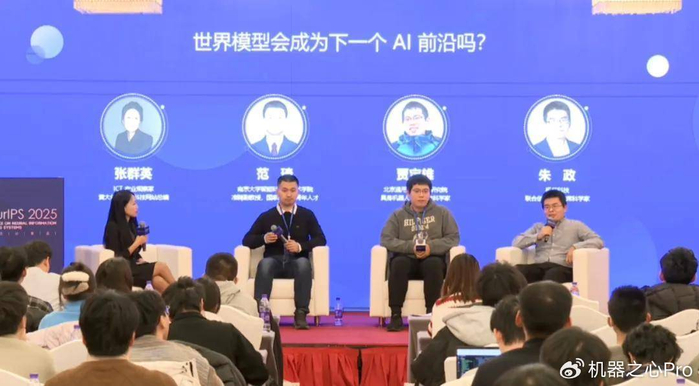
Core Insights - The discussion highlights the emerging focus on world models in AI, with significant contributions from leading scholars like Li Feifei and institutions such as the Chinese Academy of Sciences and Nanjing University [1][3] Group 1: Definition and Applications of World Models - World models are defined as predictive models that forecast the next state given the current state and action sequences, with applications in autonomous driving and embodied intelligence [3] - The ultimate goal of world models is to create a 1:1 representation of the world, although practical modeling will vary based on specific tasks [3] Group 2: Data and Model Training Challenges - A key dilemma in developing world models is whether to prioritize model creation or data collection, with examples from autonomous driving highlighting the limitations of available data [5] - Experts propose a mixed approach of generating synthetic data alongside real data to enhance model training [5] Group 3: Technical Implementation Paths - There are differing opinions on the technical paths for world model development, with some advocating for the integration of physical information while others emphasize the importance of creative generation [6] - The discussion includes the potential of combining diffusion and autoregressive architectures to improve model performance [7] Group 4: Future Outlook and Commercialization - Experts speculate that the "ChatGPT moment" for world models may occur in approximately three years, contingent on the availability of high-quality long video data [8] - The commercialization of world models faces challenges in both B2B and B2C sectors, particularly in defining the value of generated video data [8][9]
特斯拉再添一把火,「世界模型」如何重塑自动驾驶?
Tai Mei Ti A P P· 2025-12-02 09:05
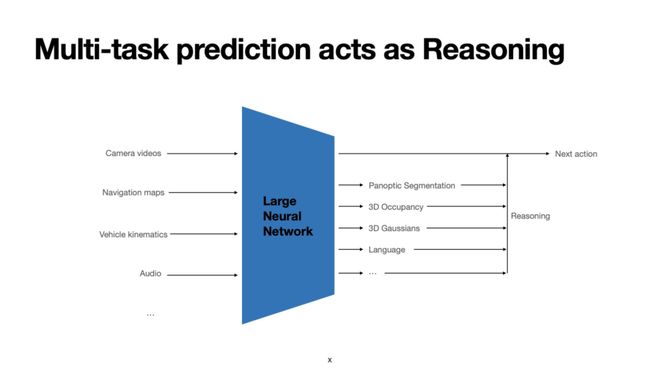
Core Insights - The article discusses the advancements in Tesla's Full Self-Driving (FSD) technology, particularly focusing on the integration of end-to-end models and world models, which are crucial for the evolution of autonomous driving technology [1][3][17]. Group 1: Tesla's FSD Developments - Tesla's AI VP Ashok Elluswamy shared significant updates on FSD, highlighting the use of a multi-modal input system that combines video, navigation maps, and audio signals into a single end-to-end neural network [1][3]. - The end-to-end architecture allows for direct output of control signals, enhancing the system's performance and reducing latency [3][4]. - The challenges faced in building an effective end-to-end system include the "curse of dimensionality," where the input data volume can explode, making real-time processing difficult [4][5]. Group 2: World Model Concept - The world model is described as a generative spatiotemporal neural system that compresses multi-modal inputs into latent states, enabling future environment predictions [18][20]. - It allows for action-conditioned future predictions, providing insights into how different actions will affect the environment, thus enhancing decision-making capabilities [21][22]. - The integration of world models with planning and control systems enables a closed-loop feedback mechanism, allowing for real-time evaluation of actions and risk assessment [22][24]. Group 3: Comparison of Approaches - The article contrasts world models with Visual-Language-Action (VLA) models, noting that world models focus on physical simulation and long-term evaluations, while VLA models leverage language processing for decision-making [46][49]. - World models are seen as more aligned with the physical nature of autonomous driving, while VLA models offer advantages in handling rare scenarios through language-based reasoning [49][50]. - The ongoing debate between these two approaches suggests that the future of autonomous driving may involve a combination of both methodologies [49]. Group 4: Developments in China - Chinese companies like NIO and Huawei are actively developing their own world models, with NIO's NWM (Nio World Model) being a notable example that integrates multi-modal information for future scene predictions [28][30]. - Huawei's WEWA architecture emphasizes direct perception-to-action pathways, avoiding language abstraction to enhance real-time decision-making capabilities [36][40]. - SenseTime's "KAIWU" world model focuses on generating high-fidelity simulation data, showcasing the growing importance of world models in the Chinese autonomous driving landscape [41][45].

世界模型和具身大脑最新突破:90%生成数据,VLA性能暴涨300%|开源
量子位· 2025-12-02 04:59
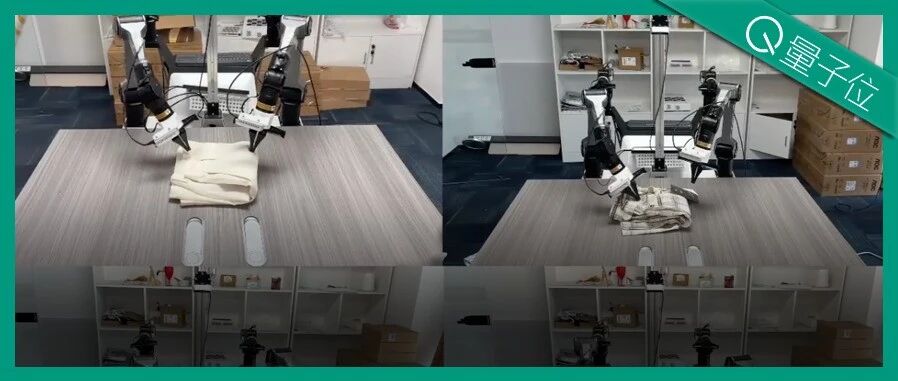
Core Insights - The article highlights a significant breakthrough in the performance of the VLA model, achieving a 300% increase in efficiency, primarily due to the use of world model-generated training data, which now constitutes 90% of the dataset [1][3][4]. Group 1: Model Development and Performance - The GigaWorld-0 model, developed by the domestic company 极佳视界, has successfully integrated world model-generated data, leading to substantial improvements in generalization across new textures, perspectives, and object placements [3][4]. - The GigaWorld-0 model consists of two main components: GigaWorld-0-Video for generating rich, realistic interaction data, and GigaWorld-0-3D for ensuring geometric and physical accuracy in generated data [5][6]. Group 2: Technical Innovations - GigaWorld-0-Video employs a sparse attention mechanism and a mixture-of-experts (MoE) architecture to enhance computational efficiency and content control, significantly reducing memory usage and inference latency [7][12][13]. - GigaWorld-0-3D combines generative and reconstruction techniques to improve scene modeling under sparse observations, utilizing a differentiable physics engine for high-fidelity physical simulations [14][18]. Group 3: Training Framework and Efficiency - The GigaTrain framework, which supports advanced training techniques, has been open-sourced to facilitate community development and standardization in embodied intelligence data generation [20][29]. - GigaWorld-0 is the first world model to adopt FP8 precision for end-to-end training, achieving a balance between visual fidelity and computational efficiency [19]. Group 4: Competitive Performance - In comparative evaluations against leading world models, GigaWorld-0, with only 2 billion parameters, outperformed larger models in overall quality scores, demonstrating its effectiveness in embodied intelligence tasks [22][23][24]. - The model's ability to generate high-quality video and 3D scenes positions it as a cost-effective solution in the market [25]. Group 5: Company Background and Funding - 极佳视界, founded in 2023, focuses on world models and embodied intelligence, aiming to bridge the gap between physical and virtual environments [27][28]. - The company recently completed a significant funding round, raising over 100 million yuan, with investments from Huawei and other notable funds, indicating strong market confidence [29].