
技术创新

Search documents
光伏反内卷持续推进、海外缺电逻辑强化,唯一跟踪光伏30指数的光伏龙头ETF广发(560980)盘中涨超3%,近11日连续上涨累计涨超15%
Xin Lang Cai Jing· 2026-01-19 03:36
Group 1 - The core achievement of Ideal's semiconductor equipment division is the successful establishment and operation of the "Ultra-thin Flexible Heterojunction (HJT) Battery AI Demonstration Line" designed for space environments, producing the first batch of P-type ultra-thin flexible HJT batteries that meet performance targets [1] - The rapid growth of photovoltaic installations has been hindered by lagging grid infrastructure, but significant improvements in grid acceptance capacity are expected to stimulate downstream photovoltaic project investments [1] - The State Grid has announced an average annual addition of approximately 200 million kilowatts of wind and solar energy installations during the 14th Five-Year Plan period, indicating a booming period for wind and solar installations in the next five years [1] Group 2 - The Ministry of Finance and the State Taxation Administration have announced differentiated adjustments to the export tax rebate policy for photovoltaic and battery products, marking a shift from subsidy-driven to market-driven growth in the photovoltaic manufacturing industry [1] - The continuation of anti-dumping duties on polysilicon from the US and South Korea aims to strengthen China's core material autonomy in the photovoltaic industry, creating a stable development environment for domestic polysilicon producers [2] - The ongoing "anti-involution" trend in the photovoltaic industry is expected to improve profitability, with regulatory measures likely to control upstream silicon prices and shift profits towards downstream battery and module segments [3] Group 3 - The market for photovoltaic components is anticipated to see profitability improvements by 2026, driven by regulatory actions and technological innovations that enhance cost efficiency [2][3] - The performance of the photovoltaic sector is reflected in the strong rise of the CSI Photovoltaic Leaders 30 Index, which increased by 2.34%, indicating positive market sentiment and investor interest in leading companies within the industry [3] - The Guangfa Photovoltaic Leaders ETF, which tracks the CSI Photovoltaic Leaders 30 Index, includes 30 large and profitable companies in the photovoltaic sector, showcasing the core assets of China's photovoltaic industry [3]
技术硬核+全球布局 科达制造(600499)子公司力泰陶机交出亮眼答卷
Cai Fu Zai Xian· 2026-01-19 03:01
Core Insights - Keda Manufacturing's subsidiary, Litai Ceramics, has achieved significant success in 2025, showcasing its leadership in the building materials machinery sector through a focus on "diversification of presses and series of ceramic machines" and leveraging technological innovation as a core strategy [1][2] - The company has received multiple major orders both domestically and internationally, with its core products being included in national promotion directories, indicating strong market recognition and contributing to the parent company's performance growth [1] Technological Innovation - Technological innovation is identified as a key factor for Keda Manufacturing to navigate industry cycles and build core competitive advantages [1] - In 2025, Litai Ceramics has focused on the integration of "digital intelligence," aiming for high-end, intelligent, and green transformation, ensuring that its equipment meets 5A standards for efficient production of high-end ceramic products [1] - The company's high-efficiency digital double-layer roller kiln and high-efficiency large-capacity foamed ceramic tunnel kiln have been recognized by national authorities, further solidifying its technological leadership [1] Global Expansion - Keda Manufacturing's global expansion has accelerated, opening new growth opportunities in 2025, with significant project breakthroughs in Asia, Africa, Europe, and South America [2] - The company has deepened its presence in the Indian market with multiple projects, including LUMBINI and KEROVIT, and has successfully launched high-end production lines [2] - In Vietnam, the company secured its tenth project with TAKAO Group and signed a high-end glazed tile project with FATA, setting new local production capacity and kiln length records [2] - Projects in Egypt, Morocco, Kenya, and Colombia are also underway, establishing a comprehensive market network across major ceramic production bases globally [2] Future Outlook - Looking ahead to 2026, Keda Manufacturing and its subsidiaries are expected to continue leveraging their technological expertise and global layout, focusing on high-end, intelligent, and green transformation while expanding their presence in the advanced ceramics sector [2]

技术硬核+全球布局 科达制造子公司力泰陶机交出亮眼答卷
Quan Jing Wang· 2026-01-19 01:57
Core Insights - Keda Manufacturing's subsidiary, Litai Ceramics, has achieved significant success in 2025, showcasing its leadership in the building materials machinery sector through a focus on "diversification of presses and series of ceramic machines" and leveraging technological innovation as a core strategy [1][2] - The company has received multiple major orders both domestically and internationally, with its core products being included in national promotion directories, indicating strong market recognition and contributing to the parent company's performance growth [1] Technological Innovation - Technological innovation is identified as a key factor for Keda Manufacturing to navigate industry cycles and build core competitive advantages [1] - In 2025, Litai Ceramics has focused on integrating "digital intelligence" trends, aiming for high-end, intelligent, and green transformation, ensuring that its equipment meets 5A standards for efficient production of high-end ceramic products [1] - The company's high-efficiency digital double-layer roller kiln and high-efficiency large-capacity foamed ceramic tunnel kiln have been recognized by national authorities, further solidifying its technological leadership [1] Global Expansion - Keda Manufacturing's global layout has accelerated, creating new growth opportunities, with Litai Ceramics achieving significant project breakthroughs in major markets across Asia, Africa, Europe, and South America in 2025 [2] - The company has deepened its presence in the Indian market with multiple projects, including LUMBINI and KEROVIT, and has successfully launched high-end production lines [2] - In Vietnam, the company secured its tenth project with TAKAO Group and signed a high-end glazed tile project with FATA, setting new local production capacity and kiln length records [2] - Projects in Egypt, Morocco, Kenya, and Colombia are also underway, establishing a comprehensive market network covering major ceramic production bases globally [2] Future Outlook - Looking ahead to 2026, Keda Manufacturing and its subsidiaries are expected to continue leveraging their technological expertise and global layout, focusing on high-end, intelligent, and green transformation while expanding their presence in both domestic and international markets [2]
趋势研判!2026年中国空调铝箔行业产业链、发展现状、竞争格局及发展趋势分析:受下游需求变化,行业产量呈波动态势[图]
Chan Ye Xin Xi Wang· 2026-01-19 01:09
Core Viewpoint - The air conditioning aluminum foil industry is experiencing fluctuations in production due to varying market demands, with a projected increase in production in 2024 followed by a decline in 2025 due to rising inventory levels [1][7]. Industry Overview - Air conditioning aluminum foil is a critical material in the air conditioning manufacturing sector, known for its lightweight, corrosion resistance, and thermal conductivity [1][3]. - The industry is divided into non-coated and coated aluminum foil, with the latter gaining traction in recent years due to its enhanced functionality [3]. Production Trends - China's air conditioning aluminum foil production saw a significant drop to 860,000 tons in 2022, a 14% decrease year-on-year, due to the impact of the pandemic [1][7]. - In 2023, production began to recover, and by 2024, it is expected to reach 1,060,000 tons, a 1.9% increase from the previous year [1][7]. - However, a forecast for 2025 indicates a decline to 1,020,000 tons, a reduction of approximately 40,000 tons or 3.8% [1][7]. Industry Chain - The upstream of the air conditioning aluminum foil industry includes raw materials such as bauxite, alumina, electrolytic aluminum, and recycled aluminum [5]. - The production of electrolytic aluminum is crucial, with China's output projected to grow from 35.13 million tons in 2019 to 44.00 million tons by 2024 [5][6]. Competitive Landscape - The air conditioning aluminum foil market is characterized by a diverse competitive landscape, with large companies dominating due to scale and technology, while smaller firms seek market opportunities through flexible strategies [9]. - Key players include Jiangsu Dingsheng New Material Co., Ltd., Guangdong Dongyangguang Technology Holdings Co., Ltd., and Jiangsu Chang Aluminum Group Co., Ltd., among others [9][10]. Development Trends - Technological innovation is driving the industry forward, with companies investing in R&D to enhance product quality and performance [11]. - Environmental policies are pushing the industry towards more sustainable practices, creating opportunities for the development of recyclable and biodegradable aluminum foil materials [12]. - The industry is expected to undergo consolidation and restructuring, optimizing the industry structure and improving production efficiency [13].


开化企业开年即奔跑
Xin Lang Cai Jing· 2026-01-18 17:24
在开拓市场的同时,博菱净化深耕技术创新,加快布局新赛道——研发应用于食品发酵行业的净化设 备。面对食品级材料适配、精密温控等一系列技术瓶颈,研发团队经过数月攻坚,最终实现突破。 本报讯 (报道组 徐露婷 徐路 通讯员 夏蕾) 1月16日,在位于开化经济开发区的浙江博菱净化有限公司 (以下简称"博菱净化")生产车间内,电焊声、机器运转声不绝于耳,16名电焊工在火花四溅中专注工 作;物流组则有序地检查着每一批出厂订单,车间内一片忙生产、赶订单的忙碌景象。该公司董事长陈 萍说:"目前,整个公司都是满负荷运转,我们的生产订单已经排到了3月份。" "今年,我们的关键词是'实干'与'开拓'。"陈萍介绍,在开化经济开发区,占地20余亩的新厂房二期项 目正全速建设,预计今年6月即可竣工。达产后可年产各类净化设备1万件(套)。 (来源:衢州日报) 博菱净化是一家集科研、制造、贸易于一体的专业化高科技企业,研制的各类优质净化设备畅销全国。 入驻开化五年来,公司发展势头强劲,2025年企业产值较上年增长23%。 转自:衢州日报 业绩增长的背后,是企业积极拓展国内外市场。去年,企业敏锐抓住新疆市场对净化设备的高需求,在 乌鲁木齐成立 ...
隆基绿能去年业绩呈修复态势
Zheng Quan Ri Bao· 2026-01-18 16:44
Core Viewpoint - Longi Green Energy Technology Co., Ltd. is expected to report a net loss of 6 billion to 6.5 billion yuan for 2025, primarily due to persistently low product prices and cost pressures [1] Group 1: Financial Performance - The projected loss for 2025 represents an improvement compared to a loss of 8.618 billion yuan in 2024, indicating a recovery trend [2] - The company is facing significant cost pressures due to rising prices of raw materials like silver paste and silicon materials, which have increased the costs of wafers, cells, and modules [1][3] Group 2: Strategic Initiatives - Longi Green Energy is focusing on high-value, scenario-based solutions to create a differentiated competitive advantage, maintaining a leading market share in module products [2] - The company has successfully achieved mass production of its second-generation high-efficiency BC products, with a peak power output of 680W and a conversion efficiency exceeding 25.2% [2] - Longi Green Energy plans to start mass production of low-metal products in the second quarter of 2026 to reduce component costs and alleviate the pressure from rising silver prices [3] Group 3: Market Position and Collaborations - The company has deepened collaborations with major entities such as Petronas, ENGIE, Shanghai Electric, and China Power Construction Group, leading to increased shipments of its BC series products [2] - Longi Green Energy is expanding into the energy storage sector, offering one-stop energy storage solutions, and aims to integrate solar, storage, and hydrogen energy businesses [3] Group 4: Industry Trends - The photovoltaic industry is undergoing a transition from homogeneous price competition to differentiated value creation, with technology-driven innovation being crucial for breaking the current competitive landscape [3]

规划产能15万吨!致美斋阳西基地订单猛增
Xin Lang Cai Jing· 2026-01-18 04:04
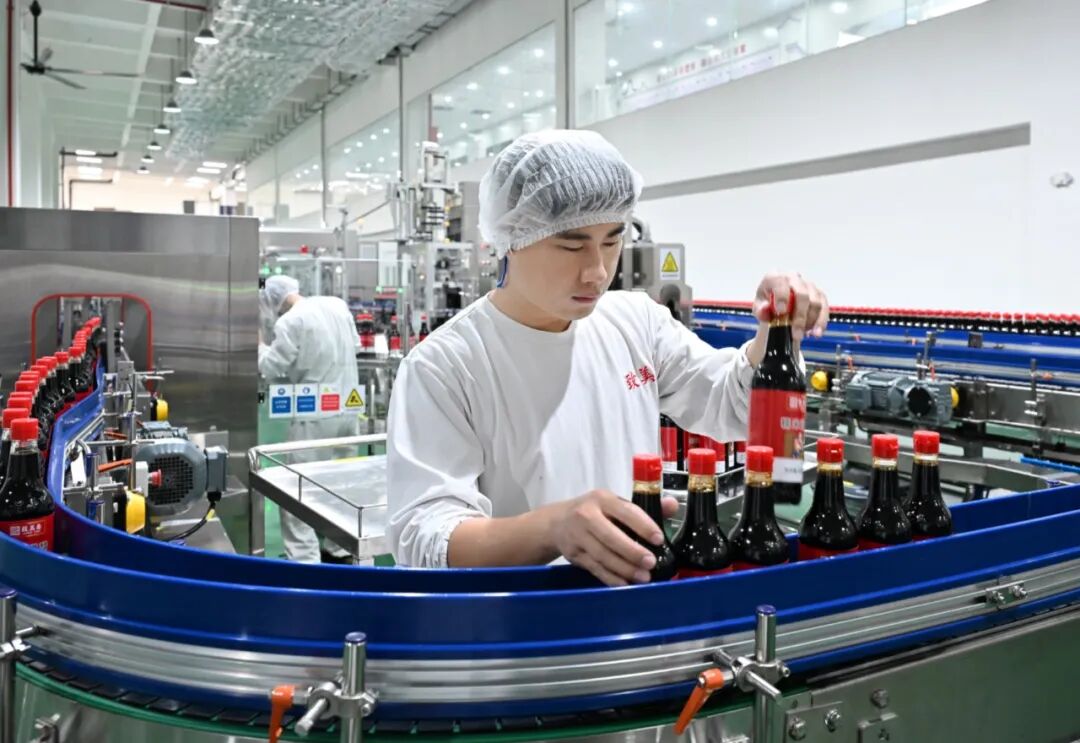
Core Insights - The company is experiencing a surge in orders as the Spring Festival approaches, with its automated production lines operating at full capacity to meet demand [1][3] - The company has implemented a full-chain quality traceability system, allowing for product tracing within two hours, and has established an emergency response team for quality issues [3] - The company is focusing on high-end product lines, with a significant increase in demand for traditional brewed soy sauce and premium oyster sauce, and a 40% year-on-year increase in orders from e-commerce and new retail channels [3][5] Production Capacity and Investment - The company's production base in Yangxi covers approximately 300 acres with a total planned investment of 2 billion yuan, and the first phase of the project is set to be operational by the end of December 2024 [5] - The company aims to double its revenue by 2026 while continuing to expand into the mid-to-high-end market [5] Technological and Environmental Initiatives - The company is collaborating with a team led by an academician from the Chinese Academy of Engineering to establish a flavor innovation research institute focused on high-quality seafood condiments [5] - The company is upgrading its fermentation process automation and implementing a digital management system from raw materials to finished products [5] - A photovoltaic system has been installed in the factory to enhance energy efficiency, with an annual reduction of 1,500 tons of standard coal [5]
雷少华:美国对华制裁为何无效?创新体制差异是根本原因
Guan Cha Zhe Wang· 2026-01-18 01:34
Core Viewpoint - The article discusses the rapid technological advancements in China, particularly in AI and semiconductor industries, despite U.S. sanctions, highlighting the resilience and growth of China's technology sector and its implications for global competition [1][16]. Group 1: Technology and Industry Interaction - Technology and industry are deeply intertwined, with technological innovation driving industrial transformation and vice versa, creating a symbiotic relationship that accelerates global capitalism [2][3]. - The "spillover effect" of technology redefines industrial production functions, leading to comprehensive upgrades across industries and enabling latecomer countries to catch up and even surpass established players [3][6]. Group 2: China's Industrial System Development - By 2023, China's manufacturing output accounted for 35% of the global total, with projections indicating it could reach 45% by 2030, surpassing the combined outputs of the U.S., Japan, and Germany [17][18]. - China has established a complete industrial system, being the only country with all industrial categories recognized by the United Nations, which positions it as a manufacturing powerhouse [17][19]. Group 3: U.S.-China Technology Competition - U.S. technology sanctions have inadvertently accelerated China's self-reliance in semiconductor development, as evidenced by significant investments in domestic chip manufacturing and related technologies [8][9]. - The U.S. strategy of technology control is based on the belief that restricting technology transfer can hinder China's innovation, yet this approach has proven ineffective as China continues to innovate and develop independently [15][16]. Group 4: Future Directions - The article predicts that by 2025, China will enter a new phase of "strong industry leading new technology," focusing on AI as a core driver of economic transformation and industrial innovation [29][30]. - China's government initiatives, such as the "Artificial Intelligence+" plan, aim to integrate AI with various sectors, enhancing productivity and creating new economic paradigms [29][30].
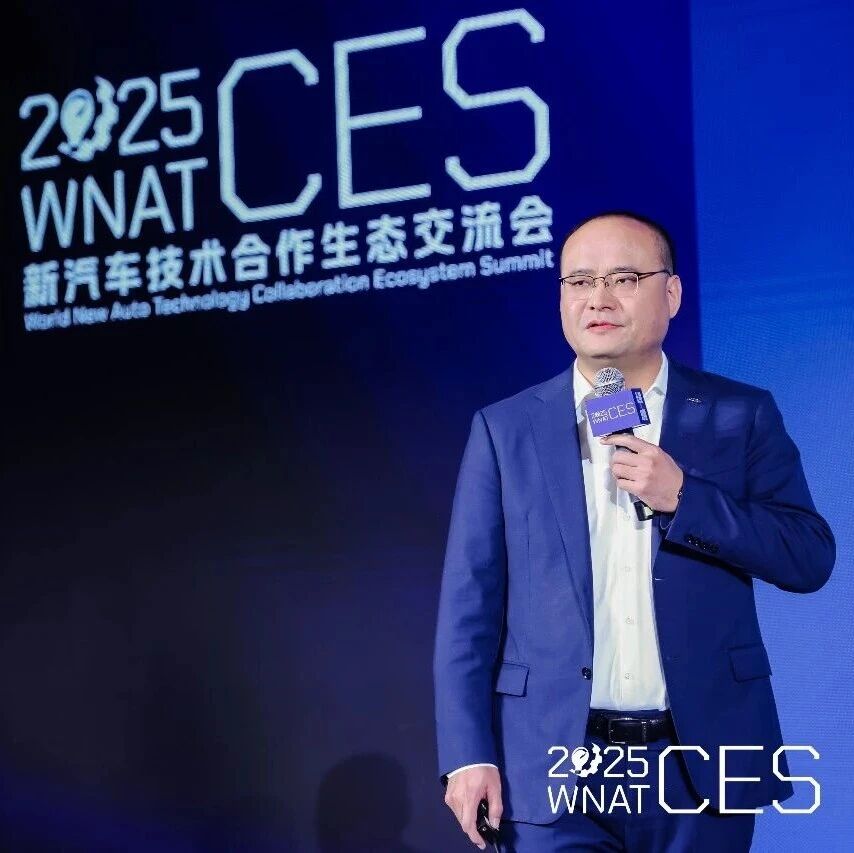
奇瑞副总裁公开放狠话,“道不同不相为谋”
汽车商业评论· 2026-01-17 23:06
Core Viewpoint - The article emphasizes the importance of collaboration and integration within the supply chain to achieve mutual growth and innovation in the automotive industry, particularly highlighting Chery Automobile's strategic approach to supplier partnerships and quality assurance [5][6][29]. Group 1: Company Development - Chery Automobile has evolved from a small establishment in Wuhu, Anhui, to a Fortune Global 500 company, ranking 233rd in 2025, a significant leap of 152 places from the previous year [13]. - As of November 2025, Chery has sold a total of 2.5615 million vehicles, with nearly 1.2 million exports and over 800,000 new energy vehicles sold within the year [16]. - The company has accumulated over 18 million global users, with more than 4.2 million overseas users, maintaining its position as the top exporter of passenger cars in China for 22 consecutive years [13]. Group 2: Supply Chain Strategy - Chery's "361" supply chain development strategy focuses on three key integrations: ideology, strategy, and capability, which must be highly aligned for effective collaboration [7][29]. - The six consensus areas for collaboration include quality as the foundation, innovation as the soul, vertical integration as the rule, global development as the bridge, digital empowerment as the channel, and ESG as the future of long-term cooperation [7][29]. - The company aims to create a high-quality industrial ecosystem where the supply chain becomes the core engine of competitiveness for automotive companies [7][29]. Group 3: Quality and Innovation - Quality is deemed the lifeline and survival baseline for Chery, with a zero-tolerance approach to quality issues being essential for long-term partnerships [8][31]. - Chery emphasizes that quality should not be viewed as a cost but as a source of profit and the foundation of cooperation [31]. - The company advocates for embracing innovation as the essence of collaboration, aiming to work closely with innovative partners to enhance product development and exceed customer expectations [33][35]. Group 4: Globalization and ESG - Chery's international strategy includes product globalization, localized manufacturing, and brand recognition, aiming to build a global supply chain that integrates high-quality resources [18]. - The company recognizes ESG (Environmental, Social, and Governance) as a mandatory aspect of business, integrating it into every facet of development to gain trust and respect from local communities [21][38]. - Chery believes that future competition will be between entire supply chains rather than individual companies, advocating for collaborative development across the industry [38].
锻造纯度更高 成色更足铁军队伍
He Nan Ri Bao· 2026-01-17 23:05
Core Viewpoint - The article emphasizes the importance of strengthening the internal capabilities of the disciplinary inspection and supervision agencies to effectively oversee others, highlighting the need for a robust and professional workforce in this sector [1]. Group 1: Theoretical and Political Education - Strengthening theoretical education and political awareness is identified as a primary task for the disciplinary inspection agencies, focusing on enhancing political recognition and commitment to the Party's leadership [2][3]. - The agencies have implemented mechanisms for continuous learning, such as the "Five Learning Interactions" and "Daily Learning for One Hour," to ensure that staff are well-versed in the latest directives and theories from the Party [3]. Group 2: Innovation and Technology in Supervision - The article discusses the use of innovation as a catalyst for advancing the standardization, legalization, and normalization of disciplinary inspection work, with a focus on institutional and technological innovations [4]. - The establishment of a comprehensive information platform is highlighted as a key initiative to enhance efficiency and effectiveness in supervision, utilizing big data and technology [4]. Group 3: Development of a Professional Workforce - The article outlines the necessity for high-quality, professional personnel within the disciplinary inspection agencies, emphasizing rigorous training and practical experience to enhance their capabilities [5][6]. - Initiatives such as comprehensive training programs and real-case learning are being implemented to ensure that staff are well-prepared to fulfill their responsibilities effectively [6].