
AI推理

Search documents
黄仁勋称AI推理需要更多计算量
news flash· 2025-06-26 01:16
Core Insights - NVIDIA's CEO Jensen Huang emphasized that inference requires more computing power, indicating a growing demand for advanced computational resources in the AI sector [1] - The generation of tokens has surged by 50 to 100 times over the past year, highlighting the exponential growth in AI applications and data processing needs [1] - Microsoft processed over 100 trillion tokens in the last quarter, which is five times the amount from a year ago, showcasing the rapid expansion of AI capabilities and infrastructure [1]

从PPTV到PPIO,派欧云不止负债越来越高
Bei Jing Shang Bao· 2025-06-24 15:07
Core Viewpoint - PPIO Cloud, founded by former PPTV executives, is seeking to go public in Hong Kong, ranking seventh among edge cloud service providers in China with a market share of 4.1% in 2024, while facing challenges such as rising sales costs and increasing net losses [2][7]. Group 1: Company Overview - PPIO Cloud was established in 2018 and operates under a light asset model in the cloud computing sector [2]. - The company specializes in distributed cloud computing, which is more suitable for applications like image and video transmission compared to centralized cloud platforms [3]. Group 2: Financial Performance - Revenue is projected to grow from 286 million yuan in 2022 to 558 million yuan in 2024, with adjusted net losses increasing from 39.13 million yuan to 61.62 million yuan during the same period [4][6]. - Sales costs have risen significantly, with 2024 sales costs expected to account for 87.7% of revenue, up from over 80% in previous years [5][4]. - The company’s liabilities have also increased, with net current liabilities rising from 439 million yuan in 2023 to 738 million yuan in 2024 [5]. Group 3: Market Position - PPIO Cloud ranks seventh in the Chinese edge cloud computing market, with the top three competitors holding a combined market share of 36.5% [2][7]. - The company’s revenue is primarily derived from edge cloud computing services, which accounted for 98.1% of total revenue in 2024, while AI cloud computing services are still in early development stages [9][10]. Group 4: Customer Dependency - PPIO Cloud faces significant customer concentration risk, with revenue from the top five clients making up 89.5% of total revenue in 2024 [11]. - The largest client contributed 35.2% of total revenue in 2024, indicating a reliance on a few key customers for financial stability [12].


【美股盘前】三大期指齐涨,国际油价跌超2%;特斯拉涨近3%,瑞银上调其Robotaxi业务估值;黄仁勋开始减持英伟达股票,年底前或套现8.65亿美元;星巴克称未考虑全面出售中国业务
Mei Ri Jing Ji Xin Wen· 2025-06-24 08:58
Group 1 - U.S. stock index futures are showing positive movement, with Dow futures up 0.66%, S&P 500 futures up 0.79%, and Nasdaq futures up 1.05% [1] - International oil prices continue to decline, with WTI down 2.58% and Brent down 2.71% due to the ceasefire between Israel and Hamas [1] - Starbucks has stated it is not considering a full sale of its China business, highlighting the long-term potential of the market [1] Group 2 - NVIDIA's CEO Jensen Huang has begun to sell shares, with plans to cash out up to $865 million by year-end, having sold 100,000 shares for $14.4 million recently [2] - Tesla shares are up nearly 3% as UBS raises the valuation of its Robotaxi business to $350 billion, contingent on successful technology and execution [2] - Melius Research has upgraded AMD's rating to "Buy" due to its growth potential in AI inference, raising the target price from $110 to $175 [2] Group 3 - Google is adjusting its streaming strategy by cutting the budget for its Google TV and Android TV teams by 10%, which may affect about a quarter of the 300 employees in that team [3]


研报 | 英伟达RTX PRO 6000特规版出货受市场关注,但存储器供应紧张成变数
TrendForce集邦· 2025-06-24 04:03
Core Viewpoint - The market is optimistic about the demand for NVIDIA's RTX PRO 6000 series, but supply chain constraints, particularly in memory supply, may impact actual shipment volumes [1][2]. Summary by Sections Product Launch and Supply Chain - NVIDIA is expected to launch the RTX PRO 6000 series in the second half of this year, with a focus on diversifying suppliers for different product categories [1]. - The main suppliers for the RTX PRO 6000 series include SK hynix for HBM, Micron for LPDDR, and Samsung for GDDR [2]. - The GDDR7 memory, exclusively supplied by Samsung, may face supply tightness, potentially affecting the production and supply capabilities of the RTX PRO 6000 series [2]. Market Applications - The RTX PRO 6000 series is positioned as a key product line for mid-range GPUs, targeting applications in AI inference, edge deep learning training, and imaging/simulation [2]. Collaboration and Future Outlook - NVIDIA has partnered with various ODMs and OEMs to promote MGX AI Server models equipped with the RTX PRO 6000, emphasizing enterprise customers' needs from cloud to edge AI applications [3].
概率统计机制下,LLM 推理真的「理解世界了」吗?
机器之心· 2025-06-21 06:32
Group 1 - The article discusses whether LLMs (Large Language Models) truly "understand the world" or if their reasoning is merely a form of pattern matching, highlighting the debate within the industry regarding the nature of LLM reasoning capabilities [1][3][4] - It references a paper from Apple suggesting that current reasoning models do not genuinely think, but rather engage in pattern matching, which has sparked renewed discussion in the AI community [3][4] - The article mentions that true reasoning involves understanding causal relationships, as emphasized by various researchers, indicating that LLMs lack a causal framework necessary for deep and flexible reasoning [5][6][7] Group 2 - The article explores the motivations behind enterprises increasing their spending on generative AI, noting a shift from building in-house solutions to purchasing third-party AI applications [1][2] - It outlines the evaluation framework for selecting AI models, which includes key factors that influence procurement decisions in the context of traditional software purchasing characteristics [1][2]

三年累亏5.68亿元,AI云公司PPIO派欧云冲刺港股CEO要圆上市梦
Tai Mei Ti A P P· 2025-06-21 00:57
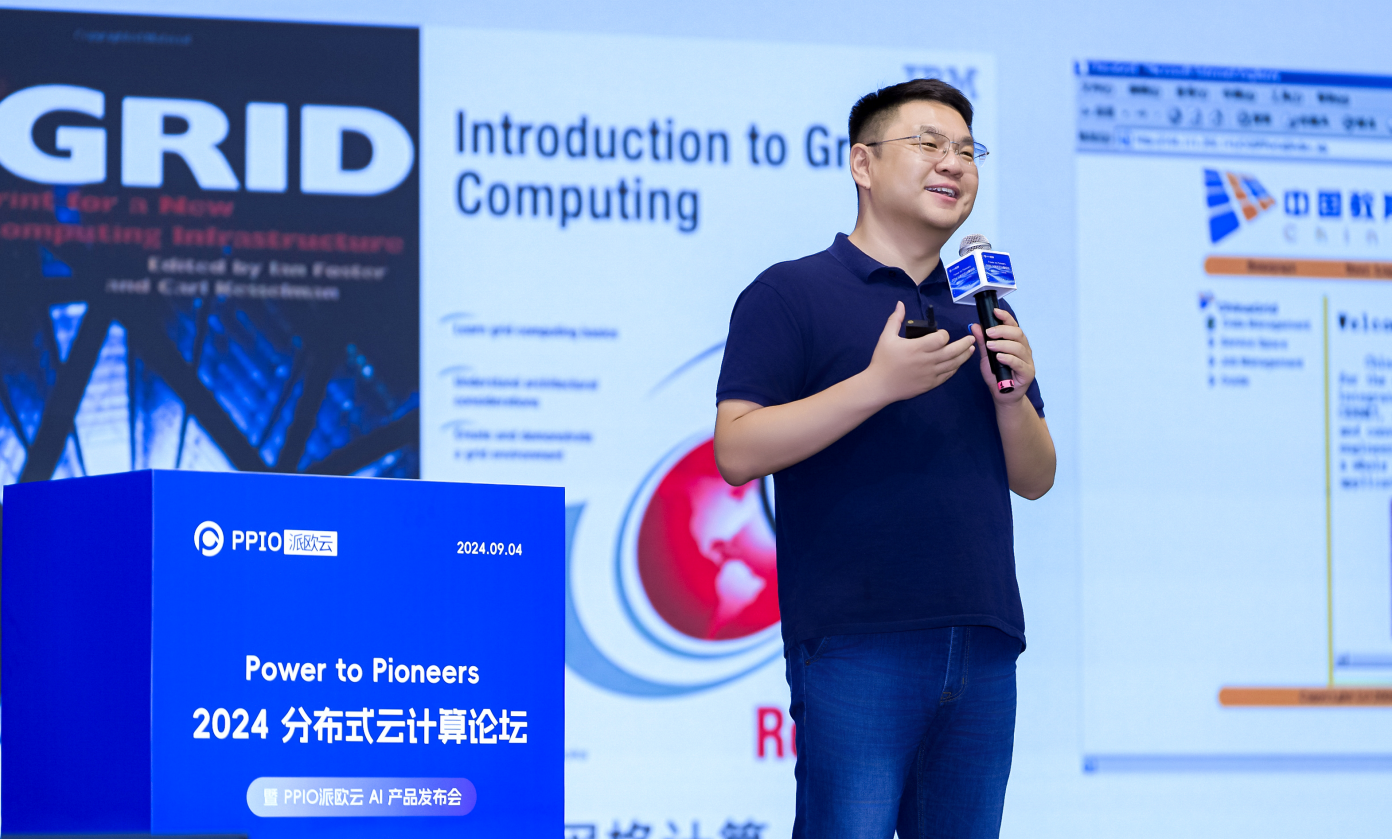
Core Viewpoint - PPIO, founded by Yao Xin, is preparing for an IPO on the Hong Kong Stock Exchange, aiming to capitalize on the growing demand for distributed cloud computing and AI services [2][5]. Company Overview - PPIO was established in 2018 as an independent distributed cloud computing service provider, with its parent company PPLabs Technology Limited registered in the Cayman Islands in 2019 [5]. - Yao Xin, the founder and CEO, previously founded PPTV, a video platform that raised over $700 million before being sold to Suning in 2014 [5]. - PPIO has received angel investments from notable figures and institutions, including Wang Xiaochuan and Panlin Fund [5]. Financial Performance - PPIO's revenue for 2022, 2023, and 2024 was approximately RMB 286 million, RMB 358 million, and RMB 558 million, respectively, with a compound annual growth rate (CAGR) of 39.7% [11]. - The company reported losses of RMB 850 million, RMB 1.894 billion, and RMB 2.935 billion for the same years, totaling approximately RMB 5.68 billion in cumulative losses [11]. - Adjusted net losses were RMB 39.13 million, RMB 37.08 million, and RMB 61.62 million, totaling around RMB 138 million [12]. Business Segments - PPIO operates primarily in two segments: edge cloud services and AI cloud services, with partnerships including major telecom operators and Alibaba Cloud [8]. - In the fiscal year 2024, revenue from edge node services accounted for 70%, edge CDN for 28.1%, and AI cloud services for 1.9% [12]. Market Potential - The edge cloud computing market in China is projected to reach RMB 37 billion by 2029, with a CAGR of 22.9% from 2024 to 2029 [10]. - The global AI cloud computing market is expected to reach RMB 427.7 billion by 2029, with a CAGR of 68.5% during the same period [10]. - PPIO claims to be one of the earliest independent providers of AI cloud computing services in China, with significant growth in token consumption from 27.1 billion to 141.9 billion between December 2024 and May 2025 [10]. Future Outlook - Yao Xin anticipates a significant reduction in AI inference costs and believes distributed computing will drive the next wave of development [15]. - The company plans to use IPO proceeds to enhance its technology capabilities, expand its market presence, and support overseas growth [16].
高通收购Alphawave:杀回数据中心市场胜算几何?
2 1 Shi Ji Jing Ji Bao Dao· 2025-06-16 12:36
Core Viewpoint - Qualcomm is re-entering the data center market by acquiring Alphawave, a leading semiconductor IP company, to enhance its competitive edge in this sector, particularly in AI chip development [1][2]. Group 1: Acquisition Details - Qualcomm announced the acquisition of Alphawave IP Group plc for an implied enterprise value of approximately $2.4 billion, expected to be completed by Q1 2026 [1][2]. - The acquisition aims to accelerate Qualcomm's expansion into the data center market and provide critical assets, particularly in high-performance, low-power computing [2][4]. Group 2: Financial Performance of Alphawave - Alphawave reported revenues of $308 million for FY2024, a 4% decline year-over-year, while FY2023 revenues were $322 million, showing a significant growth of 74% [2]. - The company achieved a booking amount of $520 million in FY2024, a 34% increase year-over-year, with a gross margin of 59%, up by 8 percentage points [2]. Group 3: Market Position and Technology - Alphawave ranks fourth globally in the semiconductor design IP market with a market share of 3.2% [3]. - The company specializes in high-end interface IP products, which are crucial for building high-performance computing applications, particularly in AI systems [3]. Group 4: Strategic Implications for Qualcomm - The acquisition is expected to enhance the data transmission efficiency of Qualcomm's Oryon CPU and Hexagon NPU in AI training and inference scenarios [4]. - Analysts suggest Qualcomm may pursue two development paths: launching Arm-based data center processors to compete directly with Nvidia and AMD, or adopting a chip design service model similar to Broadcom [4][5]. Group 5: Historical Context and Future Outlook - Qualcomm previously attempted to enter the data center market with the Centriq 2400 processor in 2017 but faced challenges due to the dominance of Intel's x86 architecture [5]. - The company has been gradually building its capabilities, including the acquisition of Nuvia in 2021, which focused on data center CPUs [5][6]. - Qualcomm's CEO indicated that the company is well-positioned to capitalize on the growing demand for AI data centers and plans to re-enter the server market with new products by 2025 [7][8].

获沙特15亿美元投资,Groq专注以垂直整合策略打造AI推理基础设施
3 6 Ke· 2025-06-11 09:42
Core Viewpoint - NVIDIA's market position is becoming less secure as competitors like Google and various startups are emerging in the AI chip and inference computing space, challenging its dominance [1][3]. Company Overview - Groq, a startup focused on AI inference chips, has made significant strides by constructing a large AI inference data center in Saudi Arabia and securing a $1.5 billion investment commitment for expanding its infrastructure [3][4]. - Groq's total funding has surpassed $1 billion, with a valuation of $2.8 billion following a $640 million financing round led by BlackRock [3][4]. Technology and Product Development - Groq's AI inference chip, the LPU (Language Processing Unit), is designed specifically for AI inference computing, optimizing linear algebra operations essential for processing large datasets [8][10]. - The LPU architecture offers a significant performance advantage, with an on-chip SRAM memory bandwidth of 80TB/s compared to the GPU's external HBM memory bandwidth of approximately 8TB/s, resulting in up to 10 times faster data access [10][11]. Market Trends and Growth Potential - The AI chip market is projected to reach $110 billion by 2030, with inference computing demand expected to rise to 60-80% of total computing needs as AI applications mature [7]. - The cost of AI inference has decreased by 99%, enhancing its economic viability, with every dollar spent on inference yielding ten times the value annually [7]. Business Model Innovation - Groq focuses on providing AI inference cloud services and AI computing centers rather than selling chips directly, differentiating itself from traditional chip manufacturers [12][18]. - The company has developed a cloud platform, GroqCloud, which offers Tokens-as-a-Service, allowing developers and enterprises to access AI applications via API [12][15]. Competitive Landscape - Groq's primary competitors are cloud service providers like AWS, Azure, and GCP, rather than direct chip manufacturers like NVIDIA [18]. - The rise of open-source models has significantly increased the number of active developers on GroqCloud, from 356,000 in July 2024 to over 1.5 million by April 2025 [15][13]. Strategic Partnerships and Talent Acquisition - Groq has attracted notable talent, including Meta's chief AI scientist and former executives from Intel and HP, enhancing its technological capabilities [4][5]. Future Outlook - Groq plans to launch chips based on a 4nm process by 2025, which will further enhance the performance and efficiency of its LPU architecture [11]. - The introduction of the Compound AI system aims to integrate various AI tools and models, providing more accurate and useful responses compared to single language models [16].
海外算力公司表现强劲,算力板块情绪修复
Mei Ri Jing Ji Xin Wen· 2025-06-10 01:02
Group 1 - The core viewpoint of the articles highlights the strong performance of overseas computing power companies, particularly in the AI semiconductor sector, with significant revenue growth and optimistic projections for ASIC deployment [1][2] - Broadcom's FY25Q2 financial report shows revenue of $15 billion, a 20% year-on-year increase, with AI semiconductor revenue reaching $4.4 billion, up 46% year-on-year, marking nine consecutive quarters of growth [1] - The shift in focus from AI training to AI inference is expected to lead to AI inference servers approaching a 50% market share, with major North American CSPs accelerating their ASIC layouts [1] Group 2 - In China, companies like Alibaba, Baidu, and Tencent are advancing their ASIC development, with Alibaba's Hanguang 800 AI inference chip and Baidu's successful deployment of self-developed clusters [2] - The Chinese analog chip market is steadily growing, with consumer electronics as the primary application area, while the automotive sector shows the fastest growth; however, the domestic market for automotive analog chips remains low at 5% [2] - The current market is characterized by rapid rotation despite low transaction volumes, suggesting a focus on less crowded chip sectors and recommending semiconductor equipment ETFs and chip ETFs [2]

国产替代加速或成长期主线,芯片板块小幅回调,芯片ETF(512760)昨日净流入超5000万元
Mei Ri Jing Ji Xin Wen· 2025-06-06 02:55
Core Viewpoint - The semiconductor sector is experiencing a mild correction, but there is significant inflow into semiconductor ETFs, indicating ongoing investor interest in the industry [1]. Group 1: Industry Developments - A seminar on semiconductor upstream and downstream enterprises was held on May 27 in Beijing, emphasizing the need to deepen economic and trade cooperation in the semiconductor field and maintain global supply chain stability [1]. - The electronic industry is in a phase of moderate recovery, with a notable surge in demand for AI inference markets. NVIDIA reported a 73% year-on-year increase in data center revenue for the first quarter, and AI inference token generation has surged tenfold in just one year [1]. - Domestic EDA (Electronic Design Automation) tools currently lack the capability to fully replace American products, but there is a long-term push towards domestic production [1]. - The domestic replacement in semiconductor equipment and materials is accelerating, with profits from specialized semiconductor device manufacturing increasing by 105.1% year-on-year from January to April [1]. Group 2: Investment Opportunities - The semiconductor ETF (code: 512760) tracks the China Semiconductor Chip (RMB) Index (code: 990001), which is compiled by China Securities Index Co., Ltd. This index reflects the overall performance of listed companies in the semiconductor materials, equipment, and design sectors in the A-share market [1]. - The index has a high industry concentration and growth characteristics, effectively reflecting the development trends of the domestic semiconductor industry chain [1]. - Investors without stock accounts can consider the Guotai CES Semiconductor Chip Industry ETF Connect C (008282) and A (008281) as alternative investment options [2].