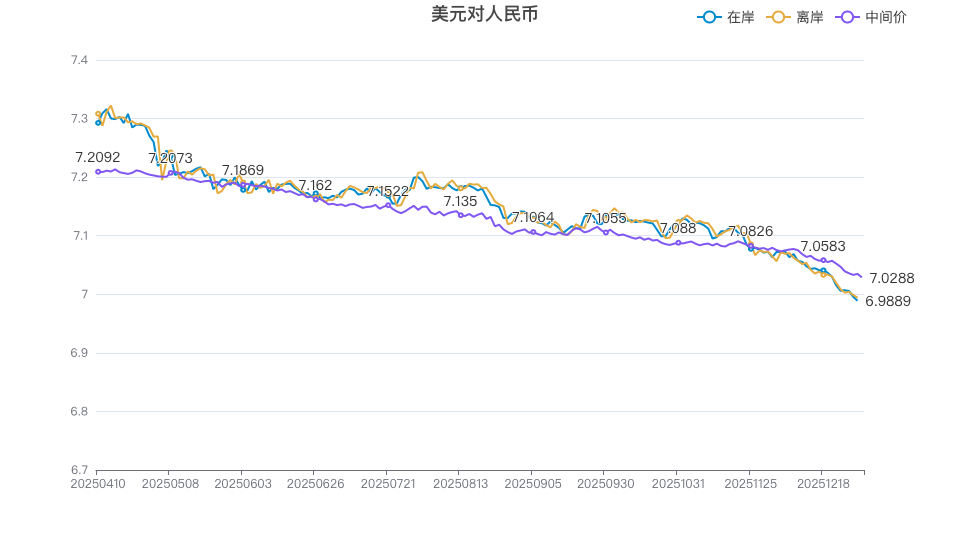
人民币汇率

Search documents
资产配置系列:人民币交易指南2026
Guolian Minsheng Securities· 2026-01-04 08:07
Group 1 - The report addresses three core questions regarding the RMB exchange rate in 2026: 1) How to assess the rise of the RMB? 2) How will the exchange rate rise and how will the central bank regulate it? 3) What impact does RMB appreciation have on stocks and bonds? [2][8] - The current appreciation of the RMB is deemed reasonable, supported by a decline in the US dollar index (over 10%), a narrowing of the China-US interest rate differential (approximately 110 basis points), and a decrease in the attractiveness of the RMB as a financing currency [2][7][10]. - The expected central level for the RMB exchange rate is around 6.8, with the central bank's regulation being crucial to avoid unnecessary overshooting [2][23]. Group 2 - The central bank's regulation follows a "symmetrical principle," meaning that just as it previously prevented excessive depreciation, it should also focus on regulating excessive appreciation to balance the economic impact of exchange rate fluctuations [2][23]. - Key regulatory measures include the use of the counter-cyclical factor in the central parity rate, guiding expectations through official channels, and reducing the reserve requirement for forward foreign exchange purchases [2][23][44]. - The report suggests that the RMB's appreciation can be divided into "non-overshooting" and "overshooting" phases, with historical data indicating that after overshooting, the central bank tends to gradually open the door to rate cuts, aiding in the return of liquidity to a neutral environment [2][47]. Group 3 - In the non-overshooting phase, the stock market benefits from cyclical recovery, favoring cyclical sectors, while the bond market may face pressure unless driven by overseas quantitative easing [2][56]. - Conversely, in the overshooting phase, economic expectations may suffer negative impacts, leading to generally subdued stock market performance, while the bond market may see increased probabilities of appreciation [2][56]. - Historical data shows that during non-overshooting phases, the stock market, represented by indices like the CSI 300, tends to perform well, while the bond market may not necessarily decline [2][56].
离岸人民币升破6.97关口 创近两年半新高
Xin Hua Cai Jing· 2026-01-04 03:30
消息显示,美国总统特朗普预计将于1月宣布下一任美联储主席人选。目前来看,最终人选会在以下三人中选出,即白宫国家经济委员会 主任凯文·哈西特、美联储前理事凯文·沃什、美联储理事克里斯托弗·沃勒。 中国外汇交易中心发布公告,调整CFETS人民币汇率指数货币篮子的权重以及BIS货币篮子人民币汇率指数的货币篮子和权重。新版指 数自2026年1月1日起生效。调降美元、欧元、日元在CFETS人民币汇率指数货币篮子的权重。 在年末美元走弱和集中结汇等因素共同影响下,人民币对美元汇率在2025年年末迎来大涨。展望2026年,短期内人民币有望保持强势, 中长期看人民币汇率或将维持温和走升的态势。 新华财经北京1月4日电(马萌伟)2026年第一个交易日(1月2日),离岸人民币兑美元延续了2025年以来的强势升值态势,逾两年半来 首次涨破6.97。 亚洲交易时段盘中,离岸人民币兑美元盘中涨超百点,一举升破6.97,最高触及6.9678。截至北美交易时段收盘,离岸人民币报6.9699。 统计数据显示,2025年,在岸人民币兑美元累计上涨3098个基点报6.989,涨幅约为4%;离岸人民币累计上涨约3600点,涨幅超过 4.93%;人 ...

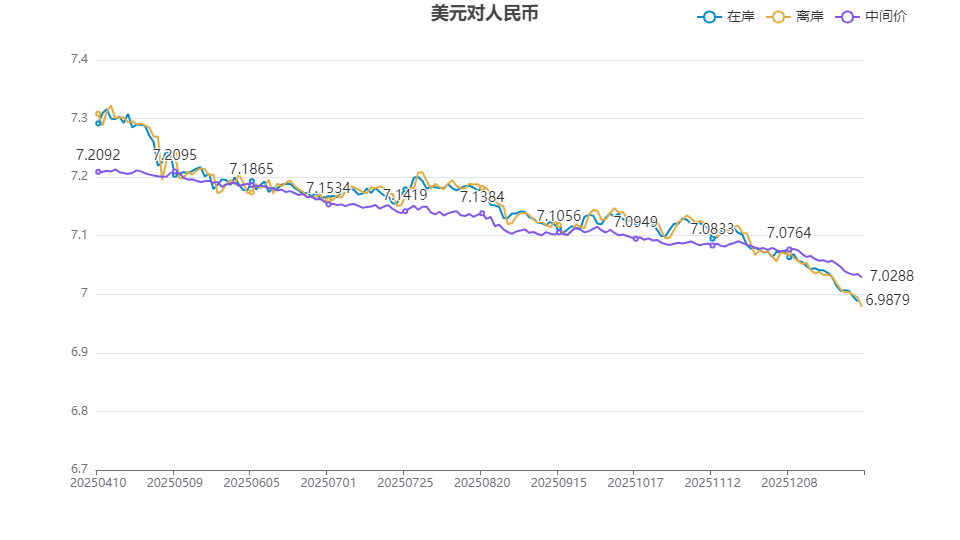
离岸人民币升破6.97关口 2025年累计上涨约3600点
Sou Hu Cai Jing· 2026-01-04 02:11
2026年第一个交易日(1月2日),离岸人民币兑美元延续了2025年以来的强势升值态势,逾两年半来首 次涨破6.97。 中金公司指出,12月人民币单月升值幅度达到了1%左右,年化水平超过了10%,这样的升值速率或难 以持续。回顾2025年4-5月和8-9月的两轮升值,人民币汇率在短期加速升值后都会在内外环境变化的影 响下横盘震荡一段时间。因此,中金公司认为,在短期强势后,人民币升值的斜率大概率会平缓一段时 间。中长期来看,人民币汇率继续走强的基础仍在一段时间内保持,在此期间内,人民币汇率或将维持 温和走升的态势。 东方金诚首席宏观分析师王青认为,人民币持续升值,会增大国内资本市场对外资的吸引力,这会直接 增加外资的汇兑收益。对于外贸企业来说,虽然近期人民币升值,但建议外贸企业不要押注人民币汇率 单边走势,还是要坚守本业,尽可能利用期权、期货等外汇衍生品工具,控制好汇率波动风险。 来源:新华财经 马萌伟 消息显示,美国总统特朗普预计将于1月宣布下一任美联储主席人选。目前来看,最终人选会在以下三 人中选出,即白宫国家经济委员会主任凯文·哈西特、美联储前理事凯文·沃什、美联储理事克里斯托弗· 沃勒。 中国外汇交易中 ...
全球货币风云突变,美元欧元轮番动荡,人民币汇率是反攻还是波动
Sou Hu Cai Jing· 2026-01-03 08:17
Core Viewpoint - The article discusses the fluctuations of the RMB exchange rate in 2026, highlighting the complex dynamics influenced by global economic conditions and domestic factors. Group 1: RMB Performance - The RMB has shown strength against the USD, appreciating nearly 4% throughout the year, reaching close to 6.99 by year-end, driven by China's economic fundamentals [3][8]. - Conversely, the RMB depreciated approximately 10% against the Euro, leading to increased costs for those exchanging RMB for Euros [5]. Group 2: Economic Factors Supporting RMB - China's impressive trade surplus in 2025 has contributed significantly to the stability of the RMB, with substantial foreign exchange inflows bolstering its position [8]. - Continuous foreign investment in the Chinese market and a resilient performance of the Shanghai Composite Index have attracted international investors, further supporting the RMB [8]. Group 3: Future Outlook - The outlook for 2026 remains uncertain, with potential for both continued depreciation of the USD and possible rebounds, influenced by the Federal Reserve's decisions [10]. - The sustainability of China's trade surplus and the global demand environment will be critical in determining the stability of the RMB exchange rate [10][12]. - Predictions suggest that while the RMB may maintain an advantage against the USD, fluctuations are expected to become the norm rather than a steady trend [12]. Group 4: Currency Exchange Decisions - Families and small businesses face challenges in currency exchange decisions amid global financial volatility, with some opting to wait for favorable rates while others are forced to pay more for Euros [15]. - For those with currency needs, a gradual exchange strategy is recommended rather than attempting to time the market, emphasizing the importance of long-term planning [15].
从恐慌到淡定,人民币三次“破7”对比,藏着啥不一样的信号?
Sou Hu Cai Jing· 2026-01-02 07:09
Core Viewpoint - The Chinese yuan has appreciated against the US dollar, officially breaking the 7 mark, while depreciating against the euro, highlighting a divided currency market in 2025 [1][5][12]. Group 1: Currency Performance - The yuan appreciated by 4% against the US dollar in 2025, with the exchange rate moving from 72,000 RMB for 10,000 USD in March to 69,800 RMB in December, resulting in a gain of 2,200 RMB for exporters [3][12]. - Conversely, the yuan depreciated nearly 10% against the euro, with the exchange rate shifting from 70,000 RMB for 10,000 EUR to 78,000 RMB, negatively impacting exporters dealing in euros [5][12]. Group 2: Market Dynamics - The decline of the US dollar index by nearly 10% in 2025, the worst performance since 2003, was influenced by the Federal Reserve's interest rate cuts, leading to a decrease in the dollar's value [8][10]. - The Chinese trade surplus reached a record high, bolstering the yuan's strength as companies had more dollars to convert, increasing demand for the yuan [12][22]. Group 3: Future Outlook - Predictions for 2026 suggest the yuan could strengthen to 6.8 against the dollar if the Federal Reserve continues to lower interest rates, but a rebound in the dollar could lead to a depreciation of the yuan [15][29]. - The stability of the trade surplus and the recovery of demand from Europe and the US are critical for maintaining the yuan's strength in the future [19][22]. Group 4: Policy and Economic Factors - The Central Economic Work Conference emphasized a dual investment strategy focusing on infrastructure and human capital, which could support economic growth and strengthen the yuan [22][24]. - The increase in actual foreign investment by 26% year-on-year in November is a positive indicator for the yuan's future value [24]. Group 5: Recommendations for Businesses - Exporters should consider settling transactions in RMB to mitigate exchange rate risks, especially when dealing with European clients who are increasingly open to RMB settlements [25][34]. - Companies are advised to engage in hedging strategies to protect against currency fluctuations while individuals should exchange currency based on actual needs rather than speculation [34].
人民币 持续走强
Shang Hai Zheng Quan Bao· 2026-01-02 03:16
2026年伊始,人民币继续走强。 1月2日,离岸人民币对美元一度升破6.97,最高升至6.9687,创2023年5月以来新高。截至10时15分发 稿,离岸人民币对美元报6.9690,涨约0.15%。 该报告总结过往10年汇率涨跌变化发现,"人民币汇率具备季节性走强的特征,主要体现在每年11月至 次年1月,此时人民币刚需结汇盘涌现(年末关账、发放工资),带动汇率升值。" 业内认为,人民币汇率是由国际环境、资金流向、政策变化等多维因素共同作用的结果,其后续走势依 然面临多重不确定性。 招商银行金融市场部报告认为,2026年1月,在刚需结汇盘的加持下,人民币汇率或稳中有升。而进入2 月,刚需结汇需求有所减弱,基于春节假期的海外旅游需求,部分零售购汇盘将出现,对结汇力量形成 一定中和。 "人民币双向波动的总基调不会变,金融市场的不确定性也不会变,市场主体可以根据自身的实需情况 和市场阶段性走势,择机操作。"报告强调。 (文章来源:上海证券报) 连日来,在外部美元指数转弱与内部结汇需求释放的共振作用下,人民币升值有所加速。上周,离岸、 在岸人民币对美元双双升破7.0关口。 招商银行金融市场部发布报告认为,2025年企业 ...

杨长江:人民币“破七”背后,是国运与币运的共振
Xin Lang Cai Jing· 2026-01-01 06:24
Core Viewpoint - The article discusses the implications of the recent appreciation of the Chinese yuan and its impact on the Chinese economy, particularly in the context of the ongoing internationalization of the yuan and the changing global economic landscape. Group 1: Yuan Appreciation and Economic Impact - The offshore yuan exchange rate reached a high of 7.43 in April 2025 and strengthened to break the 7.0 mark by the end of the year, marking a significant recovery since the trade war lows [1][4] - The appreciation of the yuan is seen as a reflection of China's economic resilience amidst external pressures, particularly from the US trade protectionism [1][6] - The current level of the yuan is not considered "seriously undervalued," but there are some factors contributing to its perceived undervaluation, including structural issues in the domestic economy [5][9] Group 2: Structural Factors Influencing Yuan Valuation - The dual nature of the yuan's exchange rate, reflecting both real economic conditions and financial market dynamics, complicates the assessment of its valuation [5][6] - Domestic market segmentation and competition have led to price suppression, contributing to the undervaluation of the yuan [7][9] - The overall price level in China has improved, indicating that the yuan is not as undervalued as previously thought, countering claims from Western nations [4][5] Group 3: Internationalization of the Yuan - The article emphasizes the importance of the yuan's appreciation for its internationalization, suggesting that a stable and gradually appreciating yuan could enhance its role as a global reserve currency [25][30] - The current global economic environment, characterized by a weakening dollar and rising inflation in Western countries, presents an opportunity for the yuan to gain traction as a safe asset [12][25] - The potential for the yuan to become a credible alternative to the US dollar is linked to China's ability to provide stable and reliable financial assets, particularly in the context of increasing skepticism towards US debt [27][30] Group 4: Future Outlook and Recommendations - The article suggests that while the yuan can appreciate, it should do so at a controlled pace to avoid market distortions and excessive speculation [22][23] - Internal reforms aimed at improving wage levels and price structures are recommended as a means to support the yuan's appreciation sustainably [23][24] - The need for China to enhance its soft power and narrative in the global market is highlighted as crucial for gaining pricing power and furthering the yuan's internationalization [34][35]
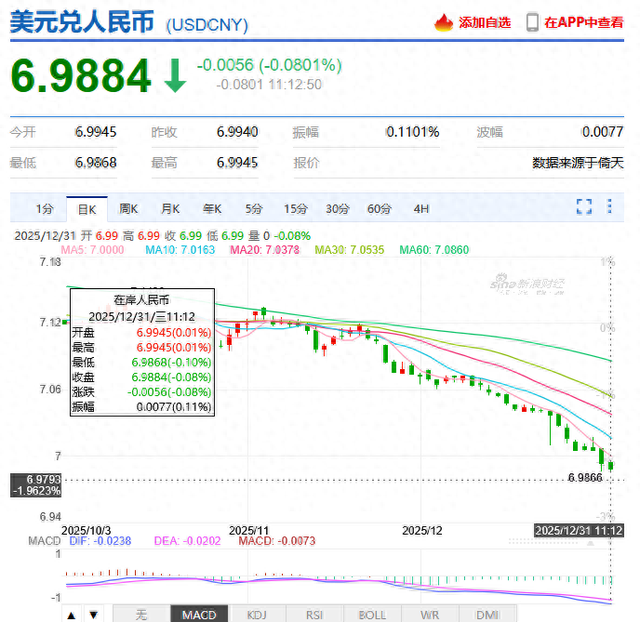
人民币2025年升值4.2%,2026年汇率如何走?继续涨但大幅升值可能性小
Sou Hu Cai Jing· 2026-01-01 04:28
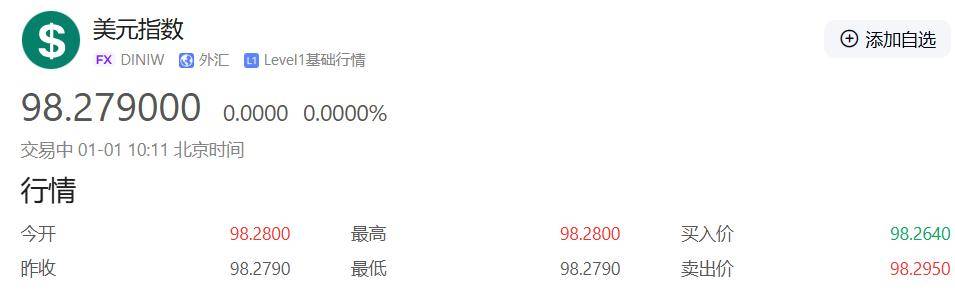
Core Viewpoint - The trend of the RMB exchange rate has become a central topic of concern as the global economic landscape continues to evolve in 2025, with a moderate annual appreciation setting the stage for further gains in 2026 [1] Group 1: RMB Exchange Rate Performance - On the last day of 2025, the onshore RMB to USD exchange rate closed at 6.994, appreciating significantly by 4.2% compared to 7.299 at the end of 2024 [2] - The appreciation of the RMB in 2025 is attributed to multiple factors, primarily the depreciation of the USD, which saw a decline of 9.4% as indicated by the USD index [2] - The controlled pace of RMB appreciation is likely a result of proactive adjustments by the People's Bank of China (PBOC) to mitigate the impact on export competitiveness [3] Group 2: Economic and Policy Implications - The PBOC aims to maintain a moderate appreciation of the RMB to avoid exacerbating cost pressures on Chinese exporters, especially in light of increased tariffs under the Trump administration's "reciprocal tariff" policy [3] - The moderate appreciation of the RMB in 2025 is expected to create broader space for future gains, supported by the Federal Reserve's shift towards a more accommodative monetary policy starting December 2025 [5] - The depreciation of the USD as a global reserve currency is anticipated to contribute to the relative appreciation of other currencies, including the RMB [5] Group 3: Future Outlook - There is a solid foundation for continued RMB appreciation in 2026, although significant gains are unlikely due to expected limited rate cuts by the Federal Reserve [7] - The RMB exchange rate is projected to fluctuate within a range of 6.7 to 7.1 throughout 2026, with potential for a brief dip to around 6.6 in extreme scenarios [9] - The accuracy of these predictions will depend on various intertwined factors, including economic fundamentals, policy adjustments, and international financial market dynamics [11]
把脉人民币动向:复旦南土国际金融政策圆桌会深度研讨汇率走势
Sou Hu Cai Jing· 2025-12-31 06:55
Core Viewpoint - The forum at Fudan University aims to analyze the current macroeconomic financial situation, focusing on the RMB exchange rate and its driving factors, with insights from various experts in academia and industry [1]. Group 1: RMB Exchange Rate Analysis - Professor Shen Guobing emphasizes that the traditional view of currency depreciation benefiting trade is outdated, suggesting that RMB appreciation could lower import costs and enhance national welfare [3]. - Wang Han from Industrial Securities notes that the RMB may face upward pressure against the USD due to potential weakening of the dollar, with a possible target of 6.7, while the People's Bank of China will manage market expectations to prevent excessive appreciation [5]. - Wu Xinru presents data indicating that the RMB's actual effective exchange rate may be undervalued by about 24% compared to equilibrium levels, asserting that export competitiveness relies more on industrial upgrades than on currency depreciation [7]. Group 2: Future Outlook and Risks - Professor Feng Ling highlights that the RMB's stabilization in 2025 is supported by improved external conditions and record trade surpluses, but uncertainties in 2026 may arise from U.S. monetary policy and political events [9]. - Tang Jianwei from the Bank of Communications predicts a moderate appreciation of the RMB in 2026, with expected fluctuations between 6.8 and 7.15, while cautioning against external political risks [11]. - The discussion reveals a consensus that the traditional "devaluation promotes exports" logic is outdated, with RMB appreciation driven by multiple factors, while uncertainties remain regarding U.S. monetary policy and geopolitical developments [15].

人民币中间价年内涨约1600点 未来双向波动是常态
Xin Hua Cai Jing· 2025-12-31 05:20
Core Viewpoint - The article discusses the strengthening of the Renminbi (RMB) against the US dollar, driven by multiple factors, and anticipates a moderate appreciation trend for the RMB in 2026 [1][2][4]. Group 1: RMB Exchange Rate Performance - As of December 31, 2025, the RMB to USD central parity rate was raised by 60 points to 7.0288, marking the highest level since September 30, 2024, with a year-to-date increase of 1,596 basis points, or 2.22% [1]. - In December, both onshore and offshore RMB against the USD showed a significant strengthening trend, with onshore RMB appreciating approximately 3,000 basis points and offshore RMB about 3,500 basis points, representing increases of 4% and 5% respectively [2]. Group 2: Factors Influencing RMB Strength - Analysts attribute the RMB's current appreciation to a weak USD, seasonal factors, and the resilience of the domestic economy, alongside the central bank's stable exchange rate policies and year-end settlement demand [1][4]. - The overall depreciation of the USD, which fell about 10% in 2025, is expected to be the worst annual performance since 2003, contributing to the RMB's appreciation [5]. Group 3: Future Outlook - Looking ahead to 2026, the RMB is expected to experience multiple favorable factors that may lead to a moderate appreciation trend, although the pace of appreciation may slow down after a strong short-term performance [7]. - The People's Bank of China emphasizes maintaining liquidity and ensuring that the growth of social financing and money supply aligns with economic growth, while also allowing the market to play a decisive role in exchange rate formation [6]. Group 4: Market Dynamics and Recommendations - The current market dynamics suggest that while the RMB may continue to appreciate, it is essential for foreign trade enterprises to avoid betting on a one-sided RMB exchange rate trend and instead utilize financial instruments to manage exchange rate risks [7][8]. - The ongoing improvements in the cross-border payment system and the restructuring of US-China hard power comparisons are expected to gradually correct the systemic undervaluation of the RMB [7].