
物理AI

Search documents
中国机器人“包围”CES 2026
Bei Jing Shang Bao· 2026-01-07 11:57
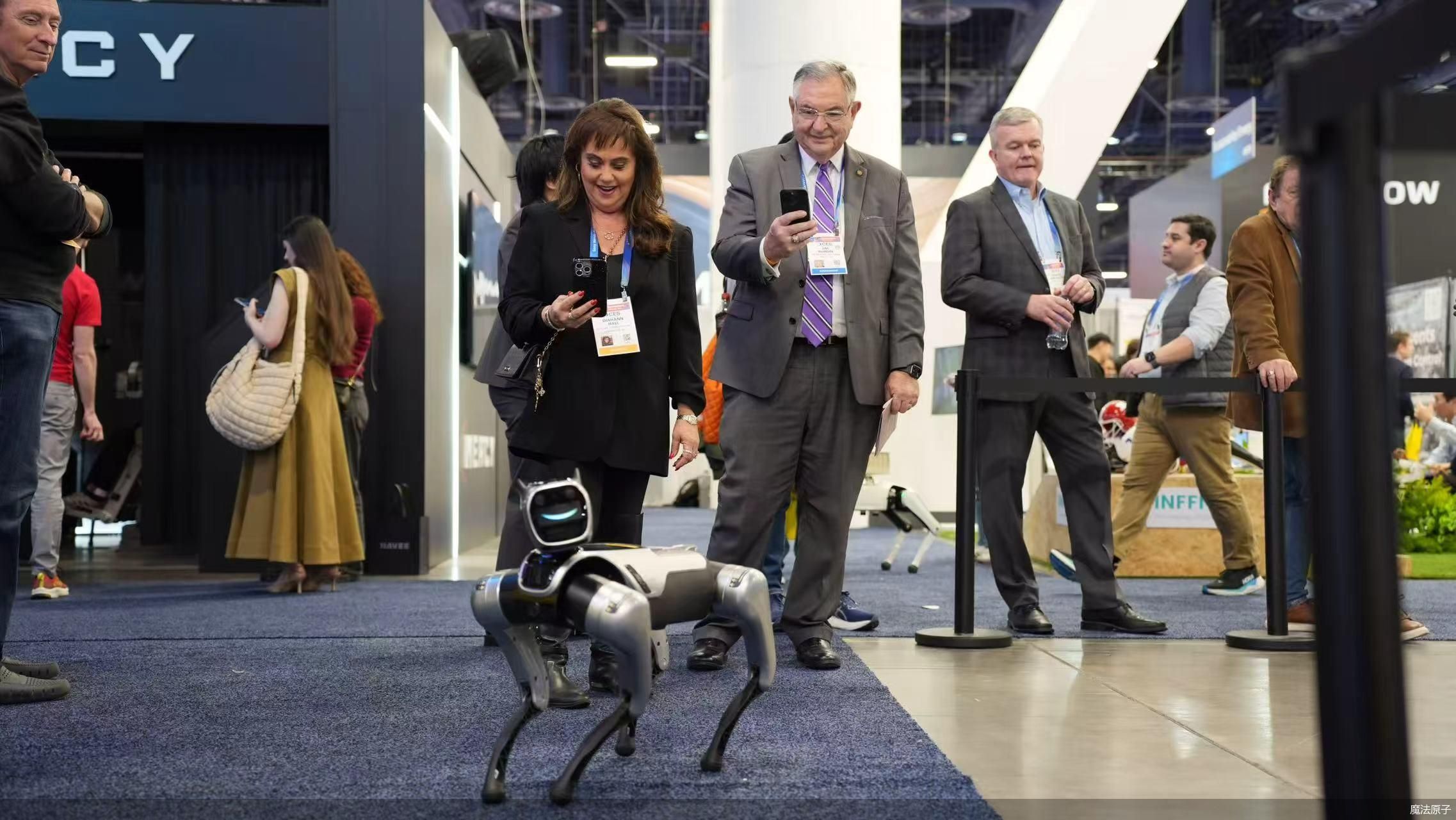
Core Insights - The computer industry is undergoing a "platform reset" that occurs every 10-15 years, with a significant focus on physical AI and the upcoming "ChatGPT moment" [1] - Chinese robotics companies showcased a complete supply chain at CES, with over 30 exhibitors demonstrating various robotic technologies [1][3] Industry Developments - This year's CES marks the most comprehensive collective appearance of Chinese robotics, featuring companies like Yuzhu, Galaxy General, and others, showcasing innovations from humanoid robots to AI-driven solutions [3][5] - The presence of new companies and technologies, such as the TORA-ONE robot from Pasini, highlights the advancements in tactile interaction and embodied intelligence [4][5] Market Engagement - Orders were received on the first day of CES, indicating strong market interest and the effectiveness of showcasing products on a global stage [6] - Companies like Songyan Power are shifting from product display to commercial implementation, targeting key markets in North America, the Middle East, Europe, and Southeast Asia [8] Competitive Landscape - The shift in audience at CES indicates a growing professionalism among attendees, with major enterprises showing interest in robotic solutions [10] - Chinese firms are aware of the competitive landscape and the need for rapid development and market capture to maintain their leading position in humanoid robotics [10][12] Strategic Initiatives - Companies are establishing flexible overseas inquiry and production systems to meet international market demands while ensuring adequate after-sales service [12] - The advancements in robotics and AI infrastructure by companies like NVIDIA complement the efforts of Chinese firms, which are actively developing market-ready solutions [12]


中望软件:CAE产品是通过数值计算与物理建模,模拟验证产品性能的计算机辅助工程仿真工具
Zheng Quan Ri Bao Zhi Sheng· 2026-01-07 11:36
Core Viewpoint - The company emphasizes the distinction between CAE products and physical AI, highlighting their unique roles in engineering simulation and understanding physical laws through AI technology [1] Group 1: CAE Products - CAE products are defined as computer-aided engineering simulation tools that utilize numerical calculations and physical modeling to validate product performance [1] - The company acknowledges the significant value of its CAD and CAE products in the development of physical AI, serving as a bridge between the physical and digital worlds [1] Group 2: Physical AI - Physical AI currently lacks a widely accepted definition but can be understood as a technology system that uses AI to comprehend the laws of the physical world and drive real-world actions [1] - The company is actively exploring the potential applications of physical AI in the industrial software sector, particularly in research and design [1] Group 3: AI Integration - The company has made positive progress in integrating AI technology into existing product functionalities and enhancing the efficiency of its internal R&D teams [1] - Future details regarding the integration of emerging technologies into the company's products will be disclosed through official channels [1]

高通发布跃龙 IQ10 系列,以完整技术组合赋能全场景物理 AI 机器人应用
Huan Qiu Wang· 2026-01-07 11:12
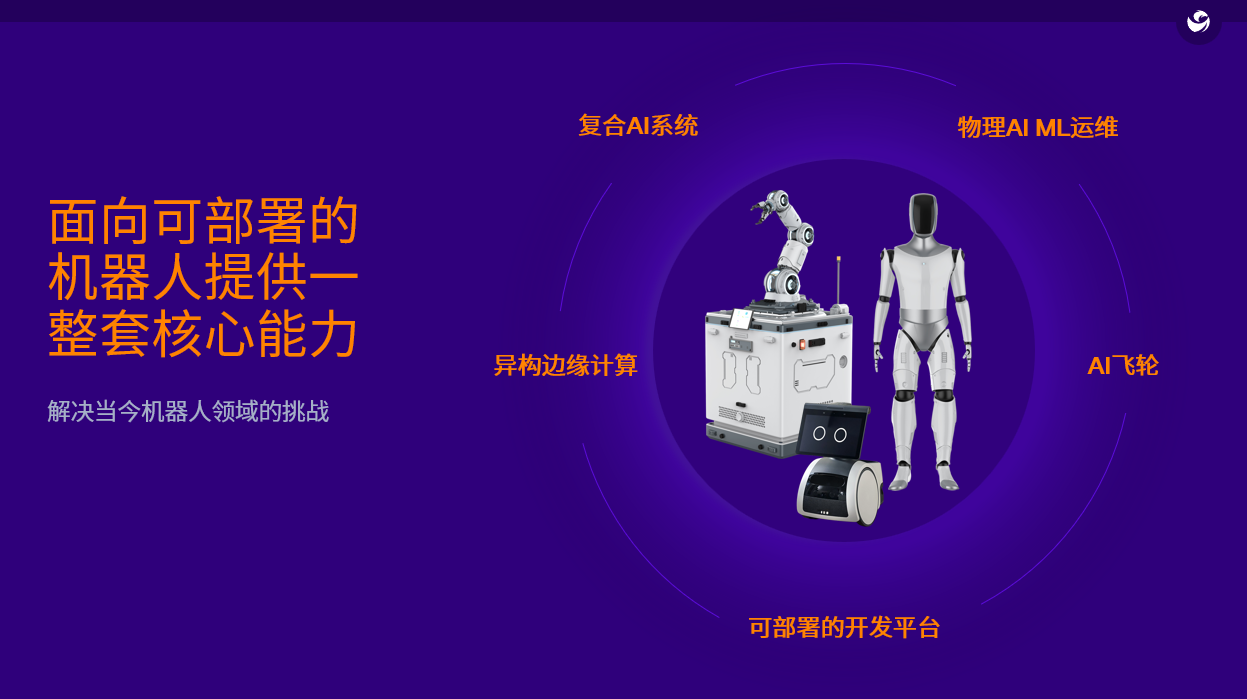
Core Insights - Qualcomm has unveiled its next-generation complete technology solution for robotics at CES 2026, integrating hardware, software, and composite AI capabilities, along with the latest high-performance robotics processor, the Qualcomm Snapdragon IQ10 series [1][3] Group 1: Qualcomm's Innovations - The Snapdragon IQ10 series is designed specifically for industrial-grade autonomous mobile robots (AMRs) and advanced full-sized humanoid robots, enhancing Qualcomm's existing robotics product roadmap with a "robotic brain" that combines high performance and energy efficiency [1][3] - Qualcomm's expertise in edge AI and high-performance low-power systems is expected to help developers transition robot prototypes into deployable intelligent devices [1][3] Group 2: Industry Collaboration and Vision - Nakul Duggal, Qualcomm's Executive Vice President, emphasized the importance of reliable, safe, and scalable operation for complex robotic systems, highlighting Qualcomm's foundational technologies that cover various aspects from sensing to execution [3] - Brett Adcock, CEO of Figure, stated that Qualcomm's platform, with its superior computing power and energy efficiency, is a crucial technological foundation for realizing Figure's mission of creating AI-driven humanoid robots to enhance productivity and improve quality of life [3] Group 3: Technological Advancements - The universal robot architecture powered by Snapdragon IQ10 integrates heterogeneous edge computing, edge AI, hybrid safety-critical systems, software, machine learning operations, and AI data flywheel technology, redefining the application possibilities of robotics [4] - This end-to-end solution enables robots to perform environmental reasoning and intelligently adapt to spatial and temporal changes, facilitating scalable deployment with industrial-grade reliability across various robot forms [4] Group 4: Product Demonstrations - During CES, Qualcomm showcased several robot products powered by its technology, including the VinMotion Motion 2 humanoid robot and the Booster K1 geek version robot, demonstrating Qualcomm's leadership in edge AI and commitment to advancing physical AI [4] - The exhibition also featured a commercially available robot development kit from Advantech, supporting rapid development and multi-scenario deployment, along with tools for remote robot control and AI data flywheel for data collection, training, and deployment [4]

黄仁勋定调,“物理AI”吹响号角
3 6 Ke· 2026-01-07 11:10
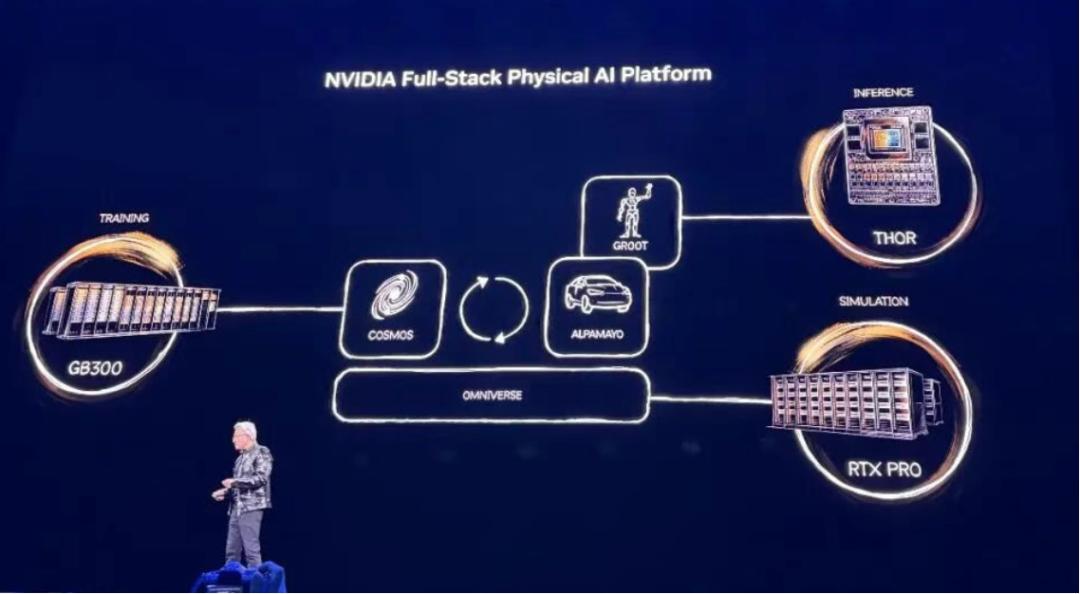
Core Insights - The core viewpoint presented by NVIDIA CEO Jensen Huang is that artificial intelligence (AI) is entering a new phase termed "Physical AI," which signifies a shift from understanding language to comprehending the physical world [2][3]. Group 1: Development of Physical AI - Huang predicts that by 2026, robots with "human-level" capabilities will be achievable, marking a significant transition in AI's ability to interact with the physical environment [2][3]. - The concept of "Physical AI" involves AI systems that can understand natural laws and interact with the physical world, moving beyond mere text and image processing [3][4]. - Huang emphasizes that the development of "Physical AI" requires a comprehensive set of models that can decompose problems and utilize tools, rather than relying on a single model [4]. Group 2: Industrialization of AI - Huang outlines a vision for "AI industrialization," indicating that the entire computing industry must undergo a fundamental transformation to support scalable and deployable AI capabilities [5]. - The latest NVIDIA offerings include a suite of open models, frameworks, and infrastructure aimed at enabling "Physical AI," showcasing collaborations with global partners to create various robotic applications [5][8]. - Huang asserts that the key to advancing AI from virtual to physical realms lies in the ability of robots to understand concepts like gravity, friction, and causality, allowing them to make informed decisions and actions [7][8]. Group 3: Industry Impact and Challenges - The emergence of "Physical AI" is expected to bring robots closer to practical applications, moving them from experimental showcases to commercially viable products [9][11]. - The performance of robots like Boston Dynamics' Atlas demonstrates that humanoid robots are being designed for real-world applications, emphasizing functionality over mere imitation of human movement [11]. - However, challenges remain in the form of data quality, the gap between simulation and real-world application, and the need for technological integration across the industry [12][13].

黄仁勋的“物理AI”,对中国制造来说真不是好消息
Xin Lang Cai Jing· 2026-01-07 10:53
Core Insights - The core message of Jensen Huang's speech at CES is focused on reducing the development costs of Physical AI, which is essential for AI factories [4][32] - The U.S. is strategically pushing AI into real-world production, aiming to revive its manufacturing sector, which poses a significant threat to other countries, particularly China [3][31] Group 1: Physical AI and Its Implications - Physical AI enables autonomous systems like cameras, robots, and self-driving cars to perceive, understand, reason, and perform complex actions in the physical world [4][32] - Training Physical AI is more costly than training generative AI due to the deeper level of reasoning required [9][38] - The introduction of the Vera Rubin platform significantly enhances inference performance, potentially reducing costs to one-tenth of the previous Blackwell platform, thus decreasing the demand for GPUs [9][38] Group 2: Competitive Landscape and Market Dynamics - NVIDIA is transitioning from being a GPU supplier to a competitor in the autonomous driving market, exemplified by its collaboration with Mercedes-Benz on a new smart driving car set to launch in Q1 2026 [13][42] - The rise of Physical AI could lead to a significant dilution of China's engineering and skilled labor advantages, as U.S. manufacturing could be revitalized [12][41] - The collaboration between SoftBank and companies like ABB indicates a broader trend of integrating AI with robotics to innovate in manufacturing [15][44] Group 3: Strategic Recommendations for China - To counter the advancements in Physical AI by companies like NVIDIA, China must enhance its AI infrastructure investment, as the current distribution of computing power is heavily skewed in favor of the U.S. [21][50] - The need for a unified approach within the Chinese AI industry is critical to develop competitive alternatives to NVIDIA's offerings [19][49] - China's extensive experience in practical applications of AI could serve as an advantage, despite the current technological disparities [53][54]
黄仁勋押注物理AI,一场颠覆式革命已然启幕?
Xin Jing Bao· 2026-01-07 10:47
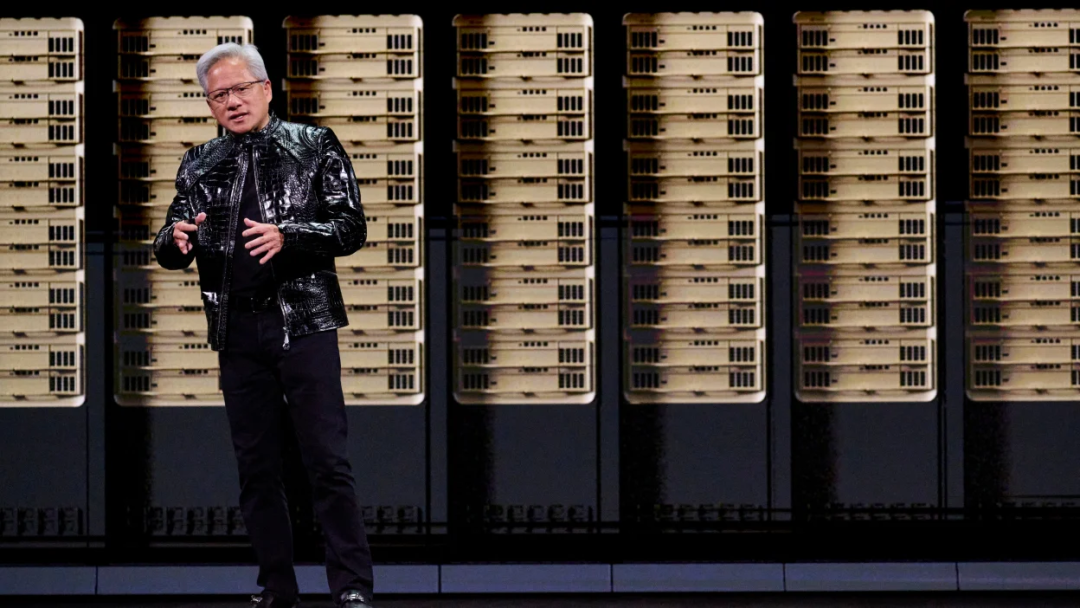
Core Insights - The 2026 International Consumer Electronics Show (CES) highlighted NVIDIA's CEO Jensen Huang's focus on physical AI and the introduction of the Cosmos AI world model, which aims to accelerate the development of physical AI for smart cars, robots, and video analysis [1] - Huang emphasized the challenges of collecting real-world training data for physical AI, advocating for synthetic data as a solution [1] - NVIDIA's CUDA ecosystem is identified as the key competitive advantage, providing a software barrier that attracts AI engineers globally [1][2] Group 1: Physical AI and Cosmos AI - Huang's vision for physical AI includes the ambition for every vehicle to be autonomous, with ongoing efforts to achieve this future [1] - The CUDA ecosystem has grown significantly, with 20 million developers and over 100,000 applications by 2025, creating a positive feedback loop that increases chip demand [2] - The reliance on synthetic data generation and training processes is crucial for simulating the physical world, requiring substantial computational power [2] Group 2: Evolution of NVIDIA's Role - The transition from digital to physical AI represents an extension and upgrade of the CUDA ecosystem, moving beyond just chip sales to becoming an AI infrastructure operator [3] - Huang's strategy aims to integrate AI into various physical environments, expanding the application of AI beyond virtual spaces [3] - The main challenge for the practical implementation of autonomous driving is not the technology itself but the alignment of societal norms with technological advancements [3] Group 3: Future Challenges - The ongoing transformation driven by computational power and ecosystem development is just beginning, raising questions about how human societal systems will adapt to technological evolution [4] - There remains significant uncertainty and challenges ahead as the industry navigates these changes [4]
Mobileye砸63亿杀入具身智能,百辆Robotaxi今年Q3进美国
3 6 Ke· 2026-01-07 10:42
Core Insights - Mobileye has acquired Mentee Robotics for $900 million, which includes $612 million in cash and up to 26.2 million shares of Class A common stock, signaling a strategic move towards integrating humanoid robotics into its operations [4][6][8] - The acquisition is seen as a ticket to a new frontier, as Mobileye aims to combine autonomous driving with humanoid robotics, enhancing its capabilities in physical AI [3][18] - Mentee Robotics, founded in 2022, focuses on humanoid robot development and has a unique AI architecture that allows for efficient skill acquisition with minimal data, which could lower deployment barriers in various industrial settings [8][11][13] Mobileye's Strategic Direction - The acquisition is part of Mobileye's broader strategy to transition from a focus solely on autonomous driving to a more comprehensive approach to physical AI, which includes understanding context, reasoning intentions, and safe actions in the physical world [18] - Mobileye's core business remains strong, with recent contracts for its new generation of surround ADAS expected to deliver up to 9 million units [6][19] - The company plans to leverage its proven safety models and large-scale AI training infrastructure to support Mentee's humanoid robotics, while Mentee's technology could enhance Mobileye's autonomous driving capabilities [16][18] Future Developments - Mobileye's roadmap includes deploying Mentee's robots for concept validation in 2026, small-scale production in 2027, and large-scale deployment in structured environments by 2028, with plans to enter unstructured environments by 2030 [23][25] - The humanoid robots developed by Mentee are designed to be versatile, with capabilities suited for logistics and manufacturing, and are expected to play a significant role in the future of robotics [23][25] - The competitive landscape for Robotaxi services in the U.S. is set to intensify, with Mobileye planning to launch its services in collaboration with major partners, positioning itself against established players like Waymo and Tesla [21][25]
iPhone Air设计师跳槽细节曝光,投奔美国版宇树CEO,新老板辣评:现在的手机和AI太笨
Xin Lang Cai Jing· 2026-01-07 10:07
他所创立的 Figure AI 目前是全球估值最高的人形机器人公司,去年刚完成超 10 亿美元融资,估值飙升 至 390 亿美元。亚马逊创始人杰夫·贝索斯、微软、OpenAI、英伟达等均参与过投资,堪称人形机器人 赛道的当红炸子鸡。 两个月前,彭博社报道称 iPhone Air 的设计师阿比杜尔 · 乔杜里(Abidur Chowdhury) 已从苹果离职, 转投到一家神秘 AI 创业公司。 消息一出,网友们除了表达对 iPhone Air 后续产品线的忧虑,也更关心这位新锐设计师究竟会落脚何 处?两个月后的今天,谜底揭晓,乔杜里加入了一家叫 Hark 的 AI 初创公司,担任设计主管。 如果你没听说过这家公司,完全情有可原,因为它去年 12 月才成立,创始人是连续创业者布雷特·爱德 考克(Brett Adcock),用 1 亿美元个人资金创办的。 说起布雷特·爱德考克,AI 圈的朋友对他或许并不陌生。 据 The Information 披露,布雷特将同时执掌 Hark 与 Figure AI 两家公司的 CEO 职位。 如果说 Figure 是他打造「机器人身体」的项目,那么 Hark 的使命,便是为这些 ...


黄仁勋与李飞飞,让AI不止于“动嘴”
首席商业评论· 2026-01-07 10:00
在最新的 CES 2026 上,英伟达(NVIDIA)首席执行官黄仁勋发表了主题演讲。这次发布会被业界视为从"生成式AI"转向" 物理AI "与" 推理型AI "的历 史性节点。 在本地发布会上,黄仁勋 宣布 Vera Rubin平台全面量产: 作为Blackwell 的继任者,Rubin架构正式亮相并宣布已进入全面投产阶段,预计2026年下半年 交付。其推理性能是前一代Blackwell的5倍,训练性能是Blackwell的3.5倍, 生成AI Token的成本直接降低至原来的1/10。 最关键的是,黄仁勋在演讲中强调,AI的下个阶段是物理AI,不仅要懂语言,也要懂物理世界,并发布了三款平台或应用模型: 1. Cosmos物理AI平台:英伟达发布了Cosmos系列基础模型(包括 Reason2、Predict2.5等)。它能通过视频和遥测数据学习物理规律,在虚拟的 Omniverse 空间中生成大规模合成数据。这意味着 AI 不再只是"猜下一个词",而是能理解重力、碰撞和物体的物理属性。 2. Alpamayo推理型智驾模型:这是首个具备"思考"能力的自动驾驶模型。它不再仅仅依赖预设规则,而是能像人类一样对 ...
CES 2026:全新产品亮相 Arm聚焦搭建AI算力基础设施
Huan Qiu Wang· 2026-01-07 09:33
Core Insights - The integration of physical AI and edge AI is a central theme at CES 2026, showcasing advancements in various devices from autonomous vehicles to personal computers and wearables [1][3]. Group 1: Automotive Industry - The automotive sector is transitioning from "software-defined" to "AI-defined," with multiple companies implementing high-performance computing platforms based on Arm architecture for real-time vehicle perception, prediction, and decision-making [3]. - Tesla's new AI5 chip, built on Arm, reportedly enhances AI performance by 40 times compared to its predecessor [3]. - Rivian's self-developed autonomous driving platform also utilizes customized Arm chips, while NVIDIA DRIVE Thor supports L4-level autonomous taxi operations [3]. Group 2: Robotics - Robotics technology is moving from laboratory experiments to large-scale commercial applications, demonstrating the practical implementation of physical AI [3]. - Various robots, including wheeled robots, cleaning delivery robots, and humanoid robots, showcased their autonomous operation capabilities in complex environments, relying on Arm's high-efficiency computing platforms [3]. Group 3: Consumer Electronics - Edge AI has become a standard feature in PCs, laptops, and tablets, with the Windows on Arm ecosystem rapidly expanding, expecting over 100 related models to launch by 2026 [4]. - Devices like Apple MacBook, Google Chromebook, and Xiaomi tablets, based on Arm architecture, demonstrate the feasibility of efficiently performing AI tasks locally while achieving high performance and long battery life [4]. - The compact AI workstation NVIDIA DGX Spark, powered by Arm cores, can support local inference for models with 120 billion parameters [4]. Group 4: Wearables and Smart Home - The smart upgrade of wearables and smart home devices reflects the deep penetration of edge AI into daily scenarios, with new smart glasses and health rings utilizing low-power Arm chips for continuous local perception and inference, ensuring user privacy [4]. - Smart home systems are increasingly shifting AI processing tasks to local hubs to address energy efficiency, privacy, and reliability needs [4]. Group 5: Industry Trends - CES 2026 clearly illustrates the trend of intelligent technology integrating into transportation, mobile devices, smart homes, professional workstations, and various robotic applications [4]. - Despite the varying forms of AI across different devices, their reliable operation depends on a high-efficiency and scalable computing foundation [4].
