经济增长

Search documents
中共中央政治局召开会议,定调明年经济政策走向,30年国债ETF(511090)涨0.61%
Sou Hu Cai Jing· 2025-12-09 02:39
Group 1 - The core viewpoint of the news is that the bond market is experiencing a rise, with significant movements in various government bond ETFs and futures contracts, indicating a positive trend in the market [1] - As of 10:00 AM, the 30-year government bond ETF (511090) increased by 0.61%, while the 30-year government bond futures contract (TL2603) reached a price of 112.46 yuan, up by 0.37% with a trading volume of 32,085 contracts [1] - The People's Bank of China conducted a 7-day reverse repurchase operation of 117.3 billion yuan at a stable interest rate of 1.40%, indicating a steady liquidity environment [1] Group 2 - The Central Political Bureau of the Communist Party of China held a meeting on December 8 to analyze and plan for economic work in 2026, which is expected to strengthen development confidence and consensus, effectively responding to various challenges [1] - Yang Zhiyong, the president of the Chinese Academy of Fiscal Sciences, stated that macroeconomic policies will continue to be proactive and effective in 2024, aiming to enhance policy efficiency and promote reasonable economic growth [2]


Trading the pivotal week for the market
Youtube· 2025-12-08 18:08
So, we're going to get the Fed decision. Bin, nice to have you in the house on Wednesday. Uh, Oracle and Broadcom are important as we said.Tony Pascarelloo, Goldman Sachs keeps his responsibly bullish stance says, "Looking forward, my baseline view is net positive. Why? The Fed's increasing liquidity into an upswing in growth. The flow of capital is supportive and that's the core of my simple calculus." Other calculus today, Oppenheimer 8,100 on the S&P next year, 7,500 for UBS. How you feeling ahead of thi ...

什么情况下你会考虑投资买房?
集思录· 2025-12-07 13:04
Group 1 - The article discusses the investment attributes of real estate, suggesting that certain conditions should be met before considering property investment, such as a continuous increase in housing prices for two years with an annual growth rate exceeding 5%, rental income of over 5% per year, and zero down payment with interest subsidies [1] - A contrasting viewpoint is presented, arguing that from a pure investment perspective, real estate is not an attractive option due to high transaction costs, long selling cycles, and the need for finding buyers or sellers individually, likening it to a poorly performing stock [2] - The article highlights the importance of personal circumstances in real estate investment decisions, emphasizing that good rental locations can yield over 5% returns even after accounting for depreciation and management costs [3] Group 2 - The discussion includes historical data on Tokyo's real estate market, noting that the Tokyo real estate index peaked in 1990 and saw a significant decline by 2003, with a subsequent recovery by 2023, illustrating the volatility of real estate investments compared to stock market performance [5][6] - It is argued that in a declining population scenario, real estate may not outperform stocks, as housing is a major consumer good and population decreases limit the potential for increased housing consumption [6] - The article suggests that for investors focused on stock markets, the returns from equities are likely to be higher than those from real estate, indicating a preference for allocating funds to stocks rather than property [6]

哈塞特支持改革地区联储行长选拔要求
Sou Hu Cai Jing· 2025-12-06 03:06
Group 1 - The White House National Economic Council Director Kevin Hassett supports Treasury Secretary Scott Benczkowski's call for residency requirements for Federal Reserve Bank president appointments [1][2] - Benczkowski announced on December 3 that he will push for a new rule requiring candidates for regional Fed presidents to have lived in their district for at least three years [2] - Hassett expressed concern that only those living in Washington and New York have voting rights on interest rates within the current Fed structure [2] Group 2 - Hassett anticipates that Fed policymakers will lower interest rates in the upcoming meeting, stating that "now is a good time for cautious rate cuts" [2] - He predicts a resurgence in economic growth by early 2026, driven by recovery from recent government shutdown impacts and new factory outputs [2] - Hassett forecasts a potential 4% productivity growth next year due to the acceleration of artificial intelligence investments [3]
海湾合作委员会推动全面增长
Shang Wu Bu Wang Zhan· 2025-12-05 16:21
(原标题:海湾合作委员会推动全面增长) 阿通社12月3日消息,第46届GCC(海湾阿拉伯国家合作委员会)峰会在巴林召开,成员国一体化 趋势加强。2024年GCC经济规模达2.3万亿美元,非石油经济占GDP76%,金融市场市值达4.2万亿美 元,银行存款与资产分别为2.1万亿美元和3.5万亿美元。对外商品贸易额达1.6万亿美元,贸易顺差1097 亿美元,内部贸易额增长至1460亿美元。GCC拥有全球32.7%原油储量和10.3%的LNG产量,并在可再 生能源领域装机达14.2GW,目标是至2050年清洁能源占比超50%,绿色氢能与氨项目投资近110亿美 元。 ...
国债月报:债市预期走弱,关注配置需求支撑-20251205
Wu Kuang Qi Huo· 2025-12-05 13:25
Report Industry Investment Rating No relevant content provided. Core Viewpoints - The November PMI data shows that both supply and demand have improved, but the manufacturing PMI is still below the boom - bust line, and the service industry has declined significantly, indicating that domestic demand still needs to be boosted. The new policy - based financial tools have not fully offset the impact of the real estate downturn, and the current power of demand recovery is insufficient. The endogenous repair momentum of the economy still needs to be consolidated [11]. - In terms of exports, the October export data was lower than expected, with exports to the US declining while exports to non - US regions maintained resilience. The Fourth Plenary Session emphasized achieving the annual economic and social development goals. Considering the high economic growth rate in the first three quarters of this year, the pressure to achieve the goal this year is not great, and the policy may focus more on the connection with next year's policies, with less need for additional measures in the fourth quarter [11]. - Overseas, the US dollar liquidity was tight in November. Subsequently, observe the inflation and employment data for indications of a December interest rate cut [11]. - The bond market is currently in a multi - empty intertwined situation with weak domestic demand recovery and improved inflation expectations, generally maintaining a volatile trend. In the short term, the imbalance between supply and demand and the expectation of the new fund fee regulations have triggered some redemptions in the bond market, but the overall risk is controllable. The rhythm should pay attention to the linkage between stocks and bonds and the impact of liquidity [14]. - In the medium and long term, the bond market should mainly adopt the strategy of buying on dips, as the direction of loose monetary policy and the adjustment trend of capital - intensive industries are difficult to change, and there is still pressure on the economy to stabilize growth [15]. Summary by Directory 1. Monthly Assessment and Strategy Recommendation - **Economic and Policy Situation**: The November PMI shows that the manufacturing and service industries are differentiated. The new policy - based financial tools have not fully offset the real estate downturn. The export to the US declined in October. The policy may focus on next - year's connection. Overseas, pay attention to the December interest rate cut signal [11]. - **Liquidity**: This week, the central bank conducted 6638 billion yuan of reverse repurchase operations, with 15118 billion yuan of reverse repurchase maturing, resulting in a net withdrawal of 848 billion yuan. The DR007 interest rate closed at 1.44% [14]. - **Interest Rates**: The latest 10 - year Treasury yield is 1.87%, up 2.87 BP week - on - week; the 30 - year Treasury yield is 2.28%, up 9.20 BP week - on - week. The latest 10 - year US Treasury yield is 4.11%, up 9.00 BP week - on - week [14]. - **Trading Strategy**: The recommended strategy is to buy on dips for a 6 - month period, with a profit - loss ratio of 3:1, driven by the combination of loose money and the difficulty of credit improvement [16]. 2. Futures and Spot Markets - **Contract Performance**: Presented the closing price, annualized premium/discount, and net basis trends of T, TL, TF, and TS contracts, as well as the closing price and trading volume trends of TS, TF, T, and TL contracts [19][22][25][28]. 3. Main Economic Data Domestic Economy - **GDP and PMI**: In the third quarter of 2025, the actual GDP growth rate was 4.8%, exceeding market expectations. In November, the manufacturing PMI was 49.2%, up 0.2 percentage points from the previous value, while the service industry PMI was 49.5%, down 0.7 percentage points [41]. - **Manufacturing PMI Sub - items**: In November, the production and new order indices of the manufacturing PMI increased month - on - month, indicating a moderate improvement in both supply and demand [42][47]. - **Prices**: In October, the CPI increased by 0.2% year - on - year, the core CPI increased by 1.2% year - on - year, and the PPI decreased by 2.1% year - on - year. The month - on - month data also showed certain changes. The PPI's year - on - year decline narrowed [50]. - **Exports**: In October 2025, China's import and export data were slightly lower than expected. Exports (in US dollars) decreased by 1.1% year - on - year, and imports increased by 1.0% year - on - year. Exports to the US declined significantly, while exports to ASEAN maintained a relatively high growth rate [53]. - **Industrial and Consumption Data**: In October, the year - on - year growth rate of industrial added value was 4.9%, and the year - on - year growth rate of total retail sales of consumer goods was 2.9%, showing a slight decline [56]. - **Investment and Real Estate**: From January to October, the cumulative year - on - year growth rate of fixed - asset investment was - 1.7%, and the real estate market continued to adjust. In October, the price of second - hand houses in 70 large and medium - sized cities continued to decline [59]. - **Real Estate Construction and Sales**: In October, the cumulative year - on - year data of the completion end declined, and the sales data of new houses in 30 large - and medium - sized cities weakened [65]. Foreign Economy - **US Economy**: In the second quarter, the quarterly annualized value of the US GDP was 3033.1 billion US dollars, with a real year - on - year growth rate of 1.99% and a quarter - on - quarter growth rate of 3.0%. In September, the US CPI and core CPI showed certain changes in year - on - year and month - on - month data [66]. - **US Durable Goods and Employment**: In September, the order amount of US durable goods was 313.7 billion US dollars, with a year - on - year growth rate of 7.26%. The seasonally - adjusted non - farm employment population increased by 119,000, and the unemployment rate was 4.4% [69]. - **US and EU PMI and GDP**: In November, the US ISM manufacturing PMI was 48.2, and the non - manufacturing PMI was 52.6. In the third quarter, the EU GDP increased by 1.5% year - on - year and 0.3% quarter - on - quarter [72]. - **Eurozone Economy**: In November, the Eurozone CPI increased by 2.2% year - on - year, and the core CPI increased by 2.4% year - on - year. The manufacturing PMI was 49.7, and the service industry PMI was 53.1 [75]. 4. Liquidity - **Money Supply and Social Financing**: In October, the M1 growth rate was 6.2%, and the M2 growth rate was 8.2%. The social financing increment was 815 billion yuan, with a year - on - year decrease of 597 billion yuan. The social financing mainly came from the growth of government bonds, and the supporting role of government bonds in social financing may weaken in the future [80]. - **Social Financing Sub - items**: In October, the year - on - year growth rate of government bonds in social financing slowed down, and the financing of the real - economy sector was weak. The social financing growth rate of the resident and enterprise sectors was 5.92%, and the government bond growth rate was 19.20% [83]. - **MLF and Reverse Repurchase**: In November, the MLF balance was 615 billion yuan, with a net investment of 100 billion yuan. This week, the central bank conducted 663.8 billion yuan of reverse repurchase operations, with 1511.8 billion yuan of reverse repurchase maturing, resulting in a net withdrawal of 848 billion yuan. The DR007 interest rate closed at 1.44% [86]. 5. Interest Rates and Exchange Rates - **Interest Rate Changes**: Various market interest rates, including repurchase rates, domestic and US Treasury yields, have changed to different degrees, with some showing increases and others showing decreases [89]. - **Interest Rate and Exchange Rate Trends**: Presented the trends of domestic and foreign bond yields, bank - to - bank pledged repurchase rates, the Fed's target interest rate, and exchange rates (USD/RMB) [92][94][98].
德国工厂订单激增 欧洲最大经济体前景有所改善
Xin Lang Cai Jing· 2025-12-05 12:00
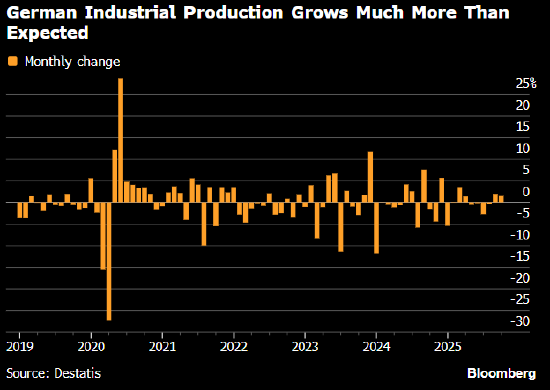
Group 1 - The core viewpoint of the article highlights a significant increase in German factory orders in October, suggesting a potential for growth in the last quarter of the year for Europe's largest economy [1][3]. - The Federal Statistical Office reported a month-on-month demand increase of 1.5%, with September's data revised upward to a growth of 2%, significantly surpassing the median forecast of 0.3% [1][3]. - The improvement in orders is primarily driven by large orders, particularly in the transportation sector, which saw an increase of 87% in orders for aircraft, ships, trains, and military vehicles [1][3]. Group 2 - The recovery of the industrial sector is viewed as crucial for overcoming economic weakness, with GDP expected to contract in both 2023 and 2024 [5]. - Germany faces challenges stemming from deeper issues such as increased tariffs from the U.S., intensified competition, and long-standing bureaucratic obstacles [5].
【环球财经】委内瑞拉副总统:2025年本国经济增速超预期
Xin Hua She· 2025-12-05 11:28
Core Viewpoint - Venezuela's economy is showing resilience and growth despite facing external sanctions, with a GDP growth rate of 8.5% year-to-date, surpassing previous forecasts [1] Economic Performance - The GDP growth rate for Venezuela has reached 8.5% this year, exceeding the UN's October forecast of 6% for the entire year [1] - The Central Bank of Venezuela reported year-on-year economic growth rates of 9.32%, 6.65%, and 8.71% for the first three quarters of the year [1] Government Budget - The proposed budget for 2026 amounts to over 5 trillion bolivars (approximately 19.7 billion USD), with nearly 78% allocated for social projects [1] Economic Structure - The Vice President emphasized the resilience and recovery capacity of Venezuela's economic structure, highlighting the importance of maintaining sovereign control over oil and gas reserves as a key pillar of the national economic model [1]
阿尔及利亚举办首届国际海事展
Shang Wu Bu Wang Zhan· 2025-12-05 05:31
Core Insights - The first International Maritime Exhibition in Algeria is being held from December 2 to 4, attracting around 40 domestic and international exhibitors [1] - The exhibition aligns with Algeria's national priorities, aiming to enhance the overall efficiency, modernization, and attractiveness of the maritime and port sectors while promoting infrastructure development to support the country's economic diversification strategy [1] Group 1: Event Overview - The event is supported by the Ministry of Vocational Training and Education, emphasizing the critical role of vocational training in the maritime sector, including shipbuilding, port technical services, maritime maintenance, and logistics [1] - The exhibition serves as a commercial showcase and a platform for various exchanges and professional training activities, strengthening skill development in the industry [1] Group 2: Industry Discussions - During the exhibition, specialized discussions are held on the future development of the industry, covering topics such as the strategic role of ports in national export policies, financing models for maritime and port infrastructure, and energy transition in the shipping sector [1] - These discussions reflect the intersection of industrial modernization, environmental sustainability, and economic growth [1]
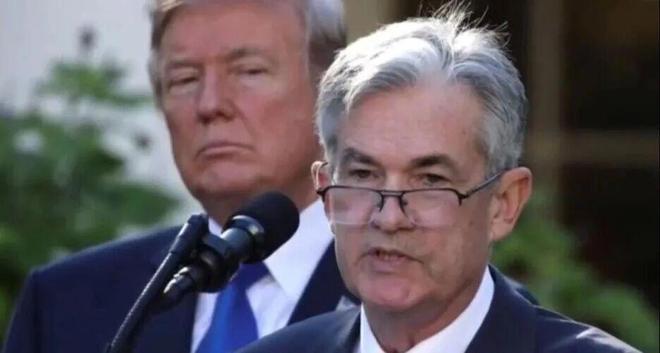
美联储高层即将洗牌
Di Yi Cai Jing Zi Xun· 2025-12-04 00:25
2025.12.04 本文字数:2267,阅读时长大约4分钟 作者 |第一财经 樊志菁 截至12月3日,根据 Kalshi 预测市场数据,哈塞特出任下任美联储主席的概率超过80%。 鲍威尔的决定 如果哈塞特成为美联储新任主席,他将承担起特朗普改组美联储的重任。 除了鲍威尔以外,目前美联储理事会三名成员由前总统拜登任命,剩余三名则由特朗普任命。其中最新 任命的成员是米兰(Stephen Miran)。若鲍威尔在领导任期结束后未辞去理事职务,或特朗普未能成 功罢免拜登任命的美联储理事库克(Lisa Cook),那么米兰将不得不辞职,为新美联储主席候选人腾 出职位。 据媒体报道,特朗普政府取消了原定于周三美联储主席候选人终选名单面试。在美国总统此前一天发出 重要信号后,现任白宫国家经济委员会主任哈塞特(Kevin Hassett)已经成为了新任美联储主席的最大 热门,他也将成为特朗普"改组"美联储的关键人物,然而摆在其面前的挑战随着宏观经济形势走向不确 定性依然艰巨。 大局已定? 据知情人士透露,特朗普团队已告知候选人,原定于周三与副总统万斯(JD Vance)的面试已取消,且 未说明决策理由。 特朗普周二表示,他 ...