
AI眼镜

Search documents
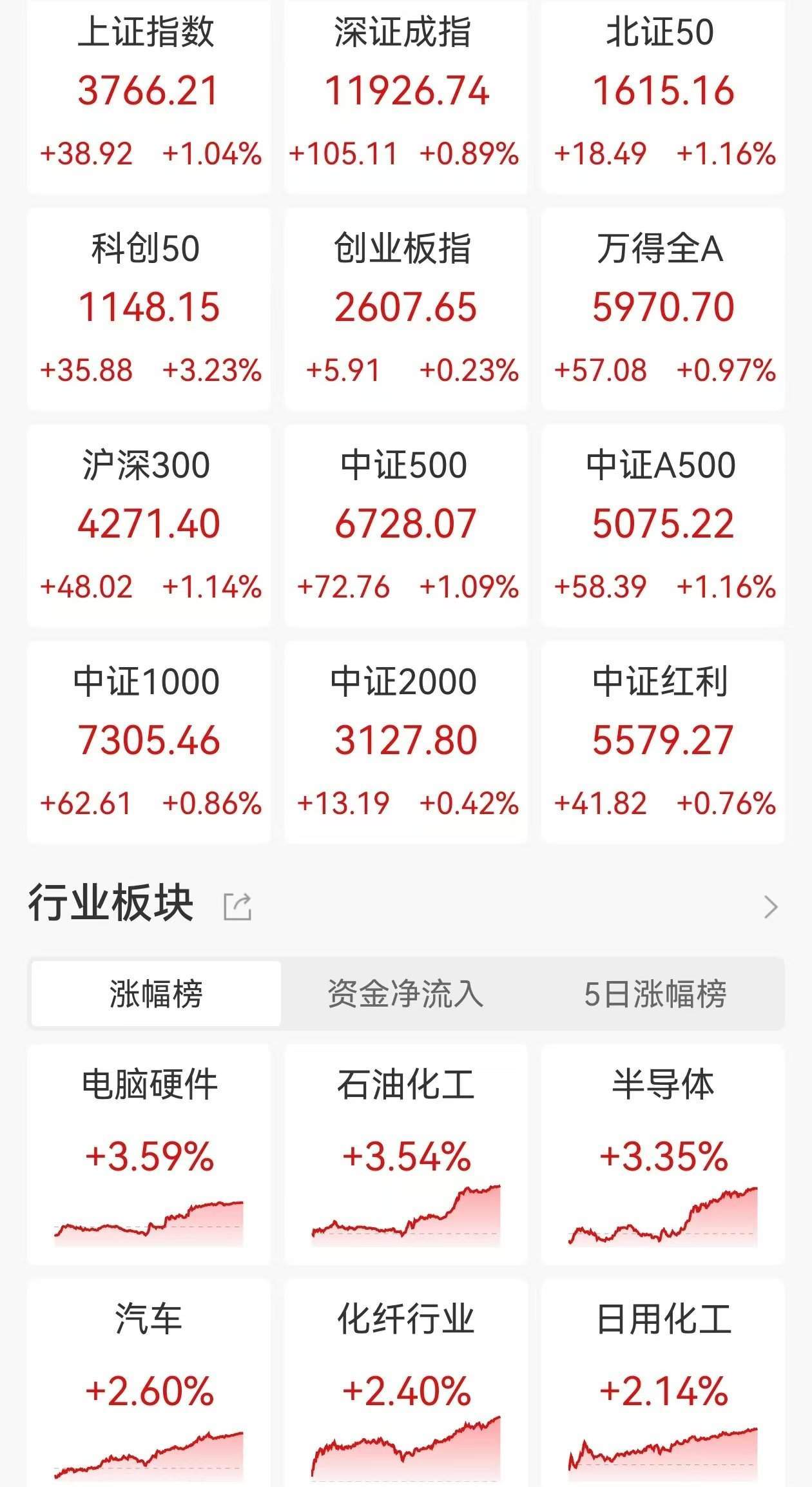
A股收评:三大指数集体上涨,沪指涨超1%续创10年新高,北证50涨1.16%科创50指数涨超3%,半导体、白酒板块走强!超3600股上涨,成交2.45万亿缩量1923亿
Ge Long Hui· 2025-08-20 07:18
Market Performance - Major A-share indices collectively rose, with the Shanghai Composite Index reaching a 10-year high, closing up 1.04% at 3766 points [1] - The Shenzhen Component Index increased by 0.89%, while the ChiNext Index rose by 0.23%. The STAR Market 50 Index surged by 3.23%, marking a new high for the year [1][2] - Total trading volume for the day was 2.45 trillion yuan, a decrease of 192.3 billion yuan compared to the previous trading day, with over 3600 stocks rising across the market [1] Sector Performance - Semiconductor and AI chip sectors saw significant gains in the afternoon, with stocks like Shengke Communication hitting the daily limit [3] - The liquor and brewing sectors strengthened, with stocks such as Guizhou Moutai and Kweichow Moutai reaching the daily limit [3] - AI glasses sector also performed well, with Sanan Optoelectronics hitting the daily limit [3] - Small metal sectors were active, with Yunnan Zinc Industry and others reaching the daily limit [3] - Conversely, the heparin concept and chemical pharmaceutical stocks declined, with companies like Chenxin Pharmaceutical and Chengyi Pharmaceutical hitting the daily limit [3] - Brain-computer interface sector fell, with Beilu Pharmaceutical dropping over 8% [3] - Power equipment sector weakened, with Zhongheng Electronics hitting the daily limit [3]

芯片股,大爆发
财联社· 2025-08-20 07:15
Market Overview - The A-share market experienced a rebound after hitting a low, with the Shanghai Composite Index, Shenzhen Component Index, and STAR Market Index all reaching new highs for the year [1] - The total trading volume for the day was 2.41 trillion, a decrease of 180.1 billion compared to the previous trading day, marking the sixth consecutive day with trading volume exceeding 2 trillion [1][6] - The market showed a mixed performance with over 3,600 stocks rising, indicating a broad-based rally [1] Sector Performance - Key sectors that saw significant gains included white wine, semiconductors, AI glasses, and small metals, while sectors such as film, chemical pharmaceuticals, CRO, and vitamins faced declines [2] - Notable individual stock performances included a surge in chip stocks, with Cambrian Technology hitting a historical high, and a rebound in consumer stocks, exemplified by the two consecutive trading limit increases of JiuGuiJiu [1][2] Index Performance - By the end of the trading session, the Shanghai Composite Index rose by 1.04%, the Shenzhen Component Index increased by 0.89%, and the ChiNext Index saw a modest gain of 0.23% [3]


中京电子:上半年净利润约1828.57万元 同比扭亏为盈
Zhong Zheng Wang· 2025-08-20 07:12
Core Viewpoint - Zhongjing Electronics (002579) reported a significant turnaround in its financial performance for the first half of 2025, driven by demand recovery in artificial intelligence, automotive electronics, and high-end consumer electronics markets [1] Financial Performance - The company achieved an operating revenue of approximately 1.618 billion yuan, representing a year-on-year increase of 21.29% [1] - The net profit attributable to shareholders was approximately 18.29 million yuan, marking a return to profitability compared to a loss of 12 million yuan in the same period last year [1] - Basic earnings per share were 0.0299 yuan, a recovery from -0.12 yuan in the previous year [1] Market and Product Development - The growth in performance was supported by the gradual release of high-end production capacity from the new factory in Zhuhai, with a product upgrade towards high-end HDI boards and high-layer count (HLC) PCBs [1] - The company is actively expanding its customer base in emerging fields such as AI servers and AI glasses, transitioning from an ODM model to direct supply to end customers, which contributed to a 45.75% year-on-year increase in overseas sales revenue [1] Research and Development - In the first half of the year, the company invested a total of 84.88 million yuan in R&D, reflecting a year-on-year increase of 14.77% [1] - The focus of R&D efforts includes the development of 800G optical modules and 6G high-frequency technologies, among 24 key projects aimed at product upgrades [1]

眼镜,会是下一个通用计算平台吗?
Hu Xiu· 2025-08-20 06:19
Core Insights - The discussion around the next universal computing platform has been ongoing for a decade since mobile devices replaced PCs as the primary computing platform [1] - Potential candidates for the next platform include IoT, wearable devices, and smart home or automotive technologies, with market opportunities potentially reaching hundreds of billions to trillions of dollars [2] Group 1: Future Platforms - The future may see connections of hundreds of billions or even trillions of devices, with AR, VR, and XR being prominent contenders for the next platform [3] - Companies like Microsoft, Meta, and Apple have invested heavily in AR/VR technologies, indicating a competitive landscape for defining the next generation platform [3] Group 2: Automotive and Home Technologies - The automotive sector presents a trillion-dollar opportunity, particularly in smart driving technologies, with Tesla leading the way and Chinese companies following closely [5] - In the home sector, while smart speakers and appliances are common, they have yet to evolve into complex interactive platforms, suggesting future breakthroughs may focus on deeper environmental adaptability [6] Group 3: Apple's Strategic Position - Apple has established a strong foothold in the hardware ecosystem, positioning itself as a key player in the transition to AI [7] - The AirPods are identified as a significant auditory entry point, with future AI capabilities potentially overcoming language barriers [8] Group 4: Smart Glasses Market - The RayBan Meta smart glasses have seen sales growth of over 200% year-on-year, with total sales expected to reach 2.17 million units by Q1 2025 [9] - Chinese companies are also making strides in the smart glasses market, with products like those from Xiaomi and Thunderbird impressing in real-time translation capabilities [10] Group 5: Development Paths for Smart Glasses - Smart glasses can evolve through multiple pathways, including: 1. Fashion accessory with light interaction capabilities [13] 2. Screen extender to enhance mobile viewing experiences [14] 3. Direct content projection onto lenses, which poses significant technical challenges [14] Group 6: Optical Display Technologies - Various optical display solutions are being explored for smart glasses, including prisms, freeform surfaces, BirdBath, and waveguide technologies, with waveguide being the most promising for future AI glasses [18] Group 7: Opportunities for Chinese Entrepreneurs - Chinese companies have unique advantages in hardware-software integration, suggesting potential for significant breakthroughs in the smart glasses market [20] - There is optimism regarding the ability of Chinese entrepreneurs to lead the next wave of innovation in this space [21]
午评:沪指震荡微跌,酒类股强势,医药、券商等板块走低
Zheng Quan Shi Bao Wang· 2025-08-20 04:42
Group 1 - The core viewpoint of the articles indicates that the market is experiencing a slow bull trend, supported by increased participation from external funds and a favorable monetary policy environment [1][2] - The Shanghai Composite Index showed a slight decline of 0.06% to 3725.22 points, while the Shenzhen Component Index fell by 0.66% and the ChiNext Index dropped by 1.71%, indicating a mixed performance across different indices [1] - The market is characterized by structural features, with large financial institutions stabilizing the index and facilitating a breakthrough above the 3400-point resistance level, establishing a new slow bull market trend [2] Group 2 - The sectors showing declines include pharmaceuticals, media, brokerage, and electricity, while sectors such as liquor, tourism, catering, food and beverage, non-ferrous metals, and banking are on the rise [1] - The market is witnessing a shift towards new momentum represented by large technology and high-end manufacturing, alongside the effects of "anti-involution" policies and significant infrastructure investments [2] - The overall market sentiment is improving, with a notable increase in external capital inflow into the stock market, driven by the expectation of a more favorable economic environment in the fourth quarter [1][2]
创业板指,半日跌1.71%
财联社· 2025-08-20 03:49
Market Overview - The A-share market experienced fluctuations in the morning session, with the ChiNext index leading the decline [1] - The total trading volume in the Shanghai and Shenzhen markets reached 1.51 trillion, a decrease of 135 billion compared to the previous trading day [1] - Over 3,400 stocks in the market saw declines, indicating a bearish sentiment [1] Sector Performance - Consumer stocks, particularly in the liquor sector, showed signs of rebound, with Jiugui Liquor achieving two consecutive trading limits [3] - Non-ferrous metal stocks demonstrated strong performance, with Luoping Zinc & Electricity hitting the daily limit [3] - AI glasses concept stocks were active, with Kosen Technology achieving four consecutive trading limits [3] - High-priced stocks collectively faced significant declines, with companies like Huasheng Tiancheng hitting the daily limit down [3] - The sectors with the highest gains included liquor, non-ferrous metals, tourism, and AI glasses, while data center power supply, Huawei Ascend, software development, and CRO sectors saw the largest declines [3] - By the end of the session, the Shanghai Composite Index fell by 0.06%, the Shenzhen Component Index dropped by 0.66%, and the ChiNext Index decreased by 1.71% [3]

市场震荡调整,创业板指半日跌1.71%,高位股集体重挫
Feng Huang Wang Cai Jing· 2025-08-20 03:41
Market Overview - The market experienced fluctuations with the ChiNext index leading the decline, closing down 1.71% [1] - The Shanghai Composite Index fell by 0.06%, while the Shenzhen Component Index decreased by 0.66% [1] - Total trading volume in the Shanghai and Shenzhen markets was 1.51 trillion, a decrease of 135 billion compared to the previous trading day [1][5] Index Performance - Shanghai Composite Index: 3725.22, down 0.06% [2] - Shenzhen Component Index: 11743.76, down 0.66% [2] - ChiNext Index: 2557.14, down 1.71% [2] - North 50 Index: 1590.51, down 0.39% [2] Sector Performance - Sectors with notable gains included liquor, non-ferrous metals, tourism, and AI glasses [3] - Liquor stocks showed a rebound, with JiuGuiJiu achieving two consecutive limit-ups [2] - Non-ferrous metal stocks strengthened, with Luoping Zinc & Electricity hitting the daily limit [2] - AI glasses stocks were active, with Kosen Technology achieving four consecutive limit-ups [2] - High-priced stocks collectively fell, with several stocks, including Huasheng Tiancai, hitting the daily limit down [2] Market Sentiment - The overall market sentiment was mixed, with over 3400 stocks declining [2][5] - The market heat index was recorded at 31, indicating a decrease in market activity [5]


午评:创业板指半日跌1.71% 高位股集体重挫
Xin Lang Cai Jing· 2025-08-20 03:40
【午评:创业板指半日跌1.71% 高位股集体重挫】智通财经8月20日电,市场早盘震荡调整,创业板指 领跌。沪深两市半日成交额1.51万亿,较上个交易日缩量1350亿。盘面上热点较为杂乱,个股跌多涨 少,全市场超3400只个股下跌。从板块来看,白酒等消费股展开反弹,酒鬼酒2连板。有色金属概念股 震荡走强,罗平锌电涨停。AI眼镜概念股表现活跃,科森科技4连板。下跌方面,高位股集体大跌,华 胜天成等多股跌停。板块方面,白酒、有色金属、旅游、AI眼镜等板块涨幅居前,数据中心电源、华 为昇腾、软件开发、CRO等板块跌幅居前。截至收盘,沪指跌0.06%,深成指跌0.66%,创业板指跌 1.71%。 转自:智通财经 ...
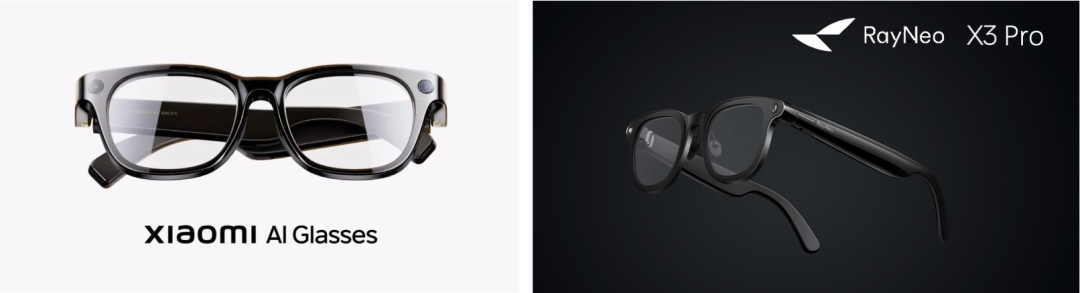
从爆火到“劝退”,小米AI眼镜还卖得动吗?
3 6 Ke· 2025-08-19 12:06
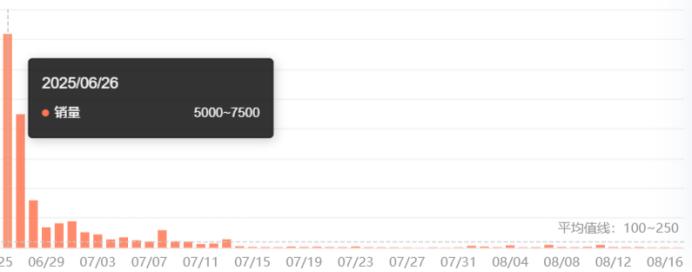
Core Viewpoint - The Xiaomi AI glasses, which initially sparked a buying frenzy, have seen a significant decline in sales and consumer interest just two months after their launch, indicating challenges in user experience and market acceptance [1][2]. Market Performance - The global smart glasses market is projected to ship 1.487 million units in Q1 2025, representing an 82.3% year-on-year growth, while China's market is expected to reach 494,000 units, growing by 116.1% [1]. - Xiaomi's AI glasses achieved over 10,000 sales within five days of launch, prompting an internal sales target increase from 300,000 to 500,000 units [2]. - Sales data from e-commerce platforms show that Xiaomi AI glasses sold over 40,000 units on JD, 7,000+ on Taobao, and 2,600+ on Douyin [2]. Consumer Sentiment - In-store observations revealed a marked decrease in consumer inquiries and interest in the Xiaomi AI glasses compared to the initial launch period [2]. - Sales representatives indicated that the glasses are selling at a low volume, with some stores reporting monthly sales of only 8 to 10 units [2]. Product Availability - Certain models of the Xiaomi AI glasses are currently out of stock across various online platforms, with only limited colors available [3]. User Experience Issues - Users have reported dissatisfaction with the overall quality of the Xiaomi AI glasses, citing a cheap plastic feel and inadequate functionality, such as the lack of a front display for photo and video capture [5][6]. - The built-in voice assistant, "Xiao Ai," has received criticism for its unresponsiveness and issues with accidental activation due to overlapping with other Xiaomi devices [6]. Industry Challenges - Analysts highlight that the domestic AI glasses market faces multiple challenges, including hardware limitations, application ecosystem deficiencies, and quality control issues [7]. - The future of the industry may involve a dual development path, with lightweight glasses evolving into multifunctional personal assistants while professional-grade devices focus on niche markets [7].

北交所市场点评:北证50指数放量上涨突破历史新高,中长期配置价值凸显
Western Securities· 2025-08-19 09:59
Investment Rating - The report indicates a strong bullish sentiment towards the North Exchange market, highlighting a significant increase in the North Exchange 50 Index, which closed at 1576.63, up 6.79% [3][12]. Core Insights - The North Exchange A-shares trading volume reached 454.6 billion yuan on August 18, 2025, an increase of 168.9 billion yuan from the previous trading day, indicating a robust market activity [3][12]. - The report emphasizes the potential for long-term investment in the North Exchange, driven by policy support, capital influx, and industrial upgrades, suggesting that the sector is likely to continue attracting investment [5][6]. Summary by Sections Market Review - On August 18, 2025, the North Exchange A-shares saw 271 companies, with 266 rising, 0 unchanged, and 5 declining. The top five gainers were all up by 30% [3][18]. - The North Exchange 50 Index achieved a historical high, with a peak of 1582.39 during the trading session [5]. Important News - Meta is set to launch a new AI glasses model, Hypernova, with a starting price of approximately $800, reflecting a trend of "price for volume" in the industry [4][22]. - Beijing plans to advance hydrogen energy infrastructure and expand the use of hydrogen fuel vehicles, aiming to cover the entire city and surrounding areas [4][23]. Key Company Announcements - Lin Tai New Materials reported a revenue of 200 million yuan for the first half of 2025, a year-on-year increase of 67.2%, with a net profit of 75.16 million yuan, up 167.81% [5][25]. - Qing Ju Technology achieved a revenue of 350 million yuan, a 2.39% increase year-on-year, with a net profit of 65.69 million yuan, up 0.56% [5][26]. - Qiu Le Seed Industry reported a revenue of 46.68 million yuan, a decrease of 9.86% year-on-year, with a net loss of 20.51 million yuan [5][27]. - Fang Da New Materials reported a revenue of 420 million yuan, a 27.96% increase year-on-year, but a net profit decrease of 25.58% [5][29]. - Chuang Yuan Xin Ke reported a revenue of 110 million yuan, an 18.44% increase year-on-year, with a net profit of 6.31 million yuan, up 354.24% [5][30].