人工智能

Search documents
LP圈发生了什么
投资界· 2026-03-28 07:18
Core Insights - The article highlights significant developments in the investment landscape, particularly focusing on the establishment and funding of various investment funds across different regions in China, indicating a trend towards increased capital flow into innovative sectors. Group 1: Fund Establishments and Investments - Shenzhen's angel investment fund has relaxed return investment constraints, removing local registration requirements for fund managers, marking a pioneering move in the venture capital industry for 2026 [3] - Blue Pool Capital has successfully raised $1 billion (approximately 70 billion RMB), marking the largest dollar fundraising in China this year [4] - A new 100 billion RMB fund, the National Investment and Innovation Fund, has been established in Shanghai, backed by social security funds and major banks, signaling a strong commitment to supporting innovation [6] - The Shanghai Integrated Circuit Industry Private Equity Fund has been launched with an initial scale of 57.02 million RMB, representing a significant step in the city's merger and acquisition strategy [7] - Singapore's Fenglong Xinghe Private Limited has injected 500 million RMB into Shanghai's technology innovation center, focusing on key industries such as integrated circuits and artificial intelligence [9] - Two low-altitude industry funds in Shenzhen have been established, totaling over 1.3 billion RMB, aimed at boosting the low-altitude economy [10] - Chengdu has set up a talent fund with a target scale of 1 billion RMB, focusing on supporting technology talent and quality projects [11] - The Zhongguancun Science City Technology Growth Fund and the Achievement Transformation Fund have completed registration, with a total scale of 10 billion RMB, aimed at supporting strategic emerging industries [12] - The Guangdong Intelligent Robot Fund has been registered with a total scale of 10 billion RMB, focusing on AI and advanced manufacturing [14] - The Shanghai Pudong Smart Manufacturing Phase II Fund has been established with a target scale of 1 billion RMB, focusing on enhancing the local industrial chain [15] - The Shanghai Jiao Yin Guo Xin Fund has been set up with an initial scale of 1 billion RMB, aimed at supporting Shanghai's technology innovation center [16] - The Hubei New Chu Seed Fund has completed registration with a total scale of 500 million RMB, focusing on seed investments in technology projects [19] Group 2: Policy Developments and Strategic Initiatives - Guangdong Province has introduced a new policy to support artificial intelligence OPC innovation development, marking a significant step in promoting new entrepreneurial models [40] - The Beijing-Tianjin-Hebei Venture Capital Guidance Fund has completed its first batch of key project agreements, with a total scale of 1 billion RMB, focusing on early-stage investments in strategic emerging industries [25] - The Hainan Free Trade Port Construction Investment Fund is set to invest in two GP funds, with a total scale of 1.2 billion RMB for one fund and 400 million RMB for another, aimed at supporting innovation in the region [27]


“AI+”产品趋势洞察-炼丹炉
炼丹炉· 2026-03-28 06:35
Investment Rating - The report does not explicitly state an investment rating for the industry [2]. Core Insights - The "AI+" consumer products sector is entering an explosive growth phase driven by policy and technological advancements, with 2025 marked as the year of hardware integration for AI [6][8]. - The report identifies three clear value pathways: new interaction points (e.g., AI glasses, smart rings), enhanced experiences (e.g., AI health monitoring), and new ecosystems (e.g., integrated home systems) [6]. - Differentiated growth characteristics are observed across segments: AI wearables, AI toys, AI imaging, and AI home appliances are all projected to reach significant market sizes by 2030 [6][8]. Summary by Sections Research Background Assessment - The report is published by Lian Dan Lu (Hangzhou Zhi Yi Technology Co., Ltd.), a professional data service platform focused on e-commerce data analysis and market insights [3]. - The research covers the year 2025 and includes market size forecasts for 2030, with a strong emphasis on the timeliness of the data [3]. Scope and Boundaries - The report focuses on "AI+" consumer-grade products, including AI wearables, AI toys, AI imaging devices, and AI home appliances, primarily within the Chinese market [4][5]. - It targets a diverse consumer base, including students, Z-generation parents, single adults, and seniors, analyzing user motivations and usage scenarios [4]. Key Data Extraction and Presentation - The projected market size for China's AI wearable devices by 2030 is estimated at 215 billion yuan [10]. - The global AI toy market is expected to exceed 35 billion USD by 2030, with a compound annual growth rate (CAGR) of over 50% [10]. - The report highlights that educational and programming toys will account for 56% of retail sales in the domestic AI toy category by 2025 [10].
血洗内存股900亿刀的谷歌AI论文,竟涉嫌学术造假
机器之心· 2026-03-28 06:33
Core Viewpoint - The article discusses a significant academic controversy surrounding Google's TurboQuant paper, which claims to revolutionize memory efficiency in AI models but is accused of plagiarism and misrepresentation of prior work [2][4][6]. Group 1: TurboQuant and Its Impact - TurboQuant is a compression algorithm that reportedly reduces memory usage by at least 6 times and increases speed by up to 8 times without loss of accuracy [6][8]. - The announcement of TurboQuant led to a significant drop in the stock prices of memory-related companies, with a market value loss exceeding $90 billion on the day of the blog post [8][12]. Group 2: Allegations of Academic Misconduct - Dr. Gao Jianyang from ETH Zurich claims that TurboQuant's core mechanisms were previously introduced by his team in the RaBitQ papers, which were published in 2024 [14][17]. - The TurboQuant authors allegedly avoided discussing the similarities with RaBitQ and misrepresented its theoretical results as suboptimal without providing evidence [25][27]. Group 3: Technical Discrepancies - The TurboQuant paper is accused of creating unfair experimental conditions by using a non-official implementation of RaBitQ and limiting its performance tests, while TurboQuant was tested on advanced hardware [28]. - Despite acknowledging the limitations in private communications, the TurboQuant paper did not correct these misrepresentations during its review and publication process [27][31]. Group 4: Response and Future Actions - Dr. Gao's team has formally complained to the ICLR Program Committee and plans to publish a detailed technical report on the discrepancies between TurboQuant and RaBitQ [30][31]. - The controversy has garnered significant attention, with many in the academic community supporting Dr. Gao's claims against Google's practices in AI research [33][34].

2025诺贝尔经济学奖得主阿吉翁:AI有可能创造更多经济增长和就业机会
Zhong Guo Xin Wen Wang· 2026-03-28 06:04
Core Insights - Philippe Aghion, the 2025 Nobel Prize winner in Economics, emphasizes that artificial intelligence (AI) has significant growth potential and could create job opportunities [1][2] - AI can automate the production of goods and services and generate new tasks from innovative ideas, which are often combinations of existing concepts [1] - Aghion identifies two main factors that could limit AI's growth potential: insufficient human capital requiring investment in education, and inappropriate competition policies necessitating reforms for data sharing and regulated mergers [1] Group 1 - AI is expected to replace some jobs but also has the potential to create new ones, as companies utilizing AI become more competitive and productive, leading to increased demand for their products and more hiring [1] - The emergence of new ideas through AI will lead to new activities, which in turn will require hiring new employees [1] Group 2 - Aghion suggests that to facilitate the transition from old jobs to new ones, a robust education system should be established in schools, focusing on reading, theorem proving, and calculations, rather than over-reliance on AI [2] - A flexible safety net in the labor market is also recommended to support this transition [2] - The AI revolution is seen as having the potential to accelerate productivity growth, increase wealth, and help impoverished populations escape poverty [2]

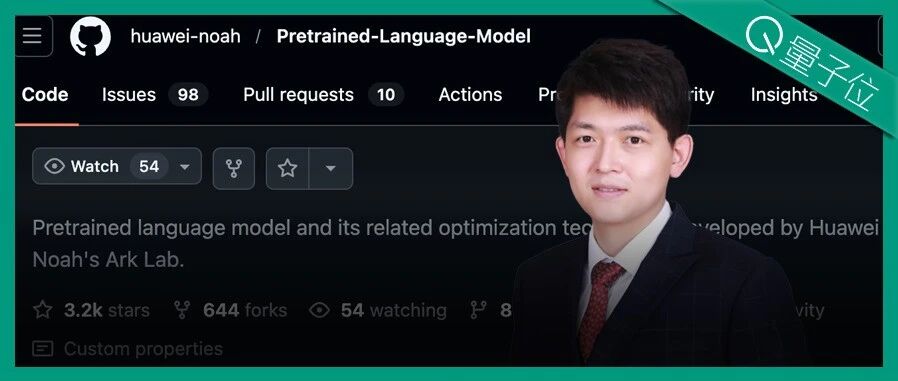
华为盘古大模型负责人王云鹤离职,被曝Agent创业
量子位· 2026-03-28 05:17
Core Viewpoint - Wang Yunhe, the head of Huawei's Pangu large model, has announced his departure from the company, marking a significant change in leadership within Huawei's AI research division [1][14]. Group 1: Career Progression - Wang Yunhe joined Huawei's Noah's Ark Lab as an intern during his PhD studies at Peking University and officially started working there after graduating in 2018 [2][6]. - Over his 8-year tenure, he held various positions including Senior Engineer, Chief Engineer, and Technical Expert, eventually becoming the head of the algorithm application department by the end of 2021 [2][12]. - In 2025, he is set to succeed Yao Jun as the director of Noah's Ark Lab, taking charge of the Pangu large model development [2][12]. Group 2: Academic Contributions - Wang's academic focus during his PhD was artificial intelligence, specifically in machine learning and computer vision, under the guidance of Professors Xu Chao and Tao Dacheng [5][6]. - He has a notable citation count of 33,109 and an h-index of 68, indicating significant impact in his research field [7]. - His highest cited paper, "Ghostnet: More features from cheap operations," addresses deploying convolutional neural networks on embedded devices with limited resources [12][13]. Group 3: Awards and Recognition - Wang Yunhe received Huawei's "Top Ten Inventions" award for innovations that have the potential to create new product lines and significant commercial value [13]. - His research has contributed to practical applications, such as assisting in the discovery of hundreds of fast radio burst samples using the Chinese Tianyan FAST telescope [13]. Group 4: Future Plans - Following his departure from Huawei, Wang Yunhe plans to venture into entrepreneurship focused on Agent technology and is currently engaged in underwater financing [15].
GLM-5.1上线,编程表现贴Opus 4.6开大,Coding plan瞬间断货
量子位· 2026-03-28 05:17
Core Viewpoint - The article discusses the launch of the GLM-5.1 model, highlighting its significant improvements in programming capabilities compared to its predecessor, GLM-5, and its close performance to the leading model, Claude Opus 4.6 [1][2]. Group 1: Model Performance and User Feedback - GLM-5.1 has shown an increase of nearly 10 points in programming ability compared to GLM-5, with a score just 2.6 points lower than Claude Opus 4.6 [1][2]. - Users have reported impressive results, such as creating an interactive version of "Minecraft" and a professional industry manual from research data fed into the model [6][7][9]. - The model's performance in generating spatial structures and maintaining consistency in dynamic environments has been positively noted, indicating strong capabilities in understanding space and continuity [20][28][29]. Group 2: Model Configuration and Accessibility - GLM-5.1 is available to all users of the GLM Coding Plan, including Lite users, and supports integration with platforms like Claude Code and OpenClaw [12][17]. - The model can be configured easily by modifying the settings.json file to switch to GLM-5.1, with detailed steps provided for users [33][36]. - The rapid release cycle of GLM-5.1, occurring just over a month after GLM-5, suggests a focus on continuous improvement and stability in programming tasks [31][32].

AI三年后取代外科医生?马斯克暴论被证伪
第一财经· 2026-03-28 04:42
Core Viewpoint - The development of surgical robots is currently at a stage comparable to the levels of automotive autonomous driving, primarily between L1 basic assistance and L2 advanced assistance, with only a few standardized procedures exploring L3 conditional autonomy, indicating that surgical robots can assist but not replace the decision-making capabilities of surgeons [3][12]. Group 1: Surgical Robot Development - The "SurgMotion" surgical video model was recently launched by the Chinese Academy of Sciences Hong Kong Innovation Research Institute, aiming to serve as a reliable teaching tool and to enhance the development of intelligent surgical robots [4][11]. - Surgical procedures in China have increased significantly, from 69.3 million in 2019 to 104 million in 2023, highlighting the growing demand for surgical services [4]. - The distribution of surgical physicians in China is uneven, with a severe shortage in grassroots areas, necessitating extensive training for new surgeons [4]. Group 2: AI Integration in Surgery - AI models can integrate vast clinical data and expert experiences, enhancing surgeons' decision-making capabilities and addressing the limitations of traditional training methods [5]. - The "SurgMotion" model is the largest of its kind, trained on a dataset of approximately 15 million frames and over 3,658 hours of real surgical videos, covering 13 anatomical areas and over 100 common clinical procedures [6][11]. - The model aims to improve the visual perception and situational understanding of surgical robots, transitioning surgery from reliance on individual experience to standardized, quantifiable practices [5][6]. Group 3: Levels of Surgical Robot Intelligence - Surgical robots are categorized into five levels of intelligence, with L1 providing basic assistance and L2 offering advanced automated support for specific tasks, while L3 is still in early experimental stages [8][9]. - L1 robots assist surgeons by enhancing precision in operations, while L2 robots automate certain repetitive tasks, improving efficiency without fully taking over decision-making [9]. - L3 robots can perform specific steps autonomously in controlled environments but require human intervention in unexpected situations, indicating the current limitations of AI in complex surgical scenarios [9][10]. Group 4: Challenges and Future Outlook - The transition to fully autonomous surgical robots (L4-L5) remains theoretical due to the complexity and unpredictability of surgical environments, which AI currently cannot fully navigate [10][12]. - The integration of AI in surgery is expected to enhance the role of surgeons, who will increasingly act as conductors of human-machine collaboration rather than being replaced by robots [12][14]. - The medical field's unique challenges, including ethical considerations and regulatory requirements, will slow the adoption of AI technologies in clinical settings, making the complete replacement of human surgeons unlikely in the near future [12][16].

深夜飙涨!避险逻辑回归,黄金突破4500美元/盎司!美股连跌五周,Meta两日重挫超11%!
雪球· 2026-03-28 04:28
Market Overview - The three major U.S. stock indices closed lower, with the Nasdaq down 2.15%, the S&P 500 down 1.67%, and the Dow Jones down 1.72%, marking the fifth consecutive week of declines for all indices [2][4]. - The Nasdaq's closing price was nearly 13% lower than its record high from October 2025, while the Dow fell into a correction zone, down 10% from recent highs [4]. Commodity Market Dynamics - A shift in the commodity market was noted, with both oil and gold prices rising simultaneously, contrasting the previous trend of "oil up, gold down" [5][6]. - Gold futures rose by 2.66% to $4,526 per ounce, silver futures increased by 3% to $69.97 per ounce, and U.S. oil prices surged over 7% to $101.16 per barrel [7][8]. Gold Market Insights - Analysts suggest that gold is regaining its appeal as a value investment, especially after a period of being viewed as a liquid asset amid market volatility [9]. - Deutsche Bank raised its gold price forecast for the end of the year from $4,900 to $5,000 per ounce, indicating that recent price corrections may not last [10]. Technology Sector Performance - Major technology stocks experienced significant declines, with the "MAG7" index dropping 2.78%. Notable declines included Amazon down nearly 4% and Meta down 3.99%, marking an 11.63% drop over two days [12][14]. - Meta's stock was pressured by legal issues and concerns over future profitability, including a $375 million fine related to child protection and potential liabilities from social media addiction cases [15]. Inflation and Geopolitical Risks - High oil prices are suppressing risk assets through both cost and expectation channels, with international oil prices reaching three-year highs amid geopolitical tensions [16][17]. - The market has abandoned expectations for interest rate cuts by the Federal Reserve this year, with a 54% probability of at least one rate hike anticipated [17]. - The ongoing conflict in the Middle East is expected to exacerbate inflation concerns, complicating the outlook for central banks globally [17][18].
ChatGPT 让所有人变成了超级个体,却没让你的公司成为超级组织
Founder Park· 2026-03-28 03:34
Core Insights - The article discusses the limitations of AI in enhancing organizational productivity despite individual efficiency gains, highlighting a disconnect between personal productivity and overall company performance [3][5][13]. Group 1: AI's Impact on Productivity - AI tools usage increased by 65% in 400 companies over 16 months, but code delivery only rose by less than 10% [3]. - Over 80% of surveyed executives reported no measurable impact of AI on productivity [3]. - The article compares the current situation to the late 19th century when factories adopted electric motors without redesigning workflows, leading to minimal productivity gains [4][13]. Group 2: Systemic Challenges - Four systemic challenges hinder productivity improvements: coordination collapse, noise amplification, productivity illusion, and AI's counterproductive effects [5][8][10]. - Coordination issues arise as employees use AI tools differently, leading to fragmented outputs [5]. - Noise amplification results from the low cost of generating content, making it harder to discern valuable insights [7]. - A study found that developers using AI tools were actually 19% slower, despite believing they were 20% faster, indicating a significant perception-reality gap [8]. Group 3: Organizational Design and AI Integration - Organizations need to redesign processes to integrate AI effectively, moving from viewing AI as a tool to treating it as a team member [15][16]. - New roles such as AI Agent Manager and Intent Engineer are emerging to manage AI's integration into workflows [16]. - The article emphasizes that organizations must focus on outcomes rather than just efficiency, as merely speeding up existing tasks does not lead to transformative results [13][14]. Group 4: Case Studies and Solutions - The article presents examples of companies like Goldman Sachs and Palantir that are successfully integrating AI into their operations by rethinking workflows and decision-making processes [20][21]. - Tezign's Generative Enterprise Agent (GEA) is highlighted as a system that understands context and drives business results, moving beyond traditional AI tools [23][28]. - GEA's Context System allows for better utilization of non-structured data, significantly increasing the efficiency of content usage [29]. Group 5: Future Directions - The article concludes that organizations must evolve from simply adopting AI tools to creating systems that leverage AI's capabilities for strategic decision-making and operational efficiency [56]. - The need for a shift in mindset is emphasized, where companies must ask if their processes are designed for AI rather than just implementing AI tools [56].

太空算力中心 先用在太空
经济观察报· 2026-03-28 03:18
Core Viewpoint - The space computing center is emerging as a new trend in the investment sector, with significant potential applications in various fields, including Earth observation and remote sensing, and is expected to evolve into a multi-trillion yuan market space [1][8]. Group 1: Applications and Market Potential - The initial applications of space computing centers include emergency safety, environmental monitoring, agricultural remote sensing, and land surveying, with plans to expand into low-altitude economy and intelligent transportation [1][8]. - The market potential for space computing centers is projected to reach a trillion yuan level, indicating substantial growth opportunities in the sector [1]. Group 2: Technological Developments - Elon Musk announced plans for a chip project, TeaFab, aimed at achieving an annual production capacity of 1 trillion watts of AI computing power by 2027, with 80% of the chips designated for space computing centers [2]. - The space computing center requires three core modules: energy, computing, and communication, which are essential for its operation [3][11]. Group 3: Challenges and Future Outlook - Current challenges include high costs associated with satellite launches and construction, as well as the need for technological breakthroughs in energy, computing, and communication [4][10][11]. - The cost of satellite launches is expected to decrease, with projections indicating that by 2030, the economic viability of space computing may improve significantly [12]. - The overall investment for a scalable computing constellation can reach hundreds of millions, highlighting the high capital requirements for establishing space computing centers [13].