未来产业

Search documents
培优育厚产业“硬家底”
Xin Lang Cai Jing· 2026-01-08 20:05
Core Viewpoint - The development of the economy relies on the foundation of the real economy, with a focus on building a modern industrial system that reflects the unique advantages of Inner Mongolia as a priority for high-quality development and national modernization efforts [1] Group 1: Industrial Upgrade - Industrial upgrading is fundamentally a process of reshaping the industrial ecosystem and optimizing resource allocation through reform [1] - Emphasis on leveraging existing strengths and enhancing traditional industries such as energy, chemicals, metallurgy, equipment manufacturing, and strategic resources through smart, green, and integrated approaches [1] - The agricultural, pastoral, and cultural tourism resources in Inner Mongolia have the potential to develop into significant industries, requiring improvements in quality and brand creation [1] Group 2: Expanding New Industries - The key to expanding new industries lies in embracing reform to strengthen emerging industries and cultivate future industries [2] - There is a need to align with trends in green low-carbon technologies and the rapid iteration of artificial intelligence, focusing on growing sectors like new energy, new materials, and green computing [2] - Inner Mongolia's rich application scenarios in low-altitude economy, autonomous driving, and artificial intelligence are crucial for seizing future development opportunities [2] Group 3: Future Outlook - By taking advantage of strengths, addressing weaknesses, and enhancing efficiency, Inner Mongolia is poised to achieve significant industrial transformation and the emergence of new driving forces [3]
门头沟将活化利用永定河古渠灌溉工程
Xin Lang Cai Jing· 2026-01-08 17:59
中关村门头沟园党工委副书记王亚楠介绍,作为全市人工智能重点布局区,京西智谷已纳入北京数据基 础制度先行示范区、入选首批未来产业育新基地。未来将重点推进算力基础设施建设,推动新增200P 国产算力全面投运,同步启动计算视听、智慧文旅等行业智算中心。目前园区已聚集国家高新技术企业 355家、专精特新企业178家。 本报讯(记者 刘洋)北京青年报记者昨日从门头沟区两会新闻发布会上获悉,今年门头沟区将以永定 河古渠灌溉工程遗产活化释放生态价值、以京西古道基础设施升级赋能文旅发展等措施,推动区域绿色 高质量发展迈上新台阶。 门头沟区水务局副局长安丽透露,"十四五"期间永定河生态修复成效显著,30余处泉水复涌、绿色生态 廊道初步形成。今年将重点拓展永定河古渠灌溉工程遗产活化利用路径,串联复苏泉点与京西古道资 源,打造水利主题研学路线。同时推进付家台灌渠遗产保护利用项目,建成集科普教育和休闲体验于一 体的生态遗产示范。 区文旅局二级调研员聂爽表示,门头沟将高质量推进京西古道基础设施升级,打造国家示范性风景道。 在此基础上,将完成第四次全国文物普查,探索社会力量参与文物保护机制,建设"京西博物馆群落", 推动更多文化遗产空间 ...
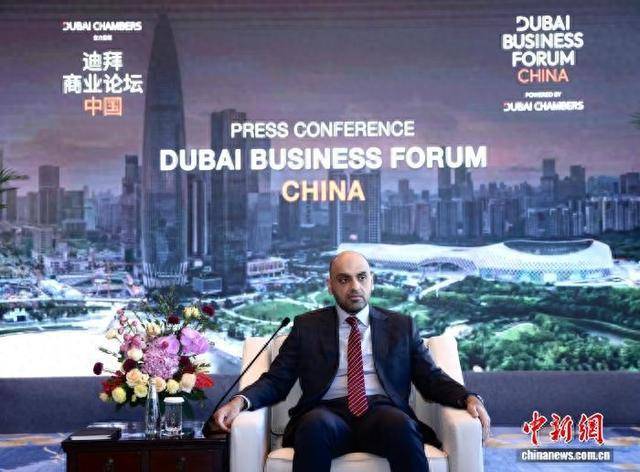
“2026迪拜商业论坛—中国”将于5月在深圳举行
Sou Hu Cai Jing· 2026-01-08 16:10
Core Viewpoint - The Dubai Chamber announced the "2026 Dubai Business Forum - China" to be held on May 14 in Shenzhen, focusing on introducing the Dubai Economic Agenda (D33) and its diversification opportunities to Chinese businesses [1][3]. Group 1: Forum Details - The forum aims to create new pathways for Chinese enterprises to expand globally, leveraging Dubai's strong global business momentum [1]. - This is the second time the Dubai Business Forum is held in China, following the previous event in Beijing in August 2024, which attracted over 800 business elites and investors [1]. - The forum will emphasize the strategic investment and cooperation between China and Dubai, showcasing Dubai as a key economic hub for Chinese companies entering high-growth markets in the Middle East, Asia, and Africa [1]. Group 2: Strategic Importance - The choice of Shenzhen as the venue aligns with its status as a core city in the Guangdong-Hong Kong-Macao Greater Bay Area and a global technology innovation hub [1]. - The Dubai Chamber's President and CEO, Mohammed Ali Rashid Lootah, highlighted the commitment to fostering a strong economic partnership with China, particularly in the digital economy sector [3]. - The forum will gather representatives from multinational companies, high-growth tech firms, unicorns, venture capital institutions, and family businesses, along with a high-level delegation from Dubai [3]. Group 3: Engagement and Participation - The forum will include precise business matchmaking sessions, industry roundtables, and policy dialogues to strengthen long-term cooperation between the two regions [4]. - As of the end of Q3 2025, there are over 6,190 active members from Chinese enterprises registered with the Dubai Chamber [4].

战新产业与未来产业领航,央企开辟增长“第二曲线”
Hua Xia Shi Bao· 2026-01-08 12:16
Core Insights - The article emphasizes the importance of the "14th Five-Year Plan" implementation period starting in 2026, focusing on enhancing core functions and competitiveness of state-owned enterprises (SOEs) to achieve world-class status [2] - The central government aims to accelerate industrial upgrades and foster new growth drivers through strategic investments in emerging industries such as artificial intelligence, biomedicine, and digital economy [2][3] Group 1: Industrial Upgrades and Strategic Focus - The State-owned Assets Supervision and Administration Commission (SASAC) is promoting a dual-track development model for SOEs, focusing on both traditional industry enhancement and the cultivation of new growth drivers [3] - Central enterprises are expected to invest in strategic emerging industries, with an annual investment growth rate exceeding 20% over the past five years, reaching 3.3 trillion yuan in fixed asset investments (excluding real estate) from January to November 2025 [3] Group 2: Technological Advancements and R&D Investment - Central enterprises have significantly increased R&D investment, amounting to 890.16 billion yuan from January to November 2025, with an R&D intensity of 2.62% [5] - Breakthroughs in key technologies have been achieved, such as the development of a world-first megawatt-level CO₂ thermal energy storage system and a 700-megawatt ultra-supercritical circulating fluidized bed boiler [5][6] Group 3: Collaborative Ecosystem and Mechanism Reforms - SOEs are moving away from isolated operations by forming innovation alliances and promoting collaborative development across the industrial chain, with 24 innovation alliances involving over 800 enterprises and institutions [7] - The SASAC plans to advance strategic and specialized mergers and acquisitions in 2026, focusing on sectors like new energy, integrated circuits, and biotechnology to enhance competitive advantages [8]


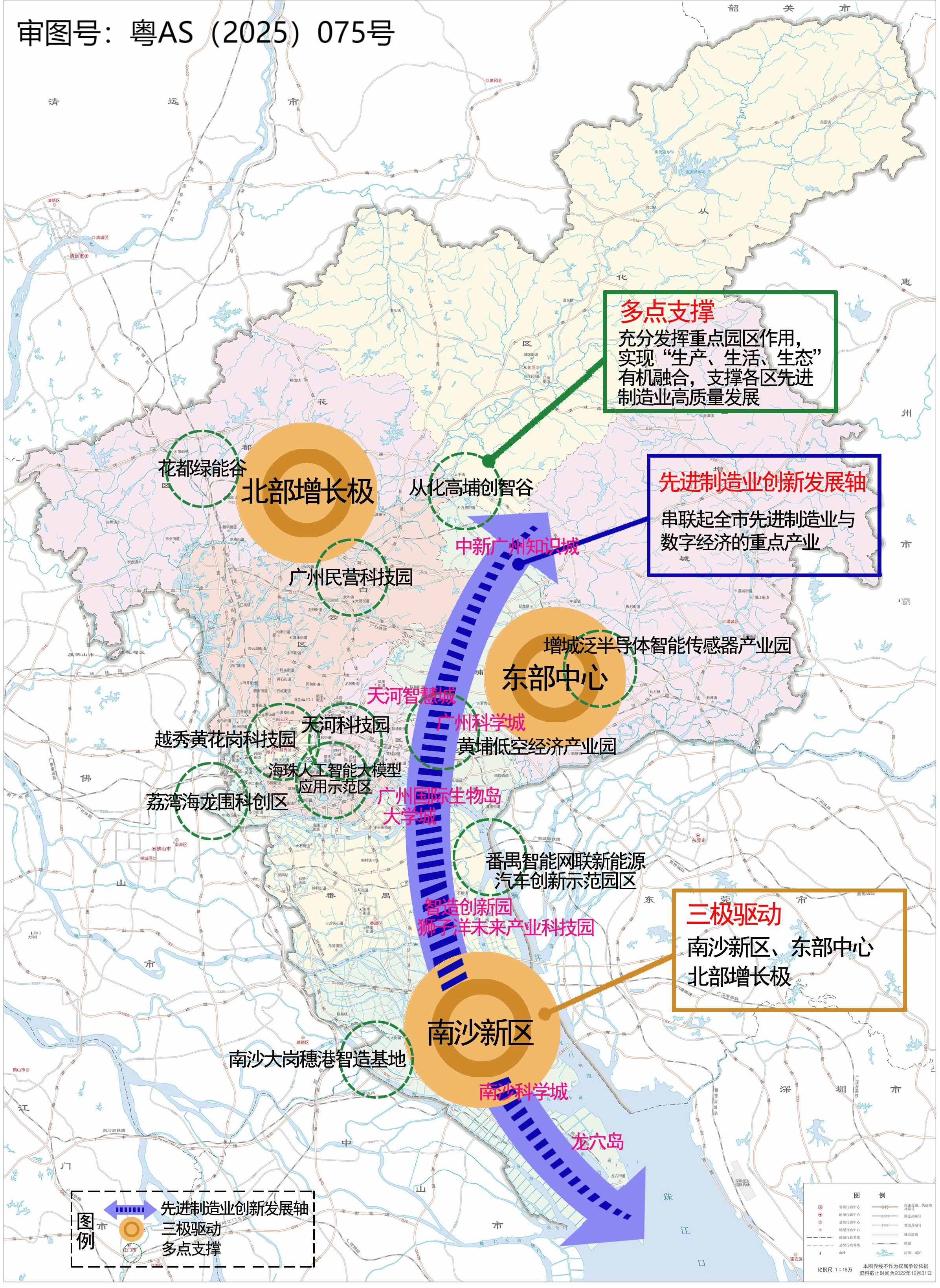
广州:加快建设先进制造业强市,到2035年工业增加值翻一番
Sou Hu Cai Jing· 2026-01-08 11:04
Core Viewpoint - Guangzhou aims to accelerate the construction of an advanced manufacturing city by 2035, targeting a doubling of industrial added value and focusing on the "12218" modern industrial system, integrating advanced manufacturing with modern services, and promoting digital and green transformations [2][14]. Group 1: Key Industrial Directions - The plan emphasizes the development of 15 strategic industrial clusters and six emerging pillar industries, including smart connected new energy vehicles, ultra-high-definition video and new displays, biomedicine and health, green petrochemicals and new materials, software and the internet, and intelligent equipment and robotics [2][38]. - Five strategic leading industries will be cultivated, including artificial intelligence, semiconductors and integrated circuits, new energy and new energy storage, low-altitude economy and aerospace, and biomanufacturing [3][38]. - Four characteristic advantageous industries will be strengthened, such as fashion consumer goods, rail transit, shipbuilding and marine engineering, and intelligent construction and industrialized buildings [4][38]. Group 2: Implementation Strategies - The plan outlines five major projects: industrial agglomeration, industrial innovation, intelligent manufacturing traction, integrated development, and supply chain optimization [14][34]. - Six action plans are proposed, including structural optimization, investment leap, talent attraction and cultivation, digital empowerment, spatial innovation, and element guarantee [14][34]. Group 3: Development Foundations - Guangzhou has a solid manufacturing base, being the most complete industrial city in South China, with significant advantages in technological innovation, green development, and international cooperation [19]. - The city ranks 8th globally in the "Nature Index - Research Cities" and has a robust innovation ecosystem, including numerous national and provincial manufacturing innovation centers [20][27]. Group 4: Opportunities and Challenges - The plan identifies major opportunities from national strategies, such as the manufacturing power strategy and the development of the Guangdong-Hong Kong-Macao Greater Bay Area, which enhances Guangzhou's role as a manufacturing hub [24][18]. - Challenges include the pressure from global economic downturns, the need for industrial upgrades, and competition from other metropolitan areas [28][29]. Group 5: Future Goals - By 2030, the advanced manufacturing city construction is expected to reach significant milestones, with a focus on optimizing industrial structure and enhancing quality and efficiency [36]. - By 2035, Guangzhou aims to solidify its status as an advanced manufacturing city, achieving breakthroughs in key technologies and maintaining a leading position in the global value chain [36][38].
每日市场观察-20260108
Caida Securities· 2026-01-08 05:37
Market Overview - On January 7, the Shanghai Composite Index recorded a slight increase of 0.05%, marking its 14th consecutive day of gains, while the Shenzhen Component rose by 0.06% and the ChiNext Index increased by 0.31%[4] - The total trading volume in the Shanghai and Shenzhen markets exceeded 2.88 trillion yuan, an increase of 492 billion yuan compared to the previous trading day[1] Sector Performance - The market saw a mixed performance across sectors, with industries such as coal, electronics, telecommunications, machinery, and power equipment experiencing gains[1] - Over 2,100 stocks rose, accounting for approximately 40% of the total stocks traded, indicating a healthy market breadth despite some technical adjustment signals emerging[1] Investment Trends - The core sectors of the computing power industry, including photolithography machines and storage chips, are showing strong market certainty due to robust demand and technological advancements[2] - The cyclical sectors, such as energy, controlled nuclear fusion, coal, and lithium carbonate, are also highlighted as recent star sectors, suggesting a coherent investment logic along technology and cyclical themes[2] Fundraising Activity - From January 5 to January 7, 38 new public funds were launched, with a total of 77 funds planned for issuance in January 2026, indicating a significant increase in fundraising activity[14] - The first trading week of January is expected to see 48 new products launched, representing 62.33% of the total planned for the month, with equity products dominating the new fund landscape[14] ETF Trading Volume - The total trading volume of ETFs in both markets reached 480.618 billion yuan, with stock ETFs accounting for 186.7 billion yuan and bond ETFs for 167.924 billion yuan[15]
国资委:靠前谋划实施重大项目和标志性工程
Zhong Guo Zheng Quan Bao· 2026-01-07 20:50
张玉卓表示,今年是"十五五"开局之年,中央企业要抢抓机遇、锐意创新,积极为经济稳中向好注入强 劲动能。要切实狠抓提质增效,深化精益管理,以有效投资积蓄发展潜力,靠前谋划实施一批重大项目 和标志性工程,持续增强价值创造能力;加快推动产业升级,统筹推进传统产业巩固提升和新兴动能培 育壮大,推动传统产业智能化绿色化融合化转型,大力发展战略性新兴产业与未来产业,开辟增长 的"第二曲线";持续加强科技创新,瞄准重点领域关键环节,加大研发投入,优化创新生态,培育拓展 应用场景;着力深化改革攻坚,进一步完善公司治理结构,探索更加符合行业和企业特点的管理运营体 系,更好激发各级企业各类人才的积极性主动性创造性;坚持党的领导加强党的建设,全面落实从严管 党治党责任,持续深化巡视整改,深入落实中央八项规定及其实施细则精神,一体推进"三不腐",进一 步培育优良党风,以高质量党建引领保障高质量发展。 ● 本报记者 刘丽靓 国务院国资委1月7日消息,国务院国资委党委书记、主任张玉卓日前赴四川深入有关中央企业科研、生 产一线调研时表示,中央企业要靠前谋划实施一批重大项目和标志性工程,持续增强价值创造能力;大 力发展战略性新兴产业与未来产 ...
竞速未来产业 各地如何抢占新增长极
Xin Lang Cai Jing· 2026-01-07 16:09
Group 1 - The core viewpoint of the articles emphasizes the strategic importance of future industries in the "14th Five-Year Plan" across various provinces, highlighting the focus on emerging sectors such as artificial intelligence, low-altitude economy, and commercial aerospace as key growth areas for regional economic development [1][2][6] - Provinces are leveraging their unique resources and industrial foundations to create differentiated development paths, with examples including Guangdong's focus on "AI + robotics" and Hainan's integration of agriculture, deep-sea, and aerospace [1][3] - The integration of technology and industry is a common theme, with provinces like Beijing aiming to cultivate a leading AI industry ecosystem and Jiangsu focusing on deepening integration within the Yangtze River Delta's aerospace industry cluster [2][4] Group 2 - The articles highlight the importance of regional collaboration, such as the Beijing-Tianjin-Hebei model, which optimizes resource allocation through a cooperative framework, and the Guangdong-Hong Kong-Macau Greater Bay Area, which fosters differentiated policy matrices to support industrial development [5][6] - The need for systemic innovation in mechanisms to support future industries is emphasized, including talent cultivation, technological breakthroughs, and ecosystem development, as well as the importance of capital support from various sources to drive growth in these sectors [7][8] - The articles suggest that achieving successful outcomes in future industries requires not only market-driven initiatives but also precise policy support to facilitate the transformation of research results into marketable products [8]
未来产业竞速,各地如何抢占新增长极
Bei Jing Shang Bao· 2026-01-07 14:59
近期,多个省份陆续公布地方版"十五五"规划建议,勾勒新质生产力培育、产业创新图景。当人工智能、低空经济、商业航天渗透到千家万户,未来产业已 成为各省"十五五"规划的"必争赛道"。未来产业作为现代化产业体系的重要组成,以其前瞻性、引领性、颠覆性等特点,成为培育新质生产力的重要抓手。 从广东的"AI+机器人"、浙江的低空经济到海南"种业+深海+航天"等特色布局,各地立足资源禀赋与产业基础,走出差异化发展路径,推动未来产业从概念 落地为区域经济增长极。 前瞻布局发展未来产业,四川则聚焦第六代移动通信、量子科技、生物制造、氢能和核聚变能、深空深地、脑机接口、具身智能、前沿半导体等领域,提出 加快突破前沿关键核心技术,建设一批未来产业孵化器和先导区。推动新技术新产品新场景应用示范,完善产业生态,建设新场景推广应用中心,建立未来 产业投入增长和风险分担机制,加快新兴产业规模化发展。促进中小企业专精特新发展,培育瞪羚企业、独角兽企业。 布局策略:从选对方向到跑好赛道 如果说赛道选择是"选对方向",那么系统的布局策略则是"跑好赛道"的关键。部分省、直辖市将建设国家实验室、大科学装置等顶级平台作为关键路径。例 如北京规划着力建 ...

站在“十五五”新起点,广元谋划经济发展新目标 锚定1+3+3 奋力攀向2000亿
Si Chuan Ri Bao· 2026-01-07 08:05
Core Viewpoint - The city of Guangyuan aims to achieve an economic total of 200 billion yuan by the end of the 14th Five-Year Plan, driven by the development of the aluminum industry and the establishment of a comprehensive industrial chain [3][4]. Group 1: Economic Growth and Industrial Development - Guangyuan's industrial added value increased by 13.7% year-on-year from January to November 2025, marking 17 consecutive months of double-digit growth [4]. - The "1+3+3" industrial advantage model has led to a 10.4% year-on-year increase in output value for key industries [4]. - The aluminum-based new materials industry is projected to exceed 50 billion yuan in output value by the end of 2025, with over 100 related enterprises established in Guangyuan [6]. Group 2: Project Attraction and Service Efficiency - Guangyuan has demonstrated a rapid project initiation process, with a notable example of a project starting within 36 days from signing [7]. - The city has implemented a comprehensive service model for enterprises, including dedicated service teams and policy support to address challenges faced by businesses [7]. - In 2025, Guangyuan welcomed 23 new enterprises and added 28 provincial-level specialized and innovative enterprises [8]. Group 3: Strategic Planning and Future Outlook - Guangyuan's strategic plan includes the establishment of a national green aluminum processing base and an innovation base for the aluminum industry in the Sichuan-Chongqing region by 2030 [9]. - The city plans to implement five major projects to enhance aluminum production capacity, upgrade the industrial chain, and accelerate green innovation [9]. - Future industrial development will focus on integrating traditional industries with emerging sectors such as low-altitude economy, new energy, and artificial intelligence [10].