核心CPI

Search documents
8月经济数据释放积极信号:核心CPI同比涨幅连续4个月扩大
Yang Shi Xin Wen Ke Hu Duan· 2025-09-10 09:49
Group 1: Consumer Price Index (CPI) Insights - In August, the Consumer Price Index (CPI) remained flat month-on-month and showed a year-on-year decline, primarily due to a high comparison base from the previous year and lower seasonal food price increases [1] - The core CPI, excluding food and energy prices, rose by 0.9% year-on-year, marking the fourth consecutive month of growth, with an increase of 0.1 percentage points from the previous month [1] - Food prices increased by 0.5% month-on-month, but this was below the seasonal level by approximately 1.1 percentage points, with pork, eggs, and fresh fruit prices showing weaker seasonal changes [1] Group 2: Producer Price Index (PPI) Insights - The Producer Price Index (PPI) turned flat in August after a 0.2% decline in the previous month, ending an eight-month downward trend, with the year-on-year decline narrowing by 0.7 percentage points [3] - The positive changes in some industry prices are attributed to the implementation of "anti-involution" policies and the orderly management of production capacity in key industries [3] - Notable price increases were observed in the coal mining, black metal smelting, and electrical machinery manufacturing sectors, with the PPI showing signs of recovery in emerging industries such as shipbuilding and communication equipment manufacturing [3][4]
最新数据公布,这些领域价格有变化→
Jin Rong Shi Bao· 2025-09-10 09:17
Core Insights - The consumer price index (CPI) in August remained stable month-on-month but decreased by 0.4% year-on-year, with the core CPI (excluding food and energy) rising by 0.9%, marking the fourth consecutive month of growth [1][3] Group 1: CPI Analysis - The year-on-year decline in CPI is attributed to a high comparison base from the previous year and lower-than-seasonal food price increases in August [1][2] - The year-on-year drop in food prices, particularly for pork, fresh vegetables, and eggs, has intensified, contributing significantly to the overall CPI decline [2][3] - The core CPI's growth indicates a stable consumer market, supported by ongoing policies aimed at boosting domestic demand and consumption [3] Group 2: Food Price Dynamics - In August, food prices increased by 0.5% month-on-month but were below seasonal expectations, with significant year-on-year declines in pork (16.1%), fresh vegetables (15.2%), and eggs (14.2%) [2][3] - The overall food price index saw a year-on-year decrease of 4.3%, with the downward pressure on CPI increasing compared to the previous month [2] Group 3: Future Outlook - Analysts predict that CPI may remain weak until the end of the year, influenced by low base effects and policies aimed at supporting consumer prices [4] - The stability in food prices and the potential for a recovery in CPI readings are expected as the impact of "anti-involution" policies on consumer goods prices becomes more pronounced [4]
8月通胀点评:核心CPI同比增速小幅上行
Bank of China Securities· 2025-09-10 09:12
Inflation Overview - August CPI year-on-year growth rate was lower than consensus expectations, with a decrease of 0.4% compared to July[2] - Core CPI increased by 0.9% year-on-year, while service prices rose by 0.6%[2] - Food prices fell by 4.3% year-on-year, contributing to a downward impact on CPI growth by approximately 0.51 percentage points[5] Price Index Trends - August PPI remained flat month-on-month but decreased by 2.9% year-on-year, with production materials down by 3.2% and living materials down by 1.7%[16] - The decline in PPI year-on-year has narrowed by 0.7 percentage points compared to July, marking the first reduction in the decline since March[17] Structural Analysis - The internal structure of CPI showed significant differentiation, with food prices exerting a greater downward influence compared to July[7] - Non-food prices increased by 0.5% year-on-year, contributing approximately 0.43 percentage points to CPI growth[6] Future Outlook - CPI is expected to show a noticeable upward trend starting in September due to base effects, but structural issues remain a concern[7] - To address weak CPI growth, measures should focus on food price stabilization, durable goods supply adjustments, and stimulating demand in service sectors[7] Risk Factors - Potential risks include a second wave of global inflation, rapid economic downturns in Europe and the U.S., and increasing international complexities[32]
8月CPI、PPI数据出炉!来看最新解读→
证券时报· 2025-09-10 08:58
Group 1 - The core viewpoint of the article indicates that the Consumer Price Index (CPI) weakened in August due to high base effects and food price declines, while indicators related to industrial product prices improved, suggesting a continuous optimization of domestic market competition and an improvement in supply-demand relationships in certain industries [1][2][4][6]. - In August, the CPI decreased by 0.4% year-on-year, with food prices dropping by 4.3% and non-food prices rising by 0.5%. The average CPI from January to August was down 0.1% compared to the same period last year [4][10]. - The core CPI, excluding food and energy prices, rose by 0.9% year-on-year, marking the fourth consecutive month of expansion in its growth rate, which reflects positive signals in price movements [1][10][9]. Group 2 - The decline in CPI was significantly influenced by food prices, which had a notable downward impact on the overall index, with pork, fresh vegetables, eggs, and fresh fruits contributing to this decline [7][11]. - Analysts suggest that the improvement in core CPI indicates a positive trend in price movements, but the overall CPI remains close to zero, indicating that further improvement in price performance requires sustained boosts in consumer demand [2][12]. - The Producer Price Index (PPI) showed a narrowing decline in August, marking the first contraction since March, and ended an eight-month downward trend, indicating potential early signs of recovery in industrial prices [13][15].


反“内卷”政策显效,8月PPI明显回升
2 1 Shi Ji Jing Ji Bao Dao· 2025-09-10 08:36
Core Insights - The Consumer Price Index (CPI) decreased by 0.4% year-on-year in August, while the Producer Price Index (PPI) fell by 2.9% year-on-year, marking a narrowing of the decline for PPI compared to the previous month [1][3] CPI Analysis - The CPI's year-on-year decline is attributed to a high comparison base from the previous year and lower-than-seasonal increases in food prices [2][3] - In August, urban CPI decreased by 0.3% and rural CPI decreased by 0.6%, with food prices down by 4.3% and non-food prices up by 0.5% [1][2] - The average CPI for January to August showed a decline of 0.1% compared to the same period last year [1] PPI Analysis - The PPI's year-on-year decline of 2.9% is the first narrowing since March, with a month-on-month change from a 0.2% decrease to flat [1][3] - The average PPI for January to August also showed a decline of 2.9% year-on-year [3] Sector-Specific Insights - Certain sectors, such as coal processing and black metal smelting, saw a reduction in price decline, contributing to the narrowing of PPI's year-on-year drop [4][5] - Emerging industries and technological innovations are driving price increases in specific sectors, such as integrated circuit packaging and shipbuilding [4][5] Future Outlook - The ongoing expansion of domestic demand policies and the effects of anti-"involution" measures are expected to lead to a moderate recovery in prices [5] - The structure of CPI is characterized by declining food and energy prices while core inflation is rising [5]
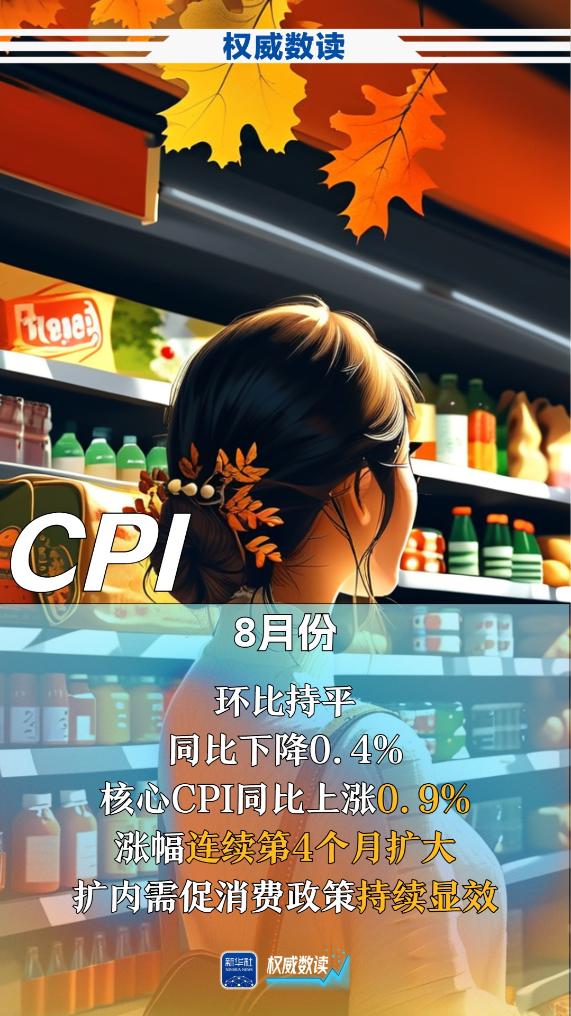
权威数读丨扩内需促消费措施持续显效:核心CPI涨幅连续第4个月扩大
Xin Hua Wang· 2025-09-10 07:55
Core Insights - The consumer market in China remained generally stable in August, with the Consumer Price Index (CPI) unchanged month-on-month and a year-on-year decrease of 0.4% [1][2] - The core CPI, excluding food and energy prices, increased by 0.9% year-on-year, marking the fourth consecutive month of growth in this metric [1][2] Group 1: Price Trends - Food prices saw a year-on-year decline of 4.3% [3] - Non-food prices experienced a year-on-year increase of 0.5% [3] - Overall consumer goods prices decreased by 1.0% year-on-year, while service prices rose by 0.6% year-on-year [3] Group 2: Policy Impact - The sustained effectiveness of domestic demand policies has contributed to consumer spending [1][2]
8月份我国消费市场运行总体平稳 核心CPI继续回升
Yang Shi Wang· 2025-09-10 07:52
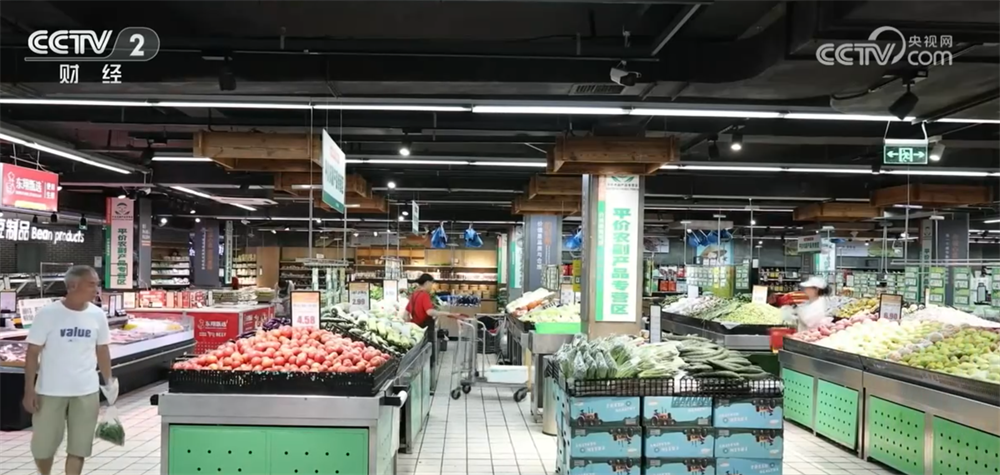
Group 1 - The overall consumer market in China remained stable in August, with the Consumer Price Index (CPI) unchanged month-on-month and down 0.4% year-on-year [1] - The Producer Price Index (PPI) was flat month-on-month after a 0.2% decline in the previous month, with a year-on-year decrease of 2.9%, marking a narrowing of the decline compared to the previous month [1] - The year-on-year decline in CPI was primarily due to a high comparison base from the previous year and lower seasonal price increases for food items such as pork, eggs, and fresh fruits [1] Group 2 - Core CPI, excluding food and energy, increased by 0.9% year-on-year, marking the fourth consecutive month of growth and reaching a new high for the year [1] - The decline in PPI year-on-year narrowed by 0.7 percentage points compared to the previous month, the first contraction since March of this year [1] - Key industries such as coal processing, black metal smelting, photovoltaic equipment manufacturing, and new energy vehicle manufacturing saw a reduction in the year-on-year price decline, contributing to the overall narrowing of PPI decline [1]
中国核心CPI同比涨幅连续4个月扩大
Zhong Guo Xin Wen Wang· 2025-09-10 07:03
值得注意的是,8月份,中国核心CPI同比上涨0.9%,涨幅比上月扩大0.1个百分点。其中,扣除能源的 工业消费品价格同比上涨1.5%,涨幅比上月扩大0.3个百分点。服务价格同比涨幅自3月份起逐步扩大, 8月份上涨0.6%,涨幅比上月扩大0.1个百分点。 国家金融与发展实验室特聘高级研究员庞溟表示,在去除短期性、超季节性、非趋势性的食品价格影响 后,中国CPI同比变化回到正增长区间。相关数据说明,随着政策发力显效,中国消费市场平稳增长、 新动能持续壮大。叠加全国统一大市场建设深入推进、对企业低价无序竞争的治理力度加大,中国社会 需求持续回暖,物价运行信号更加积极。(完) 中国核心CPI同比涨幅连续4个月扩大 中新社北京9月10日电 (记者 王恩博)中国国家统计局10日公布,8月份中国居民消费价格指数(CPI)同比 下降0.4%。但随着扩内需促消费政策持续显效,扣除食品和能源价格的核心CPI同比涨幅连续第4个月 扩大。 国家统计局城市司首席统计师董莉娟表示,8月份CPI同比由平转降,主要是上年同期对比基数走高叠 加当月食品价格涨幅低于季节性水平所致。 从翘尾看,上年价格变动对8月份CPI同比的翘尾影响约为-0.9 ...
重要数据发布!核心CPI持续回升
Sou Hu Cai Jing· 2025-09-10 06:30
Group 1: Consumer Price Index (CPI) Insights - In August, the national Consumer Price Index (CPI) remained flat month-on-month and decreased by 0.4% year-on-year, with the core CPI (excluding food and energy) rising by 0.9%, marking the fourth consecutive month of growth in this metric [1][2] - The year-on-year decline in CPI was attributed to a high comparison base from the previous year and lower-than-seasonal food price increases, with the tail effect from last year's price changes contributing approximately -0.9 percentage points to the CPI [2] - The prices of industrial consumer goods, excluding energy, increased by 1.5% year-on-year, with significant contributions from gold and platinum jewelry prices rising by 36.7% and 29.8%, respectively [2] Group 2: Producer Price Index (PPI) Insights - The Producer Price Index (PPI) decreased by 2.9% year-on-year in August, but the decline was narrower by 0.7 percentage points compared to the previous month, marking the first contraction in the decline since March [4] - The month-on-month PPI change shifted from a decline of 0.2% to flat, influenced by improved supply-demand dynamics in certain energy and raw material sectors, with coal processing prices rising by 9.7% [4] - The narrowing of the PPI decline was also supported by the ongoing optimization of domestic market competition, with significant reductions in price declines for coal processing and black metal smelting industries [5] Group 3: Service Price Trends - Service prices have shown a gradual increase since March, with an August rise of 0.6%, contributing approximately 0.23 percentage points to the CPI, driven by stable price increases in domestic services such as housekeeping and hairdressing [3] - Medical and educational service prices also saw year-on-year increases of 1.6% and 1.2%, respectively, indicating a broader trend of rising service costs [3] Group 4: Emerging Industry Trends - New growth drivers in emerging industries are contributing to price increases in specific sectors, with integrated circuit packaging and testing prices rising by 1.1%, and shipbuilding prices increasing by 0.9% [5][6] - The demand for upgraded consumer goods is also driving price increases in various manufacturing sectors, such as a 13.0% rise in the prices of arts and crafts products [6]
释放积极信号!8月CPI数据出炉
券商中国· 2025-09-10 06:23
具体来看,8月CPI同比下降0.4%,扣除食品和能源价格的核心CPI同比上涨0.9%,涨幅连续第四个月扩大。工业生产者出 厂价格指数(PPI)环比由上月下降0.2%转为持平;同比下降2.9%,降幅比上月收窄0.7个百分点。 接受券商中国记者采访的市场人士认为,核心CPI涨幅连续扩大释放物价运行积极信号,但CPI较长时间在0值附近运行, 后续物价表现改善还需要持续提振居民消费需求。 食品价格等拖累CPI同比、环比表现 8月份,CPI同比下降0.4%。其中,食品价格下降4.3%,非食品价格上涨0.5%。1—8月平均,CPI比上年同期下降0.1%。 对于CPI同比由平转降,国家统计局城市司首席统计师董莉娟分析,这主要是上年同期对比基数走高叠加当月食品价格涨 幅低于季节性水平所致。 最新数据显示,8月份受基数走高影响和食品价格拖累,居民消费价格指数(CPI)走弱,但与工业品价格相关指标改 善,表明国内市场竞争秩序持续优化,部分行业供需关系改善。 光大证券研究所分析师刘星辰表示,从结构来看,扣除能源的工业消费品价格上涨主要受三方面因素带动。一是,受黄 金价格上涨带动金饰品和铂金饰品价格涨幅扩大;二是,7月以来,整治低价 ...