
贸易逆差

Search documents
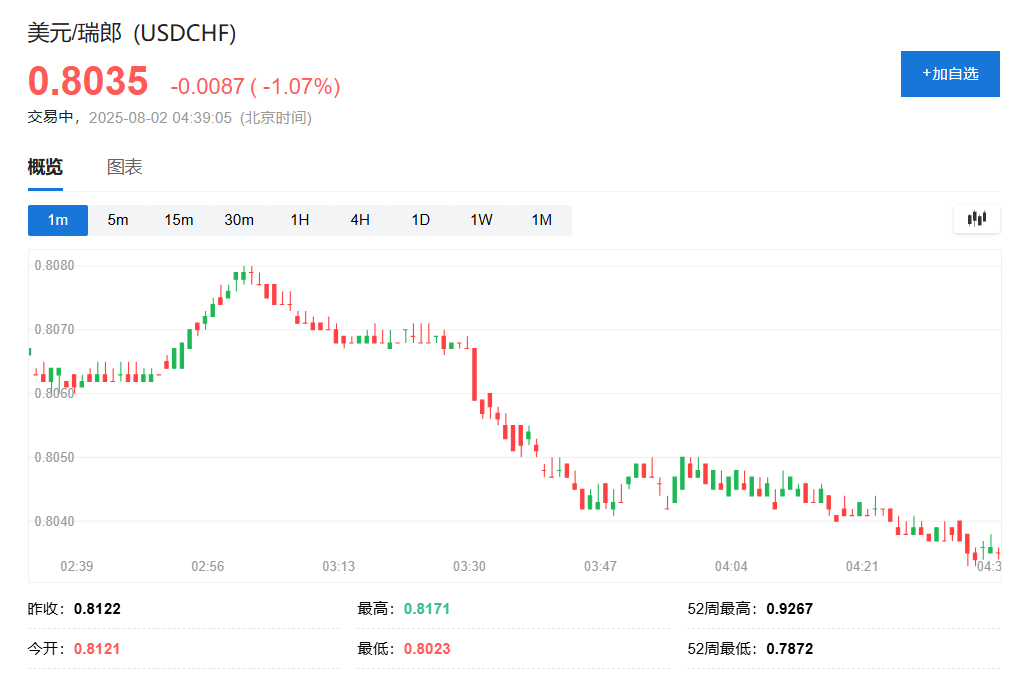
美元兑瑞郎跌1.07%,暂报0.8035。美国总统特朗普宣称,7月31日与瑞士讨论了巨额贸易逆差问题。
news flash· 2025-08-01 20:43
Group 1 - The US dollar has depreciated by 1.07% against the Swiss franc, currently trading at 0.8035 [1] - President Trump announced discussions with Switzerland on July 31 regarding a significant trade deficit issue [1]

特朗普忘了初心
36氪· 2025-08-01 13:34
日经中文网 . 以下文章来源于日经中文网 ,作者日经中文网 编制日经指数的《日本经济新闻》的中文版。提供日本、中国、欧美财经金融信息、商务、企业、高科技报道、评论和专栏。 日 美关税谈判达成了协议。"日本成了银行家","这是一种当美国想建制药厂或半导体工厂时,由日本解决资金的机制"。特朗普4月2日发动关税战的理由是:巨额 贸易逆差是对美国的非同寻常的威胁…… 来源| 日经中文网(ID:rijingzhongwenwang) 封面来源 | IC Photo 日美关税谈判7月22日达成协议。金融市场以股价上涨来回应,经济界也普遍感到安心。接近100天的谈判反映出来的事实是,美国特朗普政府已经失去了 削减贸易逆差的大义。如果关税谈判演变成争相增加对美投资的竞争,那么全球经济将埋下新的隐患。 "日本成了银行家" "在我的指示下,日本将向美国投资5500亿美元,美国将获得90%的利益。这是历史上最大规模的对日交易",美国总统特朗普7月22日如此表示,对日本 征收的对等关税税率降低到了15%。 根据此次协议,日本方面承诺通过政策性金融设置最高5500亿美元的资金额度,扩大对美直接投资。 美国商务部长卢特尼克7月23日就日 ...

美国贸易代表格里尔:关税税率根据与美国的贸易逆差设定。瑞士方面的情况富有挑战。瑞士向美国输送许多药品。与瑞士的谈判未能促成协议。
news flash· 2025-08-01 12:29
Group 1 - The U.S. Trade Representative, Tai, stated that tariff rates are set based on the trade deficit with the U.S. [1] - The situation with Switzerland is described as challenging [1] - Switzerland exports a significant amount of pharmaceuticals to the U.S. [1] - Negotiations with Switzerland have not resulted in an agreement [1]
美国贸易代表格里尔:贸易逆差决定关税税率。
news flash· 2025-08-01 12:22
Group 1 - The core viewpoint is that U.S. Trade Representative Tai stated that trade deficits will determine tariff rates [1] Group 2 - The statement emphasizes the relationship between trade deficits and the imposition of tariffs, indicating a strategic approach to trade policy [1]
15%“关税铁幕”落下 接下来将上演央行降息“多米诺”与全球“需求寒潮”?
智通财经网· 2025-08-01 12:13
Core Points - The new tariffs announced by President Trump have led to an average tariff rate of 15%, the highest since the 1930s, significantly impacting global trade dynamics [1][10] - Despite initial concerns, the global economy has performed better than expected following the tariff announcements, with some Asian economies experiencing GDP growth [1][2] - The uncertainty surrounding the tariffs remains high, with potential changes to tariffs on key products and ongoing legal reviews of the tariff policies [5][11] Tariff Details - The revised tariffs include a minimum rate of 10% and higher rates of 15% for countries with trade surpluses with the U.S. [1][7] - Notable increases include a punitive 39% tariff on Swiss imports and a 35% tariff on certain Canadian goods [5][10] - The average U.S. tariff rate is projected to rise from 13.3% to 15.2% by August 1, compared to just 2.3% before Trump's re-election [7][10] Economic Impact - Bloomberg Economics estimates that the average tariff rate has increased by 12.8 percentage points since Trump took office, potentially leading to a 1.8% decline in U.S. GDP over the next two to three years [10][13] - The tariffs are expected to raise costs for U.S. businesses and consumers, leading to reduced purchasing power [7][13] - The tariffs may also create downward risks for exporters reliant on U.S. demand, particularly affecting countries like Switzerland facing high tariffs [10][11] Market Reactions - Following the announcement of the new tariffs, Asian stock markets fell by 0.7%, and the European Stoxx 600 index dropped over 1% [5][10] - The market's initial reaction was less severe compared to the volatility seen during the April tariff announcements [5][10] Future Considerations - The Federal Reserve faces a complex situation as the new tariffs may lead to inflationary pressures, complicating monetary policy decisions [14][15] - There is a possibility of further tariff adjustments and negotiations, particularly concerning China, as the U.S. seeks to maintain a balance in trade relations [10][15]
印尼上半年贸易顺差194.8亿美元 同比增25%
Zhong Guo Xin Wen Wang· 2025-08-01 09:24
Core Insights - Indonesia achieved a trade surplus of $19.48 billion in the first half of 2025, a 25% increase compared to the same period last year [1] Trade Performance - The trade surplus was primarily driven by non-oil and gas products, which contributed a surplus of $28.31 billion, while oil and gas products recorded a deficit of $8.83 billion [1] - Key surplus items included animal and vegetable oils, mineral fuels, and steel, whereas the deficit items were mainly machinery and equipment, electrical and electronic devices, and plastics and their products [1] Export and Import Growth - Indonesia's total exports in the first half of 2025 reached $135.41 billion, reflecting a year-on-year growth of 7.70%, while total imports amounted to $115.94 billion, growing by 5.25% [1] Major Trade Partners - The top three export destinations for Indonesia in the first half of 2025 were the United States, India, and the Philippines, with China remaining the largest source of imports, followed by Australia and Brazil [1] Monthly Trade Data - In June 2025, Indonesia recorded a trade surplus of $4.11 billion, marking the 62nd consecutive month of surplus [1] - June exports totaled $23.44 billion, up 11.29% year-on-year, while imports were $19.33 billion, increasing by 4.28% [1]
推迟7天!美国关税,最新!
证券时报· 2025-08-01 04:26
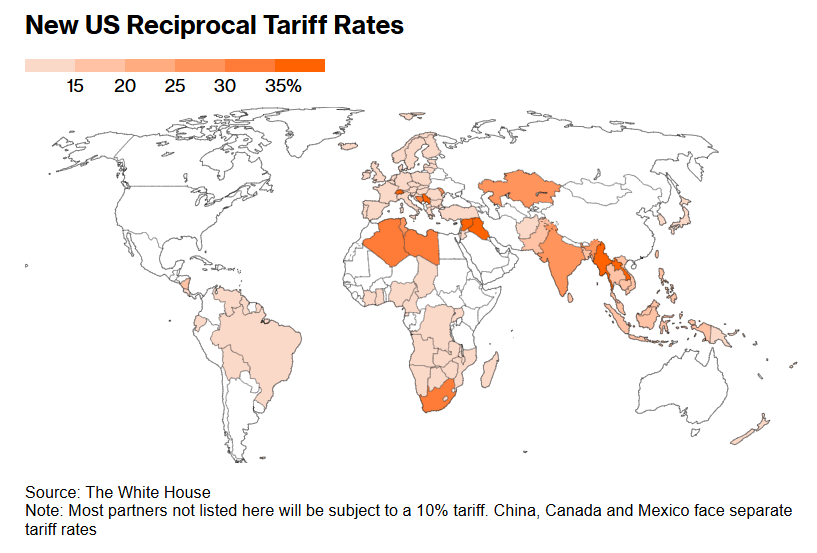
Core Viewpoint - The article discusses the recent executive orders signed by President Trump, which modify tariffs on goods from various countries, introducing new rates that range from 10% to 41% based on trade relationships and agreements with the U.S. [1][2] Summary by Sections Tariff Modifications - An executive order was signed on July 31, modifying tariffs on goods from dozens of countries, with rates varying from 10% to 41% [1] - Goods rerouted to avoid tariffs will incur an additional 40% tariff [1] Trade Agreements and Tariff Rates - Countries with trade agreements or those about to finalize agreements with the U.S. will be subject to the modified tariff rates before the agreements are finalized [2] - A general tariff of 10% will remain for countries where the U.S. has a trade surplus, while a new minimum tariff of 15% will apply to approximately 40 countries with trade deficits [2] Implementation and Specific Rates - The new tariffs will take effect on August 7, allowing U.S. Customs and Border Protection to prepare for the changes [3] - Syria has the highest tariff rate at 41%, while Laos and Myanmar are set at 40%. The UK will maintain a 10% tariff [3][4] Detailed Tariff Rates by Country - A detailed list of countries and their respective tariff rates includes: - Syria: 41% - Laos: 40% - Myanmar: 40% - Switzerland: 39% - Iraq: 35% - Serbia: 35% - Algeria: 30% - South Africa: 30% - Various other countries with rates ranging from 19% to 25% [4][5][6][7][8] Additional Tariff Measures - Starting August 1, a 50% tariff will be imposed on imported copper semi-finished products and high-copper content derivatives [8] - An executive order will suspend the tax exemption for imported packages valued at $800 or less, effective August 29 [8] Specific Country Tariff Increases - From August 6, a 40% tariff will be applied to products imported from Brazil, with certain exemptions [9] - Tariff rates for Canada will increase from 25% to 35% effective August 1 [9]

美国联邦上诉法院提出尖锐质疑,特朗普大部分关税面临严峻法律考验
news flash· 2025-07-31 20:47
Group 1 - The legality of President Trump's broad imposition of global tariffs is being challenged in a federal appeals court [1] - A hearing was held by an 11-judge panel, focusing on the Trump administration's claim that the ongoing trade deficit constitutes a national emergency [1] - The outcome of the court's decision could impact the implementation of higher tariffs set to take effect the following day [1]
摩洛哥2025年上半年贸易逆差大幅扩大
Shang Wu Bu Wang Zhan· 2025-07-31 15:35
Core Insights - Morocco's imports increased by 8.9% in the first half of 2025, reaching $43.8 billion, while exports grew by 3.1% to $25.96 billion, resulting in a trade deficit of $17.84 billion, which is an 18.4% year-on-year increase [1] Import Analysis - The surge in imports was driven by a 29.3% increase in raw material imports, totaling $2.32 billion, a 14.9% rise in equipment imports to $10.25 billion, and a 13.3% growth in consumer goods imports reaching $10.66 billion [1] - However, energy imports saw a decline of 7.4%, amounting to $5.83 billion [1] Export Analysis - The primary contributor to export growth was phosphates and derivatives, which increased by 18.9% to $5.11 billion [1] - Key sectors faced challenges, with electronic and electrical product exports declining by 7.8%, textile and leather exports down by 4%, and automotive manufacturing exports decreasing by 3.6% [1] Trade Deficit Outlook - The significant imbalance between soaring import demand and limited export growth suggests that Morocco's trade deficit is expected to widen further over the next two years [1]