
高端化

Search documents
售价16.98万元起,第六代全新荣放正式接受预订
Zhong Guo Qi Che Bao Wang· 2025-11-21 08:18
Core Insights - The sixth generation of the Toyota RAV4, referred to as the "global star," has officially started accepting reservations, offering three powertrain options: 2.0L gasoline, 2.0L hybrid, and 2.5L hybrid, with a price range of 169,800 to 228,800 yuan [1][6][14] Pricing and Promotions - The new RAV4 features a significant enhancement in product value, estimated at 15,000 yuan, while the pricing has been reduced by 12,000 yuan compared to the previous generation, resulting in a total value increase of approximately 27,000 yuan [3][5] - During the limited-time reservation period from November 21 to January 9, 2026, customers can receive up to 18,000 yuan in cash incentives, a 6,000 yuan purchase tax subsidy, and an additional 6,000 yuan in after-sales service benefits [3][5] Product Features and Variants - The RAV4 is available in six configurations, catering to diverse consumer needs, including practicality, performance, and advanced technology [6][10] - The 2.0L gasoline version targets practical users, with prices set at 179,800 yuan for the luxury version and 189,800 yuan for the four-wheel-drive luxury version [8] - The 2.0L hybrid series is designed for tech-savvy consumers, with prices starting at 169,800 yuan for the elite version and 187,800 yuan for the luxury version [10] - The 2.5L hybrid series is aimed at performance-oriented users, priced at 212,800 yuan for the four-wheel-drive luxury version and 228,800 yuan for the flagship version [10] Technological Advancements - The new RAV4 incorporates advanced technology, including a 15.6-inch 2.5K display and a Qualcomm 8155 chip, enhancing user experience with features like AI voice assistance and a spacious 591-liter trunk [12][14] - The vehicle boasts a fuel consumption of only 3.99L per 100 km for the 2.0L hybrid, translating to a cost of approximately 0.27 yuan per kilometer, emphasizing its efficiency [14] Safety Features - The RAV4 is equipped with the TSS 4.0 intelligent driving assistance system, featuring 24 high-precision sensors for enhanced safety in various driving conditions [14] - The vehicle's body structure has been redesigned with 80% new materials, utilizing ultra-high-strength steel to ensure passenger safety [14] Market Positioning - The RAV4 has a strong market presence, having sold over 15 million units globally since its launch in 1994, and remains a trusted choice for over 2 million families in China [6][12] - The launch of the new RAV4 aligns with Toyota's commitment to innovation in smart, electric, and high-end vehicle segments, as demonstrated by the recent introduction of the IT'S TiME 3.0 technology brand [17]


锚定“三化”强链赋能 恒力石化引领绿色变革
Zheng Quan Shi Bao· 2025-11-20 18:29
Group 1 - The core viewpoint of the articles highlights Hengli Petrochemical's strong performance and strategic initiatives during the "14th Five-Year Plan" period, focusing on refining integration, new material R&D, and green transformation, which solidify its global industry leadership [2] - Hengli Petrochemical has established a vertically integrated industrial layout based on "oil-coal chemical" and "silk film plastic," achieving advanced capacities of 20 million tons in refining and 1.5 million tons in ethylene, breaking the overseas raw material supply constraints [2] - The company has launched key projects such as 800,000 tons of functional polyester film and 450,000 tons of biodegradable plastics, enhancing its presence in new energy and new consumption sectors, and promoting domestic petrochemical capacity improvement and domestic material substitution [2] Group 2 - Hengli Petrochemical has made significant progress in green low-carbon and intelligent transformation, utilizing advanced low-carbon technologies in its garden-style industrial parks, achieving global leading levels in product energy consumption and carbon emission intensity [2] - The company is investing heavily in environmental facilities to achieve ultra-low emissions of "three wastes," integrating green principles into product design and extending them to the consumer end [2] - As a benchmark for high cash dividend distribution, Hengli Petrochemical has returned a total of 26.1 billion yuan to investors since its restructuring and listing in 2016, accounting for 40.43% of the net profit attributable to shareholders during the same period, significantly exceeding the fundraising scale [2] Group 3 - Looking ahead to the "15th Five-Year Plan," Hengli Petrochemical aims to further focus on "high-end, green, and intelligent" directions, accelerating the R&D and industrialization of new energy materials and bio-based materials, and overcoming more "bottleneck" technologies [3] - The company plans to deepen its "dual carbon" actions, expand the application of green electricity and green hydrogen, and promote CCUS technology demonstrations [3] - By leveraging AI and industrial internet technologies, Hengli Petrochemical intends to build a "digital twin factory," establishing a benchmark for intelligent manufacturing and creating a globally leading new materials industry cluster to support China's transition from a "petrochemical giant" to a "petrochemical powerhouse" [3]


小米集团-W(01810):用户触点超 10 亿量级,汽车首次盈利,高端化超预期
SINOLINK SECURITIES· 2025-11-20 15:25
Investment Rating - The report maintains a "Buy" rating for the company, anticipating a price increase of over 15% in the next 6-12 months [5]. Core Insights - The company reported a revenue of 340.37 billion RMB for the first three quarters of 2025, reflecting a year-on-year growth of 32.5%, with an adjusted net profit of 32.82 billion RMB, up 73.5% [2]. - The AIoT platform has connected over 1.035 billion IoT devices, marking a 20.2% increase year-on-year, surpassing major global competitors [2]. - The company is focusing on high-end smartphone positioning, with the Xiaomi 17 series seeing over 80% of its sales from Pro and Pro Max models, and a 24.1% share in the high-end smartphone market in mainland China [3]. - The IoT and consumer products segment achieved a revenue of 27.6 billion RMB in Q3 2025, with a gross margin of 23.9%, up 3.2 percentage points year-on-year [3]. - The internet services segment saw a revenue increase of 10.8% year-on-year, with overseas internet service revenue growing by 34.9% [4]. - The automotive business is showing positive trends, with the YU7 model delivering 108,796 units, a 32.6% increase quarter-on-quarter, contributing to profitability [4]. Summary by Sections Performance Review - For Q3 2025, the company achieved a revenue of 113.12 billion RMB, a 22.3% increase year-on-year, and an adjusted net profit of 11.31 billion RMB, up 80.9% [2]. Business Analysis - The smartphone segment generated 46 billion RMB in revenue in Q3 2025, with a global shipment of 43.4 million units, maintaining a market share of 16.7% globally and 13.6% in China [3]. - The IoT and consumer products segment's revenue reached 27.6 billion RMB, with a focus on smart home appliances and a new factory for smart appliances [3]. Internet Services - The internet services segment's revenue was 9.4 billion RMB in Q3 2025, with a notable increase in overseas revenue [4]. Automotive Business - The automotive segment is on track with the YU7 model's deliveries, indicating a positive trend towards profitability despite some margin pressures [4]. Profit Forecast and Valuation - The adjusted EPS forecasts for 2025, 2026, and 2027 are 1.7, 2.0, and 2.6 RMB respectively, with corresponding PE ratios of 23.89, 20.53, and 15.03 [5].

浙江区县观察:中国高定家居何以看南浔?
Zhong Guo Xin Wen Wang· 2025-11-20 13:16
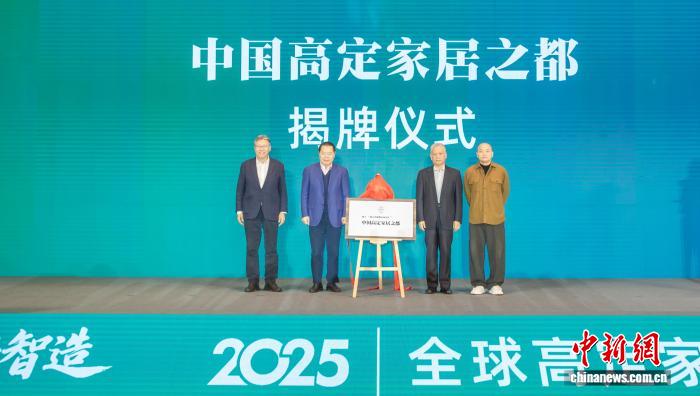
Core Insights - The article highlights the transformation of Nanxun, a city in Huzhou, Zhejiang, into a hub for high-end customized home furnishings, showcasing its industrial evolution and innovation in the sector [1][5]. Industry Development - The 2025 Global High-End Home Furnishing Design Innovation Conference was held in Nanxun, bringing together industry experts and leaders to discuss the future of high-end home furnishings [1]. - Nanxun's wood industry has evolved from traditional processing to high-end customization, with an annual output value exceeding 10 billion yuan, benefiting thousands of families [1]. - The local government has implemented policies to support the wood industry, including the "Chain Leader System" and nine measures to promote high-quality development in the home furnishing sector [2]. Company Innovations - Companies like Zhejiang Kaixin Home Technology Co., Ltd. are adopting automation and upgrading production lines, achieving a transformation from flooring manufacturers to high-end home furnishing providers, with steady growth in output value over three consecutive years [1][5]. - The integration of craftsmanship and technology is evident, with skilled artisans working alongside automated systems to enhance product quality [1]. Cultural and Market Trends - Nanxun's unique cultural heritage, including its reputation as the "Home of Silk" and "Capital of Lake Brushes," provides a competitive advantage in high-end customization, emphasizing the importance of cultural roots in design [5]. - The shift in consumer preferences towards personalized, emotional, and scenario-based home furnishing solutions is driving the industry towards a more collaborative approach between designers and manufacturers [6]. Strategic Initiatives - The establishment of the "China High-End Home Furnishing Capital" and the signing of the "China High-End Home Furnishing Research and Development Plan" indicate Nanxun's readiness to expand into global markets [5]. - The local industry is focusing on transitioning from product output to brand output, positioning itself as a key player in the high-end home furnishing market [5].
九号和小牛打架,雅迪爱玛偷笑
3 6 Ke· 2025-11-20 09:23
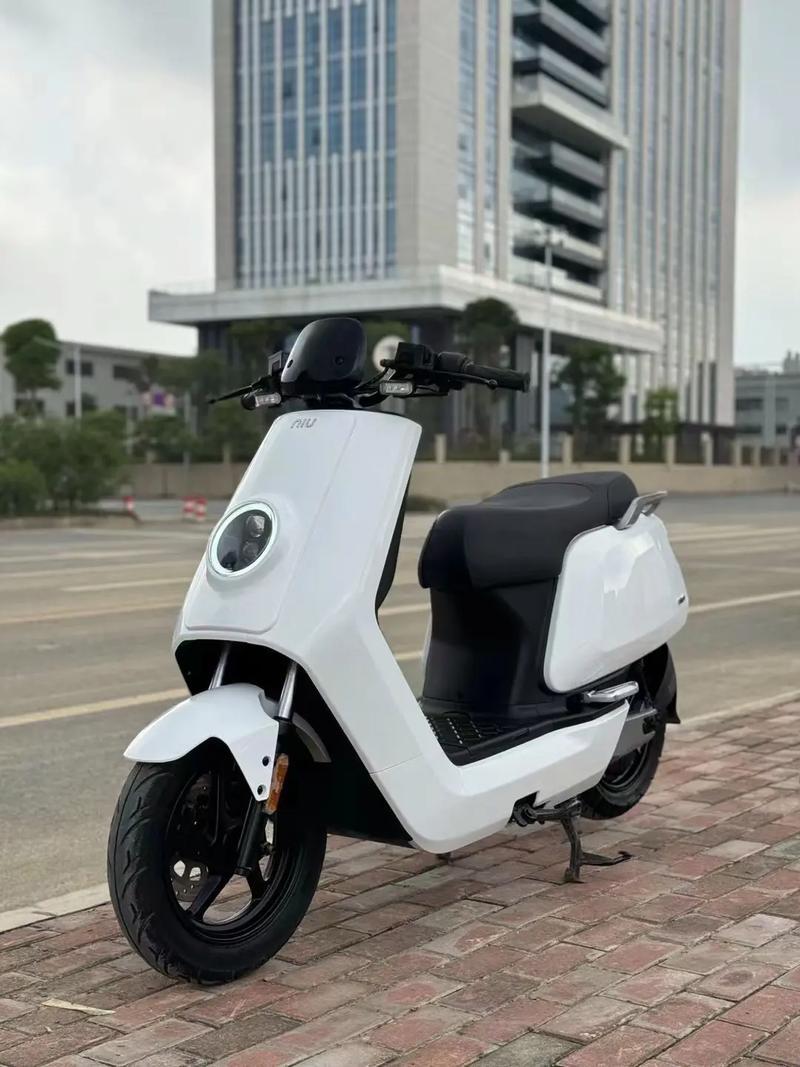
Core Insights - The article discusses the competitive landscape of the electric two-wheeler market, focusing on the contrasting trajectories of two companies: Niu Technologies and Ninebot. It highlights how Niu, initially seen as a promising player, faced significant challenges, while Ninebot capitalized on strategic decisions to emerge as a leader in the market. Group 1: Niu Technologies - Niu Technologies was founded in 2015 by Li Yinan, a prominent figure in China's tech industry, who previously held key positions at Huawei and Baidu [4][6][10]. - The company launched its first product, the N1 electric scooter, in June 2015, which quickly gained popularity despite its higher price point of 3999 yuan, setting records on crowdfunding platforms [17][18]. - However, Niu's success was short-lived as Li Yinan was arrested for insider trading just two days after the product launch, leading to a significant setback for the company [19][20]. - Despite the challenges, Niu managed to grow its sales, reaching 330,000 units by 2018, but faced difficulties in maintaining momentum due to Li's absence and strategic missteps [50][51]. Group 2: Ninebot - Ninebot was established in 2012 and initially focused on electric balance scooters, quickly gaining traction in the market [20][22]. - The company faced a lawsuit from Segway, a major player in the balance scooter market, but instead of backing down, Ninebot acquired Segway with the help of significant investment from Xiaomi [26][28]. - This acquisition allowed Ninebot to dominate the balance scooter market and later expand into electric two-wheelers, launching products that directly competed with Niu [33][34]. - Ninebot's strategic entry into the electric motorcycle market in 2019 coincided with favorable regulatory changes, leading to rapid sales growth, reaching over 1.4 million units by 2023 [58][59]. Group 3: Market Dynamics - The article emphasizes that both Niu and Ninebot have positioned their products as high-end consumer electronics, but the overall market remains dominated by low-cost, practical options [42][87]. - Niu's focus on high-end features and pricing strategies led to a decline in market share, while Ninebot successfully targeted the mid-range market, offering competitive pricing [70][71]. - The importance of physical retail presence is highlighted, with Ninebot rapidly expanding its store network to over 9,700 locations, while Niu struggled with store closures and a decline in retail presence [78][75]. Group 4: Industry Insights - The article concludes that the electric two-wheeler market is primarily driven by practical needs rather than high-end features, indicating that the push for smart and premium products may not resonate with the majority of consumers [88][102]. - Despite the initial hype around high-end electric scooters, the market is still largely influenced by traditional players like Yadea and Aima, which dominate in terms of sales and distribution [85][86]. - The narrative suggests that the future of electric two-wheelers may not lie in high-end innovation but rather in meeting the basic transportation needs of consumers [102][103].
小米新征途:智能汽车、出海和高端化造想象空间
Feng Huang Wang· 2025-11-20 07:08
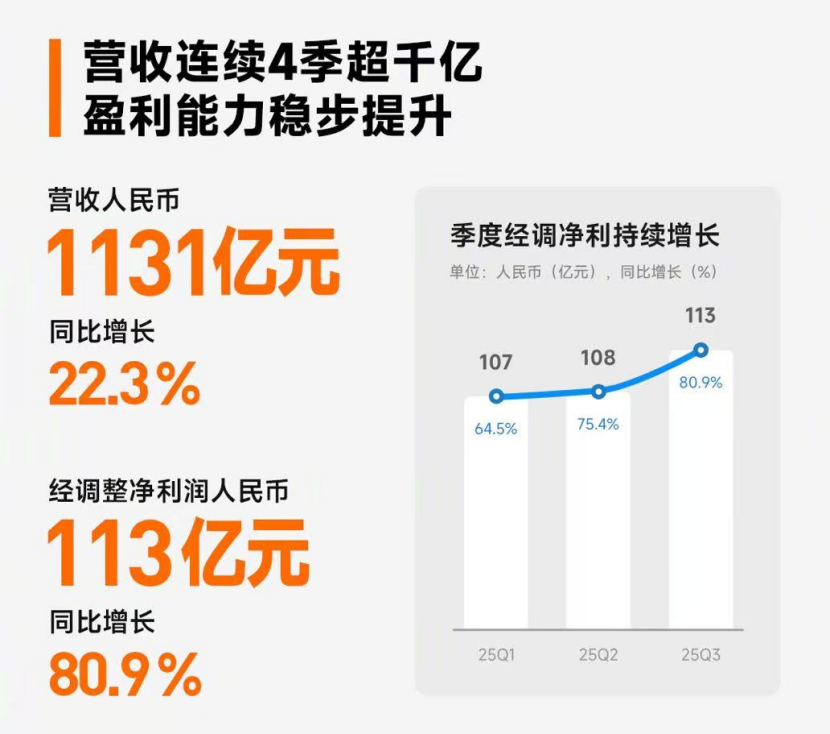
Core Insights - Xiaomi's revenue reached 113.1 billion yuan in Q3, marking a 22.3% year-on-year increase, with adjusted net profit soaring by 80.9% to 11.3 billion yuan, a historical high [1][2] - The company is experiencing robust growth in its core business while its innovative sectors, particularly electric vehicles and AI, are rapidly gaining traction [2][8] - Xiaomi's R&D investment has reached 23.5 billion yuan in the first three quarters, with expectations to exceed 30 billion yuan for the entire year, laying a solid foundation for future growth [1][17][19] Revenue Breakdown - In Q3, revenue from the smartphone and AIoT segments was 84.1 billion yuan, with smartphone revenue at 46 billion yuan and IoT and lifestyle products at 27.6 billion yuan, reflecting a 5.6% year-on-year growth [4] - Internet services revenue reached 9.4 billion yuan, up 10.8% year-on-year, with overseas internet service revenue hitting a record 3.3 billion yuan, contributing significantly to growth [5] Smartphone Performance - Xiaomi's global smartphone shipments reached 43.3 million units in Q3, marking nine consecutive quarters of year-on-year growth, maintaining a top-three position globally for 21 quarters [4] - The Xiaomi 17 series has gained significant traction in the high-end market, achieving over 1 million sales within five days of launch [9][10] Innovative Business Growth - Revenue from the electric vehicle and AI segments surged to 29 billion yuan, with a year-on-year increase exceeding 199%, and the automotive division achieving profitability [5][12] - The contribution of innovative business to overall revenue growth has increased from 15.32% to 25.64% in Q3, indicating a shift towards self-sustaining growth [5] R&D and Future Outlook - Xiaomi plans to invest 200 billion yuan in R&D over the next five years, focusing on core technologies to transition from an internet company to a hard-tech company [19][20] - The company has launched new self-developed chips and operating systems, enhancing its ecosystem and user experience across devices [19][20] International Expansion - Xiaomi aims to increase the number of its retail stores overseas to 10,000 in the next five years, focusing on markets in Southeast Asia, Hong Kong, Taiwan, Japan, South Korea, and Europe [14][16] - The company has successfully established a presence in international markets, with significant interest in its electric vehicles and smart home products [13][14]
三款新车齐发,一汽丰田技术品牌迈入新阶段
Bei Jing Ri Bao Ke Hu Duan· 2025-11-20 06:22
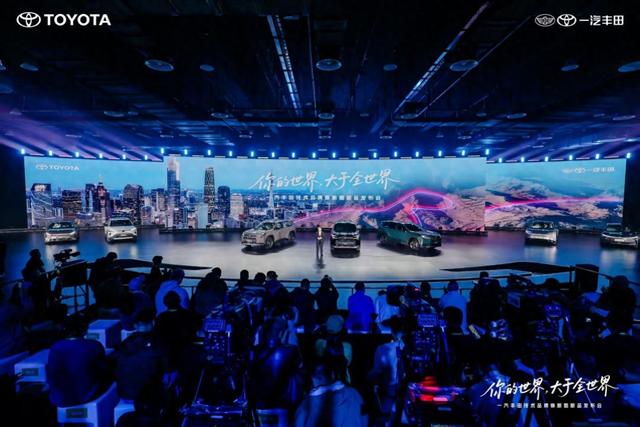
Core Insights - FAW Toyota held a technology brand renewal and new product launch event on November 19, introducing the IT'S TiME 3.0 technology brand and three new models, marking a significant advancement in the areas of intelligence, electrification, and premium offerings [1][8] Group 1: Technology Advancements - The IT'S TiME 3.0 technology framework achieves breakthroughs in intelligent driving, smart space, and hybrid technology [3] - The Toyota Pilot system has been upgraded to version 4.0, integrating self-developed TSS safety systems with extensive driving data to predict complex road risks [3] - The collaboration with Momenta has led to the development of the INP navigation driving assistance system, which includes 33 perception hardware units and 544 TOPS computing power, enabling features like lane change assistance [3] Group 2: New Model Features - The new intelligent hybrid Corolla features a 50mm longer wheelbase, a 470-liter trunk, and a fuel consumption of 4.13 liters per 100 kilometers, with a range of 1000 kilometers on a full tank [5] - The new bZ3 model is highlighted for its design and technology, including a stylish interior with ergonomic seats and a three-screen system, achieving a fuel consumption as low as 3.99 liters per 100 kilometers and a range exceeding 1400 kilometers [5] - The new RAV4 features a "hammerhead shark" hood design and advanced safety configurations, including 24 high-precision sensors and 13 L2-level driving assistance functions [5] Group 3: Strategic Direction - FAW Toyota's "oil-electric co-prosperity" strategy addresses diverse market demands, leveraging the IT'S TiME 3.0 technology brand to achieve dual breakthroughs in intelligence and electrification [8]
研判2025!中国空调铜管行业产业链、市场规模及未来趋势分析:行业产量保持平稳状态,未来朝着高端化、绿色化、自动化发展[图]
Chan Ye Xin Xi Wang· 2025-11-20 01:17
Core Viewpoint - The demand for copper tubes primarily comes from the refrigeration industry, with air conditioning being the main driver. The production scale of air conditioning products has expanded significantly, but market growth is slowing down due to economic conditions and changing consumer demands, leading to a saturation of the market. Consequently, the production of air conditioning copper tubes has not seen significant increases, with a projected production of 1.888 million tons in China by 2024, reflecting a year-on-year increase of 5.4% [1][7][8]. Industry Overview - Air conditioning copper tubes are essential components that connect indoor and outdoor units, primarily used for refrigerant transmission. They can be categorized into ordinary and degreased copper tubes based on usage and manufacturing processes, and further classified into oxygen-free copper, oxygen-containing copper, and special copper based on materials [3][4]. Industry Chain - The industry chain for air conditioning copper tubes consists of three segments: upstream (copper materials and production equipment), midstream (production and manufacturing of copper tubes), and downstream (application fields including residential, commercial, and industrial air conditioning) [4]. Production Trends - China's copper material production has shown an upward trend, increasing from 20.172 million tons in 2019 to a projected 23.503 million tons in 2024. In the first nine months of 2025, the production reached 18.575 million tons, marking a year-on-year increase of 9.6%. This growth provides ample raw materials for the air conditioning copper tube industry [5]. Current Market Situation - The air conditioning market has experienced fluctuations, with production declining in 2021 due to insufficient downstream consumption and rising upstream copper prices. However, production has gradually recovered, maintaining a slight growth trend, with a total production of 1.888 million tons expected in 2024, up 5.4% year-on-year [1][7]. Competitive Landscape - The competitive landscape of the air conditioning copper tube industry is characterized by leading companies leveraging scale, technology, and supply chain advantages to capture significant market shares. Smaller companies face challenges due to funding and technology limitations, often focusing on niche markets and regional segments [8][9]. Key Companies - Notable companies in the air conditioning copper tube industry include: - Jintian Copper Group Co., Ltd. - Zhejiang Hailiang Co., Ltd. - Guangdong Precision Metal Co., Ltd. - Zhongse Aobote Copper-Aluminum Industry Co., Ltd. - Ningbo Jintian Copper Industry (Group) Co., Ltd. - Jiangsu Jiangrun Copper Industry Co., Ltd. - Anhui Xingshengda Refrigeration Copper Tube Manufacturing Co., Ltd. - Qingdao Hongtai Copper Industry Co., Ltd. [2][10][11]. Future Development Trends - The future of the air conditioning copper tube industry is expected to focus on high-end copper tubes, driven by national energy efficiency standards that enhance the performance of air conditioning equipment. Companies will increase R&D investments to improve production processes and technology. Additionally, the industry will prioritize green and sustainable development, implementing low-carbon processes and automation to enhance production efficiency and reduce costs [12].


吉利汽车(175.HK):新能源转型成果持续兑现
Ge Long Hui· 2025-11-19 21:34
Core Viewpoint - The company reported strong Q3 performance with significant revenue and profit growth, driven by new vehicle launches and an accelerating transition to electric vehicles [1][3][4] Financial Performance - Q3 revenue reached 89.2 billion yuan, up 27% year-on-year and 15% quarter-on-quarter; net profit attributable to shareholders was 3.8 billion yuan, up 59% year-on-year and 6% quarter-on-quarter [1] - For the first three quarters, total revenue was 239.5 billion yuan, a 26% increase year-on-year, while net profit was 13.1 billion yuan, a slight decrease of 1% year-on-year [1] Sales and Margins - Q3 sales reached a record high of 760,000 new vehicles, representing a 43% increase year-on-year and 8% quarter-on-quarter [2] - The gross margin for Q3 was 17%, with an increase of 1.0 percentage point year-on-year and a decrease of 0.5 percentage point quarter-on-quarter [2] - The average selling price (ASP) per vehicle was 117,000 yuan, up 4% year-on-year and 6% quarter-on-quarter [2] New Energy Transition - In Q3, new energy vehicles accounted for 58% of total sales, with 440,000 units sold, a 15% increase quarter-on-quarter [3] - The company plans to expand its overseas market presence in 2026, including acquiring a stake in Renault Brazil and establishing a factory in Malaysia [3] Product Launches - The launch of the Zeekr 9X and Galaxy M9 models in Q3 was successful, with significant pre-orders indicating strong market demand [4] - The company aims to continue its high-end product strategy with upcoming models like the Galaxy Battleship series [4] Profit Forecast and Valuation - The profit forecast for 2026-2027 has been adjusted upwards, with net profit estimates of 17.8 billion yuan for 2026 [4] - The company is valued at 13x PE for 2026, with a target price set at 27.07 HKD [5]

小米集团-w(01810):Q3业绩创同期新高,稳步应对存储涨价周期
Guosen International· 2025-11-19 13:58
Investment Rating - The investment rating for the company is "Buy" with a target price of HKD 53.5 per share, indicating a potential upside of 31.2% from the recent closing price of HKD 40.78 [6]. Core Insights - The company achieved record high revenue and profit in Q3 2025, driven by effective execution of its "high-end, full ecosystem, and globalization" strategy, despite facing challenges from rising storage costs [5][6]. - The automotive segment reported its first profit in Q3 2025, with revenue growing by 199.2% year-on-year, contributing significantly to overall growth [2]. - The smartphone segment showed resilience with a slight revenue decline of 3.1%, while maintaining a strong market share in the high-end segment [3]. - Internet services continued to grow steadily, with revenue reaching a historical high, supported by increased advertising income and user engagement [4]. Summary by Sections Q3 Performance - Revenue for Q3 2025 increased by 22.3% year-on-year to HKD 1131.2 billion, slightly above market expectations [1]. - Gross margin was reported at 22.9%, exceeding expectations, while adjusted net profit surged by 80.9% to HKD 113.1 billion [1]. Automotive Business - The automotive segment generated revenue of HKD 290.1 billion in Q3 2025, accounting for 25.6% of total revenue, with a significant year-on-year growth of 199.2% [2]. - The company delivered 109,000 new vehicles in the quarter, marking a 173.4% increase year-on-year, with the XiaomiYU7 series leading domestic SUV sales [2]. Smartphone and AIoT - The smartphone division reported revenue of HKD 460.0 billion, a slight decline of 3.1%, with a shipment of 43.3 million units, reflecting a 0.5% increase [3]. - The IoT and lifestyle products segment achieved revenue of HKD 276.0 billion, growing by 5.6% year-on-year, with a gross margin of 23.9% [3]. Internet Services - Internet services revenue reached HKD 94.0 billion, a 10.8% increase year-on-year, with advertising revenue growing by 17.4% [4]. - The global monthly active users reached 741.7 million, reflecting an 8.2% year-on-year increase, indicating improved user engagement and monetization [4].