
AI泡沫

Search documents
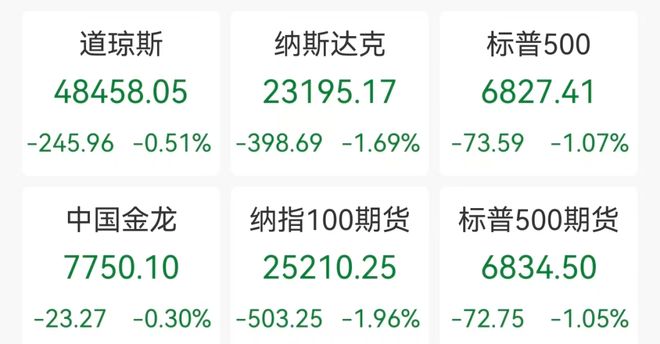
纳指跌近400点,科技巨头重挫,中概股普跌,金银跳水
2 1 Shi Ji Jing Ji Bao Dao· 2025-12-12 23:46
美东时间周五,美股科技股重挫,中概股普跌。黄金突破4300美元后急跌,白银跳水。加密货币市场多 数下跌,超11万人被爆仓。 近期,多家机构对黄金价格走势持乐观态度,据智通财经报道,高盛表示,如果美国私人投资者将资金 部署到黄金交易所交易基金(ETF)中,到2026年底,金价达到每盎司4900美元的预期有很大上调空间。 加密货币市场普跌,比特币跌超2%,以太坊跌近4.5%,全市场超11万人爆仓。 (声明:文章内容仅供参考,不构成投资建议。投资者据此操作,风险自担。) 出品 | 21财经客户端 南财快讯工作室 热门中概股普跌,纳斯达克中国金龙指数跌0.3%,亿鹏能源跌12.3%,阿特斯太阳能、博美跌超10%, 大全新能源、小马智行跌超5%;上涨方面,智能未来涨超4%,好未来、新东方、网易涨超2%。 金银震荡加剧,盘中齐跳水。现货黄金一度向上触及4353美元/盎司,为10月21日以来首次,距离历史 新高仅一步之遥,跳水后收近4300美元。现货白银跌2.5%,COMEX白银收跌3.9%。 受国际金价上涨影响,12月12日,周生生、老庙黄金、老凤祥等国内部分品牌金饰克价也创年内新高。 周生生金饰涨至1338元/克,老庙 ...
纳指跌近400点,科技巨头重挫,闪迪跌超15%,中概股普跌,亿鹏能源跌12%,金银跳水
2 1 Shi Ji Jing Ji Bao Dao· 2025-12-12 23:33
Market Overview - US technology stocks experienced a significant decline, with major indices collectively falling. The Dow Jones dropped by 246 points, the Nasdaq fell nearly 400 points, and the S&P 500 index saw a decline of over 1% [1][2] - The Nasdaq China Golden Dragon Index decreased by 0.3%, reflecting a broad downturn in Chinese concept stocks [3] Technology Sector Performance - Major tech stocks faced substantial losses, with Nvidia down over 3%, Amazon nearly 2%, and Meta, Microsoft, and Google each declining by more than 1% [2] - The semiconductor sector was particularly hard hit, with Broadcom plummeting over 11% and Oracle dropping more than 4% after a previous decline of nearly 11% [2][3] - Other semiconductor stocks like SanDisk and Oklo fell approximately 15%, while CoreWeave and Canaan Technology dropped by 10% and over 9%, respectively [2] Precious Metals Market - Gold prices surged to a peak of $4,353 per ounce before retreating to around $4,300, marking significant volatility [4] - Silver also experienced a sharp decline, with spot silver dropping by 2.5% and COMEX silver down by 3.9% [4] Cryptocurrency Market - The cryptocurrency market saw widespread declines, with Bitcoin falling over 2% and Ethereum nearly 4.5%, leading to over 110,000 liquidations [9][10]

纳指跌近400点,科技巨头重挫,闪迪跌超15%,中概股普跌,亿鹏能源跌12%,金银跳水
21世纪经济报道· 2025-12-12 23:28
记者丨刘雪莹 编辑丨曾静娇 美东时间周五,美股科技股重挫,中概股普跌。黄金突破4300美元后急跌,白银跳水。加密货 币市场多数下跌,超11万人被爆仓。 三大指数集体收跌,道指跌246点,纳指跌近400点,与标普500指数跌幅均超1%。 W 伦敦金现 SPTAUUSDOZ.IDC | 4299.285 | | 昨结 | 4279.210 | 开营 | 4280.457 | | | --- | --- | --- | --- | --- | --- | --- | | +20.075 +0.47% | | | 总量(kg) 0.00 | 现手 | | O | | 最高价 | 4353.570 | 持 仓 | 0 | | | O | | 最低价 | 4256.845 | 壇 ਦੇ | O | | | 0 | | स्त्रम्य | 王日 | 日K | 園K | 月K | 童家 | | | 臺加 | | | | 均价:-- | 盘口 | | | 4353.570 | | | | 1.74% 卖1 | 4300.345 | O | | | | | | 录1 | 4299.285 | O | | | | | | | 0 ...
“中国可能都做不到”!AI泡沫充斥得州:超220GW大项目申请到2030年入电网
Hua Er Jie Jian Wen· 2025-12-12 22:34
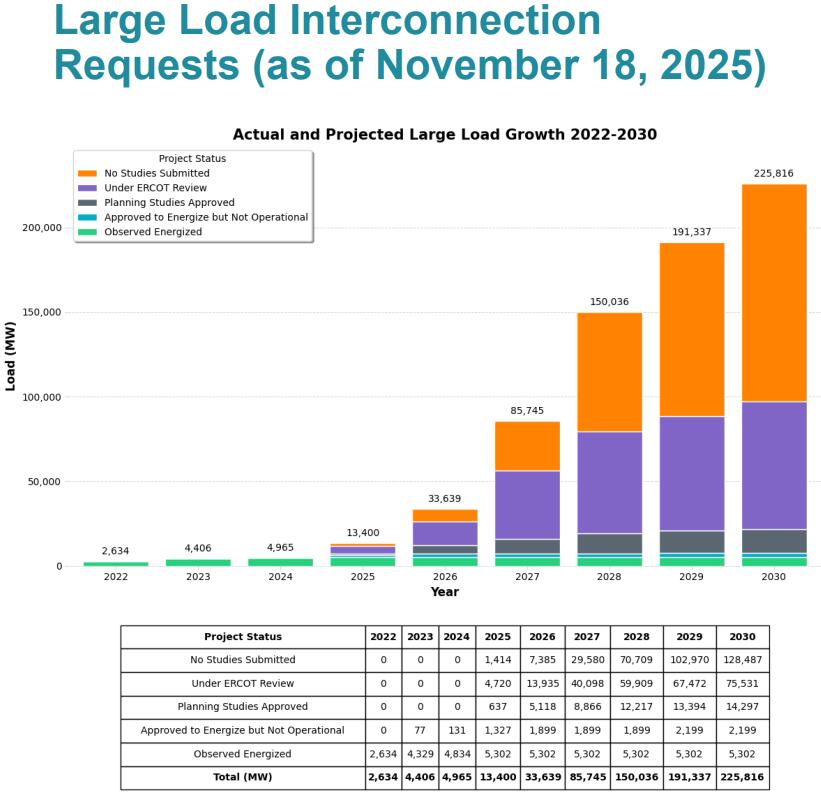
Core Viewpoint - Texas is experiencing a massive data center construction boom driven by AI, raising concerns about a potential bubble due to the overwhelming demand that cannot be met by existing infrastructure [1][3]. Group 1: Data Center Demand and Capacity - ERCOT reported that large projects applying to connect to the Texas grid before 2030 exceed 220 GW, with over 70% being data center projects [1]. - The 220 GW demand is more than double Texas's record summer peak demand of approximately 85 GW and far exceeds the state's quarterly total generation capacity of about 103 GW [1]. - In 2023, the number of large projects applying for power access nearly quadrupled, with over half of the projects representing about 128 GW of potential demand growth not yet submitted for ERCOT review [4][5]. Group 2: Infrastructure and Feasibility Concerns - Experts express skepticism about the feasibility of building sufficient infrastructure to meet the projected demand, with Joshua Rhodes stating that the numbers appear absurd and likening the situation to a bubble [2][3]. - Actual projects integrated into the grid or approved by ERCOT amount to only about 7.5 GW, which is still significant, equivalent to nearly eight large nuclear power plants [5]. - Texas has implemented measures to distinguish serious data center projects from speculative ones, including requiring developers to pay for preliminary studies and provide proof of site control [6]. Group 3: Financial and Credit Market Implications - The data center construction boom has raised concerns about potential oversupply, with some centers possibly becoming unprofitable, leading to bankruptcies [3][4]. - The credit market is witnessing a frenzy, with significant debt financing for data center projects, raising fears of a bubble that could impact equity and credit participants [8][9]. - Reports indicate that at least $175 billion in credit transactions related to data centers have been completed in the U.S. this year, with some borrowers seeking loans exceeding project costs [9].
AI 野火即将来临:疼痛无比,却极其健康
虎嗅APP· 2025-12-12 13:54
以下文章来源于经纬创投 ,作者经纬创投主页君 经纬创投 . 经纬创投的官方信息发布平台 本文来自微信公众号: 经纬创投 ,作者:经纬创投主页君,原文标题:《AI 野火即将来临:疼痛 无比,却极其健康 |【经纬低调出品】》 当下,对于AI大规模投资的"泡沫"讨论热火朝天,投资者应该如何理性地看待AI科技革命热潮? 但其实,AI领域的狂热从不是转瞬即破的泡沫,而是一场重塑生态的野火。这里面蕴藏着疼痛却暗 藏健康生长的力量。野火历来是行业周期的清醒剂,清理冗余、沉淀养分,为新物种腾挪空间, 2000年初的互联网泡沫和2008年的金融危机的浪潮早已印证,每一次燃烧后的修正,都能催生一批 核心强者。 如今硅谷资本充盈但赛道拥挤,人才稀缺且同质化竞争凸显,地表增量枯竭,野火的纠偏已然临近。 这场火势更集中于核心领域,算力既是燃料也是关键约束,过度建设的产能终将转向实际需求,而能 源根基的比拼更决定长远格局。 不同参与者如同生态里的各类植物,或易燃成养分,或耐火更坚韧,或借火获新生。唯有扎根核心能 力、筑牢商业闭环、适配真实需求,方能扛过周期考验。野火必然烧尽浮华,而真正的价值与机遇, 正藏在灰烬之后的新生之中,见证AI生 ...






德银深度报告:真假AI泡沫,究竟谁在裸泳?
Hua Er Jie Jian Wen· 2025-12-12 12:13
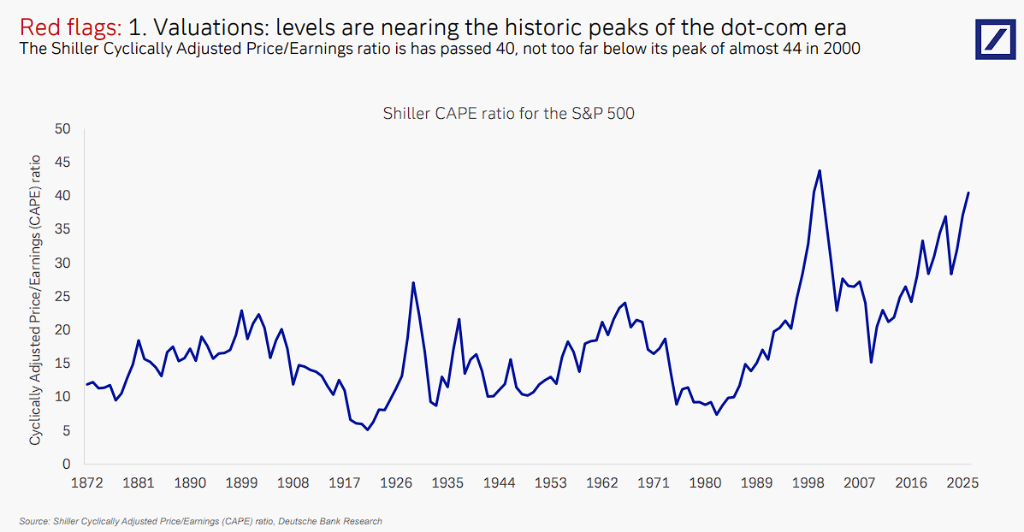
站在2025年12月的时间节点,距离ChatGPT发布仅过去三年,市场对于"AI泡沫"的讨论已至沸点。德意志银行认为,当前AI热潮既不是完全的泡 沫,也不是毫无风险,关键在于区分不同类型的"泡沫"。 12月12日,据硬AI消息,德银在最新研报中创新性地将AI泡沫分为估值泡沫、投资泡沫和技术泡沫三个维度进行分析。报告称,公开市场大型科 技公司的估值有盈利支撑,投资增长符合趋势且由现金流推动,技术进步仍在持续。真正的风险集中在估值过高的私营公司、可能失控的循环融 资结构,以及潜在的技术瓶颈和供应限制。 估值泡沫:估值分化揭示真实风险所在 德银的核心观点是当前AI热潮并非单一泡沫,而是由三种不同性质的泡沫构成。 然而,德银认为,这一估值主要由盈利增长驱动,而非纯粹的投机。该行称,虽然整体估值较高,但自2022年10月以来,标普500指数一直在 22.7%的年化增长趋势通道内运行,目前处于该通道的低端。 更关键的是,大型科技股的估值溢价是由盈利增长驱动的:大型科技股的估值溢价约60%,但这一溢价得到了20%以上的盈利增长差异支撑。 德银指出,当前科技股估值并未达到互联网泡沫时期的极端水平,且盈利增长正在向更广泛的行业 ...

全是机会?美股再创新高,华尔街暗示:年底反弹才刚开始!
Jin Shi Shu Ju· 2025-12-12 11:57
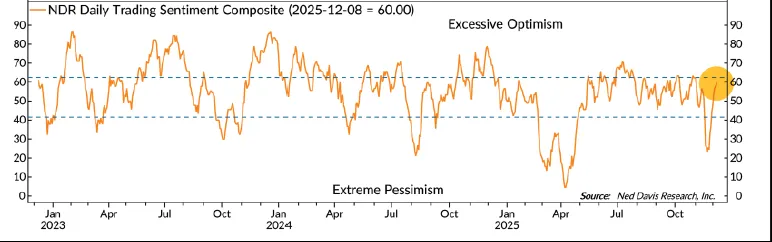
标普500指数周四再次收于历史新高,这在2025年虽不罕见,但这一次距离上一次破纪录已有六周。不过,周四的市场格局与10月下旬相 比已是截然不同。 首先,10月的高点伴随着一阵投资者的狂热情绪,主要受到强劲财报季和对人工智能前景兴奋感的推动。而这一次,那种"上头"的感觉 已荡然无存,对于期盼年底反弹的多头来说,这反倒是个积极信号。 继美联储如期降息25个基点,且美联储主席鲍威尔发表关于美国经济韧性的评论后,标普500指数出现反弹。该指数今年已录得17%的涨 幅,并于周四收于历史新高。 由Ned Davis Research编制的一项情绪指标(追踪包括波动率、投资者仓位和机构投资者调查在内的20个分项)目前低于62.5,处于通常 被视为极端乐观区间的底部之下。 自标普500指数在10月下旬创下前次纪录以来,投资者的目光已转向大型科技股以外的板块。这部分是因为AI浪潮正惠及更多领域(如公 用事业、工业公司),以及美联储暗示将降息。 与此同时,经济学家和策略师预计美国经济将在新的一年迎来飙升,从而推高利润。关于AI泡沫的担忧已迅速让位于对美国经济增长的 乐观情绪。 Ned Davis Research的首席美国策略 ...
中国绝对收益投资管理协会聂军:OpenAI或暗藏巨大泡沫
2 1 Shi Ji Jing Ji Bao Dao· 2025-12-12 11:37
Group 1 - The core viewpoint of the articles highlights the rapid growth and potential risks associated with AI, particularly focusing on OpenAI and its financial challenges [1][2][3] - AI is not a new concept, having been introduced in the 1950s, and has a solid foundation, but there are concerns about over-exuberance leading to potential bubbles, especially regarding large models [1] - OpenAI's projected spending over the next eight years is at least $1.4 trillion, with a need to grow revenue to approximately $200 billion by 2030 to achieve profitability [1][2] Group 2 - OpenAI's valuation once approached $1 trillion, but its profitability remains weak compared to companies like Alibaba, which are actively applying AI in practical scenarios [2] - The company is preparing for an IPO that could value it at up to $1 trillion, with discussions indicating a potential fundraising of at least $60 billion [2] - The importance of AI lies in its applications, with numerous implementations already present in China, such as the "black light factory" that has impressed Western entrepreneurs [3]
2026年,全球市场可能的十大黑天鹅
华尔街见闻· 2025-12-12 09:42
Core Viewpoint - The report by Deutsche Bank highlights the potential for unexpected outcomes in global markets, emphasizing the need for investors to be aware of both upside and downside risks as they navigate a post-pandemic economic landscape [3][4]. Group 1: Potential Upside Scenarios - AI-driven capital expenditure could propel the U.S. economy back to a growth rate of over 4%, reminiscent of the late 1990s boom, supported by strong cash flows from large tech companies [5][6][8]. - The S&P 500 index may reach 8000 points by 2026, indicating an annual return of approximately 17%, which aligns with historical trends of 15% to 20% annual returns [5][9][13]. - The Federal Reserve's aggressive rate cuts could facilitate a "soft landing," with historical data suggesting a 50% increase in stock prices two years post-rate cuts [15][16][17]. - Political motivations surrounding the midterm elections may lead to expanded tariff exemptions, potentially easing trade tensions and supporting market stability [19][21]. - Successful economic reforms in Europe, particularly in Germany, could revitalize stagnant economies, while any progress in the Russia-Ukraine conflict could significantly boost European asset prices [23][25]. Group 2: Potential Downside Risks - The Federal Reserve may be forced to reverse its rate cuts and raise interest rates if inflation remains persistently high, which could disrupt current market pricing [27][28][30]. - An AI bubble could burst if leading companies like Nvidia fail to meet earnings expectations, leading to a market sell-off due to high valuations and leverage [32][37]. - Concerns over sovereign debt crises in developed markets, particularly the U.S. and Japan, could challenge long-term fiscal sustainability, with the U.S. running wartime-level deficits [39][44]. - Political and economic crises in Europe, exacerbated by ineffective fiscal stimulus and political gridlock in countries like France, could lead to increased risk premiums and capital outflows [47][49]. - Extreme physical events, such as pandemics or natural disasters, pose significant tail risks that could disrupt economic forecasts and market stability [52][54].

国金宋雪涛:2026“三重逆转”之年,价值重估三维度重塑市场
2 1 Shi Ji Jing Ji Bao Dao· 2025-12-12 09:34
21世纪经济报道 记者 崔文静 广州报道 他预测泡沫濒临破灭的时点可能在2026年下半年,届时通胀回升、降息结束与美国大选政治风险叠加, 流动性拐点将引爆市场波动。 "A股优势在于拥有独立于美股的资产价值锚,"宋雪涛强调,"在A股投资可能会有幸福感,因为有很多 资产是可以跟它没关系的,你可以站在岸边看船起船落。" "泡沫本身没有问题,甚至对于产业来说没有泡沫才是悲剧,因为泡沫吸引了大量资金投在基础设施 上,"宋雪涛总结道,"但投资者需要清醒认识,产业归产业,投资归投资,是两码事。2026年将是价值 重估的关键之年,三重逆转将重塑中国经济与资本市场格局,投资者应把握结构性机会,同时警惕流动 性风险。" 谈及A股价值重估,宋雪涛创新性地提出了三重维度理论。在资产质量重估维度,他认为中国顶尖科技 企业、出海企业和产业升级类公司的质量也将得到重估。 在流动性重估维度,他指出人民币实际购买力被低估,若按购买力平价计算,人民币与美元汇率真实值 约3.4,意味着人民币被低估约50%。随着中国强大的综合国力、制造业能力和价值观输出带动地缘政 治影响力提升,全球流动性将加速流入人民币资产。 在风险溢价重估维度,宋雪涛强调中国政 ...