智能化

Search documents
研判2026!中国电动汽车连接器行业背景、产业链全景、发展现状及未来发展趋势分析:市场增长动能充沛,智能升级未来广阔[图]
Chan Ye Xin Xi Wang· 2026-02-02 01:03
Core Insights - The electric vehicle connector industry is crucial for the safe and stable operation of electric vehicle electrical systems, acting as the "blood vessels" and "nerve hubs" of the vehicle [1][2] - The industry is experiencing strong growth driven by national policies, continuous leadership in global electric vehicle production and sales, and a complete and competitive supply chain [1][9] - The market for electric vehicle connectors is expected to reach 39.296 billion yuan by 2025, with a compound annual growth rate of 19.16% from 2020 to 2024 [1][12] Industry Overview - Electric vehicle connectors facilitate energy transmission and signal exchange between electric vehicle components and external charging facilities [2][4] - The industry is supported by various national policies aimed at promoting the development of the electric vehicle sector, including the "New Energy Vehicle Industry Development Plan (2021-2035)" [7][9] Market Dynamics - The electric vehicle connector market is projected to grow significantly, with the market size increasing from 23.708 billion yuan in 2020 to 47.8 billion yuan in 2024 [11][12] - The rapid growth of the electric vehicle market, with production and sales expected to reach 16.626 million and 16.49 million units respectively by 2025, is a key driver for the connector industry [9][10] Industry Chain - The electric vehicle connector industry has a complete and collaborative supply chain, with upstream materials, midstream manufacturing, and downstream applications in vehicle production and charging infrastructure [10][11] Development Trends - The industry is expected to evolve along three main lines: technological iteration towards high voltage and intelligent integration, deepening of domestic substitution and supply chain collaboration, and global market expansion with innovative application scenarios [13][14][15] - The integration of smart features into connectors, such as state monitoring capabilities, is a significant trend driven by the convergence of electrification and intelligence [13] - The market is shifting towards a business model that combines product offerings with data services, enhancing value through predictive maintenance and other services [15]


广汽集团转型阵痛罕见预亏80亿到90亿 冯兴亚再提“三大战役”全力突围
Chang Jiang Shang Bao· 2026-02-02 00:45
Core Viewpoint - GAC Group is facing significant challenges in its transformation, resulting in an unprecedented annual loss for the first time in nearly 20 years, with projected net losses of 8 billion to 9 billion yuan for 2025 [2][3]. Financial Performance - For 2025, GAC Group anticipates a net profit attributable to shareholders of -80 billion to -90 billion yuan, marking a shift from profit to loss year-on-year [3]. - The company expects a non-recurring net profit of -89 billion to -99 billion yuan, indicating a substantial increase in losses compared to previous years [3]. - In the first three quarters of 2025, GAC Group reported a net profit attributable to shareholders of -43.12 billion yuan and a non-recurring net profit of -47.75 billion yuan [4]. - The fourth quarter is projected to see losses close to the sum of the first three quarters, with net profit estimates ranging from -36.88 billion to -46.88 billion yuan [5]. Sales Performance - GAC Group's total vehicle sales for 2025 are estimated at approximately 1.72 million units, a decline of 14.06% year-on-year, falling short of the 2.3 million sales target [9][6]. - The company has experienced a continuous decline in sales, with 2023 and 2024 revenues reported at 129.7 billion yuan and 107.8 billion yuan, respectively, reflecting changes of -17.62% and -16.90% [6]. Strategic Initiatives - GAC Group initiated the "Panyu Action" in November 2024, focusing on operational reforms, including the establishment of a management headquarters and integrated operations for its self-owned brands [10]. - The company is entering a "wartime state" to tackle future challenges, emphasizing three key battles: user demand, product value, and service experience [11]. - Recent personnel changes include the appointment of a new general manager and a chief accountant, with a focus on enhancing efficiency and decision-making processes [12]. Future Outlook - GAC Group's transformation efforts are expected to improve operational efficiency by approximately 50%, with a reduction in new vehicle development cycles from 26 months to 18-21 months [12]. - The company is deepening its collaboration with Huawei to accelerate the smart transformation of the automotive industry [12]. - The automotive industry is undergoing rapid changes, with GAC Group's performance in 2026 being closely watched for signs of recovery and competitiveness in the global market [14].

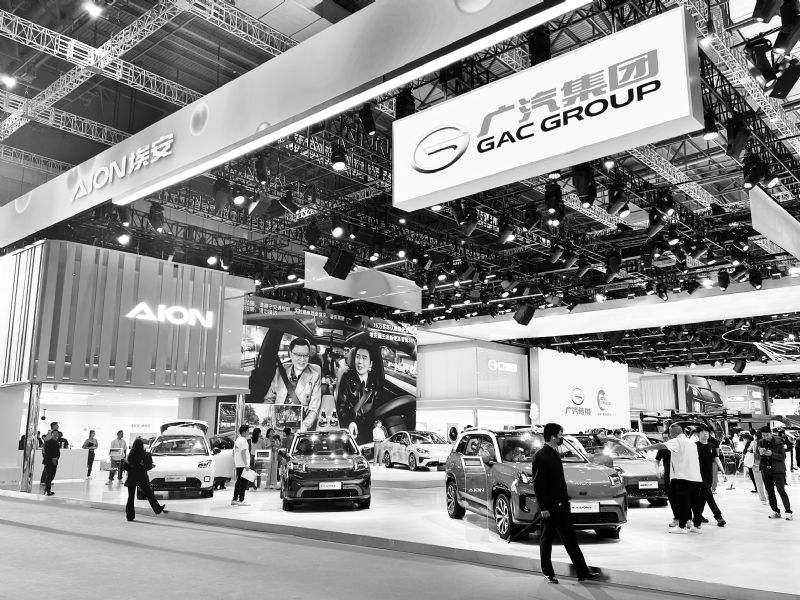
展望二〇二六驶向汽车产业提质增效新征程
Jing Ji Ri Bao· 2026-02-02 00:00
Core Insights - The Chinese automotive industry is transitioning from "scale expansion" to "quality improvement and efficiency enhancement" in 2026, driven by electrification and intelligent transformation [1] - The market competition is shifting from price wars to a "value war" focused on technological innovation, product iteration, quality enhancement, and experience optimization [1] Market Overview - In 2026, the total vehicle sales in China are projected to reach 34.75 million, a slight increase of 1%, while another estimate suggests around 28 million units, growing by 2% [2] - The industry is entering a phase characterized by high sales volume but low growth, with competition focusing on quality and efficiency rather than scale [2] - The central economic work conference emphasizes a policy direction of "stability while seeking progress" and "quality improvement and efficiency enhancement" for the automotive sector [2] New Energy Vehicles (NEVs) - NEVs are expected to achieve significant growth, with sales projected to exceed 20 million units in 2026, solidifying their market dominance [3] - Domestic automakers are leveraging technological innovation and supply chain advantages to produce competitively priced NEVs, shifting from policy-driven sales to market-driven sales as penetration rates exceed 50% [3] Competitive Landscape - Leading domestic automakers like Geely, BYD, and Chery are expected to benefit from product structure upgrades and global expansion, with Geely targeting over 4.5 million units in sales for 2026 [3] - New entrants in the automotive market are experiencing accelerated differentiation, with companies like Leap Motor and Xpeng doubling their sales, while others like NIO are focusing on operational efficiency [4] Internationalization and Global Expansion - The Chinese automotive industry is increasingly focusing on international markets, with exports projected to exceed 8 million units in 2026, primarily driven by NEVs [12] - Major automakers are establishing overseas production facilities to mitigate tariffs and trade barriers, enhancing local integration and responsiveness [13] Technological Innovation - Key areas of technological advancement include power batteries, chips, and software, with significant breakthroughs expected in 2026 [6] - The development of next-generation battery technologies, such as solid-state batteries, is progressing, with initial production expected to begin in 2026-2027 [6] - Intelligent driving technologies are advancing, with L2-level driving assistance features expected to penetrate over 70% of new passenger vehicles by 2026 [7] Emerging Trends - The automotive industry is evolving into a "super platform," integrating various technologies and services beyond traditional transportation [11] - Companies are exploring new growth avenues, including humanoid robots and low-altitude economy sectors, with significant developments anticipated in 2026 [9][10]





驶向汽车产业提质增效新征程
Jing Ji Ri Bao· 2026-02-01 21:56
跃马新程,扬鞭奋蹄。2026年是我国汽车产业从"规模扩张"驶向"提质增效"的关键之年。 面对电动化和智能化变革浪潮,我国汽车产业将在总量高位运行与结构深度调整中,奋力迈向高质量发 展。在国家政策引导和企业集体反思下,单纯以降价为核心的"内卷"有望缓解,而以技术创新、产品迭 代、品质提升、体验优化为核心的"价值战"将全面升级。 激烈的市场竞争,既是企业创新活力的生动体现,也是淘汰赛加速的直观映射。科技创新、供应链重 构、跨界融合、生态出海、政策调整、贸易保护等多种变量相互交织,不仅深刻重塑国内汽车市场竞争 格局,也将影响全球汽车市场走势。 竞争格局加速重构 经历了2025年超预期增长,2026年国内汽车市场正式迈入"高销量、低增长"新阶段。中汽协预计,2026 年汽车总销量达3475万辆,微增1%;车百会预计,2026年国内汽车销量约为2800万辆,增长2%。这个 阶段的核心特征,是销量基数大、增长幅度稳,行业竞争从规模比拼转向质量与效率竞争。 从产品结构来看,在整体市场平稳增长下,新能源汽车将实现量质齐升。新能源汽车仍是产业增长核心 动力,2026年销售量有望突破2000万辆(包括出口),市场主导地位进一步巩 ...
天润工业总裁徐承飞:锚定发电机组高景气赛道 双轮驱动构筑增长新生态
Zhong Guo Zheng Quan Bao· 2026-02-01 21:38
Core Viewpoint - Tianrun Industrial is positioned to capitalize on the booming demand for large engine generator sets driven by the explosive growth of self-supplied power sources in North America, leveraging its extensive experience and technological expertise in core engine components [1][2]. Group 1: Market Dynamics - The self-supplied power market is experiencing rigid demand due to the dual challenges of high energy consumption from AI computing and aging North American power grid infrastructure, leading to a golden period for large engine generator sets [2]. - The global data center generator set market is projected to double from $6 billion in 2023 to $12 billion by 2030, indicating a sustained increase in industry prosperity [2]. - Major foreign brands like Cummins and Caterpillar have order backlogs extending to 2028, creating significant opportunities for domestic manufacturers to fill the supply chain gaps [2]. Group 2: Production Capacity and Technological Advancements - Tianrun Industrial has established five large crankshaft production lines, with two additional top-tier lines under construction, expected to be operational by the end of the year, achieving an annual production capacity of 30,000 large crankshafts [3]. - The company is investing nearly 300 million yuan to introduce advanced forging equipment, including the world's largest 1250KJ impact hammer production line, set to be completed by 2026 [3][4]. - The new production line for impact hammers will achieve precision control within 0.005 mm, matching international standards for high-power diesel generator sets [4]. Group 3: Global Expansion and Client Relationships - Tianrun Industrial's global client base, built over decades, includes partnerships with leading manufacturers such as Weichai, Yuchai, Caterpillar, and Cummins, providing a solid foundation for entering the generator set supply chain [5]. - The establishment of a factory in Thailand allows the company to mitigate geopolitical risks and trade barriers while serving high-demand regions like Southeast Asia, North America, and Africa [6]. - The company aims to increase its overseas revenue share from 20% to 30% by 2027, with engine and generator set businesses driving this growth [6]. Group 4: Strategic Business Development - The company is focusing on upgrading its traditional business while simultaneously expanding into emerging sectors such as electric commercial vehicles, air suspension, electric drive axles, and aluminum lightweighting [8]. - The electric steering system, developed in partnership with a South Korean firm, is expected to enter the domestic market and achieve significant growth by 2026 [8]. - The air suspension business is projected to tap into a potential market space of 30 billion to 40 billion yuan as new emission standards are implemented [9]. Group 5: Future Outlook - The aluminum lightweighting business is set to enhance the company's product offerings, with plans to acquire a 100% stake in a company specializing in aluminum die-casting, expanding its customer base across the automotive industry [10]. - Tianrun Industrial is committed to maintaining a market-oriented approach and enhancing its core competitiveness through continuous investment in both traditional and emerging business sectors [10].

南京依维柯深耕江北再出发
Xin Hua Ri Bao· 2026-02-01 20:42
Core Viewpoint - The signing of the cooperation agreement marks a significant step towards enhancing industrial capacity and promoting high-quality development in Jiangbei New District, with Nanjing Iveco celebrating its 30th anniversary and focusing on transformation and upgrades in the automotive industry [1] Group 1: Company Overview - Nanjing Iveco has been a key player in the automotive market for 30 years, contributing to regional industrial construction and urban development [1] - The company has gained the trust of nearly one million users and is recognized as a model for the transformation and upgrading of manufacturing in Jiangbei [1] Group 2: Strategic Initiatives - The cooperation aims to solidify the industrial foundation, optimize the production system, and build a new industrial ecosystem [1] - The partnership will involve significant investment and collaboration to enhance product iteration and technological upgrades [1] Group 3: Industry Context - The automotive industry is undergoing profound changes towards electrification and intelligence, prompting Nanjing Iveco to adapt and innovate [1] - The favorable business environment in Jiangbei New District is seen as a catalyst for expanding investment and deepening cooperation with Nanjing Iveco [1] Group 4: Stakeholder Commitment - SAIC Group expresses strong commitment to strengthening its commercial vehicle segment through this partnership, integrating resources in technology, research and development, supply chain, and market [1]
奥士康拟投资18.2亿元用于高端印制电路板项目
Zheng Quan Ri Bao Wang· 2026-02-01 12:13
Core Viewpoint - Aoshikan Technology Co., Ltd. plans to issue convertible bonds to raise up to 1 billion yuan for a high-end PCB project, which aims to optimize product structure and enhance competitiveness in response to growing market demands [1][3]. Group 1: Company Overview - Aoshikan is a leading player in the domestic PCB industry, already possessing production capabilities for high-frequency, high-speed, and high-density interconnect PCBs [2]. - The company is currently facing capacity bottlenecks in the high-end PCB sector, which limits its ability to meet the rapidly growing demand from downstream markets [3]. Group 2: Industry Trends - The PCB industry is evolving due to technological advancements and manufacturing process iterations, focusing on meeting complex circuit layouts and high-performance computing needs [2]. - The demand for high-end PCB products, such as high multilayer boards and high-density interconnect boards, is surging due to the rapid expansion of computing infrastructure driven by artificial intelligence and the acceleration of electric and intelligent vehicle development [1][2].
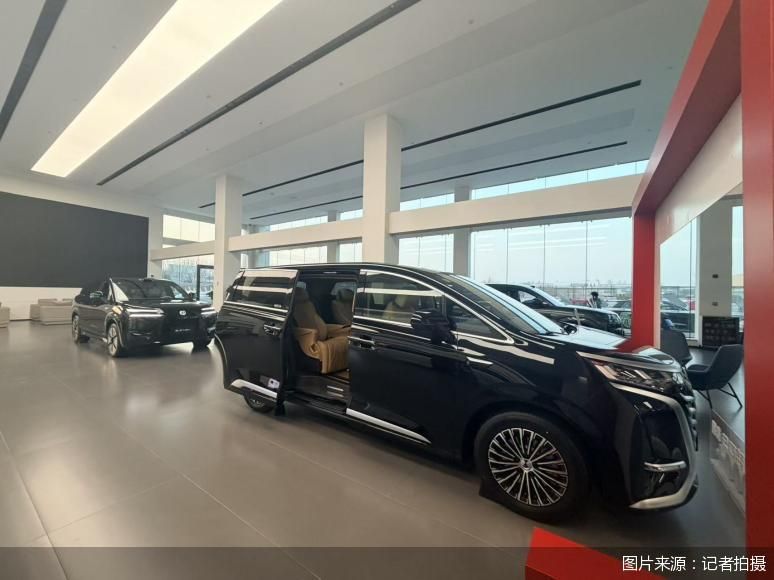
2026年MPV市场乱战升级:新车扎堆入市,全维博弈白热化
Bei Jing Shang Bao· 2026-02-01 10:41
Core Viewpoint - The MPV market in China is undergoing significant transformation, with at least six new models set to launch by 2026, driven by evolving family vehicle demands and advancements in new energy technology [1] Group 1: Market Dynamics - The MPV segment has shifted from a niche market to a competitive battleground, influenced by the increasing demand for family-oriented vehicles and the rise of new energy technologies [1] - The emergence of large six-seat SUVs is diverting demand away from MPVs, necessitating a focus on enhancing space comfort and accelerating the transition to family-oriented designs [6][8] - The MPV market is experiencing a structural explosion in demand, with family usage surpassing business use, as evidenced by 58% of MPV sales being for family purposes in 2025 [6] Group 2: New Model Launches - Multiple new MPV models are set to enter the market, including the Leap Motor D99, which features an 80.3 kWh battery for extended range, and the Galaxy V900, which offers a spacious trunk [3] - High-end models are also being introduced, such as the Lantu flagship MPV with L3-level autonomous driving capabilities and the Huawei-powered Zhijie V9, which is expected to launch in spring 2026 [3] Group 3: Sales Performance - In December 2025, 70% of the top ten MPV sales were from new energy vehicles, with the Wey brand's Gaoshan leading at 10,558 units sold [4] - Traditional brands like Toyota and Buick continue to dominate, with the Toyota Granvia and Sienna ranking second and third in sales, while Honda's models are experiencing a decline [5] Group 4: Competitive Strategies - Companies are focusing on differentiated features to enhance their competitive edge, such as the Zhijie V9's rotating second-row seats and the D99's advanced driving assistance systems [7] - The trend towards multifunctional MPVs is emerging, with some models designed for camping and outdoor activities, showcasing the versatility of MPVs [7] Group 5: Future Outlook - The MPV market is expected to see increased concentration, with the top ten manufacturers accounting for 78.3% of total sales in 2025, indicating a trend towards market consolidation [8] - The competition in the MPV sector is anticipated to intensify, with a focus on smart technology and electric upgrades as key differentiators for companies aiming to capture market share [8]
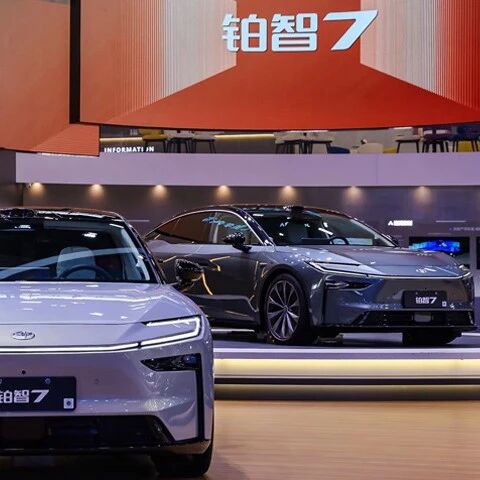
广汽丰田,携「新」篇杀进2026
36氪· 2026-02-01 09:42
Core Viewpoint - The entry of joint venture brands into the new energy vehicle market is set to redefine market rules, with a focus on safety, reliability, and balanced experience as key competitive factors [2][19]. Group 1: Market Dynamics - By 2026, there is a renewed expectation for joint venture car manufacturers, as safety crises among new forces have prompted the industry to refocus on core values [3]. - The sales figures indicate a positive trend, with Toyota's global sales increasing by 4.6% in 2025, marking six consecutive years at the top, while GAC Toyota in China also reported growth [3]. - The shift from price competition to value competition in the Chinese auto market is favoring joint venture brands that are willing to adapt [3]. Group 2: Product Development - The 20-30 million price range remains a strategic core for both traditional and new energy vehicles, with a notable shift towards performance and individuality in the new energy segment [5]. - The concept of a "water bucket car" has evolved, now requiring a balance of space, configuration, and intelligence rather than just performance and fuel efficiency [7]. - GAC Toyota's upcoming model, the BZ7, is positioned as a benchmark for the new era of "water bucket cars," showcasing excellent space and advanced configurations that challenge the perception of joint venture brands as lagging in intelligence [10][18]. Group 3: Competitive Advantages - The competition in smart technology has become a fundamental capability rather than a unique selling point, with joint ventures leveraging extensive data and engineering experience [11]. - Joint ventures like GAC Toyota demonstrate resilience and depth in their supply chains, allowing for unique product offerings despite shared suppliers [13]. - The BZ7 aims to set a new standard in the mid-to-high-end market by emphasizing safety, reliability, and a balanced user experience, moving away from superficial competition based on features [19]. Group 4: Organizational Transformation - GAC Toyota's transformation is driven by the implementation of the "Chief Engineer System," which empowers local engineers to lead product development, ensuring alignment with market needs [22]. - The introduction of the Huawei IPD/IPMS system aims to enhance internal communication and streamline product development processes, increasing market competitiveness [22]. - GAC Toyota's comprehensive transformation is rare among joint ventures, with a commitment to evolving both electric and traditional models to meet consumer expectations [24].

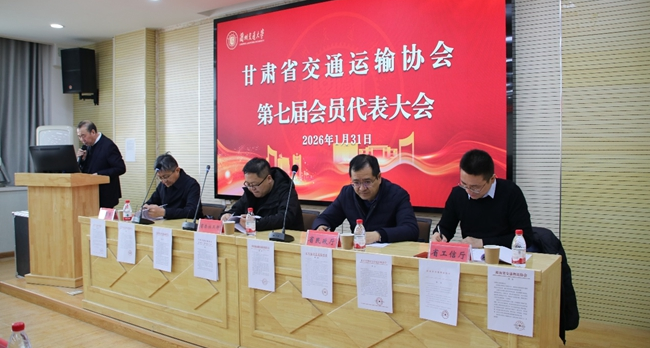
甘肃省交通运输协会第七届会员大会成功召开
Xin Lang Cai Jing· 2026-02-01 08:58
Core Viewpoint - The Gansu Provincial Transportation Association held its seventh member congress, summarizing the achievements of the sixth council and electing a new leadership team [1] Group 1: Achievements of the Sixth Council - The sixth council's work was recognized for its significant contributions to the development of the transportation and logistics industry in Gansu over the past five years [3] - Key achievements include conducting in-depth enterprise research, addressing challenges in railway transportation, and promoting new technologies such as electric vehicles and electrified roads [3] - The association improved the quality of its publication "Gansu Transportation" and successfully hosted several high-level international academic conferences to facilitate industry knowledge exchange [3] - The association implemented national policies like "public transport to rail" to help companies optimize transportation structures and reduce logistics costs [3] Group 2: Future Directions of the Seventh Council - The seventh council aims to strengthen party organization within the association to ensure alignment with provincial development strategies [5] - It plans to deepen service functions by conducting thorough enterprise research and enhancing policy coordination and advocacy [5] - The council will focus on technological innovation, targeting areas such as new energy equipment, smart transportation, and green logistics to drive industry upgrades [6] - There will be an emphasis on improving internal governance and management to enhance the association's operational efficiency and member engagement [6] Group 3: Call to Action - The meeting urged all member units to unite under the new council's leadership to seize opportunities and tackle industry challenges, contributing to the high-quality development of Gansu's transportation and logistics sector [8]