
国产替代

Search documents
聚杰微纤:更新新拓电子布领域,半导体无尘耗材亦高增-20260226
GUOTAI HAITONG SECURITIES· 2026-02-26 10:25
Investment Rating - The report maintains a "Buy" rating for the company [5] Core Insights - The company is expanding into the electronic fabric sector through acquisitions, with a focus on flexible equipment upgrades as a key feature. The semiconductor cleanroom consumables are also in a rapid growth phase [2][11] - The acquisition of Genyin Technology allows the company to enter the electronic fabric market, leveraging its expertise in ultra-fine fiber manufacturing to extend into high-end industrial applications [11] - The company has a strong presence in the cleanroom sector, producing ultra-fine cleanroom cloths that meet international standards, which are widely used in high-end wafer fabs and PCB industries [11] Financial Summary - Total revenue is projected to be 685 million in 2023, with a growth rate of 13.1%. However, a decline to 600 million is expected in 2024, followed by a gradual recovery to 749 million by 2027 [4][12] - Net profit attributable to the parent company is forecasted to be 74 million in 2023, with a significant increase of 102.5% year-on-year, but a decrease to 64 million is expected in 2024 [4][12] - Earnings per share (EPS) is estimated to be 0.50 yuan in 2023, with projections of 0.43 yuan in 2024 and increasing to 0.79 yuan by 2027 [4][12] Market Data - The target price for the company is set at 62.85 yuan, with a current price of 53.38 yuan [5][11] - The company has a market capitalization of 7,965 million yuan and a total share capital of 149 million shares [6][11] - The stock has shown significant price movement, with a 52-week price range of 14.81 to 53.78 yuan [6]
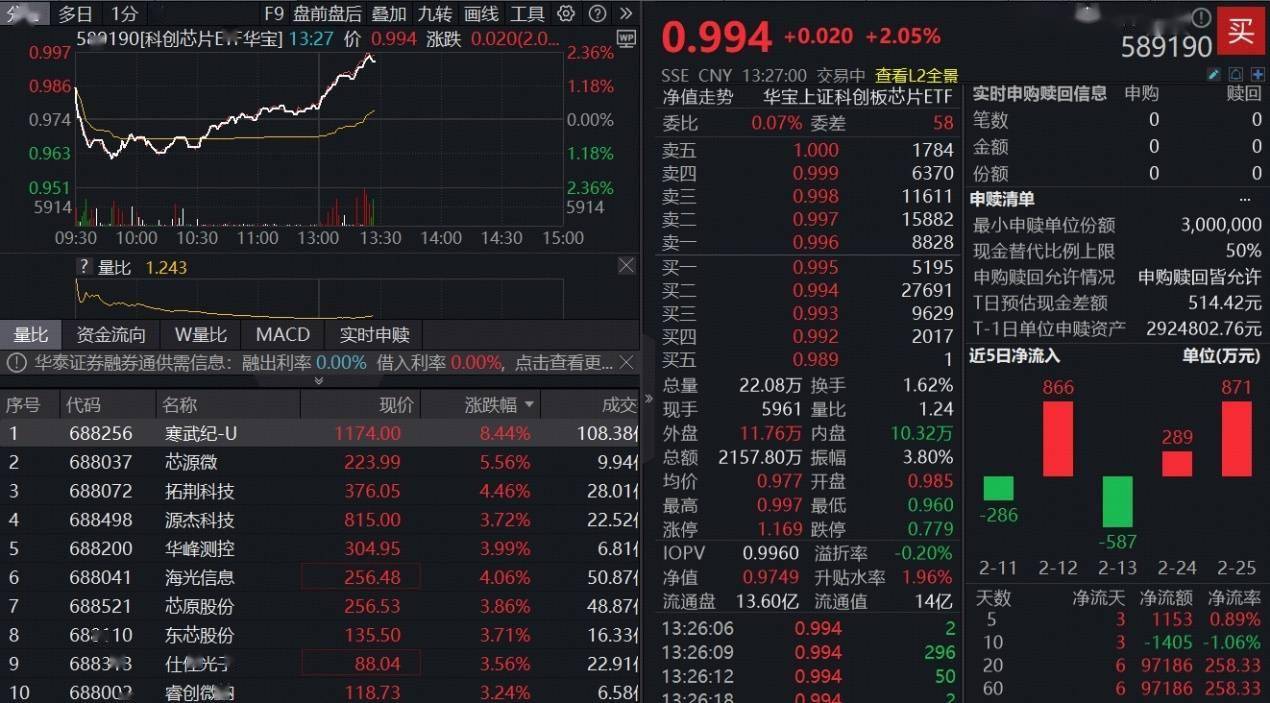
ETF盘中资讯|千亿巨头突发,寒武纪涨近10%!“全芯”科创芯片ETF(589190)涨超2%,海光信息业绩爆了
Sou Hu Cai Jing· 2026-02-26 10:04
Core Viewpoint - The semiconductor sector, particularly domestic chip companies, is experiencing significant growth driven by the demand for AI-related technologies, as evidenced by strong earnings reports and stock performance of key players in the industry [1][3]. Group 1: Stock Performance - The "Chip Innovation" ETF (华宝, 589190) saw an increase of over 2% in afternoon trading, with leading companies like Cambrian (寒武纪-U) rising nearly 10% and achieving a transaction volume exceeding 10 billion [1]. - Other notable performers included Chip Source (芯源微) up over 5%, and Haiguang Information (海光信息) and Tuo Jing Technology (拓荆科技) both rising over 4% [1]. Group 2: Earnings Reports - Haiguang Information reported a revenue of 14.376 billion yuan for 2025, marking a year-on-year increase of 56.91%, with a net profit of 2.542 billion yuan, up 31.66% [2][3]. - Cambrian's earnings forecast indicates a revenue of 6 to 7 billion yuan for 2025, representing a staggering year-on-year growth of 410.87% to 496.02%, with a net profit expected between 1.85 billion and 2.15 billion yuan [3]. - Lanke Technology (澜起科技) anticipates a net profit of 2.15 to 2.35 billion yuan for 2025, reflecting a growth of 52.29% to 66.46% [3]. Group 3: Industry Outlook - The semiconductor industry is experiencing an upward trend, with AI driving demand for computing chips, storage chips, and wafer foundry services [3]. - Dongguan Securities highlights that the semiconductor equipment sector is entering a historic development window, suggesting a focus on performance realization in the short term and on domestic substitution and key technological breakthroughs in the long term [3]. Group 4: ETF Performance - The "Chip Innovation" ETF has achieved an annualized return of 17.93% since its inception, outperforming similar indices and demonstrating a better risk-return profile [5][6]. - The index has shown a maximum drawdown of -56.81%, indicating a relatively lower risk compared to other semiconductor indices [6].


悍高集团(001221):深度报告:国产家居五金龙头,设计+智造+渠道构建竞争护城河
Dongguan Securities· 2026-02-26 09:16
Investment Rating - The report assigns an "Accumulate" rating to the company, marking its first coverage [1][48]. Core Insights - The report highlights that HIGOLD Group has transformed from an OEM manufacturer to a self-owned brand, expanding from a single product line to a comprehensive home solution provider, and from local operations to a global presence [5][48]. - The company has established a robust product matrix driven by home hardware and outdoor furniture, which supports its long-term growth [5][48]. - The home hardware industry is experiencing continuous expansion, driven by consumer demand for mid-to-high-end products, presenting significant market consolidation opportunities [27][31]. - HIGOLD Group has maintained impressive performance metrics, with a five-year compound annual growth rate (CAGR) of 28.93% in revenue and 59.15% in net profit [35][48]. - The company is well-positioned to capitalize on industry trends, including the rise of smart home products and the acceleration of domestic brand replacement [34][48]. Summary by Sections Company Overview - HIGOLD Group, founded in 2004, has evolved through various stages, including OEM manufacturing, brand development, and capital market entry, focusing on providing comprehensive high-end hardware solutions globally [12][14]. Product Matrix - The company’s core business is home hardware, contributing nearly 90% of revenue, with outdoor furniture providing about 8.56% [21][25]. - The product categories include storage hardware, basic hardware, kitchen and bathroom hardware, and smart hardware, with basic hardware becoming the largest revenue source [22][25]. Industry Growth - The home hardware market is expanding due to rising demand for renovations in existing homes, with a projected CAGR of 9.17% from 2020 to 2025 [27][29]. - The market is characterized by a "large industry, small enterprises" structure, providing opportunities for consolidation among stronger players [31][33]. Performance Metrics - HIGOLD Group's revenue grew from 802 million yuan in 2019 to 2.857 billion yuan in 2024, with a CAGR of 28.93% [35][48]. - The company’s net profit increased from 52 million yuan in 2019 to 531 million yuan in 2024, reflecting a strong operational resilience [35][48]. Competitive Advantages - The company has built a competitive moat through original design, smart manufacturing, and a comprehensive channel strategy, enhancing its market position [44][45]. - HIGOLD has established a digital production base and a multi-channel sales network, which includes both online and offline strategies [47][48]. Investment Recommendations - The report forecasts earnings per share (EPS) of 1.76 yuan, 2.31 yuan, and 3.15 yuan for 2025, 2026, and 2027, respectively, with corresponding price-to-earnings (PE) ratios of 42.2, 32.3, and 23.6 [48][52]. - The report expresses optimism about the company's growth potential, recommending an "Accumulate" rating based on its competitive advantages and market positioning [48].
聚杰微纤(300819):更新:新拓电子布领域,半导体无尘耗材亦高增
GUOTAI HAITONG SECURITIES· 2026-02-26 09:12
Investment Rating - The report maintains a "Buy" rating for the company [5][11]. Core Insights - The company is expanding into the electronic fabric sector through the acquisition of Genyin Technology, which enhances its capabilities in flexible equipment upgrades [2][11]. - The semiconductor cleanroom consumables are experiencing rapid growth, with the company producing high-end cleanroom wipes that meet international standards, primarily used in high-end wafer fabs and PCB industries [11]. - The financial forecast indicates a projected increase in net profit from 74 million yuan in 2023 to 117 million yuan by 2027, with a compound annual growth rate (CAGR) of approximately 32.6% [4][12]. Financial Summary - Total revenue is expected to decline from 685 million yuan in 2023 to 592 million yuan in 2025, before recovering to 749 million yuan by 2027, reflecting a CAGR of 14.8% from 2025 to 2027 [4][12]. - The earnings per share (EPS) is projected to grow from 0.50 yuan in 2023 to 0.79 yuan in 2027 [4][12]. - The company’s return on equity (ROE) is expected to improve from 8.7% in 2023 to 12.3% in 2027 [4][12]. Market Data - The company's target price is set at 62.85 yuan, with a current price of 53.38 yuan [5][11]. - The stock has shown significant price appreciation, with a 12-month absolute increase of 266% [10][11]. - The company has a total market capitalization of 7,965 million yuan [6].
从“卡脖子”到“走出去”,邮储银行助力国产喷油器闯荡全球市场
Qi Lu Wan Bao· 2026-02-26 08:43
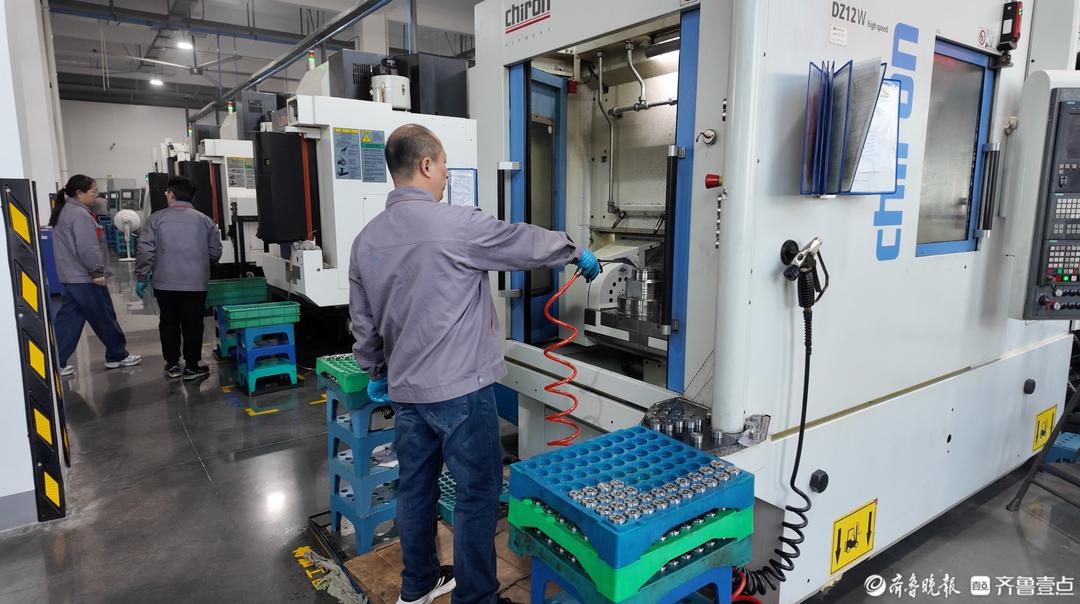
Core Insights - The article highlights the collaboration between Shandong Xinya Green Power Fuel System Co., Ltd. and Postal Savings Bank of China, emphasizing how financial support is accelerating the company's growth in the domestic substitution market [1][3]. Company Overview - Shandong Xinya Green Power Fuel System Co., Ltd. was established in 2017 and specializes in the research, production, and sales of high-pressure common rail injectors for internal combustion engines [3]. - The company's products are widely used in heavy trucks and engineering machinery, serving well-known domestic manufacturers such as China National Heavy Duty Truck Group, Weichai Power, and FAW Jiefang [3]. - The company aims to replace imports with its cost-effective products, which have successfully penetrated markets in Southeast Asia, the Middle East, and Africa [3]. Financial Collaboration - The partnership with Postal Savings Bank began in 2023, focusing on various business areas including small enterprise credit, payroll services, and cash settlement [3][5]. - A loan of 10 million yuan from Postal Savings Bank has significantly supported the company's steady development, enhancing its financing channels and optimizing cash flow management [3][5]. Business Performance - The company projects nearly 200 million yuan in revenue for 2024, with tax contributions of 15 million yuan and the creation of over 200 jobs [5]. - The diesel engine electronic control high-pressure common rail technology developed by the company is recognized as one of the 35 critical technologies in China, receiving national support [5]. Strategic Focus - Postal Savings Bank emphasizes its commitment to supporting "specialized, refined, distinctive, and innovative" enterprises like Shandong Xinya, aiming to be a growth partner throughout the company's lifecycle [7]. - The collaboration exemplifies the synergy between finance and technology, showcasing the bank's role in facilitating the company's international market expansion and technological advancements [7].

溢价超三倍、新增5亿元商誉,爱博医疗押宝德美医疗
Bei Jing Shang Bao· 2026-02-26 08:12
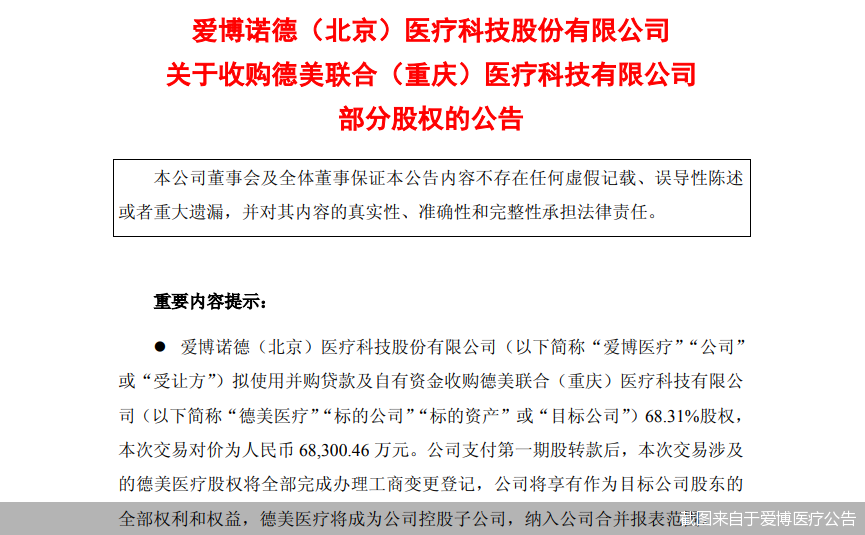
Core Viewpoint - Aibo Medical (688050), a leading ophthalmic device company, plans to enter the sports medicine sector through the acquisition of 68.31% of Demai Medical for 683 million yuan, with a significant premium over net asset value, expected to create approximately 500 million yuan in goodwill [1][7]. Group 1: Acquisition Details - The acquisition price of 683 million yuan represents about three times the net asset value of Demai Medical, with the transaction expected to generate around 500 million yuan in goodwill [1][7]. - Funding for the acquisition will primarily come from bank loans, estimated to cover 70% to 80% of the transaction value [4][5]. - Following the acquisition, Demai Medical will become a wholly-owned subsidiary of Aibo Medical, fully integrated into its consolidated financial statements [4]. Group 2: Financial Performance and Projections - Demai Medical, a leading player in the sports medicine field, is projected to achieve rapid revenue and net profit growth, with expected revenues of 236 million yuan and 286 million yuan for 2024 and 2025, respectively [9]. - Aibo Medical's revenue for the first three quarters of 2025 was 1.144 billion yuan, a year-on-year increase of 6.43%, while net profit decreased by 8.64% due to declining sales in artificial lenses and contact lenses [9]. - The acquisition is anticipated to enhance Aibo Medical's revenue and gross margin, optimizing its strategic positioning in the market [9]. Group 3: Market Context and Strategic Rationale - The sports medicine sector is experiencing rapid growth, driven by increasing demand from the aging population and supportive government policies, presenting a significant opportunity for Aibo Medical [10]. - Aibo Medical aims to leverage synergies in R&D, manufacturing, and sales channels through this acquisition, which is expected to provide new growth momentum amid slowing performance in its core ophthalmic business [1][10]. - The acquisition aligns with Aibo Medical's strategy to diversify its portfolio and tap into high-growth markets, contrasting with the more competitive and slower-growing ophthalmic sector [10].

龙头IPO过会叠加“去日化”预期升温,半导体设备ETF(561980)午后拉升,长川科技、寒武纪领涨!
Sou Hu Cai Jing· 2026-02-26 06:42
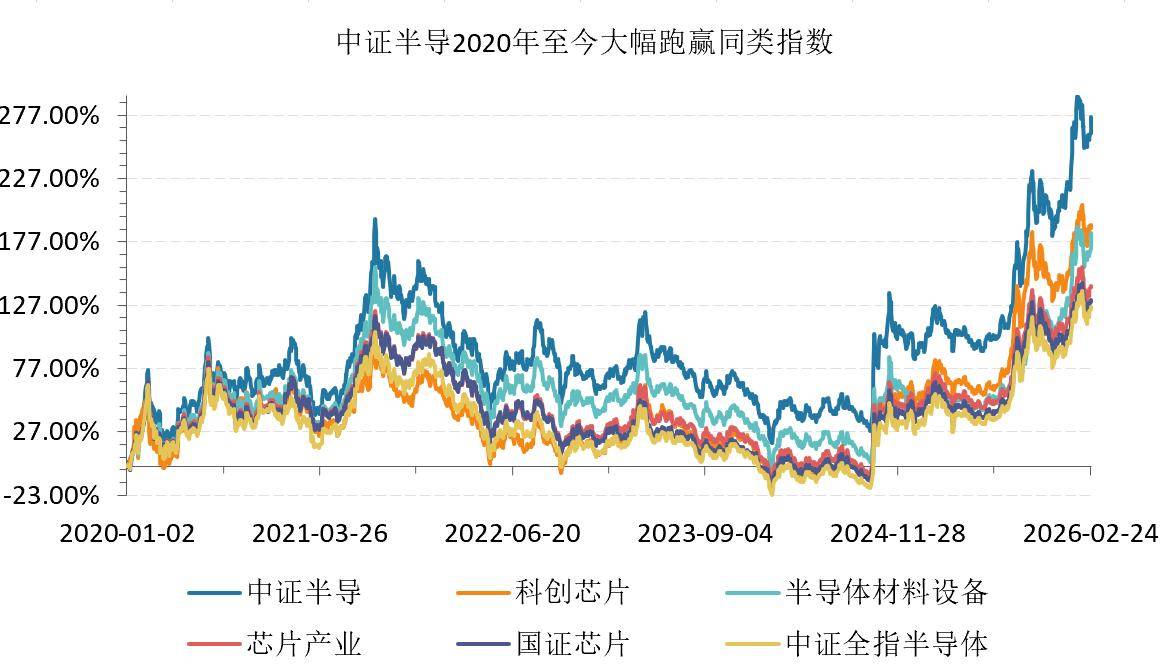
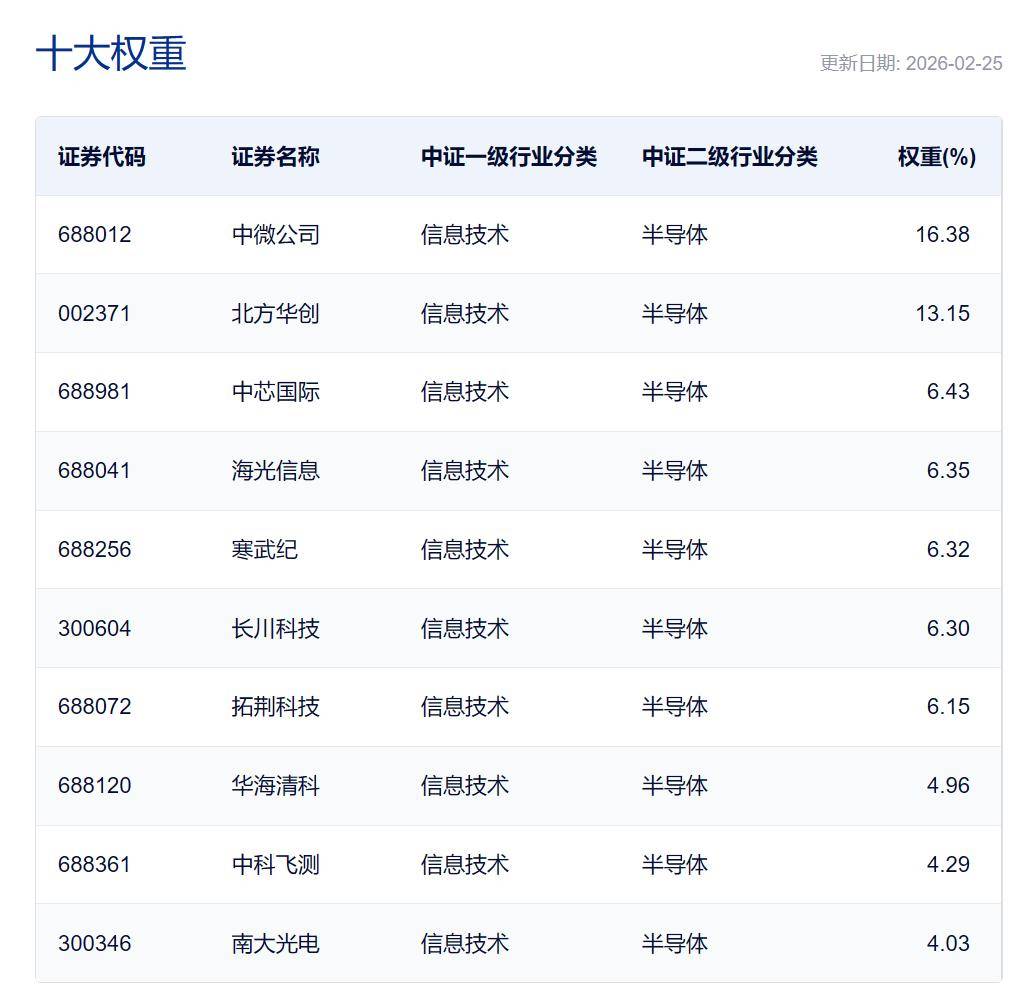
Core Viewpoint - The semiconductor equipment and chip design sectors are experiencing a strong rally, driven by various industry catalysts and positive performance from key companies [1][3]. Group 1: Market Performance - The semiconductor equipment ETF (561980) rose by 1.13%, with a peak increase of over 2%, and a real-time transaction volume of 2.58 billion yuan [1]. - Notable stock performances include Cambrian rising by 7%, and several companies like Changchuan Technology and Jingyi Equipment increasing by over 5% [2]. Group 2: Catalysts for Growth - Catalyst 1: The tightening of Sino-Japanese relations is reinforcing the logic of domestic substitution, with potential benefits for domestic equipment manufacturers as Japan's semiconductor equipment leaders focus on specific technologies [4]. - Catalyst 2: The successful IPO of Shenghe Jingwei, which aims to raise 4.8 billion yuan for advanced packaging projects, is expected to drive demand for packaging equipment, benefiting related equipment suppliers [5]. - Catalyst 3: Strong earnings reports from both domestic and international AI chip leaders confirm an upward trend in the chip industry, with Nvidia reporting a 73% year-over-year revenue increase and domestic companies like Haiguang Information and Cambrian also showing significant growth [6]. Group 3: ETF Insights - The semiconductor equipment ETF (561980) tracks the semiconductor industry index, with over 90% weight in equipment, materials, and design, featuring leading companies such as Zhongwei Company and Beifang Huachuang [7]. - As of February 25, the ETF's latest scale is 3.527 billion yuan, with its index having risen over 290% since 2020, indicating a stronger rebound compared to similar indices [7].
半导体设备、材料、设计深度分析:三重共振下的黄金主线赛道
Sou Hu Cai Jing· 2026-02-26 06:25
Core Viewpoint - The semiconductor equipment and materials market is expanding into AI chip design, with strong performance from companies like Nvidia and domestic players such as Haiguang Information and Cambrian, indicating a robust growth trajectory in the sector [1][4]. Group 1: Company Performance - Nvidia reported a revenue of $68.1 billion, a 73% year-over-year increase, with strong growth in its data center business and a positive outlook extending to 2027 [4]. - Haiguang Information expects a revenue increase of 62.91% to 75.82% year-over-year for Q1 2026, building on a 57% increase in 2025 [1]. - Cambrian anticipates a net profit increase of 575% for 2025, showcasing the strong demand for domestic AI chips [1][4]. Group 2: Market Trends - The semiconductor equipment ETF (561980) has shown resilience, recovering from a 2% dip to gain over 2% during the day, reflecting investor confidence in the sector [1]. - The semiconductor theme index has outperformed other indices since 2020, with a significant increase of 290.72% compared to other chip-related indices [2][3]. - The supply-demand dynamics in the storage chip market have shifted, with SK Hynix indicating a transition to a seller's market, leading to expected price increases [4]. Group 3: Industry Outlook - The growth in semiconductor equipment, materials, and design is expected to continue until at least 2027, driven by strong demand and capacity expansion in the industry [4]. - The domestic semiconductor industry is benefiting from increased localization, with the localization rate for wafer manufacturing equipment expected to rise from 25% in 2024 to 30% in 2026 [4]. - The increasing demand for AI computing power, coupled with rising storage prices and accelerated domestic substitution, is favorable for the equipment, materials, and design sectors [4].



研报掘金丨群益证券(香港):予通富微电“买进”评级,AMD获Meta大单,公司间接受益
Xin Lang Cai Jing· 2026-02-26 06:16
Core Insights - Meta and AMD have announced a collaboration to deploy a total of 6,000 megawatts of AMD chips (MI450), which is expected to generate over $100 billion in revenue for AMD in the coming years [1] Group 1: Company Impact - Tongfu Microelectronics, as AMD's core packaging and testing manufacturer, is expected to benefit significantly from the increased business scale with major clients, leading to a 5% upward revision in profit forecasts for 2027 [1] - The total order value from this collaboration is anticipated to exceed $100 billion, positively impacting Tongfu Microelectronics [1] - Tongfu Microelectronics has stakes of 15% in AMD's Penang and Suzhou factories, which will contribute to increased revenue for the company [1] Group 2: Strategic Opportunities - Through a private placement, the company aims to seize strategic opportunities in AI and domestic substitution, further enhancing its influence in the packaging and testing sector [1] - The long-term outlook for the company remains positive due to these developments [1] Group 3: Valuation Metrics - The current stock price corresponds to a price-to-earnings (PE) ratio of 40 times for 2026 and 26 times for 2027, with a "buy" rating recommended [1]


群益证券(香港):予通富微电“买进”评级,AMD获Meta大单,公司间接受益
Xin Lang Cai Jing· 2026-02-26 06:11
Group 1 - Meta and AMD announced a collaboration to deploy a total of 6,000 megawatts of AMD chips (MI450), which is expected to generate over $100 billion in revenue for AMD in the coming years [1] - Tongfu Microelectronics, as AMD's core packaging and testing manufacturer, is anticipated to benefit significantly from the increase in business scale from major clients, with a 5% upward revision of the 2027 profit forecast [1] - The total order amount from this collaboration is expected to exceed $100 billion, positively impacting Tongfu Microelectronics, which has a 15% stake in AMD's Penang and Suzhou factories [1] Group 2 - The company is expected to capture strategic opportunities in AI and domestic substitution through a private placement, further expanding its influence in the packaging and testing field, with a long-term positive impact [1] - The current stock price corresponds to a PE ratio of 40 times for 2026 and 26 times for 2027, with a "buy" rating recommended [1]