关税调整

Search documents
气疯了,特朗普宣布:把全球关税从10%加到15%
Sou Hu Cai Jing· 2026-02-23 06:40
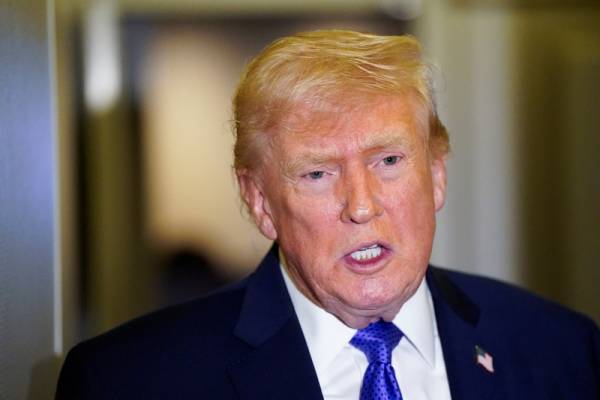
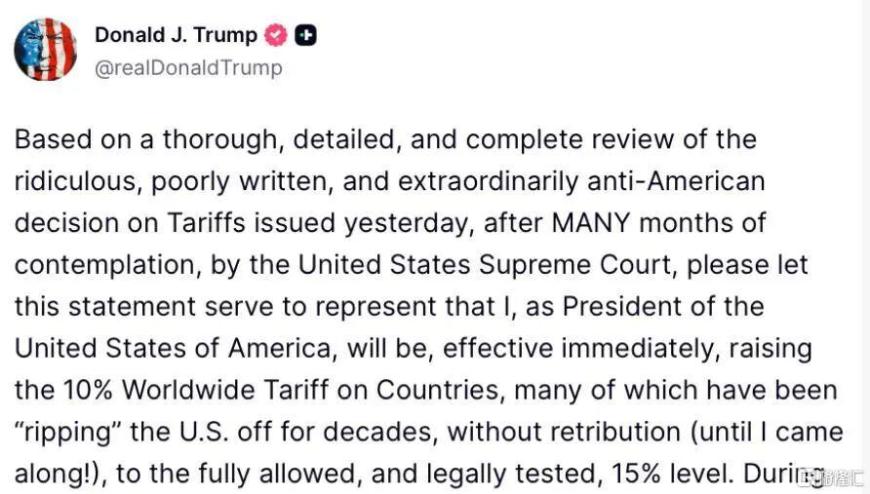
当地时间2月21日,特朗普在自创社交媒体"真实社交"平台发文,宣布了这一消息。 "我,作为美利坚合众国总统,将立即把对许多几十年来'剥削'美国却未受惩罚的国家(直到我上台) 的全球10%关税,提高到完全允许且经法律检验的15%水平,"特朗普写道。 他继续用大写字母和感叹号表达愤怒:"在接下来的几个月里,特朗普政府将确定并颁布新的、合法的 关税,这将继续我们让美国再次伟大的非凡成功进程——比以往任何时候都更加伟大!!!" 彭博社称,特朗普正急于保住他的贸易议程,当地时间20日,最高法院裁定其核心政策工具非法。特朗 普对这一裁决极为愤怒,数小时后立即宣布在现有关税基础上对全球额外加征10%的进口关税,为期 150天。他还炮轰裁定其关税政策违法的大法官们是"国家的耻辱"。 特朗普21日的帖文清楚地表明,他觉得10%"全球关税"不够。 【文/观察者网 齐倩】 美国最高法院裁定关税非法后,美国总统特朗普越想越气,要把10%""提高至15%。 洛杉矶港口已因特朗普关税遭受严重打击视频截图 报道认为,特朗普宣布并提高关税的举动凸显了未来的经济波动,将进一步加剧经济动荡。而特朗普现 在能使用的工具远不如"紧急权力"那样灵活, ...

特朗普:将全球关税从10%提高到15%,立即生效
Ge Long Hui· 2026-02-22 04:57
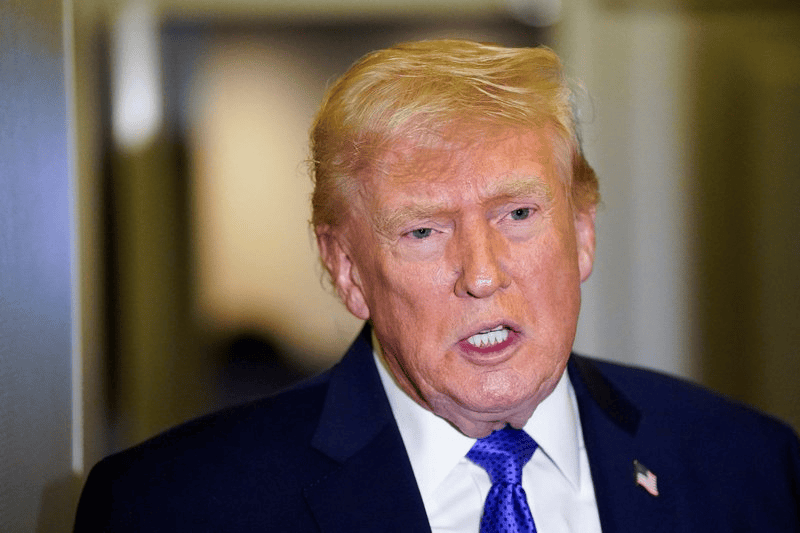
特朗普又发出让全球动荡不安的关税威胁。 此前一天,最高法院驳回了总统贸易议程中的大批条款。 尽管最高法院的裁决阻止特朗普随意对任何国家征收高额关税,但分析人士认为,这并不太可能阻碍他通过关税重新调整 全球贸易的计划。 股票频道更多独家策划、专家专栏,免费查阅>> 责任编辑:钟离 当地时间2月21日,特朗普在其社交媒体上发文称,他将把对全球范围输美商品加征的关税税率从10%提高到15%,"立即生 效"。 接下来几个月里,美国政府将确定并颁布新的"合法关税"。 ...
特朗普新征10%全球统一关税后,当下美国对东西方主要经济体的贸易协定和关税税率如何计算?
Sou Hu Cai Jing· 2026-02-21 16:12
昨天,我写了美国迎来「特朗普关税违法、PCE、GDP」三大超预期时刻的金融市场影响,今天在一票新的自相矛盾的新闻内容和各路分析下,我们再来聚 焦的分析下目前市场上最有争议的问题:现在的关税到底如何征收,美国和全球各主要经济体的关税贸易协定还能继续么? 不过,我事先要提醒一句,实际上当下欧盟、英国等经济体都表示将和美国政府一起研究如何确定过去的协延条款续及未来的关税该如何厘定,美国财政部 长贝森特也表示希望其他经济体遵守和美国过去的关税协定,但当下最大的问题是:美国海关该执行谁的标准?美国最高院确实如特朗普所言,就出了一个 裁定,完全没有给出具体的处置方案! 我们简单回顾事件经过,当地时间2月20日,美国最高法院以6:3裁定特朗普政府依据《国际紧急经济权力法》实施的大规模关税违法,核心要义是确认关税 属于税收,征税权归国会而非总统,限制了总统"无限制加征关税"的权力,但未完全剥夺其征税权。短短数小时后,特朗普迅速反击,签署行政令依据 《1974年贸易法》第122条,宣布对全球输美商品加征10%临时关税,该政策于美国东部时间2月24日正式生效,为期150天,若需延期需经国会批准。 此次10%关税为全球统一适用(豁 ...
美国关税重置为10%,东盟出口商暂获喘息之机
Ge Long Hui· 2026-02-21 09:38
据《日经亚洲》,美国最高法院裁决特朗普IEEPA关税非法,可能对东南亚出口商来说是"好事",至少 在短期内如此。地缘政治风险咨询公司APCO的经济安全政策高级主管、特朗普第一任期内的前白宫官 员Jon Lang表示,美国存在巨额商品贸易逆差的国家(例如东南亚国家)将成为"暂时的受益者"。因为 在法院裁决之前,该地区各国的对等关税范围从缅甸和老挝的40%到菲律宾、马来西亚、柬埔寨、印尼 和泰国的19%不等,但现在这些将"降至10%"。Jon Lang预计,这种情况可能会持续到根据第301条款的 关税程序完成,或者直到根据第232条款调整关税为止。美国将在这一临时窗口期内从这些国家进口更 多商品。 美股频道更多独家策划、专家专栏,免费查阅>> 责任编辑:小讯 ...
商界团体和贸易伙伴施压下 美国贸易代表称对调整钢铝关税持开放态度
Xin Lang Cai Jing· 2026-02-17 14:36
美国政府官员在试图缩小关税的适用范围。这项关税不仅涉及钢铝本身,也覆盖数十种含有钢铝成分的 产品。 据知情人士称,企业表示这些税费很难计算;欧盟也希望,作为与美国待决贸易协议的一部分,此项关 税能加以约束。知情人士还称,白宫已告知企业,正在酝酿调整,但具体时间和细节仍不清楚。 格里尔表示,基本的金属关税将会继续实施,称这些关税在提振国内产业方面"非常成功"。"显然,方 向是对的。它们会继续实施,"他表示。 美国贸易代表贾米森·格里尔暗示,在商界团体和贸易伙伴施压之下,特朗普政府对调整其对钢铝的广 泛关税安排持开放态度。 "出于合规目的,有时可能需要调整某些关税的适用方式,"格里尔周二在CNBC表示。"我们听说有公 司不得不额外雇人来确保合规。我们并不想让大家把太多精力花在繁琐的核算上,以至于没法把公司好 好经营下去。" 美国贸易代表贾米森·格里尔暗示,在商界团体和贸易伙伴施压之下,特朗普政府对调整其对钢铝的广 泛关税安排持开放态度。 "出于合规目的,有时可能需要调整某些关税的适用方式,"格里尔周二在CNBC表示。"我们听说有公 司不得不额外雇人来确保合规。我们并不想让大家把太多精力花在繁琐的核算上,以至于没法 ...

Oil Companies in ‘Active' Talks Over Recouping Venezuela Losses
Youtube· 2026-02-13 21:59
Group 1: U.S.-China-Venezuela Relations - The U.S. is strategically positioned in the trade dynamics between Venezuela and China, with China being a significant supporter of Venezuela alongside Russia and Iran [1] - The U.S. is restricting China's access to Venezuelan oil, which is likened to a "giant anaconda" around China's economy, impacting its energy asset control [2] - China's debt exposure related to Venezuela is estimated between $10 billion to $20 billion, primarily structured as oil-for-loans, indicating a significant financial concern for Beijing [3][4] Group 2: U.S. Oil Companies and Venezuela - There is skepticism regarding U.S. oil companies' enthusiasm to invest in Venezuela due to past negative experiences, despite the Trump administration's push for investment [5] - The current governance situation in Venezuela is unstable, with unresolved legitimacy issues, which poses challenges for potential investors [6] - Long-term capital and stable governance are essential for repairing Venezuela's infrastructure, which is currently insecure [6] Group 3: Tariff Dynamics - Tariff percentages are expected to decrease, but the situation remains complex due to ongoing negotiations and outstanding rulings [8][9] - Exemptions are being granted for essential imports to the U.S., which could lead to inflationary pressures if tariffs remain in place [9]
早盘速递-20260210
Guan Tong Qi Huo· 2026-02-10 03:10
1. Report Industry Investment Rating - No relevant information provided 2. Core Viewpoints - The US is planning to lower the so - called reciprocal tariffs on Bangladeshi goods and provide new exemptions for textiles, which will support Bangladesh's clothing industry [2] - The Shanghai Futures Exchange has adjusted the trading margin ratios and daily price limit ranges for newly listed contracts of multiple futures varieties [2] - The Guangzhou Futures Exchange will adjust the daily price limit ranges and margin standards for lithium carbonate, platinum, and palladium futures contracts starting from February 12th [2] - The growth and moisture conditions of Argentina's 2025/2026 soybean crops have deteriorated significantly, with the proportion of normal - to - good rated crops and suitable - to - optimal moisture areas decreasing [3] - In February, the production of polysilicon decreased significantly month - on - month due to the shutdown of leading enterprises, and some other enterprises also reduced production. Polysilicon inventory increased slightly [3] 3. Summary by Relevant Catalogs Hot News - The US will lower the overall reciprocal tariff on Bangladesh to 19% from 20% (last year it was lowered from 37% to 20%), and there is a mechanism for full tariff exemption for specific textiles [2] - The Shanghai Futures Exchange adjusted the daily price limit range of the gold 2605 contract to 17%, and the trading margin ratios for hedging and general positions to 18% and 19% respectively; for the silver 2702 contract, the daily price limit range is 20%, and the trading margin ratios for hedging and general positions are 21% and 22% respectively [2] - The Guangzhou Futures Exchange will adjust the daily price limit range of lithium carbonate futures contracts to 15% and the speculative trading margin standard to 17%, and the hedging trading margin standard to 16% from February 12th; for platinum and palladium futures contracts, the daily price limit range is adjusted to 24%, and the trading margin standards for both speculative and hedging are adjusted to 26% [2] - As of February 4th, Argentina's 2025/2026 soybean sowing is completed, but the growth and moisture conditions have worsened. Currently, 75% of the soybean crops are rated normal to good (down 8.6% from a week ago), and 59% of the planting areas have suitable to optimal moisture conditions (down 5.6% from a week ago) [3] - In February, polysilicon production decreased significantly month - on - month due to leading enterprises' shutdowns, and some other enterprises also reduced production. Polysilicon inventory increased slightly as production was insufficient to cover short - term shipments [3] Sector Performance - Key sectors to focus on: urea, lithium carbonate, platinum, crude oil, coking coal [4] - Night - session performance of sectors: non - metallic building materials rose 2.06%, precious metals rose 34.00%, oilseeds and fats rose 8.44%, soft commodities rose 2.59%, non - ferrous metals rose 25.41%, coal, coke, steel and minerals rose 10.39%, energy rose 2.69%, chemicals rose 10.71%, grains rose 1.00%, and agricultural and sideline products rose 2.71% [4] Sector Positions - The chart shows the changes in positions of commodity futures sectors in the past five days [5] Performance of Major Asset Classes | Category | Name | Daily % Change | Monthly % Change | Year - to - date % Change | | --- | --- | --- | --- | --- | | Equity | Shanghai Composite Index | 1.41 | 0.12 | 3.89 | | | SSE 50 | 1.45 | 0.50 | 1.67 | | | CSI 300 | 1.63 | 0.27 | 1.92 | | | CSI 500 | 2.02 | - 0.71 | 11.33 | | | S&P 500 | 0.47 | 0.37 | 1.74 | | | Hang Seng Index | 1.76 | - 1.31 | 5.45 | | | German DAX | 1.19 | 1.94 | 2.14 | | | Nikkei 225 | 3.89 | 5.70 | 11.97 | | | FTSE 100 | 0.16 | 1.59 | 4.58 | | Fixed - income | 10 - year Treasury bond futures | 0.06 | 0.17 | 0.58 | | | 5 - year Treasury bond futures | 0.08 | 0.13 | 0.25 | | | 2 - year Treasury bond futures | 0.04 | 0.09 | 0.03 | | Commodity | CRB Commodity Index | 0.51 | - 2.81 | 4.12 | | | WTI Crude Oil | 1.54 | - 1.72 | 12.23 | | | London Spot Gold | 1.85 | 3.66 | 17.15 | | | LME Copper | 0.00 | - 0.08 | 4.51 | | | Wind Commodity Index | 6.26 | - 16.23 | 15.87 | | Other | US Dollar Index | - 0.78 | - 0.27 | - 1.44 | | | CBOE Volatility Index | 0.00 | 1.83 | 18.80 | [6] Stock Market Risk Preference and Major Commodity Trends - The report presents various charts showing the trends of major commodities such as the Baltic Dry Index, CRB Spot Index, WTI crude oil, London spot gold, London spot silver, LME copper, CBOT soybeans, and CBOT corn, as well as the risk premiums of relevant stock indices [7]
美国将下调对孟加拉国的对等关税 并为纺织品提供新豁免
Xin Lang Cai Jing· 2026-02-09 19:34
Core Viewpoint - The U.S. is reducing the so-called reciprocal tariffs on Bangladeshi goods and providing new exemptions for textiles, which will support Bangladesh's garment industry [1] Group 1: Tariff Adjustments - The overall reciprocal tariff on Bangladesh will be lowered to 19%, down from 20% last year and 37% previously [1] - A mechanism will be established to allow certain textiles to receive full tariff exemptions, benefiting the garment sector [1] Group 2: Trade Benefits - Bangladesh will offer preferential access to U.S. industrial goods and agricultural products, including chemicals, medical devices, auto parts, energy, and agricultural products [1] - The country has committed to addressing non-tariff barriers that restrict U.S. sales, including accepting vehicles that meet U.S. regulations and obtaining authorization for pharmaceuticals from the U.S. government [1] Group 3: Compliance Commitments - Bangladesh has agreed to measures related to environmental protection, labor rights, and intellectual property rights [1]
印美临时贸易协议面临考验,印度国内质疑:该协议是向美国妥协的产物
Huan Qiu Shi Bao· 2026-02-08 22:46
Core Points - India and the US have reached a temporary trade agreement framework after a year of negotiations, with India asserting that the agreement protects its core agricultural interests, while domestic opposition views it as a compromise to the US [1][4] - The agreement includes provisions for India to lower tariffs on US industrial products and various food items, while the US will reduce its "reciprocal tariffs" on certain Indian goods from 25% to 18% [3][4] - The agreement aims to facilitate a bilateral trade deal, with plans for a formal signing in March [4] Trade Agreement Details - India will eliminate or reduce tariffs on US industrial products and multiple food and agricultural products, while the US will lower tariffs on some Indian goods [3] - India has committed to increasing imports from the US, targeting approximately $500 billion in energy products, aircraft, precious metals, technology products, and coking coal over the next five years [3] - The agreement also addresses non-tariff barriers, market access, economic security, and digital trade [3] Domestic Reactions - Indian officials, including Commerce and Industry Minister Piyush Goyal, have praised the framework as beneficial for Indian exporters, particularly farmers and small businesses, claiming it opens a $30 trillion market [5] - However, the agreement has faced strong criticism from opposition parties and organizations in India, which argue it compromises farmers' interests and national sovereignty [5][6] - The "United Farmers Front" has condemned the agreement, warning of potential nationwide protests if it is signed, citing concerns over tariff imbalances favoring US agricultural products [6] Key Factors Influencing Agreement - Analysts suggest that India's ability to reduce imports of Russian oil and the protection of Indian farmers' interests will be crucial for the successful finalization of the agreement [7][8] - The US has indicated that if India continues to import Russian oil, it may reinstate tariffs, complicating negotiations [7] - The potential impact on Indian agriculture and the trade balance with the US is a significant concern, with warnings that increased imports could erase India's trade surplus with the US [8] Future Negotiations - The issue of Russian oil procurement remains a focal point for future negotiations, with India likely to seek a compromise that satisfies both the US and its own energy needs [9] - There is a belief that India may gradually reduce its Russian oil imports to meet US demands while maintaining a balance in its foreign relations [9]
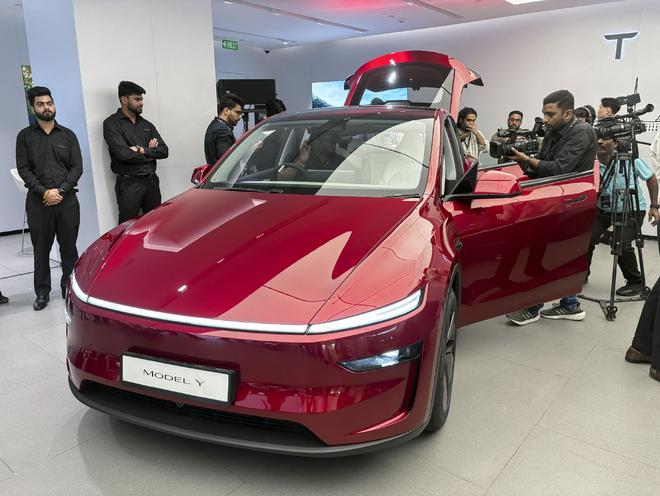
印度下调美国豪华车关税至30%,不包括特斯拉
Guan Cha Zhe Wang· 2026-02-08 07:17
Group 1 - India will reduce tariffs on luxury cars from up to 110% to 30% under a temporary trade agreement with the US, while maintaining high tariffs on electric vehicles, including those from Tesla [1][3] - The US will lower tariffs on Indian goods from 50% to 18% as part of the agreement, with the implementation of these tariff reductions expected after a formal agreement is signed in March [1] - The agreement contrasts with India's previous deal with the EU, where it agreed to reduce tariffs on more car models to 10%, including some concessions for electric vehicles [4] Group 2 - Tesla faces challenges in the Indian market due to high tariffs, with the starting price of the Model Y reaching nearly $70,000, leading to unsold inventory and a significant discount being offered to clear stock [3] - Despite initial interest, Tesla's sales in India have been disappointing, with only 227 registrations for the year and a large portion of exported vehicles remaining unsold [3]