品牌化

Search documents
2025年,跨境电商跑进下半场:告别低价,搏杀品牌
Sou Hu Cai Jing· 2026-01-10 11:13
Core Insights - 2025 presents significant challenges for cross-border platforms and merchants due to the end of the "small exemption" policy in the U.S. and the establishment of fixed tariffs by the EU, marking the end of the "low-price direct mail + tax exemption" model that has supported overseas trade for years [2] - Despite the dual pressures of tariffs and compliance, the growth of the "four dragons" of cross-border e-commerce has not slowed, with TikTok Shop and Temu both approaching the $100 billion GMV mark, and the industry focus shifting from North America to Europe and Latin America [2] Summary by Sections 1. Dual Pressure of Tariffs and Compliance - In 2025, cross-border merchants are under the shadow of tariff pressures, with the U.S. imposing a 10% tariff on Chinese goods starting in February, leading to the suspension of tax exemption for packages valued at $800 or less by August [2][3] - A 3C seller noted that tariff costs increased by approximately 25%, erasing price advantages in the consumer electronics sector, prompting many merchants to seek alternative markets, particularly in Europe, where demand for high-quality products is rising [3] - From January to September 2025, exports to the EU reached $20.5 billion, surpassing the total for 2024, while exports to the U.S. dropped significantly [4] 2. Compliance Challenges - The EU plans to impose a fixed tariff of €3 on small packages valued under €150 starting July 1, 2026, indicating a global shift away from the "tax-free era" [7] - New regulations require all platforms serving Chinese operators to report seller identities and transaction data quarterly, marking the entry of cross-border e-commerce into a fully compliant era [8][9] 3. Growth of the "Four Dragons" - Despite challenges, the "four dragons" of cross-border e-commerce are experiencing substantial growth, with TikTok Shop's GMV nearing $100 billion and Temu's projected GMV between $90 billion and $95 billion for 2025 [10] - TikTok Shop's active consumer base reached 400 million, with a fourth-quarter GMV exceeding $25 billion, surpassing eBay [9][10] 4. Shift to European Markets - The four dragons are increasingly focusing on the European market due to U.S. tariff policies, with Temu's monthly active users in Europe surpassing 140 million, a 74% increase year-on-year [12] - SHEIN is also shifting focus to Europe, with projected revenue growth of 30.7% in 2026, expected to exceed U.S. revenue for the first time [12] 5. Brandization as a Consensus - TikTok Shop is recognized as the third fastest-growing brand in the U.S. in 2025, with a 95% increase in large brands earning over $30 million joining the platform [13][14] - SHEIN opened its first permanent store in Paris, aiming to enhance brand image, while AliExpress launched a "super brand plan" to attract top brands [14] 6. Conclusion - The year 2025 has seen Chinese cross-border e-commerce navigating through policy, cost, and market restructuring, with a shift from low-price driven models to brand-focused and diversified market strategies [15] - AI is poised to reshape the e-commerce landscape, with OpenAI introducing instant checkout features, indicating a future where e-commerce platforms evolve into AI-driven shopping experiences [15]


2025,跨境电商跑进下半场:告别低价,搏杀品牌
Sou Hu Cai Jing· 2026-01-10 10:31
Core Insights - 2025 presents significant challenges for cross-border platforms and merchants due to the end of the "small parcel exemption" policy in the U.S. and the establishment of fixed tariffs by the EU, marking the end of the "low-cost direct mail + tax exemption" model that has supported overseas trade for years [2] - Despite the dual pressures of tariffs and compliance, the growth of the "four small dragons" in cross-border e-commerce remains robust, with TikTok Shop and Temu both approaching the $100 billion GMV milestone [2][12] - The industry is transitioning away from reliance on traffic-driven growth towards a long-term operational model centered on compliance and brand development [2] Tariff and Compliance Pressures - In 2025, cross-border merchants are under significant tariff pressure, with the U.S. imposing a 10% tariff on Chinese goods and ending the tax exemption for packages valued at $800 or less [2][3] - A 3 Euro fixed tariff will be applied to small parcels entering the EU valued under 150 Euros starting July 1, 2026, indicating a global shift away from the "tax-free era" [7] - New tax regulations require all platforms serving Chinese operators to report seller identities and transaction data quarterly, marking the entry of cross-border e-commerce into a fully compliant era [8] Growth of the "Four Small Dragons" - In 2025, TikTok Shop's active consumers reached 400 million, with GMV nearing $100 billion, making it the fifth-largest platform globally and the fastest-growing [9] - Temu's projected GMV for 2025 is between $90 billion and $95 billion, with significant growth in downloads and active users [9] - The shift in focus towards the European market is evident, with Temu's monthly active users in Europe surpassing 140 million, contributing 40% of its global GMV [12] Market Trends - The European market is emerging as a new growth engine for cross-border e-commerce, with significant increases in sales and profit margins compared to the U.S. market [4][12] - Brand recognition is becoming a consensus among platforms, with major brands increasingly joining TikTok Shop, reflecting a shift from small merchants to a more diverse ecosystem [13][14] - The introduction of competitive strategies, such as price guarantees by platforms like AliExpress, indicates a move towards brand differentiation and market positioning [14] Conclusion - The cross-border e-commerce landscape in 2025 is characterized by a re-evaluation of growth strategies in light of new tariffs and compliance pressures, with a focus on brand development and market diversification [15] - The integration of AI technologies is expected to reshape the e-commerce landscape, potentially transforming platforms into intelligent shopping assistants [15]

撒贝宁“策展”东莞制造美学:全球每5件毛衣,1件来自大朗!
Sou Hu Cai Jing· 2026-01-09 14:25
Group 1 - The core point of the article highlights that Dongguan, specifically Dalang, is a major hub for sweater production, with one in every five sweaters globally produced there [1][6]. - The Dalang knitting industry began in 1979 and has grown to become the largest and most complete knitting industry cluster in China, with an annual transaction volume of 72 billion yuan [2]. - The live broadcast showcased the transformation of Dongguan from a "world factory" to a "city of manufacturing aesthetics," emphasizing the artistic aspect of production through advanced technology [3][15]. Group 2 - Dalang's yarn sector leads the nation, with annual sales exceeding 1 million tons, accounting for over half of the national color yarn spot trading volume [5]. - The town has over 29,000 market entities and employs more than 200,000 people, producing 900 million sweaters annually, solidifying its market position [6]. - The core competitive advantage of Dalang lies in its "flexible production" capability, allowing regular orders to be completed in 2-3 days and high-end custom orders in just 2 hours [8]. Group 3 - E-commerce sales in Dalang have surpassed 10 billion yuan, with a "small order quick response" model enabling traditional manufacturing to adapt to market changes [10]. - The introduction of domestically produced equipment has significantly reduced costs, with self-developed machines priced at approximately 80,000 yuan each, only one-tenth of the cost of imported equipment [12]. - The "Dalang Preferred" brand initiative, set to launch in 2023, marks a significant step towards branding, with government and market collaboration to create a regional public brand [13][18]. Group 4 - The transition from "Made in China" to "Designed in Dalang" reflects a shift towards design, marketing, and brand operation capabilities, indicating a comprehensive upgrade in the industry [16][18]. - The project is now in its 2.0 phase, promoting the industry's transformation towards fashion and digitalization [16]. - Continuous innovations, such as the development of adjustable temperature yarn, demonstrate ongoing industry upgrades and advancements [19].

透视八马茶业纳税“双冠”资本叙事:从销量第一到产业共生
Jin Tou Wang· 2026-01-09 02:36
Core Insights - The article highlights the significance of rural revitalization and county economic development as key national strategies during the transition between the 14th and 15th Five-Year Plans, emphasizing the role of leading enterprises in integrating with local economies for mutual growth [1] Group 1: Tax Contributions and Market Position - Eight Horse Tea has maintained its position as the top taxpayer in Anxi and Wuyishan for six consecutive years, reflecting its strong market performance and brand recognition [2] - According to a report by Frost & Sullivan, Eight Horse Tea ranks first in the Chinese oolong and black tea markets based on projected sales revenue for 2024, with its Tieguanyin sales leading the nation for over a decade [2] - The company's consistent tax contributions are a result of its commitment to quality, which has fostered long-term market trust and a sustainable business model [2] Group 2: Industry Ecosystem and Community Engagement - Eight Horse Tea's tax contributions are just a surface-level indication of its deeper connection with the production areas, where it has established a win-win ecosystem among the market, enterprise, and production regions [3] - Since 2019, Eight Horse has invested over 40 million yuan in high-profile tea competitions, providing platforms for tea farmers to showcase their skills and improve their income, thus enhancing the overall quality standards in the region [3] - The company’s investment in Wuyishan in 2020 not only created a stable supply chain but also facilitated the local tea industry’s transformation towards standardization and modernization [3] Group 3: Business Resilience and Strategic Framework - Eight Horse Tea demonstrates resilience through a triad of standardization, technological innovation, and brand development, which collectively support its business model [5] - The company has established a comprehensive standardization system that enhances product quality and consistency, transitioning from traditional craftsmanship to a controllable and replicable production process [6] - By leveraging technology, Eight Horse has developed a smart supply chain that enhances operational efficiency and adaptability to market fluctuations [6] Group 4: Internationalization and Cultural Branding - Eight Horse Tea's international strategy focuses on brand and cultural output, participating in significant diplomatic events and expanding its global presence through tea tasting events in 32 countries [7] - The company has received multiple accolades, including being ranked second globally and first in China in the World Tea Brand Evaluation List, indicating its strong international brand recognition [7] - The chairman of Eight Horse Tea emphasizes a dual strategy of deepening local roots while expanding internationally, aiming to transform Chinese tea from a raw material export to a cultural brand [7] Group 5: Long-term Value and Economic Impact - The achievements of Eight Horse Tea reflect a broader narrative of structural upgrades within traditional industries, showcasing the potential for innovation and value creation even in conventional sectors [9] - The company’s practices in supporting local economies and contributing to rural revitalization position it as a significant player in county-level economic development, offering sustainable growth potential for investors [9]
义利天下|数贸新生代:自义乌,向世界
Xin Lang Cai Jing· 2026-01-06 10:13
Group 1 - The core idea of the article highlights the emergence of a new generation in Yiwu, who are not just inheritors of their parents' businesses but are actively seeking innovation and change in the global market [1] - This new generation is leveraging AI tools and integrating offline experiences with online marketing strategies to enhance their business models [1] - They are focused on creating high-quality, aesthetically pleasing products that resonate with consumers worldwide, thereby contributing to the globalization of Chinese goods [1] Group 2 - The young entrepreneurs in Yiwu are incorporating cultural elements into their designs and developing original intellectual properties (IPs) [1] - There is a strong emphasis on the significance of their exports, which are seen as improving the quality of life for consumers in various regions, including Africa [7] - The article suggests that while Yiwu's small commodities are recognized globally, there is a need for a more systematic approach to branding these products [9]

为何中国茶业跑不出一个“茅台”?
3 6 Ke· 2026-01-05 11:30
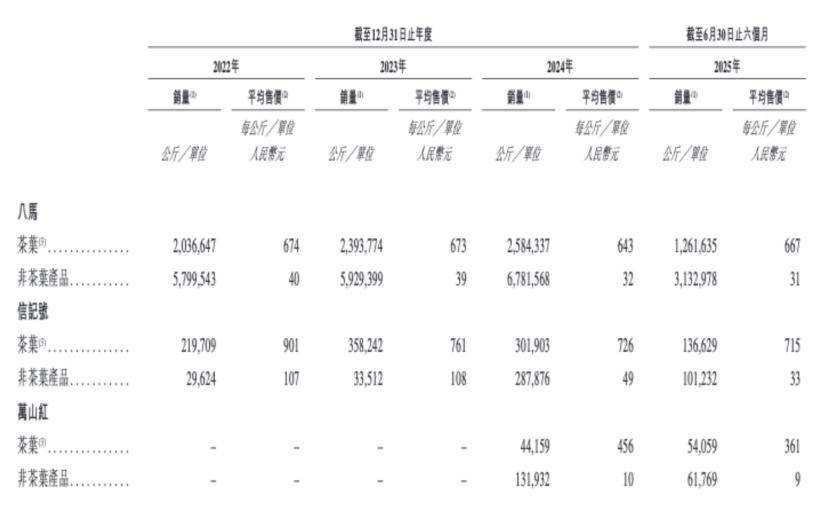
Core Insights - The decline of the "Old Deng Economy" is forcing the liquor industry to rethink consumption scenarios, while the tea industry faces a similar yet fundamentally different set of challenges [1][5] Industry Overview - The traditional consumption model in the tea industry is undergoing profound changes as the "Old Deng Economy" loses its appeal, leading to a decline in social scenarios reliant on personal connections [2] - New-style tea drinks have gained popularity among younger consumers, with brands like Mixue Ice Cream and Bawang Tea emerging, but traditional tea remains stagnant due to its strong agricultural attributes [2][4] Market Dynamics - The tea market is highly fragmented, with the top five companies in the high-end tea segment holding only 5.6% market share, and Baima Tea, as a leading player, capturing just 1.7% [4] - The lack of interest from young consumers in traditional tea and intense product homogenization raise questions about the sustainability of tea companies' profit models and growth [4] Pricing and Product Strategy - Baima Tea's pricing strategy reveals a wide range for its products, from hundreds to tens of thousands of yuan per kilogram, indicating the non-standardized nature of tea as an agricultural product [7] - Despite suggested retail prices, the average selling price of Baima's products is significantly lower, with discounts of up to 35% available to franchisees [7][9] Financial Performance - Baima Tea's gross margin for tea sales reached 58.5% in the first half of 2025, with margins varying significantly across sales channels, from 45% for franchise sales to 79% for direct sales [9][13] - The company's revenue heavily relies on franchise sales, with over 50% of total income generated from selling products to franchisees [12][13] Business Model and Expansion - The franchise model has become a mainstream choice for traditional tea companies to expand rapidly and capture market share, although it weakens brand control over end channels [12][13] - Baima Tea's marketing expenses reached 3.44 billion yuan by the end of 2024, accounting for 31% of its revenue, indicating a strong focus on brand and marketing efforts [13] Challenges and Industry Trends - The tea industry struggles with a lack of brand recognition despite having numerous products, leading to a fragmented market where high-end tea remains underrepresented [9][13] - The complexity of the tea production process and the high costs associated with owning tea plantations pose significant challenges for companies seeking to control the entire supply chain [14][17] Future Outlook - The tea industry's ability to transition successfully in a modern context will depend on defining a new "tea drinking era" rather than merely replicating the success of the liquor industry [17]
日本跨境电商的终点,是成为“本地企业”:海外仓是卖家唯一“入场券”
Sou Hu Cai Jing· 2026-01-04 04:12
Core Insights - Japan is set to undergo a significant structural change in its cross-border market with the complete removal of the consumption tax exemption for imported goods valued under 10,000 yen, imposing a uniform 10% consumption tax on all goods entering Japan [1] Group 1: Impact of Tax Policy Changes - The new tax policy will increase costs by 10% for cross-border sellers who have relied on the "low-price direct mail" business model, significantly affecting their profitability [1][2] - The tax reform aims to eliminate the price advantage previously enjoyed by cross-border sellers, particularly those from China, and to support local retailers by removing policy benefits [2][3] Group 2: Shift in Competitive Focus - As all sellers face the same tax costs, competition will shift from a "price war" to a "value war," emphasizing logistics speed, service quality, and brand trust rather than just pricing [2][3] - Cross-border sellers will need to adapt by learning compliance, branding, and local operations to survive in the new policy environment [2][7] Group 3: Benefits of Third-Party Overseas Warehouses - Third-party overseas warehouses can enhance efficiency and customer experience by allowing sellers to operate with a "local merchant" identity, achieving delivery times comparable to local brands [3][4] - Local shipping improves product visibility on platforms and enhances consumer trust, which is crucial for building brand image beyond price competition [4][5] - Utilizing overseas warehouses allows sellers to convert fixed costs into variable costs, making expenses more manageable based on actual usage [6] - These warehouses also help mitigate risks and simplify compliance, allowing sellers to operate without establishing a legal entity in Japan [7]

产销两旺!贵州江口县中药材成富民“金招牌”
Xin Lang Cai Jing· 2026-01-02 08:10
Group 1 - The traditional Chinese medicine industry in Jiangkou County, Guizhou is experiencing a peak in production and sales [1] - Jiangkou Gurun Pharmaceutical is collaborating with China National Pharmaceutical Group to implement order-based production, aiming for a sales value of 12 million yuan for dry Epimedium products by 2025 [3] - Guizhou Miao Medicine Biotechnology Co., Ltd. focuses on the extraction of Miao medicine and health product development, with a projected total sales exceeding 17 million yuan by 2025, representing a 50% year-on-year growth [5] Group 2 - Jiangkou County has a high forest coverage rate and suitable climate, making it rich in traditional Chinese medicine resources, with a planting area of 51,500 acres for key varieties like Epimedium and Huangjing [7] - The county is promoting the standardization and branding of the traditional Chinese medicine industry, aiming to make "small medicinal materials" a significant asset for local economic development [8]

2025年清远西牛麻竹笋产业联盟总结大会召开 擘画高质量发展蓝图
Nan Fang Nong Cun Bao· 2026-01-01 02:05
Core Insights - The 2025 Qingyuan Xiniu Bamboo Shoot Industry Development Alliance summary meeting was held to review industry achievements and plan for quality improvement in 2026 [2][4]. Group 1: Industry Overview - The total planting area of Xiniu bamboo shoots in Qingyuan reached 1.0056 million acres, with an increase of 13,200 acres, and a total fresh bamboo shoot output of 1.6806 million tons, generating an industry chain value of 11.45 billion yuan [8]. - In 2025, the total area of bamboo shoots in Yingde City reached 863,900 acres, with a fresh bamboo shoot output of 1.5353 million tons and a comprehensive industry value of 10.546 billion yuan [9]. Group 2: Industry Development and Financial Support - Yingde City has 667 operating entities, with 27 enterprises obtaining SC certification and 6 leading enterprises recognized at the provincial and municipal levels [10]. - Since 2022, Yingde Rural Commercial Bank has provided over 1.227 billion yuan in industry loans, benefiting more than 4,700 entities, and has signed a framework agreement for a 1 billion yuan credit line for the bamboo shoot industry [28][34]. Group 3: Product Diversification and Market Expansion - The product range has expanded from traditional pickled bamboo shoots and dried bamboo shoots to include prepared dishes, probiotic pickled bamboo shoots, and biodegradable materials, with deep processing rates increasing to 35.71% [15][16]. - The industry has successfully entered overseas markets such as Vietnam, Cambodia, and South Africa, with export prices 50%-100% higher than domestic prices [16][17]. Group 4: Employment and Community Impact - The bamboo shoot industry has created employment for over 170,000 people, with 89,000 being farmers, and 90% of employees in deep processing enterprises coming from local areas [19]. Group 5: Quality Control and Brand Development - The Yingde Market Supervision Administration reported a 100% compliance rate for bamboo shoot production units and related products [40]. - The industry is leveraging a "media+" model for brand enhancement, integrating various media resources to promote the Xiniu bamboo shoot brand through events and digital marketing [55][59]. Group 6: Future Directions and Recommendations - The Qingyuan government emphasizes the need for collective market expansion, strict quality control, and a focus on standardization, branding, and digital transformation for the bamboo shoot industry in 2026 [50][54].

俄罗斯电商平台“招商”中国卖家
经济观察报· 2025-12-31 03:07
Core Insights - The article highlights the growing interest of Chinese businesses in the Russian market, which is perceived as a nearby incremental market amidst increasing competition in the European and American markets [2][4]. Market Space - The Russian market has been described as a "market vacuum" between 2022 and 2023, where products could sell easily [4]. - Ozon, a major e-commerce platform in Russia, reported that by 2025, the daily order volume from Chinese sellers exceeded 2 million, with a year-on-year growth of 2.5 times [5]. - During the recent "Black Friday" sales, Chinese sellers generated over 20 million orders, with a total GMV growth of 4 times compared to the previous year [5]. Consumer Behavior - Russian consumers are beginning to show more discerning preferences, moving from a "just have products" mentality to a more selective approach [7]. - There is a notable shift in product categories, with increased interest in home goods and apparel, as younger Russians are reducing their use of carpets, leading to a rise in demand for advanced cleaning products [7]. Logistics and Efficiency - The logistics efficiency in Russia is highlighted as a key advantage, with a typical supply chain cycle from China to Russia taking 30 to 45 days [12]. - Ozon has established numerous logistics centers across China to support this efficiency, covering all major transport routes to Russia [14]. Currency and Pricing - Currency fluctuations pose significant risks for sellers, but Ozon has implemented a pricing mechanism that allows sellers to price in RMB, mitigating exchange rate risks [17]. - This pricing strategy provides a stable revenue environment for Chinese sellers [17]. Returns Management - A new policy set to launch in 2026 will allow Chinese sellers to resell returned goods directly from Ozon's warehouses in Russia, transforming returns from a loss into potential sales [19]. Regulatory Changes - The Russian government is cracking down on "gray customs" practices, which could increase compliance costs for sellers [22]. - Starting in 2026, the tax exemption for cross-border small packages will gradually decrease, impacting the competitive landscape [22]. Brand Development - There is a growing trend among Russian consumers towards brand recognition, with a willingness to pay a premium for better service and quality [22]. - Chinese brands are increasingly adopting advanced marketing techniques, including AI-generated models for product promotion, to adapt to local market preferences [25]. Regional Influence - The Russian market serves as a gateway to the broader Russian-speaking region, with significant trade growth expected with Central Asian countries [28]. - Ozon aims to double its GMV and order volume by 2026, supported by enhanced logistics and marketing strategies [28].