
多元共治

Search documents
“无废园区”怎么建?这四个着力点要抓好
Zhong Guo Huan Jing Bao· 2025-11-04 00:28
Core Concept - The "Zero Waste Park" is a cellular engineering model of the "Zero Waste City," aimed at efficient waste management through source reduction, resource utilization, and harmless disposal, promoting a harmonious coexistence between humans and nature [1] Group 1: Source Reduction - Source reduction is the foundational project for building "Zero Waste Parks," with significant progress in the green and low-carbon transformation of industries, yet still in a critical upgrading phase [2] - Emphasis on technological innovation to empower source reduction, including increased investment in clean production technology and support for green upgrades in production processes [2] - Encouragement for enterprises to explore green alternatives for raw materials and establish a refined, green production management system to minimize waste generation [2] Group 2: Industrial Collaboration - The need to break down industry barriers for waste utilization, allowing waste from one enterprise to become raw materials for another, thus achieving resource circulation [3] - Integration of the zero waste concept into overall park development planning, focusing on industrial positioning and attracting complementary waste utilization enterprises [3] - Promotion of collaboration among upstream and downstream enterprises to form a circular economy industrial chain through resource sharing and mutual advantages [3] Group 3: Hazardous Waste Management - Improvement of hazardous waste management measures, including pilot programs for point-to-point disposal exemptions within designated industrial park areas [4] - Encouragement for regional enterprises to innovate in hazardous waste utilization and disposal methods, fostering collaborative utilization and disposal facilities [4] - Establishment of cooperative mechanisms among different industries to enhance collaboration and reduce marginal costs of waste treatment [4] Group 4: Smart Regulation - Addressing waste management challenges, particularly for small and medium-sized enterprises, through the use of information technology and smart regulation [5] - Development of an integrated intelligent regulatory platform for real-time monitoring of waste types, quantities, and flows, ensuring effective pollution control [5][6] - Implementation of dynamic monitoring and early warning mechanisms for waste generation and disposal rates, enhancing regulatory foresight and adaptability [6] Group 5: Cultural Development - Establishment of a governance framework involving party leadership, park management, enterprise participation, and social involvement to cultivate a "zero waste culture" [7] - Encouragement for leading enterprises to take the initiative in zero waste construction, promoting gradual development through demonstration [7] - Engagement of educational institutions and environmental organizations to provide tailored zero waste transformation solutions, reducing costs and improving efficiency [7]
人民城市里的“投资于人”(现场评论)
Ren Min Ri Bao· 2025-10-30 22:31
Core Insights - The article emphasizes that the true measure of a city's development lies not only in its economic metrics and architectural achievements but also in its responsiveness to the everyday needs of its citizens [1][3] Group 1: Urban Governance and Community Involvement - The shift from a government-led approach to a multi-stakeholder governance model reflects a significant transformation in urban development philosophy, focusing on both hard and soft infrastructure [2][3] - The concept of "one household, one plan" signifies a move towards precision in urban governance, enhancing the quality of life for residents through tailored solutions [2][3] Group 2: Historical Context and Modernization - The article highlights the historical context of the "carrying toilet" issue in Shanghai, which symbolizes broader urban governance challenges faced by large cities [1][3] - The resolution of the "carrying toilet" problem is presented as a benchmark for urban civilization, indicating a city's commitment to improving the living conditions of its residents [3] Group 3: Social Impact and Future Directions - The article discusses the importance of investing in human capital as part of urban development, suggesting that cities should prioritize the well-being of their inhabitants [2][3] - The narrative of urban modernization is framed as a continuous journey, with the disappearance of outdated practices like the "carrying toilet" marking a step towards a more humane and responsive urban environment [3]
特朗普扛不住了?美国豆农迎来“救命单”!中国一出手就是18万吨
Sou Hu Cai Jing· 2025-10-29 22:06
Core Viewpoint - The recent order of 180,000 tons of U.S. soybeans by China highlights the ongoing trade dynamics between the two countries, prompting the Trump administration to consider lowering tariffs on Chinese products in response to the needs of American farmers [1][9]. Group 1: U.S. Agricultural Sector Challenges - U.S. farmers are facing significant challenges with a surplus of soybeans due to reduced purchases from China, which has been the largest buyer [3][8]. - The U.S. Department of Agriculture reported a sharp decline in soybean exports to China in Q3 2023, exacerbated by the trade tensions [3]. - Farmers are pressuring the White House to engage more effectively with China to alleviate their financial burdens [6]. Group 2: Trade Policy Adjustments - Following the soybean order, Trump indicated a potential reduction in the 20% tariff on Chinese fentanyl products, reflecting a reactive trade policy [9]. - Analysts suggest that Trump's decision is influenced by commitments made during recent trade talks, domestic inflation concerns, and the need to secure votes from agricultural states ahead of the 2024 elections [11]. Group 3: China's Strategic Positioning - China's soybean procurement is driven by market logic, as U.S. soybean prices have become more competitive compared to Brazilian soybeans due to inventory pressures [14]. - The strategy of diversifying soybean sources has allowed China to maintain leverage in trade negotiations [16]. - Over the past decade, China has developed a diversified soybean supply chain, with imports from Brazil rising to 65% in the first three quarters of 2023 [18]. Group 4: Global Trade Dynamics - The recent developments in soybean trade signal a shift in global agricultural trade from a U.S.-dominated model to a more diversified approach [21][23]. - The trade war has prompted China to explore multiple sourcing options, leading to Brazil becoming the largest soybean exporter globally [21]. - The transition towards a multi-polar trade system is reshaping international trade rules, with China actively building a global supply network [23]. Conclusion - The 180,000-ton soybean order serves as a reflection of the shifting balance of power between China and the U.S., with China gaining strategic advantages through long-term planning while the U.S. faces short-term political pressures [25].

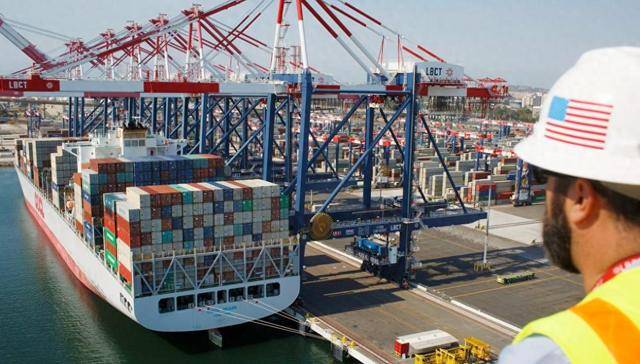
制度优势不断转化为治理效能—— 江苏“十四五”经济社会发展综述之八
Xin Hua Ri Bao· 2025-10-26 23:24
Group 1: Core Insights - The article emphasizes the importance of high-quality party leadership in driving high-quality economic development in Jiangsu during the "14th Five-Year Plan" period [2][4] - Jiangsu has made significant strides in modernizing governance systems and capabilities, focusing on grassroots governance and enhancing the political functions of local party organizations [3][8] - The province has actively promoted democratic governance, allowing citizens greater access to legislative processes and encouraging public participation in decision-making [5][6] Group 2: Governance and Party Building - Jiangsu has implemented a series of measures to strengthen party discipline and political oversight, including the establishment of a comprehensive political supervision system [3][4] - The province has prioritized theoretical education and political unity among party members, conducting multiple rounds of concentrated education on party principles [2][3] - The grassroots party organizations have been empowered to enhance their governance capabilities, with over 28.32 million grassroots organizations and 564.71 million party members actively participating [3][8] Group 3: Legal and Democratic Development - The establishment of a public opinion collection mechanism by the provincial people's congress has transformed the approach to gathering citizen feedback, leading to increased public engagement in legislative processes [6][7] - The promotion of legal awareness and education has been a key focus, with initiatives aimed at improving the legal literacy of citizens across various sectors [6][9] - The integration of multiple forms of supervision, including party, legislative, and public oversight, has created a more coordinated and effective governance framework [7][9] Group 4: Grassroots Governance Innovations - Jiangsu has seen innovative practices in grassroots governance, with initiatives like the "community party branch" model enhancing local governance and addressing community needs [8][9] - The province has focused on resolving community issues through collaborative efforts among party organizations, local governments, and social entities [8][9] - The integration of technology and data-driven approaches has improved the efficiency and responsiveness of grassroots governance [9]
浙东南法院携手共筑红树林司法保护协作新机制
Zhong Guo Zi Ran Zi Yuan Bao· 2025-10-24 02:33
Core Viewpoint - The meeting on mangrove judicial protection in the Wenzhou-Taiwan Bay marks a new phase of collaborative efforts in ecological environment governance in Zhejiang Province, focusing on addressing the challenges faced by mangrove ecosystems through judicial cooperation [1][2] Group 1: Judicial Collaboration - The meeting aimed to integrate judicial forces to tackle the protection challenges of mangrove ecosystems, which are crucial for water purification, storm resistance, carbon sequestration, and biodiversity maintenance [1] - A cross-regional judicial cooperation mechanism was established to respond to the current difficulties in mangrove protection and enhance systematic conservation efforts [1] Group 2: Collaborative Framework - The participants signed the "Wenzhou-Taiwan Bay Mangrove Judicial Protection Hongtian Declaration," committing to deepen collaboration in five key areas: strict legal enforcement against mangrove resource destruction, enhancement of specialized environmental resource adjudication, promotion of ecological restoration measures, strengthening cross-regional judicial cooperation, and facilitating the transformation of judicial outcomes into practical ecological protection experiences [2] - The framework aims to create a cohesive governance and protection network for mangroves through joint judicial protection bases, collaborative patrols, and handling of cross-regional cases [2] Group 3: Multi-Stakeholder Engagement - The meeting encouraged the innovation of a "multi-governance" model, promoting participation from government departments, universities, research institutions, social organizations, and the public, leveraging technology to enhance the socialization, normalization, and precision of protection efforts [2]
从单点突破到“系统聚变”,北京城市更新驶入“深水区”
Bei Ke Cai Jing· 2025-10-01 12:47
Core Insights - The recent data from the "Fourth Beijing Urban Renewal Best Practice Experience Sharing Conference" indicates a significant investment of 550 billion yuan in 334 city-level demonstration projects over five years, with nearly 58% of this year's best practice project applications coming from market participants [1][3][7]. Group 1: Urban Renewal Progress - Beijing's urban renewal is transitioning from isolated projects to a systematic "Beijing model," emphasizing not only spatial optimization but also cultural continuity, improved livelihoods, and the cultivation of new productive forces [2][3]. - The city has moved from "single-unit updates" to "area-wide coordination," showcasing a shift in urban renewal philosophy and practice [3][4]. Group 2: Systematic Approach - The systematic nature of urban renewal in Beijing is evident in multiple dimensions, including moving from "project-based" to "systematic" approaches, and from "government-led" to "multi-stakeholder participation" [4][8]. - The revitalization project in the Jiuxianqiao area serves as a model for systematic updates, integrating ecological, economic, social, and quality improvements through collaborative governance [4][5]. Group 3: Funding and Community Involvement - The fourth best practice evaluation received 225 project applications with a total investment of approximately 76.9 billion yuan, highlighting the effectiveness of market-driven operations in urban renewal [7][8]. - Community involvement is increasing, as seen in the successful crowdfunding efforts for sustainable updates in the Chaoyangmen area, where 52 businesses contributed 1.1 million yuan independently [7][8]. Group 4: Future Directions - The urban renewal process is seen as a driver for sustainable development, with a need for breakthroughs in top-level design, policy integration, financial innovation, and governance models to meet more detailed demands and complex challenges [8].
如何落实国家公园法,专家这样说(上)
Zhong Guo Zi Ran Zi Yuan Bao· 2025-09-19 06:53
Core Points - The National Park Law of the People's Republic of China was passed and will take effect on January 1, 2026, marking a new phase in the legal and systematic construction of natural protected areas centered around national parks [2] - The law aims to maintain the authenticity and integrity of natural ecosystems, establish a new pattern of land and space protection, and enhance the ecological civilization system to safeguard national ecological security [2] Management System - The National Park Law addresses the long-standing issue of fragmented governance by establishing a unified and efficient management system for national parks, involving various government levels and departments [13] - The law provides legal guarantees to resolve multi-headed management and overlapping responsibilities, but emphasizes that implementation will be the real test [13] Balancing Responsibilities - National park management agencies are responsible for protection, while local governments focus on economic and social development, leading to potential conflicts between short-term economic gains and long-term ecological protection [15] - A scientific ecological compensation and benefit-sharing mechanism is proposed to align the interests of both parties, ensuring that local residents benefit from conservation efforts [15] Coordination Mechanism - The law requires the establishment of a coordination mechanism for national parks that span multiple administrative regions, necessitating a permanent office for effective management and oversight [17] - This mechanism aims to unify standards and policies across regions to ensure systematic protection [17] Integrated Law Enforcement - The law grants management agencies comprehensive law enforcement responsibilities to address issues of overlapping or absent enforcement [19] - Effective integration of various enforcement powers and training for personnel is essential for successful implementation [19] Long-term Stability and Efficiency - A sustainable funding mechanism is crucial for the management of national parks, combining central government funding with local contributions and social capital [21] - The use of technology and smart management systems is emphasized to enhance monitoring and decision-making processes [21] Public Participation - The law promotes public participation in national park protection, ensuring that local communities benefit economically from conservation efforts [22] - Mechanisms are established to facilitate community involvement in park management and decision-making [22] Case Study: Wuyi Mountain National Park - Wuyi Mountain National Park has implemented eco-friendly practices in tea farming, promoting biodiversity and improving local livelihoods [28] - The park has created job opportunities for local residents in conservation and tourism, demonstrating a successful model of integrating ecological protection with community development [28] Ecological Compensation - The law mandates the establishment of an ecological compensation mechanism to balance environmental protection with economic development [33] - Specific compensation measures have been implemented in Wuyi Mountain National Park to support local farmers while ensuring ecological integrity [33] Future Outlook - The National Park Law is expected to strengthen ecological security and improve the well-being of local communities, contributing to a harmonious coexistence between humans and nature [34]
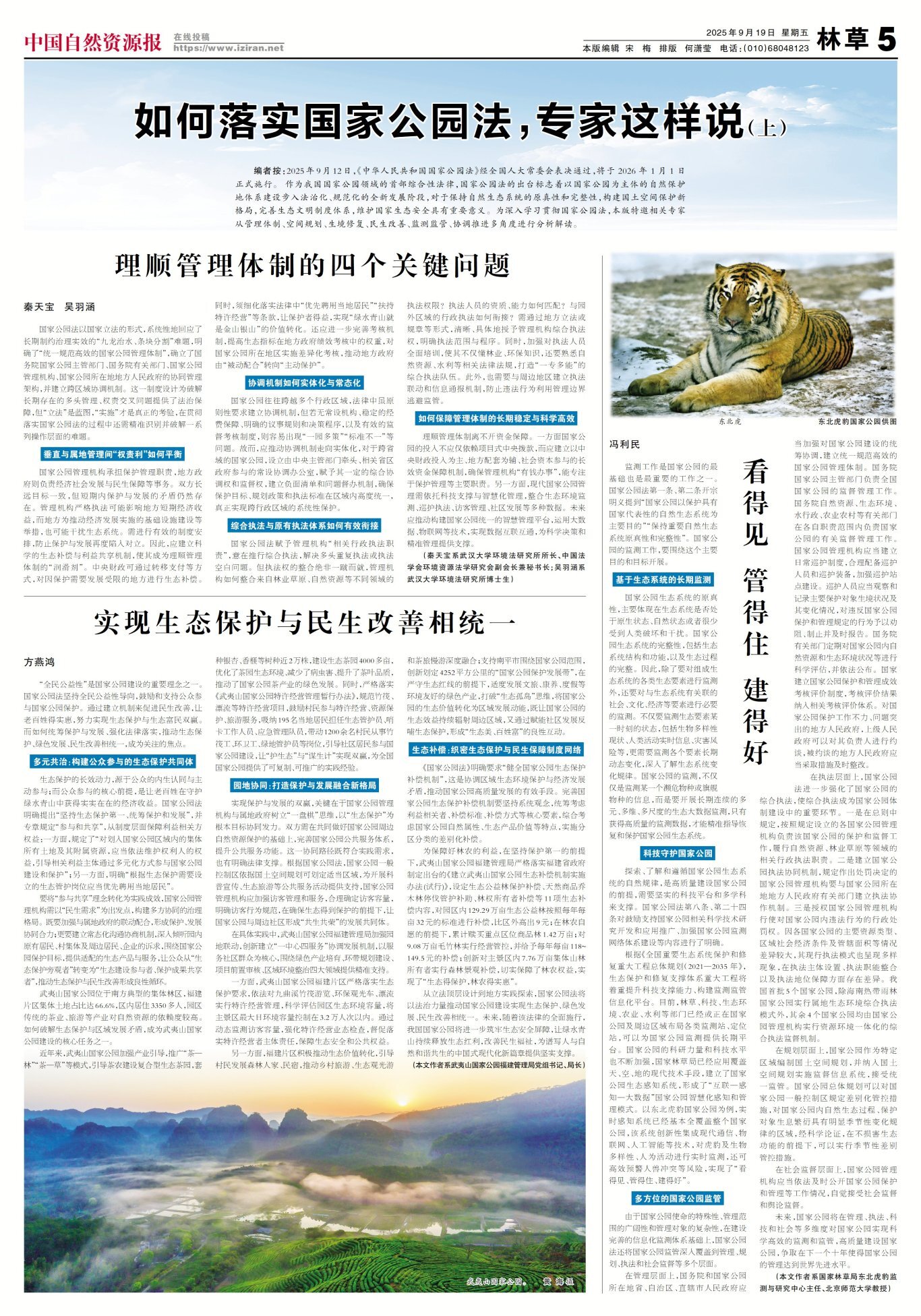
我市多地入选国家级幸福家园行动共建名单
Nan Jing Ri Bao· 2025-09-19 02:35
Core Viewpoint - The recent selection of several communities in Nanjing for the 2025 Urban and Rural Community High-Quality Development Happiness Home Action signifies a recognition of innovative grassroots governance and a step forward in enhancing the quality of life for residents [1][7]. Group 1: Community Innovations - Nanjing's selected communities have tailored their governance strategies based on local resources, population structure, and cultural characteristics, leading to unique paths for happiness practices [2]. - The Oasis Community in Yuhuatai District has created a "small but beautiful" living environment by integrating cultural heritage and effective governance, featuring a factory history museum that engages retired workers and educates younger generations [2][3]. - The Yanziji Street has developed a "Mu Yan Xing Zhi" governance brand, establishing a four-level linkage system to improve service response efficiency and enhance residents' happiness through digital governance initiatives [3][4]. Group 2: Collaborative Governance - The construction of the Happiness Home relies on multi-party collaboration, with communities actively forming governance communities that include enterprises, social organizations, and residents [4][5]. - Yanziji Street has integrated resources through a "Red Chain Party Building Hub," collaborating with educational institutions and local businesses to create a red-themed educational route that connects historical culture with urban development [4][5]. - The "Worry-Free Grocery Store" in the Nanhua New Village community serves as an innovative brand for conflict resolution, providing legal and community support services to residents [5][6]. Group 3: Sustainable Development - The Happiness Home Action aims to modernize grassroots governance and improve community service quality, selecting exemplary communities across the country to explore replicable practices [7]. - The selected communities in Nanjing represent various innovative governance directions, emphasizing the role of party building in activating internal resources and fostering sustainable development [7]. - Future plans include strengthening exchanges with other communities nationwide to further innovate in smart governance and service integration, aiming to create a replicable "Nanjing experience" in community development [7].
锚定“人海和谐”建设海洋生态
Jing Ji Ri Bao· 2025-09-17 22:07
Core Viewpoint - The Guangdong-Hong Kong-Macao Greater Bay Area has made significant progress in marine ecological construction, serving as a model for sustainable development and harmonious coexistence between humans and nature [1][2]. Group 1: Marine Ecological Status - The overall marine ecological condition in the Greater Bay Area is stable and improving, with coral reefs and mangrove ecosystems primarily rated as good [1]. - The Zhuhai area has restored 3.9 kilometers of damaged coastline, re-greened 5 hectares of slopes, and 24 hectares of bare land, increasing forest coverage to 64% [1]. - The population of the Chinese white dolphin in the Pearl River Estuary has remained stable at approximately 2,600 individuals from 2017 to 2021, indicating effective protection of rare species [1]. Group 2: Challenges and Strategies - The Greater Bay Area faces challenges such as inadequate collaborative governance mechanisms, conflicts between development and protection, and insufficient technological support for governance [2]. - A multi-governance approach is necessary to establish a collaborative governance mechanism for marine ecology, integrating land and sea management and promoting regional cooperation [3]. Group 3: Development and Protection Balance - Emphasizing the dual focus on development and protection, the area aims to create a green and low-carbon development model for marine ecology [3]. - Strict limitations on development activities in ecologically fragile areas and the implementation of pollution control measures are essential for sustainable marine resource management [3]. Group 4: Technological Innovation - The "Technology-Driven Ocean" strategy aims to leverage technology for marine ecological protection, utilizing observation, simulation, and prediction to monitor environmental changes [4]. - Advanced technologies such as AI, drones, and satellites will be employed to dynamically monitor the status of marine rare species and ecosystems, supporting the construction of a "smart ocean" in the Greater Bay Area [4].
让“烟火气”不扰民!上海再出措施
Guo Ji Jin Rong Bao· 2025-08-28 12:54
Core Viewpoint - The Shanghai Municipal Government has introduced measures to regulate outdoor seating arrangements, aiming to enhance urban vitality and meet citizen needs while maintaining order in the city [1][2]. Group 1: Regulatory Measures - The newly released measures provide detailed guidelines for outdoor seating, building on previous initiatives to optimize street vendor management [2][3]. - A total of 997 designated outdoor seating points have been established across the city, including 376 outdoor seating areas and 117 specialty markets [2]. - The measures emphasize a balance between urban order and vibrant street life, aiming for "smoky fire without oil smoke, bustling without traffic jams, and being approachable without disturbing residents" [2][3]. Group 2: Safety and Management - The measures stipulate that food preparation is not allowed at outdoor seating; only pre-prepared food can be served, with necessary safety equipment required [4]. - Local management departments are tasked with enhancing public services in designated areas, such as increasing lighting, waste collection, and portable toilets to improve the consumer experience [4]. - A dynamic adjustment mechanism is highlighted, allowing for regular evaluations of outdoor seating arrangements to adapt to urban development and citizen needs [6]. Group 3: Community Involvement - The measures encourage the establishment of self-regulatory organizations to promote cooperative governance and effective supervision of outdoor seating [5]. - Channels for public complaints and feedback are to be established, ensuring timely responses to community concerns [5]. - The initiative aims to create a collaborative environment where local authorities and residents can work together to manage outdoor seating effectively [5][6]. Group 4: Future Outlook - The implementation of these policies is expected to invigorate Shanghai's urban spaces, providing citizens with a richer street life experience in a clean and orderly environment [6]. - The management model developed through these measures may serve as a reference for other cities seeking to enhance urban vibrancy while maintaining order [6].