多极化

Search documents
特朗普的一句话,撼动中美博弈格局,美国几大盟友“醋意”大发
Sou Hu Cai Jing· 2025-11-08 08:36
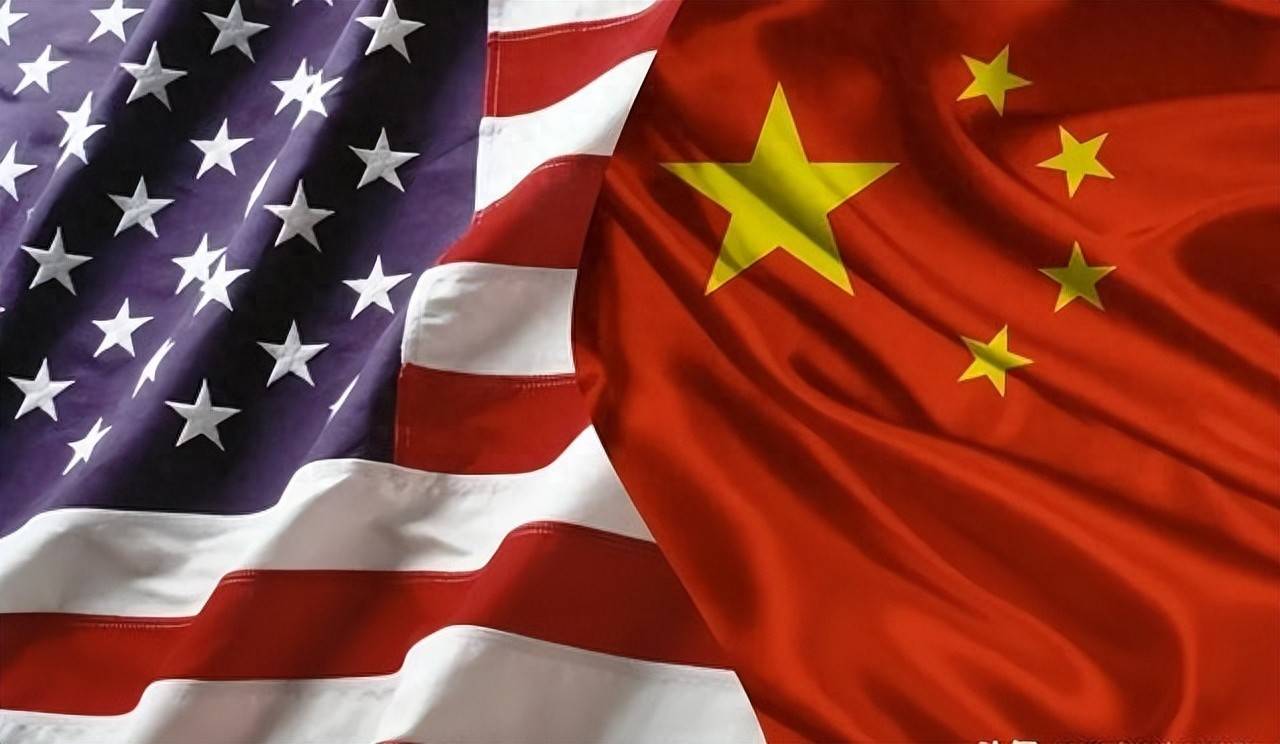
Group 1 - The meeting between China and the United States in South Korea has attracted global attention, focusing on trade wars and strategic competition [1] - Trump's declaration of the meeting as a "G2 meeting" has sparked significant controversy in Western media [1][3] - The "G2" concept, originally proposed in 2005, aimed to strengthen bilateral relations between the U.S. and key global players, but was set aside after the 2008 financial crisis [3][4] Group 2 - The revival of the "G2" concept by Trump raises concerns among U.S. allies, who fear being sidelined in the improving U.S.-China relations [4][6] - Allies such as the EU, Australia, Japan, and South Korea worry about being excluded from the power structure that the "G2" represents [4] - The understanding of "G2" differs significantly between the U.S. and China, with China aiming for a multipolar world rather than a bipolar one [6][8] Group 3 - The Obama administration's approach to "G2" was to integrate China into the international system, contrasting with Trump's more confrontational stance [6] - China's rise has shifted its position in global affairs, making it a peer to the U.S., which complicates the feasibility of a "G2" framework [6] - China firmly rejects the "G2" concept, as it contradicts its diplomatic principles and commitment to developing countries [8]

新加坡部长谈贸易摩擦,无视美国主动打压,却一味劝中国忍让!
Sou Hu Cai Jing· 2025-11-02 08:08
Core Viewpoint - The article discusses the need for China to adopt a more cooperative approach in trade relations, particularly with the United States, while highlighting the complexities and underlying issues of the current trade tensions [1][2]. Group 1: Trade Relations and Cooperation - Singapore's Minister Vivian Balakrishnan suggests that China should learn to "tolerate" trade friction and avoid a tit-for-tat approach, advocating for building bridges and seeking cooperation to mitigate protectionism [1][2]. - The article emphasizes that the trade imbalance is not initiated by China but is a result of systematic containment strategies from the U.S., including tariffs and technology restrictions [1][2]. Group 2: Singapore's Position and Concerns - Singapore, heavily reliant on global trade, is concerned about international order instability and has benefited from maintaining a balance between China and the U.S. [4]. - The article points out that Singapore's attempts to act as a mediator often lean towards Western perspectives, raising questions about the impartiality of its stance [5]. Group 3: Divergent Views on Multilateralism - There is a fundamental difference in the understanding of multilateralism between Singapore and China, with Singapore favoring actions within a U.S.-defined framework, while China advocates for equality and mutual benefit among nations [7]. - The article notes that Singapore fears a "leadership vacuum" in global order, whereas China views multipolarity as an inevitable trend in global development [7]. Group 4: China's Stance and Principles - China maintains that its development path is self-determined and emphasizes two non-negotiable principles: the right to develop independently and the defense of core interests [8][12]. - The article argues that promoting cooperation should involve addressing the actions of the party that disrupts dialogue, rather than placing the burden solely on China to concede [10]. Group 5: Conclusion on International Relations - The article concludes that the world requires mutual respect and equal dialogue rather than unilateral concessions, suggesting that a balanced international order will emerge when each country focuses on its responsibilities [16].

G2提议重现,中国拒绝和美国“共治天下”,中国的追求写在天安门上
Sou Hu Cai Jing· 2025-11-01 15:40
Group 1 - The core discussion between the US and China lasted approximately 1 hour and 40 minutes, drawing significant media attention, with Trump surprising many by proposing the G2 concept and expressing intentions to visit China within the year [1] - The US agreed to withdraw tariffs on Chinese fentanyl-related products and suspend tariffs on electronic components and machinery, indicating some progress in trade discussions [2][5] - Both sides have adjusted their retaliatory measures on agricultural and energy products, agreeing to extend certain tariff exemptions to provide businesses with more adaptation time [5] Group 2 - The G2 concept, while appearing to promote joint governance, is seen as a way for the US to maintain its dominant position while involving China, reflecting a desire to share the burden without relinquishing power [7][10] - China has shown disinterest in the G2 proposal, emphasizing that international affairs should involve all countries rather than a select few, aligning with its stance on promoting a more equitable global order [10][15] - The US's internal political dynamics reveal opposition to the G2 concept, with some arguing it undermines America's leadership role and could lead to a diminished influence in global affairs [12][14] Group 3 - The G2 proposal is perceived as a trap for China, where the US would retain control while expecting China to bear the consequences of any failures, which China rejects [17] - China's rising global influence and economic resilience are highlighted, with a focus on its ability to counter US strategies and maintain its position in international relations [19] - The ongoing shift towards a multipolar world order is noted, with more countries seeking to assert their voices in global governance, challenging the traditional dominance of a few nations [21][23]

美国拒绝归还600吨黄金?我国只用了一招,俄罗斯:早就该这样!
Sou Hu Cai Jing· 2025-10-29 06:24
Group 1 - The core issue revolves around China's request for the return of 600 tons of gold stored in the U.S., which was denied, raising concerns about global financial trust and economic order [1] - The U.S. cited "technical complexities" as reasons for the refusal, impacting market confidence and undermining its status as a "neutral financial infrastructure" [1] - Previous similar refusals faced by Germany and Venezuela highlight the politicization of U.S. financial services [1] Group 2 - In response, China sold $57.3 billion in U.S. Treasury bonds in April 2025, reducing its holdings to the lowest level since 2011 at $759 billion, causing a spike in 10-year Treasury yields above 5% [3] - This action received support from countries like Russia and is viewed as a significant challenge to U.S. dollar hegemony [3] - The incident reveals cracks in international trust and accelerates the restructuring of the global financial order, with the dollar's share in foreign exchange reserves dropping to its lowest since 1999 at 58.2% [3] - The strategic value of gold as hard currency is further emphasized, with the competition for reserves reflecting a struggle for global economic dominance [3] - Countries are reassessing economic policies, with de-dollarization and multipolarity becoming central trends in the evolution of the international financial system, while China's strategic initiatives offer a more resilient development approach [3]
永别了,美国!中国将成为全球“经济霸主”?
Sou Hu Cai Jing· 2025-10-26 10:59
Core Points - The trade war initiated by the U.S. has escalated over the past seven years, with significant tariffs imposed on imports from China, including a proposed 60% to 100% tariff on Chinese goods by Trump [1][3] - The U.S. trade deficit with China reached $295.5 billion in 2024, an increase of 5.7% from the previous year, indicating that the tariffs have not effectively reduced the trade imbalance [3] - China's GDP growth for Q1 2024 was reported at 5.4%, with exports to ASEAN countries increasing by 15% in the first half of 2025, showcasing resilience in its economy despite external pressures [5] - The global trade landscape is shifting towards multipolarity, with the EU increasing trade with China by 8% in the first half of 2025, particularly in electric vehicles and green energy [7] - The U.S. economy, while showing a GDP growth of around 2.5% in 2024, faces underlying issues such as persistent inflation, with the CPI rising to 3.2% due to supply chain bottlenecks [9] - The trend of de-dollarization is gaining momentum, with countries like Saudi Arabia and Brazil moving towards using local currencies for trade, impacting the dominance of the U.S. dollar in global transactions [11][13] - The trade war has revealed the limitations of the U.S. "America First" policy, as countries increasingly seek partnerships with China, which has become the primary trading partner for over 140 nations [15][16] Summary by Sections Trade Policies and Tariffs - Trump proposed significant tariffs on imports, including a 60% to 100% tariff on Chinese goods, leading to immediate retaliatory measures from China [1][3] - The U.S. implemented a "90-day exemption" policy to attract EU and ASEAN manufacturing back to the U.S. [3] Economic Performance - China's GDP growth outperformed expectations at 5.4% in Q1 2024, with strong export performance to ASEAN and EU [5] - The U.S. trade deficit with China increased to $295.5 billion in 2024, indicating ineffective tariff strategies [3] Global Trade Dynamics - The EU's trade with China increased by 8% in early 2025, reflecting a pragmatic approach towards China amidst U.S. pressures [7] - Countries are increasingly adopting local currencies for trade, reducing reliance on the U.S. dollar, as seen with Saudi Arabia and Brazil [11][13] Long-term Implications - The trade war has highlighted the U.S.'s diminishing influence as countries pivot towards China for trade partnerships [15][16] - The structural adjustments in China's economy, with a focus on consumption and services, contribute to its resilience against tariffs [13]
莫迪开出条件,不买俄油可以,但要“二换一”,这回美国没话说了
Sou Hu Cai Jing· 2025-09-29 04:33
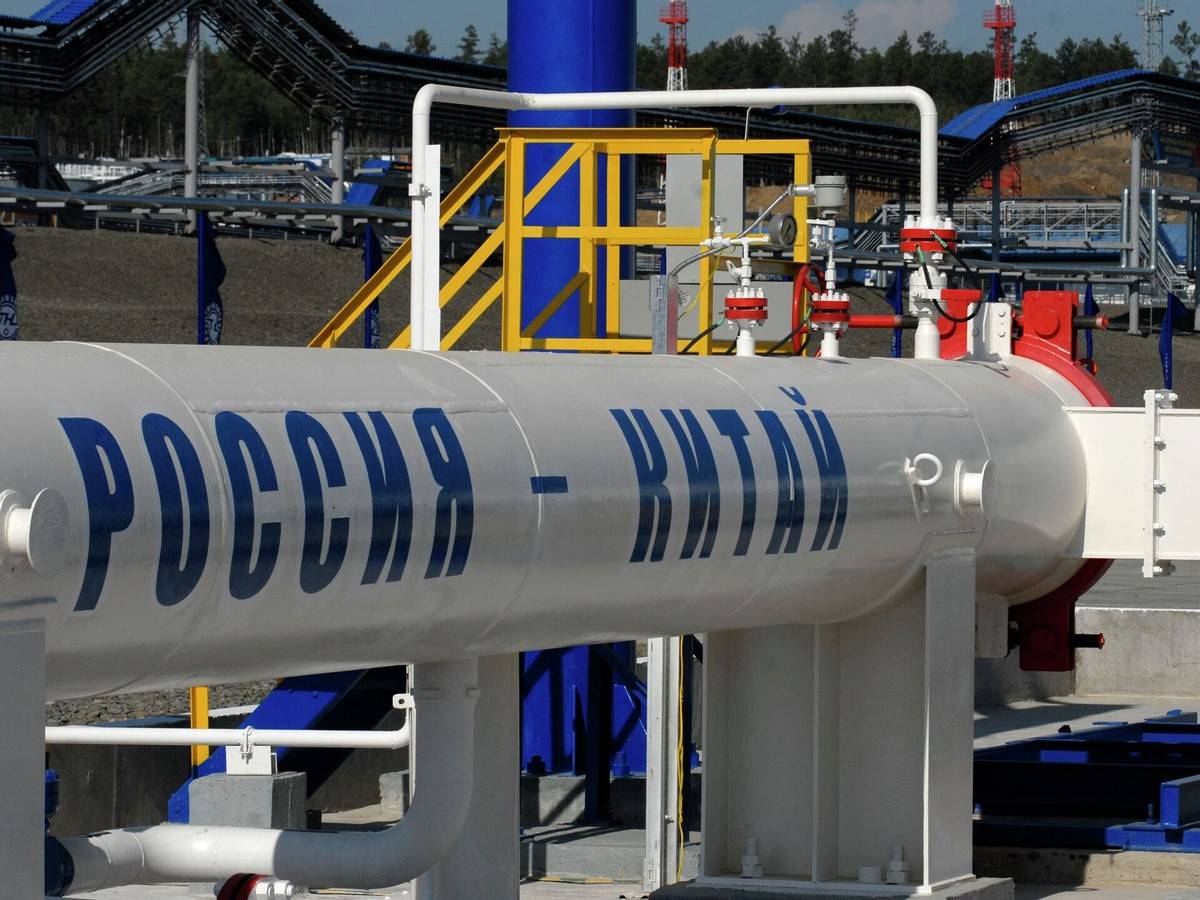
Core Viewpoint - The article discusses the strategic energy exchange proposal by India in response to the U.S. imposing tariffs and demanding a halt to Russian oil imports, highlighting the complexities of international trade and diplomacy in the context of energy security and geopolitical power dynamics [2][4]. Group 1: Energy Dependency and Economic Impact - India, as the world's third-largest crude oil importer, relies on foreign supplies for 83% of its oil needs, with Russian oil becoming crucial during the Russia-Ukraine conflict, providing a discount of 30% below market prices [4]. - The share of Russian oil in India's total imports surged from 2% before the conflict to 35% in the 2023-2024 fiscal year, helping to stabilize inflation at a reasonable rate of 5.7% [4]. Group 2: Diplomatic Strategy - India's Foreign Minister's statement emphasizes the country's long-standing philosophy of strategic autonomy, rejecting third-party approval for its international relationships [6]. - India cleverly turned the tables on the U.S. by suggesting that it would comply with U.S. demands only if sanctions on Iran and Venezuela were lifted, exposing the contradictions in U.S. sanctions policies [6][8]. Group 3: Global Trade Dynamics - The article highlights the contradiction in Western policies, noting that in 2024, bilateral trade between the U.S. and Europe with Russia still reached €60 billion, while U.S. companies continued to import Russian nuclear fuel and rare metals [8]. - The ongoing geopolitical struggle reflects a significant shift in global power dynamics, with emerging economies like India and China reshaping energy pricing and trade practices [11]. Group 4: Ripple Effects and Emerging Trends - India's actions are prompting other countries to explore alternative trade practices, such as Brazil using local currencies for oil trade and Indonesia establishing an energy payment system that bypasses SWIFT [13][15][17]. - The article concludes that economic interdependence has become a powerful tool in 21st-century geopolitical contests, signaling the end of the unipolar era and the emergence of a more democratic global governance system [18].
美专家:一场大解体正在发生,世界应警惕“美国转变成掠夺者”!
Sou Hu Cai Jing· 2025-09-26 05:11
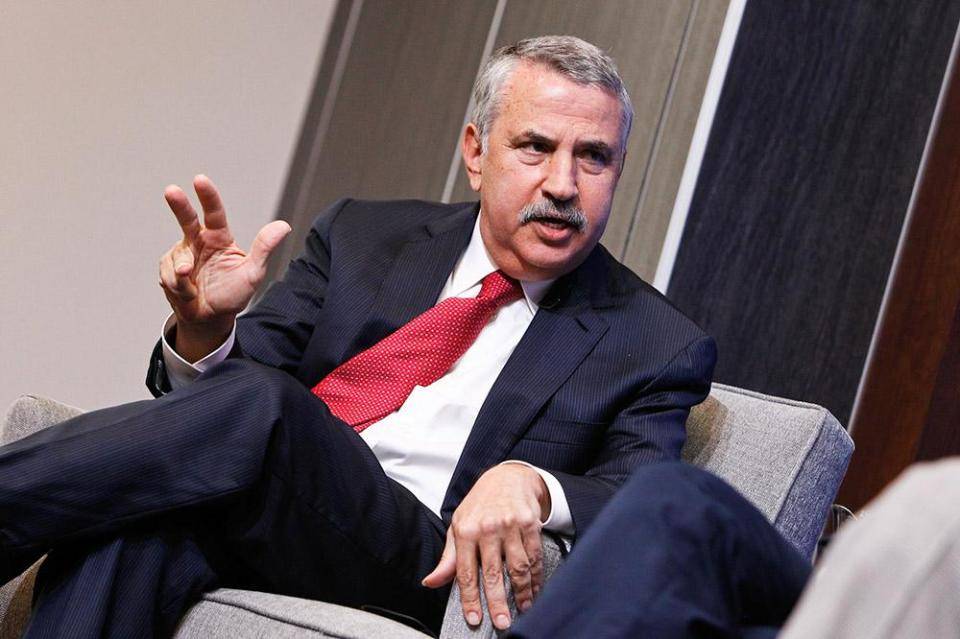
Core Viewpoint - The article discusses the significant shift in U.S. national strategy, moving from a leader in global order to a disruptor of existing systems, impacting economic policies, diplomatic strategies, and institutional changes [2][7][9] Economic Policy - The U.S. has adopted aggressive tariff policies under the Trump administration, affecting a wide range of products from various countries, including German cars and Korean chips, which has raised concerns globally [2][4] - The U.S. is perceived as a "giant money-sucking machine," transferring inflationary pressures to trade partners while enjoying short-term benefits [4] - The federal debt has surged to 145% of GDP, with the new "America First" legislation prioritizing military spending and symbolic projects, raising questions about who will ultimately bear this debt burden [4] Data Integrity and Governance - There are growing concerns about the credibility of U.S. economic data, especially after the dismissal of key personnel from the Labor Statistics Bureau, leading to reliance on subjective judgments rather than objective statistics [5] - The efficiency reforms led by Elon Musk have devolved into a system of favoritism, undermining the initial goals of innovation and efficiency [5] Foreign Policy - U.S. military actions, such as airstrikes in Yemen, have not achieved intended outcomes and have instead fueled anti-American sentiment, indicating a focus on domestic political gains over regional stability [6] - The U.S. has shown erratic behavior towards allies, creating uncertainty in international relations, as seen in its inconsistent support for Ukraine [6] Global Trade and Cooperation - The U.S. is seen as undermining international trade rules, with its actions leading to a restructuring of global supply chains and increased costs for consumers worldwide [7][8] - The World Trade Organization is struggling due to U.S. obstruction, pushing countries towards bilateral agreements and eroding the foundation of global cooperation [8] International Order - The article warns of a shift from a unipolar to a multipolar world, as countries begin to implement risk-reduction strategies, such as Europe pursuing strategic autonomy and Japan diversifying supply chains [8] - The decline of U.S. leadership and the rise of self-interested policies signal a need for countries to seek new stable frameworks for international order [9]
日欧罕见联手对美说不!美国关税围猎中印失败,美国霸权要倒了?
Sou Hu Cai Jing· 2025-09-25 04:12
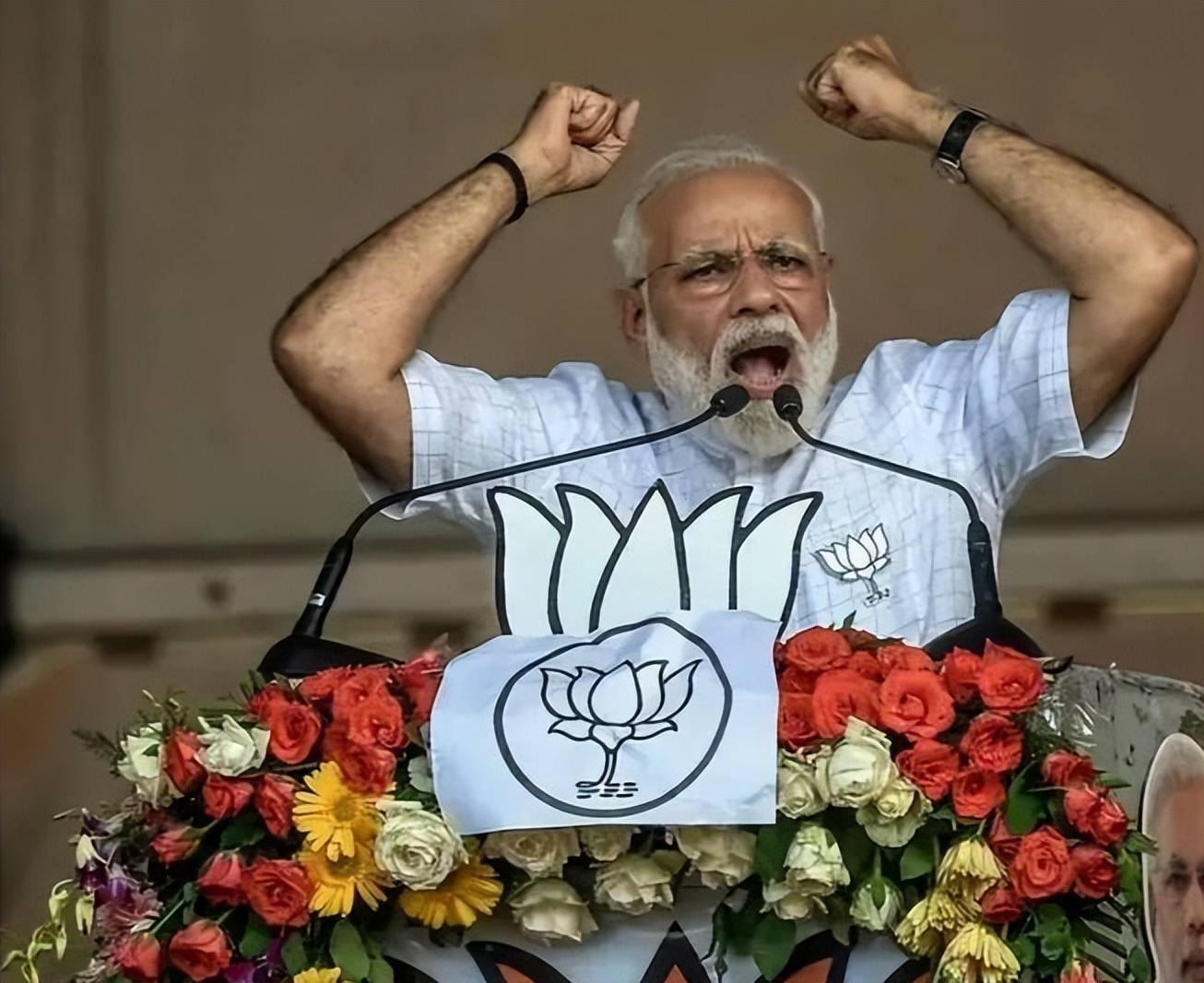
Core Viewpoint - The article discusses the evolving dynamics of international trade relations, particularly focusing on the U.S.-led tariff strategy against China and India, which has faced unexpected resistance from traditional allies like the EU and Japan [1][3][5]. Group 1: U.S. Tariff Strategy - The U.S. is attempting to pressure allies to impose tariffs on Chinese and Indian goods, aiming to frame their trade as support for adversarial nations like Russia [1]. - The U.S. has taken steps such as placing numerous Chinese tech firms on an entity list and threatening bans on platforms like TikTok to assert its position [1]. Group 2: European Response - The EU has rejected U.S. calls for tariffs, emphasizing the importance of its trade relationship with China, which exceeds €800 billion annually [3]. - European leaders are prioritizing their economic interests over U.S. demands, particularly in light of ongoing energy crises [3]. Group 3: Japan's Position - Japan has responded cautiously, citing difficulties in implementing U.S. tariff requests and referencing WTO rules to justify its stance [5]. - The Japanese economy heavily relies on exports to China, with significant contributions from major corporations like Toyota and Sony [5]. Group 4: China and India's Countermeasures - China has strategically responded by launching anti-dumping investigations against U.S. chemical and agricultural products while adjusting its rare earth export policies [5]. - India has criticized U.S. tariffs as contrary to free trade principles while strengthening energy ties with Russia and expanding trade with the Middle East and Africa [5]. Group 5: U.S. Internal Contradictions - Within the U.S., there is significant debate among lawmakers regarding the legal basis for tariffs, with farmers expressing concerns over the impact on soybean exports [7]. - Public sentiment is against the tariffs, with 62% of Americans believing they will lead to higher prices [7]. Group 6: Shifts in International Relations - The article highlights a redefinition of ally relationships, with the EU establishing risk-reduction funds and Japan advancing the Comprehensive and Progressive Agreement for Trans-Pacific Partnership (CPTPP) [9]. - Emerging countries are increasingly adept at utilizing international trade rules, as evidenced by a 40% increase in trade remedy cases initiated by China [9]. Group 7: Global Cooperation - The conclusion of the Madrid talks signifies a return to negotiation despite tensions, underscoring the necessity for countries to collaborate on global challenges like climate change and food security [10]. - The article suggests that the era of unilateral power is waning, with future success belonging to nations that can balance competition with cooperation [10]. Group 8: Multipolarity - The expansion of BRICS, ASEAN's neutrality, and the African Union's inclusion in the G20 indicate a restructuring of the global power landscape [11].
魏建国:非洲价值超5000万美元的基建项目,31%都有中国企业参与
凤凰网财经· 2025-09-24 14:08
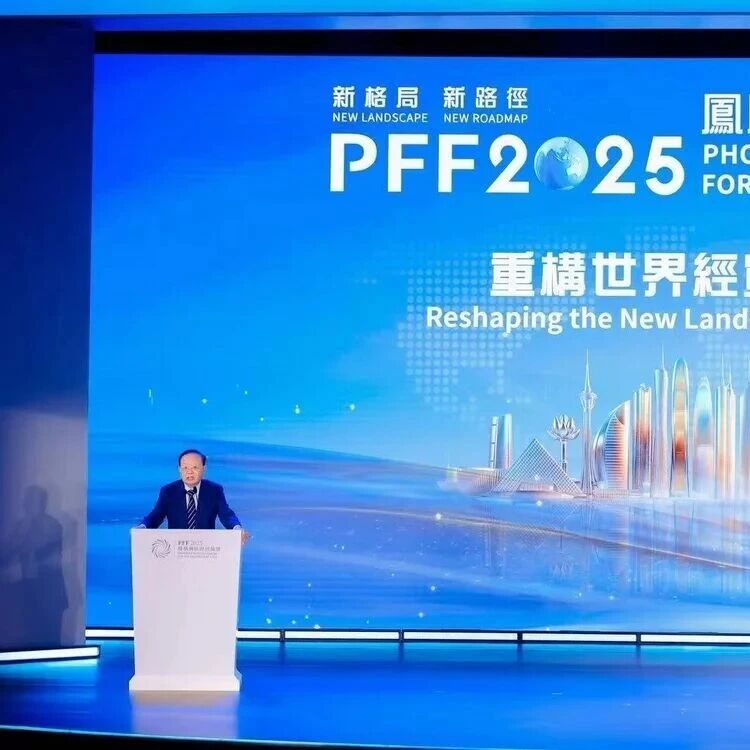
Core Viewpoint - The forum "Phoenix Bay Area Finance Forum 2025" emphasizes the need for a new perspective and courage to embrace the evolving global economic landscape, highlighting the profound changes and opportunities present in the current era [1][3]. Group 1: Global Economic Landscape - The global economic landscape is characterized by a complex coexistence of six trends: 1. Coexistence of group and fragmentation, with regional trade agreements like RCEP covering over 30% of global GDP and reducing tariffs within the region, while exclusive agreements like CPTPP increase trade barriers [4]. 2. Coexistence of multipolarity and bilateralism, with a trend towards a multipolar distribution of economic power and an increase in bilateral trade agreements among major economies [5]. 3. Coexistence of service-oriented and green economies, with global service trade projected to reach $8.6 trillion in 2024, growing at 9%, significantly outpacing global GDP growth [5]. Group 2: Opportunities and Challenges for Chinese Enterprises - The new economic landscape presents vast opportunities for Chinese enterprises, particularly through the rise of emerging markets. China has signed cooperation memorandums with 52 African countries, participating in 31% of infrastructure projects valued over $50 million [6]. - The implementation of multiple free trade agreements has allowed traditional industries like home appliances and textiles to regain market share through tariff reductions and streamlined customs processes [6]. - Chinese cross-border e-commerce reached 2.63 trillion yuan, growing by 10.8%, maintaining its position as the global leader for 15 consecutive years. Platforms like TikTok facilitate direct access for "Made in China" products to global consumers, with exports of green products like electric vehicles and lithium batteries exceeding 1 trillion yuan [6]. - However, challenges such as rising geopolitical tensions and trade protectionism increase operational uncertainties and costs for Chinese enterprises. The trend towards regionalization and shorter supply chains intensifies international competition [6]. - To navigate these challenges, Chinese enterprises are urged to accelerate technological innovation and brand development, reshaping their global strategies to enhance competitiveness [6][7].
东亚国家吐槽美国关税政策,呼吁推进多边主义
Sou Hu Cai Jing· 2025-09-22 15:01
Core Viewpoint - The article highlights the growing criticism from Southeast Asian defense ministers towards Western military alliances and U.S. tariff policies, emphasizing a shift towards multilateralism and cooperation with China as a responsible major power [1][5][7] Group 1: Criticism of Western Policies - Chinese Defense Minister directly criticizes Western military alliances for "hegemonism," with Southeast Asian counterparts echoing concerns about U.S. tariff policies [1] - Southeast Asian representatives express discontent with certain countries that create adversaries and spread chaos, indirectly targeting the U.S. [3] Group 2: Southeast Asia's Response - Vietnam's Defense Minister praises China as a "responsible major power," while Singapore warns that U.S. tariff policies create uncertainty, affecting investment and consumer spending [5] - Southeast Asian nations recognize China as their largest trading partner and see U.S. protectionism as detrimental to their economies, leading them to favor cooperation with China over confrontation with the U.S. [5][7] Group 3: Shifting Global Dynamics - The global landscape is undergoing a transformation, with a move away from the "might makes right" mentality of the West towards a multipolar world [7] - Southeast Asian countries are strategically balancing their relationships, seeking security from the U.S. while capitalizing on economic opportunities with China [7] - The potential for China's global security initiative to be implemented and the formation of new security cooperation mechanisms in Southeast Asia are areas to watch [7]