数字治理

Search documents
鄂尔多斯举行风险感知预警机制分享会
Zhong Guo Xin Wen Wang· 2025-11-25 08:28
Core Viewpoint - The establishment of a risk perception early warning mechanism in Ordos is a significant step towards modernizing urban risk governance, combining online and offline methods to address various risk types and providing a model for other regions in China [1][2]. Group 1: Risk Perception Early Warning Mechanism - The Ordos risk perception early warning mechanism categorizes 11 types of risks and utilizes think tanks for comprehensive analysis and countermeasure suggestions [1]. - The mechanism represents a shift in urban risk governance from passive observation to proactive shaping, emphasizing the need for forward-looking and collaborative digital governance [1][2]. Group 2: Recognition and Impact - Ordos has been recognized for its favorable business environment, ranking first in the region for five consecutive years and being awarded titles such as a national investment hotspot and the most livable city [1]. - The "Warm City Ordos" brand has seen a steady increase in recognition and influence, contributing to high-quality development [2]. Group 3: Innovation and Collaboration - The risk perception early warning mechanism in Ordos is characterized by "independent innovation, government promotion, professional collaboration, and technological empowerment," providing a replicable model for risk governance modernization across the country [2]. - The integration of new technologies and platforms is transforming societal governance, making Ordos' approach worthy of promotion [2].

数字化驱动高颜值变高价值
Jing Ji Ri Bao· 2025-11-17 22:24
《中共中央关于制定国民经济和社会发展第十五个五年规划的建议》明确提出,完善多元化生态补偿机 制,因地制宜拓展生态产品价值实现渠道。生态产品价值实现能够把优良的生态优势转化为经济收益, 是落实"两山"理念的重要举措。当前,数字技术正在重塑传统业态模式,对生态产品价值实现的拓展作 用日益显现。加快数字化绿色化协同转型,已然成为生态产品价值实现的未来趋势。 生态产品是自然生态系统与人类生产共同作用所产生的、能够增进人类福祉的产品,也是维系人类生存 发展、满足人民日益增长的美好生活需要的必需品。近年来,我国各地深入开展生态产品价值实现的理 论与实践探索,取得了一定的成绩和经验。然而,由于生态产品的稀缺性、要素复杂性、服务公共性和 价值多维性等特征,在实践中也出现了一些问题。 比如,在资源清查和确权方面,生态产品跨时间、跨空间和多元要素资源整合的复杂特点,为摸清自然 资源资产底数、明晰产权和实时监控带来很大困难。在生产方面,由于农业林业本身智能化水平相对较 低,加之生态环境底子好的产地往往地处偏远,基础设施、人力资源水平等相对落后,使得生态产品规 模化生产受限,产品质量和品牌溢价难以提升。在交易流通方面,一些生态产品受 ...
2025全球数商大会将在上海举行,大会亮点抢先看
第一财经· 2025-11-17 11:18
- 全 球 数 商 大 会 - 四大板块乘"数"而上 11月17日,2025全球数商大会新闻通气会在上海举行。上海市数据局党组成员、副局长翁轶丛,浦东新区数据局党组成员、副局长岑焕彩, 上海数据集团副总裁吕锋出席新闻通气会,分别介绍了本届大会的筹备情况和特色亮点。 上海已连续成功举办四届全球数商大会,本届大会将于11月25日至26日在上海国际会议中心盛大举行。2025全球数商大会以 "数联全球 商通未 来——乘数无界∞" 为主题,由上海市数据局、浦东新区人民政府指导,上海数据集团主办。 大会聚焦数据要素市场化配置、数字技术创新应用等关键领域,汇聚全球顶尖数字经济人才、数商企业、科研机构等资源,搭建产学研用协同 创新平台,推动构建数商生态体系,打造数商沟通交流平台,为全国数据要素体系建设贡献上海智慧与方案。 延续往届大会多元化办会的基础,本届大会设置 "会、商、展、用" 四大板块,从会议论坛、商业转化、展示多元、应用体验四大方面体系策 划系列活动。 会 会议论坛 采用"1+8+6+X"议程架构,设置1场开幕式及主论坛、8大主题论坛、6场闭门会议、17场特色分论坛和8个分会场。主论坛聚焦全国 一体化数据市场建设, ...

2025年网络峰会在葡萄牙举行 中欧科创企业探寻合作共赢新机遇(国际视点)
Ren Min Ri Bao· 2025-11-13 21:59
Core Insights - The 2025 Web Summit held in Lisbon attracted over 70,000 participants from 157 countries, showcasing more than 2,700 startups, marking a historic high in scale and influence [1] - Key discussions focused on global innovation hotspots such as artificial intelligence, green technology, Web 3.0, and digital governance, with many Chinese companies presenting their latest innovations [1] Group 1: Technology Innovations - The "AI Experience Zone" was particularly popular, featuring a zero-emission smart motorcycle from a Spanish startup, which utilizes algorithms to optimize energy recovery and offers personalized driving modes, reflecting the trend of integrating green travel with digital technology [1] - Chinese company Yushu Technology showcased robots that performed a dance show, demonstrating significant advancements in coordination and stability, indicating a move towards more human-like robotics [2] - AstraZeneca and Alibaba Cloud collaborated to develop a drug adverse event reporting and analysis system, which uses natural language processing to enhance efficiency by approximately three times, highlighting the role of AI in healthcare [2] Group 2: International Collaboration - The China-Europe Digital Services Cooperation Seminar emphasized the importance of cross-border innovation and collaboration, with a focus on transforming research outcomes into industrial applications [3] - Portugal and China are strengthening their economic partnership, particularly in AI, cloud computing, and clean energy, with Chinese investments in infrastructure and energy enhancing Portugal's economic resilience [3] - The summit highlighted the increasing participation of emerging market countries, with startups in sustainable technology and digital payments seeking international market opportunities [4] Group 3: Ethical Technology Development - The founder of the summit emphasized that "technology for good" is a core principle of technological development, with China setting an example by providing affordable technology paths for developing countries [5] - The global focus on AI, green technology, and digital governance reflects a strong demand for international technological cooperation [5]
报告:全球互联网发展迈入智能化新阶段
Zhong Guo Xin Wen Wang· 2025-11-08 14:29
Group 1 - The core viewpoint of the reports emphasizes the profound impact of new generation information technologies, particularly artificial intelligence, on economic development, social progress, and the international political and economic landscape, marking a new stage of intelligent development in global internet evolution [1][2] - The "World Internet Development Report 2025" highlights that infrastructure construction in the information sector has significantly supported digital transformation, evolving towards intelligence and sustainability [1] - The report indicates that artificial intelligence is driving innovation and growth in the global digital economy, empowering the development of global internet media and promoting the intelligent transformation of content production [1] Group 2 - The report notes a complex intertwining of militarized and intelligent global cybersecurity, with major countries and regions continuously enhancing their cybersecurity capabilities [1] - The innovation in government applications is driving digital transformation, with significant achievements in the development and cross-border flow of public data [1] - The "China Internet Development Report 2025" reveals a notable increase in the supply and dissemination capabilities in the digital culture sector, with the rapid development of micro-short dramas activating digital cultural production [2] - By December 2024, the user base for micro-short dramas in China is expected to reach 662 million, with a market size exceeding 50 billion RMB, surpassing box office revenues and emerging as a new avenue for content consumption [2] - Chinese micro-short dramas have successfully entered overseas markets, becoming a new force in cross-cultural communication [2]
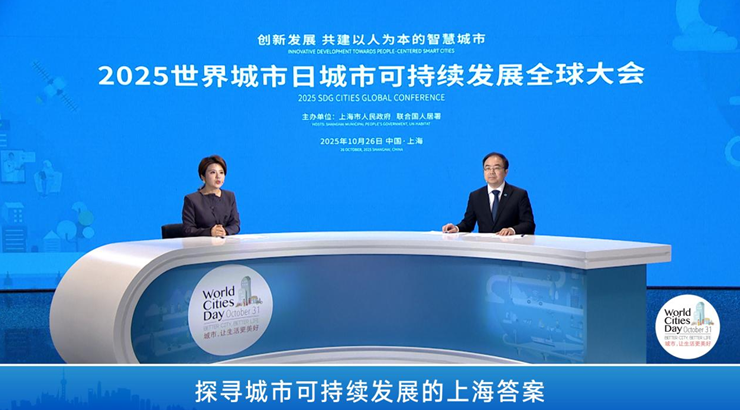
探寻城市可持续发展的上海答案
Di Yi Cai Jing· 2025-11-08 10:27
Core Insights - The rapid development and transformation of cities necessitate a focus on sustainability and livability, which has become a global issue [1][3] - The World Urban Day Global Conference on Sustainable Urban Development, co-hosted by the Shanghai Municipal Government and UN-Habitat, aims to deepen the brand connotation of the "Urban Development Conference" [1][3] Group 1: UN-Local Government Cooperation Model - The "Urban Development Conference" represents a unique mechanism innovation that integrates global agendas and international standards into urban planning and governance [3] - This model facilitates a two-way interaction between the UN and local governments, translating global sustainable development goals (SDGs) into executable urban projects [3] - The conference has established stable partnerships with over 100 cities globally, creating a valuable resource for long-term cooperation through cross-regional and cross-departmental trust [3] Group 2: Thematic Framework of the Conference - The conference is designed around three major themes that address interconnected urban challenges, forming a "complete loop" for urban governance [4] - The themes include "Good Housing," which relates to social equity; "Green, Low-Carbon, and Resilient," which pertains to urban safety and future; and "Digital Governance," which enhances urban efficiency [4] - Approximately 2.8 billion people globally still live in inadequate housing conditions, making "Good Housing" a significant global issue beyond mere construction [4] Group 3: Technological Output and Global Sharing - The conference aims to promote Chinese innovative technologies, such as the MAZU-Urban early warning system and "Smart City Cloud," as global shared tools [6] - It serves as a platform for dialogue between representatives of developing countries and Chinese technology teams to explore the applicability of technologies under different socio-economic conditions [6] - The focus is on knowledge sharing, technology openness, and capacity building to enable cities to localize and apply these experiences effectively [6] Group 4: Empowering the Next Generation - The conference seeks to engage youth in shaping the future of cities through initiatives like the "Future City Innovation Challenge" and "Youth Forum" [7] - It provides opportunities for young entrepreneurs and students to interact directly with city managers and international organizations, allowing their ideas to be put into practice [7] - Collaborations with universities and communities aim to educate young people on the significance of sustainable development, making it an accessible journey for them [7]
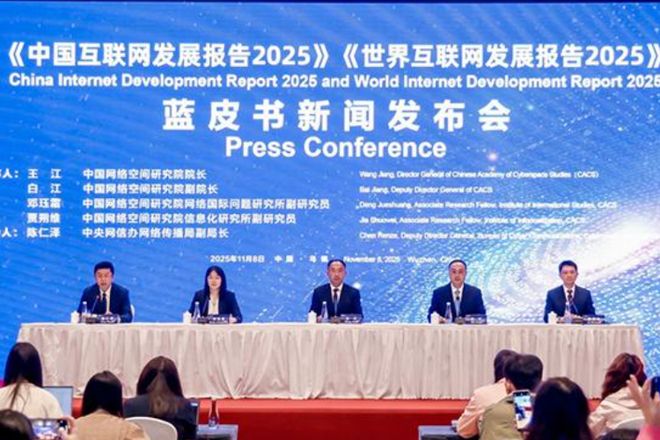
乌镇峰会蓝皮书:披露AI技术发展趋势、全球数字治理新动向
Nan Fang Du Shi Bao· 2025-11-08 10:04
Core Insights - The reports highlight the significant advancements in China's digital economy and internet development, emphasizing the transition from "heavy training" to "heavy inference" in AI models, and the practical applications of humanoid robots across various industries [2][6][7] Group 1: Digital Economy and Internet Development - By the end of 2024, the core industries of China's digital economy are projected to account for 10.4% of the GDP, achieving the "14th Five-Year Plan" target ahead of schedule [3][4] - The scale of China's industrial internet core industries exceeds 1.5 trillion yuan, with agricultural technology contributing 63.2% to progress [3] - In 2024, mobile payment transactions are expected to reach 563.7 trillion yuan, and online retail sales are projected to hit 15.23 trillion yuan, making China the largest market globally for both [3][4] Group 2: AI and Technological Advancements - China has become the largest holder of AI patents globally, accounting for 60% of the total, and leads the world in 6G patent applications with a 40.3% share [4][7] - The development of AI models is shifting towards enhanced inference capabilities, with multi-modal models capable of processing text, images, and voice data simultaneously [6][7] - The application of embodied intelligence is gaining traction in sectors such as industrial manufacturing, logistics, healthcare, and elder care, with humanoid robots moving from labs to practical use [6][7] Group 3: Global Internet Trends - The "World Internet Development Report 2025" emphasizes that AI is driving global digital economic innovation and growth, while also enhancing the development of internet media [5] - There is a growing focus on cybersecurity, with major countries enhancing their capabilities in response to complex global threats [5] - The report underscores the importance of orderly technological development and the increasing emphasis on digital governance rules among nations [5]
七度亮相APEC,五粮液以和美共话亚太可持续繁荣
Tai Mei Ti A P P· 2025-11-03 05:31
Core Insights - Wuliangye shines as a platinum sponsor at the APEC Business Leaders Summit in South Korea, promoting the sustainable development of Chinese liquor and the harmonious wisdom of Eastern culture [2][3][4] - The company emphasizes its commitment to sustainability and regional prosperity through its participation in APEC events over the past seven years, showcasing its role as a cultural ambassador [3][9] - Wuliangye's innovative marketing strategies, including the "Five Senses Micro-Intoxication" event, aim to engage younger consumers and enhance the international expression of Chinese liquor [11][15] Group 1: APEC Participation - Wuliangye has been a partner of APEC for seven consecutive years, actively participating in various events and promoting the concept of "harmony" [3][4] - The company showcased its products and cultural heritage at the APEC summit, highlighting the significance of Chinese liquor in global dialogues [4][6] - The APEC summit gathered top global business leaders to discuss key issues such as AI, technological innovation, and digital governance, with Wuliangye contributing to the discourse on sustainable development [6][9] Group 2: Cultural and Brand Promotion - The design of Wuliangye's exhibition booth at the summit was inspired by APEC's logo, reflecting the themes of integration and sustainability [4][6] - The company presented its core products and creative cocktails, receiving high praise for their quality and unique flavors [6][9] - Wuliangye's philosophy of "harmony and coexistence" is embodied in its sustainable practices, which have been recognized in industry reports [7][9] Group 3: Market Expansion and Innovation - The "Five Senses Micro-Intoxication" event in Seoul aimed to attract younger consumers by integrating traditional Chinese liquor culture into modern social settings [11][15] - Wuliangye's new product, 29° Wuliangye, achieved over 100 million in sales within 60 days of its domestic launch, indicating strong market potential [15] - The company is actively exploring international markets, having conducted research on key marketing channels in South Korea [15][17] Group 4: Future Outlook - Wuliangye plans to continue leveraging international platforms like APEC to enhance its brand influence and promote Chinese liquor globally [17] - The company has engaged in various cultural exchange activities across 18 countries, reinforcing its commitment to the "Belt and Road" initiative and the globalization of Chinese culture [17] - Future strategies will focus on innovation and diverse cultural expressions to further elevate the global presence of Chinese liquor [17]


巴西媒体关注中国网络安全法:创新与安全齐头并进
Huan Qiu Wang Zi Xun· 2025-10-29 23:32
Core Points - The Chinese government has amended the Cybersecurity Law to enhance regulations on artificial intelligence, effective from January 1, 2026, establishing a legal framework for transparency, traceability, and accountability in AI research and data usage [1][2] - The amendment reflects China's unique legislative approach, allowing for continuous improvement of laws to adapt to social progress and technological changes without altering the political system [1] - The modification aligns with the 2022 "Regulations on Online Anchors' Behavior," which set standards for influencers, particularly in specialized fields, and mandates compliance for AI-generated content [2] - The changes are part of a broader strategy to integrate scientific, economic, and political principles, emphasizing that innovation and security must progress together [3] Summary by Sections Legislative Changes - The amended Cybersecurity Law includes new provisions for AI ethics, risk monitoring, and safety regulation, aiming to promote healthy AI development [1] - The law's updates are designed to ensure that AI applications are governed by clear ethical standards and legal accountability [1] Historical Context - The changes are linked to the 2022 "Regulations on Online Anchors' Behavior," which require influencers in high-skill areas to have appropriate qualifications and for platforms to verify these credentials [2] - This regulatory framework is part of China's broader economic and social development strategy, emphasizing the need for improved governance of AI technologies [2] Market Impact - As of June 2025, there are 515 million users of generative AI in China, indicating rapid integration of AI into daily life, with a user penetration rate of 79.7% among over 1.1 billion internet users [3] - Reports indicate a significant increase in AI-related cybersecurity incidents, highlighting the necessity for the updated Cybersecurity Law to address emerging risks [3]
“数字治理与创新城市”2025全球城市论坛举行,上海构建数字时代的城市治理新标杆
Di Yi Cai Jing· 2025-10-28 01:47
Group 1: Forum Overview - The 2025 Global City Forum focused on "Digital Governance and Innovative Cities," showcasing significant achievements and practices in digital governance [1][5] - The forum was co-hosted by various organizations, including the Shanghai Municipal Housing and Urban-Rural Development Management Committee and Shanghai Jiao Tong University [1] Group 2: Digital Governance Initiatives - Shanghai aims to enhance urban resilience and inclusivity through digital governance, implementing over 200 smart application scenarios for risk management [2][3] - The city has streamlined over 3,500 service items through a unified platform, significantly reducing bureaucratic hurdles for citizens [2] Group 3: Technological Innovations - Shanghai Tunnel Engineering Co., Ltd. emphasizes the role of digital intelligence and technological innovation in driving urban development, focusing on digitalization, intelligence, and sustainability [3] - The company plans to create a closed-loop incubation system that integrates technology, capital, and application scenarios to enhance urban governance [3] Group 4: Academic Contributions - Shanghai Jiao Tong University highlights the importance of integrating digital technology into urban governance to improve living standards and foster innovation [4] - The university collaborates with local governments to create innovation zones that stimulate knowledge flow and accelerate technology transfer [4] Group 5: Key Reports and Findings - The forum released several key reports, including the "World Cities Day Activity Results Essence 2024" and the "China Urban Science and Technology Innovation District Development Report 2025," outlining best practices in urban governance [5][6] - The "Artificial Intelligence + Urban Governance Development Report 2025" discusses how AI can enhance urban management and service delivery [6] Group 6: Smart City Solutions - The "Smart City Cloud" series by Shanghai Tunnel Engineering integrates various urban governance scenarios, marking a shift towards intelligent infrastructure management [7] - The "Tongda Zhitong" traffic management system offers a comprehensive solution for urban traffic issues, emphasizing real-time data analysis and decision support [7] Group 7: Awards and Recognition - The forum recognized outstanding practices in AI-integrated urban governance, awarding 53 cases that demonstrate the effective use of AI in enhancing governance efficiency [8] - Notable examples include innovation districts from various cities, showcasing diverse paths to urban development [8] Group 8: Future Directions - The forum featured discussions on the future of digital governance, emphasizing the need for cities to adapt to post-industrial realities and enhance service delivery in urban centers [9][10] - International perspectives highlighted the importance of sustainable development and digital transformation in urban planning [11][12]