智能体(Agent)

Search documents
均降40%的GPU成本,大规模Agent部署和运维的捷径是什么?| 直播预告
AI前线· 2025-10-28 09:02
Core Insights - The article discusses the challenges and solutions for large-scale deployment and operation of AI agents in enterprises, emphasizing the need for innovation in this area [2]. Group 1: Event Details - The live broadcast is scheduled for October 28, 2025, from 19:30 to 20:30 [5]. - The theme of the live broadcast is "Accelerating Hundredfold Startup: What are the Shortcuts for Large-scale Agent Deployment and Operation?" [3][7]. Group 2: Guest Speakers - The live broadcast features key speakers including Yang Haoran, the head of Alibaba Cloud's Serverless Computing, and Zhao Yuying, the chief editor of Geekbang Technology [4]. Group 3: Key Topics - The discussion will cover the technological transition from "Cloud Native" to "AI Native" [8]. - It will highlight the AgentRun platform, which claims to achieve a hundredfold acceleration and an average reduction of 40% in GPU costs [9]. - The session will address the full lifecycle governance of AI agents, from development to operation [9]. - Future evolution of Serverless AI will also be a topic of discussion [9].


对话蚂蚁 AWorld 庄晨熠:Workflow 不是“伪智能体”,而是 Agent 的里程碑
AI科技大本营· 2025-10-28 06:41
Core Viewpoint - The article discusses the current state of AI, particularly focusing on the concept of AI Agents, and highlights the industry's obsession with performance metrics, likening it to an "exam-oriented" approach that may overlook the true value of technology [2][7][41]. Group 1: AI Agent Market Dynamics - There is a growing skepticism in the industry regarding the AI Agent market, with many products merely automating traditional workflows under the guise of being intelligent agents, leading to user disappointment [3][9]. - The popularity of AI Agents stems from a collective desire for AI to transition from experimental tools to practical applications that enhance productivity and cognitive capabilities in real-world scenarios [7][10]. Group 2: Technological Evolution - The emergence of large models represents a significant turning point, replacing rigid, rule-based systems with probabilistic semantic understanding, which allows for more dynamic and adaptable AI systems [9][10]. - The relationship between workflows and AI Agents is not adversarial; rather, workflows serve as a foundational stage for the development of true AI Agents, which will evolve beyond traditional automation [10][11]. Group 3: Future Directions and Challenges - The future of AI Agents is oriented towards results rather than processes, emphasizing the need for agents to be capable of autonomous judgment and dynamic adaptation [13][40]. - The concept of "group intelligence" is being explored as a potential alternative to the current arms race in large model development, focusing on collaboration among smaller agents to tackle complex tasks [17][18]. Group 4: Open Source and Community Engagement - The company emphasizes the importance of open-source practices, believing that collective intelligence can accelerate AI development and foster a community-driven approach to innovation [32][33]. - Open-source contributions are seen as vital for sharing insights and advancing the understanding of AI technologies, rather than just providing code [35][36]. Group 5: Practical Applications and Long-term Vision - The company aims to develop AI Agents that can operate independently over extended periods, tackling long-term tasks and adapting to various environments to enhance their learning and capabilities [39][40]. - The ultimate goal is to create a continuously learning model that serves as a technical product, allowing the community to benefit from technological advancements without being overly polished for consumer markets [40][41].

上交、清华、微软、上海AI Lab等联合发布数据分析智能体综述,LLM化身数据分析师,让数据自己「说话」
机器之心· 2025-10-27 10:40
Core Insights - The article discusses the evolution of data analysis through the integration of large language models (LLMs) and agents, moving from traditional rule-based systems to intelligent systems that understand data semantics [2][4][11] - It emphasizes the need for a General Data Analyst Agent paradigm that can handle various data types and tasks, enhancing the capabilities of data analysis [4][11] Group 1: Evolution of Data Analysis - Traditional data analysis methods rely on manual processes such as SQL coding and Python scripting, which are high in coupling and low in scalability [2] - The emergence of LLMs and agents allows for a shift from rule execution to semantic understanding, enabling machines to interpret the underlying logic and relationships in data [2][10] - The research identifies four core evolution directions for LLM/Agent technology in data analysis, aiming to transform data analysis from a rule-based system to an intelligent agent system [7][11] Group 2: Key Technical Directions - The article outlines five major directions in data analysis technology: semantic understanding, autonomous pipelines, automated workflows, tool collaboration, and open-world orientation [4][10] - It highlights the transition from closed tools to collaborative models that can interact with external APIs and knowledge bases for complex tasks [10] - The focus is on enabling dynamic generation of workflows, allowing agents to automatically construct analysis processes, enhancing efficiency and flexibility [10] Group 3: Data Types and Analysis Techniques - The article categorizes data into structured, semi-structured, unstructured, and heterogeneous data, detailing specific tasks and technologies for each type [9][12] - For structured data, it discusses advancements in relational data analysis and graph data analysis, emphasizing the shift from code-level to semantic-level understanding [9][12] - Semi-structured data analysis includes tasks like markup language understanding and semi-structured table comprehension, transitioning from template-driven approaches to LLM-based methods [12] - Unstructured data analysis covers document understanding, chart interpretation, and video/3D model analysis, integrating various technologies for comprehensive understanding [12] Group 4: Future Challenges - The article identifies future challenges in scalability, evaluation systems, and practical implementation of general data analysis agents [4][11] - It stresses the importance of robustness and adaptability to open-domain scenarios as critical factors for the success of these intelligent agents [11]

OpenAI掌舵人三年演讲梳理:一文读懂Altman
Hu Xiu· 2025-10-22 10:05
Core Insights - Sam Altman has become a prominent figure in the tech industry, comparable to Elon Musk, with a significant media presence and frequent interviews [2][3] - OpenAI is positioned as a leader in the AI sector, continuously pushing boundaries and defining new market segments [4][10] - Altman's communication style combines grand narratives with aggressive business strategies, making it essential to analyze his statements over time to understand his true intentions [8][9] Key Developments - OpenAI has made significant announcements recently, including partnerships with major companies like AMD and Nvidia to enhance its AI infrastructure [10] - The company is focused on developing AGI (Artificial General Intelligence) as its ultimate goal, which Altman believes will be a transformative technology for humanity [11][12] Strategic Evolution - Altman emphasizes the importance of iterative deployment of AI technologies to allow society to adapt and establish regulations [12] - He views computational power as a critical resource for future AI development, predicting it will become the "currency" of the new world [14] - OpenAI's shift from a non-profit to a "limited profit" model reflects the practical need for funding to achieve its ambitious goals [26] Contradictions and Challenges - There are inconsistencies in Altman's narrative, particularly regarding OpenAI's commitment to openness versus its current secretive practices [18] - Altman's calls for regulation appear contradictory, as he advocates for oversight while simultaneously pushing rapid technological advancements [16] Future Predictions - OpenAI's long-term vision remains consistent, focusing on building AGI for the benefit of humanity, despite facing numerous challenges [22] - The company is expected to increasingly integrate hardware and software, creating a comprehensive ecosystem for AI development [23] - The AI industry may see a shift towards "AI + science," with significant investments in using AI for scientific discoveries [23] Societal Implications - Altman's approach may lead to a future where AI becomes deeply integrated into daily life, potentially diminishing individual autonomy [30] - The potential for AGI to take over decision-making in crises raises ethical concerns about the balance of power between humans and AI [30]

不管是中国还是美国最终走向都是人工智能时代是这样吗?
Sou Hu Cai Jing· 2025-10-08 20:55
Core Insights - The development trajectories of China and the U.S. are clearly pointing towards the era of artificial intelligence, driven by technological iteration and industrial upgrading, but with significant differences in development paths and focus areas [1][3] Group 1: Technological Development - The U.S. maintains an advantage in foundational algorithms, large model architectures (e.g., original BERT framework), and core patent fields, focusing on fundamental breakthroughs in its research ecosystem [1] - China leverages its vast user base, mobile internet accumulation (e.g., mobile payments/e-commerce), and industrial chain collaboration to accelerate scenario-based applications, with some areas already surpassing the U.S. in user experience [1] Group 2: Policy and Strategic Approaches - The U.S. strategy aims to reinforce its technological hegemony through export controls, standard-setting, and collaboration with allies to curb competitors [3] - In contrast, China's approach focuses on leveraging its manufacturing foundation and data scale advantages, emphasizing the integration of AI with the real economy [3] Group 3: Competitive Landscape - Key differences in innovation focus: the U.S. prioritizes foundational theory and general large models, while China emphasizes scenario applications and engineering implementation [5] - Competitive advantages differ as well: the U.S. excels in academic originality and global standard leadership, whereas China leads in commercialization speed and market scale [5] Group 4: Future Competition Focus - The competition between the two nations will center around three main technological lines: the proliferation of agents, cost reduction and efficiency enhancement through mixed expert models (MoE), and the creation of incremental markets through multimodal integration [7] - China's 5-8 year lead gained during the mobile internet era may provide a crucial springboard for competition in AI applications [7]

炸裂中前行的SpaceX,马斯克豪赌的人类生存B计划 | 好奇点
Sou Hu Cai Jing· 2025-09-30 01:20
Group 1: SpaceX and Starship Overview - SpaceX, founded by Elon Musk, aims to enable human colonization of Mars and has faced numerous challenges in its journey, often referred to as a "variety of ways to fail" [1] - The Starship project has incurred nearly $5 billion in total investment, with each launch costing approximately $100 million, despite the company expecting $15.5 billion in revenue this year [1] - The recent successful tenth flight of Starship marks a significant turnaround after a series of failures, showcasing the potential of space exploration [1] Group 2: AI Entrepreneurship Insights - A group of AI content entrepreneurs has emerged, driven by passion and the recognition of unique business opportunities in the AI landscape [4] - These entrepreneurs are involved in various aspects of AI, from technical analysis to practical applications, highlighting the diverse opportunities within the industry [4] Group 3: Agent Universe and Young Entrepreneurs - Agent Universe, founded by a young entrepreneur, focuses on developing intelligent agents for both consumer and business applications, having completed over 200 projects [6] - The company aims to capture the consumption trends and emotional needs of the younger demographic through innovative agents like "Emoji Translator" and "Internet Slang Translator" [6] - The founder's background in AI and previous entrepreneurial experiences have shaped the company's direction and culture, emphasizing a flat organizational structure and a focus on collaboration [11] Group 4: AI Native Teams and Company Culture - The concept of "AI Native" teams is highlighted, where team members seamlessly integrate AI tools into their workflows, enhancing productivity and collaboration [10] - The company aspires to establish industry standards in AI, moving beyond traditional product-focused approaches to create an ecosystem that supports innovation and community engagement [11] - The company is developing a platform called "Guancha," aimed at providing a community for AI content and product distribution, addressing the need for quality information and exposure for valuable AI applications [11]
所有知识型岗都要被AI“吞了,清华大学教授刘嘉:未来大学分化猛烈,软件公司靠 “几人 + Agent” 就够
3 6 Ke· 2025-09-29 07:26
Core Insights - The rapid evolution of AI has transformed it from a tool into a potential new species, with implications for human coexistence and evolution [20][22][24]. Group 1: AI Evolution and Impact - The evolution of AI is described as "almost crazy," indicating a significant shift in how AI is perceived and its integration into daily life [2]. - AI has reached a level where it can perform tasks traditionally done by humans, such as facial recognition and decision-making, showcasing its capabilities in both physical and virtual realms [3][4]. - The emergence of intelligent agents signifies a shift from traditional AI models to more interactive and capable systems that can perform specific tasks autonomously [5][18]. Group 2: AGI and Future Directions - The concept of AGI (Artificial General Intelligence) is evolving, with expectations that it will not only match but potentially exceed human intelligence within the next decade [24][25]. - Key indicators for achieving AGI include the ability to perform zero-to-one creative tasks and enhanced sensory and motor capabilities, which current models lack [26][27]. - The integration of brain science with AI research is highlighted as a crucial direction for future advancements, aiming to replicate human-like cognitive functions [28][29]. Group 3: Education and Workforce Implications - The educational landscape must adapt to prepare individuals for an AI-driven future, emphasizing creativity and interdisciplinary knowledge over rote learning [35][36]. - The rise of AI necessitates a shift in how educational institutions approach curriculum design, focusing on the integration of AI across various disciplines [37][39]. - There is a concern that without proper understanding and integration of AI in education, initiatives like "AI+" could become superficial and fail to deliver meaningful outcomes [38].
所有知识型岗都要被AI “吞了!清华大学教授刘嘉:未来大学分化猛烈,软件公司靠 “几人 + Agent” 就够
AI前线· 2025-09-29 04:28
Core Viewpoint - The article discusses the rapid evolution of AI and its implications for humanity, emphasizing the need for individuals to adapt to a new reality shaped by artificial intelligence [5][27]. Group 1: AI Evolution and Impact - The evolution of AI has accelerated, with significant advancements in areas such as humanoid robots and intelligent agents, marking a shift from traditional models to practical applications in real-world scenarios [8][10]. - The emergence of intelligent agents that can perform specific tasks, such as booking tickets or analyzing stock trends, indicates a move towards AI systems that can assist in daily life [9][10]. - The concept of AGI (Artificial General Intelligence) is evolving, with the potential for AI to become a new species that co-evolves with humanity, rather than merely serving as a tool [27][28]. Group 2: Educational Reform and AI Integration - Current educational systems must adapt to the AI era by focusing on creativity and critical thinking, rather than rote knowledge, to prepare students for a future where AI plays a significant role [42][43]. - The integration of AI into various academic disciplines is essential, but it requires a deep understanding of AI principles to avoid superficial applications [45][46]. - Universities must promote interdisciplinary education to foster innovation, as many breakthroughs occur at the intersection of different fields [43][46]. Group 3: Future Directions and Challenges - The future of AI development may hinge on breakthroughs in brain science, which could inspire new architectures for AI that mimic human cognitive processes [35][36]. - The potential for AI to achieve self-evolution and autonomous learning remains uncertain, as current models lack the intrinsic motivation that drives human learning [19][20]. - The distinction between task-specific AI and AGI highlights the need for AI to develop general intelligence capabilities that can match or exceed human abilities across various domains [28][29].

人工智能产业“十四五”复盘与“十五五”展望:“两个变局”下的AI要素化跃
Sou Hu Cai Jing· 2025-09-26 17:47
Core Insights - The report focuses on the development and trends of the AI industry during China's 14th Five-Year Plan (2021-2025) and the outlook for the 15th Five-Year Plan (2026-2030), highlighting significant changes and advancements in technology, industry ecology, policy support, and application expansion [2][8]. Group 1: 14th Five-Year Plan Review - The AI industry has undergone five major qualitative changes, establishing a foundation for "factorization" [9]. - Technological transformation is marked by the dominance of the Transformer architecture, which has unified AIGC (AI-Generated Content) and completed the "engine convergence" [12][19]. - The computing power landscape has shifted, with domestic AI chips closing the efficiency gap with international counterparts, and the evolution from general IDC (Internet Data Center) to AIDC (AI Data Center) [25][26]. - Data has transitioned from governmental sharing to being recognized as a fiscal element, with mechanisms for asset inclusion and revenue sharing being established [33][34]. - Market dynamics have changed, with the end of the visual dividend leading to a downward shift in both supply and payment curves, allowing for a revaluation of AI [10][12]. Group 2: 15th Five-Year Plan Outlook - The AI factorization leap will be characterized by "price discovery, scale trading, and cross-border output," with Agents as the core vehicle [9]. - The product dimension will see a shift from passive execution to autonomous collaboration, with revenue models evolving from token-based to profit-sharing [9][10]. - The supply side will benefit from a complete domestic ecosystem, enabling the definition of "Agent instruction sets" and achieving pricing power [9][10]. - Demand will expand into global southern markets, with significant population potential and a projected compound annual growth rate of 9.2% for the digital economy [9][10]. - Five key application scenarios are expected to see iterative expansion, transitioning from project-based to subscription-based consumption [9][10]. Group 3: Investment Recommendations - Investment opportunities are identified in four main areas: computing power infrastructure, AI Agents and MaaS (Model as a Service) providers, intelligent terminals and embodied intelligent robots, and AI applications in green and low-carbon initiatives [9][10].

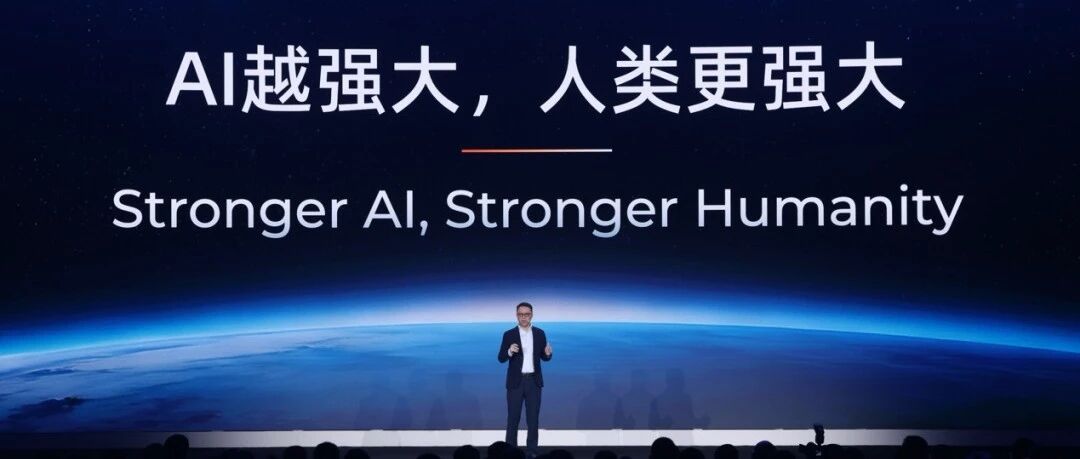
吴泳铭掌舵两年,阿里AI起飞
雷峰网· 2025-09-25 07:48
Core Insights - Alibaba's AI strategy has become increasingly clear after two years of rapid development in large model technology, with a focus on becoming a leading global AI service provider [8][11][17] - The company emphasizes the integration of AI with cloud computing, positioning large models as the next-generation operating system that will drive user needs through intelligent agents [12][20] Group 1: AI Strategy and Developments - Alibaba's CEO, Wu Yongming, highlighted "ASI" (Super Artificial Intelligence) as a core strategic focus for the next few years during the Cloud Summit [9][11] - The company aims to develop Tongyi Qianwen as the operating system for the AI era, facilitating interactions between users and software through large models [12] - Alibaba Cloud's new positioning is to become a global leader in full-stack AI services, with the launch of seven new large model technology products covering various fields [13][28] Group 2: Market Response and Financial Impact - Following the announcements at the Cloud Summit, Alibaba's stock surged by 9.16%, increasing its market value by nearly 300 billion HKD, reflecting renewed investor confidence [15][34] - The company has seen significant improvements in its revenue growth, with AI-driven initiatives contributing to a return to double-digit growth after years of stagnation [34] Group 3: Leadership and Vision - Wu Yongming's leadership has been pivotal in steering Alibaba towards AI, with a clear strategic shift to prioritize AI as the main focus of the company [20][30] - His background in technology and business has enabled him to effectively translate technical advancements into commercial success, positioning Alibaba as a competitive player in the global AI landscape [30][31] Group 4: Future Outlook - The ongoing AI revolution is expected to reshape infrastructure, software, and applications, with Alibaba poised to play a significant role in this transformation [36] - The company is committed to further investments in AI and cloud infrastructure, with plans to allocate 380 billion CNY over the next three years [27]