
碳汇

Search documents
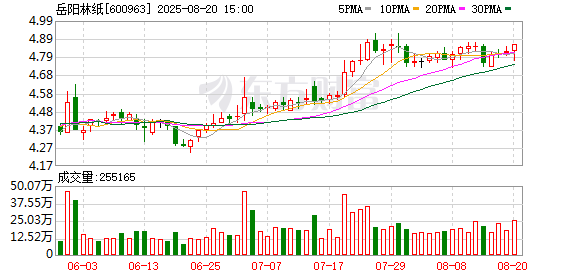
岳阳林纸:全资子公司中标碳汇合作开发项目
Zheng Quan Shi Bao Wang· 2025-09-04 08:43
Group 1 - The company, Yueyang Lin Paper, announced that its wholly-owned subsidiary, Chengtong Carbon Sink Management (Hunan) Co., Ltd., has won a bid for a carbon sink resource cooperation development project in the Tacheng region of Xinjiang [1] - The project involves the development of carbon sink resources across approximately 17.6343 million acres of existing forest land, 1.6688 million acres of arable land, and 94.6962 million acres of grassland in the Tacheng region [1] - The initial cooperation period for the project is set for 20 years [1]

岳阳林纸(600963.SH):子公司诚通碳汇中标碳汇合作开发项目
Ge Long Hui A P P· 2025-09-04 08:36
Group 1 - The core point of the article is that Yueyang Forest and Paper (600963.SH) has won a bid for a carbon sink resource development project in the Tacheng region of Xinjiang, which involves significant land areas for forestry and agriculture [1] Group 2 - The project covers approximately 17.63 million acres of existing forest land, 16.61 million acres of arable land, and 94.70 million acres of grassland for carbon sink resource development [1] - The actual area and scope of the project will be subject to final approval and certification [1]
只靠种树,还救不了森林
虎嗅APP· 2025-09-01 13:53
Core Viewpoint - The article emphasizes the critical importance of forest restoration for biodiversity conservation, climate change mitigation, and soil erosion control, highlighting the need for a multi-faceted approach to improve forest ecosystem quality and resilience [3][14][17]. Group 1: Forest Restoration Challenges - Forest restoration has evolved significantly over the past thirty years, transitioning from the recognition of unsustainable deforestation to understanding restoration as a solution for climate change and biodiversity loss [3]. - Despite global commitments to halt deforestation by 2030, the actual progress remains insufficient, with only 24% of the ideal carbon absorption target of 1 billion tons being met annually [3]. - Many restoration projects focus excessively on tree quantity rather than the quality of the ecosystem being restored [3][5]. Group 2: Practical Experiences in Forest Restoration - Practitioners like Fang Ye and Zhou Jiading illustrate the complexities of forest restoration, which involves detailed surveys, seed collection, planting, and long-term monitoring [7][8]. - Community involvement is crucial, as seen in Zhou Jiading's project, where local villagers participate in various stages of restoration, leading to increased local income and a shift in their relationship with the forest [9][10]. Group 3: Importance of Ecosystem Quality - The quality of forest ecosystems is vital for supporting biodiversity, with current artificial forests and degraded natural forests lacking the ecological complexity of mature primary forests [14]. - Protecting biodiversity is essential not only for ecological balance but also for the economic implications of ecosystem services, as demonstrated by the impact of bat population declines on agricultural practices [15]. Group 4: Policy and Funding Mechanisms - Effective forest restoration requires a robust funding mechanism and the cultivation of technical expertise, as current funding sources are limited and often insufficient [12][20]. - The article highlights the need for policy adjustments to address critical issues like harmful forest type replacement and to ensure that restoration efforts are not merely compensatory but genuinely restorative [19][23]. Group 5: Future Directions and Collaboration - Forest restoration efforts must integrate ecological, economic, and social dimensions, necessitating collaboration across disciplines and sectors [21][23]. - The article concludes that while challenges exist, ongoing efforts and small changes in community engagement and policy can lead to significant improvements in forest restoration outcomes [23].


岳阳林纸碳汇业务有望迎来发展新契机
Zheng Quan Ri Bao· 2025-08-20 11:35
Group 1 - The Ministry of Ecology and Environment has released a notice for the third batch of CCER methodology, which will benefit the biomass power generation industry [2] - Yueyang Lin Paper's subsidiary, Hunan Juntai New Materials Technology Co., Ltd., has a biomass power generation project that fully complies with the new CCER methodology, enhancing the project's economic viability and promoting sustainable development in renewable energy [2] - Juntai Technology is expected to generate 540 million kWh of biomass power in 2024, becoming a key growth point for the company's revenue and cost reduction [2] Group 2 - Yueyang Lin Paper is looking to expand into international markets, leveraging its technical advantages and project experience in carbon sink development [3] - The company plans to engage in international carbon trading and project development, collaborating with advanced international enterprises to explore new pathways for carbon reduction [3] - This international expansion aims to enhance the company's competitiveness and serve as a bridge for China's carbon sink technology and standards to reach the global stage [3]
金融忙“碳”路 山水换新颜
Jin Rong Shi Bao· 2025-08-19 02:39
Group 1: Carbon Trading and Green Development - Anji County, known as "China's Bamboo Hometown," has 870,000 acres of bamboo, generating a carbon sink of 6.6 tons per hectare, contributing over 28 million yuan annually to local farmers through carbon trading [1] - The "Two Mountains" concept has been effectively implemented in Anji, promoting a win-win scenario for common prosperity and low-carbon development, influencing national consensus on green development [1] Group 2: Nuclear Power Projects and Financial Support - The Sanmen Nuclear Power Project, China's first independently constructed nuclear power project, has received nearly 700 million yuan in supply chain loans from China Construction Bank to support its development [2] - The project is expected to generate 55 billion kilowatt-hours annually, equivalent to half of Ningbo's projected electricity consumption in 2024 [3] Group 3: Renewable Energy and Ecological Restoration - The Agricultural Development Bank of China has provided 2.415 billion yuan in loans to support renewable energy projects and ecological restoration in the Kubuqi Desert, integrating sand control with wind and solar energy development [4] - The bank's initiatives have helped secure 1.56 million acres of shifting sand through a multi-layered ecological industry model [4] Group 4: Industrial Transformation and Green Financing - Zhejiang Meixinda Textile Dyeing Technology Co., Ltd. plans to reduce energy consumption by 30% and wastewater discharge by 50% through technological upgrades [5] - China Construction Bank's Huzhou branch has provided 200 million yuan in "transformation financing" linked to the company's carbon intensity performance, incentivizing green transitions [6] - The bank's new credit issuance for transformation financing has exceeded 1.4 billion yuan this year, supporting industrial carbon reduction efforts [6]

深圳多部门联合出台实施意见 明确适用认购 碳汇履责方式
Shen Zhen Shang Bao· 2025-08-16 23:54
Core Viewpoint - The implementation of the "Implementation Opinions" aims to promote ecological restoration through the voluntary purchase of carbon credits as a substitute for fulfilling ecological and environmental repair responsibilities, thereby supporting the goals of carbon peak and carbon neutrality [1][2]. Group 1: Ecological Restoration Principles - The principle of ecological restoration emphasizes on-site homogeneous direct restoration, with alternative restoration methods prioritized when direct restoration is not feasible [2]. - The purchase of carbon credits is applicable in cases where there is a correlation between ecological damage and carbon sequestration goals, preventing inappropriate application in cases lacking ecological function correspondence [2]. Group 2: Legal and Administrative Framework - In ecological damage compensation lawsuits and environmental public interest lawsuits, purchasing carbon credits can serve as both a substitute for ecological restoration and a compensatory measure for the loss of ecological service functions during the restoration period [2]. - In criminal cases involving environmental resource damage, factors such as the possibility of ecological restoration and the actual performance of carbon credit purchases should be considered when assessing remorse and potential leniency [2]. Group 3: Forestry and Marine Ecosystem Management - Forestry management and law enforcement departments may allow the purchase of carbon credits as a substitute for administrative restoration responsibilities, such as replanting trees and restoring vegetation, when direct recovery is not possible [2]. - The "Implementation Opinions" also include arrangements for integrating the purchase of marine carbon credits (blue carbon) for the alternative restoration of marine ecological damage [2]. Group 4: Carbon Market Compliance - The "Implementation Opinions" require that the purchase and cancellation of carbon credit products occur on formal carbon market trading platforms to ensure compliance, authenticity, and effectiveness of the cancellation results [3]. - The application of this responsibility fulfillment method is subject to legal supervision by the People's Procuratorate [3].
零碳小岛连世界,国际朋友圈喜扩容
Qi Lu Wan Bao· 2025-08-14 21:24
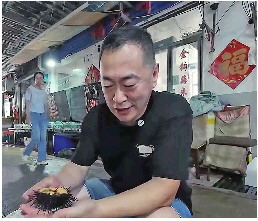
Core Insights - Yantai Changdao is experiencing a tourism boom this summer, attracting visitors with local experiences and showcasing its commitment to low-carbon practices through initiatives like the "International Zero Carbon Island" [2][6] - The transformation from a coal-dependent economy to a sustainable model has resulted in significant ecological and economic benefits for the local community, with an annual output value reaching over 60 million yuan [4][5] Group 1: Ecological Transformation - The village of Sunjia has shifted from a heavy reliance on sea cucumber farming, which caused environmental degradation, to eco-friendly practices that restore marine ecosystems [3][4] - The implementation of the "solid algae collection and fish" ecological restoration project has led to the protection of marine algae and the recovery of local fish populations, contributing to carbon sequestration [4][6] - The carbon sequestration capacity of the marine algae beds is significant, with reports indicating that the intertidal zone can sequester 187.31 grams of carbon per square meter [4] Group 2: Economic Development - The local economy has diversified with the establishment of high-end homestays, generating substantial profits during peak tourist seasons, with daily gross profits reaching 15,000 yuan [5] - The overall annual output value of the village has increased to over 60 million yuan, demonstrating the economic benefits of sustainable practices [4] Group 3: Zero Carbon Initiatives - Yantai has set ambitious goals for achieving net-zero greenhouse gas emissions by 2035, with comprehensive plans for clean energy, waste management, and sustainable tourism [6][9] - The "International Zero Carbon Island Cooperation Organization" has been established to promote sustainable development practices among island nations, emphasizing the integration of ecological and economic benefits [10][11] Group 4: Biodiversity and Conservation - The return of the spotted seal population to Changdao is a positive indicator of the improved marine ecosystem, with sightings increasing significantly in recent years [6][8] - The area has also seen a rise in various bird species, contributing to the region's biodiversity [9]
财税金融加力 促进发展增“绿”
Ren Min Ri Bao· 2025-08-10 21:55
Core Concept - The article emphasizes the progress made in ecological protection and green development in China over the past 20 years, highlighting the implementation of the "Two Mountains" theory and the establishment of innovative financial mechanisms to support sustainable practices [1] Ecological Compensation and Cooperation - The ecological environment in the Shandong Yellow River Delta National Nature Reserve has improved significantly, with 5.3 billion cubic meters of ecological water replenishment in the past three years, leading to increased biodiversity and tourism [2] - Shandong and Henan provinces have established a horizontal ecological compensation agreement to incentivize upstream provinces to protect water quality, with Shandong having disbursed 250 million yuan in ecological compensation to Henan [2] - Shandong has developed a comprehensive horizontal ecological compensation mechanism, with total compensation reaching 2.229 billion yuan, promoting shared responsibility for ecological protection [3] Green Insurance and Carbon Market - The introduction of carbon insurance products aims to support businesses in their green transitions, with companies like Xiamen Futec purchasing blue carbon to offset emissions [4][5] - Blue carbon insurance provides security for transactions, ensuring compensation for losses due to natural disasters or accidents [5][6] - Insurance companies are also increasing their investments in green projects, such as green bonds and equity investments, to support clean energy initiatives [7] Green Taxation and Technology Innovation - Tax incentives are effectively guiding companies towards reducing emissions, with a mechanism that lowers environmental protection tax for lower emissions [8][10] - The development of a digital twin energy management platform in Hainan demonstrates how tax policies can accelerate technological innovation in green energy [9][10] Green Bonds and Circular Economy - The Shandong Hongqiao Group has successfully issued green bonds totaling 600 million yuan to fund its recycling aluminum production, significantly reducing energy consumption and waste [11][12] - The issuance of green bonds has lowered financing costs and extended repayment periods, enhancing the company's commitment to ESG principles [12][13] Carbon Finance Development - The use of carbon emission rights as collateral for loans has emerged, with companies like Hubei Huangmailing Phosphate Chemical obtaining significant financing to support their green initiatives [15][16] - Hubei's financial institutions have issued 31 carbon emission rights pledge loans, facilitating 941 million yuan in financing for various projects [16] - The carbon market is evolving, with plans for carbon futures to provide risk management tools for emission-controlling enterprises [17]
人工养贻贝 还能卖碳汇
Ren Min Ri Bao· 2025-08-04 22:39
Core Insights - Dachen Island has transformed into a model for carbon trading and ecological sustainability, with significant advancements in carbon credit transactions and renewable energy utilization [1][2]. Group 1: Carbon Trading and Financial Innovations - In October 2023, a company purchased 2,223 tons of carbon credits from Dachen Island's mussel farming for 100,500 yuan, marking Zhejiang's first marine blue carbon transaction [1]. - The establishment of a "dual carbon" smart platform on Dachen Island integrates carbon monitoring, assessment, and trading, utilizing satellite remote sensing and IoT technologies for real-time carbon data [2]. - A local cooperative successfully used mussels as collateral for a 150,000 yuan loan, representing the first carbon credit financial loan transaction in Taizhou [2]. Group 2: Ecological and Economic Impact - Dachen Island's wind turbines generate over 60 million kilowatt-hours annually, reducing carbon emissions by 45,000 tons and providing surplus electricity for the island [1]. - The local government has implemented a closed-loop mechanism for carbon credit income distribution, ensuring over 40% of revenues are reinvested into ecological protection [2]. - The ongoing development of a standardized trading and distribution system aims to create a replicable model for ecological economic value transformation [2].
浙江台州市大陈岛探索蓝碳交易 人工养贻贝 还能卖碳汇
Ren Min Ri Bao· 2025-08-04 22:01
Core Insights - Dachen Island has transformed into a model for carbon trading, with the first marine blue carbon transaction in Zhejiang Province, where 2,223 tons of carbon credits from mussel farming were sold for 100,500 yuan [1][2] - The island's wind turbines generate over 60 million kilowatt-hours annually, reducing carbon emissions by 45,000 tons, and providing surplus electricity for the island [1] - A smart carbon management platform has been established on Dachen Island, integrating monitoring, assessment, and trading of carbon credits, utilizing advanced technologies like satellite remote sensing and IoT [2] Group 1 - Dachen Island's wind turbines produce over 60 million kilowatt-hours annually, reducing carbon emissions by 45,000 tons [1] - The first marine blue carbon transaction in Zhejiang Province involved the sale of 2,223 tons of carbon credits from mussel farming for 100,500 yuan [1] - The island's carbon trading market has been enhanced by a new system that replaces third-party certification with platform verification and public auction [1] Group 2 - A smart carbon management platform has been developed, featuring six modules for monitoring, assessment, and trading of carbon credits [2] - The platform employs technologies such as satellite remote sensing and IoT for real-time carbon data assessment [2] - A closed-loop mechanism for carbon credit income distribution has been established, with over 40% of revenues reinvested into ecological protection on the island [2]