科技金融体制

Search documents
七部门:加快构建科技金融体制
Zhong Guo Zheng Quan Bao· 2025-08-08 07:24
Core Viewpoint - The "Policy Measures" focus on addressing issues and breakthroughs in supporting national major technology strategies, aiming to build a technology finance system that aligns with technological innovation, enhancing financial support for major national technology tasks and technology-oriented SMEs [1][2][3] Group 1: Key Financial Support Mechanisms - The measures emphasize the role of venture capital in supporting technological innovation, including the "National Venture Capital Guidance Fund" and encouraging the development of private equity secondary market funds (S funds) [1][2] - Monetary credit is highlighted as a crucial support for technological innovation, with structural monetary policy tools like re-loans for technological innovation and encouraging banks to explore long-term performance assessment schemes for innovation loans [1][2] - The capital market is identified as a key hub for supporting technological innovation, prioritizing the listing and financing of technology-oriented enterprises that achieve breakthroughs in core technologies [2][3] Group 2: Insurance and Fiscal Policies - Technology insurance is positioned as a stabilizing force for innovation, with plans to develop high-quality technology insurance and explore risk-sharing mechanisms in key areas [2] - Fiscal policies are set to guide and support technology finance, utilizing tools like loan interest subsidies and risk compensation to support enterprise innovation [2][3] - The measures advocate for central-local collaboration to promote national technology finance work and encourage regional innovation practices [2] Group 3: Overall Impact - The introduction of these measures is expected to effectively coordinate various technology finance tools, directing more financial resources into the technology innovation sector and addressing existing challenges in financial support for technological innovation [3]
央行副行长、国家外汇局局长朱鹤新:提升科技贷款投放强度和服务能力
Zhong Guo Zheng Quan Bao· 2025-08-08 07:23
Core Viewpoint - The development of technology finance is essential for promoting the deep integration of technological innovation and industrial innovation, with recent policies aimed at enhancing the technology finance service system and facilitating the conversion of technological achievements into productive forces [1][2]. Group 1: Policy Initiatives - Multiple departments have issued policies to accelerate the construction of a technology finance system that supports high-level technological self-reliance and strength [2]. - The People's Bank of China has increased the scale of re-loans for technological innovation and technological transformation to 800 billion yuan, while lowering the re-loan interest rate to 1.5% to provide more precise loan support for enterprises [2][3]. Group 2: Bond Market Development - The establishment of a "technology board" in the bond market is underway, with approximately 100 institutions having issued technology innovation bonds totaling over 250 billion yuan [3]. - There is a focus on fostering a technology finance ecosystem that encourages collaboration among various financial institutions and supports major technological tasks [3]. Group 3: Support for Technology Enterprises - The China Securities Regulatory Commission is implementing measures to optimize the domestic listing environment for technology enterprises, including a flexible new stock issuance mechanism and support for red-chip technology companies returning to domestic listings [4]. - There is a targeted approach to support "hard technology" enterprises, including the use of a "green channel" policy for companies that break through key core technologies [4]. Group 4: Mergers and Acquisitions - Continued support for mergers and acquisitions is emphasized, with a focus on guiding resources towards technological innovation and industrial upgrading [5]. - The capital market is seen as a primary channel for corporate mergers and reorganizations, with encouragement for technology companies to utilize various payment tools for restructuring [5]. Group 5: Long-term Capital Support - Initiatives are in place to support private equity funds in acquiring listed companies for the purpose of promoting industrial integration [6]. - The financial regulatory authority is conducting pilot programs to enhance long-term capital support for technology enterprises, with significant amounts already committed [7]. Group 6: Overall Strategy - Recent meetings among multiple departments have reinforced the commitment to building a technology finance system that aligns with technological innovation, emphasizing early, small, long-term, and hard technology investments [7]. - Experts believe that accelerating the construction of a technology finance system with Chinese characteristics will help overcome constraints on technological innovation and enhance the supply of innovation capital [7].
科创板专题系列:1+N新政助力科创板高质量发展
Tianfeng Securities· 2025-07-18 07:13
Group 1 - The report outlines a comprehensive policy framework for supporting the high-quality development of the Sci-Tech Innovation Board, including 15 reform measures that cover the entire lifecycle of fundraising, investment, lending, insurance, and exit [1][11][12] - The report highlights the introduction of the "1+6" policy measures aimed at enhancing the inclusiveness and adaptability of the Sci-Tech Innovation Board, including the reintroduction of the fifth listing standard for unprofitable companies [10][19][20] - The report indicates that the average liquidity ratio of Sci-Tech Innovation Board companies has significantly improved compared to 2019, demonstrating stronger short-term solvency compared to companies on the main board [28][29] Group 2 - The report reveals that the average asset turnover ratio for Sci-Tech Innovation Board companies has decreased more sharply than that of the main board, indicating a focus on long-term investments such as R&D and equipment acquisition [30][31] - The report notes that the overseas revenue of Sci-Tech Innovation Board companies has shown a consistent upward trend, with revenues reaching 418.22 billion yuan in 2024, highlighting the increasing internationalization of these companies [42][36] - The report emphasizes that the proportion of high-tech companies among newly listed firms on the Sci-Tech Innovation Board has exceeded 90%, reflecting the board's focus on strategic emerging industries [43]
国常会重磅部署!
证券时报· 2025-06-27 13:34
Core Viewpoint - The article emphasizes the importance of accelerating the construction of a technology powerhouse and enhancing the efficiency of government services to improve the business environment and administrative effectiveness [2][3][7]. Group 1: Technology Development - The meeting highlighted that over the past year, various regions and departments have effectively advanced the tasks related to technology reform and development, making solid progress in building a technology powerhouse [3]. - There is a call to enhance the sense of responsibility and urgency, aiming for high-level technological self-reliance and strength, with a focus on "bridging gaps and strengthening advantages" to increase technological breakthroughs [3]. - The Ministry of Science and Technology, along with seven other departments, issued policies to support technology-driven enterprises, including establishing a "National Venture Capital Guidance Fund" to encourage financial institutions to increase credit support for tech companies [4]. Group 2: Efficient Government Services - The meeting discussed the establishment of a normalized mechanism to promote the "efficient handling of one matter," which aims to optimize and expand the range of services based on feedback from the public and businesses [6]. - Examples of successful implementations include streamlined processes in Shandong, Hainan, and Jiangsu provinces, where citizens can complete various administrative tasks with minimal documentation [6]. - The initiative aims to transform the administrative process from "multiple locations, multiple windows, multiple times" to "one location, one window, one time," significantly reducing the burden on enterprises [7].


科技创新需要政府和市场“两只手”协调
Jing Ji Wang· 2025-06-16 09:19
Group 1 - The book "Decoding China's Economy" features insights from 12 economists, including Huang Qifan and Liu Shijin, discussing the bright prospects of China's economy and the importance of government investment funds in supporting tech innovation [1] - Local governments in China are actively exploring the operation of government investment funds to leverage more social capital for financing support to tech innovation enterprises [1][10] - The new type of national system aims to enhance the coordination between government and market forces, promoting a deep integration of both to foster innovation [4][11] Group 2 - The 20th National Congress emphasized the need to establish a new system for developing new quality productivity, which includes encouraging angel investment, venture capital, and private equity investment [4] - The government plays a crucial role in shaping the innovation ecosystem, and the highest form of this relationship is when the government acts subtly to support innovation [4][11] - The new "three driving forces" for high-quality economic development are identified as basic research, industrial upgrading, and tech finance, which complement the traditional drivers of investment, consumption, and exports [5][6] Group 3 - China has made significant advancements in strategic emerging industries and new technologies, particularly in areas like new energy and electric vehicles, showcasing a "leapfrog" effect in global trends [6] - The number of Chinese companies in the global top 2500 R&D firms has reached 679, making China the second-largest R&D country [7] - There are over 500,000 tech SMEs and more than 460,000 high-tech enterprises in China, indicating a comprehensive enhancement in innovation capabilities [7] Group 4 - The establishment of innovation consortia led by central enterprises has been initiated to promote collaboration among various innovation entities, including universities and private enterprises [8] - The government is shifting from a subsidy-based support model to a more refined approach through government-led investment funds, enhancing operational efficiency and attracting more social capital [10][12] - The integration of government and market forces in the tech finance sector is crucial for supporting innovation and fostering the growth of tech enterprises [11][12]

重要会议加速科技转成实际应用,有望促进创投投资良性循环
Xuan Gu Bao· 2025-06-09 23:19
Group 1 - The State Council emphasizes the importance of enhancing the role of enterprises in innovation and encourages collaboration between enterprises, universities, and research institutions to address technological challenges and conduct joint research [1] - Financial support will be increased, with a focus on attracting social capital and encouraging financial institutions to innovate financial products and services, thereby developing a multi-tiered capital market [1] - The People's Bank of China aims to build a financial system that aligns with technological innovation, focusing on enhancing bank credit services, optimizing re-loan policies for technological innovation, and improving the technology finance ecosystem [2] Group 2 - The recent policies aim to optimize the entire investment chain, which is expected to accelerate the investment cycle in venture capital and promote a healthy cycle within the industry [2] - Companies specializing in "hard technology" are highlighted as having significant advantages in exit efficiency, making them attractive for investment [2] - Sichuan Shuangma is involved in private equity funds that focus on technology, advanced manufacturing, semiconductors, new energy, and consumer services [4]
金融管理部门发声“金融+科技”
Shang Hai Zheng Quan Bao· 2025-06-05 18:51
Core Insights - The forum focused on the dual empowerment of finance and technology to build a strong financial nation and innovation zones [2] - Key challenges in achieving effective interaction between technology and finance were highlighted, particularly the mismatch in financial supply and the varying risk characteristics of tech enterprises at different lifecycle stages [2][3] Financial Institutions and Support - The People's Bank of China emphasized the need to enhance bank credit services, particularly for small and medium-sized tech enterprises, to promote rapid growth in tech loans [3] - A proposal was made to establish a "technology board" in the bond market to support the issuance of technology innovation bonds by financial institutions, tech companies, and equity investment institutions [4] - The Financial Regulatory Bureau is pushing for the establishment of specialized tech finance departments within financial institutions and has set up 2,178 tech branches nationwide [5] Financial Products and Services - The knowledge property pledge loan balance in the banking sector has exceeded 300 billion yuan, reflecting a year-on-year growth of 33.7% [5] - Financial institutions are encouraged to develop specialized financial products that consider the innovation capabilities and intellectual property values of enterprises [5] Insurance and Risk Management - The Financial Regulatory Bureau is optimizing insurance services for tech enterprises, including risk guarantees for major national tech tasks and pilot programs for insurance compensation [6] Foreign Exchange Management - The State Administration of Foreign Exchange is leveraging technology to enhance trade and investment facilitation for tech enterprises, including the use of blockchain for cross-border financial services [7] - Digital technologies are being utilized to streamline processes and improve regulatory efficiency in foreign exchange management [8][10] - The integration of big data and AI is aimed at enhancing the identification and crackdown on foreign exchange violations [9]
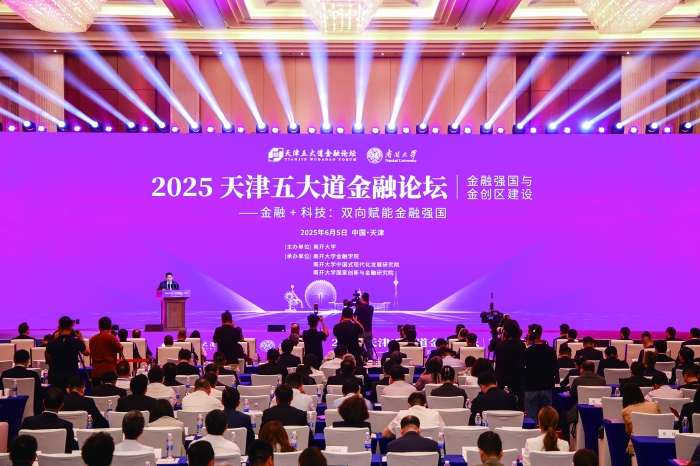
央行:加强科技创新领域银行信贷服务能力建设,增强资本市场支持力度
Sou Hu Cai Jing· 2025-06-05 13:40
Core Viewpoint - The Vice Governor of the People's Bank of China emphasizes the importance of a virtuous cycle among finance, technology, and industry to promote economic and financial transformation and upgrading [1] Group 1: Financial Support for Technological Innovation - Financial support for technology innovation faces challenges due to the varying life cycles, risk characteristics, and financing needs of technology enterprises [1] - Technology enterprises often experience unstable cash flows, high risks and uncertainties, and low financial transparency, affecting their access to credit and bond financing [1] - There is a lack of long-term, patient, and strategic capital for equity financing in technology enterprises [1] Group 2: Recommendations for Improvement - Strengthening the credit service capabilities of banks is essential, with a focus on directing more credit resources to technology-oriented SMEs to promote rapid growth in technology loans [1] - Optimizing policies for re-loans for technological innovation and equipment updates, with a signed loan amount of 16,705 billion yuan and a disbursed amount of 5,701 billion yuan as of the end of April [1] - Establishing a "Technology Board" in the bond market to support the issuance of technology innovation bonds by financial institutions, technology enterprises, and equity investment institutions [1] Group 3: Enhancing Capital Market Support - Optimizing institutional arrangements for listing, mergers and acquisitions, and equity incentives based on the characteristics of technological innovation [2] - Promoting the role of regional equity markets and innovating technology insurance products and services [2] - Strengthening collaborative efforts to improve the technology financial ecosystem, including establishing a coordinated mechanism among relevant departments to enhance financing efficiency in the technology sector [2]
月度策略:外部不确定性仍存,成长与价值均衡配置-20250604
Zhongyuan Securities· 2025-06-04 14:32
Group 1 - The report highlights that the central bank's monetary policy in May, including interest rate cuts and reserve requirement ratio reductions, has released significant liquidity into the market, which is expected to enhance consumer spending and support the economy [5][10]. - A temporary easing of export pressures has been noted due to the recent US-China tariff adjustments, which could benefit export-oriented industries such as light manufacturing, technology, and automotive parts [5][10]. - The equity market in May showed a clear preference for value stocks over growth stocks, with the North Star 50 Index rising by 5.83%, while the large-cap growth index only saw a slight increase of 0.36% [45][51]. Group 2 - The bond market experienced fluctuations in May, with interest rates initially declining due to a favorable liquidity environment, followed by a rebound influenced by supply pressures from long-term government bonds [51]. - The report suggests that the economic data for May, particularly in industrial production, consumption, and exports, provides a solid foundation for the A-share market [6][68]. - The report recommends focusing on sectors that benefit from domestic consumption and technological innovation, such as computers, components, and telecommunications, as well as defensive sectors like banking and energy [68][69]. Group 3 - The report indicates that the real estate market has shown signs of improvement, with policies aimed at stabilizing prices and boosting demand, including interest rate cuts and reduced transaction costs [69][70]. - Data from 70 major cities shows a narrowing decline in new residential prices, suggesting a potential stabilization in the housing market [71][75]. - The report emphasizes the importance of ongoing financial support for the real estate sector, as evidenced by the positive growth in real estate loans and mortgage loans, which indicates a recovery in buyer sentiment [89][90].

政策高频|制造业是国民经济的重要支柱(申万宏观·赵伟团队)
赵伟宏观探索· 2025-06-01 02:31
报告正文 2. 政策跟踪:制造业是国民经济的重要支柱 2.1 总书记河南考察:制造业是国民经济的重要支柱 5月19-20日,习近平总书记对"十五五"规划编制工作作出重要指示并赴河南进行考察调研。习近平总书 记指出,"十五五"规划编制要坚持科学、民主、依法决策,企业要根据规划调整战略,把握政策红利,推动 产业结构优化升级。在河南考察时,总书记强调,制造业是国民经济的重要支柱,推进中国式现代化必须保 持制造业合理比重,同时,现代制造业离不开科技赋能,要大力加强技术攻关,走自主创新的发展路子。 2.2 商务部例行发布会:做强国内市场、促进消费 5月22日,商务部召开例行新闻发布会,剔除做强国内市场,促进消费,更好发挥消费对经济循环的牵 引带动作用。发布会上,商务部剔除将加快实施提振消费专项行动,推进促消费政策落实;加快完善现代商 贸流通体系,支持再生资源回收和二手商品流通,推进电商高质量发展;加快推进内外贸一体化,帮扶企业 有效应对外部冲击。对于刚刚结束的APEC第三十一届贸易部长会议,发言人表示中方愿与各方深化经济合 作,加快区域经济一体化。 | 时间 | 事件 | 内容概要 | 主要内容 加快实施提振消费专项行 ...